River otters unfazed by feces and parasites while eating… and that’s good for ecosystems
New study offers first look at diet and ecology of river otters in Chesapeake Bay
video:
Three North American river otters play in the snow on the docks of the Smithsonian Environmental Research Center. Detected with SERC’s night-vision wildlife cameras.
view moreCredit: Karen McDonald, Smithsonian Environmental Research Center
North American river otters have terrible hygiene when it comes to their food. They eat, play and defecate in the same place. But their unhealthy habits make them ideal for detecting future health threats in the environment, according to scientists. In a new study published Aug. 14, Smithsonian scientists analyzed the otters’ diets and “latrine” habitats in the Chesapeake Bay for the first time. They discovered river otters often eat food riddled with parasites—and that may not be a bad thing for the larger ecosystem.
“River otters are impressive apex predators that play a vital role in ecosystems,” said Calli Wise, lead author of the study and a research technician at the Smithsonian Environmental Research Center (SERC). “The parasites consumed by river otters may also teach us about the health of the environment.”
River otters are among the most elusive animals in the Chesapeake. They’re nocturnal, semi-aquatic and generally shy around people, so live sightings are rare. Once abundant across North America, their numbers dwindled due to the fur trade and habitat degradation. A Maryland reintroduction program in the mid-1990s helped their populations rebound across the state. But even as they bounce back, scientists still don’t have precise estimates as to their population numbers in the Bay region. And many other aspects of their behavior and diets remain obscure.
“It is shocking how little information there is about their biology and ecology,” said Katrina Lohan, co-author and head of SERC’s Coastal Disease Ecology Lab.
Since live otters are difficult to observe, biologists rely on what they leave behind. Specifically, their feces. Otters leave the water periodically to congregate at latrines—sites on land where they eat, socialize and leave fresh droppings as scent marks for other otters. By studying the feces (or “scat”) from otter latrines, scientists can get a sense of what the otters are eating.
The latest study, published in the journal Frontiers in Mammal Science, looked at scat from 18 active latrines on the SERC campus in Edgewater, Maryland. Most were natural sites, such as beaches or riverbanks, but a few latrines appeared on manmade structures like docks or boardwalks. The biologists took the scat samples back to the lab, where they surveyed the samples under the microscope and ran DNA analyses using a technique called metabarcoding.
Finfish and crabs formed the staples of otter diets—accounting for 93% of all prey items in the DNA analysis. The otters also ate amphibians, worms and the occasional bird. The researchers even found evidence that otters ate two invasive fish: the common carp and the southern white river crayfish.
But the DNA analyses also uncovered a host of parasites from six different taxonomic classes teeming in the otter scat. The vast majority were trematodes—parasitic flatworms also known as “flukes.” Other parasites included microscopic dinoflagellates and other flatworms known to infect the gills, skin or fins of fishes. Most of the parasites likely infected the otters’ prey, not the otters themselves—and the otters probably weren’t any worse off for eating them. In fact, Lohan suggested, otters may be helping the overall prey populations by eating parasite-infected animals, since this weeds out sicker fish and crabs. Meanwhile, parasites may be helping the otters catch prey that would otherwise elude them.
“While parasites have negative impacts on individuals, they are extremely important in food webs,” Lohan said. “It is possible that river otters, like other top predators, wouldn’t be able to find enough food to eat without parasites.”
However, a few parasites in the study, such as roundworms and single-celled apicomplexans, are known to infect mammals. The scientists suspect these parasites directly infected the otters themselves, rather than their prey. This study did not detect any parasites in river otters than can infect humans. But some of the parasites were closely related to ones that can cause human disease, including the gastrointestinal disease cystoisosporiasis. As river otters are appearing more often in urban and suburban areas, the likelihood of them encountering something that could affect human health is also rising.
“As river otters move into more urban waterways, they will be increasingly exposed to pollutants and parasites of concern to humans,” Wise said. “As mammals, river otters may be disease sentinels that we can study to learn more about environmental risks to humans.”
Researchers from Frostburg State University, Johns Hopkins University and the University of the Pacific also contributed to this study. A copy of the study will be available on the journal’s website after publication. For photos, an advance copy of the study or to speak with one of the authors, contact Kristen Goodhue at GoodhueK@si.edu.
River Otters Eating Crab [VIDEO] |
A river otter eats a crab at an otter latrine on SERC’s nature trails, and initially refuses to share with his companions. Detected with SERC’s night-vision wildlife cameras.
Four river otters play at a latrine site on SERC’s Fox Creek Nature Trail. Detected with SERC’s night-vision wildlife cameras.
Credit
Karen McDonald, Smithsonian Environmental Research Center)
A North American river otter (Lontra canadensis) wanders through a forest at the Smithsonian Environmental Research Center.
Feces (“scat”) from North American River Otters, in a forest at the Smithsonian Environmental Research Center.
Credit
Calli Wise, Smithsonian Environmental Research Center
Research technician Calli Wise records understory plant species at one of the river otter study sites.
Credit
Smithsonian Environmental Research Center
Journal
Frontiers
Method of Research
Observational study
Subject of Research
Animals
Article Title
North American river otters consume diverse prey and parasites in a subestuary of the Chesapeake Bay
Article Publication Date
14-Aug-2025
Discovery of ‘weird looking’ otter poo reveals how these animals shape nearby ecologies
Scientists found scat from river otters teeming with parasites that infect otters’ prey, suggesting that otters may be important players in local food webs
image:
River otter at the Smithsonian Environmental Research Center. Credit: C. Wise.
view moreCredit: C. Wise
North American river otters have lived for a long time in Chesapeake Bay, yet relatively little is known about how their surroundings impact them. So what does daily life for river otters on the Atlantic coast of the US look like? What do they eat? Where do they socialize? Where do they go to poo? Researchers in Maryland decided to investigate and have now published their findings in Frontiers in Mammal Science.
“River otters in the Chesapeake Bay eat a wide range of animals, including those that live in the water and on land. Parasites, too, are crucial parts of their diet,” said senior author Dr Katrina Lohan, a parasite ecologist and head of the Coastal Disease Ecology Laboratory at the Smithsonian Environmental Research Center (SERC). “We also found that river otters use manmade structures for latrines or choose areas with specific characteristics.”
Poo on the dock of the bay
“We started this research when a colleague sent me an email about some weird-looking, watery poo that she found at the dock on our campus. In the poo was a fire engine red worm,” Lohan said. Eventually wildlife cameras caught a river otter pooing on the dock. Since the worm was most likely a parasite, Lohan decided to get some samples. The article’s first author Calli Wise, a graduate researcher at the SERC, collected further samples from 18 active otter latrines. Over 11 months, the researchers recovered 28 scats per latrine on average.
“Scats usually smelled strongly of fish and were full of scales or crustacean shells,” Wise said. “We wore gloves and used sterile tools and tubes to collect scat samples, to avoid contamination with other DNA.”
Latrines are central hubs for otters: While they are primarily used for scent-marking through defecation and urination, river otters also use them as spots to eat, play, socialize, and rest. Typically, they look like areas where the grass or other vegetation has been flattened with low overhanding vegetation for cover.
Most latrines on the Chesapeake Bay were located close to the shoreline, in areas with woody debris and open access to the water. Often, hard to miss features made them stand out from the surrounding landscape. Such features included man-made structures and five otter latrines were found on docks, boardwalks, and shoreline staircases.
Parasite control
The collected scat was taken to the lab for analysis. The team used two methods to identify what the otters had eaten: metabarcoding, a method that uses genetic information, and microscopic examination.
“We collected most scats in the summer, when river otter diet is likely diverse,” Wise said. “We found evidence of invasive species like common carp and white river crayfish in river otters’ diet.” In addition, otters ate more fish and crustaceans, such as American blue crabs. They also included the occasional duck or amphibian on their meal plan.
Otter poo, however, didn’t only tell the researchers what the otters had eaten. Using metabarcoding, they were able to determine what parasites were in the prey. They then matched parasites to the hosts they were most likely to infect. Many of the parasites are known to infect teleost fish, an extremely diverse group of ray-finned fishes that are the primary prey of river otters But a few other parasites likely infected otters directly. “It is possible that river otters, like other top predators, wouldn’t be able to find enough food to eat without parasites,” Lohan pointed out.
The team said that they weren’t able to clearly identify all parasites, mainly because of missing sequences in databases that new sequences might be matched to. They also could not identify individual diets or match poo samples to individual otters.
Nevertheless, the presence of parasites in otter poo might mean river otters are important ecosystem engineers. “Since so many of the parasites are actually infecting otters’ prey, it could mean that river otters are culling sick individuals from the populations they are preying upon,” Lohan explained. This could potentially alter evolutionary processes for their prey, since infected individuals, once eaten, no longer contribute to the gene pool.
“Some of the parasites that infect river otters could potentially also infect humans, who also are mammals,” Lohan concluded. “Thus, we could use river otters as ‘disease sentinels,’ and study them to learn about what public health threats occur in certain areas.”
Journal
Frontiers in Mammal Science
Method of Research
Experimental study
Subject of Research
Animals
Article Title
North American river otters consume diverse prey and parasites in a subestuary of the Chesapeake Bay
Article Publication Date
14-Aug-2025
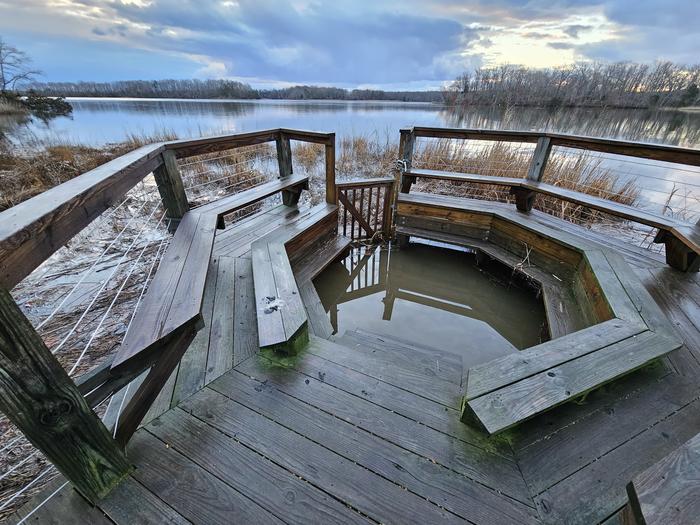
Otter latrine at Chesapeake Bay. Credit: Karen McDonald.
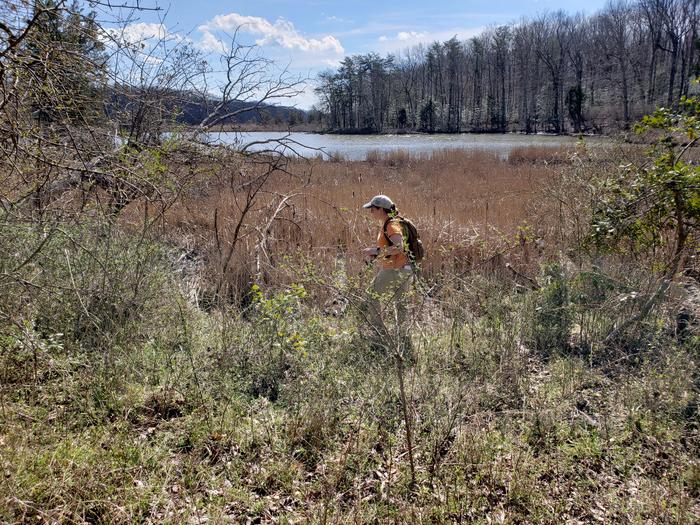
The team took samples from 18 active otter latrines. Credit: C. Wise.
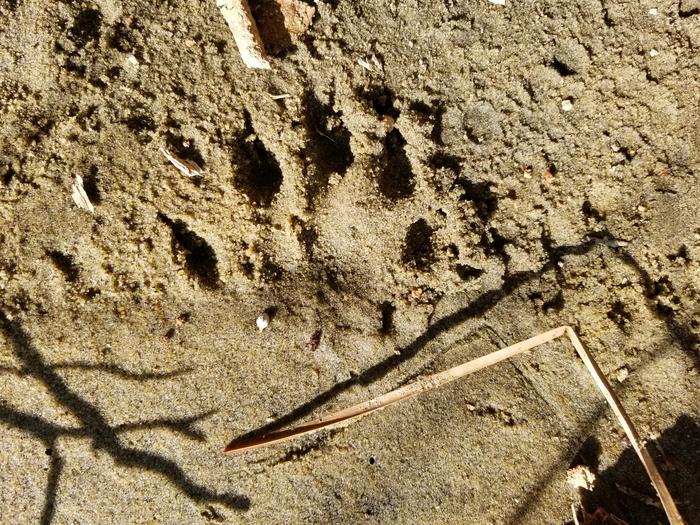
River otter track at Chespeake Bay. Credit: C. Wise.

Otter latrine on Smithsonian Environmental Research Center dock. Credit: C. Wise.


No comments:
Post a Comment