Showing posts sorted by date for query BLASPHEMY. Sort by relevance Show all posts

Wednesday, January 14, 2026

How Christian Reconstructionism influences US politics: scholar


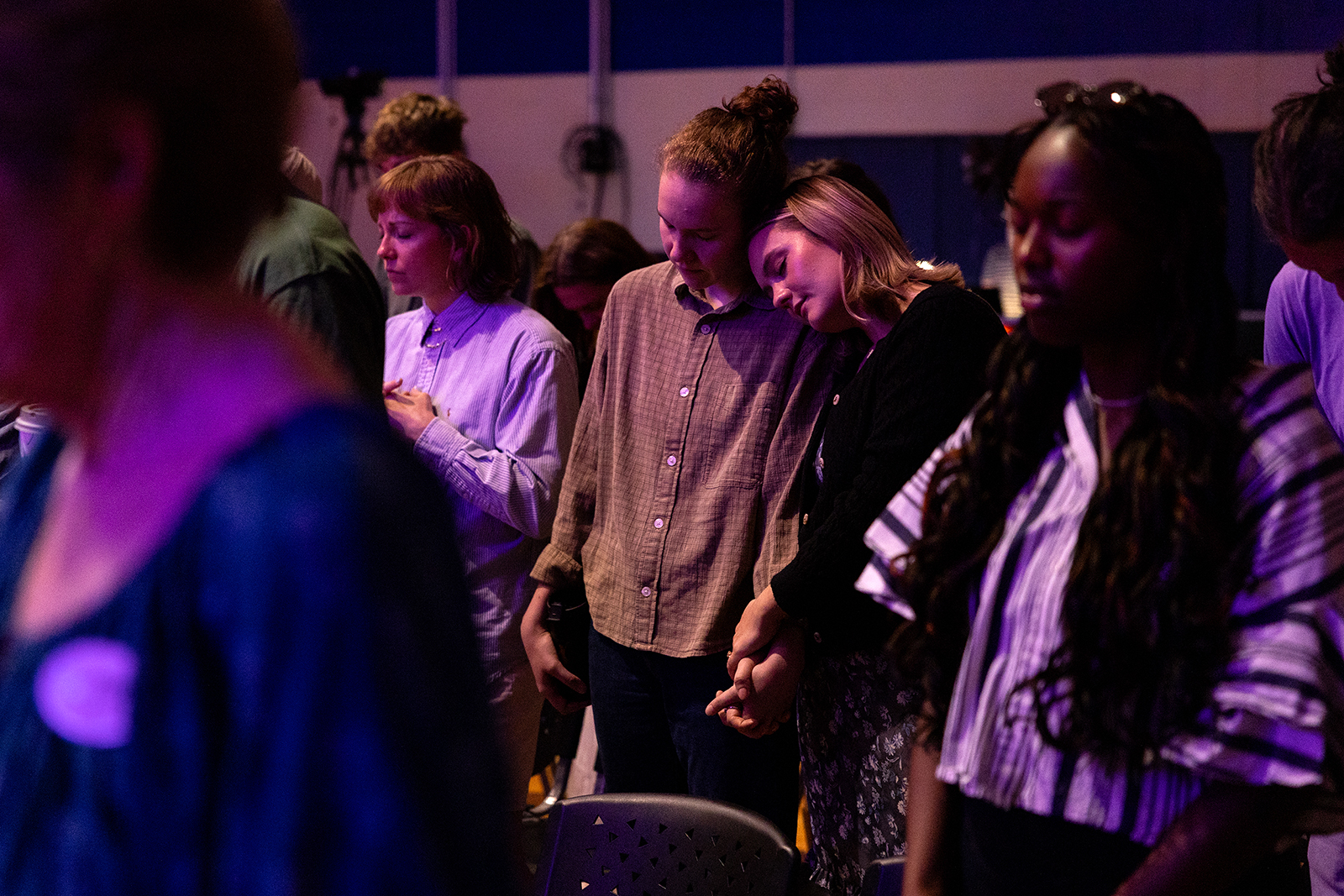
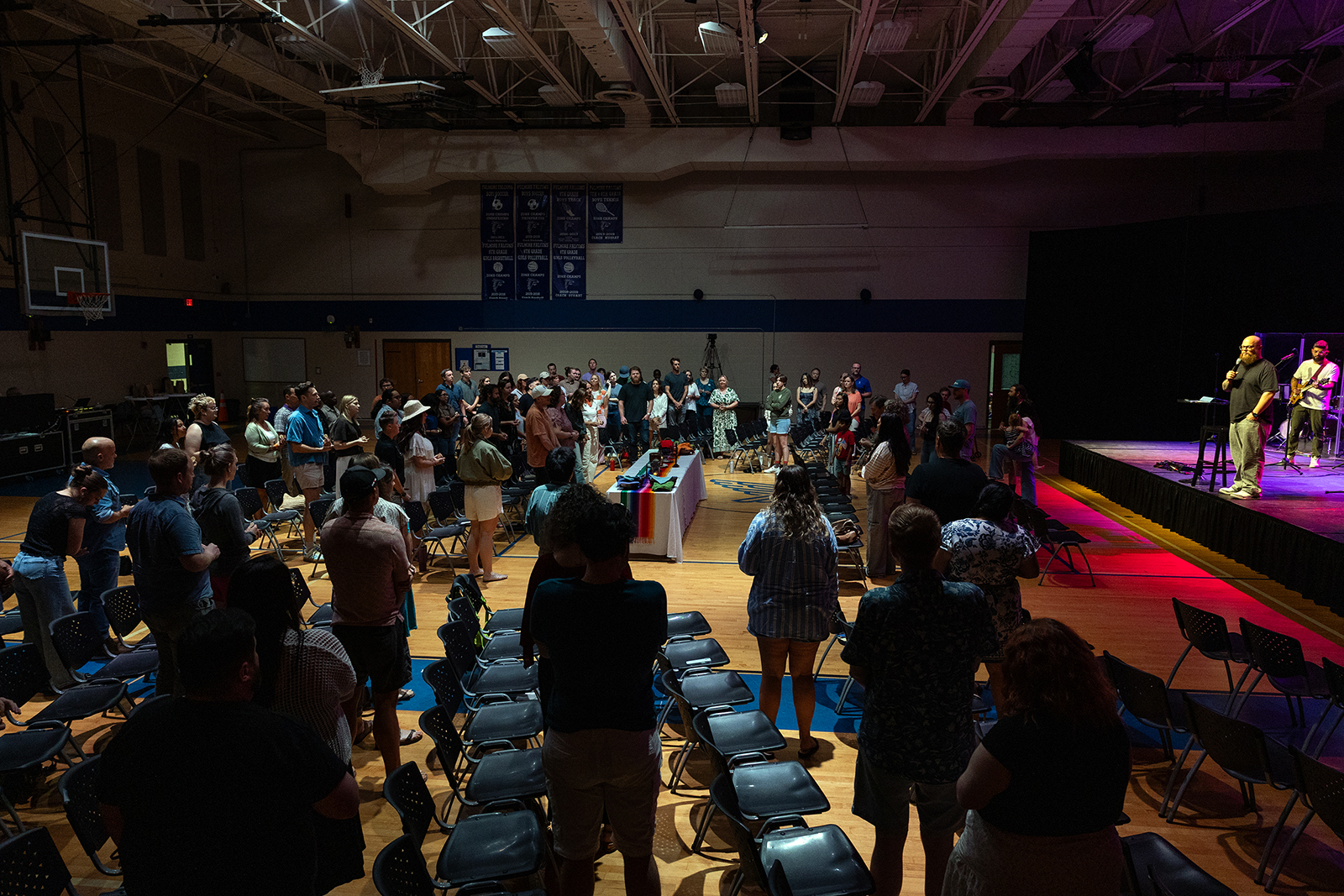
A Christian chruch service on July 8, 2024 (Paul Shuang/Shutterstock.com)
January 12, 2026 

Christian Reconstructionism is a theological and political movement within conservative Protestantism that argues society should be governed by biblical principles, including the application of biblical law to both personal and public life.

Taking shape in the late 1950s, Christian Reconstructionism developed into a more organized movement during the 1960s and 1970s.

It was born from the ideas of theologian R. J. Rushdoony, an influential Armenian-American Calvinist philosopher, theologian and author. In his 1973 book, “The Institutes of Biblical Law,” Rushdoony argued that Old Testament laws should still apply to modern society. He supported the death penalty not only for murder but also for offenses listed in the text such as adultery, blasphemy, homosexuality, witchcraft and idolatry.

As a scholar of political and religious extremism, I am familiar with this movement. Its following has been typically very small – never more than a few thousand committed adherents at its peak. But since the 1980s, its ideas have spread far beyond its limited numbers through books, churches and broader conservative Christian networks.

The movement helped knit together a network of theologians, activists and political thinkers who shared a belief that Christians are called to “take dominion” over society and exercise authority over civil society, law and culture.

These ideas continue to resonate across many areas of American religious and political life.
Origins of Christian Reconstructionism

Rushdoony’s ideas were born from a radical interpretation of Reformed Christianity – a branch of Protestant Christianity that follows the teachings of John Calvin and other reformers. It emphasizes God’s authority, the Bible as the ultimate guide and salvation through God’s grace rather than human effort.

Rushdoony’s ideas led him to found The Chalcedon Foundation in 1965, a think tank and publishing house promoting Christian Reconstructionism. It served as the movement’s main hub, producing books, position papers, articles and educational materials on applying biblical law to modern society.

It helped train Greg Bahnsen, an Orthodox Presbyterian theologian, and Gary North, a Christian reconstructionist writer and historian, both of whom went on to take key leadership roles in the movement.

At the heart of reconstructionism lies the conviction that politics, economics, education and culture are all arenas where divine authority should reign. Secular democracy, they argued, was inherently unstable, a system built on human opinion rather than divine truth.

These ideas were, and remain, deeply controversial. Many theologians, including conservatives within the Reformed tradition, rejected Rushdoony’s argument that ancient Israel’s civil laws should apply in modern states.
Christian dominionism and different networks

Nonetheless, reconstructionist ideas grew as people who more broadly believed in dominionism began to align with it. Dominionism is a broader ideology advocating Christian influence over culture and politics without requiring literal enforcement of biblical law.

Dominionism did not begin as a single, unified movement. Rather, it emerged in overlapping strands during the same period that Christian Reconstructionism was developing.

Between the 1960s and 1980s, Christian Reconstructionism helped turn dominionist beliefs into an explicit political project by grounding them in theology and outlining how biblical law should govern society. Religion historian Michael J. McVicar explains that Rushdoony’s work advocated applied biblical law as both a theological and political alternative to secular governance. This helped in influencing the trajectory of the Christian right.

At the same time, parallel streams – especially within charismatic and Pentecostal circles – advanced similar claims about Christian authority over society using different theological language.

The broad network of those who believe in Christian dominionism includes several approaches: Rushdoony’s reconstructionism, which provides the theological foundation, and charismatic kingdom theology.

Charismatic kingdom theology, which emerged in Pentecostal and charismatic circles, teaches that believers – empowered by the Holy Spirit – should shape politics, culture and society before Christ’s return.

Unlike reconstructionism, it emphasizes prophecy and spiritual authority rather than formal biblical law; it seeks influence over institutions such as government, education and culture.

What unites them is the idea that Christian faith should be the basis of the nation’s moral and political order.

Taken together, I argue that these strands have reinforced one another, creating a larger movement of thinkers and activists than any single approach could achieve alone.
From reconstructionism to the New Apostolic Reformation

Christian reconstructionist and dominionist ideas gained wider popularity through C. Peter Wagner, a leading charismatic theologian who helped shape the New Apostolic Reformation, or NAR, by adapting elements of Christian Reconstructionism. NAR is a charismatic movement that builds on dominionist ideas by emphasizing the use of spiritual gifts and apostolic leadership to shape society.

Wagner emphasized spiritual warfare, prophecy and modern apostles taking control of seven key areas – family, church, government, education, media, business and the arts – to reshape society under biblical authority. This is known as the “Seven Mountains Mandate.”

Both revisionist and dominionist movements share the belief that Christians should lead cultural institutions.

Wagner’s dominion theology, however, adapts Christian Reconstructionism to a charismatic context, transforming the goal of a Christian society into a spiritually driven movement aimed at influencing culture and governments worldwide.
Doug Wilson and homeschooling

Another key bridge between reconstructionism and contemporary dominionist thought is Doug Wilson, a pastor and author in Moscow, Idaho.

Though Wilson distances himself from some of reconstructionism’s harsher edges, he draws heavily from Rushdoony’s intellectual framework. Wilson’s influence can be seen in publications such as “Reforming Marriage,” where he argues for applying biblical principles to law, education and family life.

He has promoted Christian schools, traditional family roles and living out a “Christian worldview” in everyday life, bringing reconstructionist ideas into new areas of society.

Through his writings, teaching and leadership within the Communion of Reformed Evangelical Churches – the CREC – network, Wilson encourages a vision of society shaped by Christian values, connecting reconstructionist thought to contemporary cultural engagement.

Wilson’s publishing house, Canon Press, and his classical school movement have brought these ideas into thousands of Christian homes and classrooms across the U.S. His local congregation – the Christ Church in Moscow, Idaho – numbers around 1,300.

The Christian homeschooling movement offers parents a curriculum steeped in reformed theology and resistance to secular education.
Enduring influence

Some critics warn that the fusion of dominionist and reconstructionist theology with political action can weaken pluralism and democratic norms by pressuring laws and policies to reflect a single religious worldview. They argue that even moderated forms of these visions challenge the separation of church and state. They risk undermining the rights of religious minorities, nonreligious citizens and others who do not share the movement’s beliefs.

Supporters frame their mission as the renewal of a moral society, one in which divine authority provides the foundation for human flourishing.

Today, Christian Reconstructionism operates through small but influential networks of churches, Christian homeschool associations and media outlets. Its reach extends far beyond its original movement.

Even among those unfamiliar with Rushdoony, the political and theological patterns he helped shape remain visible in modern evangelical activism and the ongoing debates over religion’s place in American public life.

Art Jipson, Associate Professor of Sociology, University of Dayton

This article is republished from The Conversation under a Creative Commons license. Read the original article.


MAGA claims of 'massive religious revival' meticulously debunked


CEO of Turning Point USA Erika Kirk reacts as she speaks during AmericaFest, the first Turning Point USA summit since the death of Charlie Kirk, in Phoenix, Arizona, U.S. December 18, 2025. REUTERS/Cheney Orr

January 07, 2026
ALTERNET


Christian nationalist themes were alive and well at Turning Point USA's AmericaFest 2025 gathering at the Phoenix Convention Center, which found Vice President JD Vance declaring that the United States "always will be a Christian nation." But that claim was debunked by MS NOW's Steve Benen, who noted what the Founding Fathers had to say on the subject — for example, John Adams, in 1797, writing that "The government of the United States of America is not in any sense founded on the Christian Religion," and Thomas Jefferson saying, in 1802, that the U.S. Constitution created "a wall of separation between church and state."

Another prominent Christian nationalist theme at AmericaFest 2025 is that the U.S. is seeing a widespread evangelical renaissance, which is also what the Moral Majority's Rev. Jerry Falwell Sr. claimed during the 1980s. But Salon's Amanda Marcotte, in an article published on January 7, counters that the U.S. is moving in a more "secular" direction — not converting to evangelical Christian fundamentalism in huge numbers.

"For decades now," Marcotte explains, "the Christian Right has been the most powerful and influential force in the GOP, and yet even by their standards, this marked a dramatic shift toward the theocratic impulse. From a purely rational perspective, this is bad politics. Only 23 percent of Americans identify as evangelicals. Trump was able to win in 2024 only by convincing large numbers of people outside of evangelical Christianity that he has a secular worldview. This was aided by the fact that he quite clearly doesn't believe all the Christian language, both coded and overt, his aides coax him to say."

The Salon journalist continues, "But none of that seems to register with MAGA leadership right now. They've convinced themselves — or at least are trying to persuade their donors and followers — that the U.S. is undergoing a massive religious revival. Right-wing media has been pushing the view that huge numbers of Americans, especially young Americans, are converting to fundamentalist Christianity."

Right-wing media, Marcotte observes, are claiming that the murder of Turning Point USA's Charlie Kirk in September is fueling a "tidal wave of Americans, especially young Americans, discovering or returning to Christianity." But that "imaginary religious awakening," she stresses, isn't materializing.

"There is no evidence-based reason to believe there's a religious revival among the young that is about to create massive election windfalls for Republicans," Marcotte writes. "On the contrary, a December report from Pew Research found that, 'on average, young adults remain much less religious than older Americans. Today's young adults also are less religious than young people were a decade ago.'"

Amanda Marcotte's full article for Salon is available at this link.


Friday, January 09, 2026

Efforts By India And Bangladesh To Patch Up Differences Suffers Setback – Analysis

January 7, 2026 
By P. K. Balachandran

India and Bangladesh were at odds for more than a year since the overthrow of the pro-India government led by Sheikh Hasina in August 2024. However, in December 2025, the two countries seemed to be on the way to patching up. New Delhi offered a hand of friendship to the Bangladesh Nationalist Party (BNP), an emerging force in Bangladesh, using the passing away of its respected leader, Khaleda Zia, as an occasion to do so.

But the patch-up bid was short lived.

Come January 2026, the two countries have fallen out again because of events in each other’s domestic sphere. Both New Delhi and Dhaka have had to respond to pressures from domestic groups to take tough lines on certain issues. Though the two governments have not gone after each other in the same way as their populations did, there is tension in the air and further moves to strengthen ties have been put on hold.

Murder of Hindus

The serial murder of Hindus in Muslim-majority Bangladesh and harassment of Muslims and vile propaganda about illegal Bangladeshi migration to India are burning issues in the two countries.

According to The Statesman of Kolkata, since December 2025, at least four Hindus were killed in Bangladesh. Rana Pratap, who was the acting editor of a local newspaper, was killed in Kopalia Bazar in Manirampur in Jashore district. A group of men lured him out of an ice factory that he ran in addition to his work as a journalist and shot him in the head at close range.

On December 31, a Hindu businessman, Khokon Das, was set on fire by a mob. A medical shop owner in Shariatpur district was attacked by a mob with sharp weapons while returning home. A day earlier, a Hindu worker, Bajendra Biswas, was shot dead by his colleague in Bhaluka upazila of Mymensingh district.

Amrit Mondal, a known Hindu criminal, was lynched by a mob over allegations of extortion. A particularly gory incident involved Dipu Chandra Das, a garment factory worker in Mymensingh, who was lynched by a mob over allegations of blasphemy. His body was hung upside down and set on fire. Miscreants hacked to death a grocery shop owner at Charsindur Bazar in Palash upazila of Narsingdi. Local traders and the community protested against the murder.

India strongly condemned the attacks. The Ministry of External Affairs (MEA) spokesperson Randhir Jaiswal said – “The unremitting hostility against minorities in Bangladesh is a matter of great concern.” According to the MEA, there had been around 2,900 incidents of violence against minorities during the tenure of Bangladesh’s Interim Government led by Dr.Muhammad Yunus.

The MEA said India has consistently raised concerns over attacks on minorities and rejected what it called a “false narrative” being pushed by Bangladesh on such incidents. The Bangladesh government had said that there was no place for communal hatred or mob violence in what it termed the “New Bangladesh,” and promised strict action against those responsible.

Osama Hadi’s Killing

These incidents had taken place against the backdrop of widespread unrest in Bangladesh following the death of the Islamist political activist Sharif Osman Hadi at the hands of an assassin linked to the banned Awami League’s youth wing, Jubo league.

The killing of Hindus in Bangladesh led to anti-Bangladesh demonstrations in West Bengal and other pats of North India.


Illegal Infiltration

There were calls to identify and expel “Bangladeshi infiltrators” in West Bengal, Assam and other parts of North India. According to Bangladesh newspapers, the Indian border police have pushed into Bangladesh 1670 alleged infiltrators, many of whom were not even Bangladeshi nationals, but Bengali-speaking Indian Muslims.

The West Bengal government led by the Trinamool Congress alleged that the Odisha police had detained Bengali-speaking workers wrongly classifying then as Bangladeshi infiltrators simply because they spoke Bengali.

Meanwhile the Assam Chief Minister Hemanta Biswa Sarma, of the Bharatiya Janata Party (BJP) vowed to drive all Bangladeshi infiltrators out of the State. India’s Home Minister Amit Shah has pledged that if the BJP is elected again in Assam, it will clear the state of Bangladeshi infiltrators entirely.

Indian politicians and media have been putting the figure of illegal entrants from Bangladesh in millions though very few Bangladeshi infiltrators have been identified in government surveys conducted for citizenship enumeration and electoral roll purposes..

The description of Bangladesh as basket case from which people are fleeing to a prosperous India is deeply hurting to Bangladeshis, who were progressing economically under Prime Minister Sheikh Hasnia.

A statement issued by the Association for Protection of Democratic Rights (APDR), a human rights organisation of West Bengal, on December 1, 2025 said- “The Indian government or the BJP has no moral right to say anything about the oppression of minorities in Bangladesh. Minority Muslims, Christians, and Buddhists are being persecuted continuously in India. Dalits and tribal people are also suffering. Just a few days ago, the Uttar Pradesh police shot dead six people of the minority community in Uttar Pradesh’s Sambhal. Many Muslim political leaders and social activists including Abu Bakr, Umar Khalid, Gulfisha Fatima, Sharjeel Imam have been put in jail. By taking away OBC reservation, bringing waqf bill, making uniform civil rules, and digging up temples under mosques, many rights of minorities have been or are being taken away. Thousands of minority families have been displaced by bulldozers in Uttar Pradesh and Assam.”

Removal of Bangladesh Cricketer

Attacks on minority Hindus in Bangladesh had sparked calls for the rejection of Bangladeshi pacer Muztafizur Rahman by the Sharukh Khan owned Knight Riders cricket team participating in the IPL tournament. The Board of Control for Cricket in India (BCCI) announced its decision to ask KKR let go of Mustafizur Rahman.

Congress leader Shashi Tharoor asked the board not to mix cricket with politics. The Janata Dal (United) leader K.C.Tyagi pointed out that Bangladesh had appointed a Hindu Litton Das as its cricket team’s skipper.

Bangladesh in its reaction banned broadcasts of IPL matches. Bangladesh also asked the ICC to change the T20 World Cup venue from India to a neutral place to ensure the security of its team. The ICCC is believed to have rejected the request. The Bangladesh Cricket Board then formally informed the International Cricket Council of its decision not to send the national team.

P. K. Balachandran is a senior Indian journalist working in Sri Lanka for local and international media and has been writing on South Asian issues for the past 21 years.

Wednesday, December 24, 2025

 COMMUNALIST VIOLENCE

India-Bangladesh ties worsen after lynching of Hindu garment worker

India-Bangladesh ties worsen after lynching of Hindu garment worker
On December 20, 2025, Chief Adviser Professor Muhammad Yunus attended the funeral of Sharif Osman Hadi at the National Parliament’s South Plaza / Chief Adviser of the Government of Bangladesh - X
By bno - Kolkata Office December 24, 2025

Relations between India and Bangladesh have deteriorated sharply following a wave of violent protests in Bangladesh and a lynching that has inflamed public opinion on both sides of the border, raising concerns that a once close bilateral relationship is entering a prolonged period of mistrust.

The immediate trigger has been the killing of Dipu Chandra Das, a 27-year-old Hindu garment worker in northern Bangladesh, who was beaten to death by a mob after allegations of blasphemy, the BBC reports. His death came amid wider unrest sparked by the murder of Sharif Osman Hadi, a prominent student leader, in Dhaka. Together, the two incidents have intensified communal tensions inside Bangladesh while fuelling political anger in India.

In India, Hindu nationalist groups have already staged protests condemning violence against Bangladesh’s Hindu minority. Across the border in Bangladesh, meanwhile, suspicions that a key suspect in Hadi’s killing may have fled to India have only served to reinforce long-standing narratives of Indian interference the BBC continues. While there has been no police confirmation to this end it has served to deepen anti-India sentiment in the Muslim-majority country.

The diplomatic fallout has been swift. Both the Bangladesh and Indian governments have suspended visa services in a number of cities. Both have also accused the other of a failure to protect diplomatic premises. Demonstrations outside missions in Delhi, Dhaka and Chittagong have prompted formal protests, with both sides summoning senior envoys to convey their concerns.

Underlying the latest crisis, however, are longer and much deeper-running grievances. Many Bangladeshis have resented India’s influence during the 15-year rule of Sheikh Hasina, who was deposed in August 2024, and is currently living in India – in the eyes of many in Bangladesh, protected by New Delhi. As a result, India’s refusal so far to return her, despite repeated requests from Dhaka, has become a focal point for political mobilisation and street protests.

Security forces in Bangladesh meanwhile have struggled to contain demonstrations targeting Indian diplomatic sites, while stone-throwing attacks and attempted marches have heightened tensions. In India, counter-rallies outside Bangladeshi missions have drawn sharp objections from Dhaka, adding to the sense of mutual suspicion.

The lynching of Das has thus further strained relations, particularly after graphic footage circulated widely online. Bangladesh’s interim administration, led by Nobel laureate Muhammad Yunus, has pledged accountability and confirmed multiple arrests. Yet analysts say the killing has renewed fears about the safety of minorities and civil society figures in a more permissive environment for religious hardliners since Hasina’s removal.

In recent months, radical Islamist groups have become more visible on the streets of Bangladesh, with reports of attacks on Hindu communities as well as vandalism of Sufi shrines, restrictions on women’s participation in sport and pressure on cultural activities. Media outlets and cultural institutions accused of being sympathetic towards or in some way linked to India have also been targeted, amplifying concerns about freedom of expression.

The BBC adds that human rights organisations have warned of a rise in mob violence over the past year, while critics argue that the interim government has struggled half-heartedly at times, to assert authority and maintain public order amid political uncertainty.

For India, the stakes are multiple in nature. Parliamentary assessments in Delhi have described developments in Bangladesh as the most serious challenge to Indian security interests since the 1971 war of independence, particularly given the importance of stability for India’s north-eastern states.

In Bangladesh, authorities are moving towards elections on February 12 , with Sheikh Hasina’s Awami League barred from contesting and the Bangladesh Nationalist Party expected to perform strongly. However, Islamist parties could complicate the political landscape, and there are fears that anti-India sentiment may be exploited in the run-up to the vote, risking further unrest.

Until then, both governments face pressure to prevent street-level anger from hardening into lasting hostility.

Tuesday, December 23, 2025

The Children of the World vs. the Conscience of Humanity

On a night when much of the world turns its attention to the image of a child placed in a manger, it becomes necessary to confront a reality that contradicts the season’s sentimentality. While hymns are sung and rituals are performed, countless children lie tonight under rubble, under hunger, and under fear. The children of Palestine—who bear no responsibility for the circumstances into which they were born—are subjected to levels of suffering they neither initiated nor deserved. Their cries rise into the same sky that once received the cry of an infant in Bethlehem, yet the global community, equipped with sacred texts and moral traditions, often refuses to acknowledge them.

Palestine is not the only site of this abandonment. Children in Congo, Sudan, Haiti, Yemen, and across informal settlements, reservations, refugee camps, and neglected communities worldwide carry injuries that expose the ethical failures of humanity. They enter a world that confuses power with virtue, wealth with legitimacy, and domination with divine approval. Their suffering is not the result of personal wrongdoing but of global systems that prioritize strategic interests, economic gain, and political convenience over human life.

And so we must ask, with the sobriety of scholars and the anguish of prophets: What conception of God would elect one people for favour and abandon the rest to desolation? What deity would crown one tribe with celestial privilege while permitting millions of children—equal in innocence, equal in breath, equal in sacred worth—to perish unheard?

This question is not rhetorical. It is the moral fault line running beneath our world.

If God is understood as the Creator of all, then the idea of a “chosen people” collapses under the weight of universal creation. A God defined by love cannot simultaneously be defined by partiality. A God defined by justice cannot simultaneously be defined by exclusion. A God who is the source of all life cannot endorse or sanctify the suffering of any child, in any place, under any circumstance.

The tragedy, therefore, is not God. The tragedy is religion—or rather, what human beings have done in its name. For religion, fractured into sects and slogans, has too often become a weapon rather than a wellspring. It has justified conquest, sanctified inequality, and baptized violence. It has proclaimed choosiness where there should be compassion, superiority where there should be solidarity, and dogma where there should be dignity.

This is the hypocrisy that must be named. This is the blasphemy that must be confronted.

For if the divine is truly present in every child, then every bomb that falls on a child is a desecration. Every policy that starves a child is a sacrilege. Every theology that excuses the suffering of children is a betrayal of the very God it claims to defend.

If the divine is present in every child, then any act of violence against a child is a violation of the sacred. Any policy that deprives a child of food, safety, or shelter is a moral transgression. Any theology that excuses the suffering of children contradicts the very principles it claims to uphold. A society that tolerates such suffering cannot claim moral legitimacy, regardless of its religious heritage or political rhetoric.

The birth of a child in Bethlehem, commemorated each year with ceremony and devotion, carries a meaning that extends beyond religious tradition. It symbolizes a universal truth: every child is Bethlehem. Every child represents inherent value. Every child embodies the potential of humanity when dignity is recognized and protected. The child remembered at Christmas was not born to establish a religious institution. He was born to articulate a principle: that the divine is present wherever a child suffers, and that the authenticity of any moral or spiritual tradition is measured by its response to that suffering.

Yet the crisis before us is not only a crisis of geopolitics or theology. It is a crisis of conscience—a global moral paralysis that has normalized the unacceptable. Images of wounded or displaced children circulate daily, yet they rarely produce meaningful action. The world debates the legality of wars while ignoring the illegality of suffering. Complexity is used as a shield against responsibility, even though a child’s pain is never complex. It is immediate and absolute.

The children of the world are not asking for ideological alignment. They are asking for humanity to remember itself. Every society is judged not by the strength of its armies or the wealth of its elites, but by the safety of its children. Moral courage today requires confronting the structures that normalize cruelty, challenging governments and institutions when they betray the vulnerable, and acknowledging that traditions and sacred texts have been misused to justify what should never be justified.

The children of Gaza, Congo, Sudan, Haiti, Yemen, and beyond are not merely victims of circumstance. They are mirrors reflecting the fractures in our collective conscience. They expose the hypocrisy of nations that preach human rights while profiting from arms sales. They expose the contradictions of religious institutions that speak of compassion while remaining silent in the face of suffering. They expose the moral bankruptcy of a global order that assigns value to a child based on geography or political utility.

Their suffering also reveals the possibility of a new moral horizon. Their resilience demonstrates that the sacred is not found in temples or doctrines, but in the breath of every child. To defend a child is to defend the future. To protect a child is to protect the foundation of human dignity.

The question before us is straightforward: Will humanity choose its children? Will we build systems that nourish rather than exploit? Will we create a world where no child is born into predetermined suffering? Will we dismantle the hierarchies that privilege some lives over others?

The answer to these questions will determine the future of our species. A world that cannot protect its children forfeits its moral authority.

Let this season be more than ritual. Let it be a turning point. Let it be the moment when humanity recognizes that the manger is not a symbol of nostalgia but a reminder that vulnerability demands protection. Our response to that vulnerability is the true measure of our integrity.

The world must be free—free for every child, in every nation, under every sky. And a Merry Christmas to all creations.

Sammy Attoh is a Human Rights Coordinator, poet, and public writer. A member of The Riverside Church in New York City and The New York State Chaplains Group, he advocates for spiritual renewal and systemic justice. Originally from Ghana, his work draws from ancestral wisdom to explore the sacred ties between people, planet, and posterity. Read other articles by Sammy.

Monday, December 22, 2025

PAKISTAN

ATC Sahiwal sentences two men to death in blasphemy case


Shafiq Butt 
Published December 22, 2025 
DAWN
 
WAIT, WHAT?!


SAHIWAL: An anti-terrorism court (ATC) sentenced two blasphemy convicts to death on Monday, and also sentenced them to 22 years of rigorous imprisonment and imposed fines of Rs 550,000.


The case was filed on the complaint of a local on July 17, 2024, and was registered at Kameer Police Station under FIR No. 710/24 in Sahiwal district.

The FIR stated that the “alleged incident of blasphemy occurred on July 17, 2024, but was registered four months later, supported by testimonies from two local witnesses“.

The court found the two individuals guilty of violating Sections 295-A and 295-C, Sections 7/9 of the Anti-Terrorism Act (ATA) 1997, and Section 11 of the Prevention of Electronic Crimes Act (PECA) 2016 of the Pakistan Penal Code.

In his detailed verdict, the judge ruled that the convicts were separately sentenced to death and fined Rs500,000 under Section 295-C, 10 years imprisonment under Section 295-A, seven years under PECA 2016, and five years along with a fine of Rs50,000 under ATA 1997.

A senior police official of Sahiwal district told Dawn that “a total of 22 blasphemy-related cases were registered in Sahiwal district in 2025”.

This verdict marks one of the most severe punishments handed down by the court under blasphemy-related provisions during the current year.

Earlier in March, a Rawalpindi court had sentenced five men accused of blasphemy to death, life imprisonment and a total of 100 years in prison.

The same court had also sentenced four men to death for posting blasphemous content online in February.

Friday, December 12, 2025


URI-based Global RIghts Project report spotlights continued troubling trends in worldwide inhumane treatment


Third annual study notes digital oppression by countries, atrocities reaching record levels


University of Rhode Island

GRIP report cover 

image: 

The University of Rhode Island’s Center for Nonviolence and Peace Studies’ 2025 Global RIghts Project (GRIP) report notes continued troubling trends in inhumane treatment across the globe, including data noting the number of state-committed atrocities had reached an all-time high in 2022.

view more 

Credit: University of Rhode Island


KINGSTON, R.I. – Dec. 5, 2025 – Global human rights are in decline according to the findings of a recent study from researchers at the University of Rhode Island’s Center for Nonviolence and Peace Studies. As governments around the world are increasingly using surveillance or legal pressure to discourage journalists and citizens from criticizing top officials, data shows that the number of state-committed atrocities reached an all-time high in 2022—the most recent data available.


In the United States, nearly two-thirds of surveyed Americans could not fully define “human rights” when asked, with one-quarter either incorrectly defining the term or giving unserious or uncertain responses. Also, the risk of atrocities occurring in the U.S. are quite high.


These findings, detailed in the 2025 Global RIghts Project (GRIP) report released today, notes continued troubling trends in inhumane treatment across the globe. This is the third annual human rights report, which draws on the world’s largest quantitative human rights dataset—the CIRIGHTS Data Project—and the CNVP work. 


“We’ve come to two conclusions. One, human rights globally are in decline; the second is we know very little of what people know or want regarding human rights,” said Skip Mark, an associate political science professor and the URI Center for Nonviolence and Peace Studies’ executive director. “We see this as a function of both rising atrocities and a lack of demand for human rights in public opinion surveys. Democracy works to improve human rights when citizens punish elected officials for violating those rights. So, if the demand for human rights is low, then leaders can violate human rights with fewer consequences. Low demand in the U.S. means that the costs of human rights violations right now are lower than they were in the past. Therefore, human rights violations will rise as a result.”


Prior GRIP reports graded countries based on a 100-point scale, and measured each country’s human rights based on annual data from the U.S. Department of State, Amnesty International and the United Nations, among others. This year’s report focuses on research that the University’s faculty and students conducted over the past year on multiple countries, including the United States and Iran, on a myriad of human rights, civil-military relations, and security issues, out of CNVP Security Forces, Rights & Society (SFRS) Lab.


This year’s report—co-authored by Mark and Roya Izadi, assistant director of the URI Center for Nonviolence and Peace Studies and the Security Forces, Rights and Society Lab’s director—states that societal militarization, or involvement of militaries in domestic tasks has been a rising global trend since the end of the COVID-19 pandemic. 


Armed forces meant to focus exclusively on external threats are becoming more involved in law enforcement, crowd control, and media control. In the United States, the use of the military in crowd control and supporting immigration policies has led to a decline in trust in the U.S military among individuals who have immigrant friends and colleagues according to a U.S survey fielded during the protests in Los Angeles in June and July of 2025.


Atrocities reaching record levels


The United States is at high risk for mass atrocities in the coming years, the report states. Recent events, including crackdowns on women’s rights, widespread use of U.S. Immigration Customs and Enforcement to engage in repression, attacks on free speech, attacks on education and restricting the right to protest factor into the country’s high-risk status. The report notes, however, that the U.S. judiciary will play an important role in limiting the government’s ability to commit mass atrocities. 


Based on the research, Mark says the U.S. bears some responsibility for the rise in ongoing atrocities worldwide by reversing its commitment toward international human rights. He says countries can get away with committing violent acts against their own people because the U.S. has abandoned human rights as a foreign policy goal.


Using the latest CIRIGHTS data, researchers found that 2022 saw 47 countries commit brutality-based atrocities—widespread killings of more than 50 civilians by the state or by non-state actors working with the state and widespread violations of at torture, political imprisonment, or disappearances—the highest number seen over the last 40 years.  


The report also notes 20 countries that committed atrocities for at least 16 years between 2000 and 2022. Four countries—Bangladesh, Pakistan, Venezuela and India—committed atrocities every single year during that time frame. 


Leaders within oppressive countries, Mark says, are becoming savvy in continuing atrocities by limiting their scope. In other words, they have come to realize if they kill too many at once, their actions gain worldwide attention, he says.


“This is a sign that leaders are oppressing their people in different ways, and human rights groups are not adapting to those changes,” Mark said. “These are all to me red flags noting that we are likely to face real turbulent times in the future.”


Of those countries determined to have committed widespread extrajudicial killings, CIRIGHTS data shows that 99% of them engage in torture and violating the right to a fair trial, the report states.


Digital oppression by some countries


According to the report, many governments use either surveillance or legal pressure to steer journalists away from criticizing the state. Laws in Pakistan, for example—such as the Anti-Terrorist Act and the Defamation Ordinance—enabled authorities to arrest journalists, censor publications and punish the spread of materials deemed offensive. The report notes Pakistani authorities cite the need to prevent terrorism and blasphemy to legitimize censorship and surveillance.


Kuwait presents a more complex example, the report states. While citizens there have some degree of free expression, the country’s authorities monitor online activity, restrict certain websites, and use defamation and security laws to intimidate critics. Plus, online restrictions were justified under national unity and religious respect, the report states.


However, the report notes that repression adapts to new technologies. Most censorship two decades ago was focused on print and radio. Now, that logic is applied to social media, online news sites and encrypted communication. That, Mark says, can lead to dire consequences regarding human rights.


“We could be heading toward a world that looks like George Orwell’s 1984,” he said. “It’s not just about censorship. It’s about the complete erasure of privacy. The belief that everything you do is monitored and that if you are critical of the government, they will find ways to make your life miserable.”


Examining Iranian public attitudes 


Iranian citizens who were surveyed in 2024 by Mark and Izadi for the GRIP report expressed significantly more negative views about the security forces primarily associated with internal repression. The 2,667 surveyed Iranians viewed the Islamic Revolutionary Guard Corps as more corrupt and violent than any of the other security forces in the country.


The surveyed individuals also said conservative attire significantly shapes perception. While conservative respondents prefer officers signaling ideological conformity, those supporting women’s rights strongly reject them, the report states.


Mark and Izadi also found that Iranian officials use failed movements within other countries to deter their own citizens from protesting in support of various causes. Izadi says autocratic societies, including Iran, used Syria, which fell into civil war from 2011 through last year, as a scenario to instill fear in citizens that democracy could fail if they choose to protest.


But, Izadi says, that strategy doesn’t work with Iranian citizens.


“People still want freedom and still want to go out and protest,” she said, “no matter if their governments are scaring them off. Nonviolent resistance is the key for change.” 


U.S. not fully sure what “human rights” means


According to the report, only 34.2% of 3,333 U.S. citizens surveyed in 2025 by Mark and Izadi could say in their own words what the term “human rights” means. Correct answers included recognizing that rights apply to all human beings, a focus on dignity or a broad conception of many rights. 


A total of 1,341 people, or 39.8%, partially defined “human rights,” providing statements such as “That all people should be treated equally” or “It means to be able to have free speech,” the report states. But, 875 total respondents either gave incorrect, non-serious or uncertain definitions.


Mark says the problem is twofold. One is either that human rights are not taught in schools or it is taught in school as a vague concept. Human rights, he says, are taught based on how the government views them—the Bill of Rights, for example—in lieu of how human rights are defined internationally.


“From an international standpoint, we in the U.S. could adopt better educational practices to improve teaching on human rights and the U.S.’s role in the creation of the human rights regime (systems of international law that protect and promote human rights),” Mark said. “Another way is teaching about the success stories of the U.S. intervening in other places and having a positive effect while also being realistic on how we have ignored human rights and the consequences of that.”


The report notes that survey respondents are strongly in support of courts being the primary enforcement mechanism for human rights, allowing for such rights to be protected. However, despite Democrats and liberal-identifying individuals being more likely in support of immigration rights regardless of status, Americans consistently prioritize protecting the rights of authorized immigrants over those unauthorized, according to the report.


“People do not know what human rights are and also whatever idea they have about human rights, they don’t want it for outgroups, such as immigrants,” Izadi said. 


Compiling the report


The 2025 GRIP report was authored by Mark, Izadi, and Thupten Tendhar, director of the URI International Nonviolence Summer Institute. The CIRIGHTS Data Project is led by Mark and David Cingranelli of Binghamton University.


The project is also supported by the work of numerous undergraduate and graduate students. The students wrote the human rights spotlights featured in the report that shed light on topics such as incarceration, digital repression, and abuses. They also review international human rights reports and process data for the annual GRIP report.


On Friday, Dec. 12, the URI Center for Nonviolence and Peace Studies will host a presentation of the 2025 report, along with presentations of the spotlight reports by their authors—Ava Palma, Amanda Queiroz, Isabella Pizzo, Zahra Kahn, Emma Arcieri, Alex Bolland, Breana Knight, Zach Hurwitz, James Tomb and Tiffany Morel. The event will be held in the Hope Room of the Robert J. Higgins ’67 Welcome Center, 45 Upper College Road on the Kingston Campus, starting at 2 p.m.


The report, including information about methodology, is available on the project website.