Showing posts sorted by date for query F35. Sort by relevance Show all posts

Saturday, April 04, 2026

The Geoeconomic Angle Of The Third Gulf War – Analysis


April 4, 2026 
Geopolitical Monitor
By Jose Miguel Alonso-Trabanco

As the testament of history teaches, there is no war that lacks an economic layer. Since the dawn of civilization, wars have been waged with economic assets and for the pursuit of economic relative gains. However, the conflict that is shaking West Asia, even more so than the Ukraine War, highlights the contemporary centrality of geoeconomics as the expansion of war through other means. Just like bombers, fighters and guided munitions serve in the kinetic battlespace, the weaponization of oil barrels, currencies, high-tech supply chains and commodities is at the forefront of this confrontation.
The Weaponization of Complex Interdependence

Admiral Alfred Thayer Mahan explained that, as narrow chokepoints, mastery over straits matters for both commerce and naval power projection. With selective interdiction in the strait of Hormuz through drones, naval mines and missiles, Iran has triggered a geoeconomic earthquake. This measure, likely inspired by the instructive lessons of both the Suez crisis and the Arab oil embargo, is meant to strangle both Gulf petro-monarchies and oil importers in Washington’s politico-strategic orbit. At gunpoint, these states are being pushed to convince the Americans to seek a negotiated settlement that restores economic normalcy before their energy security is compromised any further.

As an additional externality, volatility in international oil markets has the critical mass to trigger recessions. In the highly sensitive realm of international finance, the resonance of the Third Gulf War has provoked losses worth at least 2.5 trillion dollars. In a macroeconomic environment underpinned by systemic financialization, mounting panic in Wall Street, stock exchanges, capital markets, and the elite corporate boardrooms of investment banks foreshadows both stagflation and political trouble.

For Iranian statecraft, this de facto blockade is not just a powerful asymmetric equalizer, but also a money-making machine. The fees charged by Iranian toll booths for safe passage (reportedly, $2 million per ship) bolster Tehran’s war chest. On the other hand, although Tehran does not intend to target partners like China and India (buyers of Iranian oil), both Beijing and Delhi are being indirectly pressured to broker a ceasefire through diplomatic solutions.


Based on the fundamentals of connectivity wars, Iranian reactive countermeasures have been masterminded to maximize the impact of ripple effects on global supply chains. Attacks against regional gas fields have partially disabled power grids that fuel energy-intensive aluminium refining facilities. The resulting shortages will disrupt worldwide industrial production in sophisticated sectors such as aerospace and car-making. Considering its dual-use applications, aluminium is officially classified by the United States as a critical metal for national security and defense. The Iranian chokehold is also curtailing the exports of Saudi and Qatari nitrogen-based fertilizers (derived from hydrocarbons) to the wider world. The resulting bottleneck is causing disturbances such as rising prices and diminishing output. Far from being only a transitory macroeconomic problem for individual farms and agribusinesses, such a disruption endangers global food security in both developed and underdeveloped nations. Since the Middle East provides roughly a third of the world’s total fertilizer supply, in the worst-case scenario of a protracted conflict, the prospect of famines is not unrealistic. Iranian attacks against major regional desalination plants follow a similar politico-strategic logic.

The US is partially shielded from this disruption thanks to self-sufficiency in oil supplies as a result of fracking and the availability of a formidable strategic petroleum reserve. However, the political will and the material capacity of the US to reopen Hormuz and restore freedom of navigation, the backbone of free trade as an international public good, are now being questioned. By targeting the keystones of the US-centric global economic order, Iran is arguably playing with fire, but this West Asian state has no interest in the preservation of an international commercial, financial, and monetary regime from which it has been excluded. Aware of this dwindling commitment to the preservation of open sea lanes, both US partners and adversaries are recalculating accordingly.

Taking Hormuz would give the Trump administration the opportunity to hold China’s energy supplies hostage to US strategic control. However, the facts on the ground suggest that removing this de facto blockade, let alone a full-fledged seizure of the Iranian oil industry, is a challenging endeavor for the Pentagon, even with boots on the ground.

Failure to reopen the strait of Hormuz would evoke the humbling withdrawal of British forces from Suez as a breaking point in the global balance of power. Iranian forces do not need to sink a US aircraft carrier, only to embrace strategic patience and resistance in order to weaponize time until the Americans, frustrated with the elusiveness of a quick victory, decide to call it a day and cut losses before things get uglier with the breakout of a land war and the ensuing carnage. For example, even though Richelovian France was behind the much richer but overstretched and heavily indebted Habsburg Empire, it managed to turn the tables through attrition, diplomatic intrigue, selective harassment, and proxy wars until the Austrian monarchy ended up in an irreversible bankruptcy. Yet this risky gamble will falter if the Iranian war effort crumbles first due to an economic implosion. Whereas the rial is on life support, Iranian industrial infrastructure is being incapacitated, and the Iranian social compact is severely strained.

For Israel, chaos in the Persian Gulf brings opportunities to promote oil and gas pipelines connecting the Arabian peninsula with Israeli ports such as Eilat and Haifa. Regardless of the outcome of the ongoing conflict, these alternative networks would bypass territories and waterways under Iranian suzerainty. If such projects ever come to fruition, Jerusalem would develop leverage over European energy security. If European states want a reliable supply of Middle Eastern fossil fuels, then their foreign policies would have to defer to Israel’s strategic national interests.

Myths and Political Realities of Sanctions

Iran is one of the most heavily sanctioned economies. These unilateral coercive measures were implemented by the US to force Tehran to freeze the development of its nuclear program. Under pressure, the Iranians engaged the Americans and other counterparts under the frame of the JCPOA. Yet, aside from the exchange of empty diplomatic niceties, these negotiations did not deliver substantive breakthroughs. The Iranians did not abandon their dual-use nuclear program, and the Americans did not lift any sanctions or restored Iranian access to payments networks like SWIFT. In parallel, Iran felt undeterred by their enforcement. Iran, inspired by Shiite revolutionary zeal and the legacy of the Persian imperial tradition, tried to forge a Shiite Crescent as the crux of Iranian regional hegemony. In order to further resilience and overcome the impact of Western sanctions, Iranian economic statecraft relied on the reorientation of its economic exchanges with Asia and the circuits of decentralized cryptocurrencies like Bitcoin. Even after setbacks for Iran’s regional influence and under the pressure of Israeli-American airstrikes and a relentless campaign of targeted assassinations, Tehran remains defiant and such an attitude seems to be paying off. Under the pressure of Iranian asymmetric tactics of economic warfare, the Trump administration has responded with the temporary suspension of sanctions on seaborne Iranian crude exports. This extraordinary measure, unthinkable barely one year ago, reflects mounting concerns surrounding instability in oil markets and surging prices. Without the availability of Iranian petroleum, the economic and financial fallout of the war may escalate further. In public, Iranian government officials have downplayed the benefits of this unexpected decision. Behind closed doors, they are surely learning that sanctions imposed by an adversarial great power can be challenged with a combination of chutzpah, expedient opportunism, and sabre-rattling.

The Promised Land of Start-Up Mercantilism versus Shiite Economic Resistance


The conflict between Israel and Iran is, aside from an interstate war, a confrontation between two systems of political economy, neither of which follows the theoretical roadmap of free trade. Instead, both Israel and Iran have neo-mercantilist models, but their recipes differ. Unlike other Middle Eastern economies, Israel has no abundance of natural resources, but this Levantine state has a qualified, multicultural and business-savvy human capital. Under these conditions, Israel has managed to sculpt, through a synergic partnership between the state and the private sector, an economy focused on start-up capitalism. Whereas the state lays the groundwork for a prosperous business environment, private companies conquer markets through the deployment of goods and services with added value. This hybrid blends intrepid entrepreneurship, advanced technologies, intensive R&D, world-class expertise, spillovers, and dual-use innovations. For example, Unit 8200 is not just involved in SIGINT tasks and cyber-warfare, it also operates as a cradle in which high-tech scalable commercial solutions are incubated. As a result, Israel is positioned as the world’s eighth most complex economy. Israeli leadership in biotechnology and diamond-cutting embodies this sophistication.

Israel has built a state-of-the-art military complex which manufactures assault rifles, tanks, intelligence software, and UAVs. Although the top-notch materiel is usually reserved for the IDF, competitive surpluses are exported to various foreign destinations. Israel’s complex economy has proved to be resilient thanks to the best practice derived from strategic intelligence and business continuity plans, but the ongoing war represents a major challenge for the pillars of this economic model. For example, the exodus of Israelis—especially amongst secular and highly educated citizens— as a result of war fatigue, economic disruptions, theocratic tendencies, and psychological exhaustion is encouraging an incremental “brain drain.” For these people, despite their ideological affinity to the Jewish state, the loss of prosperity is a deal breaker. Another weakness is that Israel’s high-tech arsenal needs imported hardware made by foreign companies, including American F35 fighter jets and German diesel-electric submarines. Although pro-Israeli governments are in charge of both Washington and Berlin, the automatic continuity of this proclivity must not be taken for granted, especially as long-term generational shifts reshape foreign policy attitudes.

In contrast, the Iranian model of state-led capitalism, under external pressure, seeks national resilience as a necessity for statecraft rather than shared profits or competitiveness. Tehran’s policy of “economic resistance” is based on national security considerations and the preservation of internal political stability. Despite having the world’s ninth largest pool of STEM graduates, Iran is far behind Israel in economic complexity. Yet Iranian statesmen think that the country does not need to be rich to satisfy its politico-strategic imperatives. This logic explains why strategic and lucrative sectors of the Iranian economy are in the hands of IRGC generals. The spectrum of such a military control over the Iranian system of political economy includes oil, construction, banking, agriculture, industrial manufacturing, tourism, real estate and even black markets. This scheme is not random. As in the cases of Cuba, Egypt, North Korea, and Pakistan, the IRGC Inc empire has been engineered to ensure the loyalty of this military elite with the carrots of economic rewards. IRGC senior commanders have therefore little incentives to stage a coup that would jeopardize access to sources of wealth. In addition, Tehran has prioritized industries whose output strengthens national power (such as aerospace and nuclear power) rather than marketable goods. Based on this rationale, Iran —deprived of access to Western conventional weapons and distrustful of alternative suppliers like the Russians— has nurtured the development of an indigenous military industrial complex which, despite existing limitations, produces Shahed kamikaze drones, ballistic missiles, and satellites.

Iranian “economic resistance” is also aligned with the doctrinal tenets of Shia Islam. For Shiites, the endurance of hardship, as a hallmark of righteousness, leads to virtue. The removal of US sanctions would be very much welcome by the Iranian business community as a sign of relief. Unsurprisingly, the so-called “bazaaris” (heirs of the Persian merchant tradition that goes back to the ancient “silk road”) are unhappy with the country’s leadership due to rising prices, commercial disruptions and wildly fluctuating exchange rates. Nevertheless, despite this discontent, the Iranian state has adapted through asymmetric tactics, partly thanks to the abundance of oil and natural gas. For example, since Iran cannot freely export petroleum to the rest of the world, these energy resources have been invested in large-scale cryptocurrency mining farms. Such a process enables the ‘alchemical’ transmutation of energy into digital money through nonstate blockchain-based networks whose geometries are, to a certain extent, sanctions-proof. Regional partners, like Georgia, have also provided additional lifelines.

Petrodollar Warfare

The Third Gulf War has ambivalent ramifications for the dollar’s hegemony as dominant reserve currency. In the short term, systemic uncertainty and higher prices in oil markets are encouraging importers to reinforce their reliance on dollar-denominated assets and arteries, at the expense of secondary hard currencies like the euro or the yen. From the perspective of Iranian economic statecraft, attacking the energy infrastructure of GCC members and the asphyxiation of the Hormuz Strait targets the cornerstone of the petro-dollar recycling system. The Gulf states, in exchange for US security guarantees, invest the proceeds of their oil exports in dollar-denominated assets. Tehran is weakening both the transactional commitment of the US military to the military protection of regional Arab partners and the incentives of these petro-monarchies to rely on the US as a trustworthy sentinel of the Middle Eastern status quo. Under Iranian pressure, systemic uncertainty and a multipolar correlation of forces, these states are being pushed to abandon Washington’s strategic orbits to pursue more diversified collective security mechanisms. Apparently, Tehran is also brandishing the Hormuz crisis to advance de-dollarization of its oil sales by embracing the yuan as an alternative settlement currency.

Although the Suez crisis spelled the death knell of the pound sterling as the world’s supreme reserve currency, it is unlikely that this measure will cross the greenback’s event horizon beyond the point of no return. The Iranians, despite their combativeness, lack the financial firepower that the Americans had when they threatened to sink the British currency or to put in motion a cascading domino effect. However, this ‘currency war’ can accelerate existing structural trends that herald the genesis of a new multipolar monetary order in which the centrality of the US dollar is diminished. In hindsight, future historians will discuss how the proliferation of high-intensity economic warfare hastened the dollar’s decline (and fall?).

High-Tech Geoeconomics

Digital code, now mightier than the sword, is reprogramming the operational grammar of warfare in theatres of engagement shaped by both complex interdependence and the Fourth Industrial Revolution. As a lab, the Iran war gives a glimpse of what a high-tech geoeconomic battlefield looks like. In this regard, advanced technologies are heavily reliant on material inputs and a supporting infrastructure. Hence, the shockwaves of the war are problematic for energy-intensive AI models whose functionality requires affordable, stable, and reliable sources of fossil fuels. This need will grow even more, as AI platforms are structurally embedded, as digital infrastructure, to major governmental and corporate nerve centers. These considerations are driving the US scramble to secure access to overseas oil reserves, and to prevent Chinese competitors from overtaking US national champions in the race for AI superiority.

Furthermore, the historical record will remember the Iran War as the first conflict in which data centers were attacked by both sides. These nodes have been added to the belligerents’ banks of targets because, in the so-called “information age” they underpin telecom, financial services, e-commerce platforms, public utilities, and even military preparedness. US forces have used both Palantir and Claude to process data for the enhancement of intelligence tasks and battlefield performance. This AI-driven war will reinforce the symbiotic covenant between the US defense establishment and Silicon Valley as an oligopolistic high-tech cluster. Although Israel has wielded AI-tools that maximize enemy casualties in Gaza (such as Habsora and Lavender), it is unknown if these assets are being used over Iranian skies to increase the lethality of its fighters, UAVs, and smart projectiles.


Despite being behind the US and Israel in military-grade AI operating systems, Iran has diagnosed the condition of AI infrastructure networks as centers of gravity and Achilles’ heels worth undermining. Iranian forces have hit Amazon data centers in the UAE and Bahrain. And it looks like Tehran also intends to strike regional nodes of tech companies like IBM, Google, Microsoft, Nvidia, Oracle and Palantir because of their close organic connections to US and Israeli national security ecosystems. This trend will encourage the securitization of data centers as strategic hardware and the development of ad-hoc public-private partnerships for their protection. They also highlight their incremental centrality for modern-day smart warfare, as well as their exposure as legitimate targets of kinetic attacks.

Finally, since helium is produced on a large scale in Qatar as a byproduct of natural gas processing, the Iran war is compressing the global supply of this gaseous chemical element, especially considering its complicated storage and transportation logistics. Helium is a strategic input for advanced manufacturing in applications related to semiconductors, chipmaking, cooling systems, fiber optics, photolithography, and satellites. Without helium, the progression of Industry 4.0 will be slower. Despite its outward ethereal appearance, the cloud is anchored to the worldly political economy of natural resources. The fateful principles of “historical security materialism” remain valid in the digital age.

Concluding Remarks

Shifts in the structural architecture of world order, usually as a result of major war, and systemic economic transitions are two sides of the same coin. The Third Gulf War is no hegemonic confrontation fought between peer competitors, but this asymmetric clash may potentially reshuffle not just the balance of power in West Asia. The threshold of the conflict has escaped the domain of conventional Clausewitzian operations. The resulting devastation is being amplified by the frontline deployment of economic weapons and the destruction of economic targets. Contrary to what neoclassical economists and liberal internationalists prophesied about a ‘Pax Mercatoria’ as a harbinger of stability, prosperity, and restraint, the grammar of economic exchanges has been swallowed by the politico-strategic logic of war. Money, commerce, high-tech and natural resources —as instruments of power projection in warfare— are too important to be left exclusively in the hands of traders, corporate executives, and financiers. In the heartland of ancient Persia, the lines in the sand of West Asia’s geoeconomic map are being redrawn.


This article was published by Geopolitical Monitor.com

Geopoliticalmonitor.com is an open-source intelligence collection and forecasting service, providing research, analysis and up to date coverage on situations and events that have a substantive impact on political, military and economic affairs.

Tuesday, March 31, 2026


NORAD Chief: F-35 “Not Needed” for North American Defense — Canada’s Fighter Jet Review Just Got Tougher?


The Commander of NORAD (North American Air Defence) has said that the American F-35 Lightning II is “not needed” for the North American defence at a time when Canada is dealing with its own F-35 predicament and reviewing the purchase of the American stealth fighter.

NORAD is a bi-national initiative between the United States and Canada and includes missions such as aerospace warning, control, and the defence of North American airspace, which depend on an integrated network of radar, satellites, and fighter aircraft on both sides of the border.

NORAD’s structure ensures the closest available aircraft, regardless of which side of the border it’s on, can respond first to threats, enabling faster intercepts.

Earlier this month, the US commander of NORAD, US Air Force (USAF) General Gregory M. Guillot, told a US Senate Armed Services Committee hearing that fifth-generation fighters such as the F-35 aren’t needed to defend North America.

“Frankly, we don’t need fifth (generation) to defend our borders,” Guillot told the committee. “Those capabilities are better used overseas where their stealth, air-to-ground weapons, and penetration capability are needed,” Guillot added, emphasising that fifth-generation fighters have a role to play in attacking overseas targets.

The US and Israel have shown that the F-35, with its stealth capabilities, allows it to operate with greater impunity in contested environments and can be a critical asset for offensive operations. 

The comments come as the F-35s are currently deployed to West Asia to support the US-Israel “Operation Epic Fury” against Iran. This deployment comes less than a year after the jets were deployed to escort the B-2 stealth bombers that struck Iran’s nuclear facilities as part of “Operation Midnight Hammer” in June 2025. And before the ongoing Iran war, the jets were deployed to the Caribbean ahead of the raid in Venezuela that led to the extraction of former President Nicolas Maduro and his wife.

However, General Guillot’s statement dismisses the role of the stealth fighter in defending the North American airspace. 

He emphasised that NORAD’s role focuses on defensive interception and the protection of continental sovereignty, which often involves quick-reaction alerts against aircraft entering air defence identification zones (ADIZ). This typically does not demand the F-35’s full stealth and sensor-fusion advantages, which are more useful in high-threat, offensive scenarios far from home bases. 

F-35 Canada: Image for Representation

In contrast, Canadian defence policymakers and military officials have repeatedly stated that the F-35 is needed to defend Canadian sovereignty and airspace, contribute to NORAD, and meet NATO obligations.

In fact, the Royal Canadian Air Force (RCAF) has linked the F-35 to NORAD modernisation, citing the need for advanced sensor fusion and situational awareness that would be useful in the Arctic against evolving threats posed by Russian bombers, cruise missiles, or potential hypersonic or low-observable threats.

The service has also often stressed seamless interoperability with US forces, including data-sharing networks central to NORAD operations, as well as the long-term capability to counter higher-end threats.

The US and Canadian forces used F-35s alongside F-16s and F-18s in actual NORAD intercepts. For instance, NORAD scrambled US F-35s and F-22s and Canadian CF-18s to intercept Russian military aircraft over Alaska as recently as March 4, 2026.

Speaking to the Senate committee, General Guillot said NORAD needs more advanced fourth-generation (not fifth-generation) fighters, citing the Boeing F-15EX—the most advanced variant of the Eagle that has formed the backbone of US air superiority missions for decades. The F-15EX is currently being integrated into the USAF and has been purchased by Israel, but has seen limited export success overall.

Intriguingly, the statement comes as Canada sits on a review of its purchase of 88 F-35A stealth fighters. In fact, in January 2026, the US Ambassador to Canada, Pete Hoekstra, warned there would be “significant consequences” for NORAD if Canada did not complete the purchase of 88 F-35As as initially planned. Additionally, the ambassador said, “If Canada is no longer going to provide that [capability], then we have to fill those gaps,” adding that the US military will intervene more frequently in Canada. 

For now, it is not clear whether the Pentagon will decide to replace the F-35s with F-15EXs or other aircraft for NORAD duties, in line with General Guillot’s opinion. However, the timing of this statement is impeccable as it comes amid discussions about Canada’s long-debated plan to acquire F-35s to replace its ageing CF-18s and contribute to NORAD.

Canada’s F-35 Quandary 

The Canadian government inked a CAD19 billion (US$14.2 billion) deal with Lockheed Martin in January 2023 to acquire 88 F-35 fighter jets in four tranches by 2032 to replace the ageing CF-18 jets. However, the Canadian Prime Minister, Mark Carney, put the acquisition under review in March 2025 amid escalating tensions with the Trump administration, as previously explained in detail by EurAsian Times.

The government has since clarified that the Royal Canadian Air Force (RCAF) will induct the 16 jets that have already been paid for, while reviewing the remaining 72.

While the review was expected to be published by the end of summer 2025, it has been pushed indefinitely with no clarity on when a decision will be made.

As of now, the Canadian government has the option to buy 72 Gripen E/F 4+-generation fighter jets from the Swedish company SAAB. Earlier this year, SAAB offered 72 Gripens and 6 GlobalEye surveillance aircraft to the Canadian Armed Forces, adding that it would create 12,600 jobs locally.

“The government is interested in all major projects that can not only protect Canada’s security and sovereignty, but also create jobs across the country,” Canada’s Industry Minister Mélanie Joly told CBC News after SAAB’s offer. ”We certainly can’t control President Trump, but … we can control our defence investments, who we award contracts to, and how we are ultimately able to create jobs in Canada. So we’re going to focus on that.”

Officials and experts in Canada are currently studying the proposals for both aircraft, i.e., the F-35 and the Gripen, to assess the defence and economic feasibility of procuring them. However, amid sustained political differences and the Trump administration’s persistent high-handedness toward Ottawa, this has complicated decision-making.

According to reports in the Canadian media, RCAF officials have urged the Carney government to complete the purchase, arguing that the F-35 is pivotal to the integration and cooperation of the two NORAD partners. Some have also cited the November 2025 leak, which revealed that the F-35 received a 95% rating while the Gripen received just 33% in a 2021 evaluation conducted by Canada’s Department of National Defence.

RCAF officials and veterans have warned against operating a mixed fleet comprising the American F-35 and the Swedish Gripen, labelling it a logistical nightmare. The RCAF commander, Lt.-Gen. Jamie Speiser-Blanchet earlier said, “Both China and Russia have fifth-generation fighter aircraft and fifth-generation missiles that can go at much greater speeds and with much more that are holding Western allies at risk at this moment in time.” Thus, indicating a clear inclination towards the F-35.

In fact, the commander travelled to Lockheed Martin’s Fort Worth production facility earlier this year to sign the fuselage bulkhead for the first Canadian F-35. The jets will be handed to the RCAF sometime later this year.

On its part, the Canadian government has been sending out mixed signals about its position on the F-35 purchase. Last month, for instance, it began making payments for key components for 14 additional F-35s. These expenses were allegedly intended for the purchase of “long-lead items,” or essential components such as avionics, structural assemblies, and other parts that must be ordered years in advance due to the intricate, worldwide production line run by Lockheed Martin. These parts must be purchased far in advance of the delivery of a finished aircraft.

The indefinite F-35 review in Canada and the payments for extra parts, according to some analysts, indicate that Canada may have reached a “no return” threshold. Others, though, think Ottawa is simply being cautious.

While the NORAD Commander has dropped a bombshell, saying NORAD does not need F-35s, one thing is certain: Canada will eventually pledge the F-35s it has purchased for North American defence. Whether it completes the purchase of all 88 F-35s, however, remains to be seen.

  • Contact the author at sakshi.tiwari13 (at) outlook.com

Friday, January 30, 2026

THE GRIFT

Not a Trump Anomaly: The Board of Peace and America’s Crisis-Driven Power Plays

Photograph Source: eddiedangerous – CC BY 2.0

The history of American power is, in many ways, the history of reinventing rules—or designing new ones—to fit US strategic interests.

This may sound harsh, but it is a necessary realization, particularly in light of US President Donald Trump’s latest political invention: the so-called Board of Peace.

Some have hastily concluded that Trump’s newest political gambit—recently unveiled at the World Economic Forum in Davos—is a uniquely Trumpian endeavor, detached from earlier US foreign policy doctrines. They are mistaken, misled largely by Trump’s self-centered political style and his constant, though unfounded, claims that he has ended wars, resolved global conflicts, and made the world a safer place.

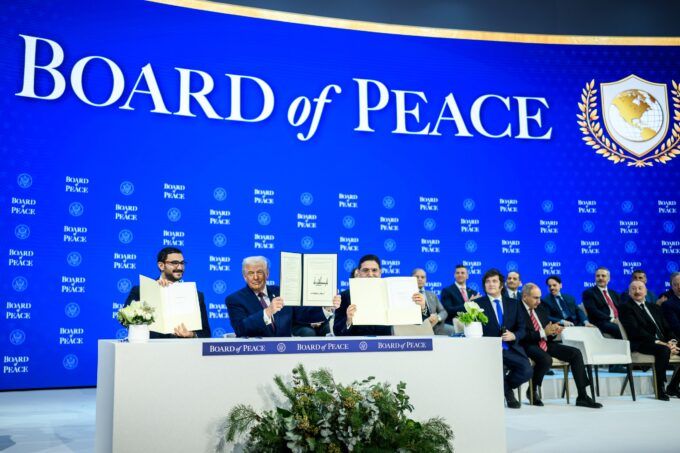
At the Davos launch, Trump reinforced this carefully crafted illusion, boasting of America’s supposed historic leadership in bringing peace, praising alleged unprecedented diplomatic breakthroughs, and presenting the Board of Peace as a neutral, benevolent mechanism capable of stabilizing the world’s most volatile regions.

Yet a less prejudiced reading of history allows us to see Trump’s political design—whether in Gaza or beyond—not as an aberration, but as part of a familiar pattern. US foreign policymakers repeatedly seek to reclaim ownership over global affairs, sideline international consensus, and impose political frameworks that they alone define, manage, and ultimately control.

The Board of Peace—a by-invitation-only political club controlled entirely by Trump himself—is increasingly taking shape as a new geopolitical reality in which the United States imposes itself as the self-appointed caretaker of global affairs, beginning with genocide-devastated Gaza, and explicitly positioning itself as an alternative to the United Nations. While Trump has not stated this outright, his open contempt for international law and his relentless drive to redesign the post-World War II world order are clear indicators of his true intentions.

The irony is staggering. A body ostensibly meant to guide Gaza through reconstruction after Israel’s devastating genocide does not include Palestinians—let alone Gazans themselves. Even more damning is the fact that the genocide it claims to address was politically backed, militarily financed, and diplomatically shielded by successive US administrations, first under Joe Biden and later under Trump.

It requires no particular insight to conclude that Trump’s Board of Peace is not concerned with peace, nor genuinely with Gaza. So what, then, is this initiative really about?

This initiative is not about reconstruction or justice, but about exploiting Gaza’s suffering to impose a new US-led world order, first in the Middle East and eventually beyond.

Gaza—a besieged territory of just 365 square kilometers—does not require a new political structure populated by dozens of world leaders, each reportedly paying a billion-dollar membership fee. Gaza needs reconstruction, its people must be granted their basic rights, and Israel’s crimes must be met with accountability. The mechanisms to achieve this already exist: the United Nations, international law, longstanding humanitarian institutions, and above all the Palestinians themselves, whose agency, resilience, and determination to survive Israel’s onslaught have become legendary.

The Board of Peace discards all of this in favor of a hollow, improvised structure tailored to satisfy Trump’s volatile ego and advance US-Israeli political and geopolitical interests. In effect, it drags Palestine back a century, to an era when Western powers unilaterally determined its fate—guided by racist assumptions about Palestinians and the Middle East, assumptions that laid the groundwork for the region’s enduring catastrophes.

Yet the central question remains: is this truly a uniquely Trumpian initiative?

No, it is not. While it is ingeniously tailored to feed Trump’s inflated sense of grandeur, it remains a familiar American tactic, particularly during moments of profound crisis. This strategy is persuasively outlined in Naomi Klein’s The Shock Doctrine, which argues that political and economic elites exploit collective trauma—wars, natural disasters, and social breakdown—to impose radical policies that would otherwise face public resistance.

Trump’s Board of Peace fits squarely within this framework, using the devastation of Gaza not as a call for justice or accountability, but as an opportunity to reshape political realities in ways that entrench US dominance and sideline international norms.

This is hardly unprecedented. The pattern can be traced back to the US-envisioned United Nations, established in 1945 as a replacement for the League of Nations. Its principal architect, President Franklin D. Roosevelt, was determined that the new institution would secure the structural dominance of the United States, most notably through the Security Council and the veto system, ensuring Washington’s decisive influence over global affairs.

When the UN later failed to fully acquiesce to US interests—most notably when it refused to grant the George W. Bush administration legal authorization to invade Iraq—the organization was labeled “irrelevant”. Bush, then, led his own so-called “coalition of the willing,” a war of aggression that devastated Iraq and destabilized the entire region, consequences that persist to this day.

A similar maneuver unfolded in Palestine with the invention of the so-called Quartet on the Middle East in 2002, a US-dominated framework. From its inception, the Quartet systematically sidelined Palestinian agency, insulated Israel from accountability, and relegated international law to a secondary—and often expendable—consideration.

The method remains consistent: when existing international mechanisms fail to serve US political objectives, new structures are invented, old ones are bypassed, and power is reasserted under the guise of peace, reform, or stability.

Judging by this historical record, it is reasonable to conclude that the Board of Peace will eventually become yet another defunct body. Before reaching that predictable end, however, it risks further derailing the already fragile prospects for a just peace in Palestine and obstructing any meaningful effort to hold Israeli war criminals accountable.

What is truly extraordinary is that even in its phase of decline, the United States continues to be permitted to experiment with the futures of entire peoples and regions. Yet it is never too late for those committed to restoring the centrality of international law—not only in Palestine, but globally—to challenge such reckless and self-serving political engineering.

Palestine, the Middle East, and the world deserve better.

Dr. Ramzy Baroud is a journalist, author and the Editor of The Palestine Chronicle. He is the author of six books. His forthcoming book, ‘Before the Flood,’ will be published by Seven Stories Press. His other books include ‘Our Vision for Liberation’, ‘My Father was a Freedom Fighter’ and ‘The Last Earth’. Baroud is a Non-resident Senior Research Fellow at the Center for Islam and Global Affairs (CIGA). His website is www.ramzybaroud.net  

Trump’s “Board of Peace” and Delusional Global Ambitions


 January 30, 2026

Photograph by Nathaniel St. Clair

It’s not enough that Donald Trump deludes himself into believing that the United States is the world’s “hottest country” – tell that to the people of Minneapolis. His proposed “Board of Peace” reveals his delusional ambition to dominate the world. Like George Orwell’s doublethink in 1984 – “War is peace” – Trump’s so-called “Board of Peace” is a perversion of the principles underlying the United Nations and reflects his increasingly evident disconnect from reality.

The Original Sin

How was Trump encouraged in his global ambitions? United Nations Security Council Resolution 2803 (UNSC 2803) formalized Trump’s 20-point proposed peace plan for Gaza. It established a Board of Peace, a transitional body to coordinate reconstruction and governance in Gaza, and named Trump as its initial chair.

Most importantly, the Resolution dealt specifically with Gaza. As noted in the preamble:  “Welcoming the Comprehensive Plan to End the Gaza Conflict…and further welcoming the constructive role played…in facilitating the ceasefire in the Gaza Strip…”

Thirteen members of the Security Council voted in favor of the 2025 Resolution, including the U.K, France, Algeria, Denmark, South Korea, and Greece, with only Russia and China abstaining. Not a single member of the Security Council voted against it.

What led these 13 countries to support Trump’s 20-point plan? The French Foreign Ministry explained its vote: “By voting in favor of this resolution, France intends to support the political momentum aimed at achieving a lasting end to the war in Gaza … the implementation of this resolution must take place within a clear political and legal framework, in line with relevant Security Council resolutions … and the right of the Palestinian people to self‑determination.”

Why Donald Trump as chair of the Board? Trump became chairman because the Board of Peace was created under the plan he proposed. UNSC 2803 endorsed Trump’s plan, granting both the plan and Trump himself United Nations legitimacy. His chairmanship of the Board is formalized in the Board’s charter, which authorizes his authority over membership, decisions, and oversight of Gaza’s reconstruction and stabilization.

Trump’s Perversion of the U.N’s Board of Peace

But giving Trump a leadership role in the Israel/Palestinian conflict was not enough for his ego. Trump presented his “Board of Peace” during the recent meeting of the World Economic Forum at Davos.

How does Trump’s Board differ from UNSC 2803? First, it is not limited to Gaza. As reported in The Guardian: “[T]there is not a single mention of Gaza in the ‘board of peace’ charter sent out to national capitals. That document instead portrays the board as a permanent fixture to promote peace and good governance around the world. It will be ‘pragmatic’ and ‘results-oriented,’ it will be ‘a more nimble and effective international peace-building body,’ and will have ‘the courage to depart from approaches and institutions that have too often failed.’”

Second, the new Board’s 11-page charter grants Trump extraordinary powers. Article 3.1–3.4 state that the “Chairman [Trump] has exclusive authority to create, modify, dissolve bodies, set agendas, and designate his successor — with removal only upon resignation or incapacity.”

Beyond the obvious danger of consolidating so much power in one individual’s hands, Trump’s “Board of Peace” is a direct challenge to the United Nations. The phrase “the courage to depart from approaches and institutions that have too often failed” signals a willingness to bypass the U.N. According to a letter Trump wrote to the Hungarian Prime Minister Viktor Orban, the Board “will be established as a new international organization.”

U.N. Secretary-General Antonio Guterres has so far refrained from publicly rebuking Trump’s Board. A spokesman noted cautiously, “One thing we are aware of is, of course, that the Security Council has endorsed the Board of Peace strictly for the work on Gaza, and, of course, we continue to abide by that resolution. What happens in the future, we’ll have to see.”

Others were more forthright in condemning Trump’s Board. “This is a direct assault on the United Nations,” declared Marc Weller, a Cambridge University law professor. “This initiative is likely to be seen as a takeover of the world order by one individual in his own image.”

But just as the Security Council voted 13-0 to endorse Trump’s Gaza plan, several countries – perhaps as many as 35 – have committed to join his Board. At the Davos ceremony inaugurating the Board, representatives from Argentina, Armenia, Azerbaijan, Bahrein, Bulgaria, Hungary, Indonesia, Jordan, Kazakhstan, Kosovo, Mongolia, Morocco, Pakistan, Paraguay, Qatar, Saudi Arabia, Turkey, United Arab Emirates, and Uzbekistan were present.

Other reactions to the Board were less positive. Norway, Sweden, the United Kingdom and France have all said they will not join. The French Foreign Minister stated “no to creating an organization as it has been presented, which would replace the United Nations,” as reported by the Associated Press. China has been invited, but has not confirmed participation, and Russia has not yet accepted the invitation. Swiss officials, in their customary prudence, said they would study the proposal closely before deciding how to proceed.

Trump threatened countries that refused to join. When French President Emmanuel Macron declined to participate in Trump’s proposed international board, Trump responded: “I’ll put a 200% tariff on his wines and champagnes, and he’ll join,”

Amnesty International captured Trump’s delusional attempt to dominate a new world order in its description of the Davos ceremony: “Today’s ceremony marking the establishment of the so‑called global ‘Board of Peace’ lays bare a brazen disregard for international law and human rights. It also represents a stark new manifestation of the escalating assault on United Nations mechanisms, international justice institutions and universal norms…”

Trump’s Delusions 

Is “delusional” the right word to describe Trump and his “Board of Peace”? “Is Trump Losing It?” Anna Gibbs asked in Slate. Susan Glasser posed a similar question in The New Yorker: “How many polite ways are there to ask whether the President of the United States is losing it?” In the New York Times, Opinion columnist Thomas Edsall cited a Columbia Business School professor on the same theme. Adam Galinsky argued that Trump “represents what researchers call the dark triad of three interconnected, malevolent personality traits: narcissism (grandiosity, self-centeredness), Machiavellianism (manipulation, cynicism) and psychopathy (impulsivity, lack of empathy/remorse).”

Trump’s “Board of Peace” is a blatant perversion of UNSC 2803 and a telling indication of his illusory ambitions. In an April 2025 interview in The Atlantic, Trump described the difference between his first and second terms: “The first time, I had two things to do — run the country and survive… And the second time, I run the country and the world.” The shift from UNSC 2803 to Trump’s “Board of Peace” is a revealing step in that direction.

The “No Kings” demonstrations must now go global. “No Emperors” should be the slogan.

Daniel Warner is the author of An Ethic of Responsibility in International Relations. (Lynne Rienner). He lives in Geneva.

Board of Peace?


January 30, 2026

Photograph Source: The White House – Public Domain

A few years ago, I wrote in a piece (Can NATO Still Make America Great?—8/28/2017) about the future of NATO that if the trumpists were successful in discarding NATO, it would be replaced with something designed to enhance US control over the world, not some body that would create a more balanced, more just balance of global power. I closed the essay with these words:

Despite the interconnectedness of the world capitalist economy, the nation-state is not dead. In fact, it seems to be experiencing a rebirth in this second decade of the twenty-first century. The Russian assertion of its territorial and national aspirations, the British exit from the European Union, the rise of nationalist political parties, and the occupancy of the US White House by “America-First” Donald Trump are all indicators of this. Donald Trump’s campaign promise to “make America great again” certainly included the maintenance and expansion of the US Empire. This remains true no matter what his isolationist supporters might hope. That being so, the question then is not whether the US military will be stationed around the world, including in the NATO countries, but under what guise that presence will be maintained. Will NATO continue to be the military vehicle for the Empire in Europe and elsewhere or will Trump and his group of imperial bureaucrats come up with a different model to accomplish a similar end? In other words, will they re-invent the wheel if that wheel is still functioning how it was designed to function? No matter what happens—and at this writing it looks like NATO will remain—Washington’s drive for world hegemony in Europe and beyond will continue.

As I write this, Donald Trump is in Davos, Switzerland conniving to get governments to sign on to his so-called Board of Peace. This board was originally intended to apply only to Gaza, but has metamorphosized into something considerably grander that its designers hope to turn into an international institution. Besides the one billion dollar per signature cost of Trump’s somewhat cartoon-like attempt to take over the work of the United Nations—work that has been short-circuited by the United States and Israel so many times the institution of the UN has become laughable—Trump’s plan remains quite unclear as to its construction. However, its intent seems pretty clear: to place the United States and its economic interests at the undisputed top of the capitalist food chain. For those who thought “America First” meant an isolationist type of retreat from US manipulation of nations and their economies through trade and military actions this negates their illusions. Indeed, in the tradition of colonial and imperial empires of the past, this trumpist vision, if enacted, would mirror empires like those of the European nations in centuries past, especially that of Britain. No pretense of a community of nations like that called for in the UN Charter is included in this vision. The Empire and the nation are the same. Trump and his minions, via the power vested in him (and that grabbed by him since January 2025), would rule like the kings and queens of the old Empire when Victoria was Empress of India and those they called coolies carried fat men in uniforms around in fancy chairs.

Recently, the world has watched the US military violate a number of long-held rules of war and historical conventions in its attacks on civilian boats in the Caribbean and the kidnapping of Venezuela’s president and his partner. Washington’s primary client state/ally in the world—Israel—has gone even further in destroying these rules and conventions in its ongoing slaughter of Palestinians. As most everyone acknowledges, Washington’s collusion in that slaughter is essential to the magnitude of its violence. The occupation which the slaughter is part and parcel of has been in violation of international law and UN conventions since its beginning. Indeed, the establishment of Israel by the United Nations in 1948 disregarded the right of the indigenous Palestinian population to self-determination, which is considered a jus cogens (fundamental) norm. I could continue the litany of US violations of the UN charter and other international conventions it agreed to; that list would stretch from Vietnam to Iraq, Chile to South Africa and even inside the United States in its oppression of Black US citizens, immigrants and its indigenous peoples. However, I believe the point has been made regarding Washington’s rejection to rules that don’t serve its hegemonic agenda.

As for that agenda, this trumpist board of peace is potentially the next step. Depending on how successful Trump and his cohorts are in convincing other rulers to sign on, it could weaken the United Nations even further. Such an occurrence would be welcomed by the United States, which has found it more and more difficult to abide by the institution’s charter, especially as Washington’s place in the world is challenged by other nations seeking economic stability and advancement. From the war on Yugoslavia under Bill Clinton to the serial rejections since 2023 of ceasefire proposals in Gaza and up to the most recent threats against Greenland by Donald Trump, it’s clear that the United States would have no real problem if the UN became even less powerful and something like Trump’s “Board of Peace” became the new vehicle of Washington’s agenda.

But what about the Democrats, the reader might ask. In case you missed it, Bill Clinton was the ruler who sent US warplanes over the disintegrating nation of Yugoslavia, bombing civilians, cities, trains, hospitals, media offices and more. That offensive was not done under the auspices of the UN, but through NATO. This was an intentional rejection of the UN and its internationally inclusive approach to errant members. This action was not much different from the Trump administration’s recent attacks in the Caribbean or its bombing of Iran in June 2025. In all of these instances, the UN was rendered mostly irrelevant, in large part because of Washington’s desire to do what it wants as regards threats to its hegemonic schemes. If Trump’s so-called Board of Peace becomes reality, it’s pretty sure money that any Democratic administration in the US’s future would accede to its continuation, having realized the fact that it made the bipartisan project of US imperialism that much easier. Don’t fool yourself into thinking that no Democrat wants to be an Emperor.

This plan is not about bringing peace to the world, but to colonize it for the United States. That can only be done via sanctions, military aggression and threats thereof. The fact that the military budget for the United States stands at a trillion dollars for the current fiscal year while Trump and others call for it to be increased by another half a trillion in the next year is more than just a victory for the war industry. It’s also an indication that the architects of the US drive for world hegemony represented by this (US-created) Board of Peace understand that their plan is likely to be bloodier than anything we’ve seen in a while. Of course, just because the far-right in the United States hopes to see the scenario outlined here become fact, that doesn’t mean it will. Already, rulers of other nations are accepting that the future will look different than the world order constructed in the wake of World War Two. Indeed, that is the underlying meaning of Canadian PM Carney’s speech to the same forum at Davos. The understanding that binds Carney’s speech and Trump’s is an understanding that capitalism and US imperialism are facing challenges they haven’t faced in such an obvious way before. If anything, the next phase of the capitalist calendar is likely to be even worse for those who are in its way. Our one chance is resistance.

Ron Jacobs is the author of several books, including Daydream Sunset: Sixties Counterculture in the Seventies published by CounterPunch Books. His latest book, titled Nowhere Land: Journeys Through a Broken Nation, is now available. He lives in Vermont. He can be reached at: ronj1955@gmail.com

Trump, Europe and the international neo-fascist movement: From ideological support to political coordination


Patriots of Europe

First published at CADTM.

The National Security Strategy document published in December 2025 (NSS 2025) is a key text in this regard. Under the pretext of defending “Western civilisation” and “European identity”, the Trump administration explicitly identifies its true “allies” in Europe — not the EU member states or their institutions, but rather the nationalist, authoritarian, and reactionary political forces that Washington categorises as “patriotic European parties”. This stance is coupled with conspiratorial, racist, and demographic rhetoric — reflecting the theories of “great replacement” and “civilisational war”—alongside direct, overt, and sometimes dramatic political support for these groups.

This article analyses a strategic shift, its ideological foundations, and its concrete implications. It demonstrates how Trump and his entourage support the electoral rise of the far right in Europe, aiming to reshape the European political order, weaken the European Union, and promote an international neo-Fascist bloc centred on Trumpism and the interests of large US private corporations. Éric Toussaint illustrates the extent to which the European far right has, thus far, expressed sympathy for and sought to emulate Trumpism. He highlights the coherence and dangers of this global political offensive by examining the NSS 2025, the German case, the institutional rise of the far right within the EU, and transnational networks such as CPAC and Foro Madrid.

From Trump’s first term in 2017 to his second in 2025, a significant change concerning Europe

In 2017, in the National Security Strategy document, D. Trump was positive about Europe:

“The United States remains firmly committed to our European allies and partners. The NATO alliance of free and sovereign states is one of our great advantages over our competitors, and the United States remains committed to Article V of the Washington Treaty. European allies and partners increase our strategic reach and provide access to forward basing and overflight rights for global operations. Together we confront shared threats. European nations are contributing thousands of troops to help fight jihadist terrorists in Afghanistan, stabilise Iraq, and fight terrorist organisations across Africa and the greater Middle East.” NSS 2017, p. 48

In the section on Europe, there was no criticism of European governments or the European Commission. The contrast between 2017 and 2025 is enormous. In the National Security Strategy document published in early December 2025 (NSS 2025), Trump took a very explicit turn.

Trump explicitly interferes in European internal affairs and unreservedly supports far-right parties and governments. He harshly criticises the European Commission for undermining states’ sovereignty. Faced with Trump’s attacks, the European Commission has adopted a docile vassal attitude:

  • On the tariffs imposed by Trump,
  • In the context of a promise to increase imports of liquefied gas and other fossil fuels from the United States,
  • By agreeing to significantly increase military spending and to purchase US weapons,
  • In collusion with Netanyahu’s neo-fascist government and the State of Israel, which Trump has unwaveringly supported in its pursuit of genocide against the Palestinian people.

Trump’s claims regarding Greenland confirm the major shift in his position towards EU countries. The submissive stance of European leaders on various issues has emboldened Trump to escalate his demands. Although European leaders are rhetorically attempting to resist on matters such as Greenland and a few other topics, they remain largely on the defensive.

The aspiration to claim Greenland and its natural resources clearly aligns with the NSS 2025’s focus on the Western Hemisphere, which, for Trump, spans from Canada and Greenland in the north to Patagonia in the south. This ambition reflects his unabashed desire to exert complete dominance over the region. It also correlates with military actions against Venezuela and Trump’s intention to gain total control of that country’s oil resources, along with threats directed at the Panama Canal, Canada, Cuba, and Colombia.

Let us revisit the national security document, which notably did not specify Trump’s intentions regarding the annexation or purchase of Greenland.

Concerning Europe, Trump’s NSS 2025 document states:

“We want to support our allies in preserving the freedom and security of Europe, while restoring Europe’s civilisational self-confidence and Western identity;” NSS 2025, p. 5

We must be clear about what the Trump administration means when it refers to supporting “our allies”. The term “allies” does not denote the countries of Europe as a whole. Instead, it specifically refers to far-right or neofascist parties within Europe, which Trump describes as “patriotic European parties”. According to the official document from Donald Trump’s administration, these “patriotic European parties” are reportedly being suppressed by European authorities, as well as by the often minority governments of various European nations — they are certainly thinking of the governments in France and Spain, to give just two examples.

Washington’s backing of far-right and neo-fascist parties in Europe is unmistakably illustrated in the following sentence:

“America encourages its political allies in Europe to promote this revival of spirit, and the growing influence of patriotic European parties indeed gives cause for great optimism.” NSS 2025, p. 26

Let us add that Trump, as we have already shown, supports the racist conspiracy theory of the great replacement, claiming that some European countries will no longer be European in the future as a result of migration flows. In the United States, this idea is known as the theory of “white genocide”.1 Steve Bannon, who was one of the main ideological architects of Trumpism, particularly in its nationalist, authoritarian and far-right dimensions, invokes “civilisational warfare”, the “destruction of the West”, “mass immigration as a political weapon” and denounces the “globalist elites who betray the people”. All these elements can be found in Trump’s document when he refers to Europe and asserts that Europe’s economic decline:2

“But this economic decline is eclipsed by the real and more stark prospect of civilisational erasure. The larger issues facing Europe include activities of the European Union and other transnational bodies that undermine political liberty and sovereignty migration policies that are transforming the continent and creating strife, censorship of free speech and suppression of political opposition (Trump and his administration refer to policies restricting the actions of far-right parties and their racist or anti-immigrant propagandanote by Éric Toussaint), cratering birth rates, and loss of national identities and self-confidence.” NSS 2025, p. 25

The conspiracy theory of the great replacement also appears transparently in this sentence:

“Over the long term, it is more than plausible that within a few decades at the latest, certain NATO members will become majority non-European." NSS 2025, p. 27

Germany: a clear example of Trump and his administration’s support for the neo-fascist far right

During the German election campaign in early 2025, Donald Trump directly supported the neo-fascist AfD (Alternative für Deutschland, Alternative for Germany) party through his adviser Elon Musk and his vice-president J.D. Vance. These were the early federal elections (Bundestagswahl) in Germany, which took place on Sunday, 23 February 2025. The interference and support of these American figures manifested itself mainly as follows: In late 2024 and early 2025, Elon Musk publicly and explicitly expressed his support for the AfD on his social network, X (formerly Twitter), by attacking Social Democratic Chancellor Olaf Scholz and declaring that “only the AfD can save Germany.” He also organised a live discussion with AfD leader Alice Weidel in January 2025. In addition, in mid-February 2025, J.D. Vance spoke at the Munich Security Conference (held from 14 to 16 February 2025), urging traditional German parties to end the “cordon sanitaire” (firewall) against the AfD. The statement was widely perceived by the German government as direct interference in the ongoing election campaign.

It should also be remembered that on January 20, 2025, in the midst of the German election campaign, during Donald Trump’s inauguration, Elon Musk, from the stage where he was giving a speech, made a gesture in which he struck his heart before extending his right arm, palm down, and fingers clenched — a movement that was widely interpreted by many observers, historians, and the media as resembling the Nazi salute or the Roman fascist salute. Many saw it as a coded message from Musk, as Trump’s adviser, to far-right communities, given Musk’s support for the AfD in Germany.

The AfD’s neo-fascist orientation is clear: it openly advocates the mass expulsion of migrants from Germany. The AfD’s sympathy for Nazism is so apparent that Marine Le Pen’s National Rally decided to expel the AfD from the Identity and Democracy group it led in the European Parliament between 2019 and 2024.

The rise of the far right in Europe and its participation in power

It is worth remembering that the far right has made significant electoral gains in Europe over the last 15 years. With a few rare exceptions, all far-right and neo-fascist parties in Europe express sympathy for Trump’s positions. Many of their leaders aspire to align themselves with Trump and emulate his communication style.

The far right is in government in several countries: Italy, Hungary, Belgium (the prime minister is from the NVA), Slovakia, the Czech Republic, Finland, Croatia, not to mention Sweden (where the far right, without being part of the minority government, supports it).

The far right has succeeded in becoming the leading political force in Italy (Brothers of Italy), France (RN), Hungary (Fidesz-Hungarian Civic Union) and Austria (FPÖ). In Flanders (Belgium), Vlaams Belang (neo-fascist) was the party that received the most votes in the European elections in June 2024. It beat the Flemish far-right party NVA. In the Netherlands, Geert Wilders’ PVV (Partij voor de Vrijheid - Freedom Party), which had become the leading party,3 lost ground in the October 2025 elections. It became the second largest party behind D66, which had campaigned against the PVV’s extremism.

The Presidency of the European Commission, led by German conservative Ursula von der Leyen, reached an agreement with the far-right parliamentary group headed by Giorgia Meloni of Italy. This agreement enabled Meloni’s group to secure a position as Executive Vice-President of the European Commission4 and three committee chairmanships.5 This development is particularly significant because the committees obtained by Meloni’s group include agriculture, budget, and petitions. Consequently, petitions from the European populace, including attempts to initiate a referendum, will be managed by a committee chaired by the far right.

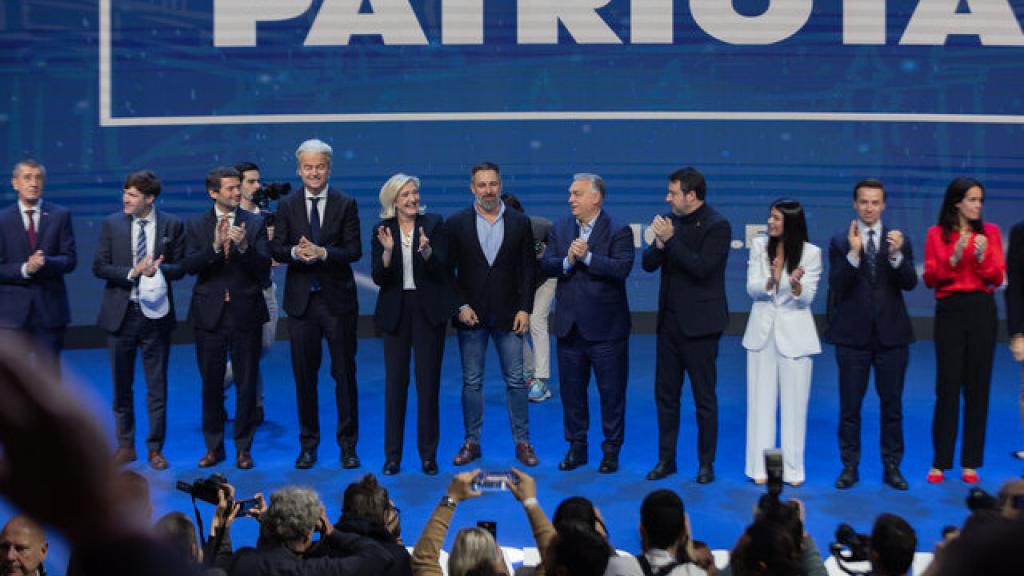
There are three far-right parliamentary groups in the European Parliament: the European Conservatives and Reformists (ECR), Meloni’s group, which comprises 79 MEPs,6 the Patriots for Europe group, led by Marine Le Pen and Viktor Orbán, with 86 MEPs;7 and the Europe of Sovereign Nations group formed around Germany’s AfD, which has 27 MEPs.8 Should these three groups unite, the far right would emerge as the largest faction in the European Parliament, boasting 192 MEPs — five more than the largest current group, the increasingly right-wing conservative European People’s Party, which has 187 members.9 The parliamentary group of social democratic and socialist parties has 136 MEPs. The RENEW Group, which includes Emmanuel Macron’s party and Georges-Louis Bouchez’s French-speaking Belgian far-right MR party, has only 75 MEPs, having lost 23 seats in 2024 compared to the 2019 elections, mainly to the far right. The European Green Party has 53 MEPs, having lost 17 seats in 2024 compared to 2019. Following this is The Left, with 46 MEPs (an improvement on the 37 MEPs elected in 2019).

Conclusion: Far-right and neo-fascist parties are making notable gains in the European Parliament, within European institutions, and in the governments of a significant number of EU member states. With the exception of the issue concerning Greenland, they exhibit strong sympathy for the neo-fascist and imperialist orientations of Donald Trump and other far-right or neo-fascist leaders worldwide. The result includes particular alignment with the Netanyahu government in Israel, the Javier Milei administration in Argentina, the newly elected Chilean president, José Antonio Kast, and the former president of Brazil, Jair Bolsonaro.

In the following list, we will describe the main European far-right and neo-fascist forces and their affinity with Trump.

This is a non-exhaustive list of far-right or neo-fascist parties in Europe that enjoy the sympathy of the Trump administration and express their affinity with him.

1. Alternative für Deutschland (AfD) in Germany. AfD won 20.8% of the vote in the federal elections on 23 February 2025. It is the second largest party in terms of votes. The AfD has increased its contacts and visits to the United States. As mentioned above, it received direct support from Elon Musk, when he was an adviser to Trump, and from J.D. Vance, Vice-President of the United States, during the January-February 2025 election campaign. Within the European Parliament, the AfD leads one of three far-right parliamentary groups. The group is called Europe of Sovereign Nations and has 27 MEPs (15 of whom are from the AfD). Representatives and figures from the AfD, including Christine Anderson (former MEP) and other members of the leadership, were invited to and participated in the Conservative Political Action Conference (CPAC) in the United States with Trump, along with a significant portion of the European and Latin American far right, notably in the 2023 and 2024 editions. To avoid clutter, we will return to the neo-fascist far right’s structures and international meetings at the end of this list. Recently, Euronews reported: “Bavaria’s AfD suggests a police unit similar to the US immigration agency ICE for tracking asylum seekers and deportations, amid criticism of ICE’s harsh tactics and recent deadly incidents.” (Source: Euronews, published 26 January 2026).

2. Rassemblement National (RN) in France. The RN has held 142 seats in the National Assembly since the June 2024 legislative elections. The RN and its allies won 33% of the vote in the first round of the 2024 parliamentary elections. Jordan Bardella, the likely future candidate for the French presidency in 2027, congratulated Trump after publishing the NSS 2025 in December 2025. He distanced himself from Trump on 20 January 2026 with regard to Greenland. We await confirmation of this distancing in the coming weeks. Jordan Bardella chairs Patriots for Europe, the largest far-right and neo-fascist group in the European Parliament, which has 86 MEPs, 30 of whom are from the RN.

3. Fidesz in Hungary. Fidesz is the dominant party in Hungary, with a significant majority in Parliament following its victory in 2022, and it governs with a supermajority. Viktor Orbán, the party’s leader, aligns ideologically with Trump regarding anti-migration policies, opposition to diversity, equality, and inclusion rights, as well as criticism of the European Union. Recent bilateral meetings have taken place in 2025. Orbán is also one of the founding fathers of “Patriots for Europe,” an organisation chaired by Jordan Bardella. Fidesz currently has 11 MEPs. It is important to note that until March 2021, Fidesz MEPs were part of the European People’s Party group, although tensions had been escalating since 2019.

4. Vox in Spain. Vox fluctuates between 10 and 12% of the vote. It has 33 members in the Spanish parliament and 6 in the European Parliament. Vox has clearly expressed its admiration for Trump’s political style and is increasing its meetings with Trump’s envoys in Europe and Latin America. In 2024, Vox left Meloni’s ECR group and joined the Patriots for Europe group chaired by Bardella as a sign of its radicalisation towards even more neo-fascist positions. In January 2026, Vox enthusiastically supported the US military aggression against Venezuela. Vox has so far remained silent on Trump and Greenland.

5. Fratelli d’Italia (Brothers of Italy, FdI) in Italy. FdI is the majority party in the governing coalition, having secured 26% of the vote in the 2022 elections and 29% in the 2024 European elections. Giorgia Meloni has developed open ties with Donald Trump, which include a visit to Mar-a-Lago and her attendance at the presidential inauguration in January 2025. Additionally, Meloni’s party leads the European Conservatives and Reformists (ECR) group in the European Parliament, which comprises 79 Members of the European Parliament (MEPs), 24 of whom are affiliated with her party.

6. La Lega (The League) in Italy. Led by Matteo Salvini, it is part of the Italian government headed by Giorgia Meloni. Matteo Salvini is Deputy Prime Minister. The Lega is part of the Patriots for Europe group, to which it contributes eight MEPs.

7. Law and Justice (PiS) in Poland. This is a large, ultra-conservative, ultra-nationalist, patriarchal party. The PiS, currently in opposition, shares some of the nationalist rhetoric and has often praised certain positions taken by the Trump administration on sovereignty and security. It is the only party on this list to express reservations about Trump’s policy towards Russia, which the PiS considers too conciliatory. The PiS is the second largest party in the ECR group led by Meloni, with 20 MEPs.

8. The Freedom Party (FPÖ) in Austria. It has scored highly in recent elections (the FPÖ reached 29% in 2024). Its leaders have regularly publicly congratulated Trump since 2016 and adopted the same positions on immigration. The FPÖ contributes six MEPs to the group led by Bardella and Orban.

9. Vlaams Belang (Flemish Interest) in Belgium (Flanders). The neo-fascist VB emerged victorious in the June 2024 European elections, narrowly surpassing Prime Minister Bart de Wever’s far-right N-VA. Vlaams Belang is part of Patriots for Europe, the group led by Jordan Bardella and Viktor Orban. Vlaams Belang has regularly praised Trump since 2016 and maintains a racist anti-immigration discourse similar to MAGA themes. Vlaams Belang contributes three MEPs to the group led by Bardella and Orban.

10. The Nieuw-Vlaamse Alliantie (New Flemish Alliance, N-VA) in Belgium. It is a member of Meloni’s ECR group in the European Parliament. The N-VA is relatively discreet in its support for Trump, given that it leads the government of the Kingdom of Belgium, but Theo Francken, one of its most prominent leaders and Minister of Defence, has expressed his sympathy and support for Donald Trump more openly and regularly, from the first administration of 2017-2021, during the 2024 elections, and up to the present day. As Minister of Defence, he is fully aligned with US requirements, particularly in terms of purchasing US-made weapons, such as F35 fighter bombers. The N-VA has three MEPs in the ECR group led by Giorgia Meloni.

11. Partij voor de Vrijheid (Party for Freedom, PVV) in the Netherlands. Led by Geert Wilders. The party achieved significant electoral success until 2023 and participated in the government; however, it experienced a loss of votes in 2025 and subsequently left the government. Geert Wilders likens himself to the “Dutch Trump.” The PVV contributes six Members of the European Parliament (MEPs) to the group led by Bardella and Orbán. Additionally, the PVV supported Washington’s military actions against Venezuela.

12. Sweden Democrats (Sverigedemokraterna in Swedish). They broke the 4% barrier in 2010, and their support has continued to grow, reaching 20.5% of the vote in the 2022 elections, making them the second largest party by votes. The SD plays a significant role in the restructuring of the Swedish right wing. Although they remain outside the government, in 2022 they signed a pact with the three right-wing parties that form the government. While not part of the government, the SD is essential for the survival of the minority coalition and wields unprecedented ideological and political influence over the country’s leadership, especially regarding immigration and repression. The SD has adopted an anti-immigration and sovereigntist discourse that closely aligns with Trumpian themes. Additionally, the three SD Members of the European Parliament (MEPs) are affiliated with Meloni’s European Conservatives and Reformists (ECR) group in the European Parliament.

13. In the Czech Republic, the three parties that have formed the government since the end of 2025 are close to Trump’s positions. These are ANO (Action of Dissatisfied Citizens, 34.5% of the vote in the 2025 elections), led by billionaire Andrej BabiÅ¡, who became prime minister; Freedom and Direct Democracy (SPD — Svoboda a přímá demokracie, 7.8% of the vote in 2025); and the AUTO party (Motorists for Themselves - Motoristé sobÄ› in Czech, 6.8% in 2025). ANO (7 MEPs) and AUTO (2 MEPs) are part of the European parliamentary group Patriots for Europe, led by Jordan Bardella and Viktor Orban, respectively. The neo-fascist Freedom and Direct Democracy party supports the Europe of Sovereign Nations group led by Germany’s AfD but has no MEPs.

14. In Romania, the Alliance for the Union of Romanians (AUR, AlianÈ›a pentru Unirea Românilor) emerged as a significant force in the Romanian Parliament after the 2025 legislative and presidential elections, in which its candidate came out on top in the first round before being defeated in the second round by a pro-EU candidate. The main leader, often described as “pro-Trump” in Romania, is George Simion. International media outlets such as The Guardian describe him as an admirer of Donald Trump who transposes elements of the MAGA style or movement into the Romanian context. Simion is considered a “natural ally of Trump”. The AUR’s five MEPs are part of Meloni’s ECR group in the European Parliament

15. CHEGA in PortugalChega has experienced rapid growth since its establishment in 2019, increasing its vote share from 1.3% in that year to approximately 22.6% in the early parliamentary elections held on 18 May 2025, during which it secured 60 out of 230 seats. This achievement positions Chega as the second largest political force in the Portuguese Parliament and the primary opposition party, surpassing the Socialist Party. Following the 2024 European elections, Chega’s two Members of the European Parliament (MEPs) have joined the Patriots for Europe group in the European Parliament, which is led by J. Bardella and V. Orban. In the first round of the Portuguese presidential election on 18 January 2026, André Ventura, the leader of the far-right Chega party, finished in second place with around 23.5% of the vote, trailing behind Socialist candidate António José Seguro, who received 31%.

The main meeting places for Trump supporters and the European and Latin American neo-fascist far right

Beyond ideological support and public statements, the European far right is now integrated into transnational spaces for political coordination directly linked to Trumpism. The Conservative Political Action Conference (CPAC), a major annual gathering of the US far right, serves as the main meeting place and has gradually become an international gathering. Since the early 2020s, leaders and executives from the AfD, Vox, the National Rally, Fidesz, Fratelli d’Italia, Chega, Vlaams Belang and the Romanian AUR have been participating regularly, alongside Donald Trump, his associates (Steve Bannon, J.D. Vance, Mike Flynn) and Latin American far-right leaders. CPAC functions as a global ideological platform where the central themes of Trumpism are disseminated and harmonised: civilisational warfare, rejection of multilateralism, hostility to the EU, obsession with migration, attacks on women’s and minority rights, climate scepticism and criminalisation of the left and social movements.

This internationalisation has been further strengthened by the active participation of Javier Milei, President of Argentina; Jair Bolsonaro and his networks; and José Antonio Kast, leader of the Chilean far right and recently elected President of Chile. Trump systematically promotes these Latin American figures as models of “resistance to socialism” and the restoration of authoritarian order. The CPAC meetings, organised outside the United States (Brazil, Mexico, Argentina, and Hungary), confirm the existence of a transatlantic and transcontinental axis linking Washington, certain European capitals, and reactionary Latin America. These are not just symbolic exchanges; these spaces allow the circulation of funds, electoral strategies, digital communication techniques, and methods of social polarisation inspired by the MAGA movement.

Alongside CPAC, Spain’s Vox party plays a central role in shaping this international network, particularly through the Foro Madrid, which was launched in 2020. Marketed as a “patriotic” alternative to progressive international forums, the Foro Madrid unites far-right parties and leaders from both Europe and Latin America, including Milei, Bolsonaro, and Kast, as well as representatives from the RN, Chega, Fratelli d’Italia, and various Central European parties. The initiatives of Foro Madrid and Vox act as a bridge between Trumpism, the European far-right, and the radical right in Latin America, promoting a discourse that is overtly opposed to the left, feminism, environmentalism, human rights, and any form of popular sovereignty that does not align with authoritarianism. While it represents a coalition of national forces, the far right emerges as a coherent international ideological bloc, with Donald Trump serving as its primary political, media, and symbolic figure.

Trump in Davos in January 2026

On 21 January 2026, a month and a half after the publication of the NSS 2025 and almost a year to the day after the start of his term of office, Trump made white supremacist and racist remarks in Davos before an audience of billionaires and heads of state and government who applauded him. Here are some excerpts:

"Listen, I come from Europe, specifically Scotland and Germany. My mother is 100% Scottish and my father is 100% German. We believe deeply in the ties that bind us to Europe as a civilisation... The explosion of prosperity, and conclusion, and progress that built the West, did not come from our tax codes, it ultimately came from our very special culture. This is the precious inheritance that America and Europe have in common. We share it. We share it. We have to keep it strong. We have to become stronger, more successful and more prosperous than ever. We have to defend that culture and rediscover the spirit that lifted the West from the depths of the Dark Ages to the pinnacle of human achievement. (Source: WEF. Part of the quote can also be found at: Whitehouse, 21 January 2026) 

He reiterated his racist insults towards Ilhan Omar, a member of the US Congress of Somali descent, elected from Minnesota. His remarks targeted Somalia as a nation, the entire Somali community in the United States, and, more broadly, African civilisations:

“And then we have this fake congressperson, who they just reported is worth £30 million. Can you believe this? Ilhan Omar talking about the Constitution that provides me ... she comes from a country that’s not a country, and she’s telling us how to run America. She’s not going to get away with it much longer, let me tell you ...” (Source: MinnPost, “D.C. Memo: Trump, at the Davos forum, takes more shots at Minnesota, Somalis” and WEF)“The situation in Minnesota reminds us that the West cannot mass import foreign cultures, which have failed to ever build a successful society of their own. I mean, we’re taking people from Somalia, and Somalia is a failed … it’s not a nation, got no government, got no police, got no mili… got no nothing.” (Source: WEF)

Trump not only resorts to insults; he also employs flattery towards his supporters present in Davos:

“Many of you in this room are true pioneers. You’re truly brilliant, brilliant people. Just your ability to get a ticket is brilliant, because you have about 50 people for every seat... But you’re in this room, and some of you are the greatest leaders anywhere in the world. You are the greatest minds anywhere in the world. And the future is unlimited. And to a large part because of you, we have to protect you and we have to cherish you.” (Source: WEF)

Conclusion-summary

Donald Trump’s second term extends beyond merely challenging the European Union; he is actively organising ideological, political, and operational support for far-right and neo-fascist movements in Europe. The NSS-2025, alongside instances of electoral interference and public backing for parties such as the AfD, RN, Fidesz, and Vox, as well as the establishment of transnational networks like CPAC and Foro Madrid, demonstrates a coherent strategy aimed at undermining the EU and fostering an authoritarian international bloc centred on Trumpism.

Trump’s claims regarding Greenland highlight a significant contradiction. By openly questioning the sovereignty of a territory that belongs to a European NATO member state, he exposes the deeply imperialistic and aggressive nature of his agenda. This stance is likely to foster enduring tensions with European governments and, in the long run, could undermine relations between Trump and the far-right parties in Europe. These parties find themselves in a dilemma, torn between their ideological alignment with Trumpism and their professed commitment to national sovereignty. This contradiction could serve as a potential breaking point for the neo-fascist international that is currently taking shape.
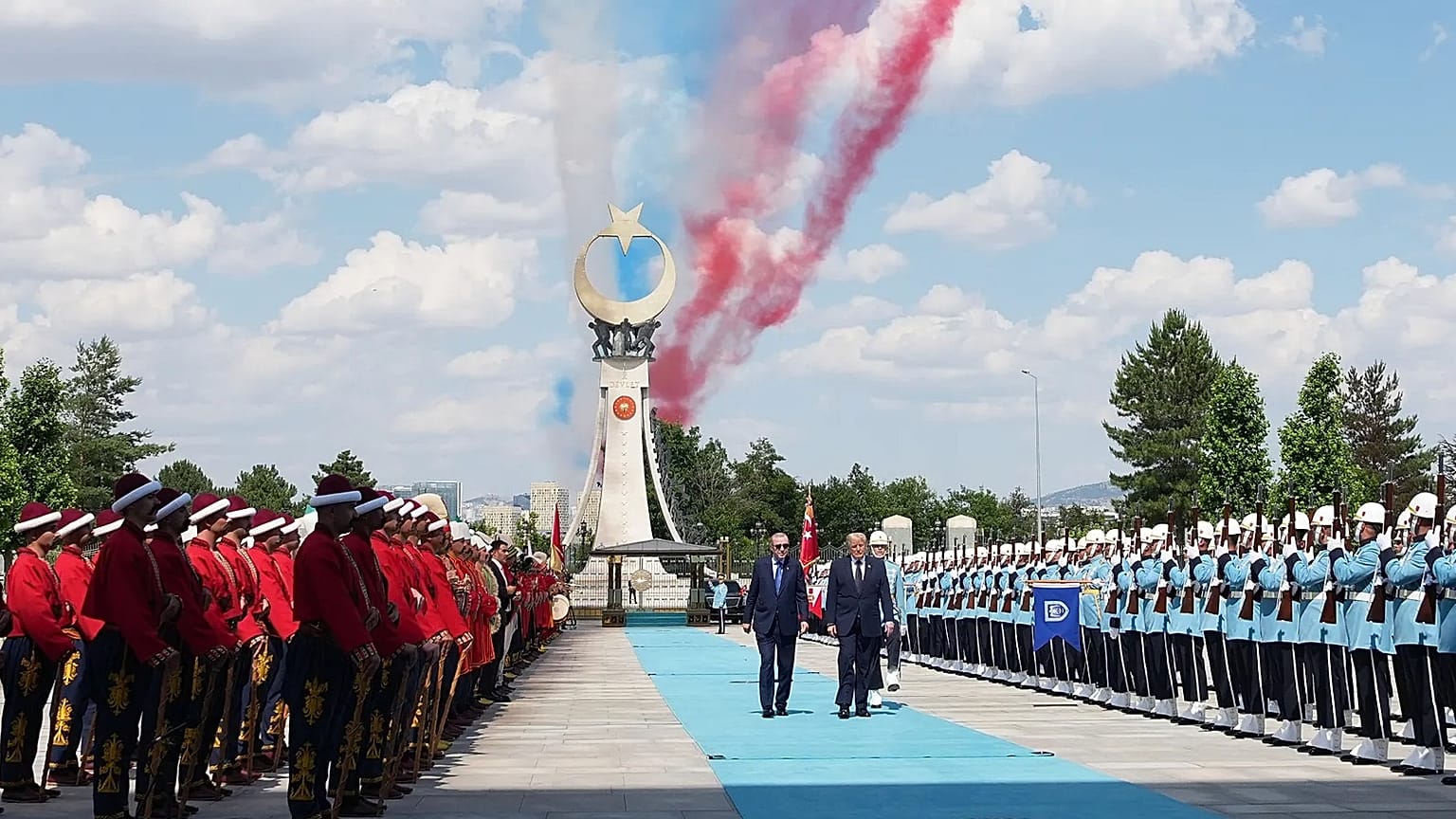
  • 1

    Moreover, Trump does not hesitate to accuse the South African government of committing genocide against white people.

  • 2

    Economist Gabriel Zucman has put into perspective Trump’s deliberately negative assessment of Europe’s economic situation compared to that of the United States. Read in open source: “The myth of European decline” https://gabrielzucman.substack.com/p/le-mythe-du-decrochage-europeen published on 15 December 2025.

  • 3

    In 2023, the far-right PVV had grown significantly, from 17 seats in 2021 to 37 in 2023. The party experienced a severe correction in 2025, dropping to 26 seats after losing about 11. In the elections, the centre-right D66 party enjoyed electoral success, enabling it to overtake the PVV by around 30,000 votes. D66 obtained around 1,790,000 votes, compared to around 1,760,000 for the PVV.

  • 4

    The ECR group secured the appointment of one of its members, Raffaele Fitto (Italy) from Meloni’s party (Fratelli di Italia), as Executive Vice-President of the European Commission (mandate of the “von der Leyen II” Commission, which took office on1December 2024) for the “Cohesion and Reforms” portfolio.

  • 5

    Johan Van Overtveldt (member of Meloni’s ECR group in the European Parliament and of the N-VA party in Belgium) was elected chair of the “Budget” committee (BUDG). Veronika Vrecionová (ECR, Czech Republic) was elected chair of the “Agriculture and Rural Development” committee (AGRI). Bogdan RzoÅ„ca (ECR, Poland) was elected chair of the Parliament’s Petitions Committee (PETI).

  • 6

    Since the June 2024 elections, the ECR has gained one additional member, bringing its total to 79 MEPs as of January 2026.

  • 7

    Marine Le Pen and Victor Orban’s Patriots for Europe group also gained two additional seats between the June 2024 and October 2025 elections. It has 86 members in its group in the European Parliament.

  • 8

    The Europe of Sovereign Nations group formed around Germany’s AFD has grown from 25 to 27 MEPs between June 2024 and the time of writing this article.

  • 9

    According to research carried out on the EP website on 25 January 2026, the combined number of seats held by the three far-right groups would reach 192, five more than the European People’s Party group, which has 187.