Showing posts sorted by date for query OMERS. Sort by relevance Show all posts

Monday, August 11, 2025

Hudson’s Bay lease sale may negatively impact pension fund: OMERS’ real estate arm

Oxford is the real estate division of Ontario Municipal Employees Retirement System


By The Canadian Press
Updated: August 11, 2025 


Ruby Liu is shown leaving court in Toronto on Monday June 23, 2025. THE CANADIAN PRESS/Nathan Denette

TORONTO — The real estate investment arm of one of the country’s largest pension funds is worried about the value of its assets if a B.C. billionaire is able to buy Hudson’s Bay leases at its properties.

In documents filed with the Ontario Superior Court over the weekend, Oxford Properties Group argues transferring leases to “an unvetted and unproven” entrepreneur like Ruby Liu “poses a serious and unacceptable risk” to the company.

“A diminution in the value or stability of Oxford’s real estate portfolio would negatively impact the performance of OMERS’ investments, and by extension, adversely affect the long-term interests of millions of current and future pension plan beneficiaries,” Nadia Corrado, a vice-president with Oxford, said in affidavit entered into the court record Saturday.

Oxford is the real estate division of Ontario Municipal Employees Retirement System, which administers the pensions of more than 600,000 plan members. Oxford has more than $79 billion in assets under management and hundreds of properties on four continents.

Liu, who owns three B.C. malls and a golf course, is looking to take over about two dozen Bay leases.

Three of those leases are in Oxford properties — Southcentre Mall in Calgary, Hillcrest Shopping Centre in Richmond Hill, Ont., and Upper Canada Mall in Newmarket, Ont.

Liu has said she plans to use the spaces to build a new department store she will name after herself. It will have three tiers of stores — flagship, platinum and standard — filled with entertainment, dining and recreation spaces.

She has said she and a team of 1,800 staff she will hire can get the bulk of the stores open within 180 days of signing leases. She has allocated $325 million to accomplishing the feat, which will involve repairing stores, forging relationships with suppliers and marketing her entirely new brand.

Liu, who did not comment for this story, has said she is confident she can win property owners over if the court allows her purchase of the leases to go through.

However, landlords, including Oxford, are fighting Liu, saying her plans are underfunded, have unrealistic timelines and are bound to fail.

A court hearing is scheduled in the case for later this month.

Oxford’s doubts about Liu emerged as soon as its executives met with her on June 2.

“That meeting was unproductive and revealed a troubling absence of financial transparency, commercial sophistication and basic preparedness,” Corrado recalled in her affidavit. “No financial statements, proof of funding or evidence of capital readiness were provided.”

She alleged Liu, who made her fortune in Chinese real estate, told Oxford she had a business plan but wouldn’t provide it unless Oxford pledged its support for her taking over the lease.

When Oxford asked about whether she had suppliers willing to sell her merchandise to fill stores, Corrado alleges Liu told the company to “relax, lay back and do not worry.”

Oxford had a hard time taking that advice. At stake were leases with terms ranging from 49 to 65 years and covering some of the company’s most desirable shopping spaces.


The size and orientation of the Bay space at Hillcrest Mall alone “means that any misstep will materially affect the overall customer experience, tenant retention, and, in turn, diminish the value of Oxford’s asset,” Corrado said.

Based on her experience, she said it takes years for companies to curate a concept for a new retailer, even for one taking over very small units. She said in the court documents that she found it hard to believe Liu thought such work could be done in a matter of months for even a single leased location of more than 150,000 square feet and thought the timeline spoke to Liu’s inexperience.

“The introduction of an unproven anchor tenant lacking established retail credibility poses a significant risk in that it can degrade the customer experience, diminish the overall quality of the shopping centre, and generate a negative ‘halo effect’ that impacts entire wings of the mall,” Corrado said.

“Given that anchor leases can endure for decades, the long-term presence of a poor anchor can permanently undermine and potentially destroy the commercial viability of substantial portions, or even the entirety of a shopping centre.”

In their own filings made Saturday, many other landlords agreed with Oxford’s concerns.

Morguard Investments Ltd. called information Liu supplied about her plans “surprisingly deficient and superficial and frankly, puerile.”

It said it was willing to wait to find a better long-term tenant and, in the meantime, wants to enter into temporary leases terminable by the landlord with 90 days’ notice with clothing company Urban Behavior and accessories retailer Ardene.

Primaris Real Estate Investment Trust said it left four hours’ worth of meetings with Liu and her team with “absolutely no confidence that she had the relevant experience or understanding of the enormity of what she is seeking to undertake by opening a multi-store business concept in several provinces from the ground up.”

Cadillac Fairview felt her plan “defies commercial common sense” but hired Ernst & Young to evaluate it anyway.

A report filed with the court showed the consultancy firm thought the estimated costs and timelines in Liu’s business plan are not feasible and would be significantly higher given the large number of repairs the properties require and the complex relationships she must forge with suppliers and other vendors.

Liu and the Bay have until Tuesday to file a response to the landlords in court. At the end of the week, they will begin cross-examinations before a judge hears their case at the end of the month.

This report by The Canadian Press was first published Aug. 11, 2025.

This is a corrected story. Due to an editing error, a previous version said Oxford has $79 million in assets under management.

Tara Deschamps, The Canadian Press

Tuesday, June 03, 2025


Oxford Properties buys CPP Investments’ stake in office portfolio in Western Canada

By The Canadian Press
 June 03, 2025 

Signage is seen in the reception of CPP Investments' Toronto offices, on Thursday, Sept. 21, 2023. THE CANADIAN PRESS/Chris Young

TORONTO — Oxford Properties Group has signed a deal to buy the Canada Pension Plan Investment Board’s 50 per cent stake in a group of office properties in Western Canada that they co-own for $730 million.

The deal gives Oxford full ownership of the portfolio that includes seven downtown office properties.

Oxford is the global real estate arm of pension fund manager OMERS.

The deal covers Eau Claire Tower, Centennial Place and 400 Third in Calgary, while in Vancouver it includes the Stack, Guinness Tower, the Marine Building and MNP Tower.


Oxford and CPP Investments will still co-own a substantial portfolio across Canada.


Tyler Seaman, Oxford Properties executive vice-president, Canada, says the fund believes now is an opportune time to rotate capital back into this asset class.

This report by The Canadian Press was first published June 3, 2025.

Thursday, May 08, 2025

WORKERS CAPITAL

Oxford Properties to buy CPPIB stake in US$1.1 billion of offices


P3 PUBLIC PENSIONS FUND PRIVATE CAPITALI$M

Published: 

Oxford Properties, which helped develop New York City’s Hudson Yards, struck a deal to buy out Canada Pension Plan Investment Board’s stake in seven office buildings, valuing the portfolio at $1.5 billion (US$1.1 billion), according to a person familiar with the matter.

Oxford, the real estate arm of the Ontario Municipal Employees Retirement System, agreed to purchase the 50 per cent of the portfolio that it doesn’t already own, said the person, who asked not to be identified discussing private information.

The portfolio is made up of three properties in Calgary and four in Vancouver, including one that’s a recently completed tower call the Stack, the person said. Spokespeople for Oxford and CPPIB declined to comment.

While the North American office market was walloped by the pandemic and the rise in remote work, there’s been some tentative signs of stabilization in recent years. At the end of last year, vacancy rates for Canada’s downtown office buildings inched down for the first time since 2020.

In the U.S., Blackstone Inc. has been seeking a stake in a New York City office tower, Bloomberg News has reported.

While Oxford is digging deeper into the office market with its purchase, other major investors, including CPPIB, have been looking to cut their exposure to those properties.

In 2023, the pension sold stakes in two U.S. office properties at steep discounts, including a deal to offload one in Manhattan for just US$1 plus CPPIB’s share of debt. This year, CPPIB said it sold its stake in a Toronto office building.

Last week, Bloomberg reported that Canada’s second-largest pension manager, the Caisse de Dépôt et Placement du Québec, is looking to sell a Chicago office tower in a deal expected to generate bids 59 per cent lower than its last purchase price about eight years ago.

Omers has not been spared from the pain spurring its peers to get out of offices. Last year, the pension’s real estate portfolio posted a net loss of 4.9 per cent, due in part to declines in the valuations of office and life science building. But the fund manager noted that there were signs of improved office leasing for high-quality buildings.

Along with its Canadian portfolio, Oxford Properties also has exposure to office buildings in cities including New York. The firm partnered with Related Cos. on its sprawling Hudson Yards development on the western side of Manhattan.

Ari Altstedter and Layan Odeh, Bloomberg News

Thursday, April 17, 2025

WORKERS CAPITAL

Omers loaded up on stocks after Trump’s tariffs pummeled markets


By Bloomberg News
Published: April 17, 2025

The Ontario Municipal Employees Retirement System bought up stocks last week after Donald Trump’s tariff program pummeled global markets.


“When the market dipped, we’ve loaded up on the greatest equities,” Chief Executive Officer Blake Hutcheson said at a Canadian Club event in Toronto on Tuesday. “We were really, really active last Monday at the bottom of the market,” he said.

Public equities made up 20 per cent of Omers’ total portfolio last year, the smallest it’s ever been, according to Hutcheson. He added that the Toronto-based pension fund decreased its equity book in anticipation of the “noise.”

Hutcheson also criticized Trump’s approach to Canada. “Tariffs are going to hit us — that’s all fair game,” he said. “I am mad at the insults. I am mad about the 51st state. I am mad about the indignities toward those that don’t deserve it in our nation.”

Governments in Canada are curbing their relationships with U.S. businesses in reaction to the trade war, and Canadian consumers have been boycotting American products and cutting back on trips down south.

Hutcheson said he was concerned about the impact of the trade war in terms of sustained periods of low growth and high inflation as businesses and consumers cut back on spending. “We see in our malls, we started to see in our hotels,” he said.

But Hutcheson isn’t “terribly worried” about the implications of tariffs on the Omers’s $138.2 billion (US$100 billion) portfolio. Out of the 30 large infrastructure companies the pension plan owns, only two are directly impacted by the cross-border levies, he said.

Layan Odeh, Bloomberg News

©2025 Bloomberg L.P.

Monday, March 03, 2025

WORKERS CAPITAL
Omers writes down US$325 million investment in bankrupt Northvolt
P3 PUBLIC PENSIONS FUND PRIVATIZATION

By Bloomberg News
February 28, 2025


The Ontario Municipal Employees Retirement System booked a loss on its US$325 million investment in Northvolt AB, the Swedish electric vehicle battery maker that filed for bankruptcy protection last year.

“At the time we made the investments, Northvolt represented an attractive growth opportunity supported by several other of the world’s most respected investors,” a spokesperson for the pension manager said by email. “Like many others, Omers has now written down its stake.”

The $138.2 billion (US$95.8 billion) pension fund made three investments in Northvolt, including participating in a private placement of equity and a convertible note.

Canadian pension funds were significant investors in the startup. Earlier this week, the Caisse de Depot et Placement du Quebec disclosed that it wrote down its US$150 million investment in Northvolt to zero, and Investment Management Corp. of Ontario has also marked down its investment, which was US$400 million.

Layan Odeh and Paula Sambo, Bloomberg News

©2025 Bloomberg L.P.

Thursday, July 11, 2024

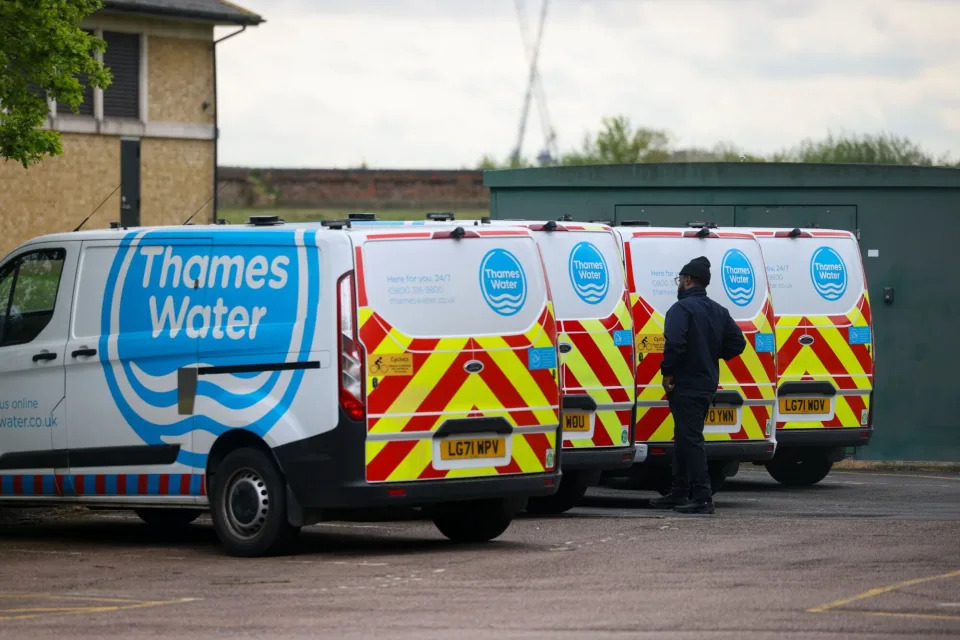
Debt, sewage and dividends: the rising tide of Thames Water’s troubles

Anna Isaac and Alex Lawson
THE GUARDIAN
Wed, 10 July 2024 

Thames’s financial and environmental problems have made it a focus for rising criticism of the privatised water industry.Composite: Guardian Design/Getty Images/Rex/Shutterstock

Government officials who tour Coppermills, a vast Thames Water treatment works in north-east London, are left under no illusions about the dire condition of Britain’s infrastructure.

“It’s in a shocking state,” said one official who has visited the 1960s site, which supplies approximately a third of the capital’s population with drinking water and sewage services. “It’s a slow-motion management disaster.”

Thames has publicly admitted that Coppermills is in such poor condition that it could be a “point of failure”, leading to prolonged water supply disruption for more than 500,000 people.

Coppermills is just one corner of a huge, decaying empire that serves 16 million customers across London and the Thames Valley.

Evidence of that decay has become all too frequent: from the rivers clouded with sewage when it rains, and the burst pipes and water mains, to the threatened water shortages when the sun shines. A slow-moving crisis that has engulfed Thames has left it teetering on the brink of a painful restructuring, or even a temporary renationalisation.

Thames has also become a powerful totem of mismanagement, corporate greed and lax regulatory oversight. And for a new Labour government coming to terms with its economic inheritance, Thames is a timebomb that is about to detonate.

New breed of investors


The roots of that decay can be traced back more than two decades. In the early 2000s, as the government prepared to shunt two renationalised companies, Railtrack and British Energy, back into private hands, the message to regulators was clear: play nice and do not put off foreign investors.

It was against this backdrop of light-touch regulation that Macquarie, which started out as a small Australian merchant bank in the 1960s, decided to buy Thames Water in 2006.

Britain’s privatisation wave, kicked off by Margaret Thatcher in the 1980s, was entering a new phase. The early owners were cashing in their lucrative investments, and a new breed of financially savvy investors was circling.

The Macquarie-led consortium outmuscled investment heavyweights – including the gas-rich state of Qatar and Guy Hands’s Terra Firma – to land the £8bn acquisition from German’s RWE.

Macquarie pruned costs ruthlessly. Thames Water lifer Cliff Roney, who had a four-decade career within the company before retiring in 2018, recalls a perceptible shift when it took over from RWE.

“When Macquarie arrived, they presented a glossy presentation to us, promising investment in assets and staff. Within months, it was clear we’d been sold a pup,” he says. “Some important sites needed in case of water shortages were sold off. They were so tight on spending, you could barely order a box of pens. All the skills were contracted out – we had electricians, blacksmiths, window fitters – they were all outsourced under Macquarie.”

Parsimony even extended to the boardroom – although not where pay was concerned. When Martin Baggs left his job running Thames Water in late 2016, he might have expected a lavish celebration, or at least a gold watch. Baggs had spent seven years as chief executive churning out profits and dividends for Macquarie. But in recognition of his service, Baggs and his top team were each presented with a tea towel.

“It had self-portraits drawn by the directors – they didn’t even pay for a designer to create them,” says a former Thames executive. “Macquarie ran a very tight ship: if money didn’t need to be spent, it wasn’t.”

They added: “I’m not saying they’re not the bad guys in this, but they were responsible in the core running of the company. If you needed to buy vital chemicals, you could buy them – you just couldn’t buy any more than was absolutely necessary. It was all very precise. They would not leave any dividends if that could be taken out.”

Hollowed outInteractive


But money was flowing, elsewhere. A £656m dividend was extracted in the first year of Macquarie’s stewardship, in 2007, dwarfing the company’s profits of £241m. Thames churned out dividends of more than £200m in each of the seven years which followed.

It carved Thames up into a complex corporate structure, layering debt across multiple tiers of companies. This so-called whole-business securitisation even involved setting up subsidiaries in the Cayman Islands.

The consortium would ultimately take out £2.8bn during Macquarie’s ownership, representing two-fifths of the total £7bn in dividends that Thames Water has paid between 1990 and 2022, according to Guardian analysis. Macquarie said £1.1bn was paid out to all shareholders, with its funds receiving £508m.

Its current owners – which include Canadian pension fund Omers, the UK universities pension fund and a subsidiary of the Abu Dhabi sovereign wealth fund – have not taken a dividend since 2017, although “internal” dividends have been paid to service debts higher up its complex corporate structure.

Thames Water, which was privatised with zero debt, saw its debts swell from £3.4bn in 2006 to £10.8bn in 2017, when Macquarie sold its final stake. The pension position went from a £26.1m surplus in 2008 to a £260m deficit in 2015. “They left Thames in a crumbling state,” says Roney.

From 2004 to 2019, there were “grotesque excesses” of debt amassed at water companies, including Thames, while dividends grew fatter, a senior water industry source said. “It was asset stripping, pure and simple.”

A Macquarie spokesperson said: “Debt increased in line with the company’s asset base, which doubled due to the record £11bn of investment delivered over the period.”

The highest profile Macquarie executive linked to Thames is Martin Stanley, its former head of asset management, whose division oversaw Thames Water transactions. He earned £10m in 2021, the year he stepped down from the role.Interactive

Irked by “misconceptions” about utility investors, another Macquarie executive, Martin Bradley, the head of asset management, who oversaw the Thames transactions, wrote to the Financial Times earlier this year arguing that the consortium had kept bills affordable and invested £11bn in network upgrades.

The company has even taken the unusual step of addressing media “mischaracterisations” online.

The Macquarie spokesperson said: “We have had no influence over the decisions taken at Thames Water in the seven years since our managed funds sold their final equity stake. During the 11 years in which our funds were shareholders in Thames Water, we oversaw the largest investment programme in the company’s history and the highest rate of investment per customer in the industry.”

Concerns about underinvestment in the water industry amid the broader challenges of the climate crisis and population growth led to a National Infrastructure Commission report in 2018 which underlined the need for greater drought resilience and leakage reduction. It is still issuing such warnings, saying in 2023 that “a lot more still needs to be done”.

In the aftermath of that report, long-mooted plans for reservoirs finally advanced, including a reservoir to the south-west of Abingdon in Oxfordshire – although it still remains the centre of an intense local tussle.

By the time Macquarie cashed in its stake, work had begun on the much-debated Thames supersewer, a separate project that sits outside Thames Water’s ownership but which will ultimately be paid for by Thames customers.

It was hard to find a corner of British infrastructure free from the bank’s reach. From airports such as Glasgow, Aberdeen and Southampton to the gas pipe network manager Cadent, Macquarie was now deeply embedded in the UK’s critical national infrastructure.

Its link to Cadent would prove handy – insiders say Sir Adrian Montague’s position as Cadent’s chair, and experience dealing with Macquarie, contributed to his appointment as chair of Thames in July last year, parachuted in to handle its turnaround.

But along with those assets, Macquarie has acquired a mixed reputation among financial services professionals. Three current lenders to Thames criticised its approach during its time as a major shareholder at the company, saying its behaviour had reflected poorly on the rest of the investment community.

Outrage grows

In March 2017, Britain’s biggest water company was hit with a huge fine – a precursor of what was to follow.

It was just eight days after Macquarie had sold its final stake in Thames to investment managers controlled by Omers and the Kuwait Investment Authority.

The Environment Agency’s prosecution led to a record £20.3m penalty, imposed after the emergence of huge leaks of untreated sewage into the Thames and its tributaries which had led to serious impacts on residents, farmers and wildlife, killing birds and fish. The incidents, in 2013 and 2014, took place at sewage treatment works at Aylesbury, Didcot, Henley and Little Marlow, and a large sewage pumping station at Littlemore.

“This is a shocking and disgraceful state of affairs,” said Judge Francis Sheridan, delivering the sentence at Aylesbury crown court. “One has to get the message across to the shareholders that the environment is to be treasured and protected, and not poisoned.”

In the four years after Macquarie’s exit, Thames was fined £32.4m for 11 water pollution cases, including £4m for discharging an estimated half a million litres of raw sewage into the Seacourt and Hinksey streams in Oxford.

In 2023, it was fined £3.3m and called “reckless” over a 2017 incident which saw millions of litres of raw sewage enter two rivers near Gatwick airport. That came on top of £12m of penalties for late or badly managed roadworks in London.

The fines were also racking up elsewhere: in 2021, Southern Water was fined a new record of £90m by the Environment Agency for deliberately dumping billions of litres of raw sewage into the seas off north Kent and Hampshire over several years.

Between 2015 and the summer of 2023, there were 59 prosecutions of water companies in England, with fines handed down by the courts of over £150m. As the fines mounted, so did the public outrage, led by a clutch of vociferous campaigners, notably the former lead singer of the Undertones, Feargal Sharkey.

Financial implosion


The political winds started to shift, with the then environment secretary, Michael Gove, saying in 2018 that water companies “have not been acting sufficiently in the public interest.” Some had been “playing the system for the benefit of wealthy managers and owners, at the expense of consumers and the environment”, hiding “behind complex financial structures” to avoid scrutiny, he said. Ultimately, it had allowed “failures to persist for far too long”.

But the wheels of regulation turn slowly. Ofwat’s concerns were building in 2018, 2019 and 2020, according to insiders who were working on issues such as dividends at the time. In 2017, the Cayman subsidiaries were ordered to be shut down.

“By the time Macquarie left, it was abundantly clear that it had ransacked Thames,” a former Ofwat board member told the Guardian. “It might have been after that particular horse had bolted, but Ofwat did take steps to try and stem the tide of dividends.”

But it was ultimately only last year that Ofwat gained new powers to stop the payment of dividends to shareholders if they threatened a water company’s financial resilience.

Related: Thames Water to shut Cayman Islands subsidiaries under new chairman

And despite the catastrophic financial position it left Thames Water in, Macquarie made a shock return to the English water industry in 2021, taking control of troubled Southern Water and injecting £1bn to save it from possible renationalisation. Its surprise comeback came with a warning from the then chair of Ofwat, Jonson Cox, who told Macquarie that “very profound changes” would be required at Southern.

Macquarie said that the regulator had welcomed its investment in struggling Southern Water.

Ofwat faced a worsening conundrum. The water monopolies were so heavily indebted that fines risked further undermining their financial resilience.

By 2021, mounting outrage over sewage discharges had reached a climax. In November of that year the Environment Agency and Ofwat announced separate, parallel investigations into “potential widespread non-compliance at wastewater treatment works”.

Meanwhile, financial problems at Thames were starting to mount. Sarah Bentley, the latest chief executive to promise to turn around the struggling utility, abruptly resigned in June 2023. Before the week was out, it emerged that the government had begun contingency planning for the collapse of Thames, and that Montague would become chair.

Accounts differ on the reasons for Bentley’s departure. Industry sources claim she was frustrated with a lack of available funds to turn around Thames more quickly. Montague told MPs she was “feeling the burdens of office were quite considerable”, before hastily apologising. “Sarah Bentley became known as the Scarlet Pimpernel: she was barely seen and only communicated with most staff through emails and bulletins,” recalls Roney.

Across English and Welsh water companies, fraught negotiations with Ofwat were under way over how much they could increase bills by for their next five-year spending cycle, due to run from 2025 to 2030.

But cash was running out. In July 2023, Thames said it had secured £750m of emergency funding from its shareholders to run to March 2025 and indicated that a further £2.5bn would be needed to cover the five years to 2030.

By December, Thames’s complex financial structure was the source of intense examination in Westminster, and had been described by one MP as an “absolute shambles”.Interactive

The arrival in January of Chris Weston, the former British Gas executive who was most recently boss of power generator Aggreko, was a last roll of the dice by its despairing shareholders. The £2.3m-a-year chief executive was “the bolshiest utilities executive they could find,” sources said.

But not everyone is convinced of this: another former colleague says Weston had a reputation for indecision at Centrica, notably when he was running its North American subsidiary Direct Energy. “The joke was Chris was much like the Canadian weather – if you didn’t like his decision, just hang around for half an hour and it will change,” a source recalled.

In March, shareholders dropped a bombshell: they pulled the plug on the first £500m tranche of the £750m committed the prior summer, deeming the company “uninvestable”. Ministers showed little sympathy – Gove called Thames “arrogant”. With no more shareholder cash forthcoming amid the standoff with Ofwat, Thames’s parent company, Kemble, told its creditors in April it would be unable to pay a £190m loan due at the end of that month.

Inside Whitehall, contingency planning for Thames’s failure gathered pace. A team set up inside government to study the Thames situation in 2023, codenamed Project Timber, drafted a blueprint for turning Thames into a publicly owned arm’s-length body. Lenders would be forced to take heavy losses – with the rest of its £15.6bn of debt added to the public purse. Its dire situation was described as a “critical risk” to the country in briefings to the prime minister, Keir Starmer, and chancellor, Rachel Reeves, within days of them taking office.

Related: Thames Water nationalisation plan could move bulk of £15bn debt to state

A Thames Water spokesperson said: “We have set out an ambitious business plan for the next five years, and with consistent leadership and priorities, time and resources, and the appropriate regulatory determination, we will turn around this business and make it perform for all our customers, the environment and our wider stakeholders.”

The special administration regime for water monopolies, hastily drawn up when the industry was privatised in 1989, was updated. The changes now allow companies to enter administration and ultimately be sold as a going concern after their debts are restructured, rather than liquidating the company.

Crucially, the rules have been rewritten to protect taxpayers, ensuring any state support issued would now need to be repaid, before even secured creditors.

The company’s fate now rests on how generous Ofwat is with its first ruling on its spending plans on Thursday. Thames has been lobbying desperately to allow it to pay dividends up to Kemble, increase bills by up to 59% and receive smaller fines, but it is unlikely to receive a warm reception.

A damaging restructuring for investors and lenders – or even temporary renationalisation – looks inevitable. Ofwat’s final view on bills increases will be released in December. Thames, its investors and – quietly – Macquarie will hope it is still in private hands by that point. The 35-year privatisation experiment looks set to culminate in a crisis that the new Labour government will have to clear up.

Thursday, July 04, 2024

 WORKERS CAPITAL

OMERS selling LifeLabs to U.S.-based Quest Diagnostics

P3: PUBLIC PENSIONS FUND PRIVATIZATION

Ontario pension fund manager OMERS has signed a deal to sell medical lab company LifeLabs to U.S.-based firm Quest Diagnostics in a deal valued at $1.35 billion including debt.

Quest Diagnostics chairman and CEO Jim Davis says the deal is based on the belief that the company can help LifeLabs accelerate growth and improve health care.

OMERS purchased LifeLabs in 2007 and helped grow the business.

Under the deal, the companies said LifeLabs will retain its brand, Canadian headquarters and management once the deal is closed.

Quest is expected to help LifeLabs with improved online appointment scheduling and faster patient service centre processing.

OMERS is the pension fund manger for municipal employees and retirees in Ontario.

This report by The Canadian Press was first published July 3, 2024.

Thursday, May 30, 2024

WORKERS CAPITAL

Omers said to explore selling stake in Texas renewable energy Firm

<p>Ontario’s pension fund for local-government workers is exploring selling a stake in Leeward Renewable Energy, according to people with knowledge of the matter.</p>

(Bloomberg) -- Ontario’s pension fund for local-government workers is exploring selling a stake in Leeward Renewable Energy, according to people with knowledge of the matter.

The Ontario Municipal Employees Retirement System is working with advisers to solicit interest in the Dallas-based company, which may be valued at about $3.5 billion including debt in a transaction, said the people, who requested anonymity discussing confidential information.

Representatives for the Canadian pension fund declined to comment. Leeward didn’t immediately respond to a request for comment. 

The company, led by CEO Jason Allen, operates and owns a portfolio of 31 solar, wind and energy storage facilities across the U.S., its website shows, and is developing dozens of new ones. Leeward says it expects to commercialize more than 1,000 megawatts of renewable energy capacity over the next couple of years. 

The infrastructure arm of Omers acquired the business from ArcLight Capital Partners in 2018, and Leeward expanded in 2021 by buying a solar project platform from First Solar Inc. 

Tuesday, May 21, 2024

Thames Seeks Options With Creditors After Board Members Quit


Jessica Shankleman
Mon, May 20, 2024


(Bloomberg) -- The parent company of Thames Water is exploring all options with a group of creditors after a series of board resignations.

Two directors resigned from Thames Water (Kemble) Finance and several quit from Kemble Water Finance Limited, two of the units that make up the firm’s complex holding structure. Paul O’Donnell and Nick Pike, both restructuring experts, have been appointed to help engage with creditors and assess options for the company, according to company statements on Monday. Meanwhile, a group of creditors has appointed Freshfields Bruckhaus Deringer as its legal adviser.

The shakeup is the latest sign that Thames will struggle to get the billions of pounds it needs to fix aging infrastructure and tackle chronic leaks and sewage spills. The parent company defaulted last month after Thames shareholders announced they were refusing to inject any more equity into the utility, declaring its business plan “uninvestible.” Kemble’s debt pile, however, pales in comparison to the roughly £16 billion ($20 billion) owed by the operating company.

Shareholders to the highly indebted water utility, which supplies a quarter of people in England, blame restrictive regulation from Ofwat. Thames’s biggest shareholder, Omers Farmoor Singapore Pte, a vehicle of the Ontario Municipal Employees Retirement System, wrote off the entire value of its stake.

But even as the company’s crisis deepens, Thames Water’s finance needs keep growing.

It recently said it will need to spend £1.1 billion more than previously thought to fix chronic leaks and sewage spills, despite not having the backing of its shareholders for new equity. The next big deadline for the company is June 12, when the regulator Ofwat announces its draft decision on the company’s next five-year business plan. Thames Water (Kemble) Finance Plc has been working with Alvarez & Marsal.

--With assistance from Giulia Morpurgo.

 Bloomberg Businessweek

LA REVUE GAUCHE - Left Comment: Search results for THAMES WATER