SOCIAL GOSPEL VS EVANGELICALS
(RNS) — 'It's a sign that they are really scared they're gonna lose this seat,' the Rev. Sarah Trone Garriott, a Lutheran pastor running for Congress in Iowa, said. She is part of a wave of religious figures running as Democrats for congressional seats.
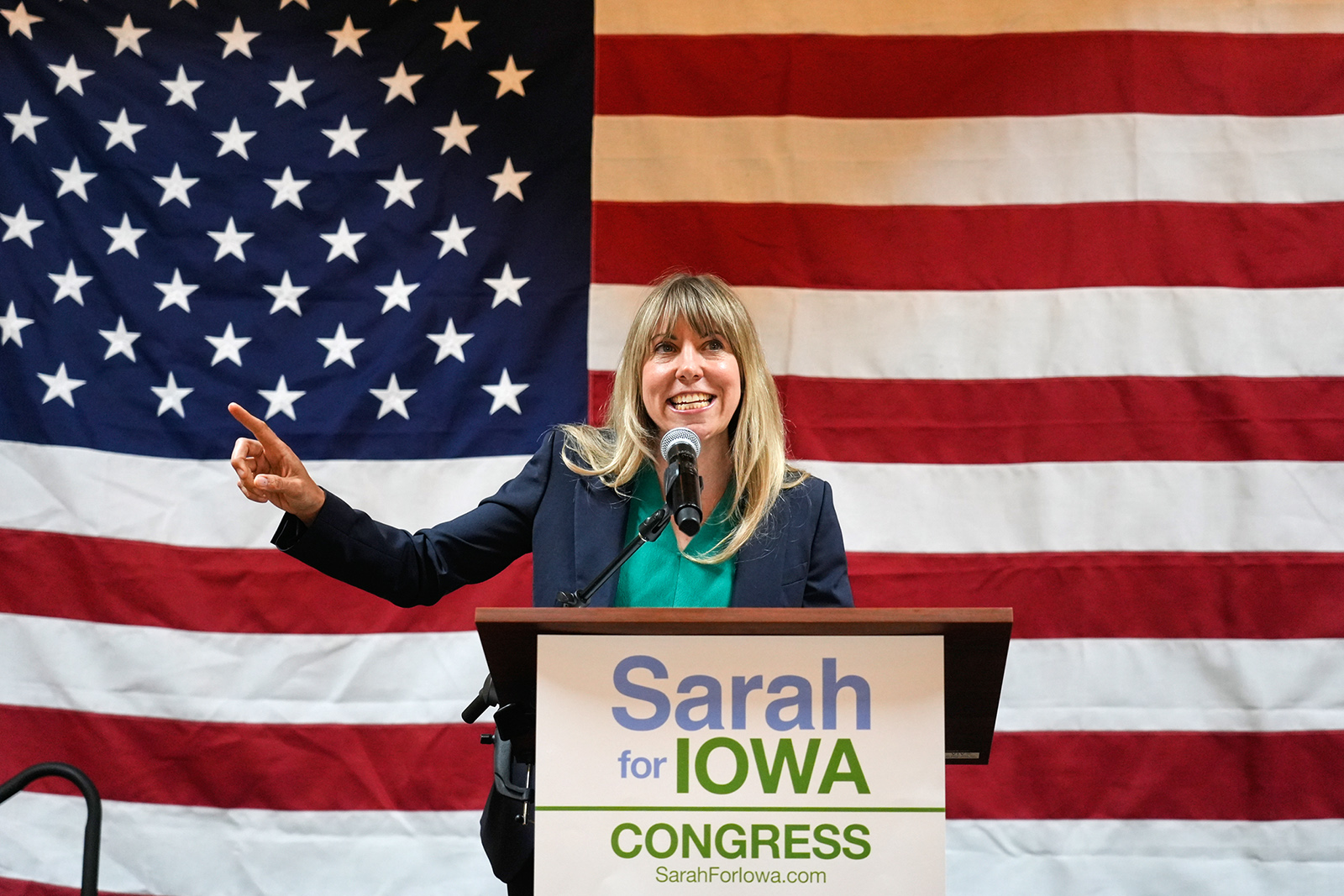
Iowa Democratic congressional candidate the Rev. Sarah Trone Garriott speaks during a primary election night watch party for Iowa state Rep. Josh Turek, a Democratic candidate for U.S. Senate, Tuesday, June 2, 2026, in Des Moines, Iowa. (AP Photo/Bryon Houlgrave)
Jack Jenkins
August 4, 2026
RNS
(RNS) — At last month’s Family Leadership Summit in Des Moines, Iowa, Joe Mitchell, a Republican running for U.S. Congress in the state’s second congressional district, jabbed at his Democratic opponent, state representative the Rev. Lindsay James, saying she “calls herself a pastor.” He then turned to the crowd of conservative evangelical pastors and coined a term he said applies to James, a Presbyterian minister, and other faith-forward Democratic candidates — namely, Lutheran minister the Rev. Sarah Trone Garriott, an Iowa state senator also running for another seat in Congress, and James Talarico, a state senator and Presbyterian seminarian running for U.S. Senate in Texas.
“I call them PINOS,” he said, explaining the term is an acronym for “Pastors in Name Only.”
“Because they’re not real pastors, right? They don’t profess the true gospel of Jesus Christ,” added Mitchell, who has attended an evangelical church in the past.
It’s the latest in a series of faith-focused attacks that have intensified amid an election cycle featuring a striking number of clergy campaigning as Democrats — and, in recent months, besting their challengers. At least 12 pastors, seminarians and former clergy have run for federal office as Democrats this year, and seven have already become the Democratic nominees as of Wednesday (Aug 6). Some are even competing against each other: In Iowa, James, who is ordained within the Presbyterian Church (USA), had to beat out another pastor, United Methodist minister the Rev. Clint Twedt-Ball, to win her primary.
At least seven current and former pastors, all evangelicals, have also launched campaigns for Congress as Republicans this year, but with less success. Of those seven, only three — Pastor Mark Harris, an incumbent in North Carolina’s 8th district; Pastor John Elleson, who is running in Illinois’ deep-blue 9th district; and Tim Walberg, an incumbent and former pastor in Michigan’s 5th district — ultimately became nominees.
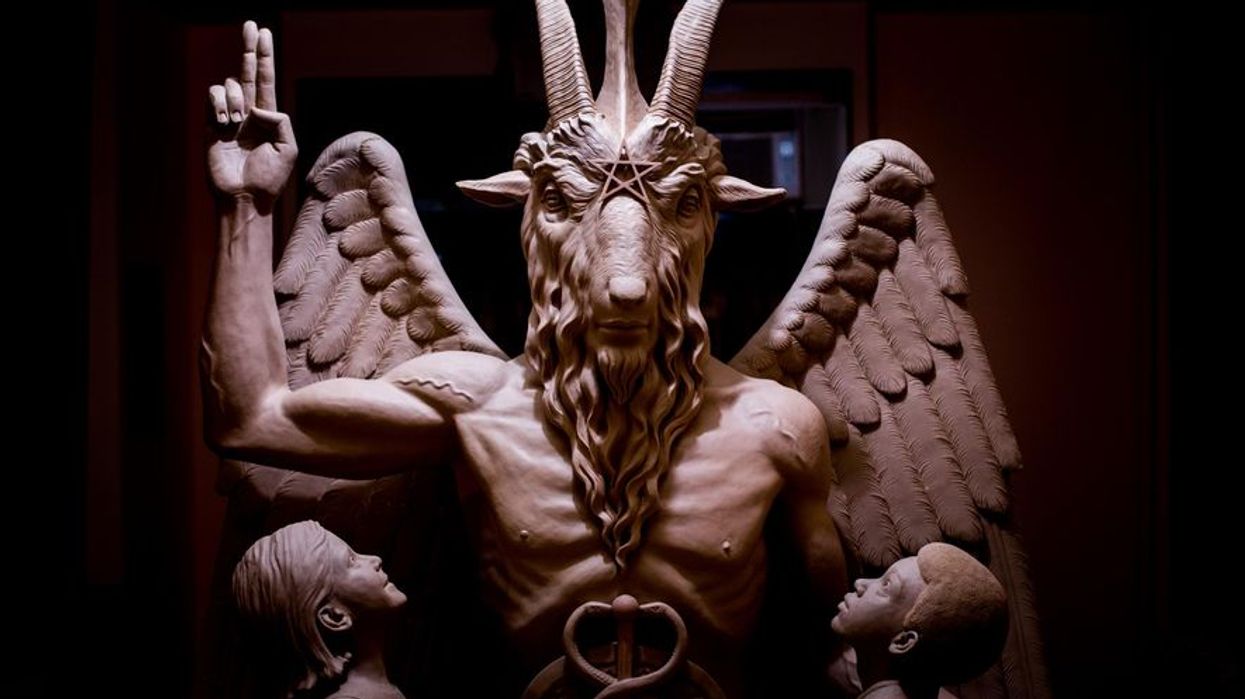
Tensions are high in competitive races with clergy candidates, with Republican opponents sometimes even turning to allegations of blasphemy as they hope to capitalize on longstanding divisions within Christianity to eke out victories. That includes Garriott, whose race is rated by The Cook Political Report as one of only 18 “toss-up” House elections in the country; in addition to Mitchell’s “PINO” remarks, Republican officials have referred to Garriott as the “Wicked Witch of Woke.” House Speaker Mike Johnson has also joined other Republicans in accusing her of having “officiated a Satanist wedding,” even though the allegation appears dubious: while Garriott has spoken publicly about participating in a wedding for people who self-identified as Satanists in meetings with pastors, she could not have officiated the wedding, as she was a pastoral intern at the time, and the service itself was conducted using Christian Scripture and liturgy.
(RNS) — At last month’s Family Leadership Summit in Des Moines, Iowa, Joe Mitchell, a Republican running for U.S. Congress in the state’s second congressional district, jabbed at his Democratic opponent, state representative the Rev. Lindsay James, saying she “calls herself a pastor.” He then turned to the crowd of conservative evangelical pastors and coined a term he said applies to James, a Presbyterian minister, and other faith-forward Democratic candidates — namely, Lutheran minister the Rev. Sarah Trone Garriott, an Iowa state senator also running for another seat in Congress, and James Talarico, a state senator and Presbyterian seminarian running for U.S. Senate in Texas.
“I call them PINOS,” he said, explaining the term is an acronym for “Pastors in Name Only.”
“Because they’re not real pastors, right? They don’t profess the true gospel of Jesus Christ,” added Mitchell, who has attended an evangelical church in the past.
It’s the latest in a series of faith-focused attacks that have intensified amid an election cycle featuring a striking number of clergy campaigning as Democrats — and, in recent months, besting their challengers. At least 12 pastors, seminarians and former clergy have run for federal office as Democrats this year, and seven have already become the Democratic nominees as of Wednesday (Aug 6). Some are even competing against each other: In Iowa, James, who is ordained within the Presbyterian Church (USA), had to beat out another pastor, United Methodist minister the Rev. Clint Twedt-Ball, to win her primary.
At least seven current and former pastors, all evangelicals, have also launched campaigns for Congress as Republicans this year, but with less success. Of those seven, only three — Pastor Mark Harris, an incumbent in North Carolina’s 8th district; Pastor John Elleson, who is running in Illinois’ deep-blue 9th district; and Tim Walberg, an incumbent and former pastor in Michigan’s 5th district — ultimately became nominees.
Tensions are high in competitive races with clergy candidates, with Republican opponents sometimes even turning to allegations of blasphemy as they hope to capitalize on longstanding divisions within Christianity to eke out victories. That includes Garriott, whose race is rated by The Cook Political Report as one of only 18 “toss-up” House elections in the country; in addition to Mitchell’s “PINO” remarks, Republican officials have referred to Garriott as the “Wicked Witch of Woke.” House Speaker Mike Johnson has also joined other Republicans in accusing her of having “officiated a Satanist wedding,” even though the allegation appears dubious: while Garriott has spoken publicly about participating in a wedding for people who self-identified as Satanists in meetings with pastors, she could not have officiated the wedding, as she was a pastoral intern at the time, and the service itself was conducted using Christian Scripture and liturgy.

Texas state Rep. James Talarico speaks during a rally to protest against redistricting hearings at the Texas Capitol, July 24, 2025, in Austin, Texas. (AP Photo/Eric Gay)
Republicans in Texas have also spent months railing against the religious beliefs of James Talarico, who has made faith a centerpiece of a U.S. Senate campaign under the slogan “Let’s flip some tables.” Texas Lt. Gov. Dan Patrick has said he has “never seen anyone commit so much blasphemy against the word of God and the Bible” as Talarico, and insisted he believes the seminarian may end up “going to Hell.” Similarly, Ken Paxton, an evangelical Christian and Talarico’s opponent, has called Talarico’s views “antithetical to historical Christian views,” arguing they were “adopted from liberal theology” and are “literally the opposite of Christianity.”
Both Lindsay James and Garriott told RNS the attacks on their faith and ordination status are “disappointing” and doubled as an indictment of their broader faith communities.
James, who is seeking to lead a district that leans Republican but is seen as competitive this year, noted she worked as a chaplain on college campuses ministering to students and doing what she called “incredibly beautiful work.” The suggestion that she is somehow not a pastor, James said, is “not just disappointing for me” but also “disappointing for all pastors and Christians across the state.”
“These kinds of attacks speak more about who my opponent is, than who I am,” she said.
Garriott argued similarly. She said her background as a parish minister and hospital chaplain are important to her personally and inform her work as a lawmaker.
“I was walking into the worst moments of people’s lives multiple times through a shift,” Garriott said, referring to her time as a chaplain. “That’s helped me develop a courage to show up for folks, no matter who they are, no matter what they’re experiencing.”

(Photo by Kelly Sikkema/Unsplash/Creative Commons)
Garriott added that, if elected, she hopes to preach regularly, as she has while serving as a state senator and on the campaign trail. Despite her grueling schedule, she has even maintained an atypically time-consuming aspect of her sermon-writing: memorizing the Bible passage she plans to preach on verbatim, then reciting it from memory before launching into her sermon.
“These attacks really are, again, not just against me as a faith leader, but me as a Lutheran minister and the churches that I’ve served,” Garriott said. “People find it really offensive — it makes them upset.”
RELATED: Iowa pastor says running for office is a test of faith
She also argued that the line of attack suggests her opponents are desperate.
“It’s a sign that they are really scared they’re gonna lose this seat,” said Garriott, who, church leaders confirmed, remains a pastor in good standing within the ELCA’s Southeastern Iowa Synod.
Marie Griffith, a religion professor at Washington University in St. Louis and former director of the school’s John C. Danforth Center on Religion and Politics, told RNS she sees the Republican strategy as partly an example of run-of-the-mill partisan politics applied to candidates who happen to be clergy. But the nature of the attacks, she said, also points to a more than century-old divide between evangelicals who tend to be Republicans and a coalition of liberal mainliners and Black Protestants who tend to vote Democratic.
What’s more, evangelicals, whose pastors do not always attend seminary, have long showcased a “suspicion of education” and the “educated elite,” Griffith said. That skepticism could extend to figures such as James, Garriott and Talarico — all of whom have earned or are pursuing a Master of Divinity, as typically required by their denominations for ordination.
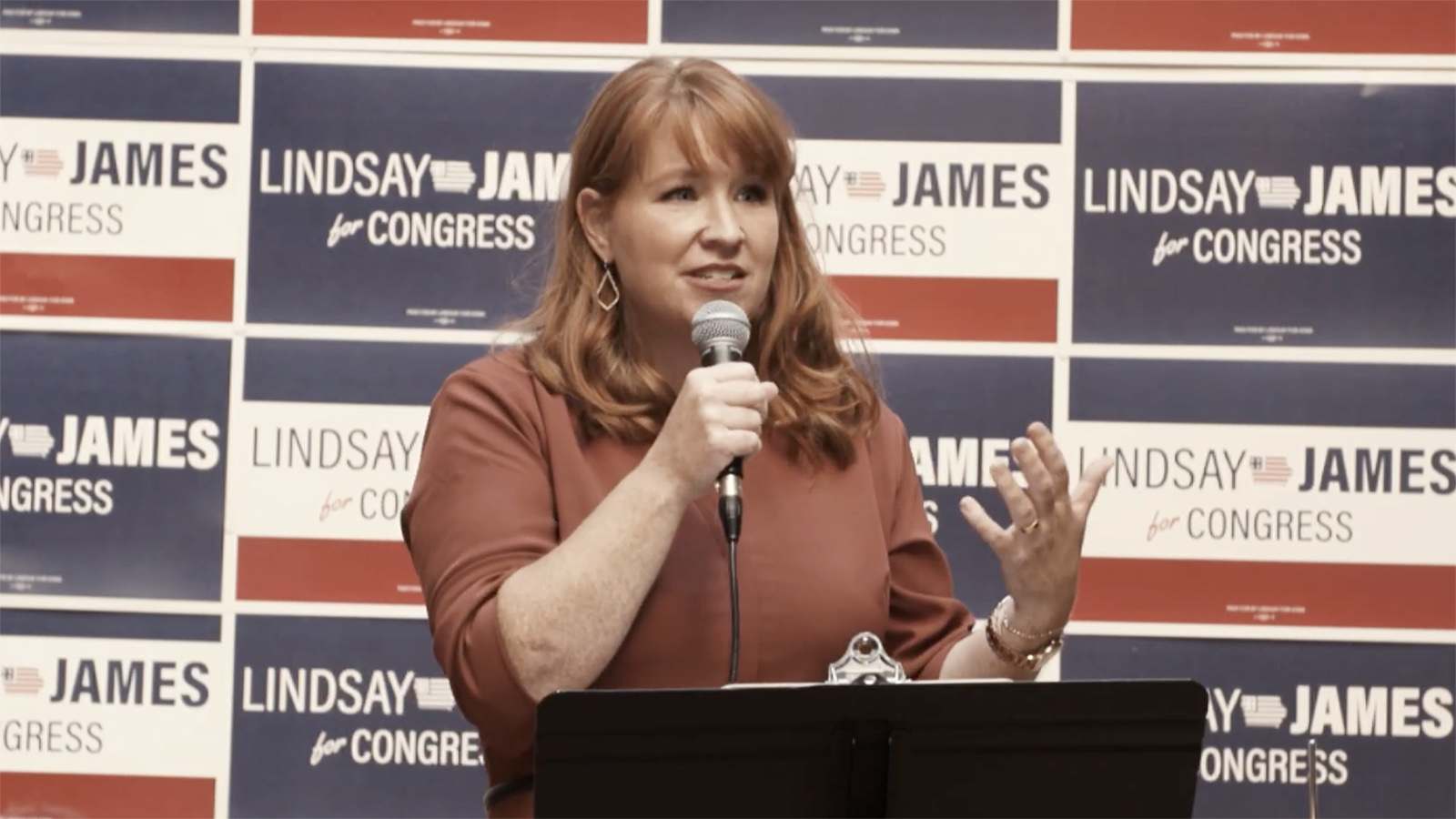
Iowa Democratic congressional candidate the Rev. Lindsay James speaks during a campaign event. (Video screen grab)
“It is plausible to many conservative evangelicals in the pews to say, ‘Mike Johnson is just as much a theological expert as some dude with a Ph.D. from Harvard Divinity School, or some liberal Christian institution,’” Griffith said.
Mitchell and other conservatives have pointed to their opponents’ support for LGBTQ+ rights — particularly transgender rights and votes in favor of various forms of gender-affirming care — as evidence of their insufficient faith. But that framing exposes another theological rift: In recent decades, many mainline Christian denominations distanced themselves from evangelical views on gender and sexuality by formally ordaining LGBTQ+ people, officiating same-sex marriages and affirming LGBTQ+ identities.
And recent election cycles have seen attacks on the faith of liberal-leaning Democratic clergy fall flat. When the Rev. Raphael Warnock, head of Ebenezer Baptist Church in Atlanta, was running for U.S. Senate in Georgia in 2020, Republicans decried his claim of being a “pro-choice pastor,” with then-Rep. Doug Collins condemning the idea as a “lie from the bed of Hell.” But polls indicated that most Catholics in the state and slightly more than half of Georgia’s Protestants believed abortion should be legal in all or most cases, and Warnock ultimately won his Senate seat — a victory later touted by Democratic Party leaders as a model for securing more wins in the South.
Democrats, of course, have also challenged the faith of Republicans. Just last month, Warnock openly questioned the Christian beliefs of Mike Johnson, a Southern Baptist, spurring a brief meeting on Capitol Hill between the lawmakers where they discussed their different approaches to Christianity and the Bible.
Yet the intensity and frequency of Republican attacks on liberal pastors’ religious beliefs is unusual, and mirrors efforts to undermine the credibility of liberal-leaning clergy who have criticized President Donald Trump’s administration. When the Rt. Rev. Mariann Budde, the Episcopal Bishop of Washington, asked Trump during a sermon at the Washington National Cathedral on the president’s first full day in office to “have mercy” on immigrants and transgender people, he responded with a Truth Social post that referred to her as a “so-called Bishop.” The Department of Homeland Security has been similarly dismissive of clergy who have protested the president’s immigration policies, with agency officials once publicly mocking participants in an immigrant rights demonstration led by faith leaders as “imbecilic morons” who need to “get a job.”
Even so, another pastor is poised to attract more Republican attacks. On Tuesday, the Rev. Adam Hamilton, who leads the largest United Methodist church in the U.S., won the Democratic primary in his bid to become the next U.S. Senator from Kansas.
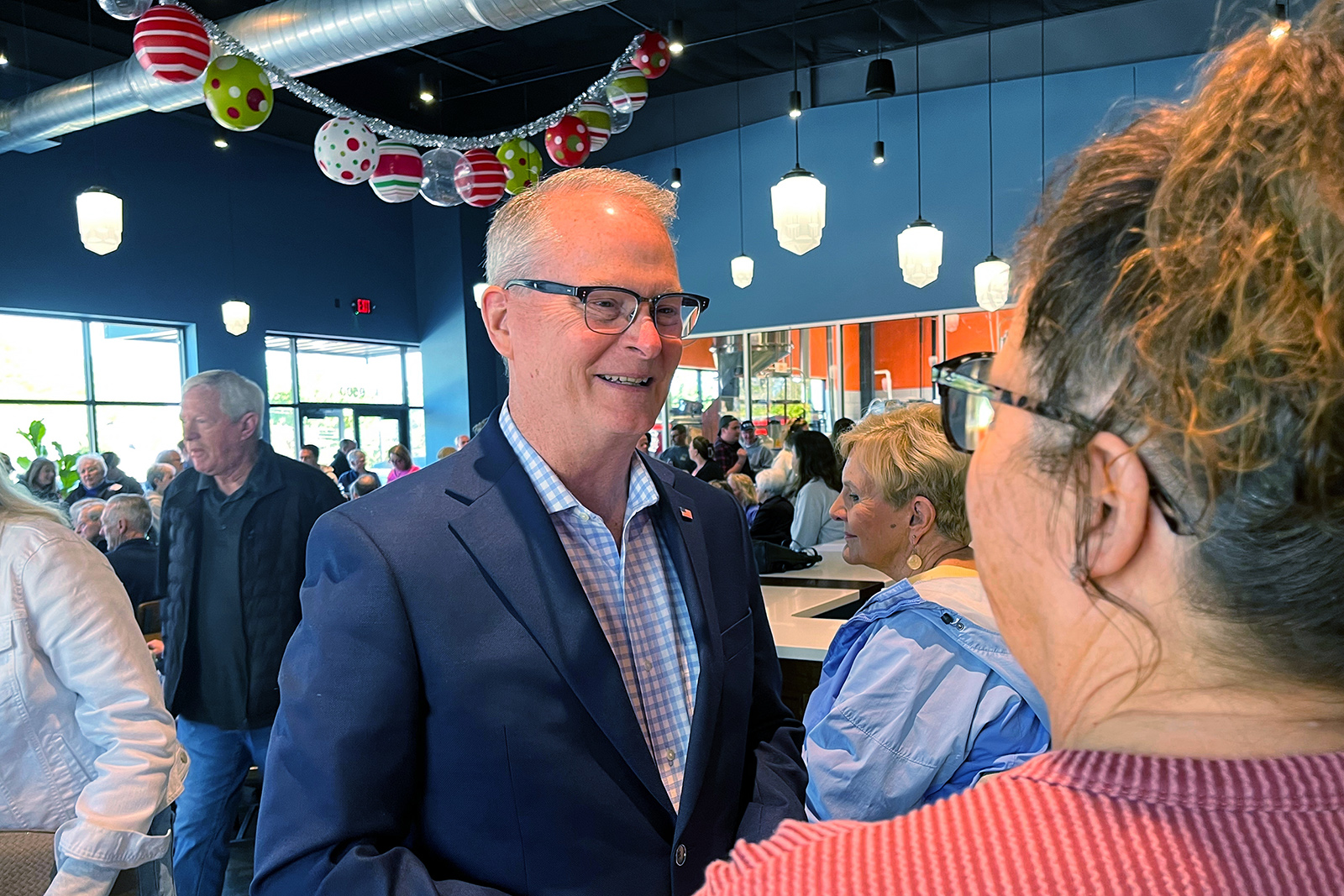
The Rev. Adam Hamilton, a Methodist mega-church pastor from Kansas, talks to voters as he wraps up a U.S. Senate listening tour on Saturday, April 18, 2026, at Limitless Brewing in Lenexa, Kansas. (AP Photo/Heather Hollingsworth)
Winning a statewide election as a Democrat in Kansas is an uphill battle, but Hamilton is already breaking fundraising records, won the endorsement of the Kansas City Star in the primary and has been drawing attention from conservatives. Last month, right wing outlet Breitbart News referred to Hamilton’s denomination as “radically leftist” and wrote critically of the pastor’s suggestion in a sermon that the Bible contains errors — an idea that, while rejected by many evangelicals, has been embraced by many mainline Christians for more than a century.
For Griffith, the attacks highlight a “core disagreement on what, fundamentally, Christianity stands for.” And if Democratic clergy and other other faith-forward candidates do well in November, she said, it could destabilize a religious coalition conservatives spent decades building into a political power bloc.
“Republicans feel that they have had the religious upper hand for so long, that it’s pretty threatening to see someone like Talarico or any of these figures (running for office),” Griffith said.
But a spiritual shift of sorts may already be at hand. The Rev. Frederick Haynes III, a prominent Baptist pastor in Texas, has already won the Democratic primary for Texas’ 30th deeply blue congressional district, making it highly likely that he will be sworn in as a member of Congress next year. He told RNS he sees the success of Democratic clergy at the polls this year as a testament to their “track record of community service” and “fighting for the people.”
“There is almost an appreciative wave for the service that has been rendered that causes the people to rise up and say, ‘We want you to serve as our representative because you have served us while not being a quote-unquote public servant or politician, but you’ve done the work of public service,’” Haynes said.
Adelle M. Banks contributed to this report.
This piece has been updated to note that additional pastors, including Rev. Adam Hamilton, became nominees after winning primaries held on Tuesday, Aug 5.
Booted from evangelicalism, a progressive, ‘post-evangelical’ church blooms in Texas
AUSTIN, Texas (RNS) — Led by Zach Lambert, Restore church is part of a small but growing countertrend.
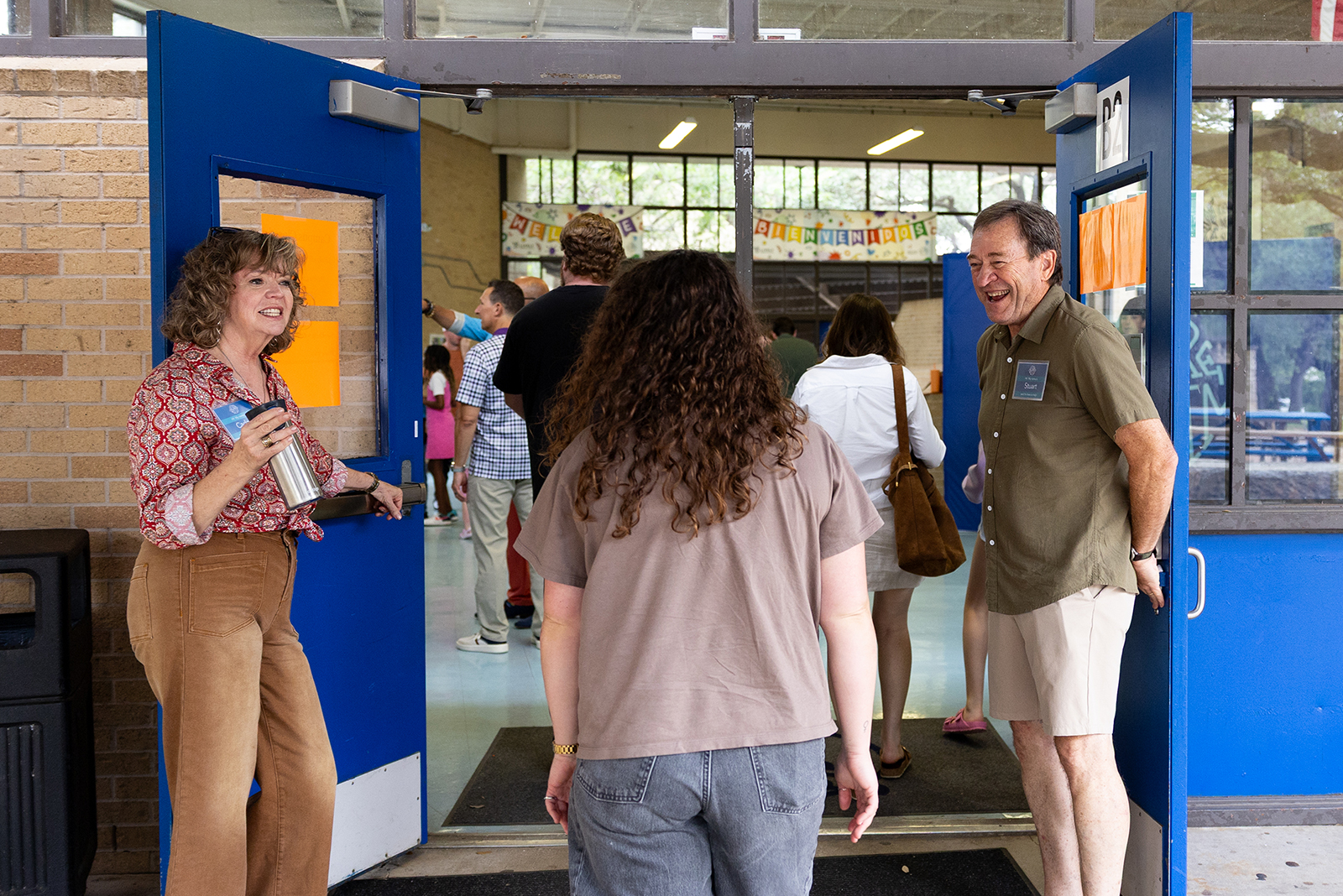
Ushers Carla and Stuart Hays welcome attendees to Restore Austin in Austin, Texas, on Sunday, June 7, 2026. (RNS photo/Angela Wang)
Kathryn Post
July 28, 2026

Lead pastor Zach Lambert invites attendees to share personal good news from the week on Sunday, June 7, 2026, at Restore Austin in Austin, Texas. (RNS photo/Angela Wang)
Many of Restore’s roughly 1,200 members are religious exiles who’ve left conservative evangelical churches — often citing an emphasis on Christian nationalism. They’ve come to Restore looking for a church that both worships Jesus as a savior and follows what they describe as his model of radical love. They’re hoping they don’t have to give up their jeans, church coffee and worship music to find it.
“I bet we’re still 90% people who have had bad church experiences,” said Zach Lambert, lead pastor and founder of Restore. “More and more people, I think, have seen a need for a church like ours to be an alternative to Christian nationalist, right-wing churches.”
More and more people, I think, have seen a need for a church like ours to be an alternative to Christian nationalist, right-wing churches.Zach Lambert
As Restore continues to grow, it’s become emblematic of a small but significant countertrend in America’s religious landscape. While white evangelicals remain among President Donald’s Trump’s most stalwart supporters, a recent poll found that nearly half of Gen Z agreed that Christians’ support of Trump has made them less likely to go to church. And young women and LGBTQ Americans are increasingly likely to claim no religious identity.
Restore, and other post-evangelical churches like it, have become a home for Christians who reject the MAGA movement while refusing to discard their faith. While politically and theologically more aligned with liberal mainline denominations, these churches retain the evangelical aesthetics so familiar and cherished by the exvangelicals in their pews — especially the music style — even as they insist racial justice, gender equality and LGBTQ inclusion are necessary outcomes of the gospel.
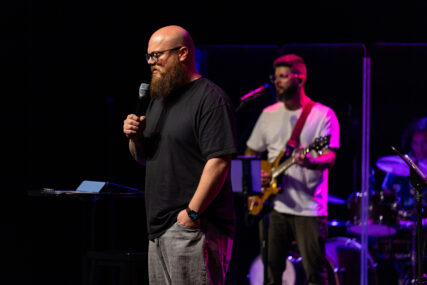
Lead pastor Zach Lambert leads the congregation in prayer during communion on Sunday, June 7, 2026, at Restore Austin in Austin, Texas. (RNS photo/Angela Wang)
Church origins
As a young person, Lambert’s faith was formed by two Southern Baptist megachurches; the one in Austin where he was raised, and later, Prestonwood Baptist Church, a 40,000-member Texas Southern Baptist congregation where he interned for two years. Both were the kind of church many of his now-congregants have fled.
At Prestonwood, he recalled, he was groomed to become a megachurch pastor. But his illusions about ministry quickly evaporated. He described leaders who demanded unquestioning loyalty, teachings that demeaned women and a church culture preoccupied with public image.
“By the end of it, I was really done,” Lambert said. “I quit, thinking I was probably never going to be in ministry again.”
Soon after, though, Lambert connected with evangelical churches that seemed more receptive to some of the progressive values he’d gradually embraced. In 2016, he and a launch team planted Restore. It was part of the Evangelical Free Church of America, but allowed women leaders, invited LGBTQ people to lead and marry, and was designed for people escaping negative church experiences yet yearning for a faith community. Austin, a longtime Democratic outpost in Texas, seemed like the ideal place.
But like many evangelical churches, most congregations in the Evangelical Free Church of America believe the Bible teaches that only men should be pastors and that marriage should be between a man and a woman. When Restore baptized a lesbian couple in its first year, Lambert said, local churches organized to remove Restore from the denomination. In 2019, they were successful.
“Our church was kicked out,” Lambert said. “I was put on trial and my ministry license was revoked.”
After being unaffiliated for several years, Restore last year joined the United Methodist Church, an LGBTQ-affirming mainline denomination on the other end of the religious spectrum.
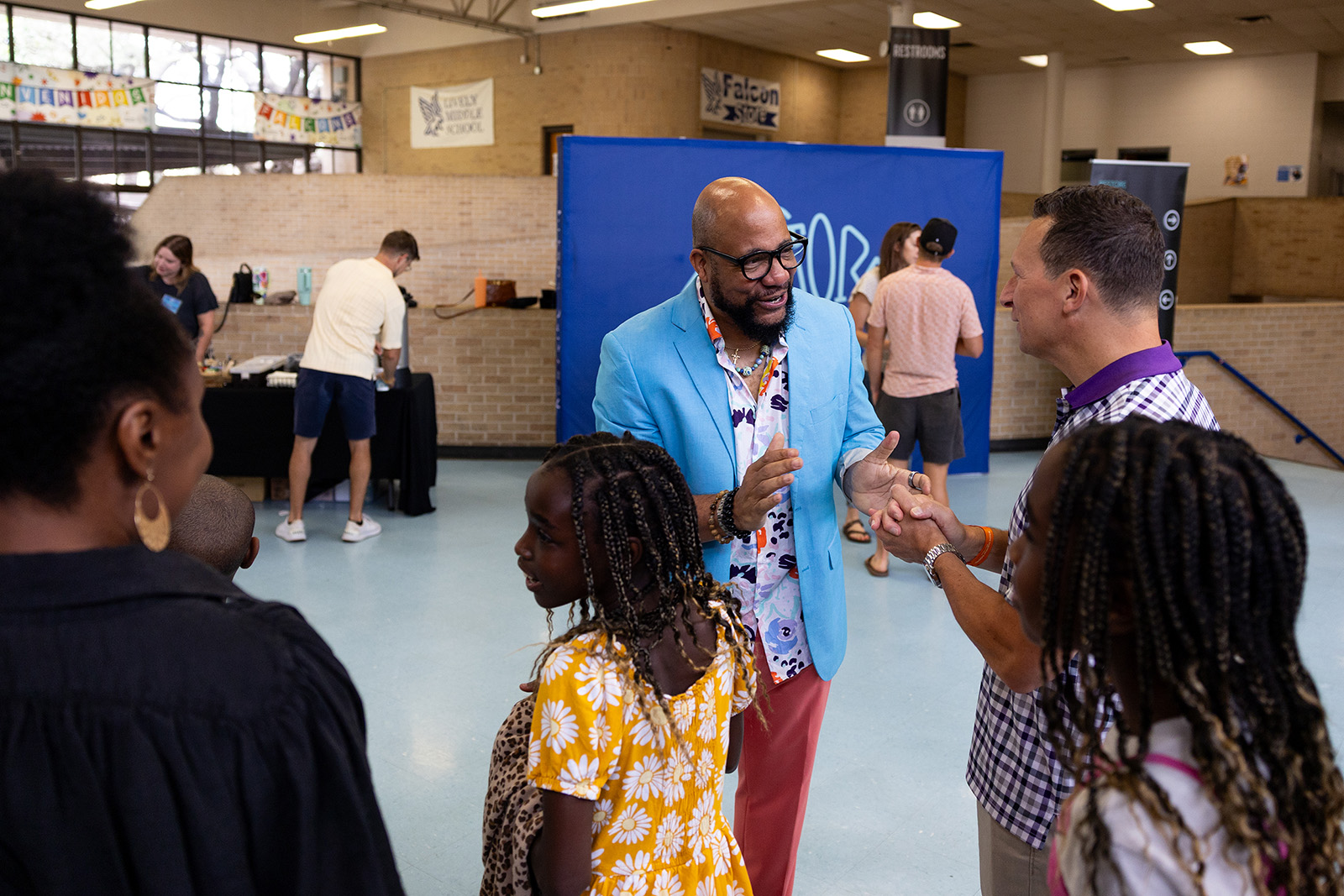
Care pastor Mark Jordan greets congregants on Sunday, June 7, 2026, at Restore Austin in Austin, Texas. (RNS photo/Angela Wang)
The ‘magic combination’
In many ways, Restore’s backstory — formed in an evangelical context, then forced out of it — mirrors that of many attendees. And it’s what made it the perfect fit for Eric McDermid, a 43-year-old retired data scientist. After years at an Austin megachurch, McDermid left when he saw widespread support for Trump and what he viewed as selective application of Scripture.
The comfortable, contemporary, laid-back setting, but these kinds of beliefs … that was the magic combination for us.Eric McDermid
McDermid and his wife tried out some mainline churches, but they missed some aspects of the megachurch model — especially how it welcomes newcomers with clear signs, coffee and a simple worship format. At Restore, he found those elements, plus a progressive faith.
“The comfortable, contemporary, laid-back setting, but these kinds of beliefs … that was the magic combination for us,” said McDermid, who now serves on Restore’s leadership team.
The church’s history has also made it more attuned to members’ religious baggage. Mark Jordan, Restore’s care pastor, is a veteran and trained hospital chaplain, and no stranger to trauma. He’s often the first to greet newcomers at the door, and, with kind eyes and a warm smile, he makes it his mission to exude a “non-anxious presence.”
“A lot of people, when they come in, especially those of the LGBTQ community, the question that they ask me is, ‘Is this a safe space?’” Jordan said. “What I look forward to is not only connecting with people, but being a part of a safe, inclusive community. That is the work of Jesus.”
Scripture has often been weaponized against church members, especially the roughly 33% who are LGBTQ, Lambert said. Because many members struggle with reading the Bible and don’t carry it to church, Bible passages are displayed on the screen. When they contain something potentially upsetting — such as portions commonly known as LGBTQ clobber passages — it’s normal for speakers to give a warning.
Sermons focus less on requiring certainty, and more on adding context and inviting reflection. Communion is open to everyone, including those with doubts.
“Come to this table, you who have much faith and you who would like to have more … you who have tried to follow Jesus and you who have failed,” Lambert says each week.
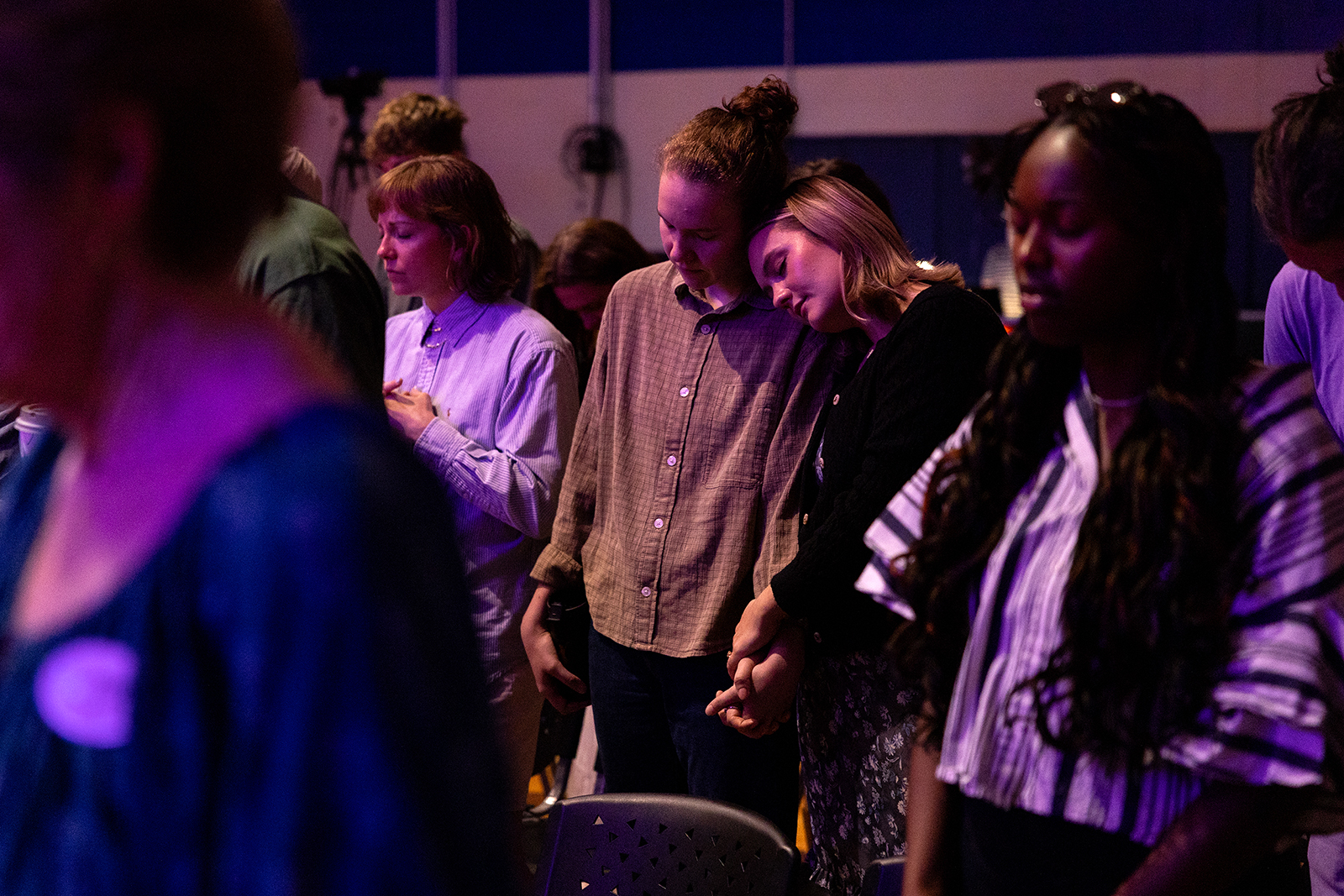
Miriam Ritchie and Nicolle Truett pray together during worship at Restore Austin in Austin, Texas, on Sunday, June 7, 2026. The newly engaged couple were introduced at church by Ritchie’s uncle, a fellow member of Restore. (Angela Wang)
For Nicolle Truett, it wasn’t easy to settle into Restore’s culture of unconditional welcome. Raised as a missionary kid in the Foursquare Church, she later left the Pentecostal denomination, saying she was removed from her job there soon after she reported abuse. Though her experience left her feeling “angry and cynical” when she first came to Restore, eventually, she said, the community compelled her to stay. She told RNS that people at Restore get what it’s like to be mistreated in a faith community they loved. But they’re also committed to avoiding the kind of us-vs-them, binary thinking they often found in those settings.
“There’s never an indication that we have what is right and everyone else has what is wrong,” she said. “Everybody here has a story of being excluded and abused and harmed, and still has a commitment to figure out how to do it better and how not to do this again to anybody else.”
Post-evangelical
By the time Restore was forced out of its first denomination in 2019, Lambert had gained a social media following for his online advocacy on topics like free lunch programs and LGBTQ rights.
“Bible verses condemning trans folks: 0; Bible verses about welcoming migrants: 33; Bible verses about advocating for peace: 429; Bible verses about loving God and others: 714; Bible verses about taking care of the poor: 2000+” Lambert wrote in one viral post.
Though his outspoken views have earned him many critics who accuse him of partisanship and heresy, his online reach is part of what connected him and Restore to a larger movement.
Lambert began to discover pastors with similar stories, including Mike Goldsworthy, who led a church in Long Beach, California. In October 2021, Goldsworthy convened roughly 100 likeminded pastors who led congregations with evangelical ties but who believed evangelicalism had been co-opted by the MAGA movement.
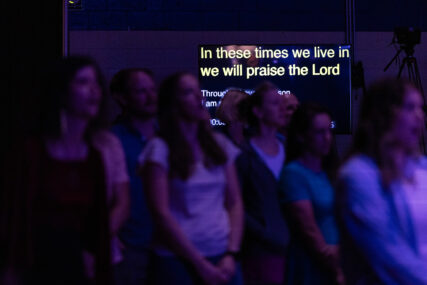
Attendees participate in worship service on Sunday, June 7, 2026, at Restore Austin in Austin, Texas. (RNS photo/Angela Wang)
Out of that initial convening, Lambert, Goldsworthy and Keri Ladouceur co-founded the Post-Evangelical Collective, now a network of over 150 churches connected by shared values, regional bodies and a national conference that, Ladouceur said, has grown roughly 25% each year.
“Many had been exiled from their previous denominational affiliation, many had been really lonely and kind of wondering, you know, ‘Am I the only one?’” said Ladouceur, who is based in Raleigh, North Carolina and serves as executive director of the collective. “There was such a sense of validation and permission and shared imagination to rethink, what does it mean to be the church in this time, beyond Christian nationalism?”
Christian ethicist David Gushee, who serves on the collective’s wisdom board, said while Lambert’s public platform has only grown since co-founding the collective — he has 56K X followers and is the bestselling author of “Better Ways to Read the Bible” — Lambert sees himself first as a local pastor. That, Gushee said, has helped kept the collective “church-oriented.”
Everybody here has a story of being excluded and abused and harmed, and still has a commitment to figure out how to do it better and how not to do this again to anybody else.Nicolle Truett
“There’s a way to be post-evangelical that is mainly about opposition to evangelicalism,” Gushee said. “Zach has had plenty of reasons to be angry and traumatized and against, but that’s not what he leads with. He leads with a constructive, winsome Christian vision that is focused on growing a church that can serve the legions of post-evangelicals who need community.”
Lately, Lambert and Restore’s leaders have been growing the church through their partnership with the United Methodist Church, a move that grants them more resources and support. It also merged with Memorial United Methodist Church, a 151-year-old congregation in East Austin, and is in the process of renovating and moving to Memorial’s 35,000-square-foot campus. The move will allow Restore to have a consistent worship space for the first time in its 10-year history, and will provide a central hub for Restore’s justice work.
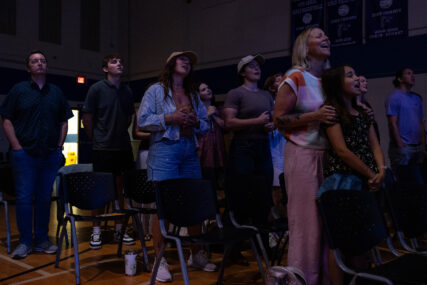
Attendees participate in worship service on Sunday, June 7, 2026, at Restore Austin in Austin, Texas. (RNS photo/Angela Wang)
A wedding
In the two years that they’ve been at Restore, Mariah and Michaela Montgomery-Lindsay have been part of the church’s evolution. After joining Restore’s LGBTQ social group, they saw a need for an LGBTQ group more focused on Bible study — so they formed one.
In May, they gathered in the hills outside of Austin, and surrounded by the new friends they’d moved to Austin to meet, Lambert married them.
“Your marriage brings great joy to the heart of God,” Lambert declared, “just as it does to mine and to the hearts of everyone here today.”
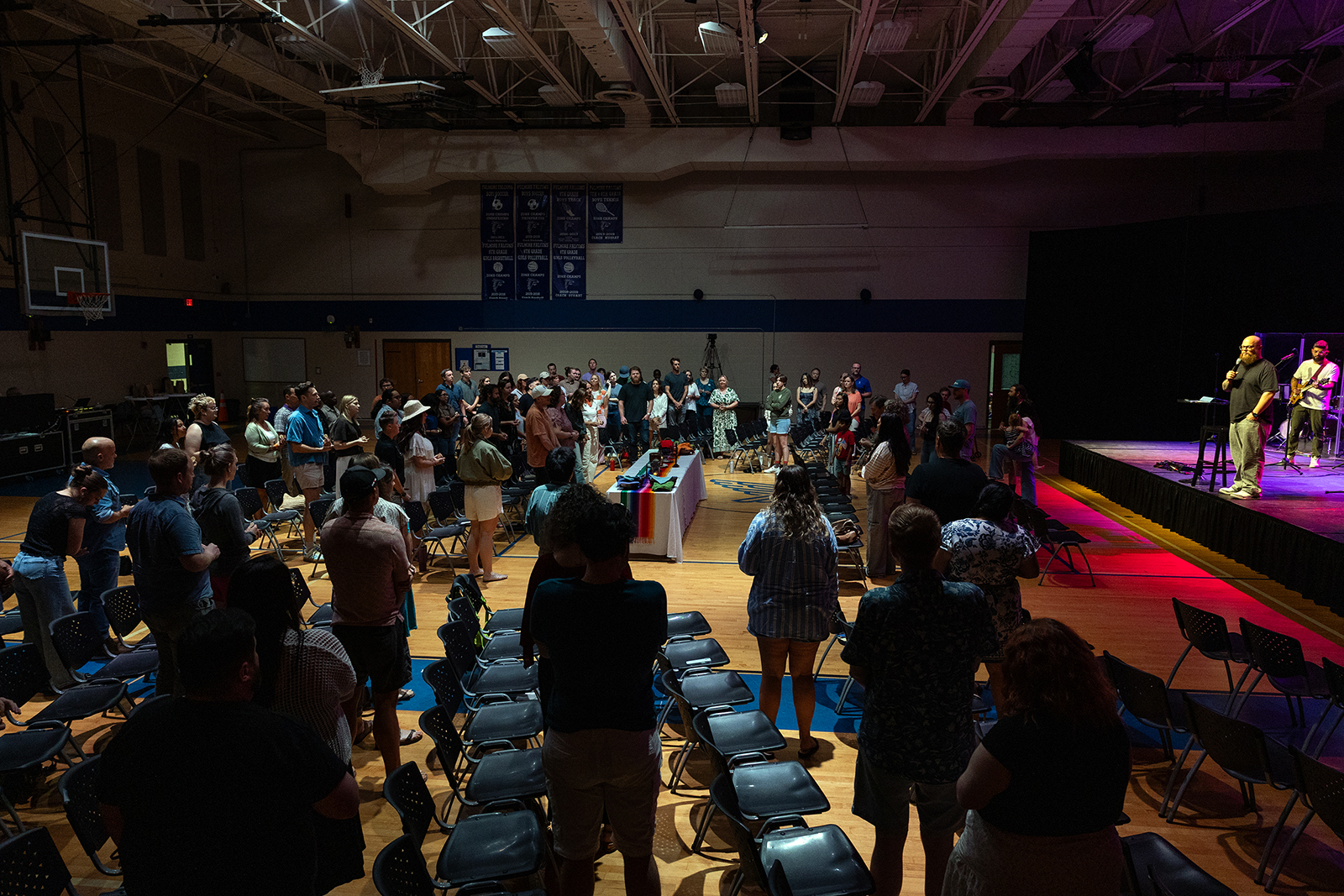
Congregants turn to the communion table at the center of the gym at Restore Austin in Austin, Texas, on Sunday, June 7, 2026. (RNS photo/Angela Wang)
This story was produced with funding from the Templeton Religion Trust.
AUSTIN, Texas (RNS) — Led by Zach Lambert, Restore church is part of a small but growing countertrend.
Ushers Carla and Stuart Hays welcome attendees to Restore Austin in Austin, Texas, on Sunday, June 7, 2026. (RNS photo/Angela Wang)
Kathryn Post
July 28, 2026
RNS
AUSTIN, Texas (RNS) — When Mariah and Michaela Montgomery-Lindsay moved more than 150 miles from Houston to Austin with three cats and two dogs in tow, it wasn’t for a job or family, but for church.
“I was just aching for a community of people who understood this transitionary pain that I was experiencing in my life, and this deconstruction that I was going through,” Mariah said.
She and her now-wife, Michaela, had been watching Sunday services of the Austin church, Restore, on YouTube for years. After growing up in a charismatic church and suppressing her gay identity for most of her life, Restore Austin, which offers a rare blend of progressive theology and evangelical expression, was the first church Mariah encountered that understood her exit from evangelicalism and was LGBTQ-affirming. After learning about Restore’s LGBTQ social group, the couple wanted in.
In early 2024, they arrived in the parking lot of the middle school where Restore meets each Sunday. That first visit, Mariah recalled, was a “visceral experience.”
“I think I cried the first 30 minutes of that service,” Mariah said. “I felt so safe to be completely myself.”
That safety wasn’t signaled by pride flags or priests in rainbow vestments, but unquestioned acceptance. It’s a congregation that will cheer as gay couples share news of their engagements, and each Sunday, a message flashing across the screen declares, “WELCOME to a community that celebrates differences and diversity.”
“People greeted us like a normal couple,” Mariah said.
AUSTIN, Texas (RNS) — When Mariah and Michaela Montgomery-Lindsay moved more than 150 miles from Houston to Austin with three cats and two dogs in tow, it wasn’t for a job or family, but for church.
“I was just aching for a community of people who understood this transitionary pain that I was experiencing in my life, and this deconstruction that I was going through,” Mariah said.
She and her now-wife, Michaela, had been watching Sunday services of the Austin church, Restore, on YouTube for years. After growing up in a charismatic church and suppressing her gay identity for most of her life, Restore Austin, which offers a rare blend of progressive theology and evangelical expression, was the first church Mariah encountered that understood her exit from evangelicalism and was LGBTQ-affirming. After learning about Restore’s LGBTQ social group, the couple wanted in.
In early 2024, they arrived in the parking lot of the middle school where Restore meets each Sunday. That first visit, Mariah recalled, was a “visceral experience.”
“I think I cried the first 30 minutes of that service,” Mariah said. “I felt so safe to be completely myself.”
That safety wasn’t signaled by pride flags or priests in rainbow vestments, but unquestioned acceptance. It’s a congregation that will cheer as gay couples share news of their engagements, and each Sunday, a message flashing across the screen declares, “WELCOME to a community that celebrates differences and diversity.”
“People greeted us like a normal couple,” Mariah said.
Lead pastor Zach Lambert invites attendees to share personal good news from the week on Sunday, June 7, 2026, at Restore Austin in Austin, Texas. (RNS photo/Angela Wang)
Many of Restore’s roughly 1,200 members are religious exiles who’ve left conservative evangelical churches — often citing an emphasis on Christian nationalism. They’ve come to Restore looking for a church that both worships Jesus as a savior and follows what they describe as his model of radical love. They’re hoping they don’t have to give up their jeans, church coffee and worship music to find it.
“I bet we’re still 90% people who have had bad church experiences,” said Zach Lambert, lead pastor and founder of Restore. “More and more people, I think, have seen a need for a church like ours to be an alternative to Christian nationalist, right-wing churches.”
More and more people, I think, have seen a need for a church like ours to be an alternative to Christian nationalist, right-wing churches.Zach Lambert
As Restore continues to grow, it’s become emblematic of a small but significant countertrend in America’s religious landscape. While white evangelicals remain among President Donald’s Trump’s most stalwart supporters, a recent poll found that nearly half of Gen Z agreed that Christians’ support of Trump has made them less likely to go to church. And young women and LGBTQ Americans are increasingly likely to claim no religious identity.
Restore, and other post-evangelical churches like it, have become a home for Christians who reject the MAGA movement while refusing to discard their faith. While politically and theologically more aligned with liberal mainline denominations, these churches retain the evangelical aesthetics so familiar and cherished by the exvangelicals in their pews — especially the music style — even as they insist racial justice, gender equality and LGBTQ inclusion are necessary outcomes of the gospel.
Lead pastor Zach Lambert leads the congregation in prayer during communion on Sunday, June 7, 2026, at Restore Austin in Austin, Texas. (RNS photo/Angela Wang)
Church origins
As a young person, Lambert’s faith was formed by two Southern Baptist megachurches; the one in Austin where he was raised, and later, Prestonwood Baptist Church, a 40,000-member Texas Southern Baptist congregation where he interned for two years. Both were the kind of church many of his now-congregants have fled.
At Prestonwood, he recalled, he was groomed to become a megachurch pastor. But his illusions about ministry quickly evaporated. He described leaders who demanded unquestioning loyalty, teachings that demeaned women and a church culture preoccupied with public image.
“By the end of it, I was really done,” Lambert said. “I quit, thinking I was probably never going to be in ministry again.”
Soon after, though, Lambert connected with evangelical churches that seemed more receptive to some of the progressive values he’d gradually embraced. In 2016, he and a launch team planted Restore. It was part of the Evangelical Free Church of America, but allowed women leaders, invited LGBTQ people to lead and marry, and was designed for people escaping negative church experiences yet yearning for a faith community. Austin, a longtime Democratic outpost in Texas, seemed like the ideal place.
But like many evangelical churches, most congregations in the Evangelical Free Church of America believe the Bible teaches that only men should be pastors and that marriage should be between a man and a woman. When Restore baptized a lesbian couple in its first year, Lambert said, local churches organized to remove Restore from the denomination. In 2019, they were successful.
“Our church was kicked out,” Lambert said. “I was put on trial and my ministry license was revoked.”
After being unaffiliated for several years, Restore last year joined the United Methodist Church, an LGBTQ-affirming mainline denomination on the other end of the religious spectrum.
Care pastor Mark Jordan greets congregants on Sunday, June 7, 2026, at Restore Austin in Austin, Texas. (RNS photo/Angela Wang)
The ‘magic combination’
In many ways, Restore’s backstory — formed in an evangelical context, then forced out of it — mirrors that of many attendees. And it’s what made it the perfect fit for Eric McDermid, a 43-year-old retired data scientist. After years at an Austin megachurch, McDermid left when he saw widespread support for Trump and what he viewed as selective application of Scripture.
The comfortable, contemporary, laid-back setting, but these kinds of beliefs … that was the magic combination for us.Eric McDermid
McDermid and his wife tried out some mainline churches, but they missed some aspects of the megachurch model — especially how it welcomes newcomers with clear signs, coffee and a simple worship format. At Restore, he found those elements, plus a progressive faith.
“The comfortable, contemporary, laid-back setting, but these kinds of beliefs … that was the magic combination for us,” said McDermid, who now serves on Restore’s leadership team.
The church’s history has also made it more attuned to members’ religious baggage. Mark Jordan, Restore’s care pastor, is a veteran and trained hospital chaplain, and no stranger to trauma. He’s often the first to greet newcomers at the door, and, with kind eyes and a warm smile, he makes it his mission to exude a “non-anxious presence.”
“A lot of people, when they come in, especially those of the LGBTQ community, the question that they ask me is, ‘Is this a safe space?’” Jordan said. “What I look forward to is not only connecting with people, but being a part of a safe, inclusive community. That is the work of Jesus.”
Scripture has often been weaponized against church members, especially the roughly 33% who are LGBTQ, Lambert said. Because many members struggle with reading the Bible and don’t carry it to church, Bible passages are displayed on the screen. When they contain something potentially upsetting — such as portions commonly known as LGBTQ clobber passages — it’s normal for speakers to give a warning.
Sermons focus less on requiring certainty, and more on adding context and inviting reflection. Communion is open to everyone, including those with doubts.
“Come to this table, you who have much faith and you who would like to have more … you who have tried to follow Jesus and you who have failed,” Lambert says each week.
Miriam Ritchie and Nicolle Truett pray together during worship at Restore Austin in Austin, Texas, on Sunday, June 7, 2026. The newly engaged couple were introduced at church by Ritchie’s uncle, a fellow member of Restore. (Angela Wang)
For Nicolle Truett, it wasn’t easy to settle into Restore’s culture of unconditional welcome. Raised as a missionary kid in the Foursquare Church, she later left the Pentecostal denomination, saying she was removed from her job there soon after she reported abuse. Though her experience left her feeling “angry and cynical” when she first came to Restore, eventually, she said, the community compelled her to stay. She told RNS that people at Restore get what it’s like to be mistreated in a faith community they loved. But they’re also committed to avoiding the kind of us-vs-them, binary thinking they often found in those settings.
“There’s never an indication that we have what is right and everyone else has what is wrong,” she said. “Everybody here has a story of being excluded and abused and harmed, and still has a commitment to figure out how to do it better and how not to do this again to anybody else.”
Post-evangelical
By the time Restore was forced out of its first denomination in 2019, Lambert had gained a social media following for his online advocacy on topics like free lunch programs and LGBTQ rights.
“Bible verses condemning trans folks: 0; Bible verses about welcoming migrants: 33; Bible verses about advocating for peace: 429; Bible verses about loving God and others: 714; Bible verses about taking care of the poor: 2000+” Lambert wrote in one viral post.
Though his outspoken views have earned him many critics who accuse him of partisanship and heresy, his online reach is part of what connected him and Restore to a larger movement.
Lambert began to discover pastors with similar stories, including Mike Goldsworthy, who led a church in Long Beach, California. In October 2021, Goldsworthy convened roughly 100 likeminded pastors who led congregations with evangelical ties but who believed evangelicalism had been co-opted by the MAGA movement.
Attendees participate in worship service on Sunday, June 7, 2026, at Restore Austin in Austin, Texas. (RNS photo/Angela Wang)
Out of that initial convening, Lambert, Goldsworthy and Keri Ladouceur co-founded the Post-Evangelical Collective, now a network of over 150 churches connected by shared values, regional bodies and a national conference that, Ladouceur said, has grown roughly 25% each year.
“Many had been exiled from their previous denominational affiliation, many had been really lonely and kind of wondering, you know, ‘Am I the only one?’” said Ladouceur, who is based in Raleigh, North Carolina and serves as executive director of the collective. “There was such a sense of validation and permission and shared imagination to rethink, what does it mean to be the church in this time, beyond Christian nationalism?”
Christian ethicist David Gushee, who serves on the collective’s wisdom board, said while Lambert’s public platform has only grown since co-founding the collective — he has 56K X followers and is the bestselling author of “Better Ways to Read the Bible” — Lambert sees himself first as a local pastor. That, Gushee said, has helped kept the collective “church-oriented.”
Everybody here has a story of being excluded and abused and harmed, and still has a commitment to figure out how to do it better and how not to do this again to anybody else.Nicolle Truett
“There’s a way to be post-evangelical that is mainly about opposition to evangelicalism,” Gushee said. “Zach has had plenty of reasons to be angry and traumatized and against, but that’s not what he leads with. He leads with a constructive, winsome Christian vision that is focused on growing a church that can serve the legions of post-evangelicals who need community.”
Lately, Lambert and Restore’s leaders have been growing the church through their partnership with the United Methodist Church, a move that grants them more resources and support. It also merged with Memorial United Methodist Church, a 151-year-old congregation in East Austin, and is in the process of renovating and moving to Memorial’s 35,000-square-foot campus. The move will allow Restore to have a consistent worship space for the first time in its 10-year history, and will provide a central hub for Restore’s justice work.
Attendees participate in worship service on Sunday, June 7, 2026, at Restore Austin in Austin, Texas. (RNS photo/Angela Wang)
A wedding
In the two years that they’ve been at Restore, Mariah and Michaela Montgomery-Lindsay have been part of the church’s evolution. After joining Restore’s LGBTQ social group, they saw a need for an LGBTQ group more focused on Bible study — so they formed one.
In May, they gathered in the hills outside of Austin, and surrounded by the new friends they’d moved to Austin to meet, Lambert married them.
“Your marriage brings great joy to the heart of God,” Lambert declared, “just as it does to mine and to the hearts of everyone here today.”
Congregants turn to the communion table at the center of the gym at Restore Austin in Austin, Texas, on Sunday, June 7, 2026. (RNS photo/Angela Wang)
This story was produced with funding from the Templeton Religion Trust.