Saturday, April 05, 2025

‘Historic moment’: South Koreans react to Yoon’s dismissal


By AFP
April 4, 2025


When South Korea's Constitutional Court ruled to impeach president Yoon Suk Yeol, protesters erupted into wild cheers, with some bursting into tears 
- Copyright AFP Pedro Pardo

Minji SUH and Claire LEE

When South Korea’s Constitutional Court ruled to uphold the impeachment of president Yoon Suk Yeol, thousands of protesters gathered outside to watch a live broadcast erupted into wild cheers, with some bursting into tears.

“Today is the most meaningful day for me,” said Kim Kyung-mo, a 43-year-old businessman.

Friday’s verdict brings legal closure to a case that has plunged the nation into monthslong turmoil, kickstarted since Yoon’s December 3 attempt to impose martial law on the democratic country.

Suspended by lawmakers, the 64-year-old was also arrested on insurrection charges as part of a separate criminal case. He was later released on procedural grounds.

In the months since, both pro and anti-Yoon protesters have poured into Seoul’s streets every weekend as the wait for the Constitutional Court’s ruling has worsened the political divide.

“Martial law caused so much pain for many people, and the country was almost plunged into crisis,” Kim told AFP.

In their ruling, the judges said that Yoon’s actions “violate the core principles of the rule of law and democratic governance”.

They also credited “the resistance of citizens” as playing a role in preventing full-fledged martial law.

Hearing the verdict read out was a highly emotional experience for Kim Hyun-mee.

“Tears started welling up as soon as the verdict delivery began, and I cried a lot,” the 44-year-old told AFP.

But for Yoon’s supporters, his removal — effective immediately and triggering fresh elections — felt like a shot to the heart.

“With today’s sentence, freedom in South Korea is dead once again,” Yi Gun-hee, a 40-year-old businessman, said.

He was among the thousands of supporters gathered near Yoon’s presidential residence — where he is now required to move out — many of whom looked visibly distraught.

Su Yo-hahn, a 71-year-old Yoon supporter, said he feels there is “no future” for his country.

“I’m not sure how to remain hopeful for the younger generation, given what has happened today,” he said.

Outside the court Friday, AFP reporters heard Yoon’s supporters shouting death threats to judges after the verdict was delivered.


– ‘Victory for democracy’ –


Yoon had defended his martial law attempt as necessary to root out “anti-state forces” and what he claimed were threats from North Korea.

This has garnered support from extreme religious figures and right-wing YouTubers.

And at least two staunch Yoon supporters died this year after self-immolating in protest of his impeachment.

With tensions running high, the ongoing political division will persist, experts say, as controversial opposition leader Lee Jae-myung is seen as the likely next president.

National Assembly speaker Woo Won-shik said on Friday the verdict “is not a victory for one side or the other”, but “a victory for democracy”.

But businessman Yi branded Lee as a North Korean sympathiser, and said “the door to tragedy has been opened for the next generation”.

“It’s clear (Lee) intends to drag South Korea away from being a liberal democracy and towards a socialist, or even a pro-North Korea, totalitarian state,” the Yoon supporter told AFP.

Calling the verdict “meaningful”, pharmacist Cho Kyung-chool said the country has been “focusing too much on competing and fighting”.

“I hope that we can now have politics where we can come together and look to the future together and move forward,” the 43-year-old said.

For Kim Min-ji, 25, the past four months had been “desperate” for her and her fellow anti-Yoon protesters.

“I’m so happy and honoured that our efforts have led to this historic moment,” she told AFP.
Protest as quake-hit Myanmar junta chief joins Bangkok summit

By AFP
April 3, 2025


People line up for food being distributed in Sagaing, a week after the deadly earthquake - Copyright AFP Sai Aung MAIN

Damon WAKE

Protesters displayed a banner calling Myanmar’s junta chief a “murderer” as he joined a regional summit in Bangkok on Friday, a week after a huge earthquake killed thousands, leaving desperate survivors pleading for food and shelter.

More than 3,000 people are confirmed dead after the 7.7-magnitude quake, and the United Nations estimates that up to three million may have been affected in some way — many left without shelter after their homes were destroyed.

Many nations have sent aid and rescue teams, but on the ground in some of the worst-hit areas there is little sign of Myanmar’s ruling military helping survivors.

Junta leader Min Aung Hlaing will hold talks with leaders from Bay of Bengal littoral nations at a plush Bangkok hotel on Friday.

The decision to invite him has drawn criticism, and outside the venue protesters hung a banner from a bridge reading: “We do not welcome murderer Min Aung Hlaing.”

In Sagaing, the Myanmar city close to the epicentre of last week’s quake and where an estimated 80 percent of buildings have been damaged, AFP journalists saw desperate scenes as hundreds of exhausted, hungry survivors scrambled for supplies.

Teams of citizen volunteers from around Myanmar piled into Sagaing in trucks laden with water, oil, rice and other basic necessities.

With so many homes in Sagaing and neighbouring Mandalay left uninhabitable by the quake, survivors have been sleeping in the streets for a week, and are badly in need of proper shelter.

A patch of land in Mandalay — a dustbowl covered in trash — has sprouted a tent city of people from ruined homes or others too scared to return because of aftershocks.

“There are many people who are in need,” cab driver Hla Myint Po, 30, now living in tents with his family, told AFP.

“Sometimes when donors bring things it’s chaos”

While the crisis rages in Myanmar, Min Aung Hlaing sat down Thursday night for a gala dinner with fellow leaders from the BIMSTEC group at the $400-a-night Shangri-La hotel in Bangkok.

The veteran general ousted Aung San Suu Kyi’s elected government in a 2021 coup, triggering a bloody civil war, and has been accused of war crimes and serious human rights abuses.

Min Aung Hlaing is under multiple global sanctions and the International Criminal Court’s chief prosecutor has sought an arrest warrant for him for alleged crimes against humanity committed against Rohingya Muslims.

Even as the Myanmar people struggled with the aftermath of the quake, the military carried out air strikes on rebel groups, drawing angry condemnation from international powers.

But the junta chief was given red carpet treatment by the Thai government as he arrived for the meeting with Prime Minister Paetongtarn Shinawatra and other leaders from Bay of Bengal nations.


– ‘Deplorable’ –


Myanmar’s shadow opposition National Unity Government (NUG) condemned his presence at the summit, calling it an affront to justice “given the immense suffering has inflicted on the people of Myanmar”.

“Allowing the junta leader and his representatives to participate in regional and international forums risks legitimising an illegal regime,” the NUG said in a statement.

Yadanar Maung of the Justice for Myanmar campaign group said it was “deplorable” that Thailand and BIMSTEC were welcoming him.

“This legitimises and emboldens a military junta that the people of Myanmar have been resisting for over four years,” Yadanar Maung said in a statement.

Shunned and sanctioned by many Western countries since the coup, the junta has turned to close allies Beijing and Moscow for support as it struggles to get the upper hand in a complex, multi-sided civil war.

BIMSTEC is Min Aung Hlaing’s first foreign trip outside of China, Russia or Belarus since he attended another regional summit in Indonesia in 2021 soon after the coup.

The Bangkok meeting affords the isolated leader a rare chance for face-to-face diplomacy with key regional powerbrokers including Indian Prime Minister Narendra Modi.

BIMSTEC host Thailand has proposed that the leaders issue a joint statement on the impact of the disaster when they meet on Friday.

The devastation wreaked by the quake, Myanmar’s biggest in decades, prompted several key armed groups in the civil war to call a temporary ceasefire to allow aid to get through — followed by the military.

But all sides still say they reserve the right to act in self-defence, and there have already been reports of sporadic fighting.

India’s foreign ministry said the so-called “Quad Partners” — which also include Australia, Japan and the United States — welcomed “recent commitments to temporary, partial ceasefires”.

Myanmar quake death toll passes 3,300: state media


By AFP
April 5, 2025


The March 28 quake flattened buildings and destroyed infrastructure across the country, resulting in thousands of deaths - Copyright AFP Zaw Htun

The death toll from a major earthquake in Myanmar has risen above 3,300, state media said Saturday, as the United Nations aid chief made a renewed call for the world to help the disaster-struck nation.

The March 28 quake flattened buildings and destroyed infrastructure across the country, resulting in 3,354 deaths and 4,508 people injured, with 220 others missing, according to new figures published by state media.

More than one week after the disaster, many people in the country are still without shelter, either forced to sleep outdoors because their homes were destroyed or wary of further collapses.

A United Nations estimate suggests that more than three million people may have been affected by the 7.7-magnitude quake, compounding previous challenges caused by four years of civil war.

The UN’s top aid official on Saturday met with victims in the central Myanmar city of Mandalay — situated close to the epicentre and now grappling with severe damage across the city.

“The destruction is staggering,” Tom Fletcher wrote in a post on X.

“The world must rally behind the people of Myanmar”.

The new toll was announced after the country’s military junta chief Min Aung Hlaing returned from a rare foreign trip to a regional summit in Bangkok on Friday, where he met with leaders including the prime ministers of Thailand and India.

The general’s attendance at the summit courted controversy, with protesters at the venue displaying a banner calling him a “murderer” and anti-junta groups condemning his inclusion.

His armed forces have ruled Myanmar since a 2021 coup, when they wrested power from the civilian government of Aung San Suu Kyi, sparking a multi-sided conflict that has yet to be resolved.

The junta has reportedly conducted dozens of attacks since the earthquake, including at least 16 since a temporary truce was announced on Wednesday, the UN said Friday.

Years of fighting have left Myanmar’s economy and infrastructure in tatters, significantly hampering international efforts to provide relief since the quake.

China, Russia and India were among the first countries to provide support, sending rescue teams to Myanmar to help locate survivors.

The United States has traditionally been at the forefront of international disaster relief, but President Donald Trump has dismantled the country’s humanitarian aid agency.

Washington said Friday it was adding $7 million on top of an earlier $2 million in assistance to Myanmar.


Lessons and liquids: buried alive in Myanmar’s earthquake

By AFP
April 3, 2025


Tin Maung Htwe was rescued after five days of being trapped under the rubble of a collapsed building after a 7.7-magnitude earthquake - Copyright AFP Sai Aung MAIN

Hla-Hla HTAY

Entombed under his hotel bed for five days in the debris, two things enabled teacher Tin Maung Htwe to survive Myanmar’s devastating earthquake: old school lessons and his own urine.

The primary school headmaster was on a training course in Sagaing, the closest place to the epicentre, when the 7.7-magnitude earthquake struck.

The 47-year-old remembered a decades-old school lesson to shelter under a bed if the world starts to shake.

“As soon as I went under the bed, the whole hotel fell down and was blocked. All I could afford was to say ‘save me’,” he said.

“I was shouting ‘save me, save me’.”

The Swal Taw Nann guesthouse where he was staying was reduced to a pile of bricks and twisted metal strips, the broken shell of its top storey resting on the remains of those below, and Tin Maung Htwe in a ground floor room underneath it all.

“I felt as though I was in hell,” he said weakly, an oxygen tube running to his nose and two intravenous drips into his reduced frame.

“My body was burning hot and all I needed was water. I couldn’t get that water from anywhere.

“So I have to refill the water my body needed with fluids coming out of my body.”


— ‘I am free’ —


The intensity of destruction in Sagaing, closer to the epicentre, is far higher than in neighbouring Mandalay, with a much greater proportion of its buildings reduced to piles of debris.

Great gouges have been opened up in the main road towards it –- jamming traffic and hampering those trying to help the victims -– and the Ava bridge across the Irrawaddy linking the two cities is down, one end of six of its 10 spans resting in the placid waters.

Residents said the Myanmar Red Cross were recovering bodies from the site and were not expecting to find anyone alive when they located him, and a Malaysian rescue team was called in to extract him.

One of eight siblings, his sister Nan Yone, 50, was one of several of his relatives watching and waiting as they worked at the site.

“I can’t describe it,” said Nan Yone of his rescue on Wednesday.

“I was dancing, crying and beating my chest because I was so happy.”

When he arrived at Sagaing’s main hospital he gave her a thumbs-up and told her: “Sister I am very good.”

“His will is very strong and I think that is why he survived,” she said on the day he was rescued.

As she spoke nurses tended to her semi-conscious brother on a outdoor gurney, his head lolling occasionally from side to side.

No one is being treated indoors at the facility, for fear of an aftershock wreaking more havoc.

“I am glad I am free now,” Tin Maung Htwe told AFP.

“I wouldn’t be able to do anything if I was dead. I didn’t die so now I can do whatever I wish.”

He wants to go back to his work as a schoolteacher. But he added: “I am considering becoming a Buddhist monk.”
Syria says deadly Israeli strikes a ‘blatant violation’


By AFP
April 2, 2025


A portrait of ousted Syrian president Bashar al-Assad next to a national flag is slightly damaged by shrapnel outside the Barzeh scientific research centre north of the Syrian capital Damascus, after being targeted by a December 2024 Israeli airstrike 
- Copyright AFP/File LOUAI BESHARA

Syria on Thursday condemned deadly Israeli strikes across the country as a “flagrant violation” of its sovereignty, after Israel said it struck “military capabilities”.

Syrian state media said the strikes hit close to a defence research centre in Damascus, among other sites, while a war monitor reported four dead in the latest Israeli attack on Syria since Islamist-led forces ousted longtime ruler Bashar al-Assad.

“In a blatant violation of international law and Syrian sovereignty, Israeli forces launched airstrikes on five locations across the country,” the Syrian foreign ministry said in a statement on Telegram.

“This unjustified escalation is a deliberate attempt to destabilise Syria and exacerbate the suffering of its people.”

It said the strikes resulted in the “near-total destruction” of a military airport in central Syrian province Hama, injuring dozens of civilians and soldiers.

Syria’s SANA news agency reported a strike that “targeted the vicinity of the scientific research building” in Damascus’s northern Barzeh neighbourhood, and a raid in the vicinity of Hama, without specifying what was hit.

The Israeli military said in a statement that forces “struck military capabilities that remained at the Syrian bases of Hama and T4, along with additional remaining military infrastructure sites in the area of Damascus”.

Israel has said it wants to prevent weapons from falling into the hands of the new authorities, whom it considers jihadists.

The Syrian ministry said the strikes came as the country was trying to rebuild after 14 years of war, calling it a strategy to “normalise violence within the country”.

Last month, Israel said it struck the T4 military base in central Homs province twice, targeting military capabilities at the site.

The Syrian Observatory for Human Rights monitor said that “four people were killed and others wounded, including Syrian defence ministry personnel, in the strikes on Hama military airport”.


– Buffer zone –


The monitor said those raids, which targeted “remaining planes, runways and towers, put the airport completely out of service,” also reporting that the Damascus strikes targeted the research centre in Barzeh.

In the days after Assad’s fall on December 8, the Britain-based Observatory reported Israeli strikes targeting the centre.

Western countries including the United States had previously struck the defence ministry facility in 2018, saying it was related to Syria’s “chemical weapons infrastructure”.

Also since Assad’s fall, Israel has deployed troops to a UN-patrolled buffer zone on the strategic Golan Heights and called for the complete demilitarisation of southern Syria, which borders the Israeli-annexed Golan.

Authorities in south Syria’s Daraa on Telegram late Wednesday said that several Israeli military vehicles entered an area in the province’s west, reporting that “three (Israeli) artillery shells” targeted the area.

The Observatory has reported repeated Israeli military incursions into southern Syria beyond the demarcation line in recent months.

Last month, during a visit to Jerusalem, EU foreign policy chief Kaja Kallas said that Israeli strikes on Syria were “unnecessary” and threatened to worsen the situation.
Video shows last minutes before Gaza aid workers’ deaths, Red Crescent says


By AFP
April 5, 2025


An image grab from a handout video reportedly recovered from the cellphone of an aid worker killed in Gaza alongside other rescuers - Copyright AFP Ishara S. KODIKARA

A video recovered from the cellphone of an aid worker killed in Gaza alongside other rescuers shows their final moments, according to the Palestinian Red Crescent, with clearly marked ambulances and emergency lights flashing as heavy gunfire erupts.

The aid worker was among 15 humanitarian personnel killed on March 23 in an attack by Israeli forces, according to the United Nations and the Palestinian Red Crescent.

The Israeli military has said its soldiers “did not randomly attack” any ambulances, insisting they fired on “terrorists” approaching them in “suspicious vehicles”.

Military spokesman Lieutenant Colonel Nadav Shoshani said that troops opened fire on vehicles that had no prior clearance from Israeli authorities and had their lights off.

But the footage released by the Red Crescent on Saturday appears to contradict the Israeli military’s claims, showing ambulances travelling with their headlights on and emergency lights flashing.

The six minute 42 second video, apparently filmed from inside a moving vehicle, captures a red firetruck and ambulances driving through the night amid constant automatic gunfire.

The vehicles stop beside another on the roadside, and two uniformed men exit.

In the video, the voices of two medics are heard — one saying “the vehicle, the vehicle”, and another responding: “It seems to be an accident.”

Seconds later a volley of gunfire breaks out and the screen goes black.


– ‘Occupation’s brutality’ –


The Red Crescent said it had found the video on the phone of Rifat Radwan, one of the aid workers killed.

“This video unequivocally refutes the occupation’s claims that Israeli forces did not randomly target ambulances, and that some vehicles had approached suspiciously without lights or emergency markings,” it said in a statement.

“The footage exposes the truth and dismantles this false narrative.”

Later on Saturday, Red Crecent spokesperson Nebal Farsakh told journalists that Israeli soldiers had “opened fire frantically and hysterically” at the medics.

“We then clearly heard the soldiers speaking Hebrew,” Farsakh said, adding that the fate of one medic, identified only as Assad, remained unknown.

“We believe he has been arrested.”

Hamas, in a statement issued on Saturday, called the video a “damning piece of evidence of the occupation’s brutality”.

“It also demonstrates a deliberate attempt to cover up the crime by burying the victims in mass graves and concealing the truth,” Hamas said.

Those killed included eight Red Crescent staff, six members of the Gaza civil defence agency and one employee of the UN agency for Palestinian refugees.

Their bodies were found buried near Gaza’s southernmost city of Rafah in what the UN Office for the Coordination of Humanitarian Affairs (OCHA) described as a mass grave.

OCHA has said that the first team was targeted by Israeli forces at dawn on March 23. In the hours that followed, additional rescue and aid teams searching for their colleagues were also struck in a series of attacks.

According to the Red Crecent, the convoy had been dispatched in response to emergency calls from civilians trapped under bombardment in Rafah.


– Fear and prayers –


In the video, a medic recording the scene can be heard reciting the Islamic profession of faith, the shahada, which Muslims traditionally say in the face of death.

“There is no God but God, Mohammed is his messenger,” he says repeatedly, his voice trembling with fear as intense gunfire continues in the background.

He is also heard saying: “Forgive me mother because I chose this way, the way of helping people.”

He then says: “Accept my martyrdom, God, and forgive me.”

Just before the footage ends, he is heard saying “The Jews are coming, the Jews are coming”, referring to Israeli soldiers.

Seconds later, a male voice is heard speaking in Hebrew without a foreign accent. “Wait, we’re coming. We’re not responsible — you are responsible,” the voice says.

The identity of the speaker and who he is addressing are unclear.

The deaths of the aid workers sparked international condemnation.

Jonathan Whittall, the head of OCHA in the Palestinian territories, said the bodies of the humanitarian workers were “in their uniforms, still wearing gloves” when they were found.

The UN High Commissioner for Human Rights, Volker Turk, condemned the attack, saying it raised concerns about possible “war crimes” by the Israeli military.

“I am appalled by the recent killings of 15 medical personnel and humanitarian aid workers, which raise further concerns over the commission of war crimes by the Israeli military,” Turk told the UN Security Council on Thursday.

An Israeli military official said the bodies had been covered “in sand and cloth” to protect them until arrangements could be made with international organisations for their retrieval.
Israel’s Netanyahu arrives in Hungary, defying ICC warrant

ZIONIST FASCIST VISITS CHRISTIAN FASCIST


By AFP
April 2, 2025


Hungary's Viktor Orban extended an invitation to Netanyahu last November, a day after the ICC issued the arrest warrant - Copyright AFP Attila KISBENEDEK


Andras ROSTOVANYI

Israeli Prime Minister Benjamin Netanyahu arrived in Budapest early Thursday on his first trip to Europe since 2023 and in defiance of the International Criminal Court (ICC)’s arrest warrant against him.

Hungarian Prime Minister Viktor Orban extended an invitation to Netanyahu last November, a day after the ICC issued the arrest warrant over alleged war crimes in Gaza.

Orban vowed the EU member would not execute the warrant, despite being an ICC member, saying the court’s decision “intervenes in an ongoing conflict… for political purposes”.

“Welcome to Budapest, Benjamin Netanyahu!” wrote Hungary’s Defence Minister Kristof Szalay-Bobrovniczky on Facebook as Netanyahu began his visit, and after greeting him at the airport in capital Budapest.

Netanyahu was welcomed with military honours, after which he will hold talks with Orban.

A joint news conference is expected around 12:30 pm (1030 GMT).


– ‘Legal obligation’ –


Experts say the Israeli premier, who is scheduled to stay in Hungary until Sunday, is trying to diminish the impact of the court’s decision, while hoping to drive attention away from tensions at home as he meets like-minded ally Orban.

“His ultimate goal is to regain the ability to travel wherever he wants,” Moshe Klughaft, an international strategic consultant and former advisor to Netanyahu, told AFP.

“At first, he’s flying to places where there’s no risk of arrest, and in doing so, he’s also paving the way to normalise his future travels.”

Germany’s chancellor-in-waiting Friedrich Merz in February vowed to make sure Netanyahu can visit his country.

The Hungary trip “goes hand in hand with US sanctions against the ICC,” Klughaft said, referring to the punitive measures US President Donald Trump imposed in February over what he described as “illegitimate and baseless actions targeting America and our close ally Israel”.

The ICC, based in The Hague, stressed it would be Hungary’s “legal obligation” and “responsibility towards other state parties” to enforce the court’s decisions.

“When states have concerns in cooperating with the court, they may consult the court in a timely and efficient manner,” ICC spokesman Fadi El-Abdallah said.

“However, it is not for states to unilaterally determine the soundness of the court’s legal decisions,” he added.

Hungary signed the Rome Statute, the international treaty that created the ICC, in 1999 and ratified it two years later during Orban’s first term in office.

The ICC, set up in 2002, has no police of its own and relies on the cooperation of its 125 member states to carry out any arrest warrants.

However, Budapest has not promulgated the associated convention for constitutional reasons and therefore asserts it is not obliged to comply with the decisions of the ICC.

Hungary has also repeatedly floated leaving the ICC — like Burundi and the Philippines — and has already decided to do so, Radio Free Europe reported on Wednesday, citing diplomatic sources.


– Increasing pressure –


The ICC issued arrest warrants for Netanyahu and former defence minister Yoav Gallant over allegations of crimes against humanity and war crimes — including starvation as a method of warfare — in Israel’s war against Hamas in Gaza.

The war was sparked by the militant Palestinian group’s attack against Israel on October 7, 2023.

After Orban invited him, Netanyahu responded by thanking his counterpart for showing “moral clarity”.

During the visit, Orban is expected to support Netanyahu on Trump’s proposal to relocate more than two million Palestinians from Gaza to neighbouring countries such as Egypt and Jordan.

Netanyahu’s trip comes as he faces increasing pressure over his government’s attempts to replace both the domestic security chief and attorney general, while expanding the power of politicians over the appointment of judges.

The Israeli prime minister also testified in a probe involving alleged payments from Qatar to some of his senior staff after two of his aides were arrested.

“One of Netanyahu’s methods is controlling the Israeli agenda,” Klughaft said, adding that the Hungary visit gives him a chance to set the conversation for days.

“In such a turbulent period, that’s worth a lot to him.”

In the past, some top leaders wanted by the ICC have thumbed their noses at the court and travelled to member states with impunity.

Mongolia ignored an ICC warrant last year when it welcomed Russian President Vladimir Putin for a state visit.

Putin is accused of war crimes for the alleged illegal deportation of thousands of Ukrainian children since the Russian invasion in 2022.
Germany slams Trump tariffs, US tech titans in crosshairs


By AFP
April 3, 2025


German Chancellor Olaf Scholz warned that US tariffs upend the global trade order - Copyright AFP Tobias SCHWARZ

German Chancellor Olaf Scholz on Thursday slammed sweeping new US tariffs as “fundamentally wrong” as Berlin warned that the European Union could retaliate by targeting American tech titans.

“This is an attack on a trade order that has created prosperity all over the globe, a trade order that is essentially the result of American efforts,” Scholz said, a day after US President Donald Trump unveiled the wide-ranging duties on friends and foes alike.

Echoing comments by the EU chief, Scholz said “we are ready for talks with the American government” to find a solution but stressed that Europe would “respond decisively, strongly and appropriately” if negotiations fail.

Economy Minister Robert Habeck suggested that the bloc could go after American tech titans by hitting them with a tax, insisting that “everything is on the table” as the EU mulls its response.

“The big tech companies have an incredible dominance in Europe and are largely exempt from European taxes,” he told a press conference.

France earlier said the EU plans to “attack online services” in response to the tariffs.

Germany, Europe’s biggest economy, stands to be hit hard by the tariffs as the United States is its top export destination, and its companies ship huge quantities of goods, from cars to chemicals, to the world’s top economy.


– Germany under pressure –


Habeck warned that “US tariff mania” could “drag countries into recession and cause massive harm worldwide. With dire consequences for many people.”

“For consumers in the US, the day will not be ‘Liberation Day’ but ‘Inflation Day’,” he said, referring to the term Trump used to describe the new duties.

Germany’s top business groups also lined up to denounce the new duties, which come on top of other recently announced US tariffs.

The tariffs were “an unprecedented attack on the international world trade system, free trade and global supply chains”, said leading industry federation BDI.

“The justification for this protectionist escalation is not comprehensible,” said Wolfgang Niedermark, a member of the group’s executive board.

“It threatens our export-oriented companies and endangers prosperity, stability, jobs, innovation and investments worldwide.”

US duties of 25 percent on imported cars also took effect Thursday, a huge blow for German titans like Volkswagen, Mercedes and BMW, for whom the United States is a major export market.

Germany’s main auto industry group, the VDA, urged the EU to respond to the tariffs with “necessary force, while continuing to signal its willingness to negotiate”.


EU to target US online services after Trump tariffs: France


By AFP
April 3, 2025


The European Union is 'ready for a trade war', says French government spokeswoman Sophie Primas - Copyright AFP Jade GAO

The European Union is “ready for a trade war” with the United States and plans to “attack online services” in response to Donald Trump’s new tariffs, the French government spokeswoman said Thursday.

“We are pretty sure that we are indeed going to see an adverse effect on production,” Sophie Primas told broadcaster RTL, expressing particular concern about the “strong” impact on wine and spirits.

“We have a whole range of tools and we are ready for this trade war,” she added. “Then we will look at how we can support our production industries.”

Trump “thinks he is the master of the world”, Primas added.

“It is an imperialist stance that we had somewhat forgotten about, but which is returning with great force and great determination.”

On Wednesday, US President Trump unveiled stinging tariffs on major trade partners including China and the European Union on what he called “Liberation Day”.

Primas said the EU was preparing a two-stage response, with “an initial response”, to be put in place around mid-April, concerning aluminium and steel.

Then the EU will target “all products and services”, with the measures probably ready at the end of April, she said, adding this was still being discussed.

“But we are also going to attack services. For example, online services, which are not taxed today but could be,” Primas said.

The EU’s response could also concern “access to our procurement contracts”, she said.

President Emmanuel Macron will meet Thursday with representatives of French sectors “impacted by the tariff measures” announced by Trump, his office said.

The meeting is set to take place at 1400 GMT.

Lesotho hardest hit as new US tariffs rattle Africa

By AFP
April 3, 2025


Lesotho's clothing industry is the largest employer in the tiny kingdom which fears the impact of new sweeping US tariffs - Copyright AFP Daniel ROLAND

Julie BOURDIN

The small African kingdom of Lesotho feared the worst for its textile industry Thursday after US President Donald Trump imposed 50-percent tariffs on its imports, the highest for a single nation.

Other African countries hit with Trump’s “reciprocal tariffs” above the new baseline rate of 10 percent include Madagascar (47 percent), Mauritius (40 percent), Botswana (37 percent), Equatorial Guinea (30 percent) and South Africa (30 percent).

But the mountain kingdom, which the US administration says is among “the worst offenders” with high tariffs on US imports, will be particularly hard hit as it is reliant on exports of mostly textiles, including jeans.

While its government did not immediately react to the new tariffs, Lesotho Private Sector Foundation CEO Thabo Qhesi told AFP Thursday they meant that “the textile and apparel industry is going to die.”

The clothing industry is the largest employer in the tiny kingdom of around 2.3 million people, providing more than 35,000 workers, according to official data.

“Before the introduction of the reciprocal tariffs, investors enjoyed exporting goods to the US market duty-free,” Qhesi said.

“With the introduction of the 50-percent tariffs, Lesotho is no longer going to be lucrative for investors,” he said, adding the transport, retail and residential property sectors would also suffer.

At 47 percent, the tariffs are also high for Madagascar, which said Thursday it had approached the US embassy to “seek clarification and explore possibilities for adjusting these new tariff barriers”.

The government will “mobilise all diplomatic and commercial levers to obtain a review of these measures”, it said.

South African President Cyril Ramaphosa said Thursday the tariffs were “a barrier to trade and shared prosperity”.

They underscore the urgent need for “a new bilateral and mutually beneficial trade agreement”, he said. The United States is South Africa’s second-largest trading partner.

The country’s automotive sector will be among the hardest hit, with separate tariffs of 25 percent on foreign-made cars going into effect shortly after Trump’s late Wednesday proclamation.

Motor vehicles account for 22 percent of South Africa’s exports to the United States, worth $1.88 billion, according to government statistics.


– Diversifying trade –


South African Minister of Trade Parks Tau said the new global trade war would affect poorer countries most and “literally devastate” Lesotho.

“We now have to look amongst ourselves and say, within the customs union in Southern Africa, within the Southern African Development Community, and within the region of Africa, how we’re going to respond to these issues,” he told journalists.

“Diversifying our trade is going to be important… enhancing our work on the African continent and collaborating,” he said.

The new US tariffs will be “disruptive of global value chains, invite retaliation, ignite inflation, dampen world economic growth and prompt repricing of risks in financial markets”, said South Africa-based economics professor Raymond Parsons.

South Africa “must see what trade adjustments might be made to win concessions to ameliorate the situation”, Parsons said, adding Pretoria should “prudently seize the moment” to find alternative trading partners.

However, “everybody is going to look for new trading partners,” said South African economist Dawie Roodt. “Of course, we must try. But it’s going to be tough.”


Lesotho, Africa’s ‘kingdom in the sky’ jolted by Trump


By AFP
April 3, 2025


An aereal view of Lesotho's capital Maseru - Copyright AFP Jade GAO

US President Donald Trump in March ridiculed Lesotho as a place “nobody has ever heard of” and then this week hit the tiny African kingdom with the highest of his reciprocal trade tariffs for any single nation.

Here are some things to know about the country sometimes called the Switzerland of Africa because of its mountainous landscape.


– ‘Kingdom in the sky’ –


Completely surrounded by South Africa, Lesotho is the largest of only three enclaved states in the world, far bigger than San Marino and the Vatican City, both of which are within Italy.

At 30,355 square kilometres (11,720 square miles), it is about the same size as Belgium.

Its population is roughly 2.3 million, compared to Belgium’s nearly 12 million.

Lesotho is known for the beauty of its mountainous terrain and styles itself the “Kingdom in the Sky”.

More than 80 percent of the country sits 1,800 metres (5,900 feet) above sea level and it is home to southern Africa’s only ski resort.

The highest peak is Mount Thabana Ntlenyana, with an altitude of at 3,482 metres.

A constitutional monarchy, it is ruled by 61-year-old King Letsie III, who has no formal power. The government is led by a prime minister.

– Textile economy –


With a annual gross domestic product of just over $2 billion, Lesotho is largely dependent on South Africa — it biggest trading partner — from which it imports most of its food, selling water in return.

The economy is heavily reliant on textile exports bound for the United States through the African Growth and Opportunity Act (AGOA) trade deal which provides duty-free access to the US market for some African products.

Its traditional Basotho blankets are a national symbol and renowned for their vibrant patterns and woollen warmth. They are often loaded with meaning, from celebrating life and nationality, to fertility and royalty, peace, love and courage.

Lesotho ranks among the world’s poorest countries despite huge mineral reserves.

British mine company Gem Diamonds said in 2018 it had discovered a 910-carat stone in one of its several Lesotho diamond mines.

The country also pioneered the growing of cannabis for medical use in Africa.

Unemployment has remained stubbornly high, hitting nearly 25 percent in 2023, according to the World Bank.


– Royal row –


A charity co-founded by Prince Harry in Lesotho to help people living with HIV ran into turbulence this month after a bitter boardroom row led King Charles III’s younger son to step down as patron.

Its Zimbabwe-born chairperson, Sophie Chandauka, publicly accused the prince of “bullying” and being involved in a “cover up”, accusations the former royal has dismissed as lies.

Harry founded the charity in 2006 with Prince Seeiso of Lesotho, before it expanded to Botswana.

The name, Sentebale, is a tribute to his mother, Princess Diana, who died in a Paris car crash in 1997 when he was just 12.


– HIV pandemic –


At least one in four adults in Lesotho is infected with HIV, in one of the highest rates in the world.

More than 230,000 people were receiving anti-retroviral treatment in 2021, according to the World Health Organization.

In 2020, the country achieved the UN’s “90-90-90” goal of 90 percent of people with the virus being diagnosed, on treatment and achieving viral suppression.

The country also has the second-highest incidence of TB in the world, estimated at 724 cases per 100,000 people.
'Winner!' Conservative WSJ editors say China had an 'excellent week' — thanks to Trump


Matthew Chapman
April 4, 2025
RAW STORY


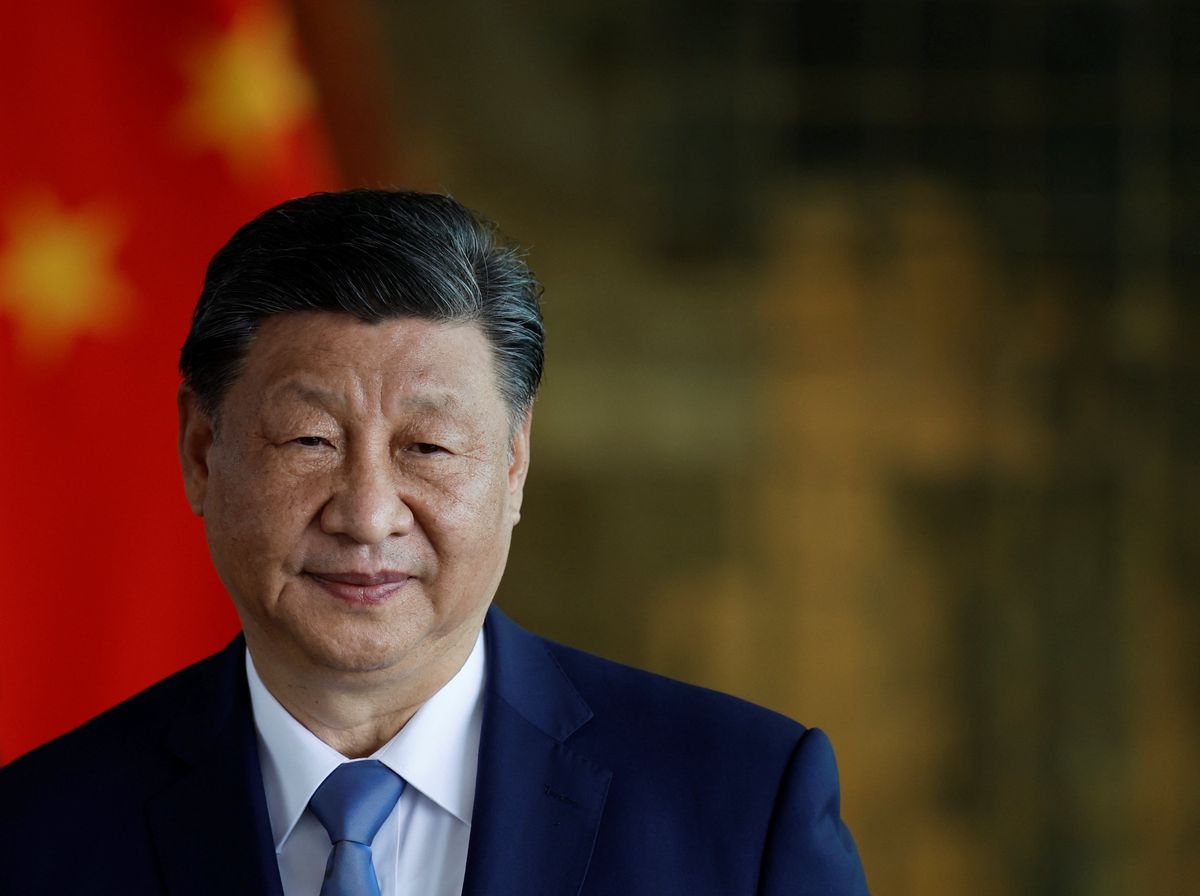
China's President Xi Jinping attends a meeting with Brazil's President Luiz Inacio Lula da Silva, in Brasilia, Brazil November 20, 2024. REUTERS/Adriano Machado

The conservative Wall Street Journal editorial board, after months of warning, has had enough of Trump's tariff scheme — and is putting out a clear message to the administration: You're now making China great again.

Trump’s tariffs are poised to "change the world order in many ways," the board said. And "one winner is already emerging" — Xi Jinping, the autocratic ruler of China, who had an "excellent week."

Trump is poised to tank the U.S. economy and drive many American allies right into China's arms.

"This is only partly a story about the retaliatory measures Beijing announced Friday following Wednesday’s 'Liberation Day' performance at the White House. China will impose a blanket 34% tariff on imports from the U.S. starting next week, matching Mr. Trump’s latest addition to his tariffs on China," wrote the board. "Beijing also added a couple dozen U.S. companies to various regulatory blacklists subject to trade, investment or export restrictions. Mr. Xi is slapping export controls on several rare-earth minerals critical for high-tech manufacturing. Oh, and a smattering of regulatory investigations for antidumping and the like are brewing, targeting American firms."

This all comes at a moment, the board wrote, when China's economy was teetering, its real estate market was in shambles, and it looked like all America had to do to win the rivalry was let events unfold.

"Mr. Xi must believe he will have no problem finding other sources for critical imports, especially since the U.S. is punishing the rest of the world with tariffs," said the board. "Meanwhile, China’s authoritarian system means Mr. Xi probably can ride out whatever political or social pain might result from higher unemployment or slower economic growth in a trade war. Congressional Republicans have to face voters in 18 months following whatever fallout comes from Mr. Trump’s tariffs. It’ll help that Mr. Xi can rally nationalist sentiment against the U.S."

Ultimately, the board concluded, Trump is only proving Xi's greatest hopes of the West's vulnerability.

"Mr. Xi and his Communist comrades have long believed the West is weak, divided and in retreat," the board concluded. "He will see this week as confirmation, and he won’t have to do much to exploit those divisions."

US soybeans, energy: Who is hit by China’s tariff retaliation?


By AFP
April 4, 2025


US agricultural exports are poised to be hard-hit if Washington and Beijing move forward with steep new tariffs, analysts say - Copyright AFP/File Johannes EISELE

Beiyi SEOW

US agricultural exports, fuels and manufactured goods are set to take a hit from China’s blanket retaliation against President Donald Trump’s sharp tariffs, with both sets of measures due to take effect next week.

After Trump announced a 34-percent new tariff on imports of Chinese goods — taking the added rate imposed this year to 54 percent — Beijing said it would slap an equivalent across-the-board tariff on US goods, among other countermeasures.

China used to target specific industries in a “mirror response” to US export restrictions, said Emily Benson of consulting firm Minerva Technology Policy Advisors.

But its broader plan unveiled Friday marks a “pretty significant warning shot” to the Trump administration to hold off further measures, she told AFP.

What is the state of US-China trade, and what US sectors stand to be impacted?


– US exports –


The United States exported $144.6 billion in goods to China in 2024, much less than the $439.7 billion it imported, Commerce Department data shows.

Among its exports, key sectors include electrical and electronic equipment and various fuels, alongside oilseed and grains.

But China likely has more confidence to retaliate this time compared with Trump’s first presidency, when he engaged in a tit-for-tat tariff war with Beijing.

“While the US is still obviously a very important market, fewer firms are now existentially dependent on US suppliers,” said Lynn Song, ING chief economist for Greater China.

She added that Beijing has also made efforts towards technological self-sufficiency.


– Agricultural goods –


“US farmers will bear a heavy burden,” said Asia Society Policy Institute vice president Wendy Cutler.

Their agricultural exports to China could “become too expensive to be competitive” with Beijing’s added tariffs, she told AFP.

Soybeans, oilseeds and certain grains were a key US export to China, amounting to $13.4 billion last year, US trade data showed.

“China bought 52 percent of our (soybean) exports in 2024,” said American Soybean Association chief economist Scott Gerlt.

Given the size of its purchases, China cannot easily be replaced, he told AFP.

Soybean prices plunged on Friday’s news.


– Fuels, machinery –


China also imported $14.7 billion of various fuels and oils from the United States last year.

Tariffs could impact the oil and gas industry in states like Texas, which alongside Louisiana saw such exports to China surge in 2023, said a US-China Business Council report.

And the US exported some $15.3 billion in electrical machinery to China last year, official trade data showed.

But semiconductor shipments have faltered on expanding US export controls on advanced tech.


– Chips impact –


Besides tariffs, China has restricted exports of rare earth elements and taken action against US firms — including drone companies and those in the defense and aerospace sectors.

“China controls about 69 percent of rare earth element mining. They also control about 90 percent of refining,” said Benson of Minerva Technology Policy Advisors.

“That’s going to probably be a chokepoint moving forward,” she added. This could affect semiconductor manufacturing, magnets, optics and lasers.

“Some of these are targeted, of course, at chips,” she said.

With Washington and Beijing turning to a growing range of tools in their conflict, Benson warned that the US “is relatively exposed to these Chinese controls” without an industrial policy response providing “a major cash infusion to scale up domestic production.”
Taiwan earmarks $2.7 bn to help industries hit by US tariffs

Agence France-Presse
April 4, 2025 


A 3D-printed miniature model of U.S. President Donald Trump, U.S. Flag and word "Tariffs" are seen in this illustration taken, April 2, 2025. REUTERS/Dado Ruvic/Illustration

by Joy CHIANG


Taiwan has earmarked $2.7 billion to help industries affected by US President Donald Trump's new tariffs, the government said Friday.

Taipei had sought to avoid Trump's threatened levies by pledging increased investment in the United States and more purchases of US energy, but it was still hit by a 32 percent tax on its imports, excluding semiconductor chips.

The government has described the tariffs as "unreasonable" and "extreme", and plans to seek negotiations with Washington in the hope of reducing their impact.

Announcing the NT$88 billion ($2.7 billion) assistance package, Premier Cho Jung-tai said the plan was to "address various needs of industries and society in the future."

Taiwan's trade surplus with the United States is the seventh highest of any country, reaching $73.9 billion in 2024.

Around 60 percent of Taiwan's exports to the United States are information and communications technology products, or ICT, which includes chips.

The government has argued that the surplus reflected soaring demand in the United States for Taiwan's semiconductors and other tech products, further driven by US tariffs and export controls targeting China that Trump imposed during his first term.

Cho told a news conference that the industrial and agricultural sectors would be the main targets of the assistance.

The funds will be used for financial support, reducing administrative costs, improving competitiveness, offering tax incentives and diversifying markets, he said.

Products expected to be hardest hit by Trump's tariffs include ICT, electronics, steel, metal and machinery, components and building materials.

Tea, orchids and fish are also likely to be hurt, Cho said, flagging a possible "shrinking consumer market or a weakening of our competitive advantage".

Vice Premier Cheng Li-chun told reporters the government had drawn up response measures based on a possible 25 percent tariff ahead of Trump's announcement.


"I must clarify that a 32 percent tariff falls under an extreme scenario," Cheng said.

"While we did run simulations based on it, that doesn't mean we consider it reasonable. In our view, it exceeds what would be a reasonable expectation -- it's neither reasonable nor fair."

Semiconductor chips, a sector that Taiwan dominates and has been a source of friction between Washington and Taipei, were excluded from Trump's levies.

However, analysts warned that tariffs on components would have a knock-on effect for the critical chip industry that is the lifeblood of the global economy.

Trump has accused Taiwan of stealing the US chip industry and recently threatened to impose tariffs of up to 100 percent on semiconductor imports from the island.

"Taiwan will lobby for exemption or at least see what Trump wants -- Trump wants something," Andrew Kam Jia Yi, an associate professor at the National University of Malaysia told AFP.


"(Trump) gives you the worst-case scenario then batters you down to a deal that you might not want but seems more reasonable than the original threat."

joy/amj/dhw

© Agence France-Presse

Taiwan says US tariffs ‘highly unreasonable’


By AFP
April 3, 2025

Donald Trump's sweeping new tariffs announced overnight included a hefty 32 percent tax on Taiwanese imports, which Taipei described as 'unfair'
- Copyright AFP I-Hwa Cheng

Joy CHIANG

US President Donald Trump’s tariffs were “highly unreasonable” and the government planned to start “serious negotiations” with Washington, Taipei said Thursday.

Taiwan had sought to avoid Trump’s threatened levies by pledging increased investment in the United States, more purchases of US energy, and greater defence spending.

But Trump’s sweeping new tariffs announced overnight included a hefty 32 percent tax on Taiwanese imports, which Taipei described as “unfair”.

“The Executive Yuan found the decision highly unreasonable and deeply regretted it, and will initiate serious negotiations with the United States,” cabinet spokeswoman Michelle Lee said.

Taiwan’s trade surplus with the United States is the seventh highest of any country, reaching US$73.9 billion in 2024.

Around 60 percent of Taiwan’s exports to the United States are information and communications technology products, or ICT, which includes semiconductor chips.

Lee said the surplus reflected soaring US demand for Taiwan’s semiconductors and other tech products that was further driven by the tariffs and export controls targeting China that Trump imposed during his first term.

“The surge in US demand for Taiwan’s ICT products reflects Taiwan’s significant contribution to the US economy and national security, yet Taiwan is now being hit with high tariffs,” Lee said.

“The proposed tariff does not accurately reflect the actual state of Taiwan-US trade relations and is unfair to Taiwan.”

Semiconductor chips, a sector that Taiwan dominates and has been a source of friction between Washington and Taipei, were excluded from the levies.

But analysts warned that tariffs on components would have a knock-on effect for the critical chip industry that is the lifeblood of the global economy.

Taiwan had drawn up plans to help local industries hit by possible US tariffs, Minister of Economic Affairs Kuo Jyh-huei said Tuesday, ahead of Trump’s announcement.

“Our countermeasures have been assessed and analysed, for example, how we would respond to a 10 percent or how we would respond to a 25 percent tariff,” Kuo said.

There had been hopes that Taiwan chipmaking titan TSMC’s plan to invest $100 billion in the United States would shield the island from Trump’s tariffs.

Taiwan has also pledged to increase investment in the United States, buy liquefied natural gas from the US state of Alaska, and raise its defence spending to more than three percent of GDP.

Trump has accused Taiwan of stealing the US chip industry and recently threatened to impose tariffs of up to 100 percent on semiconductor imports from there.
Japan PM says Trump tariffs a ‘national crisis’


By AFP
April 4, 2025


Japan's main Nikkei 225 index fell more than three percent on Friday, adding to a 2.7-percent drop on Thursday after the S&P 500 on Wall Street dropped by the most in a day since 2020 - Copyright AFP Kazuhiro NOGI


Kyoko HASEGAWA

US President Donald Trump’s tariffs on Japanese goods are a “national crisis”, Prime Minister Shigeru Ishiba said Friday ahead of cross-party talks on mitigating the impact.

Japanese firms are the biggest investors into the United States but Trump on Thursday announced a hefty 24-percent levy on imports from the close US ally as part of global “reciprocal” levies.

The measures “can be called a national crisis and the government is doing its best with all parties” to lessen the impact, Ishiba said in parliament.

He called however for a “calm-headed” approach to negotiations with Trump’s administration, which has also imposed 25-percent tariffs on auto imports which came into force this week.

Bank of Japan governor Kazuo Ueda said meanwhile that tariffs “can be a factor in downward pressure on the global and national economies”.

Ishiba on Thursday told his ministers “to study closely” the tariffs and “to take all measures necessary including financing support” for domestic industries and protecting jobs, government spokesman Yoshimasa Hayashi told reporters.

Ishiba’s meetings with party leaders later Friday were aimed at laying the groundwork for the supplementary budget bill, as his minority government needs opposition support to pass it in parliament, the Asahi Shimbun daily reported.

On Friday, Hayashi repeated that Trump’s sweeping new tariffs are “extremely regrettable” and that Japan has “serious concerns” about whether they comply with World Trade Organization rules and US-Japan trade agreements.

Japan’s main Nikkei 225 index fell more than three percent on Friday, adding to a 2.7-percent drop on Thursday after the S&P 500 on Wall Street dropped by the most in a day since 2020.


– ‘Extremely grave’ –


Major Japanese business lobby the Japan Chamber of Commerce and Industry (JCCI) said Trump’s tariffs “would have an extremely grave impact on the Japanese economy”.

“We strongly urge the government to continue its persistent negotiations for the exemption from tariff measures and to take all possible measures to minimise the impact on small and medium-sized enterprises and small businesses… by developing a detailed consultation system and strengthening cash management support,” the JCCI said Thursday.

The Japan Automobile Manufacturers Association (JAMA) also called for government assistance for its members, which make up an important pillar of the world’s fourth-biggest economy.

The industry has “consistently called for fundamental reform to simplify and ease the burden of automobile-related taxation, (and) we kindly request comprehensive support measures to ensure that Japan’s automotive industry can maintain its foundation as a manufacturing base, through the revitalization of the domestic market”, it said.

JAMA said its members have invested a cumulative total of more than $66 billion in US manufacturing as of 2024, generating over 110,000 direct US jobs and supporting more than 2.2 million others.

“We have long believed that becoming an integral part of the US auto industry — through local investment and job creation — is the most sustainable path forward for the auto industries of both countries,” it said.

Japanese carmakers ship about 1.45 million cars to the United States from Canada and Mexico, where they operate factories, Bloomberg News reported.

By comparison, Japan exports 1.49 million cars directly to the United States, while Japanese automakers make 3.3 million cars in America.

In Japan, the auto sector is a key industry, employing about 5.6 million people directly or indirectly.

Vehicles accounted for around 28 percent of Japan’s 21.3 trillion yen ($142 billion) of US-bound exports last year.


Japan says US tariffs ‘extremely regrettable’, may break WTO rules

By AFP
April 3, 2025


Unlike in Trump's first term, Japan has failed to win exemptions on tariffs on imports into the United States - Copyright AFP/File TOSHIFUMI KITAMURA


Hiroshi HIYAMA, Kyoko HASEGAWA

Japan slammed Thursday as “extremely regrettable” US President Donald Trump’s sweeping new tariffs, saying they may break WTO rules and the two countries’ trade agreement.

Japanese firms are the biggest investors into the United States but Tokyo has failed to secure an exemption, with Trump announcing a hefty 24-percent levy on Japanese imports.

“I have conveyed that the unilateral tariff measures taken by the United States are extremely regrettable, and I have again strongly urged (Washington) not to apply them to Japan,” Yoji Muto, trade and industry minister, told reporters.

He said he spoke to US Commerce Secretary Howard Lutnick before Trump’s announcement of a new 10-percent baseline tariff and extra levies on selected countries — including close strategic ally Japan.

“Japan (are) very very tough. Great people…. They would charge us 46 percent, and much higher for certain items,” Trump said. “We are charging them 24 percent.”

Muto said he had explained to Lutnick “how the US tariffs would adversely affect the US economy by undermining the capacity of Japanese companies to invest”.

“We had a frank discussion on how to pursue cooperation in the interest of both Japan and the United States that does not rely on tariffs,” Muto said.

Government spokesman Yoshimasa Hayashi also said that the US measures may contravene World Trade Organization (WTO) rules and the two countries’ trade treaty.

“We have serious concerns as to consistency with the WTO agreement and Japan-US trade agreement,” he told reporters.

Asked if Japan will impose retaliatory tariffs or is considering filing a suit to the WTO, Hayashi said: “We decline to disclose details of our considerations.”


– Abe exception –


In Trump’s first term, then prime minister Shinzo Abe, who had warm relations with Trump, managed to secure an exemption from tariffs.

In February, Trump hosted Prime Minister Shigeru Ishiba for apparently friendly and fruitful talks, hailing a “new golden age for US-Japan relations”.

Ishiba promised a trillion dollars in investments and to import what Trump called “record” imports of US natural gas.

Japan, together with South Korea, would also partner on a “gigantic natural gas pipeline in Alaska”, Trump said.

Japan has also failed to win exclusion from 25-percent tariffs on imports into the United States by its massive auto sector that came into force on Thursday.

Last year, vehicles accounted for around 28 percent of Japan’s 21.3 trillion yen ($142 billion) of US-bound exports, and roughly eight percent of all Japanese jobs are tied to the sector.

Japanese carmakers ship about 1.45 million cars to the United States from Canada and Mexico, where they operate factories, Bloomberg News reported.

By comparison Japan exports 1.49 million cars directly to the United States, while Japanese automakers make 3.3 million cars in America.