Monday, April 07, 2025


LNG and Coal Face Dismal Times With Trump’s Port Levies

  • The beleaguered coal industry could soon find itself in even more trouble thanks to a proposed levy on Chinese ships.

  • The Trump administration has drafted an executive order to levy fines of up to $1.5 million per port call on Chinese-built ships calling at U.S. ports.

  • According to the American Petroleum Institute, the proposed fees could also make it harder for the U.S. to export oil, liquefied natural gas, and refined fuels.


Last week, U.S. President Donald Trump imposed a minimum 10% tariff on all imports from 90 countries, roiling financial markets across the globe. U.S. customs agents began collecting the unilateral tariff at customs warehouses, seaports and airports on Saturday, with higher levies on goods from 57 larger trading partners set to start in the current week. As widely expected, China was the hardest hit by the tariffs: China now faces a hefty 64.9% tariff, including an additional 34% duty imposed by former President Trump on top of existing tariffs from previous administrations. Beijing returned fire by announcing a slew of countermeasures, including extra levies of 34% on all U.S. goods as well as export curbs on some rare earth minerals.

And, while some have suggested Trump policies could help revive coal, that’s only a surface argument. The beleaguered coal industry could soon find itself in even more trouble thanks to a proposed levy on Chinese ships.

The Trump administration has drafted an executive order to levy fines of up to $1.5 million per port call on Chinese-built ships calling at U.S. ports. The levy is an attempt to revive the long-declining U.S. shipbuilding industry, with the administration accusing China of “unfair practices”.

Related: Reuters Survey Shows OPEC Output Down 110,000 Bpd in March

Unfortunately, the potential port fees are already having a deleterious effect on multiple sectors of the economy, limiting the availability of ships needed to move energy, mining, agriculture, construction and manufactured goods to international buyers.

Last month, Pennsylvania-based coal marketer Xcoal Energy & Resources CEO Ernie Thrasher told Reuters that vessel owners have already refused to provide offers for future U.S. coal shipments due to the proposed USTR fees. Thrasher estimates that implementing the punitive fees could cease exports of U.S. coal within 60 days, putting $130 billion worth of shipments at risk. Thrasher says the fees could add up to 35% to the cost of U.S. coal, making it uncompetitive on the global market. Chris Hamilton, CEO of the West Virginia Coal Association, told Reuters that unsold coal inventories are rapidly piling up, with coal mines preparing to lay off miners.

"The loss of direct and indirect jobs would be catastrophic," said Thrasher.

But the coal industry is not the only energy commodity likely to suffer under the ship levies.

According to the American Petroleum Institute, the proposed fees could also make it harder for the U.S. to export oil, liquefied natural gas (LNG), and refined fuels. According to shipping association BIMCO, very few maritime operators are able to meet the requirement by the Trump administration that at least 20% of U.S. exports are carried on U.S. built, U.S flagged vessels, something likely to hit U.S. energy exports "...specifically liquid natural gas (LNG) as no US built, US flagged LNG carriers are in operation nor on order," said BIMCO.

The levy would undermine the current administration's energy goals. As one of his first executive orders, Trump expedited the LNG export license process (achieving licensing times one-sixth as long as those seen during the Biden Administration, which revoked these reforms), reduced the permitting time for drilling on federal lands (increasing permit applications by 300%), fixed the New Source Review (which punished companies for repairing and upgrading coal power plants), and opened up millions of acres for domestic energy development. Trump warned Western Europe as early as 2017 to rely on American natural gas rather than Russian energy.

Meanwhile, U.S. farmers are likely to be caught in the crossfire of the Chinese ship fee fight.

Last month, three U.S. grain export traders told Reuters that the inability to secure ocean freight transportation was already restricting their ability to sell bulk U.S. agricultural products like corn, soybeans and wheat. According to the U.S. Census Bureau Trade data, the United States exported more than $64 billion in bulk crops,  vegetable oils and bulk animal feeds in 2024. The Farm Bureau estimates that bulk agricultural exporters could see their annual transportation costs increase by $372 million to $930 million due to the proposed fees.

The ambitious USTR proposal seeks to shift domestic exports to U.S.-built ships that are also flagged. However, it’s currently impractical: Reuters estimates that U.S.-flagged cargo vessels currently number less than 200, with even fewer being U.S.-built. China is, by far, the biggest builder of cargo ships, with 81% of the global fleet of container vessels and 75% of bulk carriers built in Chinese shipyards. That’s a massive increase from 25 years ago when China owned a mere 5% slice of the shipbuilding market. In contrast, U.S. shipyards are currently building less than 0.01 per cent of the world’s cargo ships by tonnage, thanks to a strong preference by American shipyards for billion-dollar warships over commercial cargo vessels.

By Alex Kimani for Oilprice.com


Freeport-McMoRan CEO flags concern over global growth amid US tariffs


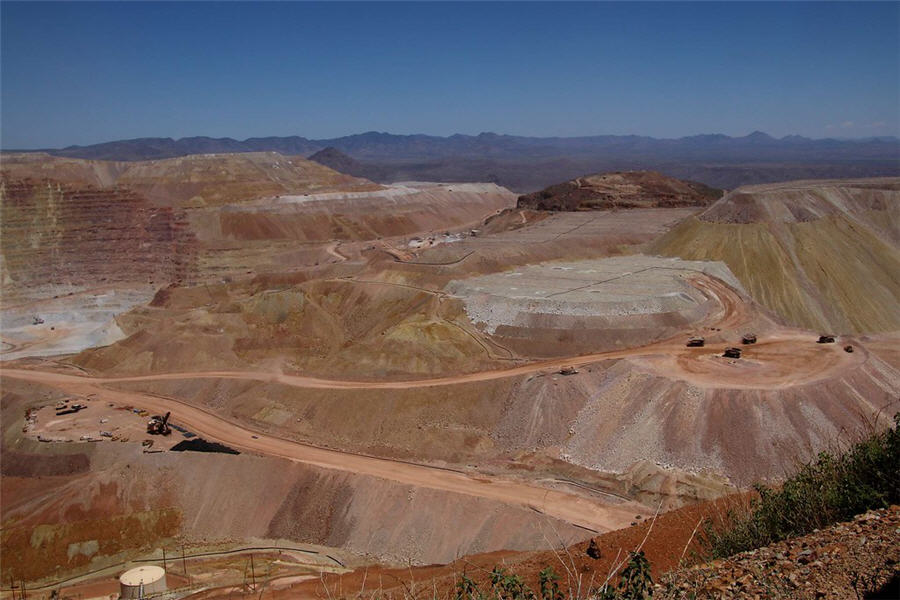
Morenci mine, Arizona. Source: Freeport-McMoRan, Flickr

The CEO of copper producer Freeport-McMoRan said on Monday she was concerned about the health of the global economy and the possibility of recession and inflation in the wake of US tariffs rolled out last week.

The comments from the world’s largest publicly traded copper producer join the chorus of concern from top executives since US President Donald Trump imposed sweeping tariffs ranging from 10% to 50%, triggering losses in financial markets and ratcheting up tensions with China and the European Union.

“We can’t ignore the fact that a trade war could cause people to not invest, to not buy, to change their patterns and affect demand,” CEO Kathleen Quirk told the CESCO conference in Santiago, one of the copper industry’s largest annual gatherings.

Copper is used widely across the global economy in power generation, electronics and construction, a ubiquity from which its nickname “Dr. Copper” is derived.

Although Quirk noted that mining companies needed to wait and see how the tariff situation unfolds, she said the recent copper price drop was not good long-term for the industry, which depends on multi-billion dollar investments.

Quirk told Reuters last month that while US copper tariffs could boost Freeport’s profits by $400 million annually, she was worried about their impact on the global economy, comments that she reiterated on Monday.

“All of us will rely on a market that will be growing in demand and not subject to these big recessions that we’ve seen over time,” she said, pointing to the effects of the 2008 downturn.

US-based Freeport also has major operations in Chile, Peru, Europe and Indonesia. Quirk said she welcomed the idea of producing more copper in the United States, a goal in line with Trump’s aim of boosting domestic production to offset the dominance of China.

The company is already the largest US copper producer and operates one of two US smelters for the red metal.

(By Daina Beth Solomon; Editing by Ernest Scheyder and Rod Nickel)

As Chile revs up lithium plans, Indigenous people demand more control


Reuters | April 7, 2025 |


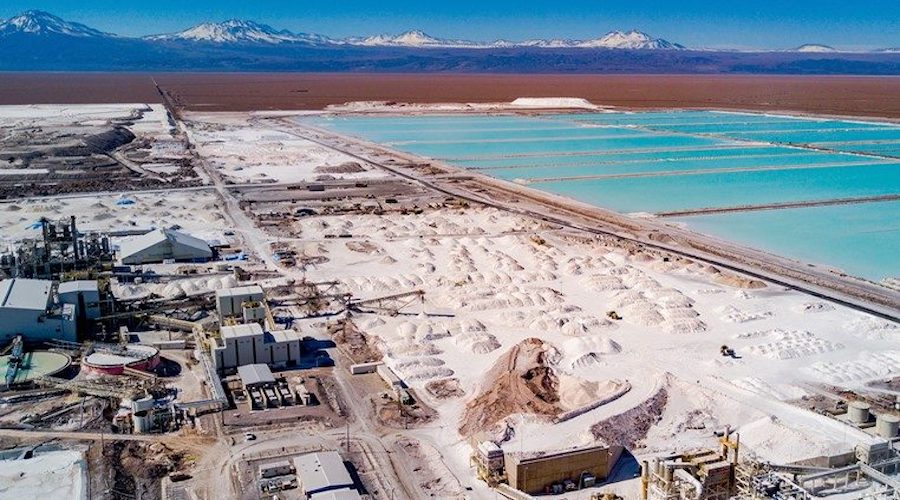
Evaporation ponds in Atacama’s salt flat, Chile. (Image courtesy of SQM.)


Chile’s Indigenous communities in the lithium-rich Atacama Desert are in talks with two of the nation’s biggest miners to gain more influence over plans to increase extraction of the battery metal, according to the companies and community sources.


The negotiations with Chile’s state-run Codelco, the world’s biggest copper producer, and Chilean lithium producer SQM, come as the companies are close to finalizing a partnership that will mark the state’s entry into production of the metal that is crucial for electric vehicle batteries.

The talks to craft a so-called “governance” plan began in March and are expected to conclude by year-end, Reuters learned exclusively. They follow a dialogue begun last year in which the companies explained the joint venture, and community representatives laid out their concerns.

Codelco and SQM agree on final lithium deal

Both sides say their goal is to create a model that will give Indigenous Atacama groups, also known as Lickanantay, an active role in the new venture in a salt flat that sweeps across one of the planet’s driest places, where people have lived for thousands of years.

“We have invited them to work together on a governance model that effectively recognizes and considers the perspectives and visions of the Lickanantay communities … in the decision-making processes of the new company,” Codelco and SQM said in a joint statement to Reuters.

The companies described the potential system as “unprecedented” in Chile, adding that it would comply with international treaties on Indigenous rights.

In visits by Reuters to five Indigenous towns in the Andean foothills above the salt flats, community leaders emphasized the need to hold SQM and Codelco accountable to their environmental pledges, particularly to limit water use.

“The idea … is that it’s not just the company deciding what to do in our territory,” said Sergio Cubillos, community leader of Peine, which overlooks the vast Atacama basin that provides a quarter of the world’s lithium supply.

Giving Indigenous groups a seat at the table could potentially crimp profits if it were to lead to costlier environmental standards.

At the same time, an agreement could appeal to global buyers that are increasingly focused on ethical mining to meet shareholder demands, and help avert protests.

The mining sector views as a cautionary tale protests in Panama in 2023 that led the government to shut down the First Quantum Minerals copper mine.

“The companies have realized that interrupting production obviously has a damaging effect,” said Yermin Basques, leader of the Toconao community.

One option for a new framework would be regular dialogue with company decision-makers, such as board members, Basques said.

“This would let us participate in the discussion on how the technological extraction process will work, how we will safeguard the water supply, how we will develop extraction with less environmental impact,” he said.

Getting a board seat is not the goal, he noted, as the communities do not seek a voice in business decisions.

Dialogue with Codelco and SQM had at times been tense, Basques added, but the two sides were now working together, in part because the firms recognized the need for community support after protests snarled SQM logistics last year.

“We have specific knowledge of our territory, of our water. And we have the power to close the salt flat if needed.”

Clock ticking

Codelco and SQM told Reuters that talks would continue this year, building on dozens of meetings last year with Atacama groups.

Their joint venture, in which Codelco will have 50% plus one share of control over SQM’s Atacama operations, is slated to go into effect in the second half of the year, pending regulatory approvals.

An advisor for the Atacama Indigenous Council (CPA), which comprises 18 communities, told Reuters that the council was reviewing early-stage proposals for the governance model, including one put forth by Codelco and SQM, but declined to provide details.

The companies declined to provide their proposal to Reuters, citing the ongoing process.

The advisor said council representatives will meet with Codelco and SQM every couple of weeks for the next two or three months as they hammer out a final proposal.

Each community will then discuss the plan internally, before representatives agree on a definitive version with Codelco and SQM, expected in the second half of the year, the advisor said.

Codelco and SQM plan to raise lithium output by as much as 33% through 2060. The goal is part of a tectonic change in Chile’s lithium sector after leftist President Gabriel Boric announced plans in 2023 to shift to a state-led model, spearheaded by Codelco, and committed to prioritizing Indigenous rights.

Some community leaders say they feel a sense of urgency to reach an agreement with Codelco and SQM while Boric is still in office through March of next year, concerned that a successor could shake up the country’s lithium strategy and veer away from Boric’s pro-Indigenous stance.

Some lawmakers, from a range of parties, have criticized the Codelco-SQM deal, concerned over whether the agreement was in Chile’s best interest. Most presidential hopefuls from opposition parties have yet to outline their stance on lithium mining. By law, Boric cannot run for a second consecutive term.

“We have to hurry up, because we don’t know what could happen next year,” said Basques, the Toconao leader.

Veteran conservative politician Evelyn Matthei, who currently leads early presidential polls, said in a statement from her office to Reuters that she supports mining development, wants to boost Chile’s lithium production, and aims to benefit all people including Indigenous communities.

Chile’s Mining Ministry declined to comment on the Codelco-SQM venture.
New model

Chile has the world’s largest proven reserves of lithium, US Geological Survey data show, and is the second-largest producer behind Australia.

While some Indigenous groups in Canada and Australia have taken a bigger role in environmental management, such practices are rare in Latin America, experts say.

SQM shareholders, as well as customers focused on environmental, social and governance (ESG) risks, such as European automakers, are likely to view an Indigenous agreement as positive for SQM, said Seth Goldstein, an analyst at Morningstar Research Services.

“Dialogue allows SQM an easier path to keep its operations going,” he said.

SQM already runs Indigenous outreach programs, including working groups, complaint channels, joint environmental monitoring and cooperation agreements. In some communities, the company has installed solar panels, provided dental care and offered agricultural training.

SQM’s efforts follow best practices for community relations, according to a 2023 audit by the Initiative for Responsible Mining Assurance (IRMA), an evaluation process favored by EV manufacturers to ensure supply chain transparency.

Still, the audit found that SQM still had work ahead to overcome years of distrust.

Winder Flores, who grew up in the town of Talabre and now helps his aging mother make cheese and wool crafts in Tambillo near the edge of the Atacama salt flat, is conscious of what’s at stake.


“We want the miners to guarantee that there will be no pollution, that our water supply will not run out,” he said, as his herd of goats and llamas roamed in one of the rare grassy areas of the desert, nourished by a freshwater spring.

“We’re not against the country’s development, but we do want to be part of it, and not be left with nothing.”

(By Daina Beth Solomon; Editing by Adam Jourdan, Veronica Brown and Claudia Parsons)


Canada’s opposition leader says he would approve Suncor oil project, mines

The leader of Canada’s Conservative Party said he would accelerate approval on 10 resource projects if elected, including the extension of a major Suncor Energy Inc. oil sands mine in Alberta.

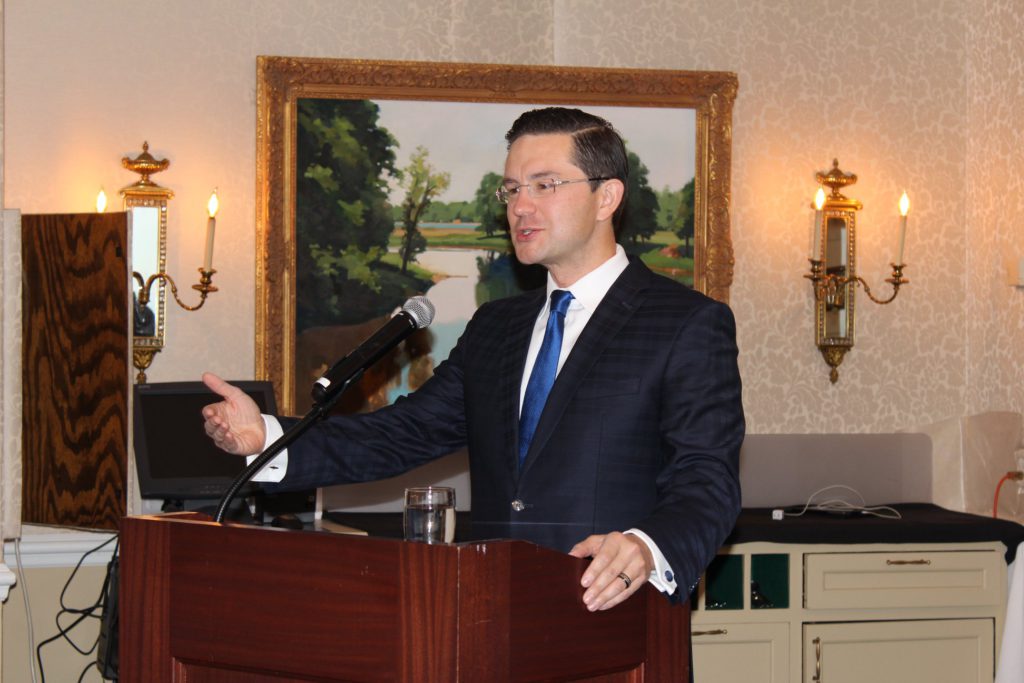
Pierre Poilievre, who’s running against Liberal Prime Minister Mark Carney in an April 28 election, has pledged to advance projects including the second phase of LNG Canada in British Columbia, the Rook 1 uranium mine in Saskatchewan, Springpole Lake gold mine in Ontario and Suncor’s project. Poilievre said natural resource projects have been stymied over the past decade of Liberal leadership due to excessive regulations and slow approvals.

Suncor submitted a plan to the federal government in 2020 to extend the life of its Base Plant mine, which is more than 50 years old and forms the backbone of Suncor’s oil sands operations. The mine feeds bitumen into two upgraders that turn the ultra-heavy crude into lighter, higher-value synthetic oil.

In 2022, then-environment minister Steven Guilbeault signaled he may not approve the extension project, saying its emissions “may not align” with Canada’s climate targets.

In December, the government announced it would begin assessing the impact of the project, but Suncor has been working to secure alternative supplies of bitumen for its upgraders, including by acquiring full control of the Fort Hills oil sands mine from TotalEnergies SE and Teck Resources Ltd.

Suncor chief executive officer Rich Kruger has also said the company is considering boosting supply with more oil-sands well projects — known as in-situ developments — including the long-proposed Lewis project or Firebag South. Suncor didn’t immediately respond to a request for comment.

(By Robert Tuttle)


China deploys rare earths as weapon in trade war with Trump

(Image: Pixabay)

China has expanded its use of critical minerals as a trade weapon with curbs on exports of rare earths, threatening to shake-up the global supply of key materials used widely in high-tech manufacturing from electric vehicles to weaponry.

As part of its retaliation to President Donald Trump’s so-called reciprocal tariffs on imported Chinese goods, Beijing said Friday it will tighten controls on exports of seven types of rare earths. The country is by far the world’s biggest supplier of the minerals, which comprise 17 elements in the periodic table.

The move triggered big gains for related stocks on Monday, with China Rare Earth Holdings Ltd. rising as much as 10% in Hong Kong. China Northern Rare Earth Group added as much as 9.2%, and Australia’s Lynas Rare Earths Ltd. as much as 5.1%.


China accounts for almost 70% of the world’s production of rare earths, according to the US Geological Survey. Its grip on a host of niche commodities has long been viewed as a potential geopolitical weapon, given America’s reliance on Chinese supplies.


Beijing had already rolled out similar curbs on other critical minerals, such as gallium, germanium, graphite and antimony, over the past two years amid rising trade tensions.

The latest export controls aren’t a blanket ban, but they mean that any overseas shipments will be subject to greater scrutiny over who is buying, and why. Other metals have seen export volumes crash to zero after controls were rolled out, with exporters needing time to get certified.

“The new controls may further tighten global supply,” analysts from Citic Securities Ltd. said in a note. The policy “safeguards China’s national security interests, and bolsters the strategic value of investing in the rare earth industry chain,” they wrote.

Supply chain

The list of rare earths announced Friday includes samarium, gadolinium, terbium, dysprosium, lutetium, scandium and yttrium. But two of the most common — neodymium and praseodymium — weren’t included. They’re used in powerful magnets that are one of the best-known applications for rare earths.

“Unlike the seven rare earths selected, these are more readily available outside China, which could make any controls less impactful,” said David Abraham, affiliate professor at Boise State University in Idaho. “They may have been excluded to preserve the option of future controls.”

The export restrictions won’t harm the stability of the international supply chain, according to a statement from the China Nonferrous Metals Industry Association on Sunday.

“As long as companies do not engage in activities that harm China’s national sovereignty, security and development interests, the export control measures won’t affect their normal operation and trade,” the industry body said.

On Friday, China’s commerce ministry said establishing the controls on so-called dual-use items that have military applications is in the interests of national security, regional stability and world peace.


MAN 175D Wins Portuguese Navy Projects

MAN Energy Solutions
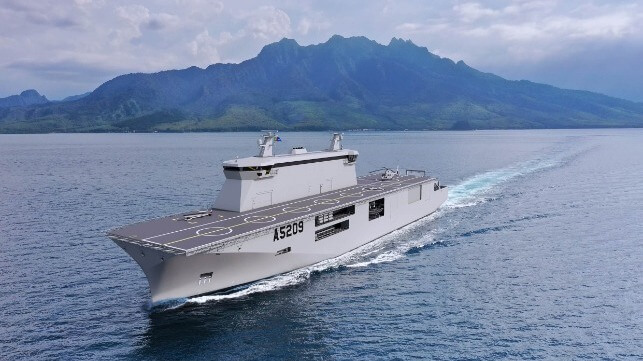
Rendering of the Multi-Purpose Vessel (Courtesy Damen Group)

Published Apr 7, 2025 6:33 PM by The Maritime Executive


[By: MAN Energy Solutions]

MAN Energy Solutions reports that its MAN 175D engine has recently won two separate orders to power newbuildings for the Portuguese Navy.

Damen Shipyards Group of the Netherlands has ordered multiple MAN 175D engines in connection with the construction of a multi-purpose vessel (MPV). The order covers one shipset comprising 2 × 12V175D-MEM engines (each delivering 1800 kW at 1,800 rpm) + 2 × 16V175D-MEM engines (each delivering 2,400 kW at 1,800 rpm).

Delivery of the engines is set for 2025, with vessel delivery subsequently scheduled for 2026. The 107-metre long MPV will comprise a multi-purpose platform with primary mission roles including oceanic research, search and rescue, and emergency relief in addition to maritime safety and naval-support operations.

Florian Keiler – Head of High-Speed Sales, Marine Four-Stroke – MAN Energy Solutions, said: “This vessel’s multi-purpose functionality will enable the Portuguese Navy to execute the most demanding missions, as well as give it the ability to perform research at the greatest ocean depths. A particular requirement for this order related to structure-borne noise and, accordingly, the 175D GenSets will come with double-resilient mounting to meet all noise requirements over the full frequency range.”

For the other key project, Portuguese shipbuilder, West Sea – Estaleiros Navais, has ordered multiple MAN 175D engines in connection with the construction of 6 × 83-metre offshore patrol vessels (OPVs). The order encompasses six shipsets featuring 2 × 16V175D-MEL engines, each delivering 2,960 kW at 1,800 rpm.

The Viana do Castelo-class OPVs will be built at West Sea’s shipyard in northern Portugal. The engines will be constructed at MAN Energy Solutions’ Frederikshavn facility in Denmark and are scheduled for ongoing delivery from early 2026 to mid-2029 with respective vessel deliveries set for 18 months after in each case.

The OPVs’ main tasks involve long-range maritime surveillance and patrol missions, as well as search-and-rescue operations. However, depending on the sensors and weapons installed on board, they can be assigned to military missions in traditional maritime areas of unrest.

Dietmar Zutt – Sales Manager, High-Speed Navy – MAN Energy Solutions, said: “This is an excellent reference for the MAN 175D as naval vessels have high requirements in terms of manoeuvrability, speed, maintenance cycles and environmental considerations. West-Sea and the Portuguese Navy jointly chose this engine mindful that each vessel’s power requirement of about 6 MW can be achieved with just two compact 16V175D-MEL GenSets. These offer the segment’s best power-to-length ratio – a unique selling point – meaning they can deliver power requirements with eight fewer cylinders than rival engines, freeing up space in the engine room and lowering maintenance requirements.”

In general, MAN 175D units offer:

  • superior engine dynamics with the segment’s fastest vessel manoeuvring and quickest acceleration;
  • OPEX leader in market segment, leading to longer cruising range;
  • resilience to high temperatures – engine always capable of operation at full power, negating any need for derating that might put the vessel at risk;
  • exceptional low-load endurance – capable of 24-hour low-load operation without the need to increase engine power.
  • control system for full level of cybersecurity;
  • capable of CO2-neutral operation with 100% FAME fuels;
  • methanol-ready.

The products and services herein described in this press release are not endorsed by The Maritime Executive.


U.S. Backs Diego Garcia Deal for 99 Years of Rent-Free Access

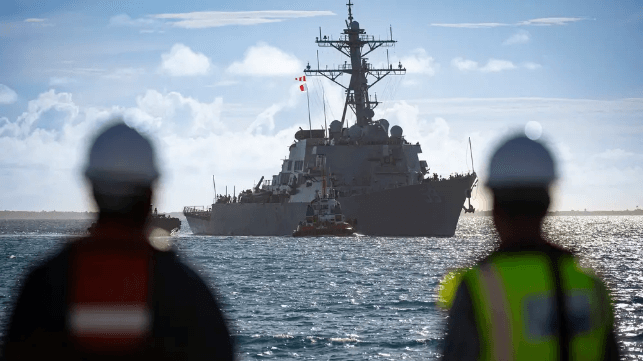
An Arleigh Burke-class destroyer arrives at Diego Garcia for a port call, 2024 (USN)

Published Apr 6, 2025 2:45 PM by The Maritime Executive


A deal appears to be in the last stages of negotiation between Mauritius and the UK over the continued use of Diego Garcia, a key base for U.S. naval and air operations in the Middle East and Africa.  This follows President Trump’s approval of the detailed draft treaty which was announced on April 1. Both the UK and Mauritian government have indicated that they are keen to finalize the treaty as soon as possible.

However, Britain’s Reform Party, which has been ahead of both the governing Labour Party and the Conservative official opposition party in opinion polling over the last three months, promised on April 6 to annul any treaty signed should it be elected to power.  Richard Tice, the Deputy Leader of the party, said in a television interview that he was not surprised the United States supported the deal, because it gave the United States rent-free use of Diego Garcia for the next 99 years. The Reform Party would ‘rip up’ the treaty, on the basis that Mauritius accepted a deal in 1965 under which it accepted payment in return for surrendering all future claims to the Chagos Island archipelago.

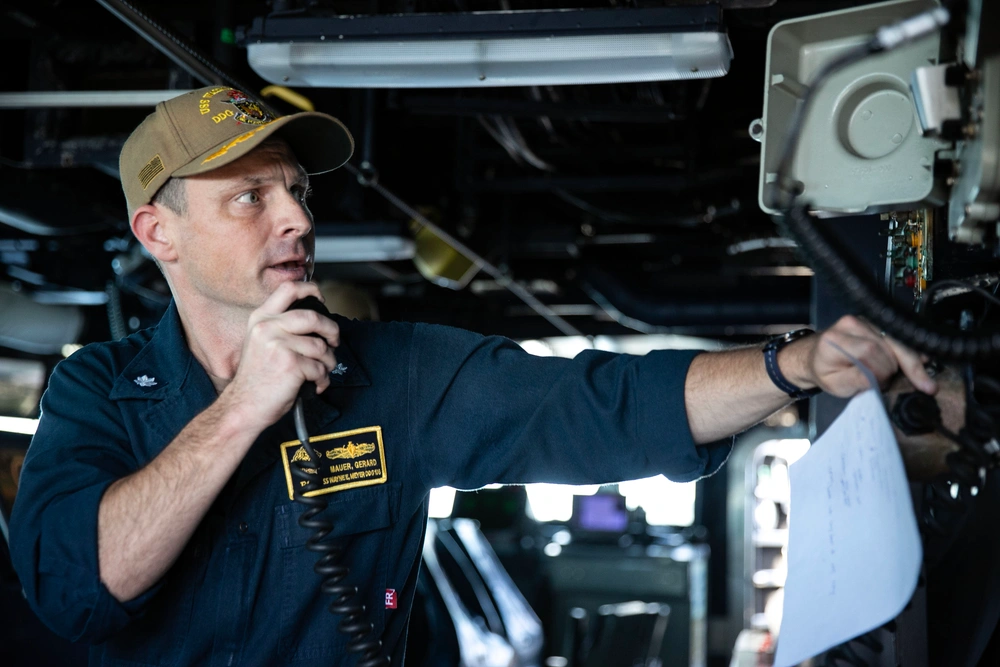
Open source imagery analysts have in recent days identified B-2 Spirit long-range strategic bombers being loaded with munitions on the Diego Garcia apron, indicating that these aircraft are being used in the ongoing attacks against Houthi targets in Yemen.  There are also reports that the United States is moving the Arleigh Burke Class destroyer USS Wayne E. Meyer (DDG-108) into position in the Chagos archipelago in order to strengthen local air defenses in the face of potential threat from Iran. USS Wayne E. Meyer has headed west out of the Malacca Straits and on April 3 was in the Indian Ocean.

Cmdr. Gerard Mauer, commanding officer of USS Wayne E. Meyer (DDG 108), speaks to the crew on the ship’s announcement system, April 3 (USN)

WWII REDUX

U.S. Transportation Secretary Wants to Rebuild USMMA

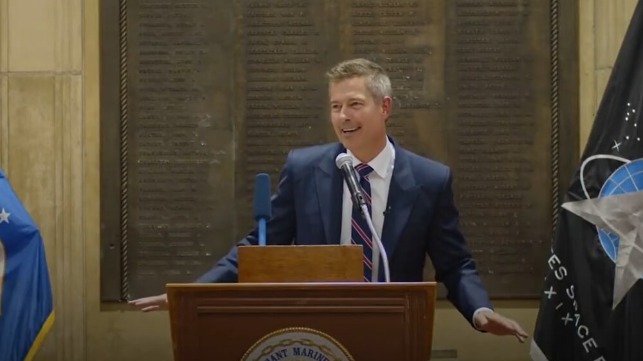
Transportation Secretary Sean Duffy addresses USMMA midshipmen (DOT)

Published Apr 6, 2025 8:06 PM by The Maritime Executive


In a visit to the U.S. Merchant Marine Academy last week, U.S. Transportation Secretary Sean Duffy pledged to help find the resources needed to restore the institution's infrastructure - an investment that DOT has not prioritized before. 

"You don't deserve to have an academy that's dilapidated," Duffy told midshipmen in an energetic speech. "The problem is, you guys haven't had the focus of a secretary to say, 'we're going to turn this around.'"

Duffy said that he was astonished to hear reports that some USMMA midshipmen have to live with mold in their accommodations and sometimes don't have hot water. (These allegations could not be immediately verified, but his audience applauded.) "I tell you what, if you guys had been at West Point or the U.S. Naval Academy . . . they would have quit a long time ago," he said. 

Duffy called the condition of USMMA a bipartisan issue, and he was accompanied on his visit by a Democratic member of Congress, Rep. Thomas Suozzi (D-NY). Four representatives from Long Island, including Suozzi, have introduced a bill to invest $1 billion in federal funding for infrastructure improvements at the USMMA campus over 10 years. 

The secretary declined to endorse any specific figure, but he pledged to support USMMA's efforts to find funding for improvements. He told Newsday that the academy needs to be rebuilt much more quickly than 10 years. 

Duffy said that part of his rationale for boosting USMMA is the need to counter China on the high seas. He pointed to China's increasing dominance in shipping and shipbuilding as a cause for concern, noting that CSSC built more tonnage in 2024 than the entire production of every American yard since WWII. "That is going to change . . . and you all are part of that change," he told the audience.

WWIII

China Coast Guard Cutter Nearly Hits Philippine Patrol Vessel Head-On

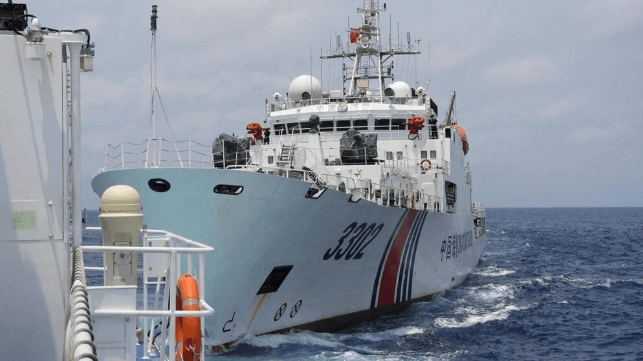
CCG-3302 closes in on BRP Cabra, April 5, 2025 (PCG)

Published Apr 6, 2025 10:18 PM by The Maritime Executive


On Sunday, the crew of the Philippine Coast Guard cutter BRP Cabra narrowly averted a head-on collision with an aggressive China Coast Guard cutter, according to the PCG. 

On Saturday, BRP Cabra intercepted the China Coast Guard cutter CCG-3302 at a position about 85 nautical miles off the coast of Luzon. CCG-3302 is the latest in a string of Chinese government vessels that have been dispatched to patrol the Philippines' coastal waters, asserting Chinese law enforcement jurisdiction in an area about 500 nautical miles from mainland China. Beijing claims almost all of the South China Sea as its own, including large sections of its neighbors' exclusive economic zones. 

"The 44-meter BRP Cabra boldly confronted the larger 99-meter CCG vessel, asserting its rightful presence within the Philippine Exclusive Economic Zone," the PCG said in a statement Saturday. 


On Sunday, PCG spokesman Commodore Jay Tarriela said that the CCG-3302 had engaged in "reckless and dangerous maneuvers," and nearly carried out a head-on collision with BRP Cabra. Only the skill of the PCG crew prevented a collision, he said. 

After the encounter, CCG-3302 retreated further from Luzon's shores by about 10 nautical miles, according to Tarriela. It continues its "illegal patrol," he said, and BRP Cabra remains on scene to monitor it. The pushback is intended to prevent the "normalization of unlawful activities" by the Chinese government in the Philippine EEZ. 

Tensions between the Philippines and China are running higher than usual, and not just in the South China Sea. Philippine police forces have arrested 18 Chinese nationals in four separate busts since the start of the year on espionage charges, including five who were detained for allegedly spying on U.S. Navy vessels in Subic Bay. 

The Armed Forces of the Philippines has also advised its forces to be prepared for the possibility of a Chinese invasion of Taiwan. If this occurred, AFP troops would be needed for an evacuation of Philippine overseas workers: an estimated 250,000 Filipinos are employed in the Taiwanese economy, and would have to be brought back to safety across the Strait of Luzon. 


Japan's Army Launches an Inter-Island Maritime Transport Unit

Effort mirrors U.S. Marine Corps' Landing Ship Medium program, which is aimed at the same operating region

JGSDF
Courtesy JGSDF

Published Apr 6, 2025 10:54 PM by The Maritime Executive


On Sunday, Japan’s Defense Ministry launched a new military unit, the Maritime Transport Group. The unit is expected to improve Japan Self-Defense Forces (JSDF) maritime logistics, allowing swift deployment of ground troops and equipment to front-line bases. The inauguration ceremony was held at Kure naval base in Hiroshima Prefecture. 

The plan for a specialized maritime transport unit for the JSDF was initially announced in 2018. The aim was enhancing JSDF ability to transport troops to remote islands - especially the islands west of Okinawa, a response to China’s maritime expansion in the region and the risk of a Chinese invasion of Taiwan.

The new Maritime Transport Group is part of the Japanese government's strategy to strengthen its island defense system, and will be managed by Japan's army (Japan Ground Self Defense Force, or JGSDF). This command structure is similar to the United States' landing craft fleet, which is housed within the U.S. Army Watercraft Systems division. 

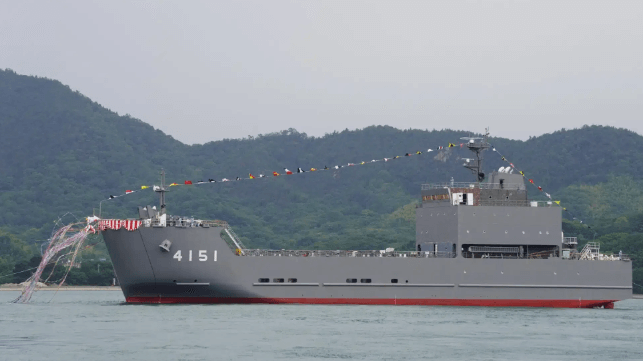
The Maritime Transport Group consists of about 100 members, drawn from the three branches of JSDF including the Ground, Maritime and Air Self Defense Forces. For the operations of the unit, the ministry plans to procure 10 vessels by March 2028. The vessels include two LSVs (Logistics Support Vessel), four LCUs (Landing Craft Utility) and four maneuver support vessels. They will be based at Kure base and the Hanshin base in Kobe city. There are also plans to prepare wharfs on the island of Amami-Oshima in Kagoshima Prefecture. Two vessels have already been launched.

The LCU Nihonbare launched in October last year at the Naikai Zosen shipyard in Onomichi City of Hiroshima. The LCU is about 80 meters long, has a draft of 3 meters and displacement of about 2,400 tons. It has a crew capacity of 30 and it can transport a dozen twenty-foot containers. In addition, the LCU has beaching capabilities that allow it to load and unload on sandy areas.

A month later, the LSV Yoko was launched at the same shipyard. The LSV is about 120 meters, has a draft of 4 meters and a displacement of 3,500 tons. It can load and unload vehicles and supplies through a side ramp on the starboard side. However, Yoko does not have beaching capabilities like Nihonbare.

The strengthening of Japan’s military transport capabilities comes at a time China has become more assertive in the East China Sea. The two countries have a long-standing maritime dispute over the Senkaku/Diaoyu Islands, which Japan controls. In the past year, China has sent a record number of heavily armed ships to patrol the islands.

According to data by Japan Coast Guard (JCG), Chinese government vessels entered the contiguous zone of the Islands (12 to 24 nautical miles from the coast) on 355 out of 366 days in 2024. This set a record for the highest number of days since 2008, when Chinese vessels were officially confirmed patrolling the Islands.


LA REVUE GAUCHE - Left Comment: Search results for PERMANENT ARMS ECONOMY