It’s possible that I shall make an ass of myself. But in that case one can always get out of it with a little dialectic. I have, of course, so worded my proposition as to be right either way (K.Marx, Letter to F.Engels on the Indian Mutiny)
Monday, June 16, 2025
Ottawa
Valedictorian told to stay home after making pro-Palestinian remarks in grad speech
Elizabeth Yao was told the school was considering 'further disciplinary action'
From left to right, Elizabeth Yao, Hanna Abdalla and Janna Awale each graduated from Bell High School in June 2025. Yao said she doesn't regret making the remarks in her graduation speech that acknowledged the deaths of children in Gaza. (Courtesy of Hanna Abdalla)
Social Sharing
The valedictorian at a west Ottawa high school says she's been told not to come to school Monday after she made pro-Palestinian remarks during a speech at her commencement ceremony.
Elizabeth Yao largely focused on highlights from the past four years at Bell High School during her speech on Thursday, including a memorable waffle fundraiser and the days spent dozing off while reading Shakespeare.
Her comments on the war in Gaza came at the end, after a land acknowledgement.
"As a commitment to truth and reconciliation, I must acknowledge colonial and genocidal atrocities today, including the massacre of more than 17,000 Palestinian children in Gaza," Yao said, breaking off as the crowd cheered.
The next day, Yao said she received a call from her principal, who said her statements had "caused harm" and told her she shouldn't come to school on Monday.
That decision is being criticized by some as going against Ottawa-Carleton District School Board (OCDSB) policy. Yao said she stands by her speech and planned to go back to school on Monday.
"I'm a little angry, maybe, at the unfortunate situation, especially since I had connected the situation to the values of the school board and what I had learned throughout my four years of being at the school," she said.
"I was applying that to being an advocate and making sure that those who are oppressed have a voice in our society."
'OCDSB likes to talk about the fact that students should be engaged in the community and also have basic understanding of empathy, be resilient and brave,' Yao remarked, saying that's what she was trying to do. (Courtesy of Elizabeth Yao)
'Took focus away' from graduation, says board
Since the Israel-Hamas war began in October 2023, more than 50,000 children have been reportedly killed or injured in Gaza, according to UNICEF.
In an email sent to parents after the commencement ceremony, which Yao provided to CBC, her principal wrote that her speech "intentionally took focus away from the purpose of the event, celebrating the achievement of our graduating class."
But the escalating war in Gaza was an ever-present concern for her class through their high school years, Yao said, noting that her school has a large Arab and Muslim population.
"I have seen it affect the students around me, as they have gone on walkouts and protests in the past in order to make the Canadian government aware of what is going on," she said.
School board trustee Lyra Evans told CBC she's been fielding a lot of emails, texts and calls, but none of them were unhappy with Yao's comments.
"[They] have been asking how on earth or why on earth are we suspending valedictorians and potentially putting their future in jeopardy with three weeks left to go in school," Evans said.
Lyra Evans said she's concerned this decision could have broader consequences on the school board's relationship with the Palestinian community in Ottawa. (Kate Porter/CBC)
Hanna Abdalla, Yao's friend and fellow graduate, said she didn't hear from anyone who was upset with Yao's speech.
"I don't think it was fair to [be] putting our valedictorian on blast," said Abdalla. "What about the harm, the daily harm, that Palestinian students back in Palestine go through every day?"
CBC asked for an interview with the school's principal, but the OCDSB said they would not be commenting.
In an email Monday, an OCDSB spokesperson said the board did "not feel that commencement ceremonies provide the appropriate forum" for "respectful, safe and supportive discussions," compared to other unspecified opportunities to do so throughout the school year.
They wrote that no students were suspended as a result of the speech. Yao has not responded to questions from CBC about what happened Monday.
'Anti-Palestinian erasure'
After her situation drew so much attention, Yao was put in touch with the National Council of Canadian Muslims (NCCM), a non-profit advocacy and lobby group.
Nusaiba Al-Azem, director of legal affairs for the NCCM, told CBC she believes the school violated OCDSB policies by both telling Yao not to come to school without officially suspending her and for punishing her for pro-Palestinian statements.
"To imply that what [Yao] said was harmful is itself a form of anti-Palestinian erasure and anti-Palestinian racism, which the school board has a specific policy against," she said.
Evans agreed that Yao did not break any rules. She cited the OCDSB's own guidelines, which say "slogans or symbols that signal solidarity, such as 'Free Palestine' etc. are permitted so long as they don't violate the code of conduct."
RUNES
Sudbury
Mysterious carving found in northern Ontario wilderness
Theory is carving was made in early 1800s by Swedish person working for Hudson's Bay Company
The directors of the Ontario Centre for Archeological Education, David Gadzala and Ryan Primrose, left to right, have been studying a Nordic runestone carved into the northern Ontario bed rock near Wawa for seven years. (Submitted by Ryan Primrose )
Social Sharing
Seven years ago, a tree fell over in the northern Ontario bush and exposed an archeological mystery that researchers are still trying to understand.
Found carved into the bedrock, not far from the town of Wawa, were 255 symbols arranged in a square about 1.2 metres by 1.5 metres, and next to it, there is carved a picture of a boat with 16 people on it, as well as 14 Xs.
Photos of the discovery made their way to Ryan Primrose, an archeologist based in New Liskeard and the director of the Ontario Centre for Archeological Education.
"Well it's certainly among the least expected finds that I think I've encountered during my career. It's absolutely fascinating," he said.
Primrose has been working on the carvings since 2018 and is now talking about it publicly for the first time.
The 250 runic characters carved into the rock spell out the Lord's Prayer. It's believed it was carved in the early 1800s and then buried, only to be exposed when a tree fell in 2018. (Submitted by Ryan Primrose)
"We didn't want to release information publicly until we had done as much as we could at the time to understand exactly what it was," he said.
Primrose quickly realized the 255 characters were Nordic runes, part of a language known as Futhark that was used in Scandinavia in centuries past. He was worried some would jump to conclusions that these were carved by Vikings more than a millennium ago.
That's why he sought the help of Henrik Williams, an emeritus professor at Uppsala University in Sweden and a leading expert in runology.
Next to the prayer carving is a picture of a boat with 16 people on it, as well as 14 Xs. (Submitted by Ryan Primrose )
He came to analyze the well-worn carvings on a drizzly cold October day several years ago.
"I was under a tarpaulin for three hours with a flash light, looking at the runes and the others were sitting outside freezing," Williams said.
"And I came out with this reading."
He realized that the runic writing spelled out the words of The Lord's Prayer in Swedish and traced it back to a 1611 runic version of the prayer, which was republished in the 19th century.
"It must have taken days and days of work. They are really deeply carved into the rock. Someone must have spent a couple of weeks carving this thing," Williams said.
"And this must have been a Swede. Were there any Swedes at all here?"
Primrose said subsequent research has shown that the Hudson's Bay Company did hire Swedes in the 1800s to work at trading posts in the Canadian wilderness, including the Michipicoten post, not too far from where the carving was found.
He says his going theory, based on how worn the carving is, is that it was likely made in the early to mid-1800s.
Williams admits to being "a little disappointed" that it's only about 200 years old, but says "the mystery around it doesn't decrease just because it's slightly younger than we hoped it was."
"Anybody has to start wondering 'Why on Earth did they carve it here and why did they choose that text?' And there's no answers," he said.
"But mysteries, they do tend to attract people and this one will certainly do that."
Swedish rune expert Henrik Williams spent hours under a tarp on a cold northern Ontario day interpreting the markings, before determining it was the Lord's Prayer. (Submitted by Ryan Primrose )
Primrose speculates this carving could have been a spot for religious worship, perhaps a gathering place for Swedes who worked at the trading post, or the solitary work of one person.
He says the carving was found under several inches of soil and it was likely deliberately buried, but no other artifacts were found in the area which makes it "difficult to tell what's going on."
Working with the property owner, Primrose has applied for a lease hold on the land and is hoping to get funding to develop the site into a historical tourist attraction, including a structure over the carving to protect it from further wear.
He hopes to have those plans formalized by the end of the summer and then give the public a chance to ponder the mysterious carving in person.
Thunder Bay
Nuclear Waste Management Organization begins site selection process for 2nd deep geological repository
Nuclear energy organization launches 2-year public engagement process to refine strategy
The first repository in the Township of Ignace will store used nuclear fuel from used reactors. (Nuclear Waste Management Organization)
The Canadian government has yet to decide whether it would allow recycling spent nuclear fuel in the country, as the Nuclear Waste Management Organization (NWMO) announces it will be engaging with the public to choose a site for the nation's second deep geological repository.
The nuclear energy organization has launched a two-year public engagement process — which will focus on both technical safety and community willingness — to refine the site selection strategy. The formal site selection process is expected to begin around 2028.
Akira Tokuhiro, a nuclear engineering professor at Ontario Tech University, said the announcement reflects strategic foresight, but he said Canada is still focused on permanent disposal, unlike other countries who are pursuing a different approach — reprocessing and reusing spent nuclear fuel.
"One thing that I learned on my visit to the French site in 2013, is used fuel or nuclear waste or the spent fuel has to be reusable or retrievable," he said.
"They have the technical means today to reprocess that fuel and put it back in the reactor and to extract more energy."
Professor of Energy and Nuclear Engineering Akira Tokuhiro is an expert on nuclear energy at Ontario Tech University. (Courtesy: Ontario Tech University )
Finland is one of the first countries to license a permanent repository with the option of retrieval. France goes further, reprocessing its spent fuel to extract more energy, a practice rarely discussed in Canada despite being technically feasible.
"Canada certainly has the technical capability. It doesn't mean that it has the facilities, but it has the capability and the know-how and the smart people to recycle that or reuse that spent fuel," said Tokuhiro.
While reprocessing is more expensive up front, he said, it's arguably more climate-friendly. But Canada, like many nations, has embraced a "once-through" cycle: mine uranium, use it once, and store the waste indefinitely.
The reason Canada hasn't followed France's lead, Tokuhiro said, comes down to economics.
"That is overall cheaper than it is to recycle. This is the same problem as plastic," he said. Reprocessing spent nuclear fuel would still generate waste
Dave Novog, professor, engineering physics at McMaster University, said the current Canadian model has "proved pretty attractive" because it means Canada does not rely on anyone else in the world for its fuel or for reprocessing technology.
"I think that's been a good decision so far when it comes to fuel recycling and the sort of advanced reactors that are needed to do that," Novog told CBC Thunder Bay.
"Those reactors, at least in my opinion, are in their infancy and it would be a huge risk for us to sort of say those reactors will eventually come and save our waste problem."
Dave Novog, professor, engineering physics at McMaster University, says the current Canadian model has 'proved pretty attractive.' (McMaster University)
Novog said he likes the government's and the NWMO's approach, noting that "these repositories take anywhere from 30 to 40 to even 50 years to construct. And so by that time, if these advanced reprocessing technologies are attractive and commercially viable, we can always move in that direction."
Novog added that by reprocessing spent nuclear fuel would still generate some waste.
"We will still have to deal with and solve a lot of that waste, so I think if nuclear is really going to double or triple its capacity like they talked about in the COP agreements, we're going to be generating more waste and it's important that we have a solution for it," he said.
'Canada is planning for the future'
Commissioning a second deep geological repository is part of an initiative aimed at addressing the long-term storage of intermediate- and non-fuel high-level radioactive waste from equipment and components used inside nuclear reactors and medical isotope byproducts, as well as waste from future nuclear reactors. The first repository in the Township of Ignace will store used nuclear fuel from used reactors.
"There is international scientific consensus that a deep geological repository is the safest way to manage intermediate- and high-level waste over the long-term," said Laurie Swami, president and CEO of the NWMO, emphasizing the need for a permanent solution.
"Canada is planning for the future."
A model of a deep geological repository in the Nuclear Waste Management Organization's Ignace Learn More Centre, which gives visitors the chance to see what the potential repository may look like. (Submitted by Vince Ponka)
Currently, Canada's intermediate- and high-level waste is stored on an interim basis, so these solutions are not considered suitable for long-term containment. The new repository will be designed to store waste deep underground, in line with international practices for managing high-level nuclear waste.
Site selection for the second repository will be guided by both technical criteria, such as geological suitability and community support. The NWMO has emphasized that community consent and Indigenous consultation will be central to the process.
5May 7, 2024 | Andrew Chang explains how two Ontario towns became the centre of a debate about where to permanently bury Canada's nuclear waste. Then, how prevalent are 'forever chemicals' in our daily lives and what is Canada doing to deal with them?
The two-year engagement period will include public consultations, cultural verification studies, and collaboration with Indigenous communities.
"We understand that many communities are getting a lot of requests to engage on major projects. And so, we want to make sure that we have the time to get meaningful input and have a meaningful discussion on the siting process before implementing it," said Joanne Jacyk, director of site selection at the NWMO.
For now, the NWMO is encouraging Canadians and Indigenous peoples to learn more or take part in the engagement process by visiting the NWMO's website or contacting the organization at ILW@nwmo.ca.
ABOUT THE AUTHOR Rajpreet Sahota Reporter Rajpreet Sahota is a CBC reporter based in Sudbury. She covers a wide range of stories about northern Ontario. News tips can be sent to rajpreet.sahota@cbc.ca With files from Desmond Brown CBC's Journalistic Standards and Practices·About CBC News
Biofuels policy has been a failure for the climate, new report claims
Report: An expansion of biofuels policy under Trump would lead to more greenhouse gas emissions.
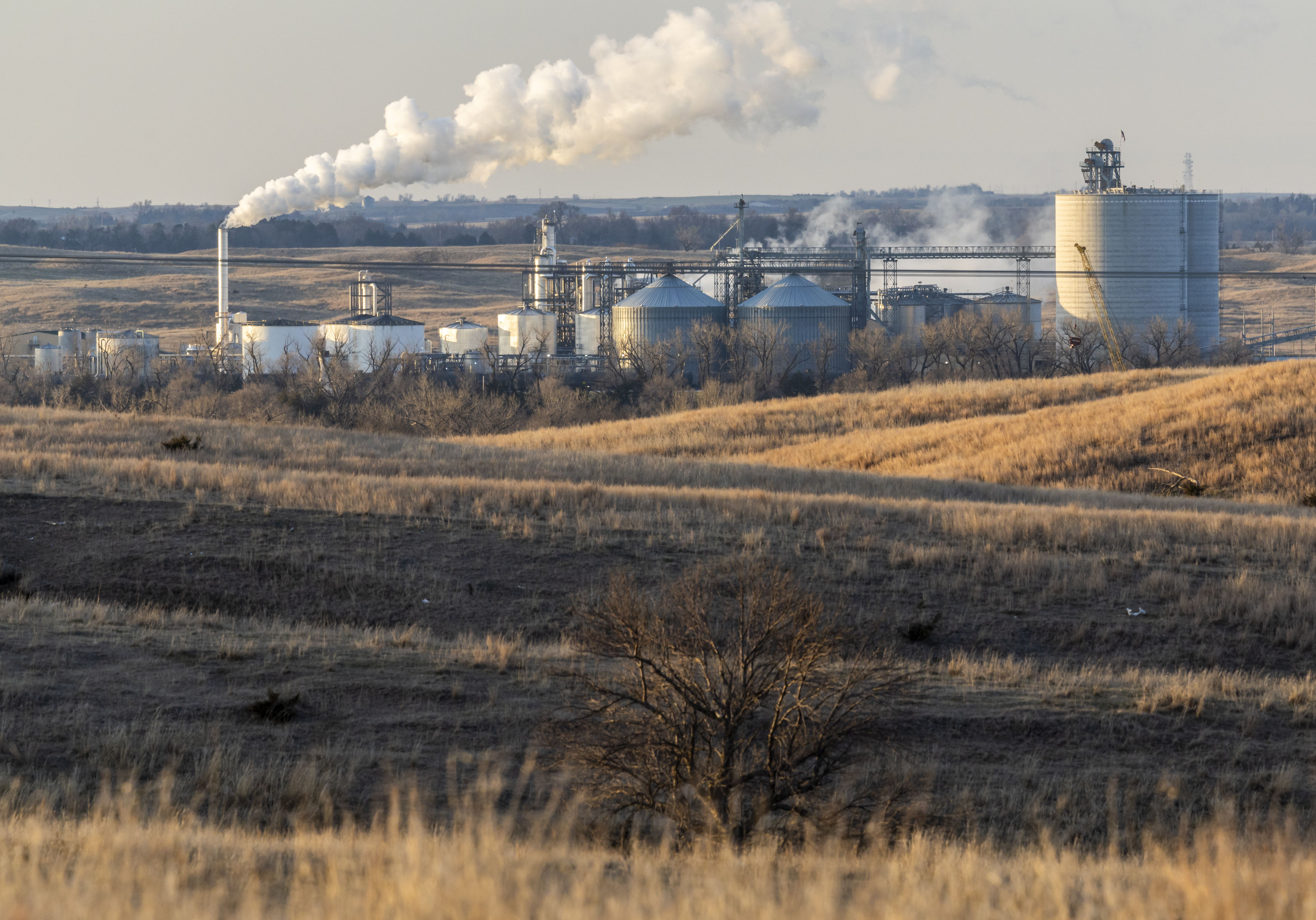
The American Midwest is home to some of the richest, most productive farmland in the world, enabling its transformation into a vast corn- and soy-producing machine—a conversion spurred largely by decades-long policies that support the production of biofuels.
But a new report takes a big swing at the ethanol orthodoxy of American agriculture, criticizing the industry for causing economic and social imbalances across rural communities and saying that the expansion of biofuels will increase greenhouse gas emissions, despite their purported climate benefits.
The report, from the World Resources Institute, which has been critical of US biofuel policy in the past, draws from 100 academic studies on biofuel impacts. It concludes that ethanol policy has been largely a failure and ought to be reconsidered, especially as the world needs more land to produce food to meet growing demand.
“Multiple studies show that US biofuel policies have reshaped crop production, displacing food crops and driving up emissions from land conversion, tillage, and fertilizer use,” said the report’s lead author, Haley Leslie-Bole. “Corn-based ethanol, in particular, has contributed to nutrient runoff, degraded water quality and harmed wildlife habitat. As climate pressures grow, increasing irrigation and refining for first-gen biofuels could deepen water scarcity in already drought-prone parts of the Midwest.”
The conversion of Midwestern agricultural land has been sweeping. Between 2004 and 2024, ethanol production increased by nearly 500 percent. Corn and soybeans are now grown on 92 and 86 million acres of land respectively—and roughly a third of those crops go to produce ethanol. That means about 30 million acres of land that could be used to grow food crops are instead being used to produce ethanol, despite ethanol only accounting for 6 percent of the country’s transportation fuel.
The biofuels industry—which includes refiners, corn and soy growers and the influential agriculture lobby writ large—has long insisted that corn- and soy-based biofuels provide an energy-efficient alternative to fossil-based fuels. Congress and the US Department of Agriculture have agreed.
The country’s primary biofuels policy, the Renewable Fuel Standard, requires that biofuels provide a greenhouse gas reduction over fossil fuels: The law says that ethanol from new plants must deliver a 20 percent reduction in greenhouse gas emissions compared to gasoline.
In addition to greenhouse gas reductions, the industry and its allies in Congress have also continued to say that ethanol is a primary mainstay of the rural economy, benefiting communities across the Midwest.
But a growing body of research—much of which the industry has tried to debunk and deride—suggests that ethanol actually may not provide the benefits that policies require. It may, in fact, produce more greenhouse gases than the fossil fuels it was intended to replace. Recent research says that biofuel refiners also emit significant amounts of carcinogenic and dangerous substances, including hexane and formaldehyde, in greater amounts than petroleum refineries.
The new report points to research saying that increased production of biofuels from corn and soy could actually raise greenhouse gas emissions, largely from carbon emissions linked to clearing land in other countries to compensate for the use of land in the Midwest.
On top of that, corn is an especially fertilizer-hungry crop requiring large amounts of nitrogen-based fertilizer, which releases huge amounts of nitrous oxide when it interacts with the soil. American farming is, by far, the largest source of domestic nitrous oxide emissions already—about 50 percent. If biofuel policies lead to expanded production, emissions of this enormously powerful greenhouse gas will likely increase, too.
The new report concludes that not only will the expansion of ethanol increase greenhouse gas emissions, but it has also failed to provide the social and financial benefits to Midwestern communities that lawmakers and the industry say it has. (The report defines the Midwest as Illinois, Indiana, Iowa, Kansas, Michigan, Minnesota, Missouri, Nebraska, North Dakota, Ohio, South Dakota, and Wisconsin.)
“The benefits from biofuels remain concentrated in the hands of a few,” Leslie-Bole said. “As subsidies flow, so may the trend of farmland consolidation, increasing inaccessibility of farmland in the Midwest, and locking out emerging or low-resource farmers. This means the benefits of biofuels production are flowing to fewer people, while more are left bearing the costs.”
New policies being considered in state legislatures and Congress, including additional tax credits and support for biofuel-based aviation fuel, could expand production, potentially causing more land conversion and greenhouse gas emissions, widening the gap between the rural communities and rich agribusinesses at a time when food demand is climbing and, critics say, land should be used to grow food instead.
President Donald Trump’s tax cut bill, passed by the House and currently being negotiated in the Senate, would not only extend tax credits for biofuels producers, it specifically excludes calculations of emissions from land conversion when determining what qualifies as a low-emission fuel.
The primary biofuels industry trade groups, including Growth Energy and the Renewable Fuels Association, did not respond to Inside Climate News requests for comment or interviews.
An employee with the Clean Fuels Alliance America, which represents biodiesel and sustainable aviation fuel producers, not ethanol, said the report vastly overstates the carbon emissions from crop-based fuels by comparing the farmed land to natural landscapes, which no longer exist.
They also noted that the impact of soy-based fuels in 2024 was more than $42 billion, providing over 100,000 jobs.
“Ten percent of the value of every bushel of soybeans is linked to biomass-based fuel,” they said.
Health and Human Services Secretary Robert F. Kennedy Jr. (R) and Food and Drug Administration (FDA) Commissioner Martin Makary at the White House in May, when Kennedy released a Make America Healthy Again Commission report that blamed the rise in chronic illnesses on ultraprocessed foods, chemical exposures, lifestyle factors and excessive use of prescription drugs
.Kevin Dietsch/Getty Images
Health Secretary Robert F. Kennedy Jr. has upended medical research and public health in the U.S. in many ways. One of the ideas that could be influencing his overhaul of federal health agencies dates back to ancient Greece.
The miasma theory is one of the first ideas that civilization hatched to try to explain why people get sick.
"It goes back to Hippocrates," says Dr. Howard Markel, an emeritus professor of medical history from the University of Michigan, Ann Arbor. "He wrote in a book called Epidemics, that epidemics came from some type of pollution – some pollution of the atmosphere, of the air that we breathe. And hence we got terrible infectious diseases."
This idea that, in essence, bad air caused illness was later championed by many others, including Florence Nightingale. It also led to some things that did help fight diseases, like cleaning up sewage.
But then came the germ theory — one of humanity's big eureka moments. Scientists like Louis Pasteur and Robert Koch discovered it wasn't some mysterious stench in the air from rotting garbage that spread diseases. Instead, it was living microscopic entities.
"They discovered what we know as germs – microbes," says Melanie Kiechle, a historian at Virginia Tech. "Bacteria and viruses and other microscopic materials were actually what caused illness and also explained the spread of illness from one person to another. So miasma theory is debunked, essentially."
The discovery of germs led to breakthroughs like antibiotics and vaccines.
But in a book Kennedy published about four years ago, The Real Anthony Fauci: Bill Gates, Big Pharma, and the Global War on Democracy and Public Health, the now- health secretary harkens back to the miasma theory.
"Miasma theory emphasizes preventing disease by fortifying the immune system through nutrition and reducing exposures to environmental toxins and stresses," Kennedy writes.
But experts say one problem is how Kennedy defines miasma theory.
"I will categorically say that miasma theory, as historians of medicine and science understand it, is not what he is saying it is, period," says Nancy Tomes, a historian of germ theory at Stony Brook University, who wrote The Gospel of Germs: Men, Women and the Microbe in American Life.
But Kennedy's take may help explain some of his policies, especially about vaccines.
"The miasma theory is the notion that there are environmental poisons, not necessarily rotting organic matter," says Dr. Paul Offit, a vaccine expert at the University of Pennsylvania. "For him, those environmental poisons are electromagnetic radiation, pesticides, vaccines. Vaccines are, for him, a modern-day miasma." And that's dangerous, many experts say.
"Can stress, air pollution, other things, make infections worse? Yes. But the cause of infections is a microorganism," says Dr. Tina Tan, who heads the Infectious Disease Society of America. "It's the microorganisms that are making people sick."
And vaccines have clearly been shown to safely and effectively protect people against dangerous microorganisms, Tan and others say.
"He's trying to give this false veneer of intellectualism by saying, 'Oh, the miasma theory,'" says Dr. Amesh Adalja, a senior scholar at the Johns Hopkins Bloomberg School of Public Health Center for Health Security. "This all just obfuscation to support his idea that vaccines are not valuable."
But some other observers argue that Kennedy's ideas about the miasma and germ theories aren't necessarily mutually exclusive.
"The real debate here is whether we can solve public health problems by developing treatments like vaccines, antibiotics, or other drugs? Or whether we will solve these problems by strengthening people's immune systems through healthier habits?" says Gregg Girvan, a resident fellow at the Foundation for Research on Equal Opportunity, a Washington think tank. "And my response is, 'Why can we not acknowledge that there is truth in both positions?'"
Kennedy's office did not respond to NPR's request for more information about his views about the miasma and germ theories.
Kennedy’s HHS Sent Congress ‘Junk Science’ To Defend Vaccine Changes
A document the Department of Health and Human Services sent to lawmakers to support Secretary Robert F. Kennedy Jr.’s decision to change U.S. policy on covid vaccines cites scientific studies that are unpublished or under dispute and mischaracterizes others.
One health expert called the document “willful medical disinformation” about the safety of covid vaccines for children and pregnant women.
“It is so far out of left field that I find it insulting to our members of Congress that they would actually give them something like this. Congress members are relying on these agencies to provide them with valid information, and it’s just not there,” said Mark Turrentine, a professor of obstetrics and gynecology at Baylor College of Medicine.
Kennedy, who was an anti-vaccine activist before taking a role in the Trump administration, announced May 27 that the Centers for Disease Control and Prevention would no longer recommend covid vaccines for pregnant women or healthy children, bypassing the agency’s formal process for adjusting its vaccine schedules for adults and kids.
The HHS document meant to support Kennedy’s decision, obtained by KFF Health News, was sent to members of Congress who questioned the science and process behind his move, according to one federal official who asked not to be identified because he wasn’t authorized to discuss the matter publicly.
The document has not been posted on the HHS website, though it is the first detailed explanation of Kennedy’s announcement from the agency.
Titled “Covid Recommendation FAQ,” the document distorts some legitimate studies and cites others that are disputed and unpublished, medical experts say.
HHS director of communications Andrew Nixon told KFF Health News, “There is no distortion of the studies in this document. The underlying data speaks for itself, and it raises legitimate safety concerns. HHS will not ignore that evidence or downplay it. We will follow the data and the science.”
HHS did not respond to a request to name the author of the document. ‘RFK Jr.’s Playbook’
One of the studies the HHS document cites is under investigation by its publisher regarding “potential issues with the research methodology and conclusions and author conflicts of interest,” according to a link on the study’s webpage.
“This is RFK Jr.’s playbook,” said Sean O’Leary, chair of the Committee on Infectious Diseases for the American Academy of Pediatrics and an assistant professor of pediatrics at the University of Colorado School of Medicine. “Either cherry-pick from good science or take junk science to support his premise — this has been his playbook for 20 years.”
Another study cited in the document is a preprint that has not been peer-reviewed. Under the study’s title is an alert that “it reports new medical research that has yet to be evaluated and so should not be used to guide clinical practice.” Though the preprint was made available a year ago, it has not been published in a peer-reviewed journal.
The FAQ supporting Kennedy’s decision claims that “post-marketing studies” of covid vaccines have identified “serious adverse effects, such as an increased risk of myocarditis and pericarditis” — conditions in which the heart’s muscle or its covering, the pericardium, suffer inflammation.
False claims that the 2024 preprint showed myocarditis and pericarditis only in people who received a covid vaccine, and not in people infected with covid, circulated on social media. One of the study’s co-authors publicly rejected that idea, because the study did not compare outcomes between people who were vaccinated and those infected with the covid virus. The study also focused only on children and adolescents.
The HHS document omitted numerous otherpeer-reviewedstudies that have shown that the risk of myocarditis and pericarditis is greater after contracting covid for both vaccinated and non-vaccinated people than the risk of the same complications after vaccination alone.
O’Leary said that while some cases of myocarditis were reported in vaccinated adolescent boys and young men early in the covid pandemic, the rates declined after the two initial doses of covid vaccines were spaced further apart.
Now, adolescents and adults who have not been previously vaccinated receive only one shot, and myocarditis no longer shows up in the data, O’Leary said, referring to the CDC’s Vaccine Safety Datalink. “There is no increased risk at this point that we can identify,” he said.
In two instances, the HHS memo makes claims that are actively refuted by the papers it cites to back them up. Both papers support the safety and effectiveness of covid vaccines for pregnant women.
The HHS document says that another paper it cites found “an increase in placental blood clotting in pregnant mothers who took the vaccine.” But the paper doesn’t contain any reference to placental blood clots or to pregnant women.
“I’ve now read it three times. And I cannot find that anywhere,” said Turrentine, the OB-GYN professor.
If he were grading the HHS document, “I would give this an ‘F,’” Turrentine said. “This is not supported by anything and it’s not using medical evidence.”
While members of Congress who are physicians should know to check references in the paper, they may not take the time to do so, said Neil Silverman, a professor of clinical obstetrics and gynecology who directs the Infectious Diseases in Pregnancy Program at the David Geffen School of Medicine at UCLA.
“They’re going to assume this is coming from a scientific agency. So they are being hoodwinked along with everyone else who has had access to this document,” Silverman said.
The offices of three Republicans in Congress who are medical doctors serving on House and Senate committees focused on health, including Sen. Bill Cassidy (R-La.), did not respond to requests for comment about whether they received the memo. Emily Druckman, communications director for Rep. Kim Schrier (D-Wash.), a physician serving on the House Energy and Commerce Committee, confirmed that Schrier’s office did receive a copy of the document.
“The problem is a lot of legislators and even their staffers, they don’t have the expertise to be able to pick those references apart,” O’Leary said. “But this one — I’ve seen much better anti-vaccine propaganda than this, frankly.”
C.J. Young, deputy communications director for the House Energy and Commerce Committee, confirmed that Democratic staff members of the committee received the document from HHS. In the past, he said, similar documents would help clarify the justification and scope of an administration’s policy change and could be assumed to be scientifically accurate, Young said.
“This feels like it’s breaking new ground. I don’t think that we saw this level of sloppiness or inattention to detail or lack of consideration for scientific merit under the first Trump administration,” Young said.
On June 4, Rep. Frank Pallone (D-N.J.) and Schrier introduced a bill that would require Kennedy to adopt official vaccine decisions from the Advisory Committee on Immunization Practices, or ACIP.
Young said the motivation behind the bill was Kennedy’s decision to change the covid vaccine schedule without the input of ACIP’s vaccine experts, who play a key role in setting CDC policies around vaccine schedules and access.
Kennedy announced June 9 on X that he would remove all 17 members of ACIP, citing alleged conflicts of interest he did not detail, and replace them. He announced eight replacements June 11, including people who had criticized vaccine mandates during the covid pandemic.
KFF Health News is a national newsroom that produces in-depth journalism about health issues.
KFF would like to speak with current and former personnel from the Department of Health and Human Services or its component agencies who believe the public should understand the impact of what’s happening within the federal health bureaucracy. Please message KFF Health News on Signal at (415) 519-8778 or get in touch here.
Kennedy appoints vaccine deniers to vaccine advisory committee
As I previously wrote, HHS Secretary Robert F Kennedy Jr fired all of the vaccine scientist members of the Advisory Committee on Immunization Practices (ACIP) and replaced them with what appears to be a complement of anti-vaccine activists. Who would have predicted this?
As I previously discussed, ACIP recommendations are crucial for parents and physicians in determining which vaccines are recommended at various ages throughout adulthood. Moreover, ACIP recommendations are used by health insurance companies and the Vaccines for Children Program to determine what vaccines will be covered for children and adults.
Until last week, the ACIP included vaccine scientists and public health experts who reviewed the scientific data to determine which vaccines were safe and effective for American children and adults. ACIP was respected across the world for providing information on how best to protect everyone from dangerous infectious diseases.
Now this has all disappeared with the eight new appointees to ACIP representing what can be described as mostly anti-vaccine opinions and viewpoints. Kennedy tried to gaslight us with the “scientific” backgrounds of these appointees, but with just a little digging, we can easily find their anti-vaccine points of view.
So that you are up-to-speed on each of the new Advisory Committee on Immunization Practices members appointed by Kennedy, this post will review each of them and their anti-vaccine credentials.
I will go through each Kennedy appointment to the Advisory Committee on Immunization Practices and discuss their public anti-vaccine viewpoints. If you were worried that vaccine recommendations would be harmed by Kennedy’s actions, you now have more reason to worry.
Joseph R Hibbeln, MD
Hibbeln retired from the National Institutes of Health in 2020. His research portfolio previously covered the nutritional intake of fatty acids, including omega-3. He has no experience in vaccine research, but co-authored a study probing whether mercury exposure during pregnancy was linked to autism, which is a big issue for RFK Jr.
He is probably not an anti-vaxxer at the level of other Kennedy appointees to the vaccine committee, although he has had zero experience in vaccine research.
Martin Kulldorff, PhD
Kulldorff was a co-author of the “Great Barrington Declaration,” which advocated for an approach to the COVID pandemic with few or no public health mitigation measures. They wanted them instituted only for those at high risk for severe disease and death (such as the elderly or diabetics). He believed that we could create herd immunity to COVID through his radical “public health” measures.
He was probably dismissed as a professor of medicine at Harvard because of his public health views, along with his refusal to get the COVID vaccine.
Kulldorf also served in the past as an “expert witness” in litigation against Merck’s Gardasil (HPV vaccine). He is currently still an expert in another large HPV vaccine case.
There is simply no way to consider Kulldorff a real vaccine scientist who examines the science to come to his conclusions. Instead, he has anti-vaccine beliefs and looks to find evidence that supports his beliefs.
Retsef Levi, PhD
He is a risk analytics professor at MIT. He considers mRNA vaccines unsafe and urged an “immediate suspension” of them, citing cardiac death signals, which have been debunked. His “research” on COVID vaccines has been criticized by many others.
He is another vaccine denier.
Robert W Malone, MD
Malone has made a name for himself by claiming that he invented the mRNA vaccine, which is just not true. He uses that claim to cast doubt on the safety and effectiveness of mRNA-based COVID vaccines.
Recently, he has passed on misinformation about the recent measles outbreak and states that the MMR vaccine has the same dangers as measles itself.
Malone brings nothing but anti-vaccine credentials to ACIP.
H Cody Meissner, MD
Meissner is a pediatric infectious disease specialist, and he is probably the most pro-vaccine of all of the new appointees. He has relevant experience in pediatric infectious diseases and analyzing the illnesses and deaths prevented by vaccines.
James Pagano, MD
Pagano is a retired emergency medicine physician with no background in vaccine science. He did advocate for ivermectin and hydroxychloroquine during the COVID pandemic, so he’s not exactly science-based.
Vicky Pebsworth, PhD, RN
Pebsworth is a long-time research director for the anti-vaccine National Vaccine Information Center (NVIC). She has said that any “coercion and sanctions to persuade adults to take an experimental vaccine, or give it to their children, is unethical and unlawful.”
In particular, [The Control Group American Survey] strongly suggests that increases in the number of vaccines in the CDC schedule may be causally related to increases in the rates of chronic illness, and as a result, the unvaccinated would be healthier than the vaccinated as shown by the pilot survey results.
She is definitely anti-vaccine.
Michael A Ross, MD
Kennedy described Ross as an obstetrics and gynecology professor at George Washington University and Virginia Commonwealth University. However, Ross does not appear in the directories for eitheruniversity. The investment firm Havencrest Capital Management lists Ross as a partner and describes Ross as a pediatrics professor.
Like some others, Ross has no background in vaccine science research, but he criticized research on ivermectin that it was useless for the treatment of COVID.
Other than one or two, these new members appointed by Kennedy to the ACIP vaccine committee are best categorized as anti-vaccine activists.
With their anti-vaccine tilt, they will change the longstanding independent scientific discussion that supported the fact that vaccines were safe and effective. And they will probably start changing recommendations for vaccines for children and adults, and they could even remove key vaccines from the CDC recommendations.
I hope physicians ignore whatever may come out of ACIP these next few weeks — they should give the vaccines necessary to protect children and adults from infectious diseases.
I’m also worried about future vaccines. For example, there is a Lyme disease vaccine in clinical trials, and it is a vaccine we need. What if this new ACIP decides not to recommend it? I can’t even imagine that.
Michael Simpson Chief Executive Officer at SkepticalRaptor Lifetime lover of science, especially biomedical research. Spent years in academics, business development, research, and traveling the world shilling for Big Pharma. I love sports, mostly college basketball and football, hockey, and baseball. I enjoy great food and intelligent conversation. And a delicious morning coffee!
Measles leaves children vulnerable to other diseases for years
Measles causes more than an acute illness: it suppresses immune memory and increases the risk of complications for years.
In 1962, the author Roald Dahl wrote a public letter describing his daughter’s measles infection, the year before vaccination became available.
Olivia, my eldest daughter, caught measles when she was seven years old. As the illness took its usual course I can remember reading to her often in bed and not feeling particularly alarmed about it. Then one morning, when she was well on the road to recovery, I was sitting on her bed showing her how to fashion little animals out of coloured pipe-cleaners, and when it came to her turn to make one herself, I noticed that her fingers and her mind were not working together and she couldn’t do anything.
“Are you feeling all right?” I asked her.
“I feel all sleepy,” she said.
In an hour, she was unconscious. In twelve hours she was dead.
The measles had turned into a terrible thing called measles encephalitis and there was nothing the doctors could do to save her. That was twenty-four years ago in 1962, but even now, if a child with measles happens to develop the same deadly reaction from measles as Olivia did, there would still be nothing the doctors could do to help her.
Dahl’s story shows how measles can strike suddenly and unpredictably — an important reminder that we need to understand not just its immediate dangers but also the lasting effects it can have.
Even today, measles-caused encephalitis (a dangerous inflammation of the brain) is difficult to treat. Even though three-quarters of those who develop it survive the condition, around one-third will sustain lifelong brain damage.1
Measles is often seen as a routine childhood illness — a fever, a rash, and recovery — but complications are common. Even when it doesn’t kill, measles can cause lasting damage. It weakens the immune system, making people vulnerable to other infections for months or years. That means children who seem to recover may still face serious health risks long after the illness is gone.
In some countries, measles has re-emerged in recent years, leading to outbreaks that many thought to be a thing of the past. At the same time, the case for vaccination has come under renewed scrutiny. If measles deaths are rare in high-income countries, why worry?
However, evaluating the harm caused by measles isn’t just about the number of deaths. It’s also about what the disease does to the immune system and the chain of complications it can set off. Preventing measles matters — not only to stop the virus but to protect children from subsequent infections.
In this article, I explain how measles spreads and damages the body’s defenses, and why preventing it is still critical.
In the United States, deaths fell before vaccines, but measles stayed dangerous
The chart below shows the number of measles cases and deaths in the United States since 1919. You can see that the number of deaths from measles began to fall several decades before vaccines were introduced in 1963.
The decline resulted from better treatment of secondary infections, improved sanitation and hygiene that limited their spread, and better childhood nutrition that lowered the risk of severe illness.2
However, we shouldn’t think this meant measles was no longer a public health issue. Although deaths had fallen, measles was still far from mild: before vaccines arrived, there were about 50,000 hospitalizations and hundreds of deaths each year in the United States alone.3
Large outbreaks also continued because measles remained extremely contagious until vaccination rates rose. The time series for cases in the chart shows that while there were often annual fluctuations, cases didn’t decline in a sustained way until the 1960s.
Because measles is airborne, clean water and sanitation weren’t enough to stop its spread. That’s because measles is also one of the most contagious diseases. On average, each person infected with measles would infect 12 to 18 other people in a population without vaccination, which mean it could spread very rapidly across the population.4
So, without vaccines, measles deaths couldn’t be eliminated, and we couldn’t stop cases either, leaving many people vulnerable to harmful and long-lasting complications of the disease.
In the next section, I’ll discuss what those measles cases meant and the complications children faced.
Measles spreads through the air and can cause complications across the body
The measles virus spreads through the air and can be inhaled into people’s lungs as they breathe. It infects immune cells in their airways, where it hitches a ride to their lymph nodes, which coordinate their immune responses.
There, it finds its main targets — memory T and B cells, which help the immune system recognize past infections. Instead of fighting the virus, these cells become its transport and carry it deeper into the bloodstream; measles turns the body’s defense system against itself. Now, the virus can spread into the thymus, spleen, bone marrow, gastrointestinal tract, kidneys, liver, and skin.5
However, visible signs of infection only appear after one or two weeks. Fever, cough, runny nose, and red, inflamed eyes (conjunctivitis) are common. These symptoms worsen over days, before tiny, blueish-white dots (known as “Koplik’s spots”) appear on the inside of the cheeks.1
Blood vessels in the skin swell and leak, resulting in characteristic red patches called the “measles rash”, which start on the face and neck. Over the next few days, the rash spreads from the chest to the back, arms, and legs. Individual spots merge into large, inflamed patches, fever spikes, and the body struggles to control the virus.1
By multiplying rapidly and spreading across the body, the virus can leave children vulnerable to many complications and additional infections for years. As measles infects immune cells, it depletes important cells that provide the body with memory of past infections and help protect against them.
The loss of immune memory caused by measles — often called “immune amnesia” — leaves a gap for other infections to take hold. This can result in ear infections, pneumonia, diarrhea, dehydration, malnourishment, blindness, and brain swelling.5
In the diagram, I’ve illustrated the many ways that measles can lead to complications across the body.
Estimates from Perry and Halsey (2004)1; Wendorf et al. (2017)6
Measles can also cause several rare complications. One is “noma”, a condition where mouth ulcers develop and eat away at soft tissue, resulting in facial disfigurement.
For one or two children in a thousand, the brain is affected as well: “post-infectious encephalomyelitis” can develop days after the rash fades and causes seizures, confusion, and paralysis. Of those who develop this condition, one in four die, and one in three survive with lifelong brain damage.1
The virus can also resurface as “subacute sclerosing panencephalitis” years later, which affects around 1 in 2,000 children.6 This is a condition where children initially appear irritable, screaming, and crying; their ability to think, make decisions, and control their body is gradually reduced until they’re in a vegetative state.7
Measles infections cause lasting immune damage
Even in a typical case of measles, children who survive the infection recover slowly. The rash fades and peels away, but the immune amnesia means they remain vulnerable for the next few years to many other diseases that would normally be mild or harmless.5
Evidence of this is shown in the chart below: children infected with measles use medical care more often for several years after their infection.
Complications from measles are most severe in infants and malnourished children, who have the highest fatality rates from the disease, as well as in pregnant women.9
In high-income countries today, many people have never seen a case of measles. But it was a feared and familiar part of childhood before widespread vaccination. This virus could sweep through communities, hospitalize a quarter of children, and leave some blind, with lasting breathing difficulties, permanent brain injury, or dead.
The suffering caused by measles was part of everyday life. Now, in places where vaccination rates have fallen, that past is starting to return.
Measles is one of the most contagious diseases, and it doesn’t just cause rashes. It infects and destroys important white blood cells, which are critical for the body’s defenses against infections.
By targeting memory T and B cells, measles weakens the immune system by erasing its memory of past infections. As a result, children remain vulnerable to other diseases for years.
The good news is that measles is preventable. With widespread vaccination, we can stop its spread, protect our immune systems, and prevent needless suffering.
When we prevent measles, we’re not just avoiding one illness. We’re also preserving the immune system’s knowledge of previous infections. That’s because vaccination doesn’t just stop measles; it also protects the body from the lasting damage the disease leaves behind.