Thursday, October 23, 2025


BHP sells iron ore cargoes to China buyers despite curbs

Image courtesy of BHP.

BHP Group sold several iron ore cargoes to Chinese traders this week, despite a dispute with the nation’s powerful state buyer that risks disrupting shipments from the world’s largest miner to its main market.

At least four shipments, including popular Mining Area C and Newman fines, were taken by buyers including state-run and private merchants and paid for in US dollars, according to traders with knowledge of the transactions, who asked not to be named discussing private matters.

The cargoes, scheduled to load in late November and early December, were sold at a discount to benchmark prices through a private tender, they said.

China is the world’s largest iron ore consumer, while BHP is one of a handful of major suppliers that provide the bulk of the material to its steelmakers. Contract talks between the mining company and China Mineral Resources Group Co. stalled in September, with CMRG subsequently telling major mills and traders to avoid taking new dollar-denominated seaborne cargoes from BHP.

CMRG was created by Beijing to strengthen its hand in global pricing, and while it has no formal authority over commercial operations at individual mills or trading houses, its recommendations typically carry weight because of its political clout and strategic role. Still, this week’s sales signal that some trading entities in the country remain willing to buy from BHP.

CMRG didn’t reply to an email inquiry seeking comments. A BHP spokesperson said the company couldn’t comment on commercial negotiations when asked about the sale of the cargoes.

Commenting at BHP’s annual meeting on Thursday, group chair Ross McEwan said the mining giant remained in commercial negotiations with CMRG, while also noting in remarks to the media at the same event that previous talks had taken as long as six months.

“We’ve had relationships in China now for decades and we have a pretty good working relationship,” McEwan said, responding to a shareholder’s question. “But this is a commercial negotiation that is going on, as it does every year.”

CMRG’s directive for local users not to take new dollar-denominated seaborne cargoes from BHP followed an earlier request for buyers not to purchase the company’s Jimblebar blend fines. All mills have now walked away from that product — a popular blast-furnace feedstock — and many remain cautious about taking other BHP cargoes, the people said. CMRG also told several large, state-owned traders last week to enhance compliance with the BHP restrictions, they said.

The BHP cargoes were traded at a double-digit discount to the average index prices for November and December, the people said.

So far, the miner has seen minimal disruption to shipments, largely because most of its 2025 allocation has already been sold. Any impact from the CMRG curbs is likely to emerge only after BHP begins marketing cargoes for January delivery next month, the people said.

(By Katharine Gemmell and Alfred Cang)

Rio Tinto moves to slash Chinalco stake via asset deal

Among the projects that could be part of the deal are Rio’s massive Simandou iron ore in Guinea. (Image courtesy of Winning Consortium Simandou.)

Rio Tinto (ASX: RIO) is reportedly in talks with China’s state-owned Chinalco over an asset-for-equity swap that would cut Chinalco’s stake in the world’s second largest miner to about 11%.

The deal, according to Reuters sources familiar with the matter, would see Chinalco exchange part of its Rio Tinto holdings for stakes in some of the miner’s key assets. The move could free Rio to restart share buybacks and pursue new strategic deals that have been constrained by its complex ownership structure.

Neither Rio Tinto nor Chinalco provided immediate comment.

The Chinese miner first acquired a near 15% stake in Rio Tinto Plc, the London-listed arm of the dual-listed company, in 2008. The purchase came with strict Australian government conditions, including a ban on raising its stake without approval and no board representation.

That investment became a flashpoint a year later, when Chinalco’s proposed $19.5-billion bailout for Rio, which was then struggling with $39 billion in debt, was blocked by regulators and shareholders wary of Chinese control over strategic mining assets.

Simandou, Oyu Tolgoi in sight

The proposed asset swap may now help resolve long-standing governance hurdles. Among the projects that could be part of the deal are Rio’s massive Simandou iron ore deposit in Guinea, already 75% Chinese-owned, and the Oyu Tolgoi copper mine in Mongolia.

Another option under review is Rio’s titanium business, which is part of a broader restructuring by new chief executive Simon Trott.

Trott, who took over in August after leading Rio’s iron ore division, is driving an overhaul to streamline operations into three main units: iron ore, copper, and aluminum–lithium.

The talks with Chinalco come as activist investors renew pressure on Rio to abandon its dual Anglo-Australian listing, arguing it creates governance friction and complicates deals in countries with restrictions on Chinese investment.

(With files from Reuters)

Crude Tanker Rates Surge as Oil in Transit Hits Highest Level Since 2020

Crude tankers are once again firing on all cylinders, with freight rates surging across all segments as oil in transit reaches its highest level in more than five years.

According to data from Vortexa, total crude and condensate in transit rose to 1.31 million barrels per day in mid-October, a level not seen since May 2020 during the pandemic-era floating storage boom. The surge is being driven less by traditional supply-and-demand dynamics and more by geopolitical disruptions, notably delivery delays of sanctioned oil cargoes bound for China and India.

Very Large Crude Carrier (VLCC) rates have rebounded to around $82,000–$85,000 per day, while Suezmax rates recently hit their highest levels since November 2023, and Aframax earnings have doubled since June. Individual fixtures are once again nearing six figures, with Petrobras, Equinor, and other charterers paying premiums for long-haul voyages amid tightening vessel availability.

Vortexa’s chief economist David Wech said the buildup of sanctioned barrels at sea is inflating oil-in-transit figures. “The surplus in the crude market is basically building up in terms of sanctioned barrels that China and partly India are not able or willing to import,” he noted, adding that these inefficiencies are supporting compliant tonnage rates.

The situation has fueled debate over whether a new floating storage phase could emerge if prompt oil prices fall further relative to futures. Poten & Partners analyst Erik Broekhuizen said that a steep contango could “give a boost to the large tanker market along the lines of what happened when Covid hit in 2020.”

Clarksons Securities expects VLCC rates to average around $63,000 per day in 2026 under moderate OPEC cuts and sees potential for a run-up to $200,000 per day if floating storage surges.

For now, strong exports from the Middle East and the Americas, coupled with mounting geopolitical inefficiencies, have kept tanker owners firmly in the driver’s seat.

By Charles Kennedy for Oilprice.com


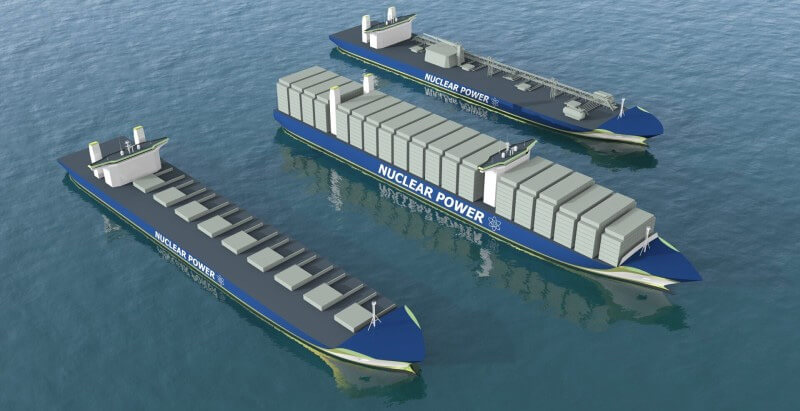
Is Nuclear Power the Missing Link in Shipping’s Decarbonization?

nuclear shipping
Interest continues to grow in the possibilities of nuclear shipping (C-Jobs)

Published Oct 23, 2025 4:10 PM by Karan Doshi


The shipping industry has resolved to reduce its GHG emissions. Ambitious targets have been set for GHG emission reduction with a view to achieving a net-zero carbon future by 2050. This transition represents nothing short of a maritime renaissance, driving a paradigm shift in how ships operate. A wide range of low- or zero-carbon fuels and technologies—biofuels, methanol, ammonia, hydrogen, onboard carbon capture, battery assistance, and wind-assisted propulsion—are being explored, with sustainability as the central theme.

However, concerns have been raised on the production, supply, availability, and costs of new fuels and technologies (not to forget safety!). For example, today’s renewable power generation capacity is far from sufficient to meet the needs of large-scale green fuel production. Scaling up production is also not a trivial task, as it will need sustained efforts by all nations in an era of fragile geopolitical alliances and growing trade protectionism. Replacing or retrofitting existing ships with ships using cleaner fuels will also need enormous efforts in shipbuilding as well as recycling the existing fleet. This raises the question: is the industry being too hard on itself—and what will it truly take? 

As the old English saying goes, “Every dark hour brings forth its champion.” In this case, nuclear power could be that champion.  The Secretary General of the International Atomic Energy Agency noted a few years ago that without nuclear energy, achieving global climate goals will be impossible. And why not? Nuclear propulsion is not new -  naval ships and submarines have relied on it for decades, while Russian icebreakers in the Arctic continue to use nuclear reactors for onboard power. Nuclear Power Generation represents a clean and virtually inexhaustible source of energy and much higher power generation capacities on board ships. Alternatively, a nuclear reactor may be installed on a barge moored offshore, and this can supply power to remote communities, or for desalination to produce potable water, or even to supply clean electricity to produce green fuels. The possibilities are multiple.

However, public opinion towards nuclear remains cautious—unsurprisingly, given the legacy of Chernobyl and Fukushima. Nuclear Technology works, there is no doubt about that. It is the potential consequences that are overwhelming should this technology face setbacks. The World Nuclear Association reports that more than 14000 reactor years of accident-free service have been recorded in a marine environment. The safety record of nuclear technology provides optimism, but this underscores efforts by designers, manufacturers, and regulators to ensure that this technology is safely harnessed. Nuclear Technology also offers a unique proposition to the maritime industry in the sense that at the end of life, not just the ship but also reactor components, auxiliaries, and spent fuel will have to be safely recycled.

There has been a spurt in the growth of Generation IV nuclear technology, which is deemed to improve safety using passive measures. The inherently safe design is expected to reduce to a major extent the possibility of another Chernobyl and Fukushima.

The arrival of General IV nuclear technology is undoubtedly cannot be ignored and shipping will explore what it can derive from the use of such technology. From a classification society’s perspective, the approval of nuclear technology for civilian ships will present significant challenges. The marine environment is considerably more dynamic and hostile compared to the terrestrial application. Classification societies will also need to engage with multiple regulators—from the International Atomic Energy Agency to national nuclear bodies, as well as port and coastal state authorities. It is anticipated that Class will serve as a bridge between the maritime and nuclear disciplines to ensure the safety of the ship, persons, and environment. 

The role of a systematic and holistic risk assessment is paramount, as well as a robust procedure to qualify the use of such “FOAK” (first of a kind) technology for onboard use, which is necessary (while ensuring that it is technology-agnostic). The importance of Material Technology needs no emphasis to ensure safe containment of radioactive fuel, as well as ensuring that appropriate materials are used to shield against the effects of harmful radiation in the event of loss of containment. The use of nuclear technology will also herald the rise of a new category of service suppliers (e.g. fuel removal, replenishment, nuclear equipment inspection, maintenance, etc.) for which Class will have to prepare (though it is anticipated that most (if not all) of these will be guided by regulations for terrestrial nuclear plants). Licensing of shipyards and recycling yards to handle nuclear-powered ships is also foreseen.

ISM and Cybersecurity audits are additional aspects which Class (acting as recognized organizations for flag administration) will be called upon to address, as also the decommissioning stage, keeping into account both safety and security (i.e. to ensure non-proliferation). 

Time is short. The first floating nuclear power plants—potential forerunners of nuclear-powered merchant ships—are expected to enter service within the next decade.

Class Rules and Guidelines have to be ready for these. Personnel with knowledge of nuclear technology will also be essential in a Classification Society, for this, we have resolved to undertake an ambitious program to ensure our staff is ready for the future with nuclear. 

These are uncharted waters, but the shipping industry has always proven capable of navigating safely. IRCLASS is gearing up to rise to this occasion. As Gene Kranz, lead flight director of Apollo 13, famously said, “Failure is not an option.”


About the author: Karan Doshi is Sr Surveyor, Indian Register of Shipping

The opinions expressed herein are the author's and not necessarily those of The Maritime Executive.


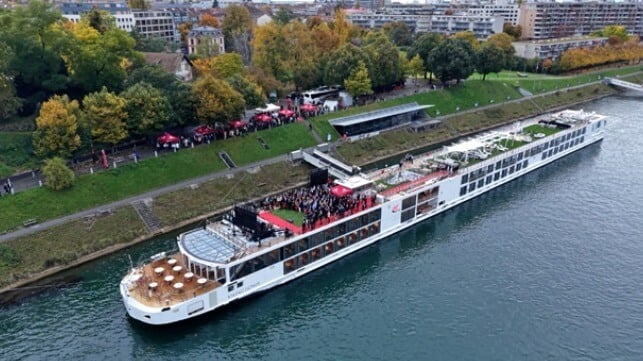
Viking Celebrates Surpassing 100 Ocean, River and Expedition Cruise Ships

Viking river cruise ship
Viking Honir was designated as the line's 100th cruise ship and hosted the unique naming ceremony (Viking)

Published Oct 22, 2025 6:46 PM by The Maritime Executive


Viking celebrated a unique point in the cruise industry as it surpassed a total of 100 ships as the company marks its 28th year in business. Started as a niche player in the then modest river cruise business, the company has grown to encompass ocean cruising and expeditions while also operating on 21 rivers and reaching five oceans and all seven continents.

The company hosted a naming celebration for its nine newest river cruise ships in Basel, Switzerland, with the ship it designated number 100, Viking Honir, one of its patented Longships. The other vessels were at points around the world, ranging from Paris, France, to Rostock, Germany, Porto, Portugal, Vietnam, and Egypt. 

The company was incorporated in August 1997 by Torstein Hagen, who was attracted to the possibilities of river cruising. (Hagen was the subject of a cover story profile in The Maritime Executive in 2018.) They would go on to modernize and popularize river cruising. A decade ago, the company expanded into ocean cruising with a fleet of small, luxury cruise ships. Today, it has a dozen ocean cruise ships, two expedition cruise ships, and a total of 89 river cruise ships. One of its cruise ships is owned in a joint venture with China Merchants. 

Viking rivals Carnival Corporation in the number of ships, although Carnival is made up entirely of large, ocean cruise ships. Carnival briefly had over 100 cruise ships before downsizing during the pandemic.

Viking has built its brand by offering Scandinavian style and quiet luxury. It says the product is designed for curious travelers with interests in science, history, culture, and cuisine. It uses the marketing tagline that Viking offers experiences “For The Thinking Person.”

“Today we are proud to name our newest river ships and to honor the nine distinguished members of our extended Viking family serving as their godparents,” said Torstein Hagen, Chairman and CEO of Viking. “We have always been quite a bit different from others in the travel industry—we like to be contrarian. Over the last 28 years, we have grown from four ships to more than 100—a fleet size that no other line has achieved—and we have done so because of our innovative approach. First, we modernized river voyages; then we reinvented ocean voyages and perfected the expedition experience. We look forward to continuing our leadership in experiential travel in the years to come.”

Viking Honir, which was the location for the event, is one of the Longships, designed to sail on the Rhine, Main, and Danube, accommodating 190 passengers in 95 staterooms. One of the elements of Viking’s approach has been using standardized designs for its ships. The Longship has a distinctive square bow, three decks, an indoor-outdoor terrace, and an asymmetric corridor that provides space to create suites on the ship.

The small ships include a design for 82 passengers on the Nile and 80 passengers on Southeast Asia’s Mekong River. In Europe, the company has a 106-passenger design for the Douro River in Portugal. It also has a design tailored to the limits of sailing on the Seine. The company’s ocean cruise ships are on their second design, altered by regulations, but all accommodate under 1,000 passengers per ship. It has tested hydrogen fuel cells and is currently building two cruise ships with Fincantieri that will have the most advanced hydrogen power systems to date.

Viking looks to continue to expand its operations. In August, it noted that its committed orderbook would add 27 river ships by 2028 and 10 ocean ships by 2031. The fleet will reach 112 river ships in 2028, and 23 ocean and expedition ships in 2031. Viking, which builds most of its river ships with Meyer Neptun in Rostock and ocean cruise ships with Fincantieri in Italy, also has additional options to further expand the fleet.


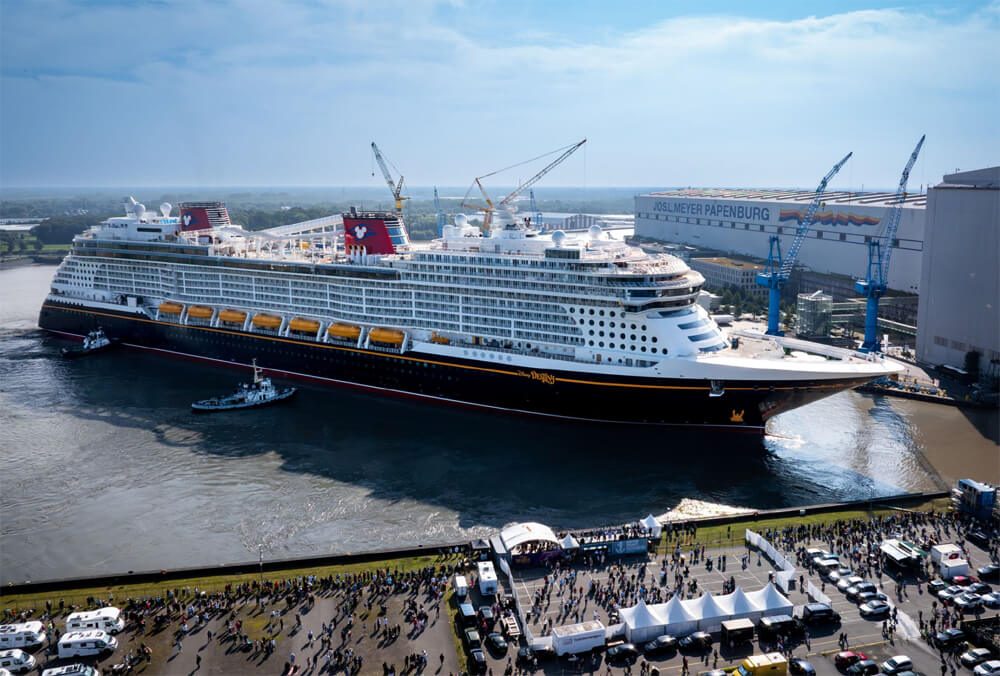
New Cruise Ships for Disney, Celebrity, and Royal Hit Milestones

Disney Destiny cruise ship
Disney Destiny left the building hall on August 9 (Meyer Werft)

Published Oct 23, 2025 8:31 PM by The Maritime Executive


It was a big week for the cruise industry as the flow of new ships continues to accelerate. Disney Cruise Line and Celebrity Cruises both took delivery of their next ships, while work is underway at Meyer Werft and Chantiers de l’Atlantique for the companies' next ships.

Disney took delivery of its seventh cruise ship, the Disney Destiny, with the handover from Meyer Werft taking place on October 15 in Eemshaven, the Netherlands. After final preparations, the ship cast off on October 20 and is on her delivery voyage to the United States. She will be making a stopover in Funchal, scheduled for October 25, before she proceeds to Port Everglades, Florida. Her maiden voyage is scheduled for November 20.

Registered in the Bahamas, Disney Destiny is the third LNG-fueled cruise ship for the line and the fifth delivered by Meyer. The shipyard highlights that the ship “features the most complex and innovative entertainment facilities in the cruise industry.” 

She follows sister ships Disney Wish, delivered in 2022, and Disney Treasure, delivered in 2024. Each of the ships is approximately 144,000 gross tons with capacity for approximately 4,000 passengers and 1,500 crew. Disney themes each of its ships, with the Disney Destiny drawing its inspiration from the heroes and villains of the Disney, Pixar, and Marvel brands.

Work is already underway on a sister ship being built at Meyer Werft in Germany, and another ship based on the same design will be built for Oriental Land Co., operator of the Disney Tokyo Resort, and due to bring Disney cruise vacations to Japan in 2029. Disney Adventure is completing outfitting in Germany before its launch from Singapore, now scheduled for March 2026, and after that, Meyer will build three more ships for Disney using a new, smaller ship design.


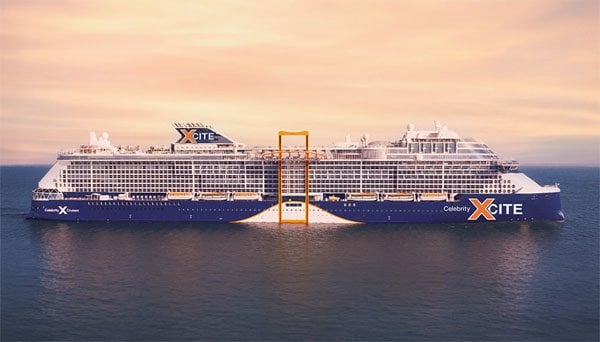
Celebrity took delivery of Xcel and announced the next sister will be named Celebrity Xcite (Celebrity)


In France, Chantiers de l’Atlantique achieved what Royal Caribbean Group is calling “a trifecta of milestones.” The shipyard handed over its latest construction for Royal Caribbean Group’s Celebrity Cruises, and at the same time, the yard marked the first steel cutting for two more cruise ships. They will be built simultaneously, and both are due for handover in 2028.

Celebrity Xcel is the fifth cruise ship in Celebrity Cruises’ Edge Series. The ship registered in Malta is approximately 141,000 gross tons with accommodations for approximately 3,300 passengers. She will be departing Saint-Nazire and making a stop in Freeport, Bahamas, before proceeding to Port Everglades for her introduction in November.

Celebrity Cruises also announced details of its sixth ship of the class, reporting the vessel will be named Celebrity Xcite. The ceremonial steel cutting took place on October 23, and the cruise ship is scheduled for delivery in 20028.

At the same time, the steel cutting ceremony was also marked for the seventh cruise ship of the Oasis class of Royal Caribbean International. The company reports it will largely be a sister to the Utopia of the Seas (236,473 gross tons), which entered service in July 2024. The name of the seventh ship of the class, which will also launch in 2028, has not been revealed.

The cruise ship orderbook has filled up again after a pause following the pandemic. Seatrade Cruise calculates that there are approximately 70 ocean cruise ships on order for delivery by 2036. The new ships will add more than 180,000 lower berths to the industry, with Seatrade calculating the value of the orders at over $60 billion.


Cabotage: A Proven Policy that Works for Nations and Their People

US flag
USN file image

Published Oct 22, 2025 11:42 PM by David Heindel and Jennifer Carpenter


David Heindel is President of the Seafarers International Union, and Jennifer Carpenter is President of the American Maritime Partnership, as well as President and CEO of the American Waterways Operators.


The United States has always been a leader—innovative, resilient, and unmatched in maritime capability. Our domestic maritime industry, with more than 40,000 vessels and 650,000 American jobs supported, remains the envy of the world. The secret behind this enduring success is simple: strong cabotage laws that protect and promote our national interests, laws that more and more nations are now choosing to adopt.

At the heart of America’s domestic maritime strength lies the Merchant Marine Act of 1920, better known as the Jones Act. This cornerstone policy ensures that vessels transporting cargo between U.S. ports are American-built, American-owned, and American-crewed. In short, it keeps control of America’s waterways—and the jobs they sustain—in American hands.

Recent research by Seafarers’ Rights International (SRI) shows just how globally influential this approach has become. When SRI first examined cabotage in 2018, it found that 91 nations maintained such laws. The updated 2025 report reveals that the number has since grown to 105 countries—representing over 85 percent of the world’s coastline. That expansion underscores an unmistakable trend: cabotage is increasingly recognized as sound, strategic policy.

Map of 105 nations across the world that have cabotage laws, as recorded by the Seafarers' Rights International (Credit: SRI)

The reasons are clear. Cabotage laws ensure that nations retain control over their domestic commerce, safeguard good jobs for their own citizens, and strengthen national and homeland security. As SRI found, countries embrace cabotage to maintain national security, promote fair competition, develop maritime skills and technology, create local jobs, expand national fleets, and ensure environmental and port safety. In an era of geopolitical uncertainty, these goals have never been more relevant.

America’s success story is also rooted in history. One of the first acts of Congress established a form of cabotage, recognizing the importance of controlling trade along our coasts. Over two centuries later, bipartisan majorities continue to affirm that commitment. The Fiscal Year 2021 National Defense Authorization Act reaffirmed that the Jones Act “promotes a strong domestic trade maritime industry,” which directly supports both national security and economic vitality. This consistency provides the policy stability that drives innovation in shipbuilding, containerization, and clean-fuel technology.  And it ensures our fellow Americans in Hawaii, Alaska, and Puerto Rico are not dependent on unreliable or unfriendly foreign powers for American goods. And in return, they can reliably ship their manufactured goods and agricultural products back to the mainland.

In the wake of the pandemic and global supply chain disruptions, America’s leaders have rediscovered what mariners have always known: a nation that controls its shipping controls its destiny. A new Executive Order and bipartisan legislation now advancing in Congress both recognize the importance of revitalizing U.S. maritime strength as a strategic and economic imperative.

Yet, not everyone shares that vision. Foreign interests have launched quiet campaigns to weaken America’s cabotage laws, even as many European nations maintain their own cabotage systems. Earlier this year, Congressional leaders rightly condemned reports of European Union interference aimed at undermining the Jones Act—a move that highlights how vital this issue is to our sovereignty and security.

Meanwhile, China’s stated maritime ambition is to dominate global shipbuilding and shipping. This aggressive posture has prompted countries worldwide to fortify their maritime independence, often by enacting or strengthening cabotage laws. They, too, have reached the same conclusion we have: cabotage is the first line of defense for national maritime security and self-reliance.

The facts are undeniable: cabotage laws are good policy, backed by decades of American success and growing global adoption. As the SRI report shows, the world is not moving away from cabotage; it is moving toward it.

The United States set the gold standard with the Jones Act more than a century ago. Today, as the world navigates new economic and geopolitical challenges, we must stand firm in defending and strengthening this proven policy. Because cabotage doesn’t just protect ships and commerce—it protects nations, workers, and the very freedom to chart one’s own course.

The opinions expressed herein are the author's and not necessarily those of The Maritime Executive.


Bulking Up

Energy, construction, and infrastructure projects are driving the breakbulk business

breakbulk ports

Published Oct 22, 2025 10:13 PM by Tom Peters

(Article originally published in July/Aug 2025 edition.)


The energy sector is often front and center when the discussion revolves around breakbulk and heavy-lift cargoes.  Windmills, on land or anchored to the ocean floor, have been all the rage for the past several years. And why not? Energy makes the world go around - whether it's green or liquid gold.

Dry bulk is another sector critical to our developing society. However, dry bulk products, like breakbulk cargoes, would not be as available or accessible were it not for the ports around the world that provide entry to needed destinations.

Sunshine State

Look at the state of Florida, for example.

Florida had the fastest-growing population in the U.S. between 2020 and 2024, according to the U.S. Census Bureau – over eight percent. Population growth means residential, urban and commercial development and the need for new infrastructure like homes, roads, bridges and buildings. These projects, large and small, need materials, and the Jacksonville Port Authority (JAXPORT) is a good example of how ports interact with suppliers, builders and contractors.

"The bulk market at JAXPORT consists of the import of stone and aggregates for use in the state of Florida's highway construction program, as well as in the housing industry, to support the growing population in northeast Florida as well as throughout the state,” the port says in a statement. “A 60% increase in dry bulk throughput between 2022 and 2023 underscores the importance of this cargo and the port's involvement."

Martin Marietta and Cemex are among the dry bulk companies that operate at JAXPORT.

Martin Marietta is a national supplier of building materials including aggregates (natural raw materials such as gravel), cement and ready-mixed concrete. "We're a mining company," says Chris Wilson, Area Sales Manager. "We mine and sell rocks. Rocks are everywhere - in your house, in sidewalks, in roads-everywhere.”

He says "JAXPORT is a major contributor to Florida's roadways," noting that granite aggregates account for half his company's business. The other half is limestone aggregates, used to make concrete for homes and warehouses and much more.

"Not many people realize that the larger role we play at JAXPORT is we support Florida infrastructure," he adds. "Without us here at the port, we wouldn't have the number of roadways we have to drive on, that's for sure.”

Long-time tenant Cemex, a global supplier of cement, ready-mix concrete and aggregates, has been approved as an aggregate source by the Florida Department of Transportation. Devon Coppock, Cemex's Director of Market Development, said in a JAXPORT article recently that in 2024 Cemex brought in 500,000 tons of aggregates. Because there's a limited supply of quality limestone available in certain areas of Florida, it's important to bring aggregates into the state.

“That's important for JAXPORT,” Coppock says. "We've been a longtime tenant at JAXPORT, and we look forward to continuing that relationship.”

Port Tampa Bay also realizes the vital role breakbulk plays in the state's infrastructure development.

“Breakbulk cargo is an important element of Port TampaBay's diverse cargo mix, serving Florida's fast-growing building and construction industry – everything from critical highway projects to residential and commercial construction,” notes Greg Lovelace, the port's Senior Vice President of Marketing & Business Development.

“Besides breakbulk cargo, there are other categories such as containers, dry bulk, liquid bulk and ro-ro that also feed the strong construction market in Florida,” he adds. “Steel makes up the majority of our general cargo shipments with the primary sources being Vietnam and South Korea. Steel coils and pipe are the predominant products and are used in the residential and commercial construction industry as well as in mining.”

Port Tampa Bay continues to invest in its infrastructure to accommodate breakbulk cargo with two new transit sheds to be built by the end of 2025 to meet demand for inside storage and the addition of new mobile harbor cranes to provide additional lift capacity.

Lone Star State

In 2024, the Port of Galveston handled 517,000 tons of breakbulk including ro-ro, project cargo and general cargo with the majority imported from Europe and Asia. Products included farm equipment, crane parts, generators/transformers, steel beams and heavy equipment plus military household goods and personal vehicles.

Project cargo consisted of wind turbine components, primarily GE and Siemens-Gamesa wind turbine blades. Galveston has been handling the import of wind turbine pieces since the early 2000s. They're moved by rail and truck to wind farms in Texas, New Mexico and other states in the central U.S.

Galveston is investing over $77 million in its cargo infrastructure to generate more jobs and revenues, says Port Director & CEO Roger Rees.

In 2024, the port began phased construction to improve and expand its West Port Cargo Complex, the centralized area for the majority of its cargo movements. A future phase will include filling two slips. When completed, the work between piers 30 and 41 will add approximately 31 acres to the 64-acre cargo area on the deepwater Galveston Harbor.

Golden State

On the West Coast, Greg Borossay, Principal-Maritime Business Development, Port of San Diego, says, “Breakbulk cargo continues to be a part of the port's long-term economic growth strategy, and the port is committed to investing in innovative maritime operations, sustainable infrastructure and expanded service lines to further enhance its leadership in handling breakbulk cargo.”

Breakbulk cargoes include engines, steel, turbines, propellers, windmill components, transforners, generators and even yachts from Europe and Asia. In addition to its cargo operations, San Diego is one of only 18 designated strategic ports in the U.S. that support the movement of military cargo.

As equipment and infrastructure come to the end of their useful lives, the port upgrades its capabilities to meet the needs of the breakbulk industry. “A good example is the deployment of our two all-electric mobile harbor cranes, each of which has a lifting capacity of 200 metric tons and a combined capacity of 400 metric tons, making us the port with the heaviest lifting capacity on the West Coast,” Borossay notes. 

To date, the port and its partners have committed more than $227 million toward projects that support modern and sustainable maritime operations including electrical infrastructure, electric cargo-handling equipment and technology deployment, berth rehabilitation and at-berth emissions reduction equipment.

Rebranding, Southern Style

Down south, meanwhile, the port of Pascagoula, Mississippi announced last year a new vision and rebranding complete with a fresh logo as part of Port Director Bo Ethridge's plan to expand operations and attract new business. Strategically located on the east side of the mouth of the Pascagoula River, on the Gulf of Mexico, Port Pascagoula is already one of the top 30 ports in the U.S.

Caroline Nettles, the port's External Affairs & Marketing Manager, says the new branding and strategic direction have been very well received as the port opens new doors for partnerships and growth: “For example, the port had 32 vessel calls to our public terminals in 2024, and we've already surpassed that number in Q1 of 2025 and are on track for 100-plus vessel calls this year.” 

Momentum in the breakbulk sector is strong. “In 2024, we moved approximately 845,000 total tons of bulk and breakbulk cargo through our public terminals,” notes Nettles, “specializing primarily in forest products including logs, liner board and lumber. We recently added wood chips to our cargo base as well.” The port also handled steel products and completed several heavy-lift/project cargo, movements with plans to expand that activity even further this year.

The port's exports reach a broad range of global markets including India, the Dominican Republic, Japan, Honduras, Jamaica and Haiti.

“In terms of infrastructure,” she added, “we continue to make improvements across the port with the support of multimodal grant funding, ensuring our terminals are ready to accommodate a wide variety of breakbulk and project cargo needs.” – MarEx


Tom Peters is the magazine's ports columnist.
 

The opinions expressed herein are the author's and not necessarily those of The Maritime Executive.


BIMCO: Recycling Wave Could Come After Ships Hung on to Deliver More Boxes

recycling ships in Turkey
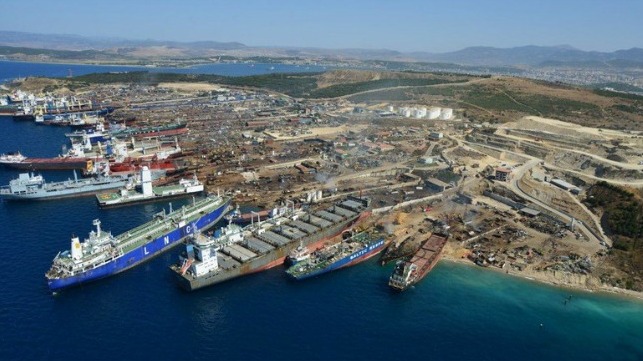
BIMCO forecasts a coming wave of recycling due to the age of ships after a market overhand (Ship recyclers' Association of Turkey)

Published Oct 23, 2025 6:50 PM by The Maritime Executive


The shipping industry has speculated for years that a potential recycling wave might be coming, but it was delayed by low capacity, high demand, and issues ranging from the pandemic-related shipping surge to the diversions away from the Red Sea. Industry trade group BIMCO highlights that many older ships have been hanging on longer than anticipated, creating a large market overhang ripe for recycling.

“Using the average recycling pattern during 2000-2019, we estimate that the current minimum recycling overhang is 500 ships and 1.8 million TEU,” says Niels Rasmussen, Chief Shipping Analyst at BIMCO. 

The numbers could be even more dramatic, BIMCO says, if you use the data from the earlier recycling of ships during the weaker market conditions of the 2010s to estimate the current maximum recycling overhang. Rasmussen highlights that this results in a maximum overhang estimate of 850 ships and 3.1 million TEU.

The share of ships 20 years old or older has increased from 16 percent at the beginning of 2020 to 24 percent currently, BIMCO reports. These ships were used to fill gaps in capacity over the past few years, and they are likely to make up the bulk of future recycling. The data highlights that the share of older ships has not been higher since the early 1970s.

“So far this year, only 10 container ships have been recycled,” says Rasmussen. “This extends a pattern of low recycling activity seen since 2021, as many ships have continued trading beyond their usual recycling age. Applying historical recycling patterns, we have calculated an average lifecycle for each size segment of the fleet and compared it to the current fleet. For instance, during the period from 2000 to 2019, 20 percent of ships were recycled before the age of 20, and 53 percent of ships were recycled before turning 25 years old.

There are a few other factors that could influence the speed at which ships are sent for recycling. BIMCO highlights the currently very large orderbook, the threat of ship demand erosion if ships return to normal Suez Canal routings, and regulatory requirements to improve ship efficiency. All of this could contribute to the higher end of its estimate.

“Future recycling is very difficult to estimate accurately,” says Rasmussen. “However, our estimates indicate an overhang of 6-10 percent of currently trading ships, equal to 33-55 percent of ships older than 20 years.

He notes that the estimated overhang is larger than the orderbook for all ship segments, but that is especially so for the small, under 8,000 TEU, vessels. He says this points to a trend where fleet growth in the coming years will be driven exclusively by the larger ships, which in turn could drive further cascading of larger ships into routes where smaller ships are currently deployed.


CNBC Highlights “Bureaucratic Blind Spot” in USTR Port Fee Program

container-Ro-Ro CONRO
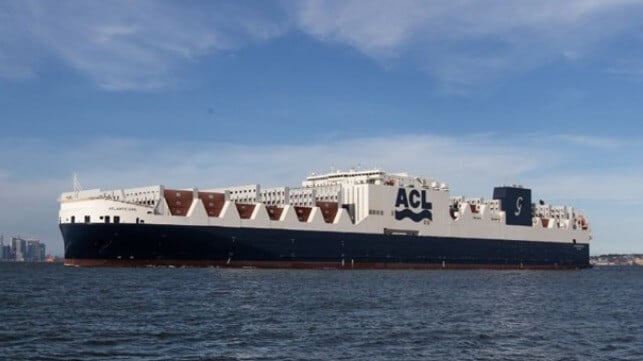
ACL's operates five unique vessels -- ConRos -- which are being charged as Ro-Ros under the USTR port fee program (ACL file photo)

Published Oct 22, 2025 5:39 PM by The Maritime Executive


The American news channel CNBC is highlighting what is being called a “bureaucratic blind spot” in the new USTR port fee program. During an interview with the Atlantic Container Line CEO, Andrew Abbott, it reports that the carrier could be facing fees of $34 million per year, which the CEO calls “unsustainable.”

The carrier, which is a division of Grimaldi Group, was set up 60 years ago by five major European steamship companies. Today, it is a unique niche provider operating five ConRo vessels built in China and registered in Malta. It operates transporting mostly containers and oversized equipment with service connecting Halifax, New York, Norfolk, and Baltimore, in the United States, with Liverpool, Antwerp, Hamburg, and Gothenburg.

Earlier this month, just before the USTR rolled out its program, it announced a proposed final change to the fees for the Ro-Ro segment. They had wavered between basing the fees on the number of units aboard the vessels or net tonnage. The USTR said it would proceed with the fees based on net tonnage because it was less susceptible to manipulation. They also dramatically increased the fee to $46 per net ton.

Abbott tells CNBC that ACL’s vessels, although they carry 80 percent containers, are being treated as Ro-Ro under the port fee program. He calls this a “bureaucratic blind spot,” saying that only 10 percent of their cargo is Ro-Ro and only 1 percent is cars. The remaining 10 percent is oversized cargo.

The five vessels as 49,600 dwt / 100,000 gross ton ships that have a capacity of 3,800 TEU and 6,400 linear meters of Ro-Ro capacity access with a stern ramp. They were built in China in 2015 and 2016. Abbott says much of their business is for American manufacturers and materials that ultimately are in U.S. exports. The line maintains weekly service with its five vessels.

He tells CNBC that on the first day of the program, one of their ships faced a $1.4 million fee. Since the program permits ships to be charged five times per year and they have five ships, he says they would be required to pay 25 fees per year. That is approximately $34 million per year.

Abbott contends their ConRo design ships have always been recognized as containerships and should be treated as such under the U.S. program. However, the codes the USTR is using list the ships as Ro-Ros. 

During the interview with CNBC, Abbott asserts that “it may not be able to viably operate a business in the U.S., and could be forced to relocate operations,” based on the fees. He says, if the situation remains the same, “then we have to start seriously looking next year about redeployment.”

He asserts that the nature of ACL’s business is unique, transporting tractors, equipment, aircraft wings, data center machinery, and transformers for power plants, for example. He says their customers would be forced into the charter market, which would provide less frequent and more costly service to move the critical equipment.

USTR responded to CNBC, saying that the program is using the International Classification of Ships by Type. It asserts this is based on construction characteristics and not the cargo being carried.