Friday, October 24, 2025

UAE Pioneers Gigascale Renewable Energy Project

  • The UAE has commenced construction on a $6 billion project that combines a 5.2 GW solar plant with a 19 GWh battery storage system, aiming to provide one gigawatt of continuous renewable energy.

  • Developed by Masdar and EWEC, the facility is expected to be operational by 2027 and will utilize AI-enhanced forecasting to overcome the intermittency challenges of traditional renewable sources.

  • This project is projected to avoid 5.7 million tonnes of carbon emissions annually, create over 10,000 jobs, and serve as a global blueprint for nations seeking to meet clean energy objectives and power rapidly expanding technology sectors.

The United Arab Emirates has broken ground on a combined solar power and battery storage facility designed to deliver one gigawatt (GW) of continuous, round-the-clock baseload renewable energy. The project, described by developers as the largest and most technologically advanced of its kind, represents a capital investment exceeding $6 billion.

The facility is being developed by Abu Dhabi Future Energy Company PJSC – Masdar and Emirates Water and Electricity Company (EWEC). Once operational in 2027, the system aims to overcome the intermittency challenges traditionally associated with renewable energy sources like solar and wind, according to statements from the companies.

Project Scope and Technology

The new infrastructure will integrate a 5.2 GW solar photovoltaic (PV) plant with a 19 gigawatt-hours (GWh) battery energy storage system. Developers state the design incorporates advanced technologies, including Artificial Intelligence (AI)-enhanced forecasting and intelligent dispatch capabilities for predictive analytics and system optimization.

The groundbreaking ceremony was witnessed by Sheikh Theyab bin Mohamed bin Zayed Al Nahyan, Deputy Chairman of the Presidential Court for Development and Fallen Heroes' Affairs, underscoring the government's support for the initiative.

According to the developers, the facility is projected to avoid approximately 5.7 million tonnes of carbon emissions annually while providing power at a globally competitive tariff.

Industry Context and Strategic Implications

This development is being framed within the context of the growing global demand for secure, clean, and reliable power sources, particularly to meet the energy needs of rapidly expanding technology sectors.

Ahmed Ali Alshamsi, Chief Executive Officer at Emirates Water and Electricity Company, highlighted the role of the project in supporting the burgeoning digital economy. "Abu Dhabi and the UAE are a global hub for artificial intelligence research, innovation, and adoption, and this project will ensure that the energy needs of this key sector are met sustainably, powering the next generation of economic growth," Alshamsi said.

The integration of gigascale solar power generation with a large-capacity battery system is seen by Masdar as a potential "blueprint" for other nations seeking to meet clean energy objectives by ensuring consistent power supply from renewables. Masdar, which has existing battery storage investments in the United States, the United Kingdom, and elsewhere, is targeting an overall project portfolio capacity across clean energy technologies of 100 GW by 2030.

Executive Commentary and Economic Impact

Executives emphasized the strategic importance of the project in advancing renewable energy integration.

Dr. Sultan Al Jaber, Minister of Industry and Advanced Technology and Chairman of Masdar, called the project a step towards "redefining the role of renewable energy for the information age." He noted that the breakthrough is the culmination of Masdar's two decades of work in renewables.

Mohamed Jameel Al Ramahi, Chief Executive Officer at Masdar, echoed this sentiment, stating that the project is "the largest and most ambitious in Masdar's history" and demonstrates that renewable energy can be dispatched continuously. "By overcoming the challenge of intermittency, we can provide sustainable power to meet fast-growing demand from advancements in artificial intelligence and other technologies," Al Ramahi added.

Beyond energy production, the project's development is expected to create more than 10,000 jobs and drive the establishment of new manufacturing and service facilities within the UAE. This aligns with the UAE's broader national strategy to position AI as a cornerstone of its economic diversification efforts.

The successful commission of the facility in 2027 would mark a significant step toward demonstrating the commercial viability of large-scale, continuous baseload power from combined solar and storage technologies, potentially shifting conventional reliance on fossil fuels for grid stability. The effort underscores the country's commitment to energy diversification and its role in the transition to non-intermittent renewable power.

By Michael Kern for Oilprice.com 


Angola challenges Botswana in high-stakes De Beers bid

State miner Endiama seeks Anglo’s majority stake as regional rivals vie for control of the diamond giant. (Image courtesy of De Beers.)

Angola’s state diamond company Endiama has submitted a formal bid for Anglo American’s (LON: AAL) majority stake in De Beers, in a sharp shift from its earlier position of seeking only a minority share.

Endiama chief executive officer José Manuel Ganga Júnior told Bloomberg News the company had presented “a concrete and well-defined proposal” to Anglo and was moving ahead with “subsequent actions.”

The move intensifies the scramble for control of the world’s largest diamond producer, pitting Angola against neighbouring Botswana, which already owns 15% of De Beers. Botswana holds the right to match any external offer and has framed its potential bid as a “matter of economic sovereignty.”

Angola recently overtook Botswana as Africa’s leading diamond producer by value, with 2024 output topping its neighbour’s for the first time in 20 years, according to the Kimberley Process, an international certification body.

Ganga Júnior said Endiama aims to leverage De Beers’ advanced mining technologies and global marketing systems. “These are factors that, if we’re part of De Beers, will automatically allow us to take bigger leaps forward,” he said.

Growing partnership

De Beers and Angola have strengthened ties since 2022, when they signed exploration agreements later expanded to cover processing. That partnership led to the first major kimberlite discovery in Angola in more than three decades, announced in August.

De Beers chief executive Al Cook at the time called Angola “one of the best places on the planet to look for diamonds.”

Anglo American, which holds an 85% stake in De Beers, is selling the business as part of a restructuring launched 17 months ago. Former De Beers executives Gareth Penny and Bruce Cleaver are leading investor groups among several bidders.

Angola’s bid adds a geopolitical dimension to the contest, as diamond-rich nations in southern Africa push for greater control over their natural resources amid mounting competition from lab-grown diamonds

De Beers has also drawn interest from at least six other consortia, including billionaire Anil Agarwal, India’s KGK Group and Kapu Gems, and Qatari investment funds.

AI's Dual Role Driving and Derailing Decarbonization

  • The global energy demand driven by AI integration is creating a significant challenge for power grids worldwide, with experts suggesting the issue may not be resolved within our lifetime.

  • The scramble to increase power generation for energy-hungry data centers has led to renewed investment in both clean energy alternatives like geothermal and tidal, and a resurgence in fossil fuel projects.

  • Despite efforts to expand energy and grid capacity, there are serious concerns about whether current infrastructure can handle the ballooning demand, leading to rising energy costs for consumers and a bipartisan pushback against unchecked AI integration.

The global energy demand increase being driven by widespread AI integration is creating a complex problem for power grids worldwide. The gap between current energy production capacity and projected need from data centers is so vast that experts are now saying that the issue won’t be solved within our lifetime, and is therefore an issue that will fall on future generations to untangle. 

“The gap between what AI is demanding and what we have everywhere in the world on the grid in terms of generation and transmission is huge and will not be closed in our lifetime,” Dave Stangis, sustainability strategy leader at Apollo Global Management Inc., recently told Bloomberg. “So what is happening around the world, there’s no doubt about it, is what you might call energy addition,” Stangis said. “The world is scrambling to add every source of power.”

The scramble to ramp up power generation capacity to support the proliferation of energy-hungry data centers has driven investment in clean and innovative energy alternatives, but it has also caused a resurgence in fossil fuel investment, and has resurrected fossil fuel-powered plants that were scheduled to be shuttered, and fast-tracked others

Investors are now heartily embracing an all-of-the-above approach to energy production at an unprecedented level, with renewed interest in previously fringe technologies like geothermaltidal energy,  and nuclear fusion, as well as a resurrection of the traditional nuclear sector. 

“There’s no doubt about it: the external world around investing in the transition has changed,” Stangis told Bloomberg. “From a policy perspective, certain technologies are more in favor today than they were a couple years ago, and others are less. But we still see the tens of trillions of dollars of opportunity – that hasn’t changed, and it’s only growing.”

But even with the rush to add increasing energy and grid capacity to support the runaway AI boom, there is cause for serious concern as to whether energy grids will be able to handle the ballooning demand that is rapidly coming down the pike. Countries including Ireland, Saudi Arabia and Malaysia are already facing serious challenges as the energy needs of their already-planned data centers far outstrip their planned energy additions. In the United States, a recent scientific study found that Americans can expect their energy costs to go up by as much as 70 percent if the government does not invest billions of dollars in generation and transmission capacity over the next few years. 

Indeed, consumers around the world are already bearing the financial burden of ubiquitous AI integration, and it’s beginning to cause a bipartisan groundswell of pushback. What’s more, consumers have no control over Big Tech’s full-steam-ahead approach to AI integration, and may not even be benefitting from it. 

"We are witnessing a massive transfer of wealth from residential utility customers to large corporations—data centers and large utilities and their corporate parents, which profit from building additional energy infrastructure," Maryland People's Counsel David Lapp was quoted by Business Insider earlier this year. "Utility regulation is failing to protect residential customers, contributing to an energy affordability crisis.”

However, while artificial intelligence is posing major threats to global power supplies and increasing rates of energy poverty, it could also hold the solutions to those same problems. Some experts believe that fears over data centers’ increasing energy consumption are overblown. As AI becomes more advanced, increased automation across sectors is expected to make nearly everything we do more efficient, to the degree that large language models are a net energy-saver. Some of the most energy-inefficient sectors, like materials value chains and biotechnology, will be transformed by AI models that can find ‘needle-in-a-haystack’ efficiency solutions that scientists alone cannot. 

By Haley Zaremba for Oilprice.com

 The Swiss National Bank 

SNB sells Rio Tinto stake in new divestment from extractive industries

Stock image.

The Swiss National Bank has sold its stake in Anglo-Australian miner Rio Tinto, adding to a series of recent divestments from companies in extractive industries, LSEG data shows.

Unsere (Our) SNB, a collection of environmental groups which includes 200 SNB shareholders, said the Rio Tinto divestment was the SNB’s entire stake, valuing it at $227 million. It said the SNB offloaded the 3.8 million shares between June 2 and July 21.

Rio Tinto and the SNB declined to comment.

According to a Reuters analysis of LSEG data based on company filings, the SNB has since 2024 sold stock in oil and gas companies worth more than double the sum it has invested in the sector.

Environmental campaigners encouraged

Among larger recent sales by the central bank, were divestitures in Chevron, BP, Tullow Oil and Enquest, LSEG data shows.

Campaigners have long called for the SNB to sell its holdings in companies they say damage the environment.

“This is an important step in the right direction, but there is still a lot more the SNB should do,” said Asti Roesle, co-coordinator for Unsere SNB.

The SNB, the world’s 10th biggest central bank by size of assets, held a quarter of its 741 billion Swiss francs of foreign currency investments in stocks at end-August.

The reason for the SNB’s latest divestments is unclear.

Coal exit in 2020

The SNB has previously said it pursues a market neutral and passive investment approach, aiming to replicate equity markets and diversifying its investments as broadly as possible.

In the past when the SNB has decided to adjust its strategy in certain sectors, it has announced this – for example its 2020 decision to no longer invest in thermal coal producers.

(By John Revill and Clara Denina; Editing by Mark Potter)


Aldebaran spins out greenfield assets in Argentina

Credit: Aldebaran Resources Inc.

Aldebaran Resources (TSXV: ALDE) has officially spun out its exploration-stage assets in northern Argentina while it continues to work on the more advanced Altar project in San Juan province as its sole asset.

The Vancouver-based copper-gold developer first announced its intention to spin out the assets in September, a move that it said would “unlock additional value” for its shareholders by creating a new company focused on advancing a portfolio of exploration projects that have been on hold for the past several years.

The new company — called Centauri Minerals — will hold six greenfield projects spanning over 430 sq. km across Salta, Jujuy and Catamarca provinces. Currently, the most advanced is Rio Grande, located 9 km from the Lindero gold-copper mine owned by Fortuna Mining. Based on drilling last completed in 2012, the project has a resource of 71 million tonnes grading 0.30% copper and 0.36 g/t gold in the indicated category and 41 million tonnes at 0.23% copper and 0.28 g/t gold in the inferred category.

Another notable project is Aguas Calientes, which has a well-mineralized surface but has not seen drilling since 2019.

New subsidiary

Leading the new subsidiary will be Sam Leung, a director at Aldebaran who previously worked at Adventus Mining (sold to Silvercorp Metals last year) and Lundin Mining, both of which have projects in South America.

As part of the spin-off, Aldebaran will “sell” the exploration assets to Centauri in exchange for 40 million shares of the subsidiary, representing 78.1% of those outstanding. The remaining shares will be sold at C$0.50 each to investors as part of a private seed financing for around C$5.7 million.

The funds would allow Centauri to execute its exploration initiatives, including the completion of a technical report on Rio Grande and field programs at Rio Grande and Aguas Calientes in preparation for drilling. It also plans to use the proceeds for administrative purposes ahead of a proposed initial public offering or go-public transaction in 2026.

Meanwhile, Aldebaran will continue to develop the 80%-owned Altar project as its lone asset. A resource update last year outlined 2.4 billion tonnes in measured and indicated resources grading 0.42% copper and 0.07 g/t gold, for 22 billion lb. of contained copper and 5.1 million oz. of gold. The company’s goal for next year is to advance the project towards a prefeasibility study.

Aldebaran Resources’ stock inched 0.6% higher on the spin-off announcement, giving the company a market capitalization of C$580.5 million ($414.3 million).


CMOC to invest $1.1B to expand Congo copper mine


China’s CMOC Group will spend $1.08 billion to expand its KFM copper mine in the Democratic Republic of Congo to add about 100,000 metric tons of output per year, it said on Friday.

It will launch the second phase of its KFM project in 2027. The first phase of KFM reached full capacity in 2023.

The investment comes as copper supplies face possible shortage amid mine worldwide disruptions, including the suspension of Freeport’s flagship Grasberg project in Indonesia.

CMOC owns 71.25% of KFM through its Hong Kong-based subsidiary and also operates the Tenke Fungurume mine in Congo. Both mines are key suppliers of copper and cobalt, metals key for energy transition.

CMOC said the KFM expansion will strengthen its position in the global market but warned of possible risks from price swings and the DRC’s political and economic uncertainty.

(By Dylan Duan and Tony Munroe; Editing by Louise Heavens)

Trilogy Metals jumps as US reinstates Alaska road permits

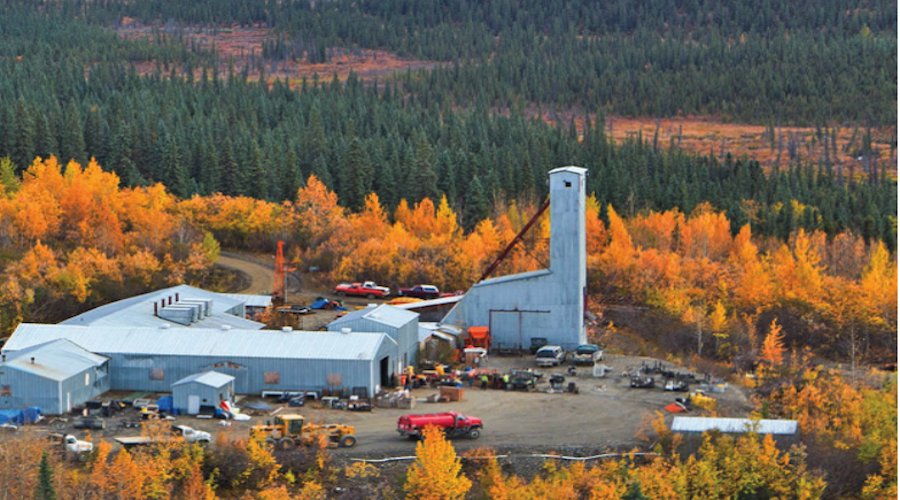
Camp at one of the Upper Kobuk Mineral Projects, in Alaska’s Ambler Mining District. (Image courtesy of Trilogy Metals j.)

Canada’s Trilogy Metals (TSX: TMQ) (NYSE-A: TMQ) saw its shares surge Friday after US authorities reinstated critical federal permits for a controversial 340-km (211-mile) access road in Alaska’s Ambler mining district. 

The Ambler road is seen as vital infrastructure to unlock one of the richest undeveloped copper regions in the world

Shares rose 15% in New York to $5.97 and 5% in Toronto to C$7.71, boosting the Vancouver-based company’s market cap to C$1.3 billion.

The US Army Corps of Engineers, the Bureau of Land Management, and the Alaska Industrial Development and Export Authority (AIDEA) re-issued the permits following President Donald Trump’s recent order to restore approvals originally granted in 2020 but revoked under the Biden administration in 2024.

The reinstated authorizations include a 50-year right-of-way across federally managed lands, enabling AIDEA to resume road planning, engineering updates, and budget preparations.

Trilogy chief executive officer Tony Giardini said the road “will provide access to a mining district that has the potential to strengthen the United States’ ability to secure domestic supplies of copper and other critical minerals.”

Opposition

The Ambler road project remains divisive. Environmental groups and Indigenous communities argue the road would bisect the Western Arctic Caribou Herd’s migration path and damage subsistence lifestyles. The Sierra Club said 89 Tribes and First Nations have formally opposed the project, which would cross Gates of the Arctic National Park.

Earlier this month, the US government invested $35.6 million in Trilogy, becoming a 10% shareholder and acquiring warrants to increase its stake by another 7.5%.

Trilogy owns 50% of Ambler Metals, a joint venture with South32 (ASX, LSE, JSE: S32), which owns the Upper Kobuk mineral projects, including the Arctic and Bornite copper-rich deposits.


Trump reverses Biden-era rules on copper smelters

Bingham Kennecott mine, Utah, site of one of the only copper smelters in the US. Credit: Adobe Stock

US President Donald Trump on Friday reversed a Biden-era air pollution rule that had imposed stricter limits on emissions from copper smelters.

The copper rule, finalized in May 2024, had required smelters to curb pollutants including lead, arsenic, mercury, benzene and dioxins under updated federal air standards.

Trump’s proclamation grants a two-year exemption from compliance for affected stationary sources, which the White House said would help promote American mineral security by reducing regulatory burdens on domestic copper producers.

“Imposing these requirements on such a limited and already strained domestic industry risks accelerating further closures, weakening the Nation’s industrial base, undermining mineral independence, and increasing reliance on foreign-controlled processing capacity,” the White House said in announcing the changes.

The proclamation specifically referenced the only two copper smelters in the United States, one operated by Freeport-McMoRan and the other by Rio Tinto. It stated the order would apply to Freeport’s smelter, but it was not immediately clear how it would affect Rio Tinto’s facility.

The two companies did not immediately respond to a request for comment.

Trump signed an executive order earlier this year that identified copper as a critical material for defense, infrastructure and emerging technologies, including clean energy and electric vehicles.

It led to a Section 232 investigation to determine whether copper imports threaten US national security, particularly due to dependence on a small number of foreign suppliers.

Following the review, the administration imposed a 50% tariff on certain imported copper and mandated that an increasing percentage of high-quality scrap copper produced in the US be sold domestically.

(By Jasper Ward; Editing by Costas Pitas, Sam Holmes and Tom Hogue)


Harvey Gulf Sells MPSV Fleet to Otto Candies to Focus on PSVs

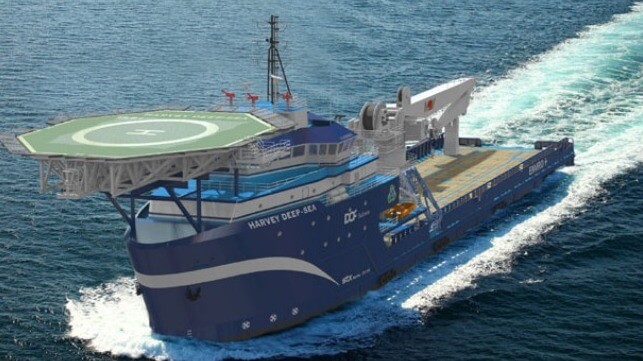
MPV
Harvey sold its four older MPSVs to Otto Candies to focus on its PSV fleet (Harvey Gulf International Marine)

Published Oct 23, 2025 10:51 PM by The Maritime Executive


Otto Candies, a Louisiana-based maritime transport and support services company, announced that it has acquired the MPSC fleet from Harvey Gulf International Marine. It is a fleet expansion for the company, while Harvey reports it will be focusing on its OSV fleet going forward.

Four ships were involved in the transaction, and they officially became part of the Otto Candies fleet on October 23. The ships include the 2012-built Harvey Intervention (3,912 GT), the 2013-built Harvey Deep-Sea (4,645 GT), and the sister ships Harvey Blue-Sea and Harvey Sub-Sea (8,417 GT), each built in 2017.

The acquisition represents a “meaningful step forward,” Otto Candies said, in its continued growth and commitment to support the evolving needs of the offshore energy industry. They highlighted that the four vessels bring proven subsea capabilities and operational versatility, which align with the company’s mission to deliver safe, reliable, and efficient marine services.

Otto Candie, which traces its origins to the 1940s, serves the offshore oil and gas and gas industry in the Gulf of Mexico. The company has also expanded to provide services to the offshore wind/new energy industries on the U.S. East Coast. Its website lists a fleet of 16 vessels in the inspection maintenance and repair, supply, Service Operation Vessels, dive support, and deck barge sectors.

“As we move into this next chapter, we remain grounded in the values that have guided our company for generations,” said Otto Candies, commenting on the acquisition. “The addition of these vessels strengthens our ability to meet the highest standards of performance while expanding our service offerings in both traditional and emerging offshore markets.”

Harvey, which lists a fleet of 28 PSVs on its site, said it remains focused on new vessels and supporting the oil and gas industry. The company in recent years has pioneered in the U.S. industry, adding PSVs powered by LNG and batteries. In 2022, it completed the refit of its third vessel to become a tri-fueled platform supply vessel, while highlighting that the plan was to operate primarily utilizing the LNG and battery power.


MSC Required to Divest of Ferry Operator Moby by Antitrust Regulators

Moby ferry
Moby operates a large fleet of cargo and passenger ferries in the Mediterranean (Moby)

Published Oct 24, 2025 2:42 PM by The Maritime Executive


In a rare setback for the Mediterranean Shipping group and the Aponte family, the company is being forced to divest its investment in Moby, an operator of ferries between Italy and the islands of the Mediterranean. The Italian Competition Authority announced on October 24 that it has accepted and made binding a commitment offered by MSC’s Shipping Agencies Services, Moby, and Grandi Navi Veloci that sets the terms of the divestment. 

The Competition Authority had announced in November 2024 that it was investigating the investment made into Moby by SAS, which also owns the ferry operator GNV. At the time, they said the market for ferries operating between Italy, Sardinia, Corsica, Sicily, and Elba is highly concentrated, with most of the cargo and passenger services provided by Moby or GNV, and occasionally a third company. They also noted that there were significant barriers to entry into these routes. Moby also operates under the brands of Tirrenia and Toremar which it acquired years ago.

The Aponte family had emerged in March 2022 as the savior for financially troubled Moby, which was controlled by the Onorato family. Under the terms of the deal that was finalized in 2023, SAS would acquire 49 percent of Moby for approximately €150 million while providing a loan for an additional €243 million. In January 2024, MSC also acquired two Moby RoPax ferries, Moby Vinci and Moby Sharden, for a further €109 million. The company also had a commitment to acquire the remaining 51 percent of the company from the Onoratos.

Under the terms of the settlement with the Competition Authority, SAS will transfer the 49 percent share, without consideration, to Onorato’s company and will relinquish its rights to the other 51 percent of the company. It has also agreed to provide compensation to consumers who purchased tickets on the Moby ferries.

It is also a setback for Moby, which has been ordered to repay the loan provided by the Apontes. Moby reports it will undertake a financial restructuring that will include the sale of assets. The proceeds will be used to repay the loan, while to maintain its services, the company will enter into charter-back agreements for some of the assets that are to be sold. If the proceeds are not enough to cover the debt, the remaining amount will be transferred to independent third parties on terms that safeguard Moby’s economic and financial stability.

The divestiture is a win for the Grimaldi group, which challenged the investment in Moby on competition grounds. However, a further appeal by Grimaldi on the terms of the settlement was rejected by the Competition Authority. 

Moby said after the announcement of the agreement that the commitments from SAS would establish a path that could be used for “capital strengthening and reorientation of the business model.” Its goal is to reduce the company’s debt to zero. While it will be selling assets, which it is calling non-strategic assets, it said the refinancing would put the company on solid financial ground. However, Moby admitted it would require some consolidation of services, mostly to Sardinia. It said the company’s focus would be on larger capacity vessels and providing higher levels of customer service.

MSC, so far, has been able to proceed with its large-scale growth and acquisition. It grew to be the largest container carrier, building and acquiring ships as well as expanding into other operations. It bought a car carrier company, made investments in railroads, and took a key role in the Port of Hamburg. Recent reports even said MSC was looking at an investment in one of Europe’s budget airlines, something the Apontes denied in media reports.