Monday, December 22, 2025

Another man dies at ICE facility near Philipsburg. Advocates renew calls for closure

Bret Pallotto
Fri, December 19, 2025 

The sign for the GEO Group’s Moshannon Valley Processing Center, an immigration detention facility, in Clearfield County.

A man died Sunday at the Moshannon Valley Processing Center, marking the second death at the privately owned immigration detention facility this year and the third in the past four.

Fouad Saeed Abdulkadir, 46, from the African country of Eritrea, died about 3:21 a.m. Sunday in U.S. Immigration and Customs Enforcement custody after experiencing what the federal agency described in a news release as medical distress.

Hours after ICE announced his death Friday, the Shut Down Detention Campaign renewed calls for Clearfield County’s governing body to end its contracts with ICE and the company that operates the facility.

“Imam Fouad’s death is not an isolated tragedy, it is the predictable outcome of a violent detention system that continues to cage people for profit and punishment,” the group said in a written statement. “... No amount of ‘oversight’ can fix a profit-driven system that treats human beings as disposable, a system designed to cage people.”

The cause of Abdulkadir’s death is being investigated. Messages left Friday afternoon with state police at Clearfield and the Clearfield County Coroner’s Office were not immediately returned. He was a father of four.

ICE said medical staff transported him to the medical department, contacted local emergency medical services and began CPR after Abdulkadir complained of chest pain. EMS personnel pronounced him dead after arriving at the facility that’s about three miles from Philipsburg.

He was in ICE custody for about seven months and was waiting for a hearing with the Justice Department’s Executive Office of Immigration Review.

Immigration rights advocates have long called for the closure of the Moshannon Valley Processing Center, the largest federal immigration detention center in the Northeast. It is owned and operated by the Florida-based GEO Group.

Chaofeng Ge, a 32-year-old Chinese citizen and New York City resident, died by suicide in August. He was found hanging by his neck in a shower stall and his family said his hands were bound behind his back.

Frankline Okpu, a 37-year-old Cameroonian national, died in December 2023 of ecstasy toxicity combined with other three other significant conditions. His death was ruled accidental. The American Civil Liberties Union of Pennsylvania said he was found unresponsive while in solitary confinement.

Each death resulted in a lawsuit seeking greater transparency from ICE. A 59-page report also detailed what it described as “punitive, inhumane, and dangerous” conditions at the facility.

Abdulkadir was a native of Saudia Arabia. ICE said he adjusted his status in the U.S. to a lawful permanent resident in April 2018, though records showed he had no claim to citizenship. The Shut Down Detention Campaign said he was a green-card holder.

He was convicted by a jury in December 2023 of wire fraud and theft of public money. He was accused of fraudulently obtaining more than $80,000 in benefits from three public assistance programs. Abdulkadir had appealed his conviction.

U.S. District Judge Sara Lioi sentenced him in April 2024 to one year and nine months in federal prison, as well as three years of supervised release. He was also ordered to pay more than $80,000 in restitution.

The judge said he “manipulated and controlled others for selfish financial gain,” Cleveland.com reported. A federal prosecutor described him as a “conman.” Nearly four dozen people wrote letters to Lioi seeking leniency.

ICE’s Enforcement and Removal Operations took him into custody in July 2024 and transported him to the Moshannon Valley Processing Center.

The Shut Down Detention Campaign said Abdulkadir was an imam and former leader at the Islamic Center of Northeast Ohio. A GoFundMe — which has raised more than $9,000 to cover his funeral expenses — described him as a “gentle guide who illuminated our paths.”

The page said he died while “unjustly incarcerated, after pleading for medical care for over a year.”

“He spent his life selflessly caring for others, nurturing our children with the wisdom of the Quran, healing family rifts, and offering kindness to everyone he met,” the page said. “His boundless generosity touched countless souls, and the space he leaves behind feels immeasurably quiet and deep.”

A record average of 1,600 people were at the detention center as of Nov. 28, according to the Transactional Records Access Clearinghouse, a data distribution organization founded at Syracuse University. The facility has a capacity of 1,876.


Trump removes nearly 30 career diplomats from ambassadorial positions

MATTHEW LEE
Sun, December 21, 2025 


President Donald Trump holds a cell phone with a call to Nvidia CEO Jensen Huang as he departs on Air Force One at Rocky Mount-Wilson Regional Airport, Friday, Dec. 19, 2025, in Elm City, N.C. (AP Photo/Alex Brandon)(ASSOCIATED PRESS)

Secretary of State Marco Rubio speaks during a news conference at the State Department, Friday, Dec. 19, 2025, in Washington. (AP Photo/Julia Demaree Nikhinson)(ASSOCIATED PRESS)

WASHINGTON (AP) — The Trump administration is recalling nearly 30 career diplomats from ambassadorial and other senior embassy posts as it moves to reshape the U.S. diplomatic posture abroad with personnel deemed fully supportive of President Donald Trump’s “America First” priorities.

The chiefs of mission in at least 29 countries were informed last week that their tenures would end in January, according to two State Department officials, who spoke on condition of anonymity to discuss internal personnel moves.

All of them had taken up their posts in the Biden administration but had survived an initial purge in the early months of Trump’s second term that targeted mainly political appointees. That changed on Wednesday when they began to receive notices from officials in Washington about their imminent departures.

Ambassadors serve at the pleasure of the president although they typically remain at their posts for three to four years. Those affected by the shake-up are not losing their foreign service jobs but will be returning to Washington for other assignments should they wish to take them, the officials said.

The State Department declined to comment on specific numbers or ambassadors affected, but defended the changes, calling them “a standard process in any administration.” It noted that an ambassador is “a personal representative of the president and it is the president’s right to ensure that he has individuals in these countries who advance the America First agenda.”

Africa is the continent most affected by the removals, with ambassadors from 13 countries being removed: Burundi, Cameroon, Cape Verde, Gabon, Ivory Coast, Madagascar, Mauritius, Niger, Nigeria, Rwanda, Senegal, Somalia and Uganda.

Second is Asia, with ambassadorial changes coming to six countries: Fiji, Laos, the Marshall Islands, Papua New Guinea, the Philippines and Vietnam affected.

Four countries in Europe (Armenia, Macedonia, Montenegro and Slovakia) are affected; as are two each in the Middle East (Algeria and Egypt); South and Central Asia (Nepal and Sri Lanka); and the Western Hemisphere (Guatemala and Suriname).

Politico was the first to report on the ambassadorial recalls, which have drawn concern from some lawmakers and the union representing American diplomats.

US awards no-bid contract to Denmark scientists studying hepatitis B vaccine in African babies

The contract did not undergo a customary ethics review


MIKE STOBBE
Fri, December 19, 2025


FILE - This 1981 electron microscope image made available by the U.S. Centers for Disease Control and Prevention shows hepatitis B virus particles, indicated in orange. (Dr. Erskine Palmer/CDC via AP, File)


NEW YORK (AP) — The Trump administration has awarded a $1.6 million, no-bid contract to a Danish university to study hepatitis B vaccinations on newborns in Africa that is raising ethical concerns.

The unusual contract was awarded to scientists who have been cited by anti-vaccine activists and whose work has been questioned by leading public health experts. Some experts have suggested the research plan is unethical, because it will withhold vaccines that work from newborns at significant risk of infection.

The contract did not undergo a customary ethics review, The Associated Press has learned.

The Centers for Disease Control and Prevention awarded the grant to a research team at the University of Southern Denmark that has been lauded by U.S. Health Secretary Robert F. Kennedy Jr., according to a federal notice posted this week.

One of the team's leaders is Christine Stabell Benn, a consultant for a Kennedy-appointed committee that recently voted to stop recommending a dose of hepatitis B vaccine for all U.S. newborns.

The study is to begin early next year in Guinea-Bissau, an impoverished West African nation where hepatitis B infection is common. The researchers are funded for five years to study 14,000 newborns.

It’s to be a randomized controlled trial, with some infants given the hepatitis B vaccine at birth and some not. Children will be tracked for death, illness and long-term developmental outcomes.

Most of the children will be followed for less than two years to look for side effects, but the first 500 enrolled will be followed for five years to look for behavior and brain development problems. There is no placebo involved, according to a copy of the study protocol prepared earlier this year that was obtained by the AP.

Hepatitis B can be passed from an infected mother to a baby. It also can be spread by other infected people a baby comes in contact with.

Research and widespread medical consensus holds that the hepatitis B vaccine protects newborns, so withholding it from some babies — in this case, Black babies — has raised ethical alarms.

Medical evidence is clear that the vaccine protects infants from developing liver disease and an early death. The well-documented infection risk far outweighs hypothetical concerns about side effects, said Dr. Boghuma K. Titanji, an Emory University infectious diseases doctor.

She called the study “unconscionable,” and said it likely will exacerbate existing vaccine hesitancy in Africa and elsewhere.

“There’s so much potential for this to be a harmful study,” said Titanji, who is from Cameroon.

Benn did not respond to an email seeking comment about the proposal. An automatic response said she is out of the office until early January.

But, in a statement, the research team said the study “will be the first and likely the only one of its kind.”

They said it takes advantage of an unusual window of opportunity: Guinea-Bissau doesn't currently recommended a birth dose of the hep B vaccine, but the nation will be implementing universal vaccination of newborns in 2027.

Vaccine skeptics and opponents have suggested that all the vaccine's possible side effects were inadequately studied before the CDC began recommending it for newborns in 1991. Public health experts counter that over more than three decades no serious side effect has been documented.

The award is highly unusual. The CDC did not announce a research funding opportunity and invite proposals.

The proposal was unsolicited and the award did not go through customary review, said a CDC official with knowledge of the decision. Department of Health and Human Services officials told CDC officials to approve it and said HHS would provide special funding for it, the CDC official said.

In private communications channels, CDC staffers were expressing outrage about the award, said the official, who is not authorized to talk about it and spoke on condition of anonymity.

Some of those CDC scientists have compared the work to the infamous Tuskegee Study, which the agency oversaw in its later stages. In that decades-long study, health workers withheld treatment from unsuspecting Black men infected with syphilis so doctors could track the horrible ravages of the disease.

Like Tuskegee, this study involves the prospect of researchers watching people grow ill when a medical intervention could have kept them healthy, Titanji echoed.

“It is an apt comparison,” she said.

The new study's researchers say the trial was approved by a national ethics committee in Guinea-Bissau. But it did not undergo a customary ethics review within the CDC, the agency official told the AP.

In a statement, HHS spokesman Andrew Nixon said "we will ensure the highest scientific and ethical standards are met.”

Public health scientists noted questions have been raised in the past about research led by Benn and her husband, Peter Aaby, in their Bandim Health Project.

Other Danish researchers who reviewed Aaby and Benn's work have described questionable research practices. Earlier this year, former CDC Director Dr. Tom Frieden wrote an editorial calling a 2017 study co-authored by Aaby and Benn “fundamentally flawed."

Several researchers had harsh words about the latest award.

“Aaby and Benn are doing the Guinea-Bissau HBV vaccine depravation trial," Carl Bergstrom, a University of Washington evolutionary biologist, wrote in a post on Bluesky. "Did RFK Jr. just call up the first name in the antivax yellow pages?”

Dr. Angela Rasmussen, a virus expert at the University of Saskatchewan, said Kennedy was giving taxpayers' money to his “cronies” for a “grossly unethical study that will expose African babies to hep B for no reason.”

___

The Associated Press Health and Science Department receives support from the Howard Hughes Medical Institute’s Science and Educational Media Group and the Robert Wood Johnson Foundation. The AP is solely responsible for all content.


Prisoners freed by Belarus say their passports are taken away in a final 'dirty trick' by officials

YURAS KARMANAU
Fri, December 19, 2025 


Uladzimir Labkovich, one of the released Belarusian prisoners and his wife Nina Labkovich smile as he arrives in Vilnius, Lithuania, Thursday, Dec. 18, 2025. 
(AP Photo/Mindaugas Kulbis)

TALLINN, Estonia (AP) — The only official document human rights advocate Uladzimir Labkovich had with him when he was suddenly released from a Belarus prison, blindfolded and driven to neighboring Ukraine was a piece of paper with his name and mugshot on it.

“After four and half years of abuse in prison, I was thrown out of my own country without a passport or valid documents,” Labkovich told The Associated Press by phone from Ukraine on Wednesday. “This is yet another dirty trick by the Belarusian authorities, who continue to make our lives difficult.”

Labkovich, 47, was one of 123 prisoners released by Belarus on Dec. 13 in exchange for the U.S. lifting some trade sanctions on the authoritarian government of President Alexander Lukashenko. All but nine were taken to Ukraine; the rest — including Nobel Peace Prize laureate Ales Bialiatski — were driven to Lithuania.

A close ally of Russia, Lukashenko has ruled his nation of 9.5 million with an iron fist for over three decades. Belarus has faced years of Western isolation and sanctions for its crackdown on human rights and for allowing Moscow to use its territory in the 2022 invasion of Ukraine.

Recently, Lukashenko has sought better relations with the West, releasing hundreds of prisoners since July 2024.

But in a final act of indignity and repression, the newly freed prisoners often are not told they are being deported without passports or other identity papers. They must rebuild their lives abroad, facing bureaucratic obstacles without any help from their homeland.

Retaliation after release

Because he was blindfolded, Labkovich said he and others could only tell they were heading south. At least 18 prisoners taken to Ukraine — including Labkovich and Belarusian opposition figures Vitkar Babaryka and Maria Kolesnikova — had no documents with them, according to rights advocates. Germany has promised to provide shelter to Babaryka and Kolesnikova.

“I dream of hugging my three children and wife in (the Lithuanian capital) Vilnius, but instead I have to deal with absurd bureaucratic procedures,” Labkovich said.

Belarusian opposition leader Sviatlana Tsikhanouskaya, who fled the country in 2020, told AP in written comments that the way the prisoners were taken out of Belarus was “a forced deportation in violation of all international norms and regulations,” adding it was inhumane treatment.

“Even after pardoning people, Lukashenko continues to retaliate against them,” Tsikhanouskaya said. “They bar people from staying in the country, they forcibly drive them out of Belarus without documents in order to humiliate them even further.”

In September, Lukashenko pardoned more than 50 political prisoners who were taken to the Lithuanian border.

One of them, prominent opposition activist Mikola Statkevich refused to leave Belarus. The 69-year-old, who called the government’s actions a “forced deportation,” pushed his way out of the bus and stayed for several hours in the no-man’s land between the borders before being taken away by Belarusian police and returned to prison.

Fourteen others who had crossed into Lithuania from the September release didn't have passports. Freed activist Mikalai Dziadok said Belarusian security operatives tore up his passport in front of him. Freed journalist Ihar Losik said all of his papers — including diaries — were confiscated.

“My passport was simply stolen. We came here (to Lithuania) — no one had passports. They took photos, all papers, the verdict, notebooks — they took everything,” Losik said.

Nils Muižnieks, the U.N. special rapporteur on human rights in Belarus, described what happened to the prisoners as “not pardons, but forced exile.”

“These people were looking forward to returning to their homes and families," he said in a statement. "Instead, they were expelled from the country, left without means of subsistence and, in some cases, stripped of identity documents.”

One activist group has raised more than 245,000 euros (about $278,000) for the released prisoners, and Tsikhanouskaya said she's asked Western governments for help.

“People went through real hell, and now we are working together to help them and facilitate their legalization and settlement, engaging all contacts with both American and European allies," she said.

Harsh prison conditions


Bialiatski, Labkovich and five other members of Viasna, Belarus' oldest and most prominent rights group, were arrested in Lukashenko's crackdown on mass protests after a 2020 election that kept him in power and was denounced as rigged by the opposition and the West. Tens of thousands were arrested, with many brutally beaten, while hundreds of thousands fled abroad.

Along with Bialiatski, Labkovich was accused of “financing public unrest” and helping those affected by the crackdown. Bialiatski was sentenced to 10 years in prison; Labkovich got seven.

Prison authorities tried to coerce Labkovich to cooperate and launched two more criminal cases against him — refusing to obey orders of prison officials and high treason, which could have added another 15 years to his sentence.

Labkovich said he spent more than 200 days in solitary confinement and “and lost count of the nights on the concrete floor in the icy cell.”

Two other Viasna activists — Marfa Rabkova and Valiantsin Stefanovic — remain imprisoned. Labkovich believes they and others are still held so that authorities “can influence the behavior and statements of those released.”

Babaryka, 62, recalled that while in prison in 2023, he started having fainting episodes and once woke up with a broken rib, torn lung, pneumonia and 23 cuts in his scalp. He said he didn't know what had happened while he was unconscious and didn't want to elaborate on the conditions behind bars.

“I'll tell you the truth: Those who come out shouldn't talk about how they were and what they felt, because many people remain inside the system and depending on what they say, they will generally get disadvantages rather than advantages,” Babaryka said Sunday in Chernihiv, Ukraine.

His 35-year-old son, Eduard Babaryka, is among more than 1,100 political prisoners still held in Belarus, serving a 10-year sentence on charges of organizing mass unrest.

A crackdown at home and beyond


While prisoner releases have become more regular recently, Lukashenko's crackdown continues, targeting critics wherever they live. Belarusians living abroad cannot renew their passports or get new ones at embassies and consulates, making life difficult for thousands who fled the repression.

Opposition activists, rights advocates and journalists in exile face criminal trials in absentia. Authorities seize their apartments and other property, with courts rejecting attempts to contest those moves.

Activists say there is a “revolving door” of prisoner releases and arrests. Since the Dec. 13 release, Viasna declared seven more people to be political prisoners, and 176 since September.

Despite this month's pardons, Amnesty International's director for Eastern Europe Marie Struthers urged people not to forget those whose freedom "is long overdue.”

“If this release is a part of political bargain, it only underscores the Belarusian authorities’ cynical treatment of people as pawns,” she said.

Earlier this week, activist Aliaksandr Zdaravennau, 46, of the southern city of Rechytsa, was convicted of high treason and participating in extremist activities and sentenced to 10 years. Subway engineer Yury Karnitski, 44, and shop clerk Alena Hartanovich, 52, were added to the Interior Ministry's list of extremists.

“While the prisoner releases are certainly a relief, there are no signs from Belarusian authorities of a change in the policy or practice of repression," Muižnieks said. “Belarus continues to rank among the countries with the highest number of political prisoners per capita.”


Viktar Babaryka, key Belorussian opposition figure looks on during a joint press conference with Uladzimir Labkovich, human rights activist, Maria Kolesnikova, key Belorussian opposition figure and Alyaksandr Feduta, Belarusian politician after being released from detention in Belarus, in Chernihiv, Ukraine, Sunday, Dec. 14, 2025. (AP Photo/Evgeniy Maloletka)(ASSOCIATED PRESS)

Nobel Peace Prize laureate Ales Bialiatski, one of the Belarusian prisoners released on Saturday, speaks during an interview with the Associated Press in Vilnius, Lithuania, on Sunday, Dec. 14, 2025. (AP Photo/Mindaugas Kulbis)(ASSOCIATED PRESS)

Pavel Seviarynets, one of the released Belarusian prisoners smiles as he arrives in Vilnius, Lithuania, Thursday, Dec. 18, 2025. (AP Photo/Mindaugas Kulbis)(ASSOCIATED PRESS)


Nobel Peace Prize laureate Ales Bialiatski, one of the Belarusian prisoners released on Saturday, gestures during an interview with the Associated Press in Vilnius, Lithuania, on Sunday, Dec. 14, 2025. (AP Photo/Mindaugas Kulbis)(ASSOCIATED PRESS)

Uladzimir Labkovich, one of the released Belarusian prisoners embraces a relative as he arrives in Vilnius, Lithuania, Thursday, Dec. 18, 2025. (AP Photo/Mindaugas Kulbis)(ASSOCIATED PRESS)

A Man Was Perfectly Frozen in Ice for 28 Years. The Glacier Just Spit Him Back Out.

Darren Orf
Sat, December 20, 2025 
POP MECH


Missing Man Found Mummified in Ice 28 Years Later 
Andyborodaty - Getty Images

Here's what you'll learn when you read this story:

A 31-year-old Pakistani man, who went missing in June 1997 in an ice cave, was found perfectly preserved by a local shepherd.

The discovery puts an end to a painful three-decade-long search for a family that tirelessly searched for his body in the mountainous Kohistan region.

As glaciers retreat around the world due to climate change, discoveries of bodies or ancient artifacts will likely increase as melting ice reveals their frozen tombs.

In June 1997, a 31-year-old Pakistani man by the name Naseeruddin, while traveling in the Supat Valley in the mountainous northern region of Pakistan called Kohistan, disappeared into a cave never to be seen again. He left behind a wife and two children, and for years, the family of the missing man searched the area for any sign of him—ultimately, to no avail.

“Our family left no stone unturned to trace him over the years,” Malik Ubaid, the nephew of the deceased, told the AFP. “Our uncles and cousins visited the glacier several times to see if his body could be retrieved, but they eventually gave up as it wasn’t possible.”

After nearly three decades, the search for Naseeruddin has finally come to an end. On July 31, a local shepherd in the valley named Omar Khan discovered the missing man’s body, with an identity card still on him. But that wasn’t the only surprise.

“What I saw was unbelievable,” Khan told BBC Urdu. “The body was intact. The clothes were not even torn.”

For 28 years, Naseeruddin lay mummified in the glacial ice. He underwent a quick freezing process that then protected the body from moisture and oxygen. Pakistan is home to some 7,000 glaciers—the largest amount outside of Earth’s polar regions—and like many glaciers around the world, these ice giants are slowly disappearing due to anthropogenic climate change.

In northern Pakistan, climate change has caused decreased snowfall in the region, leading to more direct sunlight melting the glaciers. This unnatural warming is what eventually exposed Naseeruddin’s body, allowing the passing shepherd to finally put a painful mystery to rest.

“Finally, we have got some relief after the recovery of his dead body,” Ubaid said.

Glaciers and other icy bodies, such as ice sheets, are basically planetary time capsules. Scientists around the world frequently drill ice cores to measure past climactic events by analyzing trapped air bubbles, as well as the isotropic composition of the surrounding ice. They can also provide incredible glimpses into humanity’s past. While many amazing artifacts have been found encased in glacial ice, the most famous frozen finding is Ötzi, also known as The Iceman, who was found in the Italian Alps in 1991 with his soft tissues and organs intact. This discovery provided an unprecedented glimpse into life and times and neolithic Europe.

While glaciers are amazing at preserving soft tissue (scientists even know what Ötzi’s last meal was), they aren’t as effective as cryogenic freezing, which can perfectly preserve an organism. This is why Ötzi, as well as other bodies of frozen WWI soldiers discovered in 2017, still show signs of decomposition and dehydration.

Sadly, Naseeruddin’s fate is one shared by many intrepid explorers who venture into these dangerous and cold altitudes. Last year, National Geographic reported the partial recovery of mountaineer Sandy Irvine, who disappeared on Everest a century ago. In fact, crews regularly conducted clean-up campaigns on the world’s tallest peak, often finding long-lost climbers frozen along the mountainside.


With glaciers rapidly in retreat around the world, we’ll soon see what other mysteries—both tragic and wondrous—that may lay hidden at the top of the world.
A funeral for slain Bangladeshi activist draws hundreds of thousands

JULHAS ALAM
Sat, December 20, 2025 


Protesters shout slogans and block an intersection following overnight attacks and vandalism after the death of a prominent activist, who was shot by an assailant a week ago, in Dhaka, Bangladesh, Friday, Dec. 19, 2025. (AP Photo/Mahmud Hossain Opu)More


DHAKA, Bangladesh (AP) — Hundreds of thousands of people attended the funeral Saturday of a leading Bangladeshi activist who died of gunshot wounds sustained in an attack in Dhaka earlier this month, as political tensions gripped the country ahead of elections.

Sharif Osman Hadi, who took part in last year’s political uprising that ended former Prime Minister Sheikh Hasina’s 15-year rule, died in a hospital in Singapore on Thursday after being shot Dec. 12 in Dhaka.

Police said they had identified suspects and that the shooter had most probably fled to India, where Hasina has been in exile. The development sparked a new diplomatic squabble with India and prompted New Delhi this week to summon Bangladesh’s envoy. Bangladesh also summoned the Indian envoy to Dhaka.

Security was tight in Dhaka on Saturday as the funeral prayers were held outside the nation’s Parliament complex.

Hadi’s body returned on Friday night, and Saturday was declared a national mourning day.

Hadi was a spokesperson for the Inqilab Moncho culture group, which said he would be buried on the Dhaka University campus beside the country’s national poet Kazi Nazrul Islam.

Mourners carried Bangladesh flags and chanted slogans, such as “We will be Hadi, we will be fighting decades after decades,” and “We will not let Hadi’s blood go in vain.”

The news of his death on Thursday evening triggered violence, with groups of protesters attacking and torching the offices of two leading national dailies. The country’s interim leader, Nobel Peace Prize laureate Muhammad Yunus, has urged the people to stay calm.

Hadi was a fierce critic of both neighboring India and Hasina, who has been in exile since Aug. 5, 2024, when she fled Bangladesh. Hadi had planned to run as an independent candidate in a major constituency in Dhaka in the next national elections in February.

Bangladesh has been going through a critical transition under Yunus in a bid to return to democracy through the upcoming elections. But the government has been Hasina’s Awami League party, which is one of two major political parties. ,

Hasina’s archrival, former Prime Minister Khaleda Zia’s Bangladesh Nationalist Party is the other key party, which hopes to forms the next government. The Jamaat-e-Islami party, the country’s largest Islamist party with a dark history involving the nation’s independence war in 1971, is leading an alliance to carve out a bigger political space in the absence of Hasina’s party and its allies.

Hasina has been sentenced to death on charges of crimes against humanity, but India's has not responded to repeated requests by the Yunus-led government for her extradition.
Pakistani court sentences former Prime Minister Imran Khan and wife to 17 years in graft case

MUNIR AHMED
Sat, December 20, 2025 


FILE - Pakistan's former Prime Minister Imran Khan, right, and Bushra Bibi, his wife, speak to the media before signing documents to submit surety bond over his bails in different cases, at an office of Lahore High Court in Lahore, Pakistan, on July 17, 2023. (AP Photo/K.M. Chaudary, File)(ASSOCIATED PRESS)

Supporters of Pakistan's imprisoned former Prime Minister Imran Khan hold a demonstration outside Islamabad High Court, in Islamabad, Pakistan, Tuesday, Dec. 2, 2025. (AP Photo/A. Sheikh)

ISLAMABAD (AP) — A Pakistani court convicted and sentenced imprisoned former Prime Minister Imran Khan and his wife Bushra Bibi on Saturday to 17 years in prison after finding them guilty of retaining and selling state gifts, officials and his party said.

The couple pleaded not guilty when they were indicted last year. They were accused of selling the gifts, including jewelry from Saudi Arabia’s government, at prices far below their market value while he was in office.

Prosecutors said Khan and his wife declared the value of the gifts at a little over $10,000, far below their actual market value of $285,521, allowing them to purchase the items at a reduced price.

Khan's lawyer, Salman Safdar, said he would appeal the ruling on behalf of the former premier and his wife.

Under Pakistani law, for government officials and politicians to keep gifts received from foreign dignitaries, they must buy them at the assessed market value and declare any proceeds earned from selling them.

Khan’s spokesperson, Zulfiquar Bukhari, said Saturday's sentencing ignored basic principles of justice. In a statement, he said that the “criminal liability was imposed without proof of intent, gain, or loss, relying instead on a retrospective reinterpretation of rules.

Bukhari said the court ruling “raised serious questions about the fairness and impartiality of the process, turning justice into a tool for selective prosecution.”

Khan’s opposition Pakistan Tehreek-e-Insaf party, or PTI, denounced the ruling in a statement, calling it “a black chapter in history,” and said Khan was present in the court when the judge announced the verdict in the Adiala prison in the city of Rawalpindi.

On its official X account, the party wrote Khan's family was not allowed access to the court when the verdict was announced. “A closed-door jail trial is neither free nor fair. It is, in fact, a military Trial.”

Omar Ayub, a PTI senior leader, said on X that there was “no rule of law in Pakistan.”

Meanwhile, Information Minister Attaullah Tarar said Khan and his wife were convicted and sentenced after the court examined solid evidence. He said the couple indulged in corruption, and “the court delivered a fair decision”.
Khan, 73, was ousted in a no-confidence vote in April 2022 and his party is in opposition in the parliament. However, he remains popular in Pakistan.

His party made a strong showing in the Feb. 8, 2024, parliamentary election but did not win a majority of the seats in the National Assembly, or lower house of the parliament. The party claimed the vote was rigged. The government denies such claims.

Khan's main political rival, Shehbaz Sharif, is the country's current prime minister. Since his ouster, Khan has repeatedly alleged that his removal was the result of a U.S.-backed conspiracy carried out with the support of Pakistan’s powerful military — claims denied by Washington, the military and his opponents.

The former prime minister has been serving multiple prison terms since 2023 on corruption convictions and other charges that the former cricket star and his supporters have alleged are aimed at blocking his political career.
Opinion - How President Trump ruined Christmas

John Mac Ghlionn, 
opinion contributor
THE HILL
Sat, December 20, 2025 


President Trump has weathered scandals, impeachments, investigations, electoral defeats, and enough lawsuits to make a mid-size law firm weep. But this winter, he’s facing something he can’t bluff or bark away: prices. Real prices. Grocery-store prices. The kind that glare at you from the receipt like a personal insult.

And Americans are tired of being insulted.

His approval rating has fallen to depths not seen since Nixon started sweating through his suits. Even Republicans are beginning to admit something is off. Strategists are panicking. Voters are grimacing. Nothing feels stable anymore, except the cost of groceries, which is now apparently welded to the price of rare minerals.

The moment the floor gave way came on Dec. 7, when Trump turned on “Fox & Friends,” his long-time emotional support animal, and found Peter Schiff calmly pointing out that Americans can’t afford much of anything right now. Schiff didn’t yell or blast the president. He simply stated the obvious: prices are rising, wages aren’t and Trump’s tariffs are making everything worse.

Trump’s response was instant and volcanic. He accused Schiff of being a “Trump-hating loser,” demanded producers be investigated, and suggested some unnamed force was infiltrating the network.

But no matter how many enemies he invents, voters know when they’re being squeezed. A recent Reuters/Ipsos poll found only 26 percent of Americans think Trump is handling the cost of living well.

Even former House Speaker Newt Gingrich (R-Ga.), who has defended every Republican president since the Bronze Age, has finally waved the red flag. Ignoring affordability, he warned, isn’t a strategy but political self-harm. You can yell “Fake news!” at a reporter. You can’t yell it at a supermarket shelf. As Gingrich put it, any Republican who denies the problem “is not listening to the American people.” Prices feel real because people feel them, and in a free country, perception becomes reality fast. When your voters decide groceries are unaffordable, no spin or late-night rant can drag them back into believing otherwise.

And the sting of rising prices is now paired with something even harder to ignore: Trump’s increasingly erratic behavior. When he’s not comparing female reporters to farm animals, he’s on Truth Social unloading a stream of consciousness that reads like a diary no one asked to see. He’s always been a ranter, of course, but the recent eruption didn’t register as a mere tantrum. It operated on an entirely different level. Hundreds of posts an hour. AI images. Conspiracy theories running around like mice in a grain silo. He accused Michelle Obama of controlling President Biden’s autopen. He suggested Canada was meddling in American elections. He claimed Democrats faked affordability statistics. He warned of shadowy enemies and imaginary plots. It was a kaleidoscope of fury, paranoia and capital letters.

And he did it in December, the one month Americans beg for a break. They want lights. Carols. Hot chocolate. They want to forget their overdrafts and pretend the economy isn’t hanging by a thread. They want peace on earth, or at least silence from their president at 3 a.m.

But instead, they got a man firing off posts like an overcaffeinated teenager locked in a basement with three routers and a grudge.

Christmas didn’t stand a chance.

Families are already tiptoeing around budgets. Four in ten say they’re cutting back. Six in ten say gifts for others are on the chopping block. This year, stockings across America will be filled not with gadgets or toys but with the one gift every politician hands out for free: disappointment.

Tariffs have turned holiday shopping into a form of financial stunt work. Small businesses are being squeezed so hard they now measure success by whether they can make it through one more import cycle without crying.

Take a fragile economy. Add a president broadcasting his own mental turbulence to millions. Mix in a month that demands emotional stability more than any other. The result is simple: Trump stepped on Christmas, barefoot, and shattered it.

John Mac Ghlionn is a writer and researcher who explores culture, society and the impact of technology on daily life.

Copyright 2025 Nexstar Media, Inc. All rights reserved


Trump's 'refusal to face reality' on economic crisis shows his 'indifference': analysis

Ewan Gleadow
December 22, 2025 
RAW STORY


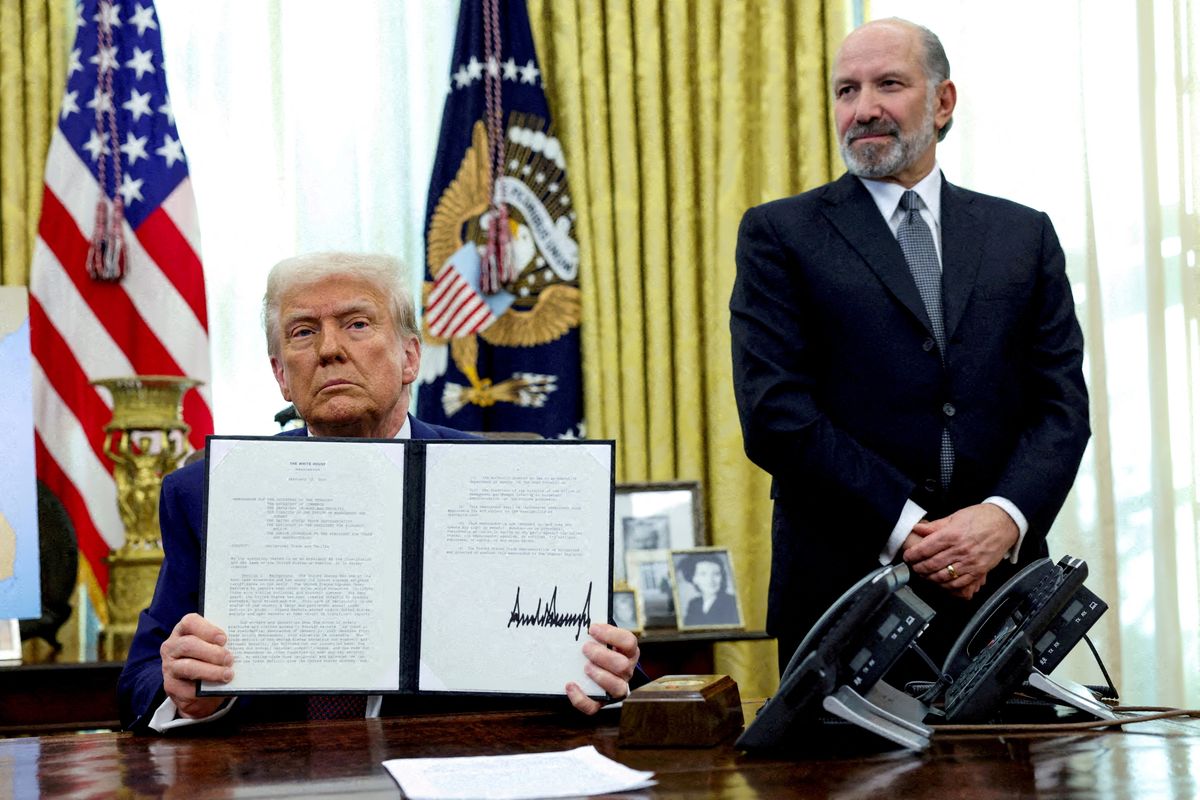
FILE PHOTO: U.S. President Donald Trump holds an executive order about tariffs increase, flanked by U.S. Commerce Secretary Howard Lutnick, in the Oval Office of the White House in Washington, D.C., U.S., February 13, 2025. REUTERS/File Photo

Donald Trump has failed to face up to the reality of the cost of living crisis according to a political commentator who highlighted this "indifference".

John Casey suggested the president had failed to mark up the everyday problems facing the country this Christmas in an opinion piece for The Daily Beast. Casey claimed that Trump had flat out lied about prices falling when, in fact, they were on the rise. Trump's administration was compared to that of Herbert Hoover's "moral failure" in failing to adapt to The Great Depression

Casey wrote, "Herbert Hoover embodied the moral failure of inaction. When the Great Depression devastated the nation, he refused to treat widespread suffering as a call for federal intervention."


"The catastrophic results included soaring unemployment, hunger, disease, and death. Americans experienced what it means when their government refused responsibility for pain."

"Trump’s governing style reflects this refusal to face reality, with consequences stemming from deadlines passed and protections lapsed, with the indifferent refrain that 'things won’t be that bad.'"

"He dismisses warnings from job reports to inflation data as mere messaging problems and the reliable fallback of fake news. Economic hardship is challenged as a Democratic hoax, even as ordinary Americans struggle. Gas prices are down even when they are up."

These economic woes are starting to put strain on the MAGA faithful, according to Nobel Prize winner Paul Krugman. Writing in his Substack newsletter, Krugman explained how Trump had inherited an economy that was in much better shape before he took office.

The Nobel Prize winner wrote, "Trump inherited when he took office was in much better shape than today’s economy, with lower unemployment combined with faster job growth, and inflation trending down."

"Trump’s radical policy changes – huge (illegal) tariffs, mass deportations, big tax cuts (for the rich), benefit cuts (for the poor and middle class), mass layoffs of federal workers, disinvesting in huge green energy projects and aid to farmers — have been clearly damaging to everything besides crypto and AI.

"It strains credulity – even for the Trump faithful – to claim that we are still in Joe Biden’s economy." Krugman went on to suggest Trump will try and "gaslight" Americans into believing the economy has been fixed.

He wrote, "Trump is going to make a prime-time address to the nation tonight. The details of his speech haven’t been announced, but it’s a good guess that he intends to gaslight Americans yet again, claiming that things are going well. They aren’t."

Swiss Watch Industry’s Tough Year Continues as U.S. Exports Drop by Half

Joshua Kirby
Thu, December 18, 2025 

Watch exports to the U.S. were affected by President Trump’s trade tariffs. - manuel ausloos/Reuters

Swiss watch exports continued to decline last month, leaving the key industry on track to book a fall over a year marked by a sharp impact from President Trump’s trade tariffs.

Exports to the key U.S. market dropped by more than half in November compared with the same month last year, according to figures from Federation of the Swiss Watch Industry, or FH, released Thursday. That dragged total exports down by a total 7.3% on year, with other markets redressing some of the American drag. For the year to date, total exports are down 2.2%, making a decline likely for the year as a whole when data are set out next month.

Switzerland came into Trump’s trade crosshairs this year, with crippling tariffs set out on the Alpine nation over the summer. Those duties were later cut to 15%, the same level as Switzlerland’s European Union neighbors, after a diplomatic push from business leaders that included Johann Rupert, the chairman of luxury-goods group Richemont, whose watchmaker brands were set to suffer from the heavy import tariffs.

Still, U.S. tariffs “continued to impact exports to the region” last month, analysts at brokerage Bernstein wrote in a note to investors. That was likely due to a combination of a continued snapback from a rush to stuff U.S. inventories before the higher tariffs were implemented and wariness about further imports given lingering uncertainty around tariffs, the analysts said.

Write to Joshua Kirby at joshua.kirby@wsj.com
Beloved Macy’s Christmas tradition ends abruptly after 80 years

Daniel Kline
Sat, December 20, 2025 at 2:07 PM MST 5 min read


When you grow up Jewish, Santa Claus seems a bit absurd.

I mean, religion requires faith, but believing that a magical old man brought toys to all the Christian kids in the world, riding a flying sleigh, seemed like something most kids would be skeptical of.

In reality, however, many kids believe until a certain age, and others go along with the ritual because it involves getting presents on Christmas morning.


Part of the Santa Claus ritual has always been getting pictures taken with Jolly Old Saint Nick, sitting on his lap, and telling him what you want for Christmas.

Some kids do that in privately booked photo shoots, while many others head for the mall.

I think most kids know that the mall Santa is more an emissary of the big man than the actual man himself. Still, parents take their kids to meet him, the kids either cry hysterically, or get their pictures taken and gift choices noted before moving on.

For about 80 years, for people living in San Francisco, that tradition meant taking their children to Macy's Union Square. It was a time-honored tradition that has lasted for generations, but this year, it won't be happening.

Santa Claus, at least for San Franciscans who enjoy visiting him at Macy's Union Square, won't be coming to town, it seems.


Macy's Santa Claus has other plans

Macy's has quietly ended its tradition of having Santa Claus head from its Thanksgiving Day Parade to its store in Union Square, San Francisco.

The chain explained that decision in a way that suggests it did not have the option of hiring multiple Santas to visit different stores.

“This year, Macy’s Santa will not be available at our Union Square location. Instead, he will be going on a national tour to visit stores and communities he hasn’t had a chance to appear in before, following his national arrival at the (New York) Macy’s Thanksgiving Day Parade,” Macy’s officials said in a statement reported by the San Francisco Chronicle.

Macy's added that the holiday season magic will continue in Union Square with its SF SPCA Holiday Windows and Macy's Great Tree presented by Ripple.

"It seems weird without Santa Claus," Yvonne Fletcher and her husband, Adrian, told Yahoo News. "I can't bring my grandkids, and that's what we were waiting for."

Santa Claus has always been a key part of the Macy's Thanksgiving Day Parade.

Macy’s Santa at Union Square (San Francisco) history

About an 80-year tradition: Santa appeared annually at Macy’s Union Square store, dating back to the store’s opening in the late 1940s and continuing nearly every year until 2025 (excluding the pandemic year), according to the San Francisco Chronicle.


Local cultural touchstone: Families lined up for visits and photos with Santa each holiday season, making it a cherished Bay Area tradition, the San Francisco Chronicle added.

Same Santa for decades: From roughly 1990 to 2010, the role was played by the beloved “Santa John,” whose appearance became iconic in local family photos, reported Hoodline.

No Santa in 2025: For the first time in nearly 80 years, Macy’s confirmed Santa won’t be at Union Square this holiday season as he embarks on a national tour after the Thanksgiving parade, shared ABC7 San Francisco.

Santa Claus puts Macy's on the naughty list

Margarita Hernandez, who had visited the Union Square Santa as a child, hadn't known about the change and brought her daughter.

"I guess we'll go find another Santa," she told reporters, adding, "It's sad. We've been bringing her here since she was a baby."

Macy's actually fired the famed Santa John Toomey.

"That 2010 incident remains one of Union Square's most memorable holiday dramas. Toomey was dismissed after an adult couple complained about a lighthearted joke he'd told for decades: When adults asked why Santa was so jolly, he'd quip that it's because he knows where all the naughty boys and girls live," Hoodline reported.

He was not rehired by Macy's but did get hired by a local restaurant, appearing for one year before he passed away.

For many families, this is an important tradition.

Leigh Eric Schmidt, author of "Consumer Rites: The Buying and Selling of American Holidays," explained the evolution of Santa Claus in department stores and malls to Catholic Online.

He said it reflects a deeper cultural truth.

“The tradition of visiting Santa at the store is more than just a commercial venture — it’s about creating lasting memories and experiencing the joy of the season,” he shared.

Macy's and Santa Claus have over 100 years of history

Origin in 1924: The first Macy’s parade was held on November 27, 1924, originally called the Macy’s Christmas Parade, and featured floats, live animals, performers, and Santa Claus, according to NBC.


Santa’s central role: Santa has historically appeared at the end of the parade, marking the symbolic start of the Christmas season each year since the first event, reported Encyclopedia Britannica.


Annual holiday kickoff: Although renamed the Macy’s Thanksgiving Day Parade (by 1927), Santa’s presence has remained a key ceremonial moment, ushering in holiday shopping and festivities, added Encyclopedia Britannica.


Near‑continuous history: The parade has run every year since 1924 except during World War II (1942-1944), becoming ingrained in American holiday tradition, according to NBC.


Cultural historians note that Santa’s appearance isn’t just commercial; it’s ritualistic.

"Culminating with a Santa Claus at the very end of the parade unveiling the holiday windows on 34th Street,” Valerie Paley, chief historian at the New‑York Historical Society, told CBS News, describing how the Macy’s Thanksgiving Day Parade has long served as a symbolic kickoff to the holiday season.

This story was originally published by TheStreet on Dec 20, 2025, where it first appeared in the Retail section.