Showing posts sorted by relevance for query trump. Sort by date Show all posts

Tuesday, April 28, 2020


Is Trump killing people on purpose?

April 25, 2020 By Chauncey Devega, Salon- Commentary

As of Friday, the coronavirus pandemic has killed at least 50,000 people in the United States. That number is likely to be an undercount, and it’s possible we will never have a true reckoning.

This article first appeared in Salon.

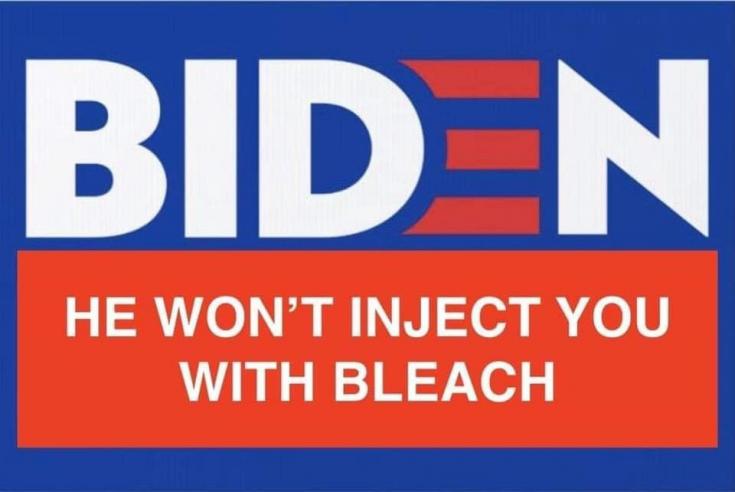
At almost every juncture, Donald Trump has made decisions about the coronavirus pandemic that have led to more death. His behavior is that of a person who has no care or concern for the health, safety and welfare of the American people. Nothing could epitomize that more perfectly than his grotesque suggestion this week that “injecting” disinfectants or household cleaning products might kill the coronavirus. This would seem comical, and entirely unbelievable, if it had not actually happened.


In 2016 the Obama administration told then President-elect Trump and his advisers of the high likelihood that a pandemic would strike the nation and advised the incoming administration to take appropriate steps to reduce its impact. Obama officials also left their Trump counterparts a step-by-step guide on how to respond to a pandemic. Trump and his inner circle ignored that guidance.


Last November, the U.S. military warned Donald Trump that the country was likely to be afflicted with a devastating pandemic originating in China.

In January 2020, the Trump administration was told by its own experts that the coronavirus would spread beyond China and become a global pandemic. Again, Trump chose inaction.

Trump has deprived Democratic-led regions of the country from receiving needed medical supplies. He also waited months to begin using the Defense Appropriation Act to compel American companies to produce more ventilators, masks and other emergency equipment.

Late last year, Americans working with the World Health Organization began to warn Trump and his administration about the coronavirus pandemic. These doctors and other medical professionals were ignored.

In these examples and many others, Trump and his inner circle ignored or purged experts and other truth-tellers, and lied about, misrepresented, deflected or denied the dire threat to the American people posed by the coronavirus pandemic.

Considered in total, Trump and his regime have shown themselves to be incompetent, callous, malevolent and deeply cruel in their response to the coronavirus crisis (as well as to a plethora of other issues).

But to merely document the Trump regime’s deadly failures in response to the coronavirus pandemic is to ignore the most important question: What were Trump and his advisers’ underlying motivations?


This forensic question must be answered if we are ever to have a full accounting of the coronavirus, and see justice done for the sick, the dead and the dying as well as the damage done to the broader American community.

Media critic (and former Salon writer) Eric Boehlert summarizes the importance of determining Donald Trump’s motives this way:
As I stressed last week, the media’s preferred storyline that suggests Trump is simply incompetent doesn’t add up because Trump has made the wrong decision every single time in terms of how crises like this are supposed to be dealt with. (i.e. Be consistent, transparent, factual, and credible.) It’s increasingly not believable for the press to suggest Trump has been distracted or inept during this crisis, in part because of the level of White House uselessness has become so staggering.
Maybe Trump’s vengeful. Maybe he wants to wreck the economy to create investment opportunities? He’s under the thumb of a foreign entity? He wants to cause panic and cancel the November elections? He’s a fatalist? Who knows. And honestly, the specific “why” isn’t what matters now. What matters is asking the difficult questions and pondering what the Trump presidency is truly about, no matter what lurks in the shadows….

Now the press needs to shift some of its focus and ask the truly alarming questions about Trump and his motives. Because we still don’t know why he essentially ordered the federal government to stand down for the virus invasion.


Psychologist and psychotherapist John Gartner, contributor to the bestselling book “The Dangerous Case of Donald Trump” and co-founder of the Duty to WARN PAC, has an answer: Donald Trump is a malignant narcissist. Our president’s mental pathologies inexorably compel him to hurt and kill large numbers of people — including his own supporters.

Dr. Gartner taught for many years at the Johns Hopkins University Medical School, and has private therapeutic practices in Baltimore and New York, specializing in the treatment of borderline personality disorders. In our most recent conversation, he explains that sadism and violence are central to Trump’s malignant narcissism and his decision-making about the coronavirus pandemic. Gartner also warns that Donald Trump is an abuser locked into a deeply dysfunctional relationship with the American people and that, like other sadists, Trump enjoys causing harm and suffering.

Ultimately, Gartner concludes that Donald Trump is engaging in “democidal behavior” and cautions that the tens of thousands of dead (so far) from the coronavirus pandemic are not simply collateral damage from Trump’s policies, but rather the logical outcome of Trump’s apparent mental pathologies and the poor decisions that flow from them.

This conversation has been edited for clarity and length.

Donald Trump’s behavior is very predictable. He has a very simple mind. Why do so many people treat him as some type of mystery? Why do they claim to be so “surprised” by his vile behavior?


Yes, Donald Trump is simplistic. But an atomic explosion is also very simple.

How does the human mind remain in denial about Trump’s nature when on an almost daily basis he reveals his true nature through his cruelty, lies, violence and other anti-social behavior? There are many Americans who oppose Trump who continue to claim that they are somehow surprised by his behavior?

Malignant narcissists are very sick people. They are sick in such a deep, disturbed and dark way that a normal person cannot comprehend such behavior. Therefore, normal, mentally healthy people cannot imagine or understand the mind of a malignant narcissist.

As a mental health professional, what do you see when you watch Trump’s so-called briefings about the coronavirus pandemic?


Trump is both denying responsibility by saying things such as, “I take no responsibility. We’ve done everything right.” But at the same time, Trump is also sabotaging the efforts to stop the coronavirus pandemic. This is a very important aspect of Trump’s behavior. Trump is not just deflecting blame onto the governors, he is actively interfering with the governors’ ability to do their job. Trump is not just incompetent. He is actively engaging in sabotage.


How does someone with his type of mind reconcile claims like “I have total power” with “I take no responsibility”? He has said both things within a few days of each other.

That is a function of how the psychology of a malignant narcissist is structured. When Trump says things such as, “I have total power,” that’s the grandiosity. “I’m in total control” is a function of Trump’s paranoia, where everything bad is projected outward. Therefore, anything negative or bad is someone else’s fault. Bad things are other people in Trump’s mind. The grandiosity and “greatness” are all him. Trump’s mind runs on a formula which bends and twists facts, ideas and memories to suit his malignant narcissism. This is why Trump contradicts himself so easily. He lies and makes things up. His fantasies all serve his malignant narcissism and the world he has created in his own mind about his greatness.

The fourth component of Trump’s malignant narcissism is sadism. That part of Trump’s mind is more hidden. People such as Trump are malignant-narcissist sadists because they, at some deep level, are driven to cause harm to other people. Trump’s life is proof of this. He enjoys ripping people off and humiliating people. He does this manically and gleefully. He has lied more than 16,000 times. He threatens people online and elsewhere. I believe that Donald Trump is also a sexual sadist, who on some basic level enjoys and is aroused by watching people be afraid of him. In his mind, Trump is creating chaos and instability so that he can feel powerful.

Professor of psychiatry and psychoanalyst Otto Kernberg called that phenomenon “omnipotent destructiveness.” The bullying, the violence, the destruction, frightening people, humiliating people, getting revenge and the like — such behavior is what Donald Trump has done his whole life. It is who Donald Trump really is. Unfortunately, too many people are still in denial of that fact.

If Donald Trump is primarily obsessed with omnipotent destruction, how is that fueling his behavior?

Donald Trump has to create a field of negative corrupting energy around himself. For example, he pressures the scientific experts to bend the truth to his dreamworld during his press conferences. The scientists are basically Trump’s hostages. The American people are hostages as well to Donald Trump. We are being abused by him. We know that Trump is lying. We know that he’s doing nothing to help us. We feel helpless to do anything to stop him. It is causing collective mental despair. In this way Donald Trump is inducing feelings of rage and outrage — and he keeps doing it. It is not that all Americans are suckers or dupes, it is that Trump is a master at such cruel and manipulative behavior. Donald Trump knows exactly what he is doing to the physical and emotional health of the American people.

I envision Donald Trump as a megalomaniacal puppet master. The American people are his little marionettes. The American people must acknowledge that relationship to cut the strings.

That is a great analogy. Donald Trump is a master at getting negative attention, and the more people he can shock and upset, the better. Donald Trump has been doing such a thing for years.

The pandemic has provided Trump with the opportunity to use his skill at doing such things into overdrive. America, with this coronavirus crisis, is now “The Trump Show.”

Society is a type of family. Leaders are fathers, mothers, and other types of parental authority figures. In that role, Donald Trump is abusing the American people.

Yes, the American people are being abused by Donald Trump. This is a key dimension of sadists. I also believe that Donald Trump is democidal. I would even go so far as to say that he is a “democidal maniac”. If you look at human history there is one trait that all malignant narcissistic leaders have in common: They kill mass numbers of their own people. Why would Donald Trump be any different?

Trump has had many public moments where one can see the convergence of his rage, misogyny and violence. Trump’s press conferences have been a showcase for his pathologies. There is so much rage when a reporter makes clear that Trump is lying or asks him a basic question that challenges his self-delusions and fantasies. Trump’s rage at women who challenge him, in particular nonwhite women such as PBS reporter Yamiche Alcindor, is palpable.

It is probably not lost on Trump that the people who are being disproportionately killed by the coronavirus are people in Democratic blue states and cities: nonwhite people, poor people, other marginalized people in this society, working-class people. These are the people who Donald Trump sees as “less than,” inferior to him, the types of people he likes to grind down under his heel.

In the course of a week, we literally had Trump’s cultists, his spokespeople, saying, “People should sacrifice themselves for the economy.” Literally go out and die. Of course the real meaning there is, “I want you to go out and die so that I can be re-elected because I’m dependent on the economy.” Trump and his allies have been telling people to go out and risk their lives as an act of loyalty to “the economy.” And of course Trump is willing to see people die to ensure — at least in his mind — that he will be re-elected. In many ways he is positioning himself as a god who demands human sacrifice.

Such behavior and beliefs are common among malignant narcissists. Malignant narcissists like Donald Trump view other human beings as kindling wood to be burned for their own personal enrichment and enlargement and expansion.

Beyond mere negligence, much of Trump’s and his regime’s behavior is malevolent. Trump and his sycophants knew that potentially millions of Americans could die but chose to do nothing. His administration has gone so far as to purge people from the government who were trying to warn the public.

Again, that behavior is part of the psychology of malignant narcissistic leaders. They are democidal. Malignant narcissistic leaders kill many of their own people through wars and political terror, but also through willful incompetence. These types of leaders actively do things that will kill large portions of the population. Causing harm is a type of addiction for them. Donald Trump’s addiction is only getting worse.


Donald Trump is a human predator. That is what he does. He will not change. At this point, I hold the American people, the news media, the Republican Party and its voters ultimately responsible for the calamity that is Trump’s reign.

The 2020 presidential election will decide either the life or death of America.

What would you tell those Americans and others who would object to your analysis of Trump and the danger he represents? Because many people would protest that whatever Trump’s flaws may be, of course he loves America, and it’s inconceivable we would have a president who would actively seek to harm the American people.Follow the facts to the obvious and true conclusion. If all the facts show that Donald Trump is a malignant narcissist with these powerful sadistic tendencies, this omnipotent destructiveness, where he’s getting pleasure and a sense of power from dominating people and degrading people and destroying people and plundering people and laying waste to people, both psychologically and physically, then to deny such obvious facts is willful ignorance.

What do you think Donald Trump will do if, shortly before Nov. 3, it appears clear that he is going to lose the election?


Rather than making a prediction as to Trump’s specific actions, it is more helpful to describe the type of actions he will take. Rather than trying to say, “This is the move he’ll make.” Like in a relationship, Donald Trump is the abuser. He is the husband or father who is abusing his partner or children or other relatives. The American people are like a woman who is leaving her abuser. She tells her abuser, “That’s it! I am done with you!” She has her keys in hand and is opening the door of the house or apartment to finally leave. What happens? The democidal maniac Donald Trump will attack us, badly. Make no mistake. Donald Trump is going to find a way to attack and cause great harm to the American people if he believes that he will lose the 2020 election

Thumbnail

Thursday, July 25, 2024

Kamala Harris, Trump’s Voters, and Shawn Fain

July 22, 2024
Source: Originally published by Z. Feel free to share widely.


Biden bids adieu. Anoints Vice President Harris. What next? In particular, who runs to become the next Vice President? How can anyone who has endured the last few weeks (months, years, decades?) even guess at that, much less offer a serious plausible proposal for that? Well, I think I can.

What was the final cause of Biden’s decision? We can only guess but I would bet the big donors and a few Party power brokers—read Pelosi and Obama—finally said enough is enough. But regardless, who now rums?

Barring some kind of perversity or miracle, I think it will be Kamala Harris. She has Biden’s support. She can be an overwhelming or even unanimous choice to avoid a contentious convention. She can fight and debate. A prosecutor for a felon. And for kickers Harris can access funds that were raised for Biden and that others can’t access. But there arises another question. Who runs along with Harris? Who does Harris and the convention settle on to become Vice President?

For that calculation, the key point is to beat Trump and Vance. So I hope they settle on someone who can inject some real excitement, some real hope. Someone who is not a political insider but is also not a ridiculous transplant from an entirely unrelated domain. So not a politician. Not an actor. Not a singer. Not an athlete. Not even a TV talk show star. Okay, maybe Jon Stewart, I guess. But who would I actually want?

My favorite is Shawn Fain, President of the UAW. To me, if the aim is to beat Trump, this pick is obvious. Peel off much of Trump’s working class support. Election over. Arouse an incredible army of volunteers. Double over. Show Vance who the real deal working class hero is. Triply over. Midwest strength and how about if as a bonus, at the optimistic edge, Fain brings along with himself million worker Harris/Fain marches in New York, Pittsburgh, Cleveland, Chicago, Las Vegas, San Francisco, phoenix, Houston, Birmingham, Augusta, and Miami. Take that Trump. Time for you to weep. And Trump voters. Here is a reason for you to change teams. More on Fain at the end, below.

But why is beating Trump paramount? Well, if anyone reading this doesn’t already know, we could consider the Republican National Convention. Hulk Hogan? Hannibal Lector? Donald Trump? That isn’t parody. It is actuality. It is real farce. But for me the RNC farce raised still another question. How could anyone watch Trump’s convention, that flaunt farce him in our faces, center stage, no masquerade, star bright, and still decide support Donald Trump?

Does it give you a headache to consider my question about Trump’s voters? Do you suffer sleeplessness if you mull “why” so many of your fellow Americans support Trump? It breaks my brain too. Crushes my heart too. So why ask why? Indeed why worry about why? Why not just ignore why Trump’s supporters support Trump? Why not just look away? Netflix calls. Olympics are imminent. Escape beckons. What, me worry? Not me. Less painful to look away.

But I do worry. Why do roughly half of U.S. voters still support Trump. I understand and I too feel the inclination to look away. Nonetheless, I worry about how so many voters can visibly see what’s repeatedly flaunted before them, not to mention peruse Project 2025, and still support Trump.

I worry about that not solely because to Stop Trump it will help to know why so many voters support Trump. I also worry about it because beyond the election, to arrive at a fundamentally transformed society we cannot have half the voting population remain Trumpist. But to avoid having that, we have to successfully communicate with Trump’s voters. And successful communication will not happen while we have no notion why Trump’s voters feel as they do. Much less can we successfully communicate with Trump’s voters while we aggressively avoid Trump’s voters.

Sanders says that even just accounting for only one issue, global warming, no one in the U.S. should cast a vote for Trump. Drill baby drill is, even taken alone, disqualifying. “You are going to boil and drown me. I’d rather you lose.” But even beyond that, no one should believe Trump cares even a whit for other than the rich, and actually, plausibly, for other than himself. Okay, Sanders is absolutely right about all that. So we of course need to convincingly demonstrate Sanders’ two claims, and other similar ones, as well.

But at the same time, if we are going to be heard by Trump supporters, don’t we need to recognize that to offer such observations alone has been and will remain essentially irrelevant. Trump supporters will mostly not believe, mostly not register, mostly not even hear such communications. Or they will hear them only as lies to reject. They will discount or never register evidence regarding the dangers of Trump’s agenda if we who offer such evidence—whether we do it on late night TV to millions or at a bus stop or bar to one—don’t acknowledge why Trump’s supporters support Trump and don’t sincerely and respectfully address their warranted concerns.

So why do people support Trump? Don’t we who despise not just Trump but also what Trump is preparing to do as President via his Project 2025 need to know why Trump’s supporters support him despite the dangers to others and even to themselves if we are to effectively convey to them valid facts, figures, and implications? Well, wait a minute. Why? For what reason do we need to know their reasons?

The reason we need to know Trump’s voters reasons is that in a vacuum, which is to say absent shared compelling explanations of their reasons, anti-Trump voters will fill the explanation vacuum on the fly. And we know that the answer many will grab on the fly is that it’s because everyone who supports Trump is crazy. Or is out of this world racist, sexist, and authoritarian. Or is mind bogglingly greedy. Or whatever other vile characterization one finds comfortable as a summary—like, oh, perhaps everyone who supports Trump is deplorable.

We know it is undeniably easy for anti-Trump voters to think such thoughts. After all, if no one should rationally support Trump, doesn’t it follow that anyone who does support Trump has some perverse and irrational attribute causing their aberrant choice? And if irrational perversity is at work, then isn’t it reasonable for us to conclude that there is no point even trying to impact that?

No. My point is that our spontaneous answers tend to preclude effective communication with Trump’s supporters. Our spontaneous answers tend to lump all who support Trump into a single mass with common immutable motivations. We then see only an abyss. And we look away. But what if, albeit with some exceptions, our spontaneous answers are not dead end wrong?

“Some exceptions”? Who are the “some exceptions”? Who are the Trump supporters whose reasons for supporting him will remain until November and perhaps for a long time thereafter immutably, untouchable vile?

First, the seriously rich do indeed support Trump for clear and what are for them rationally warranted albeit horribly vile reasons. For example, Trump will lower their taxes. Trump will aid their efforts to obstruct unionization and to crush labor resistance. Trump will remove restrictions on their profit-seeking pursuits. No more pollution controls, no more workplace or product safety requirements, no more minimum wage, no more climate policy, and so on. Trump promises to fulfill every rich person’s wish list. Trump says drill baby drill. So the rich say, “go Donald.” Trump in absolute control? The rich say, “great. Donald is my guy” and pay his bills. Okay, we can’t budge their greedy minds. But on election day, in the tally, they are still at best a few percent of the population.

Second, truly grossly misogynist and/or racist voters support Trump also for clear and I guess in their clouded eyes rationally warranted reasons. Trump will not coddle women, Latins, immigrants, and Blacks. Trump will instead degrade, denigrate, deny, and deport or at least diminish all those and in that way he will elevate his supporters. Get control Donald, and then get them. You must be for me if you are against them. So “go Donald. You are my guy.” But how many voters are like this? I don’t know and neither do you, but I think it is not all that many.

Structural sexism and racism are still incredibly serious cancers of our society. But are they widely this personally strong, this personally overt, this personally aggressive, so that they individual people’s all other concerns? Even fear of fascism once one stares that in the eyes? Again I would estimate this just adds a few more percent to Trumps rock solid Election Day tally and then Trumpism’s on-going flock.

So, who else is in the unreachable base? Religious fundamentalists who seek a Christian nation and think Trump is saved so Trump can do or is doing God’s work so that for them Trump’s personal history is literally beside the point. He is God’s chosen one. “Go Donald. You are God’s guy so you are my guy too.” Are those reasons valid and immovably entrenched in the heads of religious fundamentalists? Even if they are, how many more voters does that add beyond the above two categories? Sum it all up. Is it even thirty percent of his voters? I think not.

The above says to me that it isn’t only undecideds at play in the coming election. I think it is also soft supporters on both sides. And who is soft support for Trump? It is people who have supported Trump because their friends are doing so and they don’t want any friction with their friends. It is people who have supported and even clung to Trump because they hated Biden, or they thought Biden was too weak or too old. Trump is more robust. Trump is tougher. It is people who supported Trump because he is entertaining and they feel that being entertaining is the only positive attribute either Trump or any candidate can have, so they will vote for the candidate with more entertainment sense and that is Trump. It is people who javelin thought Trump understands them. Trump is not an elitist asshole to avoid. Trump is a guy to have fun with. It is people who have thought Trump bullies the bad guys, but not us. Trump lies to the bad guys, but not to us. It is people who have thought Trump will shake up the government and, indeed, will shake up everything, and who have figured that the ensuing Trumpian chaos might lead to some good. After all, everything is certainly broken. Everything does deserve to be shaken up. None of that seems immutably unreachable to me.

And what resides behind all of that soft Trump support including from so many desperate white and now also some Black and Latin workers, and including from lots of lonely scared and impoverished people, and including even from millions of women?

We can see people who have very real grievances from economic hardship to oxycodone addiction and fentanyl death. People who have had their dignity trampled, their voice silenced. Plus a team, MAGA, that beckons them. A team which they receive some sense of efficacy from. A team which they receive a degree of, yes, camaraderie from. Which they receive a degree of, yes, solidarity from. A team whose members that look like them. A team that doesn’t dismiss, deny, and denigrate them, which the only other big team repeatedly does all day long and late night too. They see a MAGA team that they feel emboldened by. A MAGA team that they don’t want to leave. They feel some power in it, some efficacy.

Do we want to talk and act in ways that can weaken Trump’s support rather than to look away and ignore looming defeat until it snuffs out more lives and smothers more hope? If so, don’t we have to hear Trump’s supporters’ reasons. And don’t we have to listen to and really hear their either partially or probably more often than not entirely valid grievances? And don’t we have to acknowledge their feelings and then and only then ask, okay, but how does what Trump will deliver improve anything for you? There will be mostly and perhaps even entirely silence. If there are answers, you are communicating. Great. Converse more. Ask them how does each specific agenda item of Trump’s Project 2025 help you? Ask them specifically why various agenda items don’t hurt you. Demonstrate the truth. Conversation then progressing, ask why they think the Democrats’ plans to do so and so and to do such and such, accurately described, wouldn’t be helpful. And finally, when it won’t feel like slapping them upside their head, ask which is better, authoritarian fascism that squeezes and constricts populations unto death, or admittedly oppressive business as usual that we can, however, push to be better, even much better, to then seek still more gains?

You may need to counter all kinds of prejudices, biases, confusions, and sometimes even perverse values. It won’t be fun. To worry about this stuff may engender in you headaches and sleeplessness. But isn’t it necessary to do just that if we are to Stop Trump now and beyond November stop Trumpism and move toward a fundamentally better world?

Are the above observations and the derivative prescription seriously wrong? If so, please write to tell me why, so I don’t keep pounding out misguided words. Or is the above mostly right? If so, please don’t give up. Organize.

I said above that I would provide a bit more about Shawn Fain, my VP pick, to close this article. In Trump’s acceptance speech at the RNC he said the UAW should immediately fire Shawn Fain. The reason he offered was some blather about Chinese auto plants. Fain replied and I think his reply tells us a lot.

“Last night, Donald Trump once again attacked our union on a national stage. That should tell you everything you need to know about the man and the candidate. As we’ve said for many months, he stands for everything we stand against. Trump claims to be attacking us in the name of protecting American auto workers.

“So tell us why, when Lordstown closed in 2019, when Trump was President, and our members were on strike for 40 days, he said nothing and did nothing. Tell us why Trump pushed to move auto jobs out of Michigan to drive down wages.

“Tell us why Trump ‘renegotiated NAFTA’ for the disastrous USMCA, under which manufacturing jobs continue to leave the country and the trade deficit with Mexico has gone up, not down. Tell us why Trump blamed the 2008 auto crisis on the autoworkers. We’ll tell you why. Because Donald Trump always has and always will side with the billionaire class against the working class.

“Trump doesn’t want to protect American auto workers. He wants to pad the pockets of the ludicrously wealthy auto executives. He wants to cut the corporate tax rates of his golfing buddies and keep the stock buybacks and Wall Street manipulation going. He wants autoworkers to shut up and take scraps, not stand up and fight for more.

“Trump talks about the electric vehicle transition as the reason our industry is under threat. Our members don’t go to work every day because they’re passionate about combustion engines. It’s about our families and our communities getting our fair share of the record auto profits, electric or not. The threat we face is corporate greed run wild, and that’s what Donald Trump enables and celebrates.

“America’s autoworkers aren’t the problem. Our union isn’t the problem. The working class isn’t the problem. Corporate greed and the billionaires’ hero, mascot, and lapdog, Donald Trump, are the problem. Don’t get played by this scab billionaire. Stand up and fight for more.”

My reaction: Fain for Vice President and Harris-Fain will resoundingly defeat Trump-Vance.


ZNetwork is funded solely through the generosity of its readers    DONATE


Michael Albert

Michael Albert`s radicalization occurred during the 1960s. His political involvements, starting then and continuing to the present, have ranged from local, regional, and national organizing projects and campaigns to co-founding South End Press, Z Magazine, the Z Media Institute, and ZNet, and to working on all these projects, writing for various publications and publishers, giving public talks, etc. His personal interests, outside the political realm, focus on general science reading (with an emphasis on physics, math, and matters of evolution and cognitive science), computers, mystery and thriller/adventure novels, sea kayaking, and the more sedentary but no less challenging game of GO. Albert is the author of 21 books which include: No Bosses: A New Economy for a Better World; Fanfare for the Future; Remembering Tomorrow; Realizing Hope; and Parecon: Life After Capitalism. Michael is currently host of the podcast Revolution Z and is a Friend of ZNetwork.

Thursday, January 23, 2025

The psychological puzzle of Donald Trump: Eye-opening findings from 20 studies


Donald Trump’s political rise in 2016 was as unexpected as it was controversial, shaking the American political landscape to its core. Emerging from a background steeped not in politics but in real estate and reality television, Trump’s ascent to the presidency defied all conventional wisdom. His brash rhetoric, unfiltered communication style, and populist appeal captivated millions, while simultaneously alienating millions of others.

The phenomenon of Trump’s support has since become a focal point for psychologists, sociologists, and political scientists alike, eager to understand what drives such fervent loyalty in his base. What psychological factors contribute to the unwavering support for a leader who has consistently broken political norms? Here, we explore some of the research that has attempted to answer these questions.

Trump’s journey to the White House was anything but typical. Traditionally, U.S. presidents have cut their teeth in politics or the military before making a run for the highest office. Trump, however, had neither. His experience lay in business and entertainment, making his leap to the presidency unconventional and unprecedented.


173.5K

Fire Ants Survive Flood By Turning Into a Raft

Trump’s fame as a real estate mogul and reality TV star provided him with an unparalleled level of name recognition, which he leveraged masterfully in his campaign. He eschewed traditional political strategies, relying instead on large rallies, extensive media coverage, and a powerful social media presence.

Furthermore, Trump’s populist rhetoric, which included promises to “drain the swamp” and put “America First,” resonated with a significant portion of the electorate. His approach was highly polarizing, often disregarding political norms and taking a combative stance against the political establishment. His rise defied the expectations of political analysts and pollsters alike, making his eventual victory in the 2016 election all the more remarkable.

The surprising nature of Trump’s ascent led to a surge in research aimed at understanding his appeal and the broader implications of his presidency. Scholars have since explored a wide array of psychological and social factors that may explain the fervent support Trump enjoys among his base. Below, are 20 studies that offer insights into the psychology of Trump supporters and the impact of Trump’s political ascent.


1. Heightened Moral Division and Support for Strong Leaders

A study published in Political Psychology found that perceptions of moral division in society intensify support for authoritarian leaders. Researchers surveyed participants in the U.S., U.K., and Australia, finding that those who perceived a breakdown in societal morals were more likely to support leaders like Donald Trump, who they believed could restore order. The study suggests that the perception of moral polarization leads people to favor strong, rule-breaking leaders who promise to challenge the status quo.

2. Authoritarian Aggression and Group-Based Dominance Among Trump Supporters


Research published in Social Psychological and Personality Science analyzed the psychological traits of Trump supporters during the 2016 primaries. The study found that while general right-wing authoritarianism did not distinguish Trump supporters from other Republican candidates, Trump supporters were uniquely characterized by authoritarian aggression and a preference for group-based dominance. These traits manifested in a greater acceptance of hierarchy and the use of aggressive measures to maintain it. The findings suggest that Trump’s appeal was partly rooted in these authoritarian and dominance-oriented dispositions.

3. Masculine Insecurity and Aggressive Politics

Research in the Personality and Social Psychology Bulletin revealed a link between masculine insecurity and support for aggressive political policies, including those endorsed by Trump. The study found that men who feel their masculinity is threatened are more likely to endorse aggressive policies and support leaders like Trump who project a dominant and unyielding persona. This phenomenon is partly explained by the concept of precarious manhood, where men strive to reaffirm their masculinity through aggressive political stances.


4. The Trump Presidency’s Impact on Prejudice

A series of 13 studies involving over 10,000 participants, published in Nature Human Behavior, examined changes in racial and religious prejudice among Americans during Trump’s presidency. The researchers found that explicit prejudice increased among Trump supporters, while it decreased among those who opposed him. This suggests that Trump’s rhetoric may have reshaped social norms, making expressions of prejudice more acceptable among his supporters.

5. Simplicity and Happiness Among Trump Supporters


A study in Social Psychological and Personality Science found that Trump supporters tended to use more positive language and exhibit less cognitive complexity compared to Biden supporters. The research suggests that Trump’s supporters may engage in more simplistic and categorical thinking, which could be linked to higher levels of happiness and satisfaction with their political choices.

6. Cognitive Rigidity and Interpersonal Warmth

Published in the Journal of Social and Political Psychology, this study found that Trump supporters tend to be more cognitively rigid and less interpersonally warm compared to supporters of Democratic candidates. Even among extreme liberals, the research found that cognitive rigidity was less pronounced than among Trump supporters, suggesting a unique psychological profile among his base.


7. Ambivalence Towards Trump

Research in PLOS One highlighted the ambivalence many people feel towards Trump. The study found that about 40% of college students displayed ambivalence in their attitudes towards Trump, indicating that political opinion polls may often overlook the complexity of voter attitudes. This ambivalence could have played a role in the unexpected outcome of the 2016 election.

8. Perceptions of Trump’s Personality Disorders

A study in Clinical Psychological Science revealed that American voters, regardless of their political leanings, perceived Donald Trump as having traits associated with sadistic and narcissistic personality disorders. Both Trump supporters and detractors rated him as highly disordered, with only a difference in the degree of perceived dysfunction. The research highlighted that voters were not necessarily divided on Trump’s personality traits but rather on how these traits influenced their judgment of his suitability as a leader.

9. Narcissism and Support for Trump

A study in the Journal of Social Psychology explored the relationship between narcissism and support for Trump. The researchers found that narcissism was linked to increased support for Trump, mediated by anti-immigrant attitudes and right-wing authoritarian beliefs. The findings suggest that Trump’s appeal may be partly rooted in his alignment with the narcissistic tendencies of some of his supporters.

10. Narcissistic Traits Among Trump Supporters

Likewise, a study published in PLOS One found that Trump supporters tend to exhibit narcissistic traits similar to those displayed by Trump himself. The research identified antagonism and indifference to others as key narcissistic traits that predicted support for Trump in the 2020 election, suggesting that his supporters may be drawn to his grandiose and aggressive personality.

11. Racial Attitudes and Polarization

A study published in Political Psychology found that Trump’s 2016 campaign had a polarizing effect on the racial attitudes of white Americans. Those who supported Trump were more likely to dehumanize Black people after the election, while those who opposed him became more empathetic. This polarization highlights the deepening racial divide that has been exacerbated by Trump’s rhetoric.

12. Moral Congruence and Political Support

Research in Political Psychology found that voters tend to adjust their moral views to align with those of their preferred candidates. The study found that Trump supporters, in particular, were likely to revise their moral beliefs to reduce inconsistencies with Trump’s positions. This suggests that political leadership can significantly influence the moral beliefs of voters.

13. The Effectiveness of Trump’s Nicknaming Strategy

A study in the Journal of Political Marketing examined the effectiveness of Trump’s use of nicknames for his political rivals, such as “Sleepy Joe” for Joe Biden. The research found that while many people remembered the nicknames, they were not necessarily more likely to believe the negative connotations associated with them. The study highlights the limitations of this campaign strategy in swaying voter opinions.

14. Religious Beliefs and Support for Trump

Published in Politics and Religion, this study found that white evangelical Christians who view themselves as a religious minority are more likely to believe that Trump’s election was part of God’s plan. The research suggests that feelings of religious identity threat may have played a significant role in the unwavering support for Trump among white evangelicals.

15. Populism and Criminal Behavior

A study in the Proceedings of the National Academy of Sciences found that individuals with strong populist beliefs, particularly those aligned with Trump’s “America First” agenda, were more likely to have been arrested in their lifetime. The research suggests a link between populist views, socioeconomic frustration, and criminal behavior, highlighting the complex relationship between political beliefs and personal conduct.

16. MAGA Republicans and Political Violence

Research published in PLOS One found that MAGA Republicans, a faction of Trump supporters, are more likely than other groups to endorse political violence. The study revealed that this group holds distinct beliefs on race and democracy, which set them apart from other Republicans and non-Republicans. However, the willingness to engage in violence personally remained low across all groups.

17. Victimhood and Support for Trump

A study in Political Behavior found that Trump supporters who scored high on measures of egocentric victimhood were more likely to feel warmly towards him. In contrast, those who felt a sense of systemic victimhood were more hostile towards Trump. The research suggests that feelings of personal victimhood may play a significant role in shaping political preferences.

18. The Rise of Political Authoritarianism and Identity Fusion

A study published in Political Psychology investigated the rise of political authoritarianism in the U.S., particularly surrounding the January 6, 2021, insurrection. The researchers found that Trump supporters who felt a deep personal connection to him (identity fusion) were more likely to perceive Democrats as existential threats and endorse authoritarian actions against them. However, those who fused their identity more with the broader concept of “America” were less likely to support such extreme measures.

19. Anti-Vaccination Engagement on Twitter

A study published in PLOS One found that anti-vaccination profiles on Twitter, which were often influenced by Donald Trump, were more engaged and interconnected than pro-vaccination counterparts. The anti-vaccination group was more active, generated more emotional and conspiracy-laden content, and formed a tightly-knit network that amplified misinformation. Trump, despite not overtly promoting anti-vaccination as president, was identified as a key influencer in this network, linking vaccination with autism in past tweets.

20. Trump’s Influence on Media Preferences

Research published in Public Opinion Quarterly explored how Donald Trump’s tweets influenced perceptions of Fox News and alternative media outlets like OANN. Trump’s increasing criticism of Fox News on Twitter correlated with a decline in the network’s ratings among Republicans, who began to show a greater willingness to consume more extreme alternatives such as OANN. Interestingly, Democrats viewed Fox News more favorably following Trump’s attacks, suggesting a shift in their perception of the network. The study highlights the powerful role of political elites in shaping media consumption preferences through their rhetoric.

These studies are just a small selection of the extensive research exploring the psychology behind Donald Trump’s support and broader political impact. If you’re interested in delving deeper into this fascinating topic, explore more research and insights at PsyPost’s dedicated section on Donald Trump.

Saturday, February 07, 2026

THE GRIFT


Trump Gets Spectacularly Richer, While Putting the Country on a Path to Poverty


February 6, 2026

Photograph by Nathaniel St. Clair

Contrary to what many people may believe, Donald Trump is not a very impressive businessman. Not only has he had six businesses that went bankrupt, several of his other ventures failed and faded away. The now defunct Trump University was sued for defrauding students, and Trump settled for $25 million. The Trump Ice bottled water generally can’t be found alongside other bottled waters in stores. Although lobbyists and foreign governments funneled money into the Trump International Hotel during the first Trump presidency, the hotel still lost an estimated $74 million and was sold. This is far from a complete list of Trump’s failed ventures.

Donald Trump has been wealthy all of his life largely because he received $413 million from his father. The New York Times reports, “Much of this money came to Mr. Trump because he helped his parents dodge taxes.” It is much easier to make additional millions if one already has hundreds of millions. As scholars have observed, wealth begets more wealth.

Donald Trump’s real talent is his ability to get people to believe things that are not true. One of his biggest successes in this area is the idea that he is a tremendously successful businessman. Because Trump has gotten people to associate his name with luxury and success, he has been able to make millions licensing his name. Businesspeople pay Trump to put the Trump name on their ventures. This creates a feedback loop where these businesses that are not owned and managed by Trump give the public the impression that Trump owns more businesses than he actually does. It feeds into the image of him as a successful businessman.

Trump convinced many Americans that he would apply his supposed skill in business to address the problems facing the country. But as with many of his actual businesses, we may end up with a bankrupt country instead.

Trump’s Most Financially Successful Venture: The Second Trump Administration

Trump is using his power as president to bully, extort, and receive financial favors from companies and countries. For example, Trump has sued companies that depend on the government for contracts and mergers or that simply want to avoid a battle with the Trump administration. So far, Trump has made $90 million from these suits. Justin Sun was under federal investigation. He invested $75 million in Trump’s World Liberty Financial company. Then the federal government paused its investigation. The United Arab Emirates pledged to invest $2 billion in World Liberty Financial. The UAE is now able to purchase advanced artificial intelligence computer chips from the United States. There are many more examples.

There are different estimates of how many billions Trump has made off the presidency. Trump is not transparent about his business deals. He has multiple ventures and partnerships, and it is not always clear how much of the wealth from his joint ventures should be allocated to Trump. And his wealth is now constantly growing. All of this makes it hard to calculate exactly how much Trump has profited off the presidency.

In September of 2025, Forbes observed that Trump “just had the most lucrative year of his life.” It estimated that Trump made $3 billion from 2024 to September 2025. This amount would increase Trump’s net worth from $4.3 billion to $7.3 billion. In other words, Trump’s net worth increased by 70 percent by September 2025.

In January 2026, New Yorker reporter David D. Kirkpatrick estimated that Trump’s profits from the presidency had reached $4 billion. Based on the Forbes number for 2024, this would mean that Trump has basically doubled his net worth in about a year.

While 2025 was extremely profitable to Trump, 2026 is likely to be even more so. Trump has started the year with a $10 billion suit against the IRS and Treasury Department for failing to prevent the leaking of his tax information. If President Trump directs the IRS and Treasury Department to pay him $10 billion then he would have more than doubled his net worth again.

Fred Wertheimer, the president of the anti-corruption watchdog group Democracy 21, has worked on this issue for several decades. While most presidents profit personally in some way from the presidency, Wertheimer has never seen an American president profit personally on the scale that Donald Trump is. For Wertheimer, the president most similar to Trump is Russian President Vladimir Putin.

Trump Puts America on a Path to Poverty

Trump is attacking the long-term health and strength of the US economy in several ways. His erratic tariffs are making it harder and more expensive for businesses to function. Although immigrants are important contributors to the US economy, his administration is virulently anti-immigrant. There are too many ways that Trump is harming the US economy in the long-term to address them all here, but I will briefly highlight three that might not come to mind when one thinks of the economic impact of Trump’s policies.

Trump’s climate-change-denial and pro-fossil-fuel policies are hurting the planet, the health of the American people, and the US economy. The Congressional Budget Office concluded that the harms of climate change in the United States will include an increase in mortality rates and hundreds of billions of dollars in flood damage — yet Trump continues with his denials. Trump’s pro-coal stance is among his most nonsensical. Coal is the dirtiest of the fossil fuels, emitting a variety of harmful chemicals. Particulates from coal cause hundreds of thousands of deaths. And, as the conservative Washington Post editorial board stated, “Requiring aging [coal power] plants to operate after their scheduled closures hurts consumers, who pay the price.” But this is, in fact, what the Trump administration is requiring.

Electric vehicles are an important tool to reduce greenhouse gas emissions. Trump’s anti-electric vehicle policies are helping China to increase its global dominance of the growing EV market and weakening the global competitiveness of the US auto industry. (Many of Trump’s policies are helping to “Make China great again.”) Although the harms of climate change and fossil fuels are clear, Trump is pursuing a policy agenda to accelerate and exacerbate the damage.

Science and technology have been critical to US economic development and growth. Many of the wealthiest US companies are technology companies. Many of the highest paying occupations are in scientific and technological fields. But the Trump administration is anti-science. The denial of climate change and the rejection of the findings of vaccine research are two prominent examples of this anti-science stance. Jennifer Duchon, a pediatric infectious disease specialist, described the latest vaccine recommendations from the Centers for Disease Control and Prevention as “an unmitigated disaster” and “grossly irresponsible.”

Although Donald Trump dined with the anti-Semites Nick Fuentes and Ye (Kanye West), has an administration with anti-Semites in prominent positions, and leads a MAGA movement that is increasing openly anti-Semitic and racist, the administration used the cover of going after anti-Semitism to attack the nation’s leading scientific research universities. These universities have lost research funding, have had to pay fines, and have had reductions in the number of foreign students.

About 25,000 scientists have been cut from government agencies. Joel Wilkins of Futurism concluded that the administration’s actions have resulted in a “colossal exodus of specialized expertise from institutions important to public health, environmental protection, and scientific research” and that “[t]he effects are likely to be catastrophic — and the reverberations could be felt for decades.”

Sudip Parikh, CEO of the American Association for the Advancement of Science, stated,

Over the last 80 years, we have built the greatest innovation engine that the world’s ever seen and it’s delivered cures and treatments for disease. It has delivered economic growth and jobs.

But now Trump is destroying that innovation engine — and the rest of the world is benefitting. France, the Netherlands, Denmark, Spain, Australia, Norway and other countries are now actively recruiting US scientists. Given that there has been a jump in the number of US scientists looking for jobs overseas, these countries are likely to be successful in capturing US talent.

Rather than try to unify the country, Trump has worked to deepen divisions and intensify conflict. He has called Democrats “the enemy from within.” His administration tries to punish blue states. (Trump is bipartisan in that he will also go after Republican politicians who dare to oppose him, but most Republicans have toed the Trump line.) Blue states are economically connected to red states and to the federal government. If Trump succeeds in harming blue states, he weakens all of America.

It is difficult for a country to address problems when there is so much internal conflict. In a hyper-partisan environment, policies that are needed are viewed through a partisan lens rather than with an eye toward what’s best for the country. Division makes governing more difficult. A dysfunctional political system likely leads to a less responsive and more inefficient economic system.

Much more could be said about Trump’s anti-climate-change, anti-science, and pro-division policies. Additionally, there are many more risks that the Trump administration poses to the long-term economic health of the country. Among the potential sources of harm are Trump’s desire to control the Federal Reserve, underfunding and understaffing of the federal government, his deregulatory agenda, his failure to address rising healthcare costs, disastrous foreign policy, and his approach to artificial intelligence. This is not a complete list.

Trump may not be very good as a businessman, but he seems to be pretty good at creating bankruptcies and failed ventures. The United States may be the next victim of his reverse Midas touch.

This first appeared on CEPR.

Algernon Austin, a senior research fellow at the Center for Economic and Policy Research, has conducted research and writing on issues of race and racial inequality for over 20 years. His primary focus has been on the intersection of race and the economy.