San Carlos Apache Tribe Applauds Federal Court Ruling Blocking Transfer of Sacred Oak Flat Land
Yahoo News
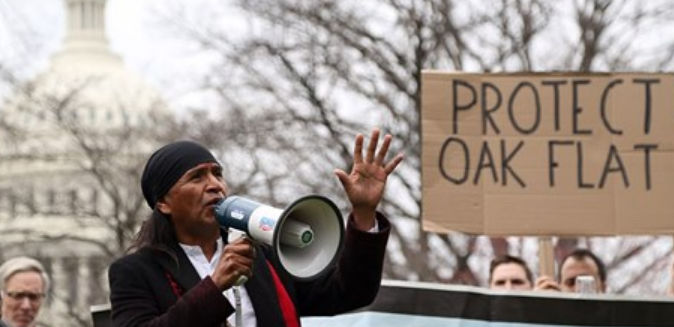
. Wendsler Nosie has led the fight to protect Oak Flats for almost a decade. (Photo/Apache Stronghold)
The San Carlos Apache Tribe welcomed a May 9 federal court decision that temporarily halts the U.S. government’s plan to transfer Oak Flat—sacred Western Apache land within the Tonto National Forest—to Resolution Copper, a company backed by Chinese interests.
“This marks a turning point in our two-decade struggle to save Oak Flat from destruction by two of the world’s largest mining corporations,” said San Carlos Apache Chairman Terry Rambler. “We congratulate Apache Stronghold for securing this historic legal victory.”
Apache Stronghold filed an emergency motion to block the transfer while the U.S. Supreme Court considers hearing their case. The case challenges a federal law mandating the land’s transfer to Resolution Copper Mining, LLC once an environmental impact report is issued—a report the federal government was preparing to release after June 16.
The ruling halts the land transfer until the Supreme Court decides whether to review the case.
“There is no close question in this matter,” wrote U.S. District Judge Steven P. Logan. “The balance of equities tips sharply in Plaintiff’s favor, and they have presented serious questions on the merits that warrant the Supreme Court’s careful scrutiny.”
Oak Flat, or Chi’chil Biłdagoteel in Apache, is on the National Register of Historic Places and had been protected for 70 years. Those protections were revoked in 2014 when Congress added a land-swap provision to a must-pass defense bill. Resolution Copper plans to mine the area, ultimately creating a crater two miles wide and over 1,000 feet deep.
“We urge the Supreme Court to accept Apache Stronghold’s petition and affirm our right to practice religious ceremonies that can only be held at Oak Flat,” Chairman Rambler added. “Indigenous peoples around the world are watching and hoping the Court will finally treat Native religious practices with the same respect as other major world religions.”
Resolution Copper is jointly owned by Rio Tinto (UK-based) and BHP (Australia-based), the two largest mining companies globally. Both derive significant revenue from China. The Chinese state-owned firm Chinalco, which focuses on securing strategic minerals like copper, is Rio Tinto’s largest shareholder, holding nearly 15% of its stock.
Yahoo News
. Wendsler Nosie has led the fight to protect Oak Flats for almost a decade. (Photo/Apache Stronghold)
By Native News Online Staff
May 12, 2025
The San Carlos Apache Tribe welcomed a May 9 federal court decision that temporarily halts the U.S. government’s plan to transfer Oak Flat—sacred Western Apache land within the Tonto National Forest—to Resolution Copper, a company backed by Chinese interests.
“This marks a turning point in our two-decade struggle to save Oak Flat from destruction by two of the world’s largest mining corporations,” said San Carlos Apache Chairman Terry Rambler. “We congratulate Apache Stronghold for securing this historic legal victory.”
Apache Stronghold filed an emergency motion to block the transfer while the U.S. Supreme Court considers hearing their case. The case challenges a federal law mandating the land’s transfer to Resolution Copper Mining, LLC once an environmental impact report is issued—a report the federal government was preparing to release after June 16.
The ruling halts the land transfer until the Supreme Court decides whether to review the case.
“There is no close question in this matter,” wrote U.S. District Judge Steven P. Logan. “The balance of equities tips sharply in Plaintiff’s favor, and they have presented serious questions on the merits that warrant the Supreme Court’s careful scrutiny.”
Oak Flat, or Chi’chil Biłdagoteel in Apache, is on the National Register of Historic Places and had been protected for 70 years. Those protections were revoked in 2014 when Congress added a land-swap provision to a must-pass defense bill. Resolution Copper plans to mine the area, ultimately creating a crater two miles wide and over 1,000 feet deep.
“We urge the Supreme Court to accept Apache Stronghold’s petition and affirm our right to practice religious ceremonies that can only be held at Oak Flat,” Chairman Rambler added. “Indigenous peoples around the world are watching and hoping the Court will finally treat Native religious practices with the same respect as other major world religions.”
Resolution Copper is jointly owned by Rio Tinto (UK-based) and BHP (Australia-based), the two largest mining companies globally. Both derive significant revenue from China. The Chinese state-owned firm Chinalco, which focuses on securing strategic minerals like copper, is Rio Tinto’s largest shareholder, holding nearly 15% of its stock.
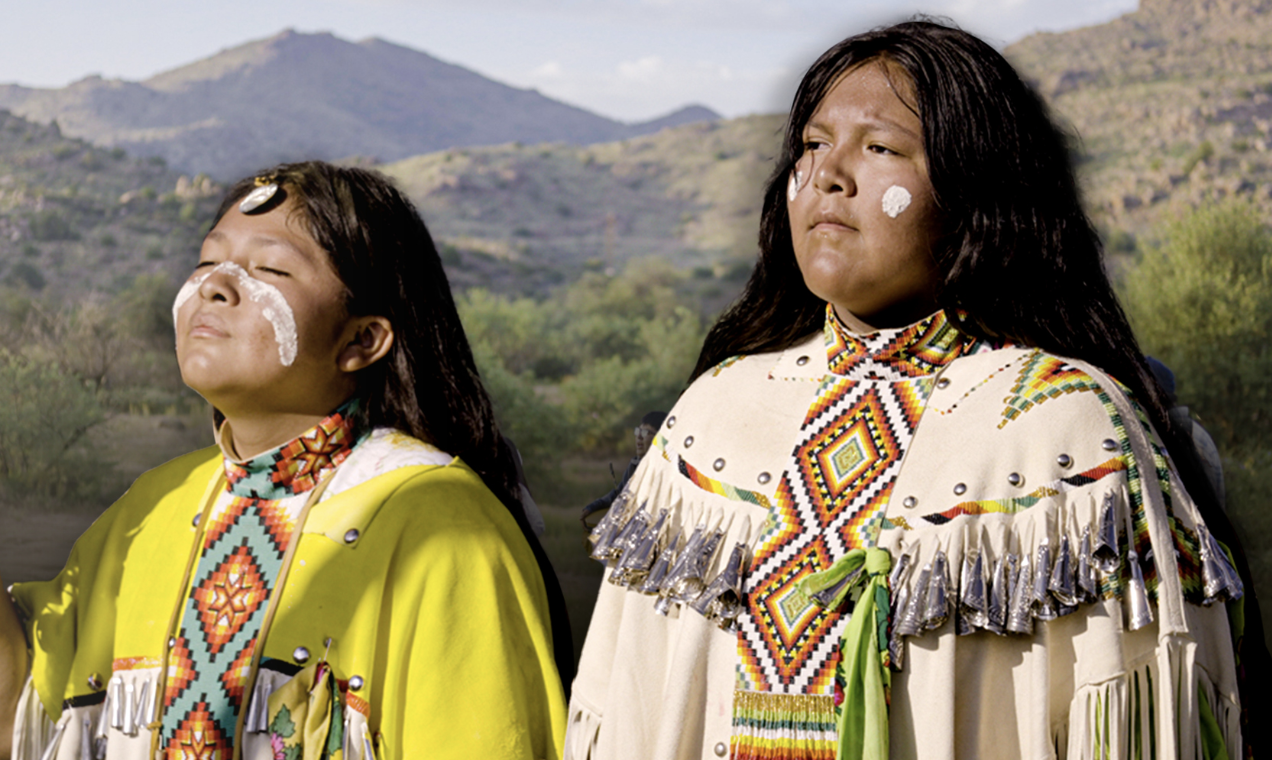
(Photo/Becket Fund)
By Levi Rickert
May 09, 2025
Yahoo News
A federal court has issued an order halting the U.S. government’s plans to transfer Oak Flat—the most sacred site of the Western Apaches—to a multinational mining corporation for destruction. In the case Apache Stronghold v. United States, the government recently indicated it could hand over the land as soon as June 16, 2025, to Resolution Copper, a mining company with Chinese ownership, which intends to transform the sacred site into a massive copper mine. This would effectively end Apache religious practices tied to the land. Apache Stronghold, a coalition of Western Apaches, other Native communities, and allies, filed an emergency motion to pause the transfer while the case awaits review by the U.S. Supreme Court.
A federal court granted that request today, with Judge Steven P. Logan concluding, “There is no close question in this matter. It is abundantly clear that the balance of equities ‘tips sharply’ in Plaintiff’s favor, and … they have presented serious questions on the merits that warrant the Supreme Court’s careful scrutiny.”
For countless generations, Western Apaches and other Native peoples have gathered at Oak Flat—known in Apache as Chi’chil Biłdagoteel—just outside present-day Superior, Arizona, to conduct sacred ceremonies that cannot be held anywhere else.
Oak Flat is listed on the National Register of Historic Places and has been shielded from mining and other destructive activities for the past seventy years. That protection came under threat in December 2014, when a last-minute provision was quietly added to a must-pass defense bill, authorizing the land’s transfer to Resolution Copper. The company now plans to turn this sacred site into a crater two miles wide and 1,100 feet deep. Resolution Copper is majority-owned by Rio Tinto, the same mining giant that drew global condemnation for destroying 46,000-year-old Indigenous rock shelters at a major cultural site in Australia.
“The federal government and Resolution Copper have put Oak Flat on death row—they are racing to destroy our spiritual lifeblood and erase our religious traditions forever,” said Dr. Wendsler Nosie Sr. of Apache Stronghold. “We are grateful the judge stopped this land grab in its tracks so that the Supreme Court has time to protect Oak Flat from destruction.”
Apache Stronghold filed this lawsuit in January 2021 to stop the proposed copper mine at Oak Flat. The project faces widespread opposition—including 21 of the 22 federally recognized tribal nations in Arizona, the National Congress of American Indians, and a broad coalition of religious groups, civil rights organizations, and legal scholars. National polls show that 74% of Americans support preserving Oak Flat. Despite this, the Ninth Circuit Court of Appeals ruled 6–5 last year that the land transfer does not violate federal religious freedom protections. In a strong dissent, five judges warned the court had “tragically err[ed]” in failing to safeguard the sacred site.
“The feds have absolutely no reason to ram through the transfer of Oak Flat while our case is standing on the doorstep of the Supreme Court,” said Luke Goodrich, vice president and senior counsel at Becket. “This ruling ensures that Oak Flat remains protected as the legal process continues, giving the Supreme Court time to decide if cherished Apache rituals can continue for future generations.”
In addition to Becket, Apache Stronghold is represented by Erin Murphy of Clement & Murphy PLLC, Professor Stephanie Barclay of Georgetown Law School, and attorneys Michael V. Nixon and Clifford Levenson.
A federal court has issued an order halting the U.S. government’s plans to transfer Oak Flat—the most sacred site of the Western Apaches—to a multinational mining corporation for destruction. In the case Apache Stronghold v. United States, the government recently indicated it could hand over the land as soon as June 16, 2025, to Resolution Copper, a mining company with Chinese ownership, which intends to transform the sacred site into a massive copper mine. This would effectively end Apache religious practices tied to the land. Apache Stronghold, a coalition of Western Apaches, other Native communities, and allies, filed an emergency motion to pause the transfer while the case awaits review by the U.S. Supreme Court.
A federal court granted that request today, with Judge Steven P. Logan concluding, “There is no close question in this matter. It is abundantly clear that the balance of equities ‘tips sharply’ in Plaintiff’s favor, and … they have presented serious questions on the merits that warrant the Supreme Court’s careful scrutiny.”
For countless generations, Western Apaches and other Native peoples have gathered at Oak Flat—known in Apache as Chi’chil Biłdagoteel—just outside present-day Superior, Arizona, to conduct sacred ceremonies that cannot be held anywhere else.
Oak Flat is listed on the National Register of Historic Places and has been shielded from mining and other destructive activities for the past seventy years. That protection came under threat in December 2014, when a last-minute provision was quietly added to a must-pass defense bill, authorizing the land’s transfer to Resolution Copper. The company now plans to turn this sacred site into a crater two miles wide and 1,100 feet deep. Resolution Copper is majority-owned by Rio Tinto, the same mining giant that drew global condemnation for destroying 46,000-year-old Indigenous rock shelters at a major cultural site in Australia.
“The federal government and Resolution Copper have put Oak Flat on death row—they are racing to destroy our spiritual lifeblood and erase our religious traditions forever,” said Dr. Wendsler Nosie Sr. of Apache Stronghold. “We are grateful the judge stopped this land grab in its tracks so that the Supreme Court has time to protect Oak Flat from destruction.”
Apache Stronghold filed this lawsuit in January 2021 to stop the proposed copper mine at Oak Flat. The project faces widespread opposition—including 21 of the 22 federally recognized tribal nations in Arizona, the National Congress of American Indians, and a broad coalition of religious groups, civil rights organizations, and legal scholars. National polls show that 74% of Americans support preserving Oak Flat. Despite this, the Ninth Circuit Court of Appeals ruled 6–5 last year that the land transfer does not violate federal religious freedom protections. In a strong dissent, five judges warned the court had “tragically err[ed]” in failing to safeguard the sacred site.
“The feds have absolutely no reason to ram through the transfer of Oak Flat while our case is standing on the doorstep of the Supreme Court,” said Luke Goodrich, vice president and senior counsel at Becket. “This ruling ensures that Oak Flat remains protected as the legal process continues, giving the Supreme Court time to decide if cherished Apache rituals can continue for future generations.”
In addition to Becket, Apache Stronghold is represented by Erin Murphy of Clement & Murphy PLLC, Professor Stephanie Barclay of Georgetown Law School, and attorneys Michael V. Nixon and Clifford Levenson.

No comments:
Post a Comment