Robert Reich: The Dogs Of War – OpEd
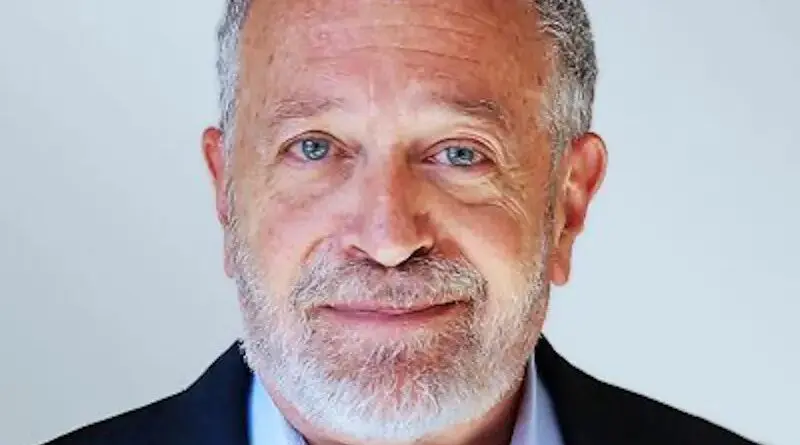
Robert Reich
By Robert Reich
The United States is now at war with Iran.
A single person — Donald J. Trump — has released the dogs of war on one of the most dangerous countries in the world, and done it without the consent of Congress or our allies, or even a clear explanation to the American people.
Anyone who has doubted Trump’s intention to replace American democracy with a dictatorship should now be fully disabused.
I share your despair, sadness, and fear. Even if our president was a wise and judicious man, surrounded by thoughtful advisers with impeccable integrity and wisdom, this would be a highly dangerous move.
Last night I spoke with a number of people experienced and knowledgeable about American foreign policy and politics. Here, in brief, is what I asked and what I learned.
1. Why is Trump taking us into war with Iran?
It’s possible that he believes the attacks give him more bargaining leverage with Iran. But a more likely explanation is that the attacks fit perfectly with Trump’s desire to divert attention from his multiple failures at home: the on-again-off-again tariffs that have spooked financial markets while eliciting no meaningful concessions from other nations (especially China). An immigration crackdown that’s been stymied by federal judges. The so-called “big beautiful bill” that’s in deep trouble in the Senate. Trump’s embarrassing tiff with Musk. His failures to achieve peace in either Ukraine or Gaza. And last weekend’s record-breaking “No Kings” demonstrations as compared to his scrawny military parade.
Besides, there’s nothing like a war to help a wannabe dictator like Trump justify more “emergency” powers.
2. Is (or was) Iran building a nuclear weapon?
No one knows for sure. In March, Tulsi Gabbard, director of national intelligence, testified before Congress that the intelligence community [IC] “continues to assess that Iran is not building a nuclear weapon, and Supreme Leader [Ali] Khamenei has not authorized the nuclear weapons program that he suspended in 2003.”
Iran’s growing stockpile of enriched uranium could allow it to produce enough fissile material for a nuclear weapon. Experts differ in how long Iran would need to make a usable nuclear weapon out of the fissile material.
In the face of such uncertainty, it’s useful to recall George W. Bush’s claims of Saddam Hussein’s “weapons of mass destruction” that proved bogus — at a cost of 4,431 American lives, 31,994 Americans wounded in action, and an estimated 295,000 Iraqi lives.
3. Is Trump getting good information and advice?
Unlikely. He told reporters on Friday that Gabbard was “wrong” to say that Iran is not currently building a nuclear weapon but he didn’t say where he was getting hisintelligence from. In May, Trump fired his national security adviser, Mike Waltz, and dismissed half the professionals at the National Security Council (the Middle East section went from 10 staffers to five).
Trump is being advised on Iran by a close-knit group of political advisers and ideologues, none of whom has deep knowledge of Iran or the Middle East. All are totally loyal to Trump. (They include JD Vance; Secretary of State Marco Rubio; Chief of Staff Susie Wiles; Deputy Chief of Staff Stephen Miller; Steve Witkoff, Trump’s envoy to the Middle East who was formerly a luxury real estate developer; Lieutenant General Dan (Razin’) Caine, now serving as Chairman of the Joint Chiefs; Erik (“The Gorilla”) Kurilla, the head of U.S. Central Command (CENTCOM); John Ratcliffe, CIA director, who served in the first Trump administration and was previously a Texas congressman and a small-town mayor; and Steve Bannon.)
As a result, he’s probably getting decent advice about what’s good for Trump but not about what’s good for America or the world. It’s an inevitable consequence of purging from the government anyone more loyal to the United States than to him. Besides, Trump listens only to information he wants to hear.
4. Will Iran now cave and agree to destroy its remaining stockpile of enriched uranium and allow inspectors to confirm that the stockpile is gone?
No. Not one of the experts I spoke to thought this likely. Iran doesn’t trust the United States or Israel, and it doesn’t want to give up its potential nuclear capacities.
5. Have the bombings wiped out Iran’s capacity to enrich uranium to produce fissile material for nuclear weapons?
Unlikely. Trump claims that the facilities were “completely and totally obliterated,” but who trusts Trump to tell the truth, or to be told the truth?
Iran has buried its uranium-enrichment facilities deep underground and distributed them to many locations. Iranian officials acknowledge that three sites were attacked but did not describe the extent of damage.
In any event, America does not have good intelligence about how long it will take Iran to get the three targeted sites back to running order.
6. What’s the worst Iran can now do to the United States in retaliation?
It could wholly or partially close the Strait of Hormuz, a vital waterway through which about a fifth of global oil must pass. While it was not completely closed during past conflicts, Iran possesses the capabilities to significantly disrupt or halt traffic with mines, anti-ship missiles, and air defense systems. This would cause oil prices to soar in the United States and Europe (helping Big Oil but not American consumers).
Iran could also engage in a range of terrorist actions directed toward the United States. No one knows the extent of any “sleeper cells” in the U.S. or in Europe. The mere possibility could give Trump more license to restrict civil liberties.
7. Will the American public “rally around the flag” and support Trump in this war?
Some Americans clearly will. But a drawn-out war in Iran will be deeply unpopular. A recent YouGov poll found that only 16 percent of Americans thought the U.S. military should get involved in the conflict between Israel and Iran; 60 percent said it should not.
Trump promised no foreign entanglements and lower consumer prices. But this war could prove to be the largest foreign entanglement in years, and the attacks will almost certainly raise oil and gas prices.
8. Will he send in American ground troops?
On balance, the experts I consulted with thought Trump eventually would send in troops if Iran retaliated and the conflict escalated. Last night he explicitly threatened more action against Iran if it did not return to diplomatic efforts: “If they do not [make peace], future attacks will be far greater and a lot easier.”
More than anything else, Trump has an abiding need to save face, he hates to lose, and he likes nothing more than conflict. He was willing to send the active military into California to stop trumped-up protests. He’ll likely be willing to send them into Iran.
The war will not be over quickly. Iran and its extensive networks in the Middle East could keep hostilities going for months or years, at a substantial cost of human life.
9. What’s Congress likely to do now?
I hope Democrats will use the War Powers Act to force a vote on the war, putting Republican lawmakers in the awkward position of voting for a war that’s immensely unpopular and can easily go very badly.
10. Bonus question: Where does the phrase “dogs of war” come from?
Shakespeare’s Julius Caesar, in which Mark Antony (in Act 3, Scene 1) says: “Cry ‘Havoc!’, and let slip the dogs of war” — signifying that war unleashes chaos and violence.
Now that the bombing has begun, there’s no telling where this will end.
Be strong. Be safe. Hug your loved ones.
- This article was published at Robert Reich’s Substack

Robert Reich
Robert B. Reich is Chancellor's Professor of Public Policy at the University of California at Berkeley and Senior Fellow at the Blum Center for Developing Economies, and writes at robertreich.substack.com. Reich served as Secretary of Labor in the Clinton administration, for which Time Magazine named him one of the ten most effective cabinet secretaries of the twentieth century. He has written fifteen books, including the best sellers "Aftershock", "The Work of Nations," and"Beyond Outrage," and, his most recent, "The Common Good," which is available in bookstores now. He is also a founding editor of the American Prospect magazine, chairman of Common Cause, a member of the American Academy of Arts and Sciences, and co-creator of the award-winning documentary, "Inequality For All." He's co-creator of the Netflix original documentary "Saving Capitalism," which is streaming now.

No comments:
Post a Comment