WATER WARS
Pakistan blows up dam embankment as it braces for flood surge
Lahore (Pakistan) (AFP) – Pakistan authorities blew up an embankment next to a monsoon-engorged dam on Wednesday as flooding submerged one of the world's holiest Sikh sites.
Issued on: 27/08/2025

Lahore (Pakistan) (AFP) – Pakistan authorities blew up an embankment next to a monsoon-engorged dam on Wednesday as flooding submerged one of the world's holiest Sikh sites.
Issued on: 27/08/2025
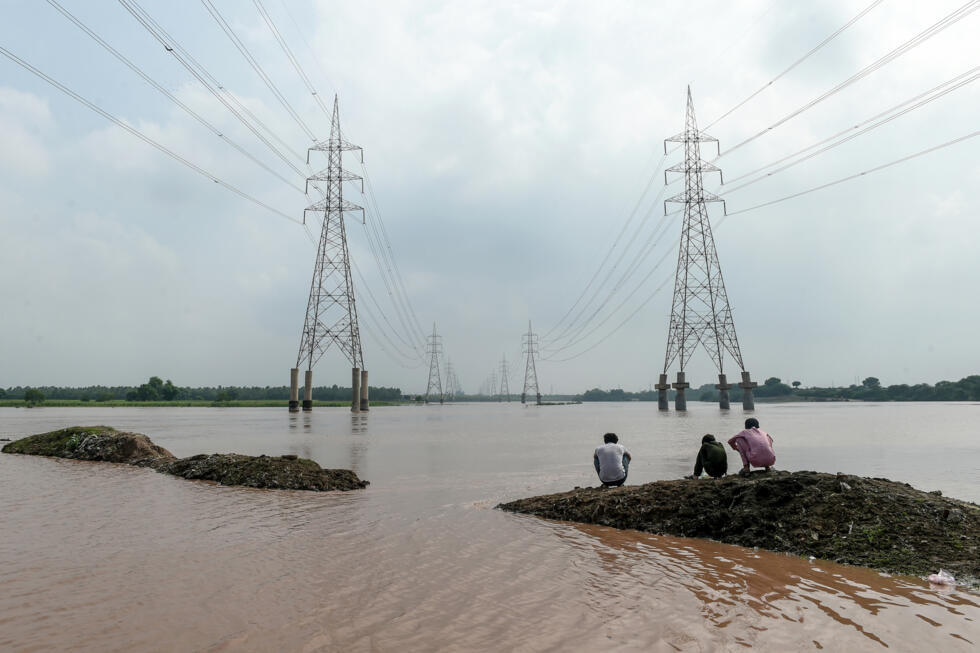
Pakistan authorities blew up an embankment next to a flood-swollen dam during a brutal monsoon season, with a holy Sikh site submerged by floodwater © Syed Murtaza Ali / AFP
Three transboundary rivers in the east of the country have swollen to exceptionally high levels as a result of heavy rains across the border in India.
It has triggered flood alerts throughout Punjab province, home to nearly half of Pakistan's 255 million people. The army was also deployed to help evacuate tens of thousands of people and livestock near the Chenab, Ravi and Sutlej rivers.
Authorities carried out a controlled explosion of an embankment at Qadirabad dam on the Chenab River on Wednesday as the water levels rose.
"To save the structure, we have breached the right marginal embankment so that the flow of the water reduces," said Mazhar Hussain, the spokesperson for Punjab's disaster management agency.
The Kartarpur temple, where the founder of the Sikh faith Guru Nanak died in 1539, was submerged by floodwater near the border with India.
Five boats were sent to the sprawling site to rescue around 100 people left stranded.
Pakistan authorities said neighbouring India had released water from upstream dams on its side of the border, further increasing the volume of water reaching Pakistan.
Islamabad's foreign ministry said New Delhi had given advanced notice through diplomatic channels ahead of opening the dam spillways.
Indian government officials have not commented.
Three transboundary rivers in the east of the country have swollen to exceptionally high levels as a result of heavy rains across the border in India.
It has triggered flood alerts throughout Punjab province, home to nearly half of Pakistan's 255 million people. The army was also deployed to help evacuate tens of thousands of people and livestock near the Chenab, Ravi and Sutlej rivers.
Authorities carried out a controlled explosion of an embankment at Qadirabad dam on the Chenab River on Wednesday as the water levels rose.
"To save the structure, we have breached the right marginal embankment so that the flow of the water reduces," said Mazhar Hussain, the spokesperson for Punjab's disaster management agency.
The Kartarpur temple, where the founder of the Sikh faith Guru Nanak died in 1539, was submerged by floodwater near the border with India.
Five boats were sent to the sprawling site to rescue around 100 people left stranded.
Pakistan authorities said neighbouring India had released water from upstream dams on its side of the border, further increasing the volume of water reaching Pakistan.
Islamabad's foreign ministry said New Delhi had given advanced notice through diplomatic channels ahead of opening the dam spillways.
Indian government officials have not commented.
Disaster officials in Pakistan issued emergency alerts and advised those living near three flood-swollen rivers in Pakistan's Punjab province to move to safer locations during a brutal monsoon season © Syed Murtaza Ali / AFP
The disaster management authority issued emergency alerts and advised those living near the Chenab, Ravi, and Sutlej rivers to "immediately move to safe locations".
"I urge the public to evacuate the floodplains along the Ravi River, as the water flow is the highest since 1988," provincial disaster chief Irfan Ali said.
The flood surge "is expected to pass through Lahore tonight and tomorrow morning", he said of the Punjab capital.
Pakistan has been battered by a brutal monsoon season this year, with landslides and floods triggered by torrential rain killing more than 800 people since June.
© 2025 AFP
The disaster management authority issued emergency alerts and advised those living near the Chenab, Ravi, and Sutlej rivers to "immediately move to safe locations".
"I urge the public to evacuate the floodplains along the Ravi River, as the water flow is the highest since 1988," provincial disaster chief Irfan Ali said.
The flood surge "is expected to pass through Lahore tonight and tomorrow morning", he said of the Punjab capital.
Pakistan has been battered by a brutal monsoon season this year, with landslides and floods triggered by torrential rain killing more than 800 people since June.
© 2025 AFP
Floods, landslides kill at least 30 in India's Jammu region
Srinagar (India) (AFP) – Floods and landslides triggered by heavy rains have killed at least 30 people in India's Himalayan region of Jammu and Kashmir, officials and local media said Wednesday.
Issued on: 27/08/2025 -

Intense monsoon rainstorm in Indian-administered Jammu and Kashmir has caused widespread chaos © - / AFP
An intense monsoon rainstorm in the Indian-administered territory has caused widespread chaos with raging water smashing into bridges and swamping homes.
A landslide on the route to the famous Hindu shrine Vaishno Devi killed at least 30 people, a local disaster official told AFP.
Prime Minister Narendra Modi said the loss of lives was "saddening".
Floods and landslides are common during the June-September monsoon season, but experts say climate change, coupled with poorly planned development, is increasing their frequency, severity and impact.
Climate experts from the Himalayan focused International Centre for Integrated Mountain Development (ICIMOD) warn that a spate of disasters illustrates the dangers when extreme rain combines with mountain slopes weakened by melting permafrost -- and building development in flood-prone valleys.
ICIMOD warned in a statement this month that the wider Hindu Kush Himalaya region is suffering "accelerated glacier melt, shifting weather patterns, and an increasing frequency of disaster events" including floods.
An intense monsoon rainstorm in the Indian-administered territory has caused widespread chaos with raging water smashing into bridges and swamping homes.
A landslide on the route to the famous Hindu shrine Vaishno Devi killed at least 30 people, a local disaster official told AFP.
Prime Minister Narendra Modi said the loss of lives was "saddening".
Floods and landslides are common during the June-September monsoon season, but experts say climate change, coupled with poorly planned development, is increasing their frequency, severity and impact.
Climate experts from the Himalayan focused International Centre for Integrated Mountain Development (ICIMOD) warn that a spate of disasters illustrates the dangers when extreme rain combines with mountain slopes weakened by melting permafrost -- and building development in flood-prone valleys.
ICIMOD warned in a statement this month that the wider Hindu Kush Himalaya region is suffering "accelerated glacier melt, shifting weather patterns, and an increasing frequency of disaster events" including floods.
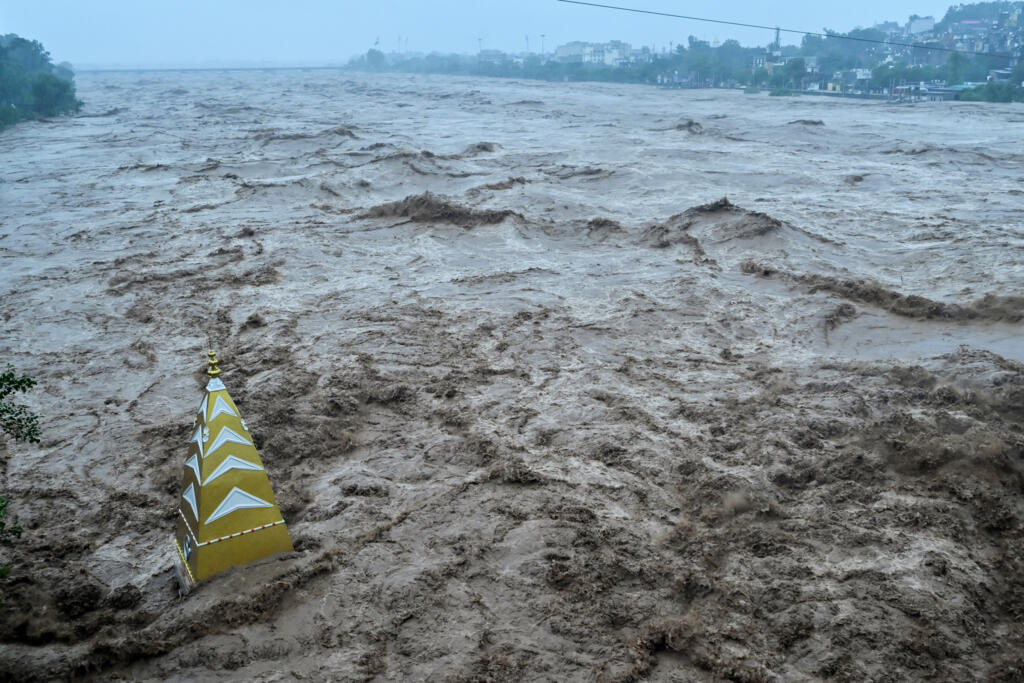
Floods and landslides are common during the monsoon season, but experts say climate change is increasing their frequency and severity © - / AFP
The local administration said Wednesday that thousands had been forced to flee in the Jammu region.
Schools have been shut in the area, with the region's Chief Minister Omar Abdullah saying officials were struggling with "almost nonexistent communication".
The main Jhelum river in the Kashmir valley has also risen above the danger mark with authorities sounding flood alerts, including for the key city of Srinagar.
On August 14, powerful torrents driven by intense rain smashed into Chisoti village in Indian-administered Kashmir, killing at least 65 people with another 33 missing.
Floods on August 5 overwhelmed the Himalayan town of Dharali in India's Uttarakhand state and buried it in mud. The likely death toll from that disaster is more than 70 but has not been confirmed.
© 2025 AFP
The local administration said Wednesday that thousands had been forced to flee in the Jammu region.
Schools have been shut in the area, with the region's Chief Minister Omar Abdullah saying officials were struggling with "almost nonexistent communication".
The main Jhelum river in the Kashmir valley has also risen above the danger mark with authorities sounding flood alerts, including for the key city of Srinagar.
On August 14, powerful torrents driven by intense rain smashed into Chisoti village in Indian-administered Kashmir, killing at least 65 people with another 33 missing.
Floods on August 5 overwhelmed the Himalayan town of Dharali in India's Uttarakhand state and buried it in mud. The likely death toll from that disaster is more than 70 but has not been confirmed.
© 2025 AFP
Evacuations under way in eastern Pakistan as India releases water from swollen rivers
Copyright AP Photo
By Gavin Blackburn
Published on 26/08/2025
Copyright AP Photo
By Gavin Blackburn
Published on 26/08/2025
EURONEWS
The move came a day after New Delhi alerted Islamabad about possible cross-border flooding, marking the first public diplomatic contact between the two nuclear-armed rivals in months.
Pakistan has evacuated tens of thousands of people to safer areas after neighbouring India released water from overflowing dams and swollen rivers into low-lying border regions, officials said on Tuesday.
The move came a day after New Delhi alerted Islamabad about possible cross-border flooding, marking the first public diplomatic contact between the two nuclear-armed rivals in months.
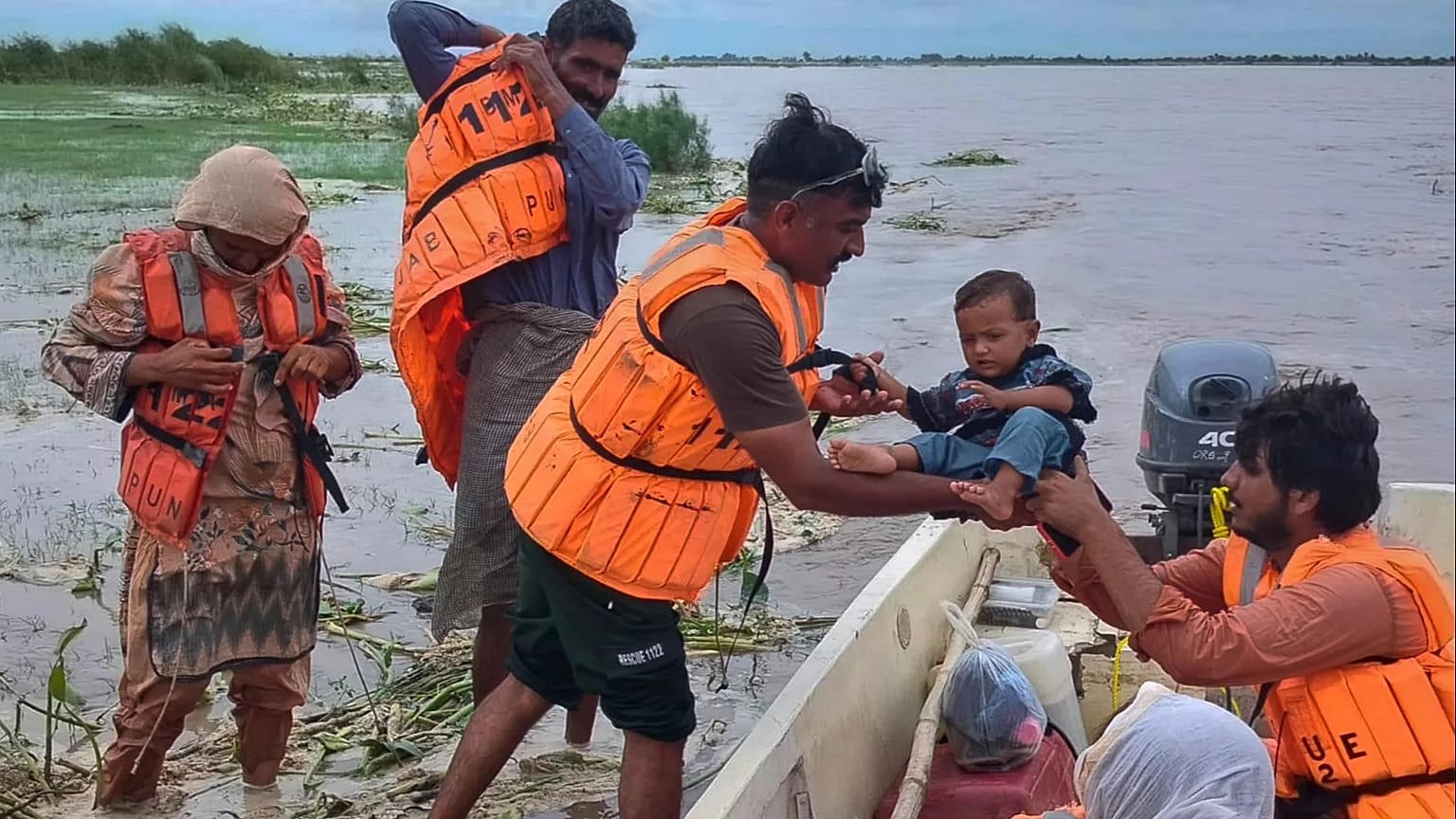
Pakistan’s National Disaster Management Authority (NDMA) said it had issued an advance alert to its Punjabi counterparts about a surge in the Sutlej River and the risk of flooding and that evacuations from various districts in the eastern Punjab province were underway.
In a statement, it said rescuers evacuated more than 14,000 people from Kasur, a district in Punjab province, while over 89,000 were moved to safer ground from the city of Bahawalnagar, near the Indian border.
Pakistan has evacuated tens of thousands of people to safer areas after neighbouring India released water from overflowing dams and swollen rivers into low-lying border regions, officials said on Tuesday.
The move came a day after New Delhi alerted Islamabad about possible cross-border flooding, marking the first public diplomatic contact between the two nuclear-armed rivals in months.
Pakistan’s National Disaster Management Authority (NDMA) said it had issued an advance alert to its Punjabi counterparts about a surge in the Sutlej River and the risk of flooding and that evacuations from various districts in the eastern Punjab province were underway.
In a statement, it said rescuers evacuated more than 14,000 people from Kasur, a district in Punjab province, while over 89,000 were moved to safer ground from the city of Bahawalnagar, near the Indian border.
The NDMA said authorities have urged residents to stay away from rivers, streams and low-lying areas, avoid unnecessary travel and follow alerts issued through the media, mobile phones and the NDMA's disaster alert app.
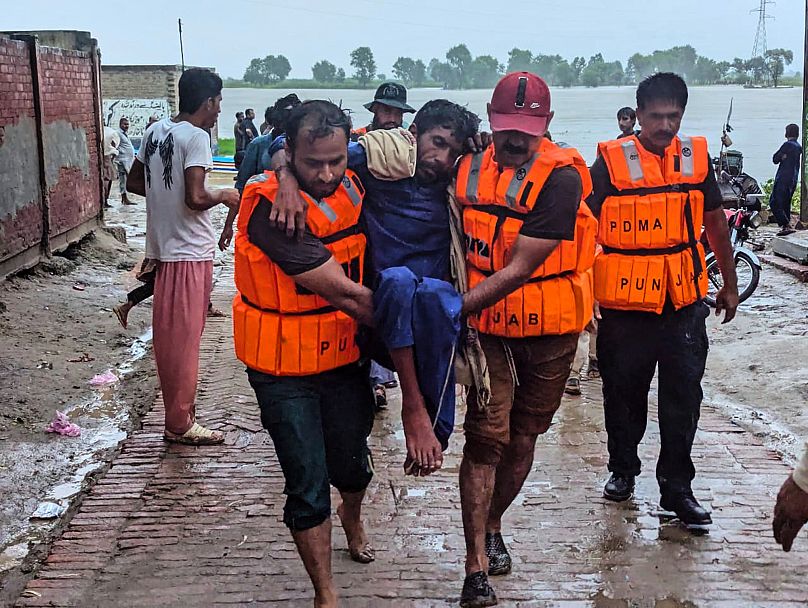
Rescue workers evacuate villagers from a low-lying area due to rising water level in the Sutlej River in Pakistan's Punjab province, 26 August, 2025 AP Photo
The latest flood alert and evacuation drive by Pakistan comes as heavy monsoon rains continue to batter both South Asian countries.
In Pakistan’s northwest, many residents complained this month that they had received no warning before flash floods struck the district of Buner, killing more than 300 people.
Officials have said the devastation was caused by a sudden cloudburst, which could not have been predicted, and that many of the victims were living along natural water pathways.
Nationwide, floods triggered by seasonal rains have killed more than 800 people in Pakistan since 26 June.
In Kashmir, which is split between India and Pakistan and claimed by both in its entirety, at least 65 have also died and hundreds have been displaced in the Indian-administered Jammu area.
Many of the region's rivers and tributaries eventually flow into Pakistan and the part of Kashmir it controls.
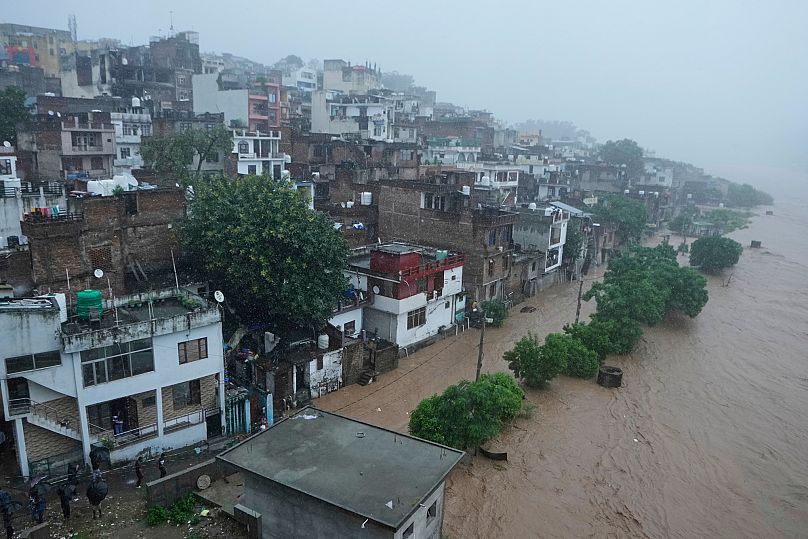
On Tuesday, Indian officials said most rivers and streams were overflowing, with muddy waters inundating homes in several places and damaging roads and bridges. Water levels in multiple rivers continued to rise in the region.
The latest flood alert and evacuation drive by Pakistan comes as heavy monsoon rains continue to batter both South Asian countries.
In Pakistan’s northwest, many residents complained this month that they had received no warning before flash floods struck the district of Buner, killing more than 300 people.
Officials have said the devastation was caused by a sudden cloudburst, which could not have been predicted, and that many of the victims were living along natural water pathways.
Nationwide, floods triggered by seasonal rains have killed more than 800 people in Pakistan since 26 June.
In Kashmir, which is split between India and Pakistan and claimed by both in its entirety, at least 65 have also died and hundreds have been displaced in the Indian-administered Jammu area.
Many of the region's rivers and tributaries eventually flow into Pakistan and the part of Kashmir it controls.
On Tuesday, Indian officials said most rivers and streams were overflowing, with muddy waters inundating homes in several places and damaging roads and bridges. Water levels in multiple rivers continued to rise in the region.
People watch a swelling River Tawi from the roof of their houses in Jammu, 26 August, 2025 AP Photo
According to the Indian Meteorological Department, rains should persist until late Tuesday.
In recent months, Pakistan has witnessed multiple cloudburst floods and higher than normal rainfall. Pakistan’s annual monsoon season runs from July to September.
Scientists and weather forecasters have blamed climate change for heavier rains in recent years in the region.
This year's heavy rains have raised fears of a repeat of the 2022 downpour that inundated a third of the country and killed 1,739 people.
Additional sources AP
According to the Indian Meteorological Department, rains should persist until late Tuesday.
In recent months, Pakistan has witnessed multiple cloudburst floods and higher than normal rainfall. Pakistan’s annual monsoon season runs from July to September.
Scientists and weather forecasters have blamed climate change for heavier rains in recent years in the region.
This year's heavy rains have raised fears of a repeat of the 2022 downpour that inundated a third of the country and killed 1,739 people.
Additional sources AP
By AFP
August 26, 2025

People wade through a flooded street after heavy rainfall in Karachi
- Copyright AFP Hector RETAMAL
Shrouq TARIQ, Juliette MANSOUR, with Sameer MANDHRO in Karachi
Floodwaters gushing through mountain villages, cities rendered swamps, mourners gathered at fresh graves — as Pakistan’s monsoon season once again delivers scenes of calamity, it also lays bare woeful preparedness.
Without better regulation of construction and sewer maintenance, the annual downpours that have left hundreds dead in recent months will continue to kill, experts say.
Even Prime Minister Shehbaz Sharif appeared to agree as he toured flood-stricken northwestern Khyber Pakhtunkhwa province last week, where landslides killed more than 450 people.
“Natural disasters are acts of God, but we cannot ignore the human blunders,” he said.
“If we keep letting influence-peddling and corruption control building permits, neither the people nor the governments will be forgiven.”
Pakistan is among the countries most vulnerable to climate change, with limited resources for adaptation.
In the devastated mountain villages the prime minister visited, and beyond, residential areas are erected near riverbeds, blocking “natural storm drains,” former climate change minister Sherry Rehman told AFP.
Entrepreneur Fazal Khan now recognises the “mistake” of building too close to the river.
His home in the Swat Valley was destroyed first by 2010 floods and then again in the 2022 inundation that affected nearly four million Pakistanis.
“On August 15, once again, the floodwater surged through the channel and entered our home,” the 43-year-old father said.
– Man-made mistakes –
Since it began in June, this year’s monsoon has killed around 800 people and damaged more than 7,000 homes, with further downpours expected through September.
While South Asia’s seasonal monsoon brings rainfall that farmers depend on, climate change is making the phenomenon more erratic, unpredictable and deadly across the region.
By the middle of this month, Pakistan had already received 50 percent more rainfall than this time last year, according to disaster authorities, while in neighbouring India, flash floods and sudden storms have killed hundreds.
Extractive practices have also compounded the climate-related disasters, with cash-strapped but mineral-rich Pakistan eager to meet growing American and Chinese demand.
Rehman, the former minister, said mining and logging have altered the natural watershed.
“When a flood comes down, especially in mountainous terrain, a dense forest is very often able to check the speed, scale and ferocity of the water, but Pakistan now only has five percent forest coverage, the lowest in South Asia,” she said.
Urban infrastructure, too, has faltered.
Days after villages were swept away in the north, a spell of rain in the south brought Pakistan’s financial capital, Karachi, to a standstill.
The coastal megacity — home to more than 20 million people — recorded 10 deaths last week, with victims electrocuted or crushed by collapsing roofs.
A Human Rights Commission of Pakistan (HRCP) report said brown water inundating streets is not only the result of rain but “clogged drains, inadequate solid waste disposal, poor infrastructure, encroachments, elitist housing societies… and so on.”
Published in the wake of 2020’s deadly floods, the report still rings true today.
– ‘Negligence’ –
According to the commission, the problems are “inherently political” as various parties use building permits to fuel their patronage networks — often disregarding the risks of constructing on top of drainage canals.
In some areas, “the drain has become so narrow that when high tide occurs and it rains simultaneously, instead of the water flowing into the sea, it flows back into the river,” urban planning expert Arif Hasan said in an interview after the 2022 floods.
In the sprawling, rapidly swelling city, the various authorities, both civil and military, have failed to coordinate urban planning, according to the rights commission.
As a result, what infrastructure does get built can solve one problem while creating others.
“Karachi isn’t being destroyed by rain, but by years of negligence,” said Taha Ahmed Khan, an opposition lawmaker in the Sindh provincial assembly.
“Illegal construction and encroachments on stormwater drains, along with substandard roads… have only worsened the crisis,” he added.
Karachi Mayor Murtaza Wahab says he has been asking Islamabad every year for help financing the revamping of drainage canals, to no avail.
“It’s easy to suggest that drainage capacity should be enhanced, but the cost is so high that it might require spending almost the entire national budget,” he told AFP.
Yet during June’s budget vote, the opposition accused the city of having spent only 10 percent of funds earmarked for a massive development project.
The five-year plan, designed with international donors, was supposed to end the city’s monsoon suffering by the end of 2024.
But nearly a year later, there is no respite.
Shrouq TARIQ, Juliette MANSOUR, with Sameer MANDHRO in Karachi
Floodwaters gushing through mountain villages, cities rendered swamps, mourners gathered at fresh graves — as Pakistan’s monsoon season once again delivers scenes of calamity, it also lays bare woeful preparedness.
Without better regulation of construction and sewer maintenance, the annual downpours that have left hundreds dead in recent months will continue to kill, experts say.
Even Prime Minister Shehbaz Sharif appeared to agree as he toured flood-stricken northwestern Khyber Pakhtunkhwa province last week, where landslides killed more than 450 people.
“Natural disasters are acts of God, but we cannot ignore the human blunders,” he said.
“If we keep letting influence-peddling and corruption control building permits, neither the people nor the governments will be forgiven.”
Pakistan is among the countries most vulnerable to climate change, with limited resources for adaptation.
In the devastated mountain villages the prime minister visited, and beyond, residential areas are erected near riverbeds, blocking “natural storm drains,” former climate change minister Sherry Rehman told AFP.
Entrepreneur Fazal Khan now recognises the “mistake” of building too close to the river.
His home in the Swat Valley was destroyed first by 2010 floods and then again in the 2022 inundation that affected nearly four million Pakistanis.
“On August 15, once again, the floodwater surged through the channel and entered our home,” the 43-year-old father said.
– Man-made mistakes –
Since it began in June, this year’s monsoon has killed around 800 people and damaged more than 7,000 homes, with further downpours expected through September.
While South Asia’s seasonal monsoon brings rainfall that farmers depend on, climate change is making the phenomenon more erratic, unpredictable and deadly across the region.
By the middle of this month, Pakistan had already received 50 percent more rainfall than this time last year, according to disaster authorities, while in neighbouring India, flash floods and sudden storms have killed hundreds.
Extractive practices have also compounded the climate-related disasters, with cash-strapped but mineral-rich Pakistan eager to meet growing American and Chinese demand.
Rehman, the former minister, said mining and logging have altered the natural watershed.
“When a flood comes down, especially in mountainous terrain, a dense forest is very often able to check the speed, scale and ferocity of the water, but Pakistan now only has five percent forest coverage, the lowest in South Asia,” she said.
Urban infrastructure, too, has faltered.
Days after villages were swept away in the north, a spell of rain in the south brought Pakistan’s financial capital, Karachi, to a standstill.
The coastal megacity — home to more than 20 million people — recorded 10 deaths last week, with victims electrocuted or crushed by collapsing roofs.
A Human Rights Commission of Pakistan (HRCP) report said brown water inundating streets is not only the result of rain but “clogged drains, inadequate solid waste disposal, poor infrastructure, encroachments, elitist housing societies… and so on.”
Published in the wake of 2020’s deadly floods, the report still rings true today.
– ‘Negligence’ –
According to the commission, the problems are “inherently political” as various parties use building permits to fuel their patronage networks — often disregarding the risks of constructing on top of drainage canals.
In some areas, “the drain has become so narrow that when high tide occurs and it rains simultaneously, instead of the water flowing into the sea, it flows back into the river,” urban planning expert Arif Hasan said in an interview after the 2022 floods.
In the sprawling, rapidly swelling city, the various authorities, both civil and military, have failed to coordinate urban planning, according to the rights commission.
As a result, what infrastructure does get built can solve one problem while creating others.
“Karachi isn’t being destroyed by rain, but by years of negligence,” said Taha Ahmed Khan, an opposition lawmaker in the Sindh provincial assembly.
“Illegal construction and encroachments on stormwater drains, along with substandard roads… have only worsened the crisis,” he added.
Karachi Mayor Murtaza Wahab says he has been asking Islamabad every year for help financing the revamping of drainage canals, to no avail.
“It’s easy to suggest that drainage capacity should be enhanced, but the cost is so high that it might require spending almost the entire national budget,” he told AFP.
Yet during June’s budget vote, the opposition accused the city of having spent only 10 percent of funds earmarked for a massive development project.
The five-year plan, designed with international donors, was supposed to end the city’s monsoon suffering by the end of 2024.
But nearly a year later, there is no respite.

No comments:
Post a Comment