Ukraine knocks out 17% of Russia's oil refining capacity, creating shortages and disrupting exports
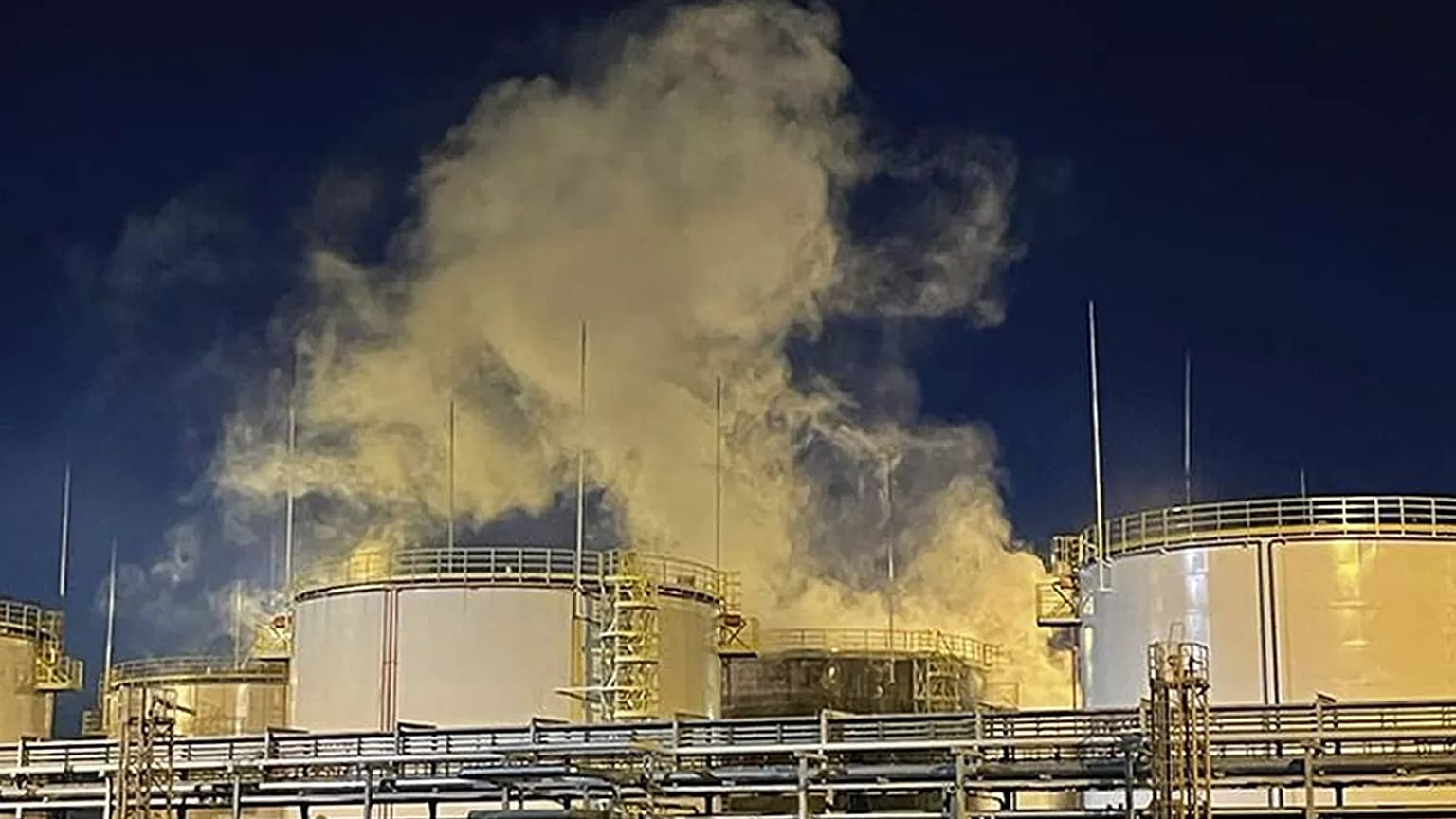
Ukraine has significantly intensified its attacks against Russia's energy sector over the past few weeks, managing to disrupt oil refining capacity, weakening Moscow’s war economy.
Ukraine has significantly intensified its attacks against Russia's energy sector over the past few weeks, inflicting significant losses on the primary source of financing of Moscow’s war machine.
Kyiv’s recent strikes on 10 Russian oil refineries have reportedly disrupted at least 17% of all of Russia’s refining capacity, an equivalent of 1.1 million barrels per day.
Ukraine’s targeted campaign is focused on refineries, oil depots and military-industrial sites. This way Kyiv disrupted Moscow’s ability to process and export oil. Ukraine’s campaign also created shortages in some Russian regions and in Moscow-annexed Crimea.
On Sunday, Kyiv targeted a gas terminal in the Leningrad region and an oil refinery in Samara
A source in Ukraine's Security Service (SBU) confirmed to The Kyiv Independent news outlet that the SBU was behind the attack on the liquefied natural gas terminal.
"Russia trades oil and gas through this terminal with the help of a 'shadow fleet'. Drone sanctions from the SBU reduce the inflow of foreign currency that Russia needs to wage war," the source said.
The General Staff of Ukraine's Armed Forces also confirmed that Military Intelligence (HUR), the Unmanned Systems Forces and other defence agencies were behind the strike on the Syzran oil refinery in Samara, which "specialises in the production of gasoline, diesel fuel, jet fuel, and other petroleum supplied to the Russian troops."
"The Syzran refinery has a design capacity of up to 8.5 million tons of crude oil per year, accounting for around 3.08% of Russia's total oil refining volume," General Staff wrote on Telegram.
Earlier this month, Ukraine also targeted the Lukoil refinery in Volgograd, the largest in southern Russia, as well as large refineries in the Saratov and Rostov regions.
The refinery hits come as Russia's seasonal demand for gasoline from tourists and farmers peaks.
Russia had already tightened its gasoline export ban in July to deal with a spike in domestic demand, even before Kyiv intensified its attacks.
There were shortages of gasoline in some areas of Russia-occupied regions of Ukraine, southern Russia and even the Far East.
In some areas there are huge queues at petrol stations and a system of coupons has been introduced recently. There are also reports in the Russian media that petrol is increasingly being sold only to organisations and businesses.
COMMENT: Can Russia weather Ukrainian drone attack fuel crisis?
Russia is once again navigating a familiar crisis: surging gasoline prices, empty fuel pumps, and mounting pressure on its domestic supply system. This is not the first time Russia has faced a fuel crisis. They have been relatively common in the past, but unlike previous shortages, this year’s disruption may have more serious and lasting consequences. The difference, argues Sergey Vakulenko in a note for the Carnegie Endowment for International Peace, is the war.
“The drone attacks that began on August 2, 2025, have been different,” Vakulenko writes. “Ukraine clearly has more drones now and can send out attack swarms numerous enough to overwhelm Russia’s air defences.”
The Kremlin admitted that the attacks are starting to hurt this week. Ukrainian drone strikes have taken out 13-17% of Russia's oil refining capacity, resulting in a daily loss of about 1.1mn barrels that can be processed into gasoline and diesel, according to the Wall Street Journal.
This has compelled Russia to increase oil exports, while the US continues to exert pressure on China and India to reduce their Russian oil imports. The situation is further worsened by Western sanctions, which have been in place since 2022, hindering infrastructure repairs and maintenance. Over the past month, Ukraine has targeted more than ten Russian oil refineries. The fire at the Novoshakhtinsky refinery was finally extinguished six days after the attack on August 21 and major damage was done by another strike on the Ust Luga oil export terminal in the Baltic Sea last week. Eight refineries were hit in just August, some of them multiple times and the crucial Druzhba oil pipeline that transports oil from Siberia to Budapest was hit three times in two weeks, and is now out of action for at least a week.
At the same time, the conflict is increasingly fought with missiles. Russia is producing some 1,200 highly sophisticated missiles a year and has quadrupled its drone and missile salvos against Ukrainian targets this year, but Ukraine has in the last month rolled out its first Flamingo cruise missile and updated its Neptune missile, both of which are much more powerful and both of which can now hit targets deep inside Russian territory, without seeking permission from Ukraine’s western allies – the constriction previously placed on Nato-supplied missiles.
These upgraded strikes are doing far more damage than in the earlier stages when drone war first broke out, Vakulenko notes. They are a game changer. Kyiv has changed tactics and while the fighting was almost exclusively contained to Ukrainian soil for most of the last three years, now the Armed Forces of Ukraine (AFU) is taking the fight into Russia, aiming to cause “maximum damage—up to and including shutdowns” at Russian refineries.
By mid-August, Ukraine had succeeded in damaging key facilities including the Ukhta, Ryazan, Saratov, and Volgograd refineries, along with the Samara group of plants. While some of these supply lower-demand or export-oriented regions, refineries in the arc from Ryazan to Volgograd serve a populous area that includes agricultural zones and vacation destinations. On August 26, Russian media reported that fuel supplies to the island of Sakhalin have completely run out and almost every Russian region is running short of petrol.
This escalation coincides with the seasonal strain of Russia’s peak driving season. “This year [the attacks] began in August: a time when the oil market’s systemic problems traditionally come to the fore,” Vakulenko notes. Harvests drive agricultural demand, while summer holidays increase car use. Compounding the issue, regular maintenance has taken some refinery capacity offline, while the sky high interest rates have made it unprofitable to stockpile fuel in advance.
Russia’s long-standing efforts to control retail fuel prices—via formal mechanisms like dampener payments and informal bans on sharp price increases—are now blunting the market’s natural capacity to adapt. “This policy reduces the effectiveness of market signals and discourages producers from increasing supplies or stockpiling,” Vakulenko writes.
Wholesale gasoline prices surged in spring and hit new records in June. Since early August, prices have continued to climb, exceeding the all-time highs of the last fuel shortage in 2023.
Retail prices, constrained by regulation, have risen more slowly but steadily. “In the week beginning August 18, the wholesale price… approached the retail price,” Vakulenko notes, warning of pressure on company margins.
Yet the situation, while tense, is not yet critical. Most damaged refineries are still operating at reduced capacity, and deficits have been partially offset by rerouting supplies and drawing from state reserves. Vakulenko emphasises that “a lot of Russian vehicles and military equipment run on diesel, not gasoline,” and the country maintains a surplus in diesel.
With annual gasoline production exceeding domestic demand by up to 20%, and diesel output more than double, Russia still has room to manoeuvre, says Vakulenko.
Even if the attacked refineries—representing roughly 20% of refining capacity—shut down completely, the deficit could be filled through imports, particularly from Belarus, although Minsk is currently selling its refined oil products to Asia where the prices are higher. Although Ukrainian strikes targeted the Druzhba pipeline, Vakulenko notes that “repairs were swift,” and expects Druzhba to be fully functional again “within days.”
However, should the crisis deepen, more drastic interventions may be required. Spread over a vast territory, Russian air defences are clearly lagging the escalation. The government could abandon price controls, Vakulenko suggests, or temporarily permit lower-quality motor fuels to be sold. “If the worst comes to the worst, a crisis measure would be gasoline rationing.”
At present, these measures remain hypothetical. But the resilience of Russia’s fuel infrastructure, and the government’s willingness to adapt its policies, may soon be tested. “There is still a long way to go before the transport, agriculture, and industrial sectors—or, most importantly, the army—experience any significant fuel shortages,” Vakulenko concludes.

Russia is once again navigating a familiar crisis: surging gasoline prices, empty fuel pumps, and mounting pressure on its domestic supply system. This is not the first time Russia has faced a fuel crisis. They have been relatively common in the past, but unlike previous shortages, this year’s disruption may have more serious and lasting consequences. The difference, argues Sergey Vakulenko in a note for the Carnegie Endowment for International Peace, is the war.
“The drone attacks that began on August 2, 2025, have been different,” Vakulenko writes. “Ukraine clearly has more drones now and can send out attack swarms numerous enough to overwhelm Russia’s air defences.”
The Kremlin admitted that the attacks are starting to hurt this week. Ukrainian drone strikes have taken out 13-17% of Russia's oil refining capacity, resulting in a daily loss of about 1.1mn barrels that can be processed into gasoline and diesel, according to the Wall Street Journal.
This has compelled Russia to increase oil exports, while the US continues to exert pressure on China and India to reduce their Russian oil imports. The situation is further worsened by Western sanctions, which have been in place since 2022, hindering infrastructure repairs and maintenance. Over the past month, Ukraine has targeted more than ten Russian oil refineries. The fire at the Novoshakhtinsky refinery was finally extinguished six days after the attack on August 21 and major damage was done by another strike on the Ust Luga oil export terminal in the Baltic Sea last week. Eight refineries were hit in just August, some of them multiple times and the crucial Druzhba oil pipeline that transports oil from Siberia to Budapest was hit three times in two weeks, and is now out of action for at least a week.
At the same time, the conflict is increasingly fought with missiles. Russia is producing some 1,200 highly sophisticated missiles a year and has quadrupled its drone and missile salvos against Ukrainian targets this year, but Ukraine has in the last month rolled out its first Flamingo cruise missile and updated its Neptune missile, both of which are much more powerful and both of which can now hit targets deep inside Russian territory, without seeking permission from Ukraine’s western allies – the constriction previously placed on Nato-supplied missiles.
These upgraded strikes are doing far more damage than in the earlier stages when drone war first broke out, Vakulenko notes. They are a game changer. Kyiv has changed tactics and while the fighting was almost exclusively contained to Ukrainian soil for most of the last three years, now the Armed Forces of Ukraine (AFU) is taking the fight into Russia, aiming to cause “maximum damage—up to and including shutdowns” at Russian refineries.
By mid-August, Ukraine had succeeded in damaging key facilities including the Ukhta, Ryazan, Saratov, and Volgograd refineries, along with the Samara group of plants. While some of these supply lower-demand or export-oriented regions, refineries in the arc from Ryazan to Volgograd serve a populous area that includes agricultural zones and vacation destinations. On August 26, Russian media reported that fuel supplies to the island of Sakhalin have completely run out and almost every Russian region is running short of petrol.
This escalation coincides with the seasonal strain of Russia’s peak driving season. “This year [the attacks] began in August: a time when the oil market’s systemic problems traditionally come to the fore,” Vakulenko notes. Harvests drive agricultural demand, while summer holidays increase car use. Compounding the issue, regular maintenance has taken some refinery capacity offline, while the sky high interest rates have made it unprofitable to stockpile fuel in advance.
Russia’s long-standing efforts to control retail fuel prices—via formal mechanisms like dampener payments and informal bans on sharp price increases—are now blunting the market’s natural capacity to adapt. “This policy reduces the effectiveness of market signals and discourages producers from increasing supplies or stockpiling,” Vakulenko writes.
Wholesale gasoline prices surged in spring and hit new records in June. Since early August, prices have continued to climb, exceeding the all-time highs of the last fuel shortage in 2023.
Retail prices, constrained by regulation, have risen more slowly but steadily. “In the week beginning August 18, the wholesale price… approached the retail price,” Vakulenko notes, warning of pressure on company margins.
Yet the situation, while tense, is not yet critical. Most damaged refineries are still operating at reduced capacity, and deficits have been partially offset by rerouting supplies and drawing from state reserves. Vakulenko emphasises that “a lot of Russian vehicles and military equipment run on diesel, not gasoline,” and the country maintains a surplus in diesel.
With annual gasoline production exceeding domestic demand by up to 20%, and diesel output more than double, Russia still has room to manoeuvre, says Vakulenko.
Even if the attacked refineries—representing roughly 20% of refining capacity—shut down completely, the deficit could be filled through imports, particularly from Belarus, although Minsk is currently selling its refined oil products to Asia where the prices are higher. Although Ukrainian strikes targeted the Druzhba pipeline, Vakulenko notes that “repairs were swift,” and expects Druzhba to be fully functional again “within days.”
However, should the crisis deepen, more drastic interventions may be required. Spread over a vast territory, Russian air defences are clearly lagging the escalation. The government could abandon price controls, Vakulenko suggests, or temporarily permit lower-quality motor fuels to be sold. “If the worst comes to the worst, a crisis measure would be gasoline rationing.”
At present, these measures remain hypothetical. But the resilience of Russia’s fuel infrastructure, and the government’s willingness to adapt its policies, may soon be tested. “There is still a long way to go before the transport, agriculture, and industrial sectors—or, most importantly, the army—experience any significant fuel shortages,” Vakulenko concludes.
Ukraine unveils upgraded Neptune missile with extended range capabilities
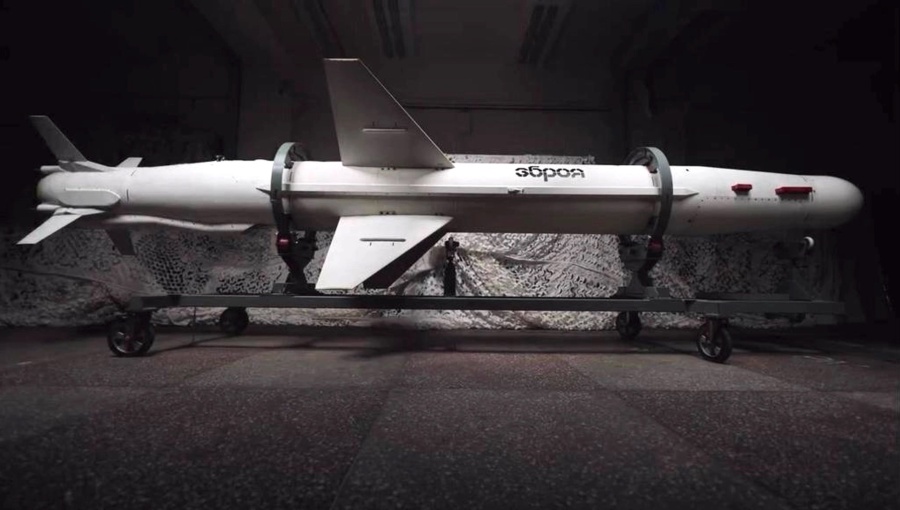
Ukraine has unveiled a new version of its domestically produced Neptune missile, the same weapon used to sink Russia’s Black Sea fleet flagship, the Moskva in April 2022, with a redesigned airframe, a significantly expanded range of up to 1,000 km and a bigger payload.
The updated missile was shown for the first time in a promotional video released by Ukrainian defence manufacturer Zbroya on August 25 to mark the country’s Independence Day. Displayed alongside other indigenous systems including the Bohdana howitzer and naval drones, the full-body footage reveals a visibly enlarged design compared to the original Neptune, The Kyiv Post reports.
Ukraine has rapidly upgraded its missile capacities this year as the drone war gives way to a missile war with Russia. Drones have dominated the fighting since the start of 2023, but recently Russia has increased its barrage of Ukraine using missiles four-fold. Ukraine has responded by developing its first long-range cruise missile, the Flamingo that has a range of 3,000km and carries around 1,250kg of explosive – ten-times more than regular drones. Currently, Ukraine is producing a reported seven Flamingos a month, approximately a tenth of Russia’s missile output.
Previously, Kyiv developed and tested its the Palyanytsia cruise missile that has a range of approximately 600-700 km, allowing it to target Russian military airfields. The Palyanytsia is a hybrid between a missile and a drone, which makes it unique and hard for Russian defences to counter but carries a much smaller payload. Despite the hype surrounding its introduction, the Palyanytsia does not seem to be in serial production and has not played an important role on the battlefield.
The Flamingo, on the other hand, could significantly shift the balance of power in Ukraine’s favour. Kyiv’s allies have been reluctant to supply Ukraine with powerful long-range missiles for fear of provoking a direct conflict between Nato and Russia. Last week, US Secretary for Defence Pete Hegseth introduced new restrictions on Ukraine’s use of US-supplied missiles, which all rely on US satellite data for navigation. However, there are no such restrictions on the use of Ukraine’s home-made missiles, which Kyiv has been using to target Russian refineries in particular and has caused a growing fuel crisis in Russia after refining throughput has been reduced by an estimated 10% in recent months.
Neptune specs
According to Ukrainian defence news outlet Militarnyi, the updated Neptune's larger body likely houses a bigger warhead and additional fuel capacity, giving it an extended operational range. “The missile shown in the video has a larger body, which would explain the updated missile’s stated range of 1,000 km,” Militarnyi reported.
Ukrainian President Volodymyr Zelenskiy confirmed in March 2025 that the Neptune upgrade had increased the system’s range from the 300km listed in a 2020 brochure to 1,000 km, The Kyiv Post reports. The missile was likely used in a long-range Ukrainian strike on the Russian naval base at Novorossiysk in May, a target located over 750km from launch points in Ukraine.
Ukraine has struck at least eight Russian refineries in August alone as well as the Druzhba oil pipeline that carries Russian oil from Siberia to Budapest and is now out of action for at least five days.
Defence analysts cited by Militarnyi suggest the enhancements may also include a new guidance system or terminal-phase targeting features such as an infrared homing sensor. Upgrade plans dating from 2023 included proposals to boost the warhead size from 150 kg to 350 kg, though the final specifications have not been disclosed, The Kyiv Post reports. The revised design also features larger stabilising fins, which may improve both range and in-flight manoeuvrability.
Initially developed as an anti-ship missile, the Neptune has since been adapted for land-attack missions, as Ukraine starts to expand its missile capabilities.
Will Ukraine’s new long-range Flamingo cruise missile put Russia on red alert?
Copyright Efrem Lukatsky/Copyright 2025 The AP. All rights reserved.
By Johanna Urbancik
Published on 26/08/2025
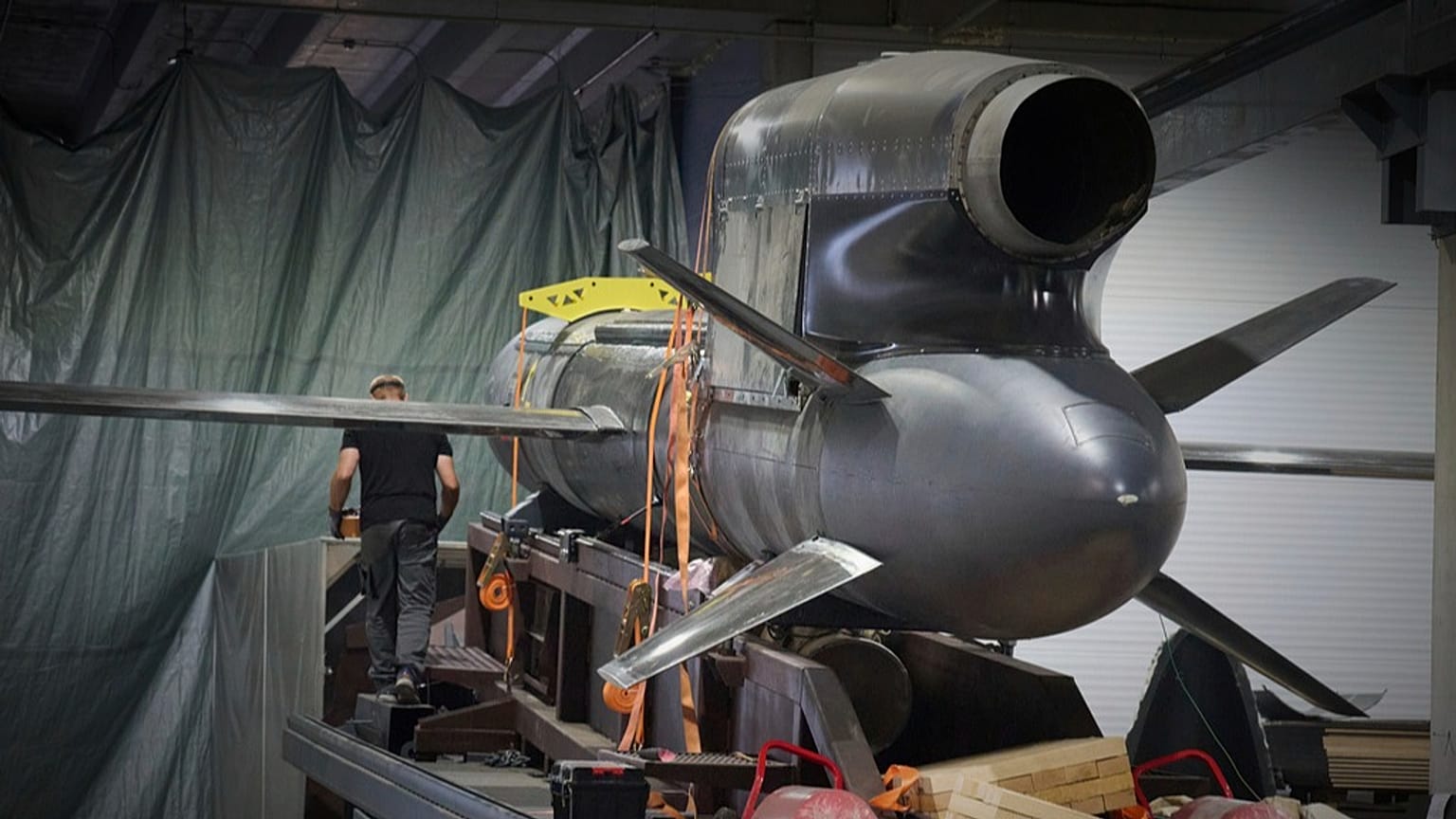
As Russia continues to unleash a major wave of airstrikes across Ukraine, Kyiv revealed a domestically made long-range cruise missile that could prove a game-changer in the war.
The FP-5 “Flamingo” missile is capable of travelling 3,000km and delivering a payload of 1,150kg, according to its maker, the Ukrainian defence start-up Fire Point.
The firm said it is producing roughly one Flamingo per day, and hoped to build capacity to make seven per day by October. That would equate to more than 200 missiles each month, or some 2,500 a year.
Ukrainian President Volodymyr Zelenskyy said last week that the Flamingo had undergone successful testing and should go into mass production by February at the latest.
"The missile has undergone successful tests. It is currently our most successful missile," he told reporters.
"By December, we’ll have more of them,” Zelenskyy told reporters. “And by the end of December or in January–February, mass production should begin.”
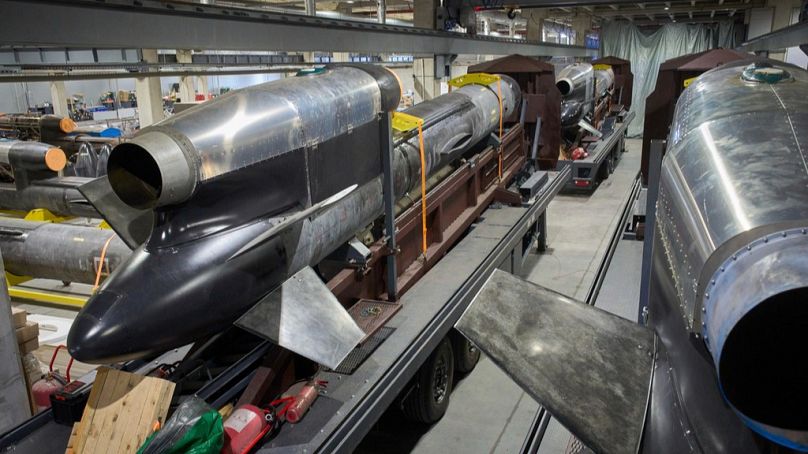
The Flamingo’s explosive capabilities greatly outweigh the long-range drones and mini-cruise missiles Ukraine currently employs, according to Fabian Hoffmann, a doctoral research fellow and missile expert at the University of Oslo in Norway.
The missile’s high terminal velocity, in combination with its heavy weight, means that the warhead penetrates deeper into the target before exploding, which significantly increases the destructive power, he wrote last week in his Substack entitled Missile Matters.
Second, the Flamingo’s large payload capacity produces a much wider lethal radius than existing Ukrainian missiles and drones, according to Hoffmann.
“Even achieving a steady monthly output of 30-50 missiles would give Ukraine a substantial supply of heavy cruise missiles that would likely have tangible effects on the war,” he wrote.
The unveiling of the Flamingo comes amid reports that the Pentagon has blocked Kyiv from using US-supplied long-range missiles to hit targets inside Russia, as US President Donald Trump tries to get his Russian counterpart Vladimir Putin to join peace talks.
Washington has stopped Ukraine from deploying the Army Tactical Missile Systems (ATACMS) against targets in Russia for several months, the Wall Street Journal reported on Saturday.
Speaking at a press conference the following day, Zelenskyy said that Ukraine could hit targets deep inside Russia without the need for coordination with Washington.
“As of today, we are using our domestically produced long-range weapons. And to be honest, we haven't been discussing such matters with the US lately," he said.
Controversy over Germany’s Taurus
Zelenskyy’s remarks about the Flamingo followed months of speculation over whether Ukraine would receive the arms it has long sought: Germany’s Taurus cruise missiles.
Equipped with stealth technology, the Taurus has a range of up to 500km, which would be able to reach targets deep in Russia from Ukrainian soil.
Ukraine has been asking Germany for the missiles to complement the long-range Storm Shadow missiles sent by the UK and France’s nearly identical Scalp cruise missiles.
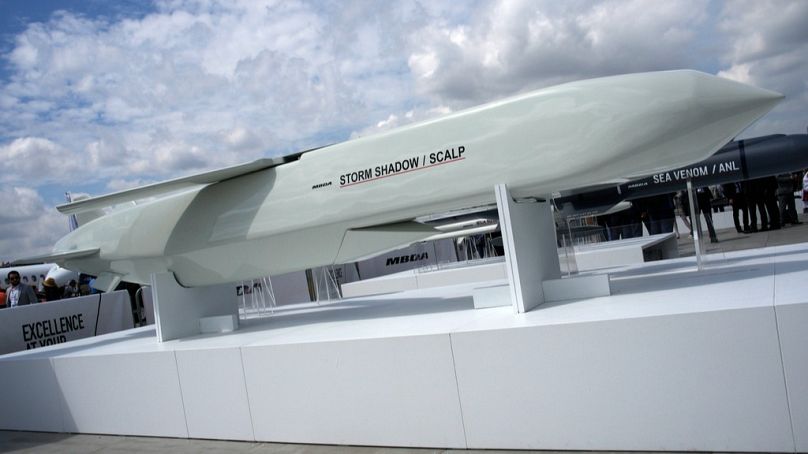
Germany is the second biggest provider of military aid to Ukraine after the US and has pledged this year to further ramp up its support.
However, ex-Chancellor Olaf Scholz refused to supply Ukraine with Taurus missiles because he did not want Germany to be directly involved in the war.
Austrian military expert Gustav Gressel told Euronews he believed the discussion around the Taurus in Germany was “a little absurd”.
Gressel pointed out that Scholz had said that the risk of escalation was significant, as were the training costs involved, even though the Ukrainians had already used the UK’s Storm Shadow “without it being the end of the world”.
‘Ukraine’s strongest security guarantee’
During the German election campaign, the country’s now-Chancellor Friedrich Merz signalled his intention to supply Ukraine with the Taurus missiles if he was elected.
In early July, Merz said that decision was still under consideration.
A fortnight later, German Defence Minister Boris Pistorius told the Financial Times that the country would not supply Ukraine with the Taurus missiles.
During Merz’s first official visit to Kyiv back in May, he said that the German government would stop disclosing details about military aid for Ukraine. The reason for this was “strategic ambiguity”, so that Russia would not know in advance which weapons were being supplied.
This was followed by an announcement that Berlin and Kyiv would work together to develop the industrial production of long-range missiles.
“Germany will finance the future production of long-range weapons systems in Ukraine,” the defence ministry said in a press release on 28 May.
"A considerable number of long-range weapons systems are to be produced in 2025. The weapon systems will be available to the Ukrainian armed forces quickly — the first ones can be deployed in just a few weeks.”
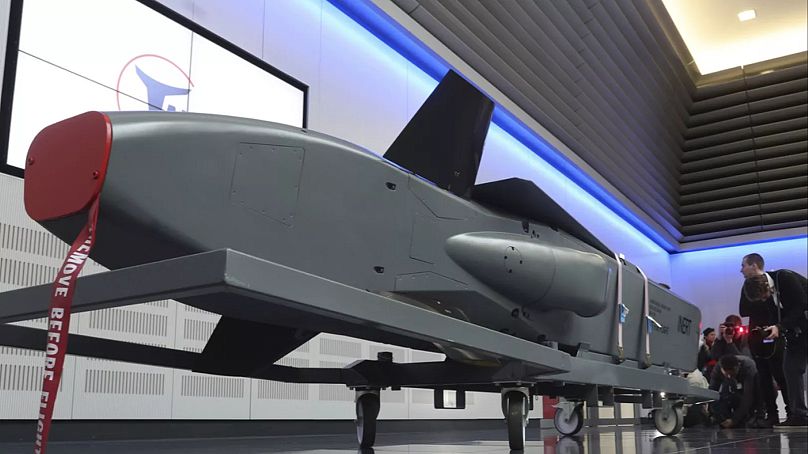
It is unclear whether the German government has co-financed the Flamingo cruise missile.
In response to a question from Euronews, a spokesperson for Germany’s defence ministry said that “for reasons of military security, no questions can be answered about individual weapons systems or support for individual commercial enterprises”.
Gressel — the military expert — said that although the Taurus is more difficult to detect on radar and more manoeuvrable than the Flamingo, the latter “has a far greater range and warhead, so it has a far greater effect on the target”.
Whether or not the Flamingo will ultimately change the nature of the war in Ukraine depends on the intel that Kyiv has about its targets, according to Gressel.
"Is the target strongly defended? Are there gaps in the Russian air defence? Where and when are Russian fighter patrols in the air that could intercept the missile? The more precisely you know this, the better you can plan missions," he explained.
For Hoffmann of the University of Oslo, the mass production of the Flamingo does not only have major implications for Russia’s ongoing war, but also Ukraine’s post-war deterrence.
“That is Ukraine’s strongest security guarantee,” Hoffmann said in a post on X. “If it can field 3,000 to 5,000 of these (and similar) missiles, ready within 24 to 48 hours to destroy upward of 25% of Russia’s economic output, further Russian aggression becomes untenable.”

No comments:
Post a Comment