Tailings could meet much of US critical mineral demand – study
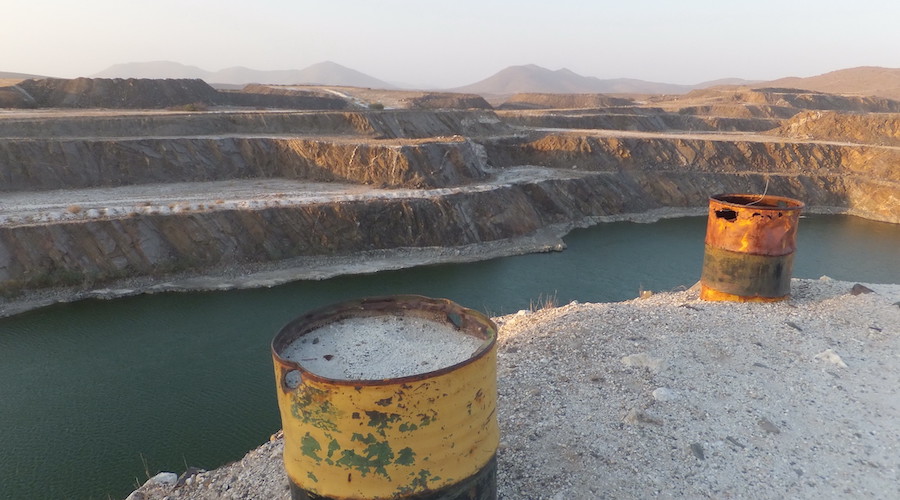
A new study from the Colorado School of Mines has found that the United States could meet much of its demand for critical minerals by recovering materials currently discarded in mining waste.

Published this week in Science, the analysis shows that nearly all critical minerals used in clean energy technologies, electronics, and defense applications are already present in ore processed at US mines. However, the majority of these materials end up in tailings and other waste streams rather than being refined for use.
The analysis highlights cobalt and germanium as prime examples. Recovering less than 10% of the cobalt already mined and processed but lost to waste streams would be sufficient to supply the entire US battery market, the authors assert. For germanium, reclaiming under 1% from existing zinc and molybdenum operations would eliminate the need for imports altogether.
The study examined 70 elements across US mining operations. Aside from platinum and palladium, the researchers found that all could theoretically be sourced domestically with improved recovery methods.
Elizabeth Holley, associate professor of mining engineering at Colorado School of Mines and lead author of the study, described mine tailings as a significant untapped resource. “We’re already mining these materials,” she said.
“The question is whether we capture them or throw them away.”
The team combined production data from federally permitted US mines with ore concentration data from the US Geological Survey and other international sources to estimate the amount of critical minerals lost in waste streams.
The findings highlight both a strategic opportunity and a challenge. While recovering minerals from tailings could reduce US dependence on foreign sources and lower the environmental footprint of mining, the researchers note that current market conditions often make byproduct recovery uneconomic. They suggest that additional research, development, and policy incentives will be needed to make large-scale recovery viable.
The study comes as the Trump administration is seeking to secure supplies of critical minerals needed for the energy transition, amid concerns about China’s dominant position in mineral production and processing.
US seeks to stockpile cobalt for first time in decades
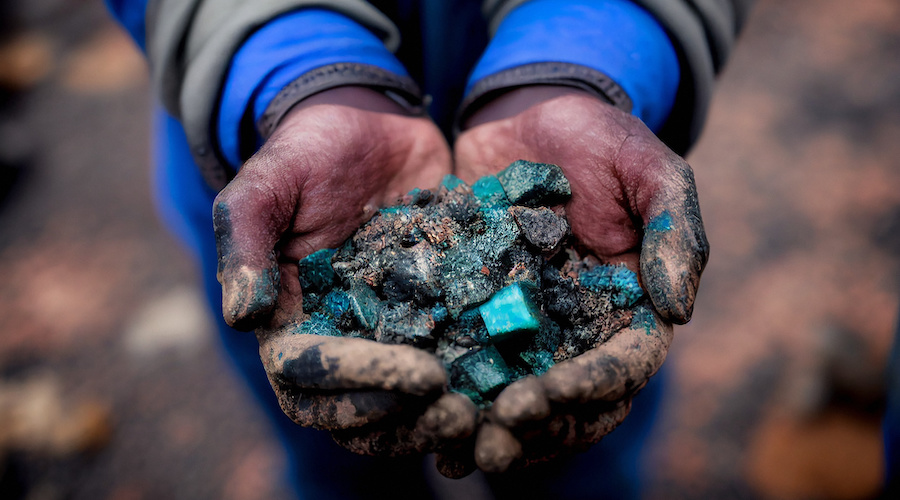
The US Defense Department is seeking to buy cobalt for its strategic stockpiles for the first time in decades, the latest move to bolster domestic supplies of critical metals.
The Defense Logistics Agency is seeking offers for up to 7,500 tons of cobalt over the next five years in a contract worth up to $500 million, according to tender documents published this week. It’s the first time the DLA has sought to buy cobalt since 1990, according to a person familiar with the purchase.
Demand for cobalt has risen dramatically in recent years because of its use in batteries, but it is also crucial for a range of applications in military systems. Cobalt-based alloys are used in munitions and jet engines, while the metal is also critical for making magnets used in flaps, landing gear and the flight control surface on an airplane.
The Pentagon’s purchase highlights a shift in government thinking about such metals and would be a major intervention in the cobalt market, accounting for about one sixth of non-Chinese supply of alloy-grade cobalt, according to a Bloomberg calculation. It comes after prices have already been driven higher by an export ban from the metal’s top producer, the Democratic Republic of Congo.
For many years, the DLA was a seller rather than a buyer of cobalt, as budget cuts in the 1990s and 2000s led it to sell off what had once been a giant stockpile of the metal built up during the Cold War.
In recent years, however, securing supply chains for metals like cobalt has become a political priority, as officials seek to reduce reliance on China. Beijing dominates processing of cobalt and other battery metals, and has built up a significant state stockpile of its own through the National Food and Strategic Reserves Administration, more commonly known as the State Reserve Bureau.
The Pentagon did not immediately respond to a request for comment.
In its tender documents, which were first reported by Fastmarkets, the DLA said it was seeking offers for alloy-grade cobalt supplies from only three producers: units of Vale SA in Canada, Sumitomo Metal Mining Co. in Japan, and Glencore Plc’s Nikkelverk plant in Norway. It asked suppliers to propose fixed prices for the supplies over five years.
Traders said the move was likely to drive prices of cobalt higher, particularly for alloy-grade metal, which is a small subset of the overall market. Cobalt has jumped 42% this year after the government of the Democratic Republic of Congo imposed an export ban to prop up prices.
Still, it wasn’t clear whether the DLA would be successful in buying the full 7,500 tons. Traders said there were very few suppliers that would be able to meet the DLA’s requirements. The tender documents stated that the government was intending to spend a minimum of $2 million and a maximum of $500 million on the contract. At current prices, 7,500 tons of cobalt is worth about $313 million.
The solicitation for cobalt comes amid a flurry of published tenders by the Pentagon in less than a month, an indication that the department’s arm that handles critical supply chain purchases is charging ahead with its newly minted spending power authorized under President Donald Trump’s signature tax-and-spending legislation. That fiscal package appropriated about $2 billion for the Defense Logistics Agency to purchase materials the US deems essential and critical to national security.
The Biden administration had also sought to bolster procurement of critical minerals, and in late 2023 Congress passed a new National Defense Authorization Act which gave the DLA greater freedom to make long-term purchases without the congressional approval it had previously needed. It also guaranteed $1 billion a year in funding.
The cobalt tender is one of more than a half a dozen tenders for critical materials published since July 30, and includes niobium, graphite and antimony — industries dominated by China.
The Defense Department has published more tenders to acquire materials this fiscal year than during any since the Cold War ended.
(By Jack Farchy, Joe Deaux and Annie Lee)
Vulcan Elements enters US rare earth magnet manufacturing race
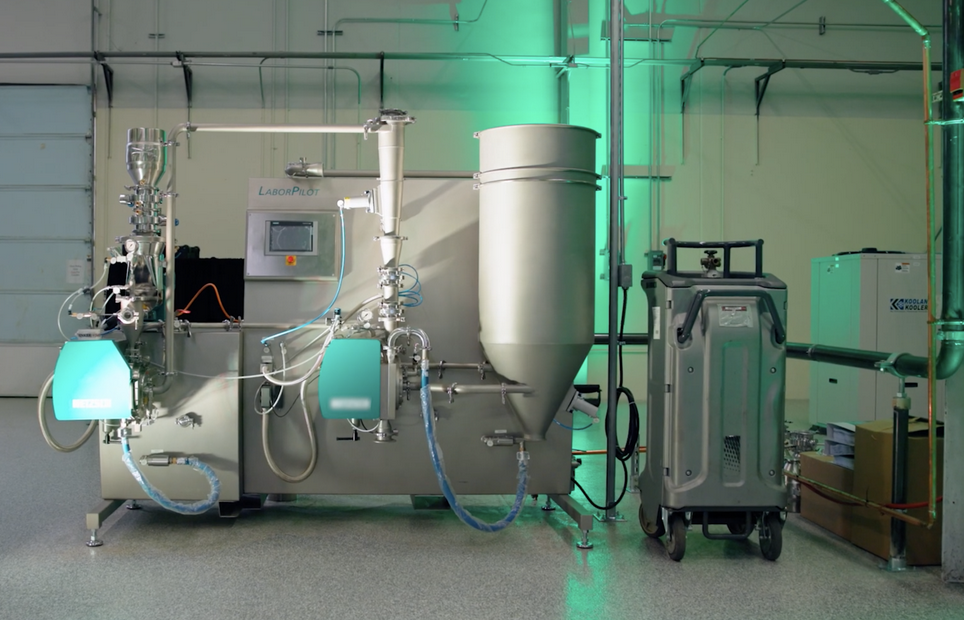
When US-based rare earth magnet manufacturer Vulcan Elements announced this week it signed a supply deal with ReElement Technologies, the financial terms were undisclosed, but the companies said that the price is “significantly below” the floor of $110 per kilogram that the US Department of Defense guaranteed to MP Materials last month.
Rare earth metals are essential in heavy magnets that power electric vehicles, consumer electronics and military applications, and MP Materials is the only US producer, out of its Mountain Pass mine in California.
While China dominates the global rare earth industry, controlling the vast majority of the world’s rare earth processing and refining capacity, Vulcan Elements’ vision is to provide domestic supply with pricing viable in the US market and beyond.
“This pricing will enable Vulcan to be competitive in global markets,” Vulcan CEO John Maslin told Reuters. “We wanted to make sure the unit economics made sense.”
Last week, the privately-held North Carolina-based start up unveiled it has raised $65 million in Series A funding to scale up its planned buildout of a commercial-scale facility in Durham.
That announcement came only a day after Vulcan posted on its website that its domestic rare earth magnet manufacturing capability won the Advanced Manufacturing Innovation for Maritime Readiness Challenge with support from the US Department of Defense’s Defense Industrial Base Consortium.
Over 400 manufacturing companies competed for the award, but Vulcan has, until now, avoided the spotlight.
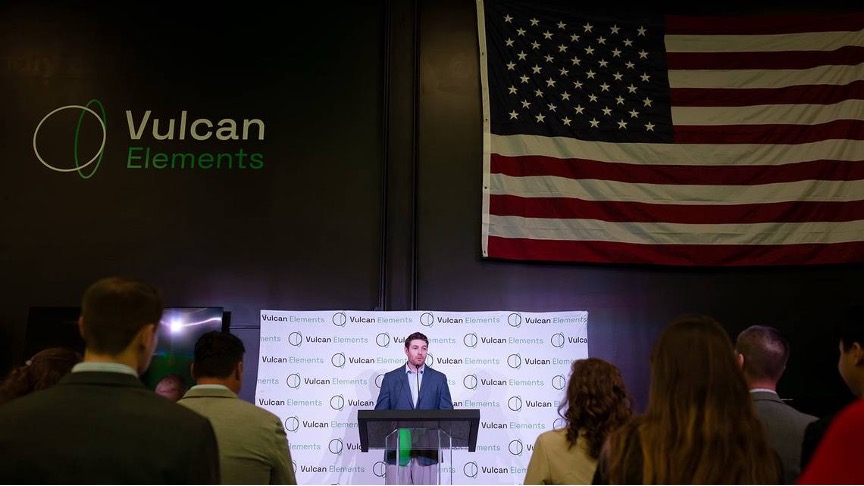
“We’ve been fairly quiet intentionally, and that’s because we want to put our money where our mouths are,” Vulcan Elements CEO John Maslin told MINING.com in an interview.
“We want to execute. And now that we’re doing that, we have a lot of additional work to do where we have to execute much further at a much larger scale,” he said. “We want to show and not just tell. So now is the right time.”
The company is specifically producing neodymium iron boron magnets – and boron is a big blind spot in the US market. As with many other critical minerals, efforts are underway to re-shore supply to the US.
Maslin, a former supply chain officer with the Navy’s nuclear energy program, saw the gap working across nuclear shipbuilding and submarine programs.
“My job was effectively working with the government and appropriations and then taking that and helping finance and procure materials and components for nuclear reactors,” Maslin said.
“I was thinking a lot about the critical components that were going to be fundamental, not just for defense, but for critical economic industries, the 21st century technology race – semiconductors, batteries, rare earth magnets,” Maslin remembered.
“The way that we think about it internally is if you think about your own body, a semiconductor is like your brain, a battery is like your heart, and a rare earth magnet is like your spine. It converts electricity into motion. Everyone was focused on semiconductors and batteries at the time.
“No one was thinking about the third leg of that stool, which is a rare earth magnet. The next generation technologies, either commercially or defense related, drones, data centers that enable AI, robotics, hybrid electric vehicles, et cetera, satellites, aerospace applications, you need all three.”
“But functionally, we knew that China made over 90% of the global supply and that the US made less than 1% and that the demand for these magnets was going exponential, and there needed to be diversity and resiliency in the West.”
Maslin said that all of Vulcan Elements’ materials, whether rare earths or the electrolytic iron or the boron or ferroboron, have traceability down to the mine where that’s coming from, and that feedstock is sourced from US and allied partners.
One of the first rare earth magnetics labs in the US in decades
Maslin met Vulcan’s co-founder, Peter Kulik, who had opened one of the first rare earth magnetics labs in the US in two decades at the University of Central Florida.
“We said, this is a problem that is too important not to address. We went to the Department of Energy, and we validated our own chemistries with their scientists,” Maslin said. “We made several different grades of magnets, then built a pilot facility.”
The plan was to have the plant online by Q1 2025, fully decoupled from China down to the equipment, software, and material level.
“We opened our doors on March 31st of this year,” Maslin said. “It is a blend of defense and commercial across several different verticals and industries. We have started to deliver and qualify magnets with customers. 100% of our material is US or allied. We either get it from recycled end-of-life magnets, or directly from miners in the US and Canada and Australia, parts of Africa, parts of South America. Nothing from an entity of concern.”
The company is now moving to large-scale commercial, doing a multi-state site search.
“We’re going to go to several hundred tons over the next 18 to 24 months. The goal is to have several thousand tons online by the end of this decade,” Maslin said.
Vulcan is currently producing a mix of samples and low-volume production.
“A lot of it right now is qualification, making sure that we’re hitting the grades that we’re actually delivering the products that customers need. We’re at the point where we’re getting to actually do that with our customers who are very eager to have resilience in their supply chain.
“We have a lot of work to do to deliver even higher performing grades – but we’re moving with the speed and seriousness that this mission and this moment need.”

No comments:
Post a Comment