Steerprop to Supply CRP Propulsion for Aerospace Center Research Vessel
[By: Steerprop]
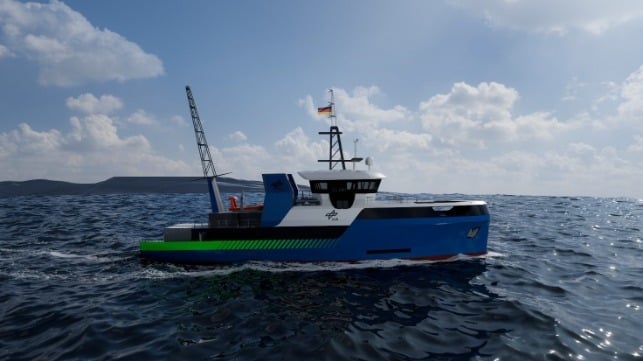
Finnish propulsion specialist Steerprop has been selected to deliver its new Next Generation of Contra-Rotating Propeller (CRP) azimuth propulsions to Lloyd Werft Bremerhaven GmbH, which is building a state-of-the-art research vessel for the German Aerospace Center (DLR).
The new vessel, measuring 48 meters in length and 11 meters in breadth, will serve as a floating laboratory for maritime research. Designed to study, test, and operate on different maritime energy systems under real-life operating conditions, the vessel will become a unique platform for advancing sustainable shipping solutions. It will primarily be used for research voyages lasting from one to several days in the North Sea and Baltic Sea, accommodating up to 20 people onboard.
First delivery of Steerprop’s Next Generation of CRP
This order marks the first delivery of Steerprop’s Next Generation of CRP technology, representing a major leap in propulsion efficiency. The scope includes two Steerprop 14 CRP LM units, each rated at 750 kW and designed to Ice Class 1A standards.
The new CRP design introduces pressure lubrication for smaller applications, likely making this vessel the first in the world to implement such a solution. Pressure lubrication minimizes mechanical losses, enabling mechanical efficiency up to 98.5% compared to the typical 95%, and enabling superior fuel economy and performance.
R&D-driven propulsion optimization
Prior to the contract award, Steerprop conducted an extensive R&D study to optimize the vessel’s propulsion concept. Model tests with the design propulsors confirmed that the tailored solution would fully support the vessel’s demanding mission profile.
“Working in close cooperation with the owner and shipyard was crucial to this project,” said Juho Rekola, Director, Sales & Project Management, Steerprop. “We are proud that our Next Generation of CRP technology will contribute to groundbreaking research on energy systems in maritime industry.”
A floating laboratory for the maritime industry
Beyond energy system trials, the research vessel will provide extensive measuring capabilities, including load, torque, thrust, and ice loads. This makes it not only a platform for DLR’s work but also a valuable resource for Steerprop, other suppliers, and academic partners to conduct independent research.
The vessel’s unique role as a fuel laboratory at sea aligns with the maritime industry’s push toward decarbonization, providing vital data on energy efficiency, fuel performance, and operational impacts in real-world conditions.
The order for Steerprop was confirmed in March 2025. Construction will be carried out at Lloyd Werft Bremerhaven GmbH, with Steerprop delivering the propulsion units as part of its comprehensive scope of supply.
This collaboration underscores Steerprop’s commitment to developing propulsion solutions that meet the efficiency and sustainability challenges of tomorrow’s shipping industry.
The products and services herein described in this press release are not endorsed by The Maritime Executive.
NYK Demonstrates First Liquefied Ammonia STS Contributing to Supply Chain
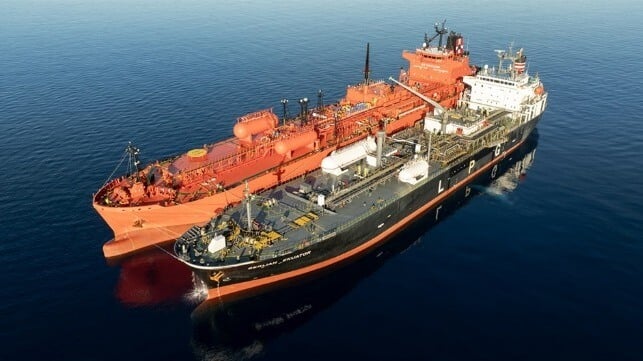
NYK reports it recently completed its first ship-to-ship transfer involving liquified ammonia. Building the expertise and transfer capabilities for the highly toxic material is seen as a critical element in building the structure to support the growth of ammonia transport and its use as a marine fuel.
With demand expected to increase, NYK says that the STS method, which is not constrained by port size or onshore equipment, is attracting attention as a flexible supply method compared to conventional land-based cargo handling methods. Currently, the regulatory environment is still being developed for ammonia, while several initiatives are working to establish the safety protocols for the handling of ammonia.
Beyond its existing applications in fertilizers and chemicals, ammonia, NYK notes, is emerging as a next-generation clean energy source. It is being developed as a carbon-free combustion alternative as well as an efficient energy carrier. Ammonia cracking is seen as a key means of transporting hydrogen. Ammonia is expected to be used in various applications, including marine fuel.
“The success of this operation marks a significant milestone in developing an international supply network for ammonia,” reports NYK. “With the support of Trammo's longstanding experience and their designated STS specialist provider, International Fender Providers, we successfully leveraged our advanced safety management system and refined STS operational know-how to safely transfer the entire cargo of liquefied ammonia.”
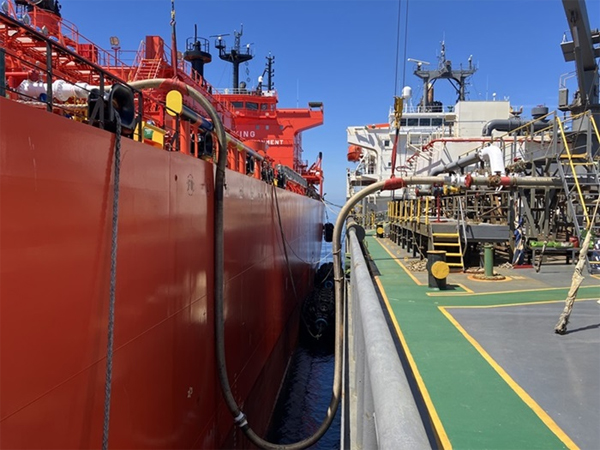
The transfer operation took place on September 2 off the coast of Ceuta, Spain. It involved the ammonia carrier Berlian Ekuator (26,776 dwt) owned by NYK and time-chartered by Mitsui & Co. Built in 2004, the vessel is registered in Panama. The liquified ammonia was transferred to the ammonia carrier Eco Enchanted (30,062 dwt), a Greek-owned vessel operated by Trammo, a leading ammonia trader.
Approximately 23,000 MT of ammonia were transferred between the two vessels. It was conducted with an STS hose connection.
NYK reports it will build on the insights and experience gained from this STS operation to further advance next-generation fuels and strengthen safe maritime transportation systems. It is part of its efforts to grow this sector of shipping and to contribute to the broader goal of achieving a decarbonized society.

No comments:
Post a Comment