What to know about Argentina's mid-term vote, a key test for Trump ally Milei
Argentine President Javier Milei’s image as a straight-talking outsider has been hurt by a series of scandals and setbacks ahead of mid-term congressional elections on Sunday. Opposition parties have gained support after US President Donald Trump warned that US assistance to Argentina was contingent on Milei’s victory in the vote.
Issued on: 26/10/2025
By: FRANCE 24
Video by: FRANCE 24
Argentine President Javier Milei’s image as a straight-talking outsider has been hurt by a series of scandals and setbacks ahead of mid-term congressional elections on Sunday. Opposition parties have gained support after US President Donald Trump warned that US assistance to Argentina was contingent on Milei’s victory in the vote.
Issued on: 26/10/2025
By: FRANCE 24
Video by: FRANCE 24
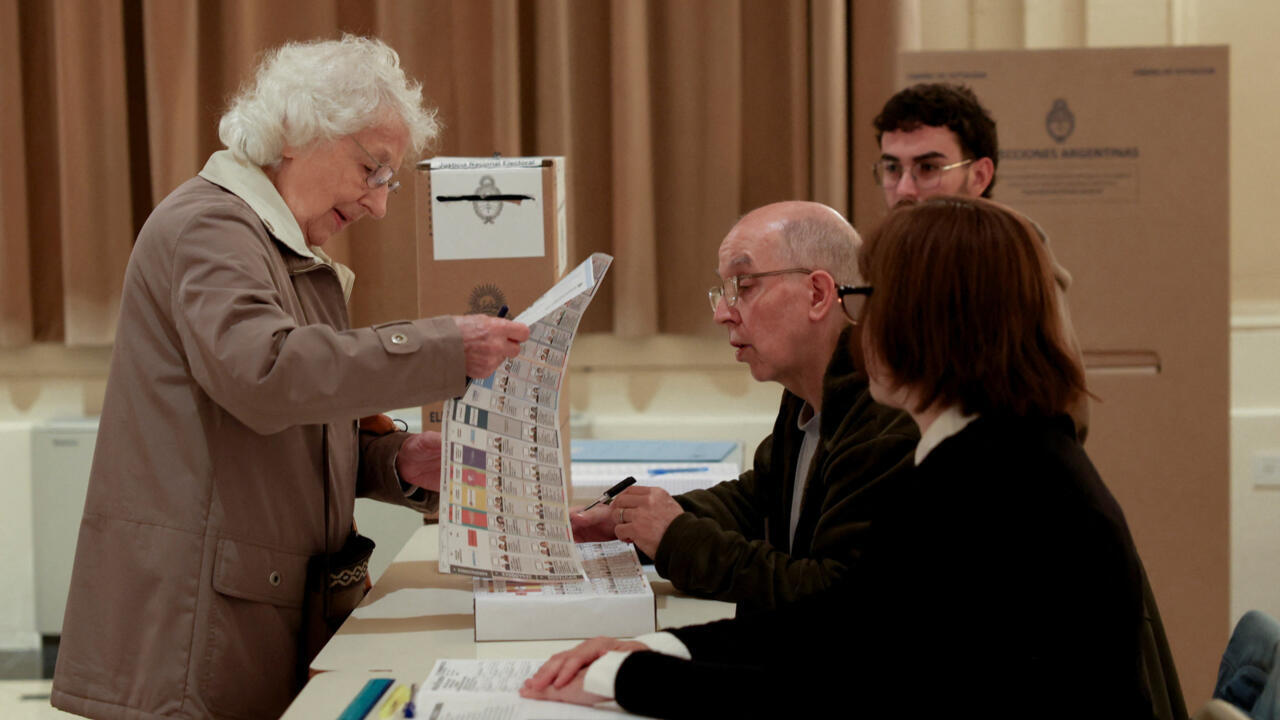
Voting gets under way in Argentina's midterm elections at a polling station in Buenos Aires on October 26, 2025. © Cristina Sille, Reuters
04:53
Anyone who watched US President Donald Trump vow to condition financial aid to cash-strapped Argentina on the outcome of a “very big” and “very important” vote in the South American country would be forgiven for thinking that his close ideological ally, Argentine President Javier Milei, was up for reelection.
But no. The vote that Trump was talking about earlier this month is, in fact, a midterm election for less than half of the Argentine congress.
Now the explosive comments, combined with a dizzying series of scandals and setbacks for Milei, have cranked up the pressure on Argentina’s libertarian president and transformed Sunday’s limited vote into a major political test that could help determine the fate of Milei’s free-market experiment.
Read more Trump warns US aid to Argentina will end if ally Milei loses key elections
At his closing campaign rally late Thursday in the port city of Rosario, Milei blamed his problems on a hostile legislature and pleaded with his supporters to prove his critics wrong.
“Despite a Congress that repeatedly attacked our program, we arrived at the elections on our feet,” Milei said. “We have the opportunity to change the face of Congress and move forward with the reforms Argentina needs.”
At the start of the year, pollsters and pundits were predicting a smashing success for Milei in the midterms.
His huge cuts to state spending delivered Argentina’s first fiscal surplus in nearly 15 years and pulled down monthly inflation from 25.5 percent to 2 percent. Argentines celebrated relief from ever-rising prices and took comfort in a strong peso that made it cheaper for them to snap up imported goods and vacation abroad.
Read moreArgentina's Congress curbs Milei’s decree powers in major blow to libertarian leader
With his approval ratings high, Milei took victory laps through Europe, Latin America and, most frequently, Trump’s Mar-a-Lago club, railing against the evils of socialism and the corruption of the political elite. He pushed key deregulation laws through an opposition-dominated Congress, allying with the right-wing PRO party of former President Mauricio Macri and striking deals with moderate governors.
How quickly the mood turned.
Milei’s aura of infallibility first began to crack in February, when he promoted a dodgy memecoin on his social media account that quickly collapsed, leading to $250 million in losses for investors. Then in August, Milei’s powerful sister was accused of taking bribes from a government medicine supplier. She denies wrongdoing.
The latest blow came earlier this month, when Milei’s leading candidate in Buenos Aires province, José Luis Espert, dropped out of the midterm race after admitting he received $200,000 from a businessman indicted in the US for drug trafficking. He says it was for consulting services.
The controversies have hurt Milei’s reputation as a straight-talking outsider determined to tear down the corrupt establishment, experts say, particularly at this time of harsh austerity.
“It was the first wake-up call when people started to ask, maybe (Milei and Karina) are asking us to make sacrifices that they’re not making themselves,” said Eugenia Mitchelstein, the chair of the social sciences department at Buenos Aires’s San Andrés University.
Tactical errors compounded matters. Milei ran an aggressive campaign strategy in some two dozen provincial elections in recent months that pitted a slew of unknowns from his scrappy libertarian party against more established rivals.
His decision to forgo any attempt at coalition-building alienated potential political allies, who punished Milei by passing spending measures in Congress and overturning his vetoes.
The run-up to the midterms – in which half the seats in the lower house of Congress and a third of the Senate are up for grabs – has also been rough. Although veteran politician Diego Santilli is now at the top of the party’s Buenos Aires list after Espert stood down over the scandal, voters will still see Espert on the ballot Sunday after electoral authorities ruled it was too late to print new ones.
The other Buenos Aires candidate, Karen Reichardt, is a former model and actor who has recently come under fire for old social media posts attacking national soccer hero Lionel Messi and insulting her political enemies with racially insensitive language. She did not respond to a request for comment.
Milei’s first major electoral defeat – in which his party lost Buenos Aires province, home to 40% of the population, to the incumbent populist Peronists by a landslide – revealed waning public support as Argentines reeling from two years of cutbacks grow impatient with a contracting economy, falling wages and rising unemployment.
The loss tipped already jittery markets over the edge. Investors dumped Argentine bonds and sold off the peso, prompting the central bank to burn through its foreign currency reserves to prop up the currency.
Read moreTrump boosts Argentina's Milei with $20 billion economic lifeline as US buys pesos
That’s when Trump and US Treasury Secretary Scott Bessent stepped in to save their closest political ally in the region.
The Treasury bought up pesos – the currency that even Argentines distrust – and confirmed a $20 billion swap line to Argentina’s central bank on what Bessent called a “bridge” to the midterms. Trump said the US would even boost beef imports from Argentina to bring down US meat prices, and Bessent said he was working on another $20 billion loan from private banks.
Jamie Dimon, the chief executive of JPMorgan Chase, was in Buenos Aires this week and expected to meet with Milei later Friday.
But not even such dramatic moves from the world’s biggest economy have restored faith in the famously volatile peso. Argentine investors – who can more easily take money out of Argentina since Milei’s government scrapped capital controls this year – continued ditching pesos. The currency slid to a new record low of 1,476 per dollar Monday.
“It’s the managerial class changing their pesos furiously into dollars who are sabotaging Milei,” said Christopher Ecclestone, a strategist with investment bank Hallgarten & Company.
Washington’s multibillion-dollar rescue of Argentina has unleashed backlash across the political spectrum – and the Western Hemisphere.
In the US, Democratic and Republican lawmakers, farmers, ranchers and Trump supporters adamant about the president’s “America first” doctrine questioned the merits of showering money on a serial defaulter and rival agricultural exporter.
In Argentina, Trump’s warning that US assistance was contingent on Milei’s victory in the vote breathed new life into the opposition Peronist party, which urged Argentines long wary of US interventionism to punish Milei on Sunday.
“Compatriots, Argentina is a country too great and dignified to depend on the whims of a foreign leader,” said former Peronist President Cristina Fernández de Kirchner in a video message Thursday from her Buenos Aires apartment, where she’s serving out a six-year sentence for corruption.
Markets reeled as investors fretted that the US aid might not come at all.
Consultants tried to parse Trump’s cryptic demand that Milei clinch a victory in the midterms. Does that mean Milei is increasing his party’s tiny congressional minority even a bit? Does that mean securing at least 35 percent of the vote – the share that experts agree Milei needs to defend his vetoes and push through key reforms?
With only some congressional seats up for renewal, a landslide win for Milei’s party wouldn’t give it a majority in Congress.
Even Milei’s supporters took to social media to express unease, with many attacking then-Foreign Minister Gerardo Werthein for mishandling the situation. Werthein tendered his resignation without explanation late Tuesday.
Protesters rallied in front of the US Embassy in Buenos Aires on Wednesday, banging pots and setting American flags alight.
(FRANCE 24 with AP)
04:53
Anyone who watched US President Donald Trump vow to condition financial aid to cash-strapped Argentina on the outcome of a “very big” and “very important” vote in the South American country would be forgiven for thinking that his close ideological ally, Argentine President Javier Milei, was up for reelection.
But no. The vote that Trump was talking about earlier this month is, in fact, a midterm election for less than half of the Argentine congress.
Now the explosive comments, combined with a dizzying series of scandals and setbacks for Milei, have cranked up the pressure on Argentina’s libertarian president and transformed Sunday’s limited vote into a major political test that could help determine the fate of Milei’s free-market experiment.
Read more Trump warns US aid to Argentina will end if ally Milei loses key elections
At his closing campaign rally late Thursday in the port city of Rosario, Milei blamed his problems on a hostile legislature and pleaded with his supporters to prove his critics wrong.
“Despite a Congress that repeatedly attacked our program, we arrived at the elections on our feet,” Milei said. “We have the opportunity to change the face of Congress and move forward with the reforms Argentina needs.”
At the start of the year, pollsters and pundits were predicting a smashing success for Milei in the midterms.
His huge cuts to state spending delivered Argentina’s first fiscal surplus in nearly 15 years and pulled down monthly inflation from 25.5 percent to 2 percent. Argentines celebrated relief from ever-rising prices and took comfort in a strong peso that made it cheaper for them to snap up imported goods and vacation abroad.
Read moreArgentina's Congress curbs Milei’s decree powers in major blow to libertarian leader
With his approval ratings high, Milei took victory laps through Europe, Latin America and, most frequently, Trump’s Mar-a-Lago club, railing against the evils of socialism and the corruption of the political elite. He pushed key deregulation laws through an opposition-dominated Congress, allying with the right-wing PRO party of former President Mauricio Macri and striking deals with moderate governors.
How quickly the mood turned.
Milei’s aura of infallibility first began to crack in February, when he promoted a dodgy memecoin on his social media account that quickly collapsed, leading to $250 million in losses for investors. Then in August, Milei’s powerful sister was accused of taking bribes from a government medicine supplier. She denies wrongdoing.
The latest blow came earlier this month, when Milei’s leading candidate in Buenos Aires province, José Luis Espert, dropped out of the midterm race after admitting he received $200,000 from a businessman indicted in the US for drug trafficking. He says it was for consulting services.
The controversies have hurt Milei’s reputation as a straight-talking outsider determined to tear down the corrupt establishment, experts say, particularly at this time of harsh austerity.
“It was the first wake-up call when people started to ask, maybe (Milei and Karina) are asking us to make sacrifices that they’re not making themselves,” said Eugenia Mitchelstein, the chair of the social sciences department at Buenos Aires’s San Andrés University.
Tactical errors compounded matters. Milei ran an aggressive campaign strategy in some two dozen provincial elections in recent months that pitted a slew of unknowns from his scrappy libertarian party against more established rivals.
His decision to forgo any attempt at coalition-building alienated potential political allies, who punished Milei by passing spending measures in Congress and overturning his vetoes.
The run-up to the midterms – in which half the seats in the lower house of Congress and a third of the Senate are up for grabs – has also been rough. Although veteran politician Diego Santilli is now at the top of the party’s Buenos Aires list after Espert stood down over the scandal, voters will still see Espert on the ballot Sunday after electoral authorities ruled it was too late to print new ones.
The other Buenos Aires candidate, Karen Reichardt, is a former model and actor who has recently come under fire for old social media posts attacking national soccer hero Lionel Messi and insulting her political enemies with racially insensitive language. She did not respond to a request for comment.
Milei’s first major electoral defeat – in which his party lost Buenos Aires province, home to 40% of the population, to the incumbent populist Peronists by a landslide – revealed waning public support as Argentines reeling from two years of cutbacks grow impatient with a contracting economy, falling wages and rising unemployment.
The loss tipped already jittery markets over the edge. Investors dumped Argentine bonds and sold off the peso, prompting the central bank to burn through its foreign currency reserves to prop up the currency.
Read moreTrump boosts Argentina's Milei with $20 billion economic lifeline as US buys pesos
That’s when Trump and US Treasury Secretary Scott Bessent stepped in to save their closest political ally in the region.
The Treasury bought up pesos – the currency that even Argentines distrust – and confirmed a $20 billion swap line to Argentina’s central bank on what Bessent called a “bridge” to the midterms. Trump said the US would even boost beef imports from Argentina to bring down US meat prices, and Bessent said he was working on another $20 billion loan from private banks.
Jamie Dimon, the chief executive of JPMorgan Chase, was in Buenos Aires this week and expected to meet with Milei later Friday.
But not even such dramatic moves from the world’s biggest economy have restored faith in the famously volatile peso. Argentine investors – who can more easily take money out of Argentina since Milei’s government scrapped capital controls this year – continued ditching pesos. The currency slid to a new record low of 1,476 per dollar Monday.
“It’s the managerial class changing their pesos furiously into dollars who are sabotaging Milei,” said Christopher Ecclestone, a strategist with investment bank Hallgarten & Company.
Washington’s multibillion-dollar rescue of Argentina has unleashed backlash across the political spectrum – and the Western Hemisphere.
In the US, Democratic and Republican lawmakers, farmers, ranchers and Trump supporters adamant about the president’s “America first” doctrine questioned the merits of showering money on a serial defaulter and rival agricultural exporter.
In Argentina, Trump’s warning that US assistance was contingent on Milei’s victory in the vote breathed new life into the opposition Peronist party, which urged Argentines long wary of US interventionism to punish Milei on Sunday.
“Compatriots, Argentina is a country too great and dignified to depend on the whims of a foreign leader,” said former Peronist President Cristina Fernández de Kirchner in a video message Thursday from her Buenos Aires apartment, where she’s serving out a six-year sentence for corruption.
Markets reeled as investors fretted that the US aid might not come at all.
Consultants tried to parse Trump’s cryptic demand that Milei clinch a victory in the midterms. Does that mean Milei is increasing his party’s tiny congressional minority even a bit? Does that mean securing at least 35 percent of the vote – the share that experts agree Milei needs to defend his vetoes and push through key reforms?
With only some congressional seats up for renewal, a landslide win for Milei’s party wouldn’t give it a majority in Congress.
Even Milei’s supporters took to social media to express unease, with many attacking then-Foreign Minister Gerardo Werthein for mishandling the situation. Werthein tendered his resignation without explanation late Tuesday.
Protesters rallied in front of the US Embassy in Buenos Aires on Wednesday, banging pots and setting American flags alight.
(FRANCE 24 with AP)
Will Trump’s bail-out be enough for Milei?
Saturday 25 October 2025, by Martin Hache
On Sunday 26 October 2025 the mid-term legislative elections will take place in Argentina. The far-right president was in danger of suffering a major defeat. But his friend Trump came to his rescue.
In Argentina, economic issues are central to winning or losing an election. The entire population follows the evolution of the dollar’s quotation in the media every day. The inflation rate is now at only 2.1% monthly, after a peak of 25% in December 2023. After two years of brutal austerity policies that had caused inflation, economic growth and purchasing power to fall, the trend was once again on the rise, and this risked causing an economic crisis before the elections.
To avoid this, Milei and Trump reached an agreement to stop the rise in the dollar’s quotation, which would have led to a surge in inflation. To do this, the United States will buy pesos worth $20 billion through a currency swap. But this rescue, which is clearly political, may prove insufficient.
A defeat and a scandal
In the Buenos Aires provincial elections for the Provincial Assembly, Milei suffered a heavy defeat despite his alliance with the right-wing party of former President Mauricio Macri. In the most populous province, the government alliance won 34%, ahead of Peronism at 47%. This result portends an unfavourable outcome for Milei in October.
In addition, there is a corruption and drug trafficking scandal that has affected the president: one of his first supporters and the head of the list for the legislative elections, deputy José Luis Espert, received payments from a narco boss who was recently arrested. After procrastination, he gave up his candidacy, for fear of adding to the electoral defeat.
Small goals, big risks
But Milei has little to lose, apart from his pride. The alliance with Macri’s party gives him a sufficient floor to be able to govern. These mid-term legislative elections involve the renewal of the seats elected four years ago, when he was still unknown and had obtained only eight deputies. Thus, even with a defeat, La Libertad Avanza will gain in the number of deputies.
His objective is in no way to have a majority of the assembly, or even a relative majority. He simply aims to secure a third of the seats in one of the chambers. This would be enough for him to govern easily, for it takes two-thirds of each chamber to overturn presidential decrees and vetoes. He will thus be able to continue, as he has done for the past two years, to govern with the authoritarianism that a constitution even more presidentialist than that of France allows him.
Translated by International Viewpoint from l’Anticapitaliste.
Attached documentswill-trump-s-bail-out-be-enough-for-milei_a9233.pdf (PDF - 904.4 KiB)
Extraction PDF [->article9233]
Argentina
China and the IMF, supported by BRICS+, provided a lifeline to Javier Milei’s far-right government in Argentina
Mobilisations in Argentina: Brief considerations on the current political turmoil
Cristina Kirchner condemned and banned from election
Argentina: opposition to Milei revives
Argentina: Milei, the crypto-presidential scam and the crisis of legitimacy
Martin Hache is a militant of the NPA, originally from Argentina.
International Viewpoint is published under the responsibility of the Bureau of the Fourth International. Signed articles do not necessarily reflect editorial policy. Articles can be reprinted with acknowledgement, and a live link if possible.

No comments:
Post a Comment