How Kabul and Islamabad’s Non-Cooperation has Turned a Terrorism Threat into a Multi-Faceted Regional Crisis.
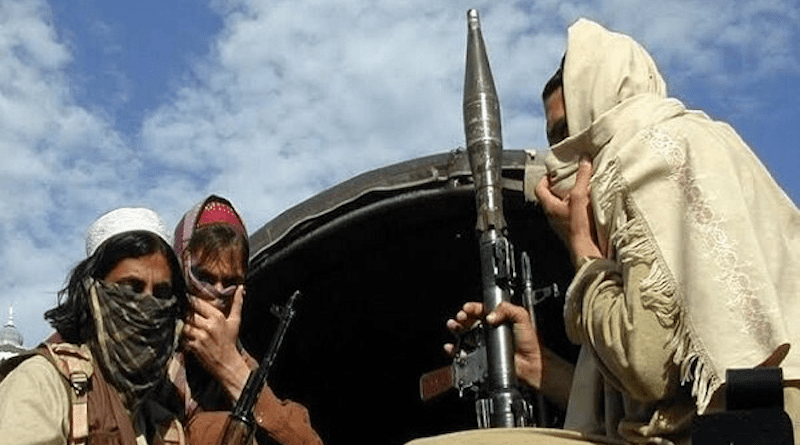
Members of Tehrik-i-Taliban Pakistan (TTP). Photo Credit: Mehr News Agency
October 20, 2025
By Farahnaz Amini
The Taliban’s ascension to power in Afghanistan in 2021 affected the area’s most complicated geopolitical relationship: the unstable relationship between Kabul and Islamabad. This analysis will show that the deeply divergent interests between the Afghan Taliban and Pakistan regarding the containment of the terrorist group Tehrik-i-Taliban Pakistan (TTP) has become a full blown regional security crisis. The TTP is seen by Pakistan as a direct threat to its sovereignty and expected that its former ally (the Taliban) would take action against TTP. However, the Taliban has been unwilling to take military action, due to ideological, ethnic, and political factors, and instead has created a sanctuary in eastern Afghanistan for the TTP.
This has shifted Pakistan’s long-held policy of creating a “strategic depth” to one of “strategic insecurity”, leading Pakistan and the Taliban toward a “border cold war”. The consequences of the rivalry extend well beyond the Durand Line, and include the serious undermining of regional counter-terrorism cooperation (prompting alarming Chinese concerns regarding security of the CPEC corridor), and the exacerbation of a major Humanitarian Crisis arising from the forced migration of Afghan refugees.
Introduction: When “Strategic Depth” Becomes “Strategic Insecurity”
The security situation in South and Southwest Asia, particularly along the Afghanistan-Pakistan border, has long been one of the most complicated security challenges in the region. At the center of this complexity is the triangular relationship involving the Afghan Taliban, Pakistan, and the resurgence of the TTP. The TTP, established in the early 2000s, has become an armed group that primarily targets the Pakistani state, but utilizes Afghan soil, as noted in PIPS’s report on security in international relations in 2024. This reality creates unique security issues within Pakistan, and for the wider region, as established by Suparna Banerjee, a researcher at the PRIF think tank. The experience is more than just a direct security threat to Pakistan; it has evolved into a broader stability challenge that extends far beyond the region at both ends of the border.
Historically, Pakistan tried to utilize the Taliban, and other militant groups, as tools of influence in Afghanistan to counter India’s role. This policy has often been described as “strategic depth,” and it resulted in tacit and at times even direct support for armed groups in Afghanistan (Hameed Hakimi, 2024, Al Jazeera). However, the Taliban’s reassertion of power in 2021, as well as the TTP’s increased activity, has further doubled the complexity of this relationship by highlighting a deep-seated interest conflict between the Taliban and Pakistan.
The first impact relates to the effects that border security and internal stability have on both countries. According to recent UN Security Council reports (2025), TTP cross-border attacks, retaliatory Pakistani military operations and reciprocal political pressures have created border regions that have become grey zones where neither the Taliban nor the Pakistani state hold total sway over the populace. This has turned border regions into transit routes for arms, militants, and human trafficking, creating trans-regional repercussions.
The second impact concerns the loss of regional cooperation in counter-terrorism. Neighboring countries and major regional powers—including China, India, Iran and Russia—have failed to create joint working plans due to the lack of transparency from the Islamabad and the perception of a dual policy in how to deal with the Taliban, as stated in the International Crisis Group (ICG) July 2023 report. Weakening cooperation complicates crisis management and provides fertile ground for the rise of militant groups.
Moreover, as indicated by UNAMA (the United Nations Assistance Mission in Afghanistan) in its 2024 reports, the humanitarian disaster as a result of the conflict and Pakistan’s policy of forced expulsion of Afghan refugees has enormous socio-economic dimensions. The situation indicates that the conflict between the Taliban and Pakistan is no longer simply a political-military question, but a complex security, humanitarian, and regional crisis.
Context: From Fraternal Ties to Strategic Tensions
The relationship between the Afghan Taliban and the Pakistani state cannot be described merely as two independent actors; since its inception in the 1990s, Pakistan has played a critical role in the Taliban’s emergence and ascendance. Banerjee’s PRIF report, highlighting that the Taliban emerged in 1994 during Afghanistan’s civil war. Islamabad, prioritizing “strategic depth” against India, welcomed the Taliban’s emergence and backed them financially, militarily, and politically within weeks.
The historical policy of Pakistan towards Afghanistan was based on two main principles: precluding Indian influence in Kabul, and advancing a friendly government in Kabul. For this reason, the Taliban were a tool of Pakistan’s ideology and geopolitics. Hakimi in Al Jazeera mentioned that in the 1990s, the Inter-Services Intelligence (ISI) of Pakistan was central to the Taliban’s supply of equipment, training, and guidance.
However, this collaboration was based solely on transient interests. The report of PIPS (2023) indicates that once the Taliban were removed from power in 2001, Pakistan pursued a dual-policy approach, cooperating with the U.S. while covertly establishing networks of unwelcome support.
The primary point of rupture arose with the establishment of the TTP in 2007. The UN Security Council report (2025) indicates that, from Islamabads’s perspective, the TTP posed an explicit threat to the national security of Pakistan, and yet the Afghan Taliban refrained from taking action against the group because of ideological and ethnic ties. Following the Taliban seizure of power in 2021, Pakistan was left disappointed; the opportunity to normalize relations and bring security to Pakistan diminished as TTP attacks against Pakistan increased, with Islamabad regularly accusing the Taliban of supporting the TTP and providing them a safe haven.
According to Banerjee, the cross-border ethnic and religious relationship and the internal political calculus of the Taliban are the chief reasons why the Taliban refused to confront the TTP. The report from PIPS summarizes it well: the change in the nature of their relationship is not only consequential for the two countries, but also establishes the conditions for pervasive insecurity throughout the broader South Asia to Central Asia region.
Conflict of Interests: Held Hostage by Ideology and Geography
Although Pakistan and the Afghan Taliban appear to share historical, religious, and ethnic ties, the PIPS report (2024) states that in today’s political reality, their interests concerning the TTP are sharply opposed.
1. Pakistan’s View: The Nightmare of National Security
The resurgence of the TTP in Pakistan since 2022 is a sobering revival and distillation of a relevant past nightmare. According to the UN Security Council (2025) has documented that the TTP has conducted dozens of violence and violent attacks against military forces and government buildings and facilities, or stronger language might say that there has been dozens of violence and violent attacks, just unqualified language. The UN Security Council (2025) and Banerjee (2025) report that the TTP more than doubled attacks between 2022 and 2024, many of which were planned and conducted from Afghan soil. This has significantly reversed Pakistan’s “strategic depth” into its own instability, or even its own strategic stability into instability.
2. The Afghan Taliban’s View: Political Expediency in Silence
Ideologically speaking, there is much in common between the Afghan Taliban and the TTP. According to Banerjee, this ideological similarity, in conjunction with ethnic affinities and domestic political considerations, makes the Taliban reluctant to militarily engage the TTP. The UN Security Council (2025) report indicated that TTP members move freely and have found safe haven in parts of eastern Afghanistan.
Ramifications: Spreading Insecurity and Humanitarian Disaster
The conflict between the Taliban and Pakistan is far more than a bilateral crisis.
1. Instability along the Durand Line
Banerjee reports (2025) that cross-border exchanges of fire at locations such as Torkham and Spin Boldak have resulted in significant human casualties and economic losses. Such volatility has a direct impact on hundreds of thousands of civilians and has prevented a fast and efficient voluntary return process for refugees, according to 2024 UNHCR data.
2. Undermining Regional Counter-Terrorism Cooperation
As indicated in the PIPS report published in 2024, Pakistan’s two-timing policy has resulted in a diminishing trust among the various actors in the region. China, a key long-term partner which has invested billions of dollars into the China-Pakistan Economic Corridor (CPEC), is particularly worried about the spread of instability in and around the border areas. The International Crisis Group (ICG) cautioned in 2023 that the increased activity by Tehrik-i-Taliban Pakistan (TTP) would pose a serious threat to China’s projects in the region.
3. Humanitarian Crisis and a New Wave of Migration
According to the UNAMA report of 2024, increasing border skirmishes and subsequent airstrikes between Afghanistan and Pakistan, the developing humanitarian crisis. Amnesty International also reported on Pakistan’s policy of forced and mass expulsion of Afghan refugees in 2024 has put over 1.5 million people at risk and is generating social and economic instability in the region.
Conclusion
The interests of the Afghan Taliban and Pakistan concerning the containment of the TTP represent a geopolitical hostage crisis with disastrous consequences at both domestic and regional levels. The rift between the two parties has lead to border areas that are unsecured areas where the militant attacks are being planned without any checks. This insecurity affects Pakistan directly, while threatening the stability of South and Southwest Asia.
The lack of counter-terrorism cooperation among neighbors and regional powers has enabled armed groups to thrive. To counter the spread of instability, states must develop transparent policies, enhance security and counter-terrorism cooperation, and coordinate humanitarian responses to protect civilian populations, otherwise a continued crisis at the border, increasing militant attacks and severe regional consequences will occur.

Farahnaz Amini
Farahnaz Amini is from Afghanistan she is a Master's student in International Relations at the University Islam International Indonesia (UIII). She holds a Bachelor's degree in Journalism from Balkh University. Her research interests include security and politics in South Asia, particularly Afghanistan, and the role of organizations in addressing gender-based violence. Her current study focuses on the political motivations of Pakistan and Iran and the economic consequences of mass refugee expulsions in the region.

No comments:
Post a Comment