Report: New Zealand Insurer Linked to Iranian Dark Fleet Tankers
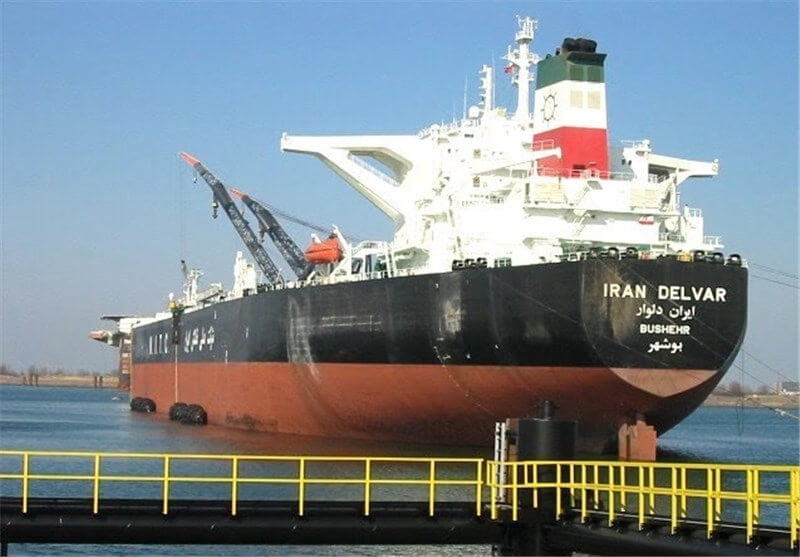
A New Zealand insurer is under investigation for providing insurance for Iranian dark fleet tankers Reuters reveals in a new exposé. The report suggests that Maritime Mutual, headquartered in Auckland, has insured tankers which have carried at least $18 billion worth of Iranian oil since 2018.
New Zealand's government announced earlier this month that it would re-impose the United Nations Sanctions (Iran) Regulations 2025, following the UN Security Council vote effective October 18. Foreign Minister Winston Peters said they would introduce a range of restrictions including an asset freeze and travel bans for sanctioned persons, import and export bans on certain nuclear and military goods, and a duty on New Zealanders to exercise vigilance in dealings with Iran. New?Zealand will also be introducing a compulsory registration scheme for New Zealanders who intend to do business with Iran, which comes into effect on February 1, 2026.
Maritime Mutual has “categorically denied” the allegations, claiming it has a zero-tolerance policy toward violations, and that it operates under “rigorous compliance standards designed to ensure full adherence to all applicable laws.” The New Zealand police's Financial Crime Group searched the offices of Maritime Mutual in Christchurch and Auckland on October 16, although this was declared to be in connection with breaches of Russia-related sanctions, and the company's website currently carries a banner saying the company “is not licensed to carry on insurance business in New Zealand, and that it is not able to underwrite insurance for persons resident in New Zealand.”
Maritime Mutual claims to have insured 7,102 vessels in 2023, and over 23 million gross tonnage, with re-insurance cover from Aon, Atrium, Lockton, Hannover and Lloyds Syndicates. It maintains manager correspondents in Shanghai, Singapore, Vanuatu, Phnom Penn and in the DMCC Dubai. Unusually, Maritime Mutual does not routinely provide details of which ships it insures to the likes of S&P Global Market Intelligence and Lloyd's List Intelligence.
A standard line in police investigation of sanctions breaches is fraudulent misrepresentation, in which ship operators present insurance certification at ports, in order to secure entry, bunkering and services, but which when scrutinized proves to be forged. This line of inquiry will no doubt examine the credentials of Shiraz Marine, which claims to represent Maritime Mutual and is based in Amir Jabir Boulevard, Shiraz, to examine if insurance certification presented in its name have been forged. But contrary to implications that it could have been defrauded, Maritime Mutual appears to have enjoyed healthy average annual revenue growth of 41 percent between 2019 and 2024, up from $14 million in 2018 to $108 in 2024.
The Helsinki-based Centre for Research on Energy and Clean Air has discovered that of 231 vessels insured by Maritime Mutual over a period in early 2025, 130 were carrying energy products from Iran or Russia, and that on average 30 vessels a day that were insured by Maritime Mutual were carrying either Iranian or Russian oil. In a review using Lloyds List data, Reuters identified that 97 tankers subject to sanctions had Maritime Mutual insurance cover on the day its review was conducted. Three people contacted by Reuters in its thorough investigation commented that most of the Maritime Mutual dark fleet insurance underwriting activity is carried out in the Dubai office based in the DMCC, where many sanctioned dark fleet front companies also have offices.
Maritime Mutual appears to be a family owned and managed company, founded 20 years ago by British citizen Paul Rankin. If the United Kingdom's Office of Financial Sanctions Implementation (OFSI) were to investigate the role played in breaking Iran sanctions by British citizens employed in Maritime Mutual, which OFSI has not declared it is doing, it would represent a first, as OFSI has not been minded to levy an enforcement penalty on anyone in connection with breaches of sanctions against Iran since details of enforcement actions began to be posted in 2019.
Georgia’s New Oil Hub Could Offer a Lifeline to Russia’s Shadow Fleet
- A new refinery in Georgia’s Kulevi port has begun processing Russian crude, offering Moscow a potential backdoor for oil exports amid tightening sanctions.
- The project is closely linked to Georgia’s ruling party and figures tied to Russian business interests, raising fears of growing Kremlin influence.
- Analysts warn the move risks entangling Georgia in Russia’s war economy and could expose Tbilisi to future Western sanctions.
Russian officials have potentially opened a new revenue stream to help them generate profits from oil exports needed to keep their war effort going in Ukraine. And it runs through Georgia.
Moscow is dealing with growing energy isolation and a wave of Ukrainian drone strikes that have crippled its oil infrastructure, reducing refining capacity by roughly 40 percent, according to a Washington Post report. Georgia is now providing a safe haven for Russian oil at a new refinery in Kulevi, situated on the shores of the Black Sea.
A tanker, the Kayseri, sailing out of the Russian port of Novorossiysk delivered over 105,000 metric tons of oil to Kulevi on October 6, according to a report published by the Reuters news agency, which cited tracking data and an industry source. A Russian company, RussNeft, reportedly organized the shipment, the Reuters report added.
RussNeft is a privately held entity that is not presently subject to sanctions, as is the state-owned entity Rosneft. Critics argue this distinction is cosmetic. RussNeft’s founder, Mikhail Gutseriev is under EU sanctions, and his family remains influential within the company. Many observers also contend that in Russia's state-controlled economy, no major business operates independently from the Kremlin.
Adding to the murkiness, independent monitors tracking Russia’s so-called “shadow fleet” of tankers have flagged the Kayseri as a suspected vessel in this opaque system.
In response to public scrutiny, Georgia’s State Revenue Service confirmed the arrival of Russian cargo but stressed that “the ship and the ship-owning company, as well as the companies sending and receiving the cargo, are not subject to international sanctions.” The agency declined to disclose the name of the receiving company, citing tax secrecy.
Other government bodies echoed the same line, emphasizing that while the cargo originated in Russia, the ship sailed under a Panamanian flag.
However, the Revenue Service added that “the cargo was unloaded at a temporary customs storage facility to undergo further customs inspection procedures.” This is the most recent publicly available information regarding the Siberian Light oil shipment that entered Georgia.
The Kulevi refinery was inaugurated a year ago with great fanfare. Prime Minister Irakli Kobakhidze and then-economy minister Levan Davitashvili hailed it as “one of the most important projects for the country’s energy security and independence.”
The facility is operated by Black Sea Petroleum, owned by Maka Asatiani, a business figure close to the ruling Georgian Dream party. Recently, an independent Russian investigative media outlet reported that Asatiani’s son is involved in business dealings with the son of the first deputy head of Russia’s military intelligence service, the GRU.
In September, ex-minister Davitashvili became chairman of the refinery’s board, a move underscoring the ruling party’s growing influence and vested interest in the project. In addition, one of the project's main backers is Cartu Bank, founded by Bidzina Ivanishvili, the billionaire impresario of Georgian Dream.
“The import of Russian oil into Georgia for processing once again highlights the [Bidzina] Ivanishvili government’s support for Russia in its war against Ukraine,” security expert and former Georgian parliament member Teona Akubardia said in an interview published by a regional news outlet, Batumelebi. “It also raises the country’s risk of future sanctions, especially as Ukraine continues legitimate strikes on Russia’s energy sector.”
The refinery began operations earlier this month with an initial processing capacity of 1.2 million tons of oil per year (around 24,000 barrels per day) and plans to expand to 4 million tons by 2028, serving both domestic and export markets.
Since fighting a five-day war in 2008, Russia and Georgia have had no formal diplomatic ties. Yet under Georgian Dream, Tbilisi’s economic links with Moscow have deepened while relations with the United States and European Union have gone into a deep freeze. In 2024, Georgiasourced roughly 40 percent of its oil products from Russia.
Political expert Gia Khukhashvili in an interview with RFERL, accused the Georgian Dream government of pursuing a “collaborationist policy” with the Kremlin.
The United States only recently imposed major sanctions on Rosneft and Lukoil, Russia’s two largest oil companies. India and China, Russia’s top oil buyers, reportedly paused imports, wary of secondary sanctions. Against this backdrop, Georgia’s new refinery could become a small, sanction-free outlet for Russian oil, though its impact on Moscow’s exports remains uncertain.
Georgian Dream leaders have long sought to justify their geopolitical turn away from the West by claiming without evidence that Washington and Brussels were intent on using Georgia to open a ‘second front’ against Russia in the Ukraine war.
But Georgian Dream’s evident tolerance of the acceptance of a Russian oil shipment at Kulevi would appear to do more than any other single development in the country since 2022 to potentially entangle Georgia in the war.
By Eurasianet
Iranian Prosecutors Seek $170M Fine in Connection With MSC Aries Seizure
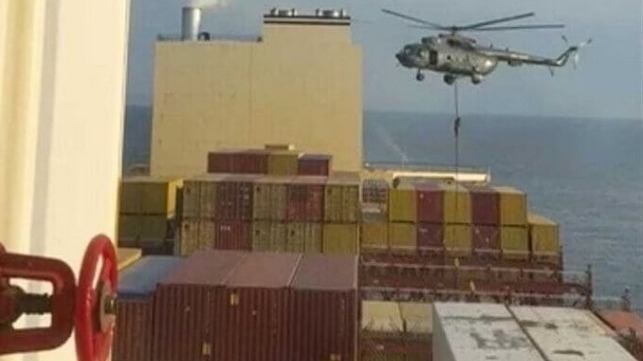
Iranian prosecutors are seeking a hefty fine from London-based Zodiac Maritime in connection with the seizure of MSC Aries, the Zodiac-owned boxship that was seized by Iranian forces in February on the pretext of carrying "hazardous and harmful materials." Charges have been filed in connection with the case in Iranian courts.
"A fine of $170 million has been demanded against its owner, of Israeli origin," said judicial spokesman Asghar Jahangir on Tuesday.
MSC Aries was seized by Iranian operatives near the Strait of Hormuz on April 13, 2024, one day before Iran launched a massive drone and missile attack on Israel. The ship was impounded and its 25 crewmembers were detained. The seizure was not out of character for Iran, where authorities periodically capture diplomatically-relevant vessels at moments of geopolitical tension.
MSC Aries is owned by an affiliate of Zodiac Maritime and bareboat chartered to operator MSC. Zodiac is domiciled in the UK and considers itself a British firm; one of its owners is Eyal Ofer, one of the world's 100 richest people, who currently manages his fortune out of Monaco. Ofer is of Israeli extraction: he is one of the two sons of Israeli shipping legend Sammy Ofer, and is described by some Israeli media as "Israel's wealthiest individual." In Iran, he is considered a "Zionist capitalist," and stands accused of "financing terrorism."
A hazmat-carriage charge - like the underlying offense claimed by Iran - is unusual, as it is normal for container ships to carry hazardous goods in bulk. A safety violation of this type would typically be treated as a civil or administrative matter in most global seaports, not a criminal case, and the shipowner would be allowed to post a bond to release the vessel while the court process played out.

No comments:
Post a Comment