Our Cities Should Not Be Training Grounds for War
.JPG)
What neighborhoods need are affordable housing, accessible healthcare, well-funded schools, and good jobs—not Humvees on their corners.
Katerina Canyon
Nov 07, 2025
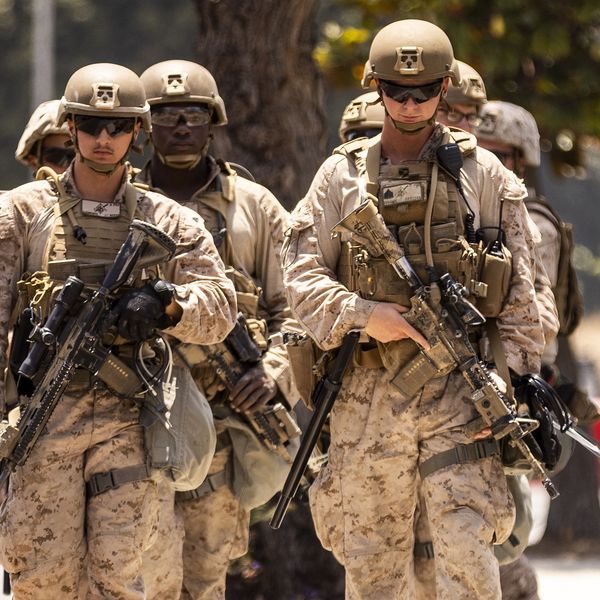
‘Unlawful and Un-American’: Trump Claims He Can Send ‘Army, Navy, Air Force, Marines’ Into US Cities

The Librarian’s Call: Documenting Is Resistance
There’s a reason the Posse Comitatus Act of 1878 restricts the role of federal troops in domestic law enforcement. The law enshrines a fundamental democratic principle: Civilian life must be separate from military power. Trump’s plan to “train” troops in US cities would erase that line entirely.
He has already blurred these boundaries before—from ordering federal forces into Los Angeles during immigration protests to threatening governors who refused to deploy National Guard troops on his terms. Each instance chips away at the legal and moral walls that protect civilian governance.
Democracy thrives when communities are supported, not surveilled; when people are empowered, not patrolled.
Presidents have rarely invoked exceptions to Posse Comitatus. Dwight Eisenhower did so to enforce school desegregation in 1957; George H. W. Bush during the 1992 Los Angeles riots. Those were extraordinary moments of crisis—not political theater. Turning urban neighborhoods into “training zones” is neither an emergency response nor a lawful one. It’s an authoritarian rehearsal.
Equally troubling is the administration’s push to reshape the armed forces around an exclusionary, hyper-masculine “warrior ethos,” while dismantling diversity and inclusion programs. Combining that militant culture with domestic deployments is a recipe for disaster. Soldiers trained to neutralize foreign enemies should never be tasked with policing American citizens. That pairing risks injury, mistrust, and tragedy. This culture of war needs to end.
The US military has long earned public trust precisely because it stood apart from partisan politics. Using troops in domestic political battles destroys that trust—and corrodes the foundation of democracy itself.
Communities need peace, not militarization. No number of military drills will solve crime, poverty, or unrest. What neighborhoods need are affordable housing, accessible healthcare, well-funded schools, and good jobs—not Humvees on their corners.
At the Peace Economy Project, we’ve spent decades showing how misplaced our national priorities have become. The United States now spends nearly $1 trillion each year on its military, yet millions of Americans struggle to pay rent or buy groceries. Trump’s proposal to rehearse war inside our own borders exposes just how warped this imbalance is.
Some dismiss his statements as rhetoric. But we’ve already seen troops deployed unlawfully, governors coerced, and protesters tear-gassed. Each time the line blurs between civilian life and military power, it becomes easier to cross again. We are marching steadily toward authoritarianism.
What begins as “training” can morph into surveillance, detainment, or suppression of protest. Once normalized, that level of militarization will be nearly impossible to reverse.
What We Must Do
We cannot allow our neighborhoods to become rehearsal spaces for war. Congress must move swiftly to reaffirm the protections of the Posse Comitatus Act and establish clear penalties for violations. Governors must reject attempts to federalize local security for political purposes. Civil society—from churches to universities to advocacy groups—must remain vigilant, united, and vocal.
Above all, we must remember: Democracy thrives when communities are supported, not surveilled; when people are empowered, not patrolled.
Our cities are not training grounds. They are where families grow, where culture flourishes, and where democracy takes root. The path to peace and safety does not run through military drills in our streets—it runs through justice, opportunity, and care.
As Executive Director of the Peace Economy Project, I call on every elected official, civic leader, and citizen to reject this dangerous experiment in domestic militarization. We must defend the line between war and peace, between authoritarianism and democracy—before it disappears altogether.
Because if we allow our streets to become training grounds for soldiers, we risk losing the very freedoms those soldiers are sworn to defend.
Our work is licensed under Creative Commons (CC BY-NC-ND 3.0). Feel free to republish and share widely.
Katerina Canyon
Katerina Canyon is the executive director of the Peace Economy Project, a St. Louis-based nonprofit advancing demilitarization and community-centered investment. She is also an MFA candidate whose work explores the social costs of militarization and the civic imagination.
Full Bio >
.JPG)
What neighborhoods need are affordable housing, accessible healthcare, well-funded schools, and good jobs—not Humvees on their corners.
Katerina Canyon
Nov 07, 2025
Common Dreams
When President Donald Trump stood before military leaders at Marine Corps Base Quantico this September and declared that American cities should serve as “training grounds” for US troops, he did more than test the limits of civil-military relations—he crossed them. His proposal isn’t just bluster. It represents a dangerous escalation in domestic militarization that undermines the Constitution and endangers the very people our government is sworn to protect.
American neighborhoods are not battlefields. These our the places where we build our homes, send our children to school–the places we take the buses to work every morning. These cities are markers of who we are, not training grounds. Treating them as warfields sets a precedent that imperils every citizen, especially the Black, immigrant, and working-class communities he has repeatedly vilified. Cities like Chicago, Los Angeles, and Portland don’t need military drills. They need investments in housing, healthcare, and education.
When President Donald Trump stood before military leaders at Marine Corps Base Quantico this September and declared that American cities should serve as “training grounds” for US troops, he did more than test the limits of civil-military relations—he crossed them. His proposal isn’t just bluster. It represents a dangerous escalation in domestic militarization that undermines the Constitution and endangers the very people our government is sworn to protect.
American neighborhoods are not battlefields. These our the places where we build our homes, send our children to school–the places we take the buses to work every morning. These cities are markers of who we are, not training grounds. Treating them as warfields sets a precedent that imperils every citizen, especially the Black, immigrant, and working-class communities he has repeatedly vilified. Cities like Chicago, Los Angeles, and Portland don’t need military drills. They need investments in housing, healthcare, and education.
‘Unlawful and Un-American’: Trump Claims He Can Send ‘Army, Navy, Air Force, Marines’ Into US Cities
The Librarian’s Call: Documenting Is Resistance
There’s a reason the Posse Comitatus Act of 1878 restricts the role of federal troops in domestic law enforcement. The law enshrines a fundamental democratic principle: Civilian life must be separate from military power. Trump’s plan to “train” troops in US cities would erase that line entirely.
He has already blurred these boundaries before—from ordering federal forces into Los Angeles during immigration protests to threatening governors who refused to deploy National Guard troops on his terms. Each instance chips away at the legal and moral walls that protect civilian governance.
Democracy thrives when communities are supported, not surveilled; when people are empowered, not patrolled.
Presidents have rarely invoked exceptions to Posse Comitatus. Dwight Eisenhower did so to enforce school desegregation in 1957; George H. W. Bush during the 1992 Los Angeles riots. Those were extraordinary moments of crisis—not political theater. Turning urban neighborhoods into “training zones” is neither an emergency response nor a lawful one. It’s an authoritarian rehearsal.
Equally troubling is the administration’s push to reshape the armed forces around an exclusionary, hyper-masculine “warrior ethos,” while dismantling diversity and inclusion programs. Combining that militant culture with domestic deployments is a recipe for disaster. Soldiers trained to neutralize foreign enemies should never be tasked with policing American citizens. That pairing risks injury, mistrust, and tragedy. This culture of war needs to end.
The US military has long earned public trust precisely because it stood apart from partisan politics. Using troops in domestic political battles destroys that trust—and corrodes the foundation of democracy itself.
Communities need peace, not militarization. No number of military drills will solve crime, poverty, or unrest. What neighborhoods need are affordable housing, accessible healthcare, well-funded schools, and good jobs—not Humvees on their corners.
At the Peace Economy Project, we’ve spent decades showing how misplaced our national priorities have become. The United States now spends nearly $1 trillion each year on its military, yet millions of Americans struggle to pay rent or buy groceries. Trump’s proposal to rehearse war inside our own borders exposes just how warped this imbalance is.
Some dismiss his statements as rhetoric. But we’ve already seen troops deployed unlawfully, governors coerced, and protesters tear-gassed. Each time the line blurs between civilian life and military power, it becomes easier to cross again. We are marching steadily toward authoritarianism.
What begins as “training” can morph into surveillance, detainment, or suppression of protest. Once normalized, that level of militarization will be nearly impossible to reverse.
What We Must Do
We cannot allow our neighborhoods to become rehearsal spaces for war. Congress must move swiftly to reaffirm the protections of the Posse Comitatus Act and establish clear penalties for violations. Governors must reject attempts to federalize local security for political purposes. Civil society—from churches to universities to advocacy groups—must remain vigilant, united, and vocal.
Above all, we must remember: Democracy thrives when communities are supported, not surveilled; when people are empowered, not patrolled.
Our cities are not training grounds. They are where families grow, where culture flourishes, and where democracy takes root. The path to peace and safety does not run through military drills in our streets—it runs through justice, opportunity, and care.
As Executive Director of the Peace Economy Project, I call on every elected official, civic leader, and citizen to reject this dangerous experiment in domestic militarization. We must defend the line between war and peace, between authoritarianism and democracy—before it disappears altogether.
Because if we allow our streets to become training grounds for soldiers, we risk losing the very freedoms those soldiers are sworn to defend.
Our work is licensed under Creative Commons (CC BY-NC-ND 3.0). Feel free to republish and share widely.
Katerina Canyon
Katerina Canyon is the executive director of the Peace Economy Project, a St. Louis-based nonprofit advancing demilitarization and community-centered investment. She is also an MFA candidate whose work explores the social costs of militarization and the civic imagination.
Full Bio >
Judge says Trump border commander lied to court about use of force incident
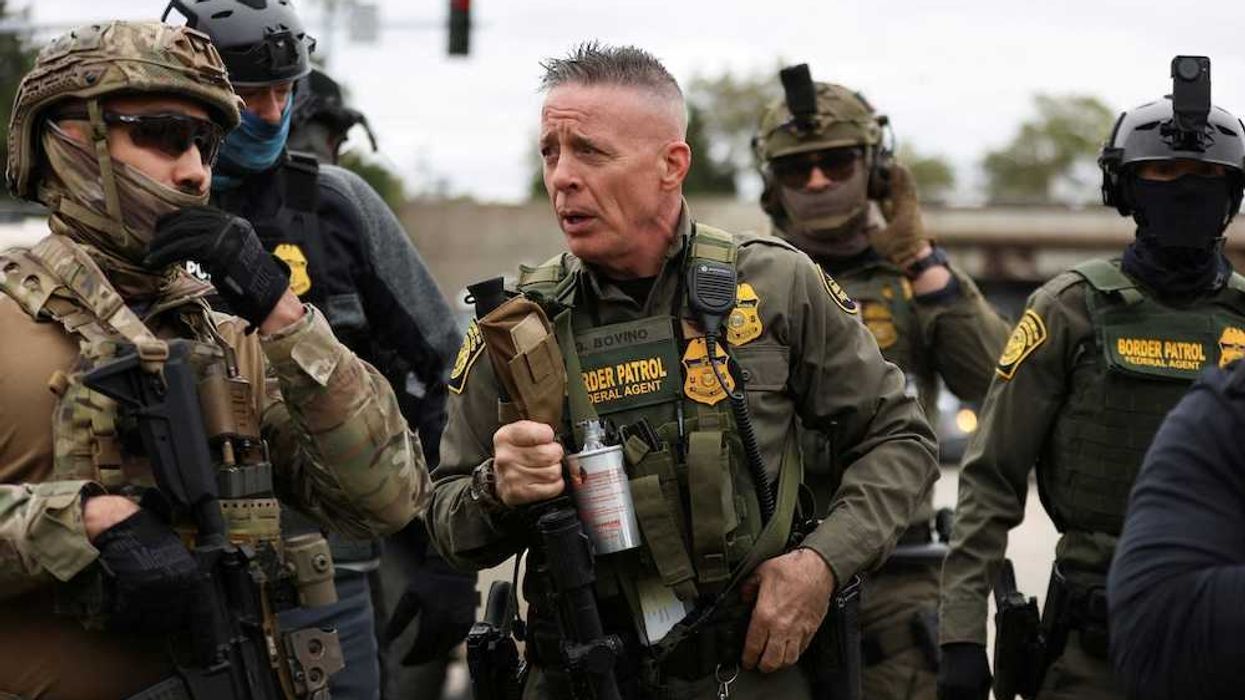
USBP Chief Patrol Agent of the El Centro sector, Greg Bovino, speaks with federal agents in the Cicero neighborhood during an immigration raid, after U.S. President Donald Trump ordered increased federal law enforcement presence to assist in crime prevention, in Chicago, Illinois, U.S., October 22, 2025. REUTERS/Jim Vondruska
Commenters on X slammed Bovino’s dishonesty.
“I’d sure as s—— go to jail if had lied about my actions,” posted retired veteran Scott Warhin on X.
“In any other era in America, Greg Bovino would immediately be fired for flagrantly lying under oath in court,” complained another critic on X. “But Trump loves criminals and miscreants. America has had enough of this s—— show.”
Read the ABC report at this link.

USBP Chief Patrol Agent of the El Centro sector, Greg Bovino, speaks with federal agents in the Cicero neighborhood during an immigration raid, after U.S. President Donald Trump ordered increased federal law enforcement presence to assist in crime prevention, in Chicago, Illinois, U.S., October 22, 2025. REUTERS/Jim Vondruska
November 07, 2025
ALTERNET
ABC News reports the Border Patrol official in charge of Trump’s immigration crackdown in Chicago admitted to lying about a thrown rock before launching tear gas at protesters.
U.S. District Judge Sara Ellis said Thursday that Patrol Commander Greg Bovino fabricated claims about the Oct. 23 incident, which was caught on camera with Bovino throwing a gas canister at demonstrators in Chicago's Little Village neighborhood without giving a verbal warning — a violation of the judge's earlier temporary restraining order limiting the use of force, the judge said. That same day, the judge issued a preliminary injunction limiting the use of force during immigration arrests and protests.
"Mr. Bovino and the Department of Homeland Security claimed that he had been hit by a rock in the head before throwing the tear gas, but video evidence disproves this. And he ultimately admitted he was not hit until after he threw the tear gas," Ellis said.
DHS initially defended Bovino's actions saying that a Border Patrol transport van transporting undocumented immigrants was attacked by demonstrators.
"The mob of rioters grew more hostile and violent, advancing toward agents and began throwing rocks and other objects at agents, including one that struck Chief Greg Bovino in the head," Assistant Secretary Tricia McLaughlin said in an October statement.
But Bovino proved McLaughlin’s statement incorrect.
ABC News reached out to DHS in the aftermath of Bovino’s confession but DHS officials responded by criticizing the judge's decision to grant a preliminary injunction.
“This injunction is an extreme act by an activist judge that risks the lives and livelihoods of law enforcement officers,” the official said.
ABC News reports the Border Patrol official in charge of Trump’s immigration crackdown in Chicago admitted to lying about a thrown rock before launching tear gas at protesters.
U.S. District Judge Sara Ellis said Thursday that Patrol Commander Greg Bovino fabricated claims about the Oct. 23 incident, which was caught on camera with Bovino throwing a gas canister at demonstrators in Chicago's Little Village neighborhood without giving a verbal warning — a violation of the judge's earlier temporary restraining order limiting the use of force, the judge said. That same day, the judge issued a preliminary injunction limiting the use of force during immigration arrests and protests.
"Mr. Bovino and the Department of Homeland Security claimed that he had been hit by a rock in the head before throwing the tear gas, but video evidence disproves this. And he ultimately admitted he was not hit until after he threw the tear gas," Ellis said.
DHS initially defended Bovino's actions saying that a Border Patrol transport van transporting undocumented immigrants was attacked by demonstrators.
"The mob of rioters grew more hostile and violent, advancing toward agents and began throwing rocks and other objects at agents, including one that struck Chief Greg Bovino in the head," Assistant Secretary Tricia McLaughlin said in an October statement.
But Bovino proved McLaughlin’s statement incorrect.
ABC News reached out to DHS in the aftermath of Bovino’s confession but DHS officials responded by criticizing the judge's decision to grant a preliminary injunction.
“This injunction is an extreme act by an activist judge that risks the lives and livelihoods of law enforcement officers,” the official said.
Commenters on X slammed Bovino’s dishonesty.
“I’d sure as s—— go to jail if had lied about my actions,” posted retired veteran Scott Warhin on X.
“In any other era in America, Greg Bovino would immediately be fired for flagrantly lying under oath in court,” complained another critic on X. “But Trump loves criminals and miscreants. America has had enough of this s—— show.”
Read the ABC report at this link.

“It’s impossible to overstate how much of what ICE is doing on the ground reflects this completely preposterous conflation of hostile speech and hostile conduct,” commented one legal expert.
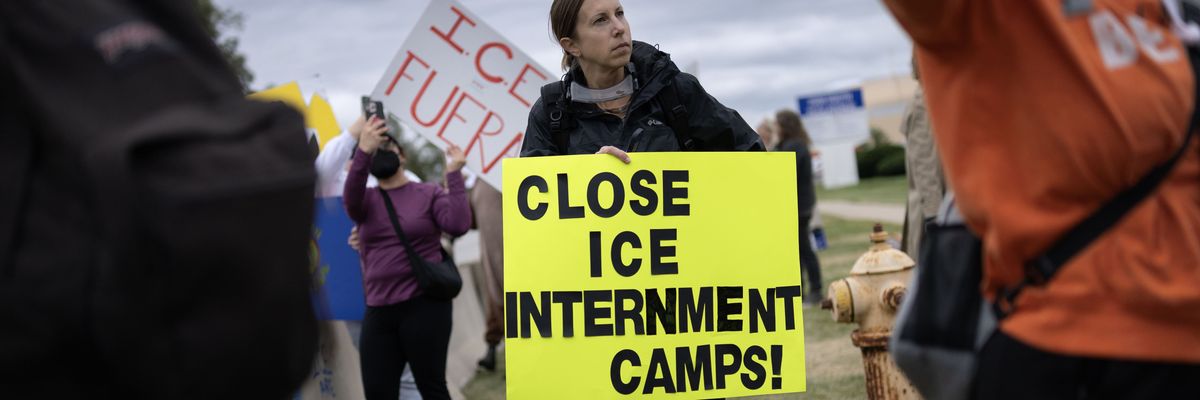
Demonstrators protest outside of the immigration processing and detention facility on October 11, 2025 in Broadview, Illinois.
(Photo by Scott Olson/Getty Images)
Brad Reed
Nov 04, 2025
COMMON DREAMS
A court filing released late on Monday alleged that US Border Patrol Commander-at-Large Gregory Bovino said that merely making what he called “hyperbolic comments” about immigration enforcement operations, including President Donald Trump’s “Operation Midway Blitz” in Chicago, was enough to justify being arrested.
As reported by the Chicago Sun-Times on Tuesday, attorneys representing several Chicago-based media organizations who are suing to restrict federal immigration agents’ use of force in their city claimed that Bovino said during a sworn deposition that “he has instructed his officers to arrest protesters who make hyperbolic comments in the heat of political demonstrations.”
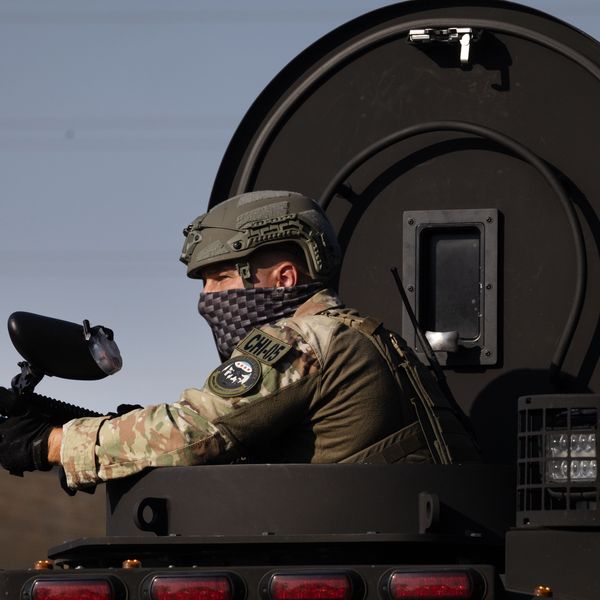
Group Calls on Illinois AG to Open Probe Into ‘Unlawful Actions of Federal Agents’ in Chicago
More Than 170 US Citizens Have Been Held by Immigration Agents, Some Abused or Detained for Days: ProPublica
The attorneys also said in the court document that Russell Hott, the field director for Immigration and Customs Enforcement (ICE) in Chicago, said during his deposition that he did not agree that it would be “unconstitutional to arrest people” simply for expressing opposition to his agency’s current mass deportation operation in the Windy City.
This section of the filing caught the attention of Steve Vladeck, a law professor at Georgetown University, who said it appeared federal immigration officials are straightforwardly violating the First Amendment right to peacefully protest.
“It’s impossible to overstate how much of what ICE is doing on the ground reflects this completely preposterous conflation of hostile speech and hostile conduct,” he wrote in a post on Bluesky. “The First Amendment protects—or, at least, is supposed to protect—the former up and until it’s a ‘true threat,’ which none of this is.”
Elsewhere in the filing, the plaintiffs’ attorneys alleged that Bovino said during testimony that he had “interacted with many violent rioters and individuals” at the ICE facility in Broadview, Illinois, which in recent weeks has become the focal point of local protests. Additionally, the attorneys wrote, Bovino would “not admit he has ever seen protesters who were not violent rioters.”
The attorneys commented that “by Bovino’s logic, anyone who shows up to protest is presumptively violent or assaultive and he can ‘go hard’ against them.”
The case involving the Chicago media organizations and federal immigration enforcement officials is currently being overseen by US District Court Judge Sara Ellis, who last month issued a temporary restraining order that barred federal officers from using riot control weapons “on members of the press, protestors, or religious practitioners who are not posing an immediate threat to the safety of a law enforcement officer or others.”
Federal immigration officials have been employing increasingly aggressive and violent tactics in the Chicago area in recent weeks, including attacking a journalist and a protesting priest with pepper balls outside an Immigration and Customs Enforcement facility; slamming a congressional candidate to the ground; dragging US citizens, including children, out of their homes during a raid in the middle of the night; and fatally shooting a man during a traffic stop.
A hearing on whether to make permanent Ellis’ restraining order which strictly limits the use of riot control munitions has been set for November 5.


No comments:
Post a Comment