It’s possible that I shall make an ass of myself. But in that case one can always get out of it with a little dialectic. I have, of course, so worded my proposition as to be right either way (K.Marx, Letter to F.Engels on the Indian Mutiny)
"No arrests were made. Traffic is flowing normally, and all involved had dispersed by midday," Kent police said in an update on Saturday afternoon.
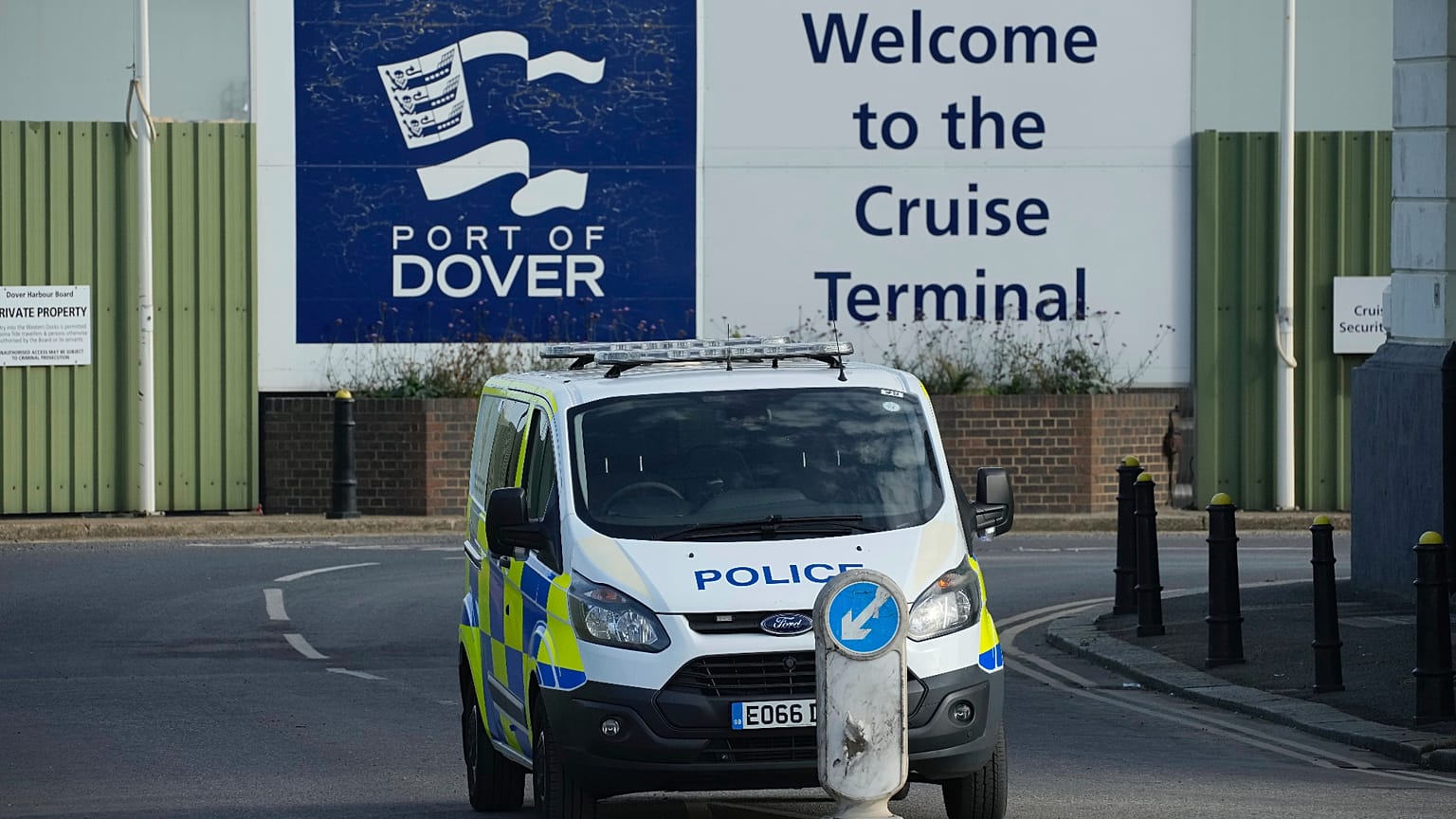
Dozens of masked men dressed in all black descended on the Port of Dover on Saturday morning in what police have described as a "protest."
Port authorities said there was an "ongoing public order incident" happening across the town, which is a key passenger hub for ferry services between the UK and mainland Europe.
The Port of Dover has since confirmed that "operations have returned to normal," with routes in and out of Dover and the port open and traffic "moving freely."
It had earlier said the incident was "affecting all routes in and out the port and town.
P&O Ferries, which operates a ferry from Dover to Calais, said its services were operating with delays of up to an hour following the disruption.
Video footage circulating online shows protesters - many wearing balaclavas, hoods and hats - gathering in the Kent town and chanting.
Far-right anti-immigration activist Tommy Robinson shared a video of the protest on his X account, writing in the caption: "British patriots send a warning shot to the establishment in Dover this morning."
"Patriots can organise and gather huge numbers without the need for social media. Watch this grow," he continued, adding: "We want our country back."
Mike Tapp, the Labour MP for Dover and Deal, criticised those involved in another post on X, telling protesters to go home and saying he was speaking with police.
"Dover Park Run cancelled, port access disrupted, the lives of residents made more difficult," he wrote.
"I am fed up with idiots coming to Dover to cause disruption. I bet if you asked any one of those 'protesters' they wouldn’t know small boat crossing are down by 40%," Tapp added, referring to migrant Channel crossings.
Officers from Kent police attended the scene and were "engaging with protesters," according to the force.
"No arrests were made. Traffic is flowing normally, and all involved had dispersed by midday," it added in an update on Saturday afternoon.
Friday, July 24, 2026
Cruise Ship Hits Lock Wall in Vienna, Injuring 14 People
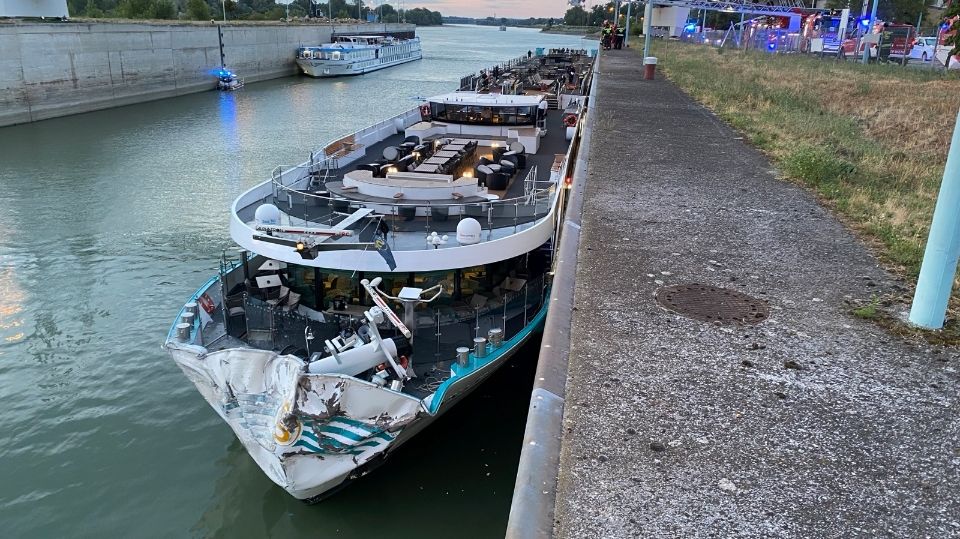
On Friday, a river cruise ship hit a lock on the Danube in Vienna, causing injuries to multiple passengers and damage to the bow of the ship.
Early on Friday morning, the cruise ship Anna Katharina was navigating the Danube through Vienna with about 200 passengers and crewmembers on board. At about 0430, the vessel hit the lock wall at the Freudenau power plant.
14 people on board sustained light injuries from the force of the allision. The local fire department responded to the scene with ladder trucks, and used a fire ladder to retrieve several people from the vessel's deck. Six of the injured were transferred to a hospital for evaluation of back, neck and chest pain.
After ensuring that all were accounted for and treated if necessary, the operator transferred the rest of the passengers to an alternate river cruise vessel for onward travel.
The cause of the casualty is under investigation and a judicial inquiry is under way. "The possibility that a technical defect may have been the cause of the accident is currently being considered," a police spokesperson told local outlet Heute.
Anna Katharina is a 135-meter cruise ship built in 2019. She has a capacity of 180 passengers and serves a variety of routes on the Rhine, Main and Danube waterway system.
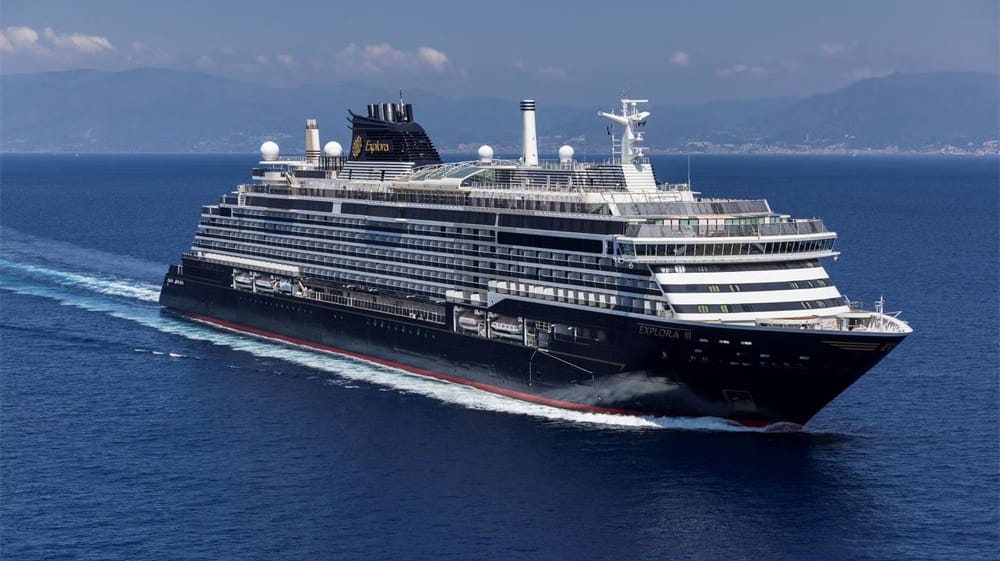
MSC Group took delivery on Thursday, July 23, of the third cruise ship in its ultra-luxury brand, Explora Journeys. Developed on the family’s concept of luxury yacht-style cruising, the brand is part of the industry’s growing focus on ultra-luxury cruising.
Explora Journeys launched in July 2023 with Explora I and a second sister ship vessel in September 2024. The ships are being built by Fincantieri, with MSC highlighting it as part of a €3.5 billion investment in its fleet. The company has committed to the construction of a total of six Explora cruise ships. With the delivery of Explora III today, they are at the halfway mark, with construction underway on the three additional ships.
The first two cruise ships were delivered with traditional propulsion systems, but MSC changed the order, making the third through the sixth ships LNG-fueled. The changes included lengthening the ships by 19.2 meters (63 feet) to a new length overall of approximately 268 meters (879 feet).
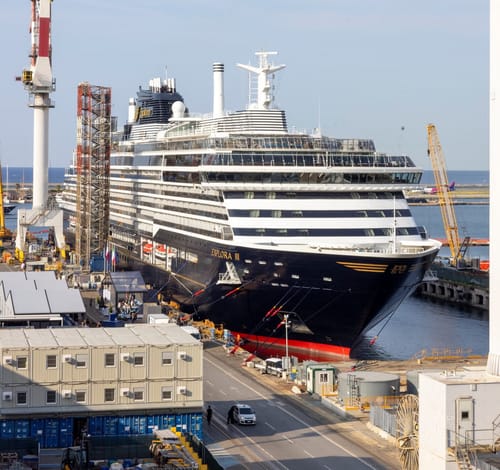
The traditional delivery ceremony took place at Fincantieri’s Sestri Ponente shipyard in Genoa. It included a parade of the ship’s officers and the shipyard workers, the ceremonial flag change to its registry in Malta, and the naming of the vessel.
Fincantieri is building the six ultra-luxury cruise ships (Fincantieri)
Explora Journeys continues to refine its offering, highlighting that the enlarged cruise ship permitted it to introduce new culinary offerings, with three new restaurant concepts, and enhanced wellness, spa, and fitness facilities. They are also introducing Chopard’s first boutique onboard.
The passenger accommodations are also being enhanced with a second Owner’s Residence, an increased number of Ocean Residence suites and Ocean Penthouses. The total number of suites aboard the ship increases from 456 on the first two cruise ships, to 461 on Explora III. Gross tonnage of the cruise ship also increases from 63,621 to 72,810.
Fincantieri highlights the advanced technical designs, noting that the LNG fuel capability also supports the future use of renewable alternatives, including bio-LNG, synthetic LNG, or biofuels. The ship also has shore power connectivity and advanced power management technologies. The last two ships of the class, Explora V and Explora VI, will additionally feature fuel cells, which will more efficiently generate energy for the vessels.
Designed and built under the supervision of RINA Classification Society, Fincantieri highlights that Explora III received a number of additional notations recognizing its environmental performance and passenger comfort. These include the "Green Plus" notation for high environmental standards and the "Comfort Noise and Vibration" notation for low onboard noise and vibration levels. The vessel has also received the "Dolphin" notation, recognizing efforts to minimize underwater radiated noise in environmentally sensitive marine areas, as well as Polar Code C certification, enabling operations in polar regions.
Explora Journeys is introducing Explora III with a “Prelude Journey” departing Genoa on July 24 and sailing to Civitavecchia, arriving on July 29. The official maiden voyage begins in Barcelona on August 1, and the ship will move through Northern Europe, Iceland, Greenland, and North America. It will spend the winter in the Caribbean before repositioning for Explora Journeys’ first season in Alaska in 2027.
The introduction of Explora IV is scheduled for the summer of 2027, and Explora V in December 2027. The company will complete its fleet in August 2028 with Explora VI.
Aman at Sea Completes Successful Float Out of Amangati
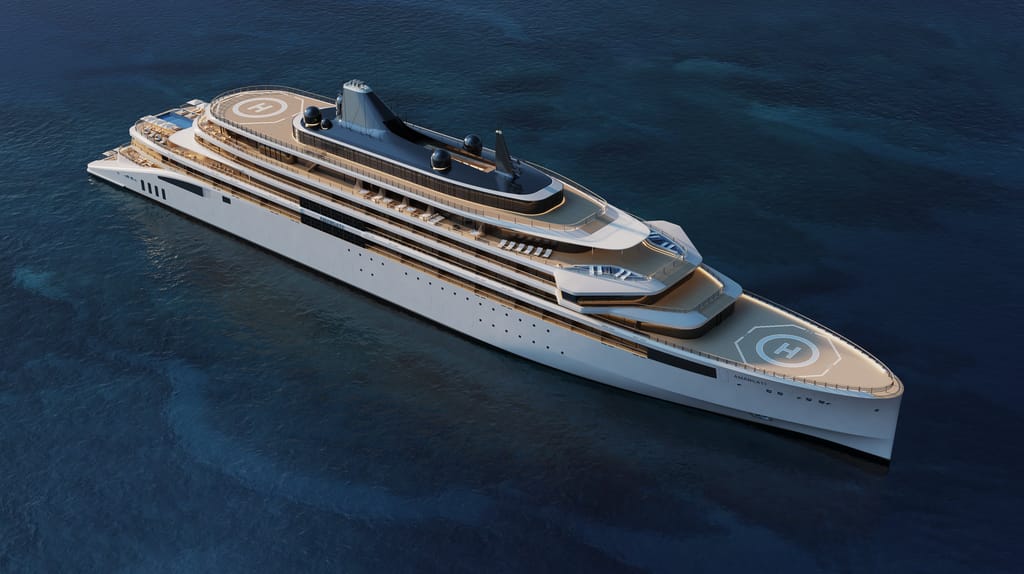
Aman at Sea today announces the successful Float Out of Amangati, its inaugural ocean-going yacht, at the T. Mariotti shipyard in Genoa, Italy. Following centuries of Italian shipbuilding tradition, the ceremony marks the completion of the exterior build and the transition of Amangati from dry dock to sea.
The Float Out is one of the most significant milestones in the construction of an ocean-going vessel, signaling that the hull is complete, sealed, painted and watertight. Amangati now moves to the outfitting quay in Genoa, where the finishing of the interiors will unfold in the months ahead - including the yacht's 47 expansive suites, the Aman Spa (the largest in luxury yachting), four signature restaurants, Selora lounge and the Marina - ahead of sea trials, delivery and preparation for guests.
Amangati will depart Palma de Mallorca on a six-night voyage bound for Nice on 7 May 2027, opening its inaugural Mediterranean season with voyages of between five and eight nights across the Mediterranean, Adriatic, Ionian and Aegean seas. Reservations for the maiden season, along with its newly added Autumn 2027 Caribbean voyages are now open for reservations.
Jonathan Wilson, President and CEO of Aman at Sea, said:
"Today is a defining moment in the story of Aman at Sea. To see Amangati painted, afloat and taking shape for the first time is to see years of design, craftsmanship and vision meeting the water together. We are grateful to the T. Mariotti shipyard, Sinot Yacht Architecture & Design, and to every hand that has brought Amangati to this milestone. Every step from here brings us closer to welcoming our first guests aboard next May."
Yacht Overview
Name: Amangati (Sanskrit for ‘peaceful motion’)
Inaugural voyage: 7 May 2027, Palma de Mallorca to Nice
Length: 180 metres (600 feet); nine decks
Gross Tonnage: 23,000 GT
Designer: SINOT Yacht Architecture & Design
Shipyard: T. Mariotti S.p.A., Genoa, Italy
Flag: Malta
Guest Experience
Suites: 47 ocean-facing suites, each with a private terrace and full-height windows
Maximum guests: 94
Crew: 207, with a 2.2:1 crew-to-guest ratio
Suite Host: a dedicated, on-demand concierge assigned to every suite
Dining: four signature restaurants — Alira (Mediterranean), Akari (Japanese), Hiori (teppanyaki), Aman Grill
Social spaces: The Jazz Club, Cigar Lounge, Alira Pool Bar, The Bar at Aman Grill, Selora and Cinema
Wellness: Aman Spa — the largest in luxury yachting at 740 sqm (8,000 sqft) — with eight ocean-facing treatment rooms, each with a private terrace and whirlpool, plus hammam, banya, fitness studio, yoga and meditation deck, beauty lounge and Medi Spa
Sea access: The Marina on Deck 3, with two floating platforms and a curated fleet of water toys; Selora, the adjacent waterfront lounge
Tenders: four limousine tenders and two open sport tenders
Helipads: two — Deck 6 forward and Deck 9 aft
The products and services herein described in this press release are not endorsed by The Maritime Executive.
More Cruise Lines Are Going Adult-Only
More cruise lines are dedicating cruise ships to the adults-only market (P&O file photo)
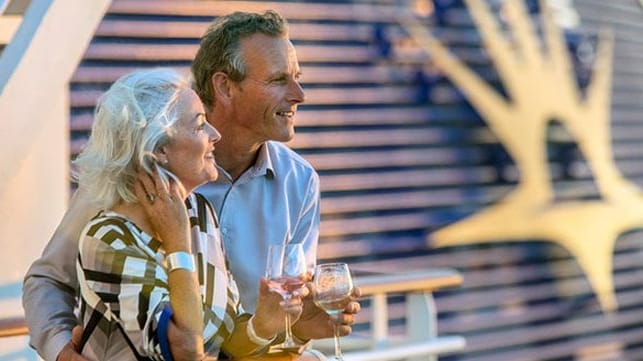
While a segment of cruising has been devoted to the adult-only travel market, it is expanding to more cruise lines as a possible response to the increasingly amusement-laden cruise ships. Going against the trend of marketing multi-generational cruises, several additional cruise lines have announced plans to transition into adults-only cruises.
Mostly adult-only cruising has been limited to smaller ships and luxury brands, such as Viking, which has always been adult-only in keeping with its positioning of being a “thinking man’s” cruise experience. Viking highlights its focus on cultural aspects of its destinations with museums and other enlightening visits while in port. Aboard its ships, which are 47,000 to 54,000 gross tons and under 1,000 passengers, there are no water parks, rope courses, or other amusements, and even no casino. Limiting its marketing to adults-only was a natural extension of its positioning.
Virgin Voyages adopted an adults-only policy when it launched its cruise line, which again was aligned with the persona of Virgin. The company said its research indicated that the target audience wanted to relax in an adult environment, and so it limited passengers to being 18 years or older. It has highlighted the multi-generational opportunity for families with young adults while continuing to maintain its minimum age, making it one of the few operators of larger ships to be adults-only.
Premium cruise line Oceania Cruises reported in January 2026 that it was transitioning its current fleet of eight mid-sized cruise ships (plus four under construction) to adults-only, welcoming only passengers 18 years or older. While children had been a small part of its business, mostly with multi-generational bookings, it conducted extensive research. Oceania reported that the feedback from repeat passengers, travel partners, and new-to-brand guests showed that they valued the serene atmosphere, sophisticated service, and unhurried pace on its ships. They said these attributes were highly sought after and valued by mature, affluent travelers, fueling its decision to transition to adults-only.
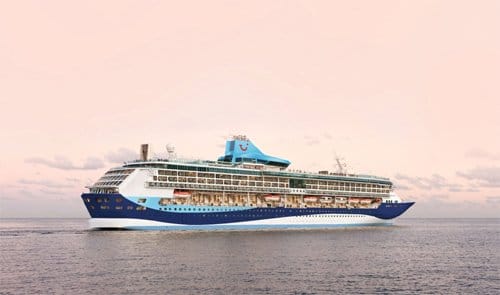
UK-based Marella Cruises, part of TUI Group, is converting a second cruise ship with new features for adults-only cruising (Marella)
Demand for adults-only cruises continues to grow, says Chris Hackney, CEO of the UK-based line Marella Cruises. The line began its adults-only cruises in 2019 when it introduced its new ship, the Marella Explorer 2 (71,500 gross ton ex. Celebrity Century), with a passenger capacity of 1,800.
Today, the brand has five medium-sized cruise ships for the UK market. This summer it is marketing the Marella Discovery (69,500 gross tons) as adult-only from Cyprus, but it will return to the family market in the winter of 2026-2027.
Marella reports it is taking adult-only to the next step for its winter 2027 program with the conversion of its cruise ship Marella Discovery 2. Built in 1995 as Royal Caribbean’s first Legend of the Seas, the cruise ship is 69,500 gross tons with accommodations for 1,800 passengers. It joined Marella in 2017 and has been offering all-inclusive, family-friendly cruising.
Hackney highlights that the company is investing in four new onboard concepts aboard Marella Discovery 2 to enhance the adults-only experience. The four new spaces, which will replace the kids-only spaces onboard the ship, introduce a speakeasy, an escape room, a karaoke room, and an arts and crafts area. The line is also introducing a new itinerary that includes Agadir in Morocco, as well as Las Palmas, Gran Canaria, Fuerteventura, and Lanzarote.
Another UK cruise line, Ambassador Cruise Line, also reports that starting in 2027 all of its itineraries will be adult-only. The company had previously alternated between itineraries marketed as multi-generational and others as adults-only.
P&O Cruises, however, which had been operating adults-only on its two smaller cruise ships – the 84,000 gross ton Arcadia and 76,000 gross ton Aurora – announced that starting in December 2026, it will be offering some multi-generational cruises on those two ships. The ships will have more limited offerings for children versus its other ships, but it will accept children on its smaller ships.
The expansion of adults-only cruising is not limited to the UK market. It has even reached Carnival Cruise Line. While best known for its “fun ships” and its broad appeal product well-suited to multi-generational experiences, the line launched SEA Cruises. It is an invitation-only product for guests 21 and older. It tested its first adults-only cruise in August and September 2025, and it is now expanding it. Carnival points out that the cruises are designed to offer more casino time and “grown-up fun” as well as an elevated dining experience.
The experiences being offered present an alternative to the broader trend of larger, more event-filled cruise ships. While adults-only will remain niche, it is growing with more ships and geographies. You can expect to see more ships adopting this approach, providing an alternative for travelers who crave a relaxed experience.
Battle of the Beaches for the Cruise Lines
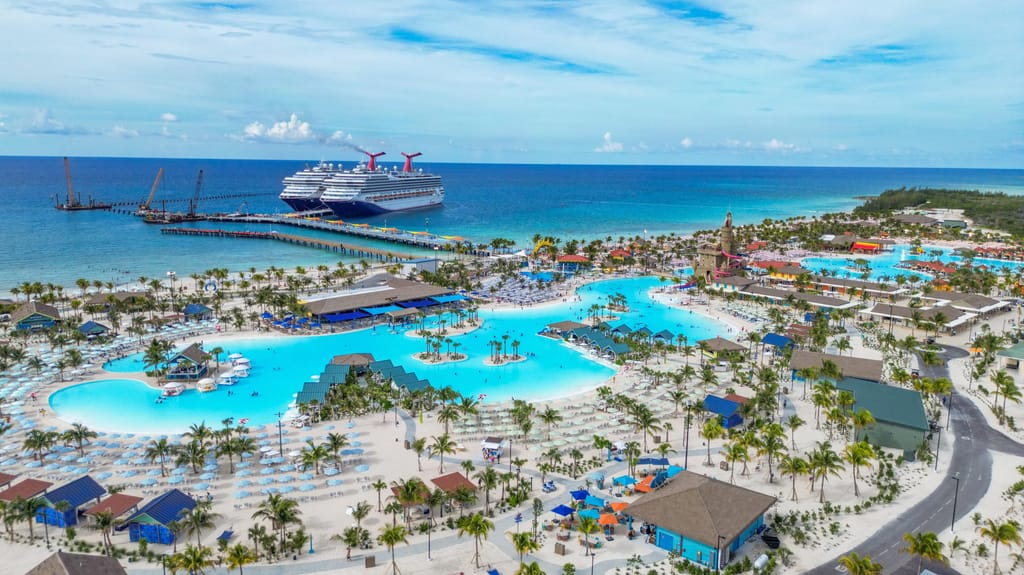
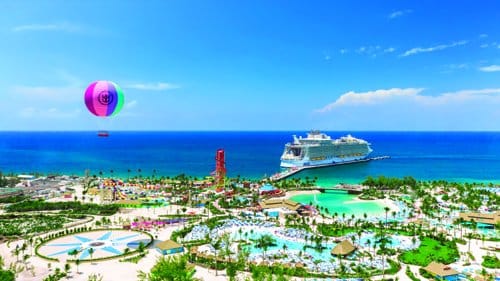
Carnival Cruise Line invested more than $600 million to build a private destination in the Bahamas and has now expanded it to handle up to four cruise ships and 13,000 daily visitors (CCL)
Cruise lines are intensifying their focus on their private ports. While the beach destinations have long been popular with passengers, the lines are increasing their investments not only to expand their offerings but also to differentiate their islands as they seek to grow their earning potential.
The concept of the private islands got its start in the 1970s. Then marketing executive at Norwegian Cruise Line, Bruce Nierenberg, recalls the origins as coming from a popular beach party excursion the line offered on Grand Cayman during its western Caribbean cruises. He said it was the top-rated excursion and inspired NCL to acquire rights to an island in the Berry Island chain of the Bahamas.
Started with a Beach Party
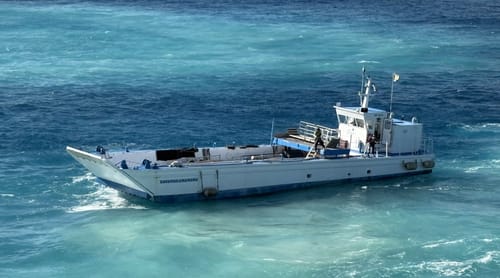
The private island beach party was launched in 1977 on 3- and 4-day cruises Norwegian called Bahamarama from Miami to Nassau and the island. Nierenberg recalls it was a “Robinson Crusoe” style experience, and they were using lifeboats to land the passengers. The line also acquired surplus World War II landing crafts, rebuilt and rechristened the Bahamarama Mamas.
NCL's first "tenders" for passengers with a bow ramp, the Bahamarama Mama, is still in service at Great Stirrup Cay (Allan Jordan)
“Private destinations have become a major factor in how travelers choose a cruise today,” says Micah Balingit, Marketing Specialist at online travel agency Cruise Direct. He notes that travelers frequently filter itineraries that include a private island stop on their site. Balingit reports the private islands “have become some of the most sought-after stops in the industry.”
Based on the popularity of the stop at Great Stirrup Cay, the port was added to more of Norwegian’s itineraries. Other cruise lines followed. Princess Cruises launched a beach party in the Grenadines and, in 1992, acquired rights to a Bahamas destination that became Princess Cays. Royal Caribbean International introduced Labadee in Haiti in 1988 and followed with what became Coco Cay in the Bahamas in 1990. Holland America Line acquired the rights to Little San Salvador, which Norwegian had been using, and in 1997 introduced Half Moon Cay.
The upgrades of the islands started with Disney Cruise Line, which was the first to incorporate a dock into the island for its cruise ship, doing away with the challenges of tendering. While the lines added new activities, the basic concept of the islands remained until 2019, when Royal Caribbean extensively renovated Coco Cay at a cost of $250 million and renamed it Perfect Day CocoCay. It added waterslides, a balloon ride, a zip line, and the Caribbean's largest wave pool, setting the stage for the battle of the beaches.
Royal Caribbean started the trend by developing an amusement park on its private island (RCI)
New Ports and Upgrades
“Private islands are the clearest example right now” of where the cruise lines are spending their money, says Nick Bonatsakis, the founder of the ship-tracking site Cruise Kick. He notes that they get the highest guest satisfaction scores of any stop on a trip as they offer an easy beach day with no hassle. For the cruise lines, he notes the private ports mean they “keep almost all the money guests spend that day.”
Carnival Cruise Line, which for years had preferred to keep its ships at sea for a day cruising, invested nearly $600 million to develop Celebration Key on Grand Bahama. Opened in July 2025, it handled 2.4 million passengers in its first year. Carnival recently completed a further $100 million investment in a pier extension, permitting it to dock up to four ships a day at Celebration Key. Carnival reported the extended pier would add roughly 200 more ship calls and 700,000 passengers annually, taking Celebration Key toward a daily capacity of 13,000 passengers and 3.5 million visitors annually. The corporation is also adding port calls at the private destination to Princess Cruises and AIDA’s port rotation.
Carnival Corporation highlights that it now has seven exclusive destinations in the Caribbean. It recently completed upgrades at Half Moon Cay, launching RelaxAway on a separate part of the island with a private pier for Carnival Cruise Line. In Honduras, Carnival Cruise Line upgraded and renamed its destination Isla Tropicale with a $93 million investment, including a pool, along with a dock that handles Excel and Vista class ships. It opened as Mahogany Bay in 2009, and Carnival says it has handled more than nine million visitors.
Rendering of Carnival's planned development for Baja California (CCL)
Next up for Carnival is its Ensenada Bay Village, a new shoreside destination planned for Baja California, Mexico, which will also become the industry’s first private destination on the North American West Coast. The company is investing over $26 million as a shared commitment by the project partners to develop a destination with attractions such as zip lines, river rides, a scenic boat ride, artisan crafts, and culinary, relaxation and wellness experiences, including thermal springs, an adult pool area, and spa offerings. Designed to handle 9,000 visitors a day, it is expected to open in 2028.
Norwegian Cruise Line is anticipating the opening of its Great Tides Waterpark at Great Stirrup Cay in September as part of a $150 million investment in the destination. It also added its first dock for the cruise ships. It is expanding its private cabanas, adding new food trucks, a pool, and the first water coasters.
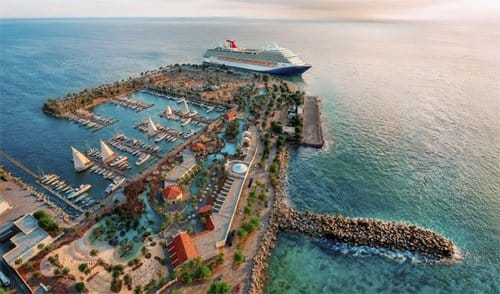
MSC Cruises joined the beach battle, opening Ocean Cay in late 2019. In addition to the industry-standard features of beaches and sports attractions, it is unique as it hosts the MSC Marine Reserve. MSC currently has an expansion and upgrade project underway that will expand the pier to allow two ships to dock simultaneously, new restaurants, more beach area, and adults-only areas. The upgrades are due to be completed by late 2027, and MSC is also developing a newly-created nearby island, which it calls Sandy Cay, as a luxury destination due to launch in 2028 for its Yacht Club passengers and Explora Journeys.
More Revenue Opportunities
The cruise lines are seeking to further differentiate their destinations, with Bonatsakis noting that “the gap is widening.” Royal Caribbean is leaning into paid thrills, notes Bonatsakis, and pricier zones, a model Norwegian Cruise Line is following. Others, like Half Moon Cay, “are more of a quiet, classic beach day,” while Disney developed a second island and increased the family premium experience.
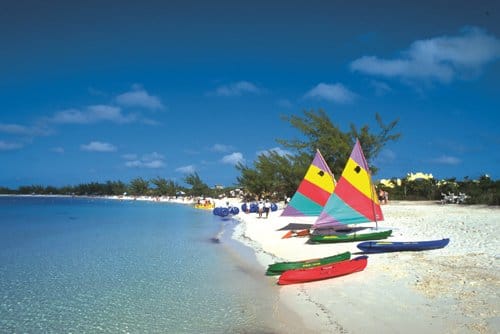
Holland America's Half Moon Cay remains one of the more relaxed beach experiences without the amusements (HAL)
For the passengers, a day at the islands can be pricey. Sebastian Garrido, digital marketing manager at Vibe Adventures, highlights that Royal Caribbean has a base charge of $56 for its Hideaway Beach, $100 for the waterpark, and cabanas ranging from $1,000 to $10,000 for a family cabana. Norwegian has excursions such as a zip line at $110 and swim-with-pigs at above $200.
“When a stop lets you raise prices and still fill the ship, that’s real demand,” says Bonatsakis. The cruise lines have also started “double dip” itineraries visiting two of their private destinations on a cruise or cruises just to the private islands.
Royal Caribbean is expanding the offering to its premium brand, Celebrity Cruises, and taking the concept beyond the Caribbean. In addition to a beach club in the Bahamas, Royal Caribbean opened a beach club on Santorini in Greece. In late 2027, it plans to open Royal Beach Club Lelepa, in the southwestern Pacific island nation of Vanuatu, which the line says will raise the bar on vacations in the South Pacific. However, it ran into environmental protests for a planned Perfect Day Mexico destination on Mexico’s east coast near Costa Maya in the Caribbean. The company says it is looking to relocate the planned development.
The popularity of these destinations builds on the controlled experience of a cruise and provides the lines with new opportunities to differentiate their products. The strong financial contribution to the lines and the ability to manage concerns such as port overcrowding are likely to continue to drive these investments and see the application of private ports continue to expand.
Holland America Adopts Carnival's Evolution Strategy for Updating Ships
Among the changes, Holland America will add two Bridgeview Suites to each ship with sweeping views (HAL)
Holland America Line is rolling out the details of what it is calling the largest fleet update in the 153-year history of the company and harkening back to the late 1960s and early 1970s when its liners were converted to be year-round cruise ships. Updating popular existing ships of the fleet is a strategy that has served Carnival Corporation well and provides an opportunity to add new features and more revenue opportunities.
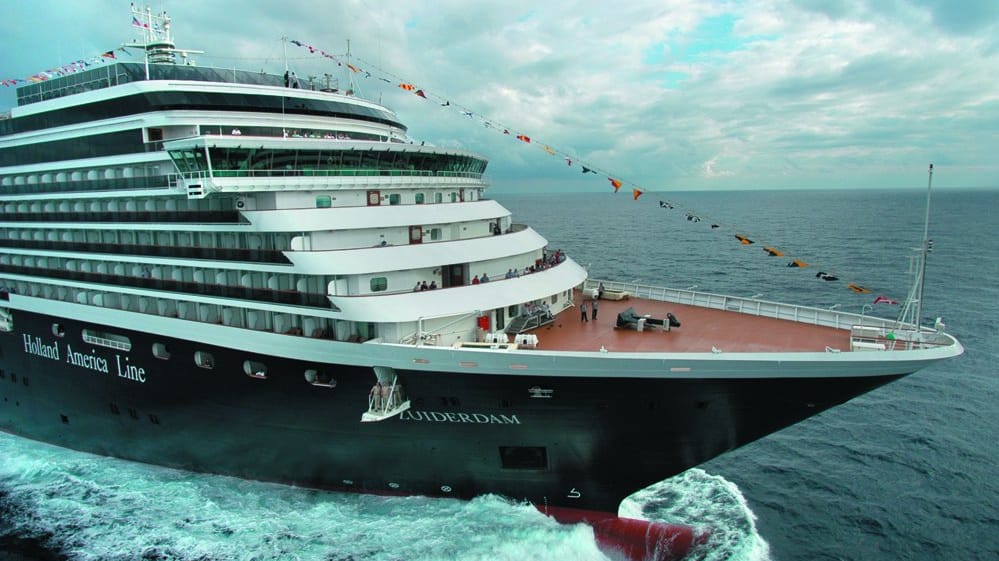
For Holland America, the strategy calls for investing over $500 million over the next few years to enhance its four Vista class ships (Oosterdam, Zuiderdam, Westerdam, and Noordam) as well as two Signature class ships (Nieuw Amsterdam and Eurodam). The ships range in age, having been introduced between late 2002 and 2010. The first ship to undergo what the company is calling its “Evolution” is Oosterdam, which will be out of service from mid-October to December 2027 and will be followed by Zuiderdam in 2028. No dates have been announced for the other four ships.
"Our guests have been very clear about what they love about our ships and what they want to see more of, and Holland America Evolution is our answer to that," said Beth Bodensteiner, president, Holland America Line, announcing the program in April. "This investment allows us to introduce experiences and venues that are new to the fleet, add Pinnacle class favorites like Grand Dutch Café, and create new stateroom categories designed for the way people travel today, all while preserving the perfectly sized ship experience that defines Holland America."
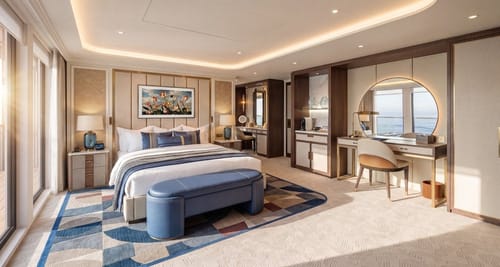
The bedroom of one of Holland America's new luxury suites, the 1,550 sq. ft. Pinnacle Suite (HAL)
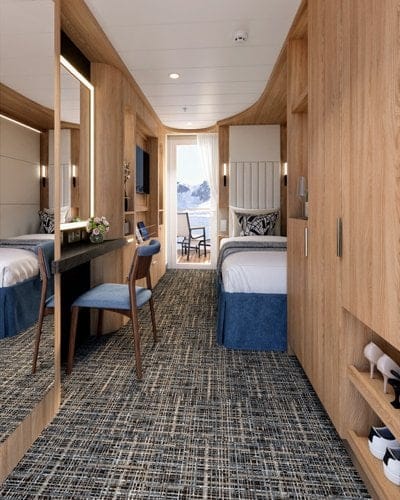
Following one of the key trends in the industry, Holland America is adding 30 purpose-built cabins for solo travelers, each with a veranda. The company introduced a handful of ocean view solo occupancy cabins on its Pinnacle class ships, which have been very popular, and now it is elevating the concept with verandas. It involves reworking the spaces used by existing double occupancy cabins.
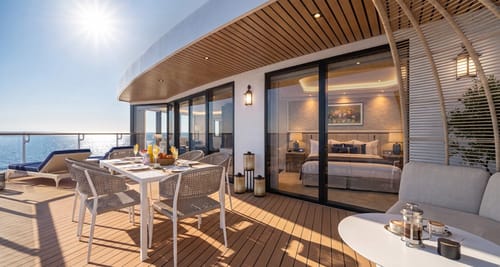
Following a concept that proved popular on Carnival Cruise Line, they are adding two Bridgeview Suites with forward-facing views with wraparound windows, replacing some of the space in the current spa. They are also creating a large new suite (1,550 square feet), the Pinnacle Suite, although the ships go from two to one of these suites per ship. They are also introducing a new suite category called Vista Suites (280 square feet).
Holland America is creating solo occupancy cabins with verandas (HAL)
Public spaces are also being reworked, including the addition of a popular casual dining space on the line’s newest ships called the Grand Dutch Café. It is part of a “comprehensive ship-wide refresh,” which the company says will update all staterooms, bathrooms, carpeting, soft goods, corridors, and select public areas. Behind the scenes, targeted technical investments will improve energy efficiency with smarter power management.
The net changes on the 82,300 gross ton cruise ships increased the passenger cabin and suite count to a total of 1,030 from the current 993, while lower-berth capacity increases from 1,986 to 2,028 passengers. Holland America is working with Fincantieri, which built the ships, and which will execute the Evolution at its shipyard in Palermo, Italy.
The new bridgeview suites have a large veranda and sweeping views (HAL)
Holland America is launching its Evolution, as Carnival Corporation’s AIDA brand is also executing its Evolution program. It launched in 2025 and added new suites, bars, and restaurants, and redecorated AIDAdiva, AIDAluna, and AIDAbella, with each ship spending almost seven weeks in dry dock. All told, AIDA plans to invest approximately €700 million in its fleet modernization program.
AIDA Cruises’ President Felix Eichhorn explains that by investing in the modernization of its Selection fleet. The line is demonstrating it is clearly committed to its smaller ships. He says they are making them fit for the future while at the same time “committed to constantly rethinking cruising.”
The same strategy was used at Carnival Cruise Line, which has undertaken refits across most of its fleet over the past decade. It continues to add new features to its existing ships while also introducing new ships.
Even the venerated Cunard Line is quietly adopting the same strategy. A decade ago, it “re-mastered” the Queen Mary 2 with new staterooms and modernized spaces. The company confirmed to The Maritime Executive that during a scheduled refit in March 2027, they will introduce 30 new staterooms on board Queen Mary 2, and there will be updates in selected areas across the ship. Cunard also announced on Monday a planned three-week drydocking for Queen Victoria this fall to refresh spaces, including its suites, add eight new cabins, and introduce The Pavilion Wellness Café.
Revitalizing and modernizing existing ships has proven to be a very effective strategy for the cruise corporations. They are adding additional revenue opportunities and adding new luster to ships that have become familiar to travelers. Look for similar programs across more segments of the industry as the costs of new ships continue to rise and the corporations look for opportunities with their existing fleets.
MSC Cruises Innovates with Retrofits to Bring Yacht Club to More Ships
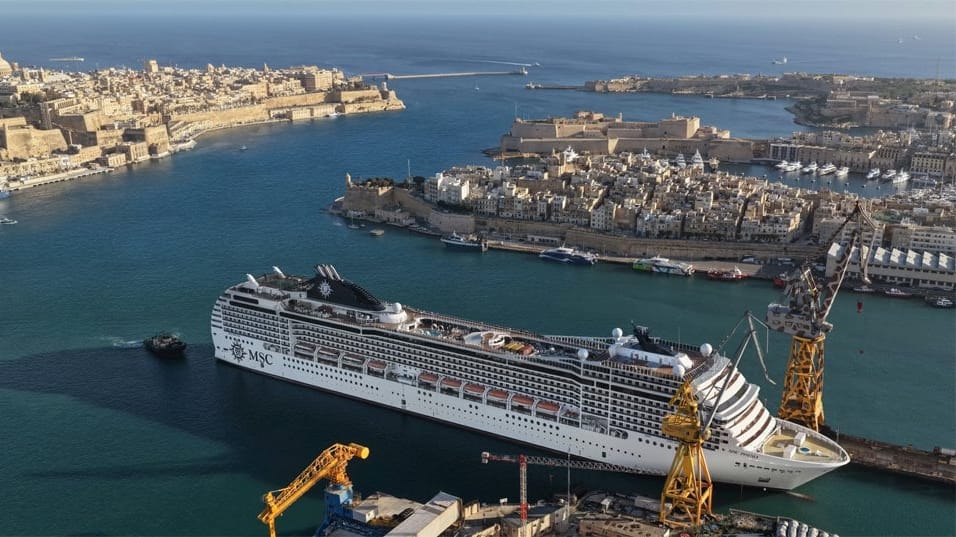
MSC Poesia arriving in Malta to begin the retrofit to add the Yacht Club earlier this year (MSC Cruises)
MSC Cruises has taken a unique position within the cruise industry, expanding its popular ship-within-a-ship concept called the Yacht Club to more vessels in the fleet. The line points to the popularity of the concept, explaining that by becoming the first cruise line to retrofit the suite enclave concept on existing ships, it is responding to passenger demand and will be able to offer the experience on more itineraries.
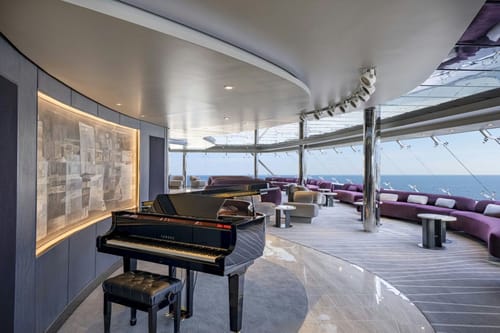
The suite enclave, which made its debut in 2008 on MSC’s Fantasia class (137,930 gross tons), offers passengers suites with private access to a lounge, restaurant, pool deck with a bar, and butler and concierge service. The offering continues to grow and evolve for MSC as an element of all its new cruise ships. In 2025, however, the company reported that it was planning to extend the same feature to the Musica class (92,400 gross tons), which had been built between 2006 and 2010.
The first ships to be retrofitted were MSC Poesia so that Yacht Club could be offered on its first Alaska cruises this summer, and on the MSC Magnifica, which is sailing this summer in Northern Europe from Germany. The MSC Magnifica will also feature for the first time the Yacht Club on the line’s 121-night World Cruise departing in January 2027. The retrofitting of the Yacht Club to the class will be completed with MSC Musica in November 2026 and MSC Orchestra in March 2027.
The concept of a ship-within-a-ship is not new and harkens back to the days of the ocean liners, which traveled with multiple classes of accommodations. In the 1950s, so-called Tourist Class liners created smaller areas of First Class accommodations with their own lounge and dining areas. In the modern era, Norwegian Cruise Line inherited designs for giant suites and private areas when Star Cruises transferred new builds to the brand after the acquisition in 2000. Its first enclaves started in 2005, and in 2011, NCL branded the space The Haven, also complete with a private restaurant, lounge, pool and sun deck.
Other cruise lines have tried limited applications of the enclave or elements similar to the concept. Lines such as Celebrity Cruises have a dedicated dining room for the suites and have added that feature to some of their older ships. MSC’s program, however, is the most extensive expansion to existing ships yet seen in the industry.
MSC repositioned and updated the spa and gym to create a new private lounge for the Yacht Club -- Top Sail on MSC Magnifica (MSC Cruises)
"This program demonstrates that innovation in cruising isn't only about building new ships,” said Cristian Comirla, Vice President, MSC Yacht Club. “The introduction of MSC Yacht Club to the Musica class represents a significant transformation that combines complex technical upgrades with a premium hospitality offering, enhancing the value, competitiveness, and guest appeal of these vessels for years to come.”
MSC highlights that the program represents a comprehensive transformation of key guest and operational areas on the Musica class. It requires significant engineering, construction, and commissioning work to integrate the Yacht Club. As with any major refit, a significant portion of the work takes place long before construction begins, with careful planning required. MSC points to the need for extensive coordination across shipboard, shoreside and shipyard teams to ensure that the new MSC Yacht Club facilities, services and operating model are fully integrated and ready for delivery from the vessel’s return to service.
The physical refurbishment is being carried out during a dry dock period of up to 60 days per vessel at the Palumbo Malta Shipyard in Valletta, Malta. The dry dock phase represents the execution stage of a much broader program involving detailed design, technical engineering, procurement, project planning, crew training, and operational preparation.
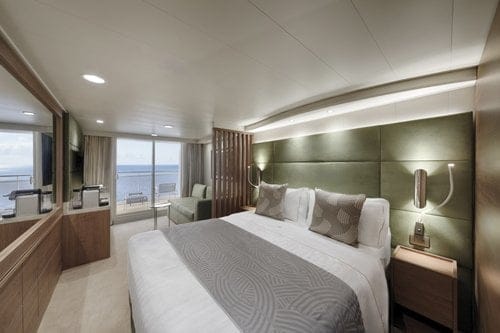
Existing accommodations are being reconfigured to create 63 larger suites on each ship (69 suites on MSC Poesia), and the travel range of one elevator is being extended. The spas and gyms are being rebuilt and modernized while also making space for the Yacht Club Lounge. Spaces are being redesigned along with the creation of two new galleys to support a new Yacht Club Restaurant and two enhanced specialty restaurants. Dedicated sun deck areas for the Yacht Club with whirlpools, loungers, a bar and grill are also being created.
MSC is renovating and creating new suites for its Yacht Club aboard the existing ships of the Musica class (MSC Cruises)
The scope of the project is highlighted by the numbers. More than 1,400 people were involved throughout the project, managing a complex logistics operation involving approximately 12,000 pallets of materials and equipment and around 370 truckloads. Around 5,000 square meters of new carpet is being installed along with approximately 1,500 new glass balustrades.
“The MSC Yacht Club is one of our most highly regarded products, loved by guests for its outstanding level of service, elegant spaces, and exclusive facilities, so we are proud to be bringing this to MSC Magnifica,” said Gianni Onorato, CEO of MSC Cruises, when the company announced the program in 2025. “The extensive remodeling is the largest we’ve undertaken in the last ten years and underlines our commitment to offer our guests the best possible guest experience across our entire fleet.”
Overall capacity on the ship is actually being lowered on the Musica class ships, but the company is confident in the enhancements to the offering and the continued passenger demand for the product. When MSC Orchestra is completed in the spring of 2027, MSC Cruises will be offering the Yacht Club on 19 ships across its fleet of 24 cruise ships.