Aftermath of Russian missile strike in Ukraine. Photo Credit: Ukraine Emergency Services, @SESU_UA, X

By Patial RC
Key Takeaways:
The war is increasingly a contest of industrial capacity, demography and endurance, with Europe now carrying the main burden of support as U.S. assistance declines.
These structural pressures suggest the conflict is entering a decisive phase in which political calculations and the search for a negotiated settlement may gradually outweigh pure battlefield outcomes.
The daily devastating Russian missile strike on Kyiv that leave several dead and dozens injured may well be remembered as more than another tragic chapter in the Russia-Ukrainian War. For the first time in recent months, Ukraine acknowledged that it had failed to intercept a single ballistic missile launched during the assault, despite successfully destroying nearly one hundred attacking drones. The incident has revived an increasingly important strategic question: Has the war entered its end game or is it a ruse to force Ukraine into a serious peace dialogue?
The answer is neither simple nor absolute. One night’s inability to intercept ballistic missiles does not determine the outcome of a conflict that has stretched over four-and-a-half years. Yet it does illuminate deeper military, political and economic realities that are reshaping the battlefield. Behind the spectacular explosions over Kyiv lies a far more consequential struggle—one involving industrial capacity, demographic endurance, alliance politics and strategic patience.
The Changing Character of Russia’s Air Campaign
Russia’s military strategy has evolved considerably since the early months of the invasion in 2022. Initial expectations of a rapid victory gave way to a grinding war of attrition. Today, Moscow relies increasingly on overwhelming combinations of drones, cruise missiles and high-speed ballistic missiles designed to saturate Ukraine’s air-defence network.
The latest attack demonstrated the effectiveness of this approach. Ukrainian air defences reportedly destroyed ninety-eight of the 115 drones launched overnight but failed to intercept any of the ballistic missiles. The distinction is crucial. Slow-moving drones can usually be tracked and engaged by multiple layers of air defence. Ballistic missiles, however, descend at hypersonic speeds, leaving defenders with only seconds to react. Only a handful of advanced systems, notably the American Patriot, have consistently demonstrated the capability to intercept such weapons.
President Zelensky was quick to attribute the failure to dwindling stocks of interceptor missiles. He stated that deliveries of air-defence missiles from Ukraine’s partners had fallen dramatically compared with the previous year, underscoring Kyiv’s growing dependence on continued Western military assistance.
Air Defence: More Than a Military Asset
Air defence is often viewed purely in military terms, but its strategic importance extends much further. Every successful interception protects civilian lives, preserves critical infrastructure, maintains economic activity and strengthens public morale. Every missile that penetrates these defences imposes costs far beyond the immediate physical damage.
Russia understands this dynamic well. Rather than attempting to overwhelm Ukraine solely through ground offensives, Moscow appears increasingly focused on exhausting Ukraine’s limited inventory of expensive interceptor missiles. Each successful strike not only damages infrastructure but also forces Kyiv to expend scarce defensive resources. It is a classic war of attrition in which economics becomes as important as battlefield tactics.
The recent attack therefore represents more than a temporary operational setback. It raises legitimate questions about whether Ukraine can sustain its defensive posture if advanced interceptor supplies continue to decline.
The Emerging Burden on Europe
Perhaps the most significant strategic shift of 2026 has been the changing balance of international support.During the early years of the conflict, the United States was the principal supplier of advanced military equipment, intelligence and financial assistance. More recently, however, the burden has increasingly shifted towards NATO members. European countries are now providing the overwhelming share of military and financial assistance, with Germany emerging as the principal supporter. The Trump administration has sharply curtailed new military assistance to Ukraine, leaving Europe as Kyiv’s main source of financial and military support.The US interests have shifted to deal with Iran.
This transition has important implications. European Union countries face slowing economies, budgetary pressures and increasingly divided domestic political opinion regarding continued support for Ukraine. While political leaders remain committed to Kyiv’s defence, sustaining high levels of military assistance indefinitely presents growing challenges.
If interceptor missiles, advanced radar systems and long-range precision weapons become increasingly difficult to replace, Ukraine’s military position could gradually weaken regardless of the determination of its dwindling armed forces.
Zelensky Meets Trump
Reviving Russian Peace Talks. Ukrainian President Zelensky met with his United States counterpart Donald Trump at the White House on 28 Jul 2026. Discussions included plans for reviving Russian peace talks.However, diplomatic efforts have slowed recently as Washington focused on other foreign policy priorities.
Ukraine to produce Patriot missile interceptors. A joint production venture. Earlier Trump had agreed to allow Ukraine to jointly produce Patriot air defence interceptors, a crucial component of the country’s defence against Russian aerial attacks. A US official told Reuters that the most feasible option for Patriots would be making some components in Ukraine and assembling them in Germany, where an older Patriot model is already made and the more advanced PAC-3 is expected to be produced as well. Trump has now raised security concerns about handing over highly secretive Patriot blueprints in their entirety to Ukraine. US and Ukraine are also moving closer to a deal on joint drone production, which could help the US catch up with Ukraine in an important military technology.Ukraine is on track to produce six to seven million short-range attack drones this year, while the Pentagon’s $1.1bn production programme is expected to have ordered nearly 200,000 drones by February 2027.Ukraine has proven adept at producing large volumes of dramatically cheaper yet equally or more effective missiles and drones compared with those made by western allies.
The Demographic Reality
Military historians have long argued that wars of attrition are ultimately decided not by tactical brilliance but by structural endurance.Ukraine’s population under government control has fallen dramatically, reducing the pool of available military manpower while simultaneously shrinking the country’s economic and industrial base.
Demography is rarely discussed in daily battlefield reports, yet it remains one of the most decisive elements of prolonged warfare. A smaller working-age population means fewer soldiers, lower tax revenues, reduced industrial production and greater dependence on foreign assistance.
Russia also faces demographic challenges of its own, but its significantly larger population provides greater strategic depth in a prolonged conflict.Manpower and economic resilience will heavily influence the ultimate outcome of the war.
Ukraine’s Deep Strikes: Tactical Success or Strategic Solution?
Despite increasing defensive challenges, Ukraine has demonstrated extraordinary innovation in offensive operations. Long-range drones have repeatedly penetrated deep into Russian territory, striking airfields, fuel depots, logistics centres and industrial facilities.
These operations have imposed real costs on Russia. They have forced Moscow to disperse strategic assets, strengthen homeland air defences and absorb repeated attacks on military infrastructure.
Nevertheless, these operations are tactically impressive but cannot by themselves alter the overall strategic balance. Infrastructure can often be repaired or rebuilt, whereas territorial control and sustained military pressure require manpower, logistics and industrial capacity.
The Political Dimension
No modern war is fought solely on the battlefield.Political resolve in Washington, Brussels, Berlin, Moscow and Kyiv may ultimately prove more decisive than developments along the front lines.
Much attention now centres on President Donald Trump’s administration and its future policy towards Ukraine. Speculation continues regarding whether Washington will seek a negotiated settlement or maintain selective military assistance while encouraging diplomacy.
At present, however, there is no publicly confirmed “Trump card” capable of ending the conflict overnight. Any eventual settlement will almost certainly require difficult compromises, extensive negotiations and political willingness from all parties involved.
History suggests that wars of attrition rarely end through total military victory. More often, they conclude when the economic, political and human costs become unacceptable for one or both sides.
Is This Truly the End Game?
The phrase “End Game” should be used with caution.The inability to intercept a single night’s ballistic missile barrage does not mean Ukraine is on the verge of collapse. Ukrainian forces continue to demonstrate resilience, innovation and the ability to impose significant costs on Russian military infrastructure.
At the same time, the recent attacks highlight undeniable structural pressures: declining stocks of advanced interceptor missiles, growing dependence on European assistance, manpower shortages and the enormous economic burden of prolonged warfare.
These factors suggest that the conflict may indeed be entering a decisive strategic phase—not necessarily one of imminent military defeat for either side, but one in which political calculations could gradually overshadow battlefield operations.
Both warring nations face near demographic exhaustion, diminishing American military assistance for Ukraine and mounting European fatigue make some form of negotiated settlement increasingly probable by the end of 2026. Whether that prediction proves correct remains uncertain, but it deserves serious consideration as one possible trajectory rather than a predetermined outcome.
Conclusion
Ukraine’s inability to intercept Russia’s latest ballistic missile barrage should be viewed as a warning signal rather than a definitive verdict. It exposes NATO vulnerabilities that cannot be ignored but does not, by itself, determine the outcome of the war.
The future of the Russia-Ukrainian conflict will depend less on any single missile strike and more on the broader contest of national endurance—industrial production, demographic resilience, economic sustainability and political determination.
History teaches that wars are rarely decided by dramatic moments alone. “Wars are not won merely by capturing territory or destroying cities. They are ultimately decided by a nation’s ability to sustain the fight.”They end when strategic realities compel political decisions. There appears to be No strategy to end this war of attrition early either by President Putin or President Zelensky. Whether that moment has finally arrived for Zelensky remains one of the defining geopolitical questions of our time.
About Patial RC
Patial RC is a retired Infantry officer of the Indian Army and possesses unique experience of serving in active CI Ops across the country and in Sri Lanka. Patial RC is a regular writer on military and travel matters in military professional journals. The veteran is a keen mountaineer and a trekker.
View all posts by Patial RC →
Military shake-up poses little threat to Ukraine's ongoing drone revolution
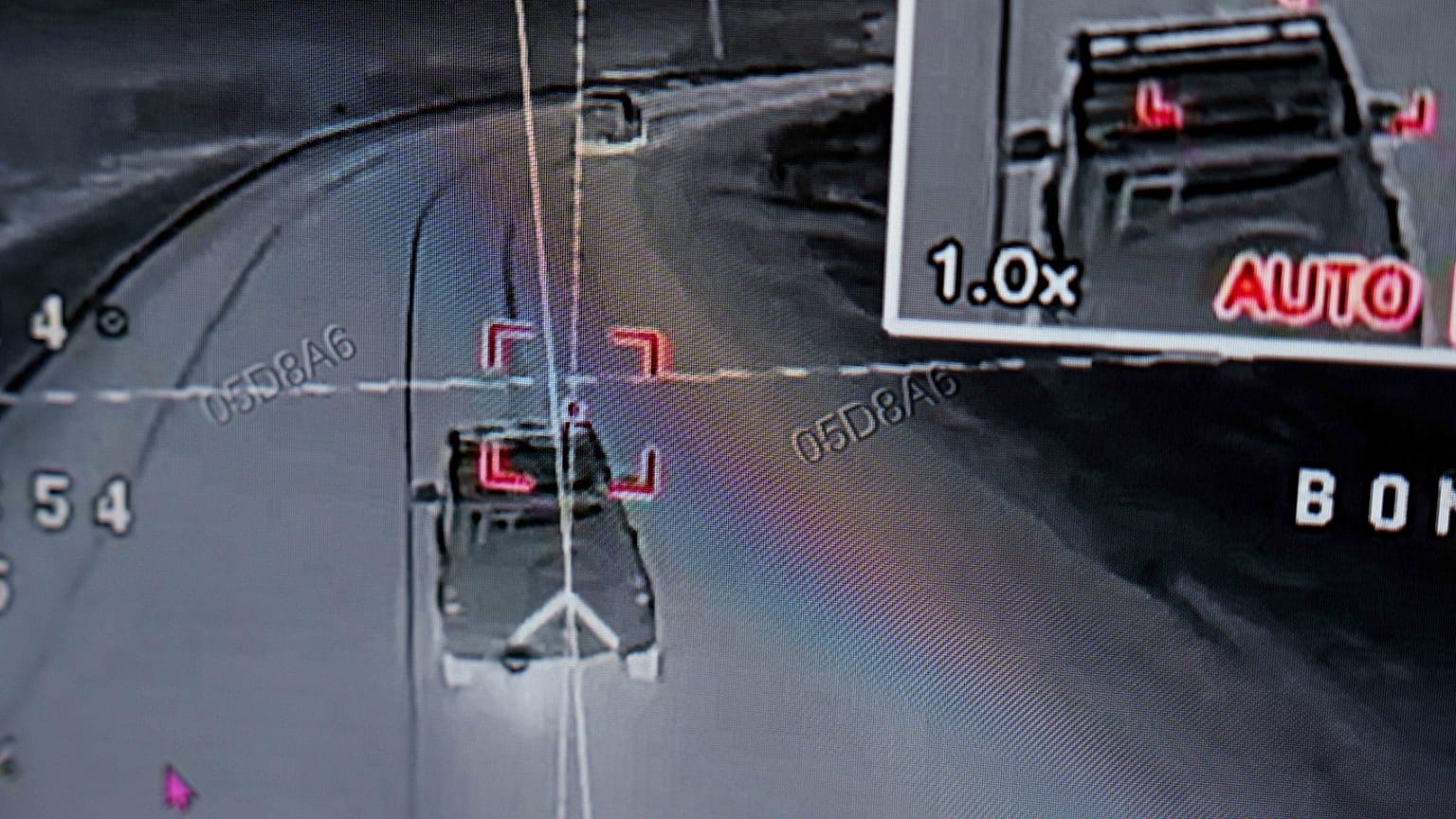
Ukraine has built a sprawling drone industry from scratch, hailed by President Volodymyr Zelenskyy as the best in the world.
Zigzagging between robots, weapons and computers in his garage workshop, Ukrainian engineer Eduard Trotsenko was bubbling with excitement as he showed off his latest prototypes and dreamed of sci-fi-inspired futuristic ideas.
Top of his ideas list are "mechanical birds" that can land on high-voltage power lines and recharge themselves, and "robot dogs" that can be sent into battle.
"In order to save human lives, to save soldiers, there must be robots," Trotsenko told the AFP news agency.
Autonomous weapons have come to dominate the war with Russia.
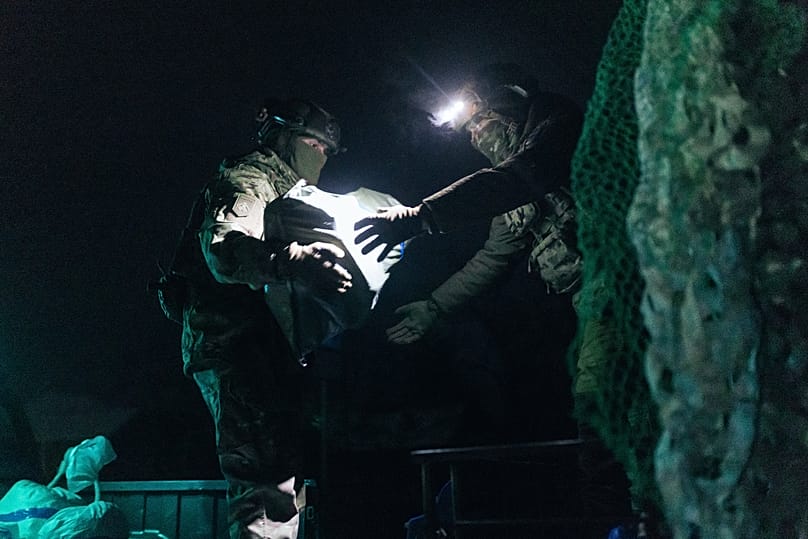
Aerial drones are used on the front lines for reconnaissance and to drop explosives, while down below ground robots support logistics operations.
Ukraine has built a sprawling drone industry from scratch, hailed by President Volodymyr Zelenskyy as the best in the world.
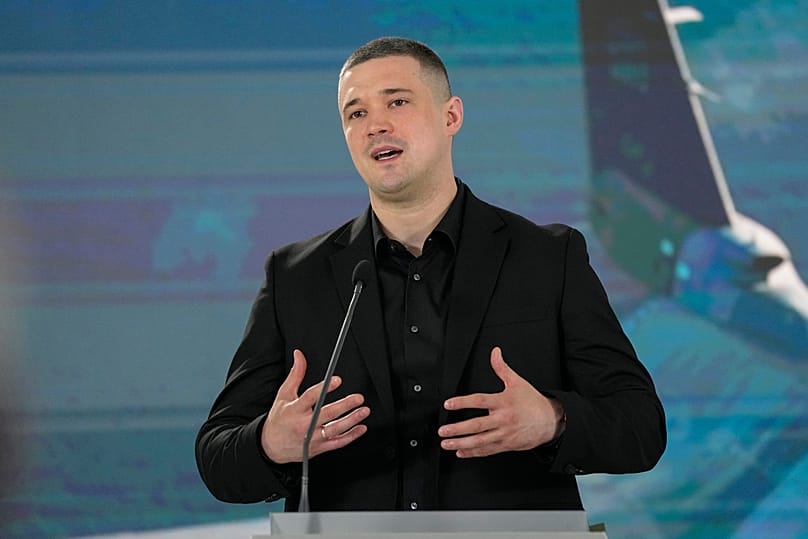
But the dismissal last month of popular defence minister Mykhailo Fedorov, one of the most ardent backers of drones, raised some concerns over the future of the sector.
"I don't understand why they sacked Fedorov," Trotsenko, the founder and CEO of robot manufacturer Temerland, said.
Despite his removal, industry players and military personnel AFP spoke to said there was no going back now.
"The young people there won't let it go. There'll definitely be drones," Trotsenko said.
Into the kill zone
When Russia launched its full-scale invasion of Ukraine in 2022, 55-year-old Trotsenko switched from making car charging stations to military robots.
His speciality is ground drones: autonomous vehicles that crawl the "kill zone," the kilometres-deep stretch of territory where Russian and Ukrainian drones lurk in the skies, posing a constant danger to anybody below.
For now, they mainly help evacuate wounded soldiers from the battlefield or ferry supplies, reducing the need to send more men into the kill zone.
But Trotsenko is looking at combat prototypes: one equipped with an RPG rocket launcher, the other with a heavy machine gun, controlled by onboard artificial intelligence (AI).
"They're currently being tested in some brigades," said Trotsenko, who is awaiting a green light for further rollout by the General Staff.
Fedorov had been crucial to pushing the technological shift within Ukraine's army.
He created the Defence AI Center A1, a hub dedicated to embedding AI in the military and using live feedback from the front to speed up the deployment of new technology.
Fedorov also pushed to bring private companies into the military system, putting competition at the heart of the army's innovation.
"In a private company, you can take risks more quickly," said Trotsenko, explaining how small companies were incentivised to modify and adapt at speed to win contracts.
'Bottom-up'
Hundreds of kilometres away, a 45-year-old military commander who goes by the call sign "Jason", was just back from a mission.
He heads a unit that operates the kind of ground drones that Trotsenko develops in his garage.
"You can afford to lose a drone, but not a person. The probability of human losses there is reduced," he told AFP.
That kind of mantra, using drones to save lives, was precisely what Fedorov had been pushing at the defence ministry.

After he was sacked, protestors forced out the Soviet-style commander-in-chief, Oleksandr Syrsky, who had clashed with Fedorov's reform drive, criticising him for not embracing drones and being too careless with soldiers' lives.
Asked whether Fedorov's removal could upset Ukraine's drone development, Jason brushes it off.
"It's not that simple...the technological initiative was not flowing from the top down. It wasn't a government order," he said.
After Russia invaded, "there was an explosion of bottom-up initiative."
Young engineers began to create new products, showed them to the military, who took what they wanted and then started their own development, he said.
Now, programmers, telecoms specialists and engineers are fully integrated into the army.
Jason said "the shortage of professionally trained people" is the biggest challenge he faces.
Back in Trotsenko's workshop, his engineers are already working to redefine the technological and geographical limits of war.
On a whiteboard, he sketched out his vision of the future: conflicts fought by "humanoid robots", controlled by operators in another country, or wounded soldiers lying in hospital beds.
"Things have really taken off," he said confidently.
ANALYSIS
Why has Ukraine's former military chief given up on NATO membership?
The former chief of Ukraine's armed forces, Valery Zaluzhny, says his country, fighting Russian invasion since 2022, will "never" join NATO – despite Kyiv's intention to become a member of the military alliance. While some analysts suggest Zaluzhny is primarily seeking to highlight the alliance’s weaknesses, others say he is laying the groundwork for a presidential bid.
Issued on: 05/08/2026 - RFI

"I know NATO very well. For roughly 12 years I've personally worked on mastering NATO standards, and every year I've listened to the same fairytale that we're about to join," Zaluzhny said at a meeting of Kyiv's ambassadors on Monday.
"Unfortunately, we never will," he added, in comments quoted by Ukrainian news site European Pravda.
Zaluzhny, a popular figure, was sacked as commander-in-chief by Ukrainian President Volodymyr Zelensky in February 2024, and is now the Ukrainian ambassador to the United Kingdom.
He said that "given the current level of development of the Ukrainian Armed Forces" it was impossible for Ukraine to join the alliance which, according to Zaluzhny, "adheres to doctrines dating from the Second World War".
Ukraine prides itself on its military industrial progress, particularly in drone technology, which it has developed extensively since Russia invaded the country in February 2022.
Official line
His statement stands in stark contrast to Kyiv's official line, whereby NATO membership remains a strategic objective enshrined in the Ukrainian constitution.
Political scientist Olexiy Haran says he is "surprised" by the former army chief’s comments.
"It is still Ukraine’s official objective, and I think it will remain so," he told RFI, adding that Ukrainians are nonetheless frustrated by the current situation with regards to membership.
"They are no longer certain that membership will materialise, but it remains their goal and they will do everything in their power to join NATO."
According to a poll published in April, nearly 69 per cent of Ukrainians are in favour of NATO membership.
Ruslan Bortnik, an expert on Ukrainian politics, echoed Haran's surprise. "It contradicts Ukraine’s official line. And it is very strange to hear such a statement from an ambassador appointed by the Ukrainian government," he told RFI.
Reliance on allies
For Haran, Zaluzhny’s comments could reflect his personal disappointment following years of cooperation with NATO – but could also be intended to serve as a wake-up call for Ukraine's Western allies.
"Perhaps he simply wanted to draw attention to the reality of the situation," he said. "If you cannot guarantee our security within NATO, if you are not even prepared to discuss it, then do what is actually necessary today to defend Ukraine. The West is doing a great deal and we appreciate it, but it is not enough."
In an opinion piece for UK newspaper The Daily Telegraph published last month, Zaluzhny said the war in Ukraine had "exposed uncomfortable questions about whether NATO is equipped for the conflicts of the 21st century".
Pointing out that "Ukraine's ability to sustain the war depends heavily upon continued backing from its allies", Zaluzhny acknowledged the importance of that support, but added that he believes the experience gained by the Ukrainian army now puts it ahead of several Western countries.
"Ukraine has every reason to appreciate the support NATO members have provided, and continues to provide. But respect for the alliance should not prevent an honest assessment of its shortcomings," Zaluzhny wrote.
Bortnik also posits that Zaluzhny is attempting to "put pressure on NATO" in order to draw its attention to Ukraine’s needs and secure further military and financial support.
Ukraine’s wartime unity put to the test by protests over military leadership
Political long game
Bortnik also puts forward a more political hypothesis: by declaring NATO membership impossible, Zaluzhny could be seeking to align his position with that of United States President Donald Trump's administration, which opposes Ukraine’s accession to NATO in the near future.
This, he argues, could be a way of making himself more "acceptable" in Washington’s eyes ahead of possible peace negotiations with Russia.
Zaluzhny is frequently portrayed as a potential rival to Zelensky in Ukraine's next presidential election. And according to several Ukrainian media outlets, a June poll showed 73 percent of the public had confidence in him.
Haran remains cautious, however, regarding this interpretation.
As long as Ukraine is at war and under martial law, no presidential election can be held, and there is no indication that a campaign is imminent, making it difficult, he believes, to establish a direct link between Zaluzhny's statement and a future candidacy.
For Bortnik, however, it could enable Zaluzhny to begin building an international profile: that of a figure capable of engaging with Washington and, in the long term, of taking part in a negotiated settlement of the conflict.
'New security architecture'
Zaluzhny believes Kyiv will need to align itself with the new blocs and alliances emerging in Europe.
He cites the Joint Expeditionary Force (JEF) as a potentially effective mechanism. Led by the UK, it brings together 10 countries – Denmark, Estonia, Finland, Iceland, Latvia, Lithuania, the Netherlands, Norway, Sweden and the UK itself.
This coalition operates outside NATO’s structures and focuses on strategic regions such as the Baltic, the North Sea, the Arctic and the North Atlantic.
Since November 2025, Ukraine has been its first external "enhanced partner". This status gives it access to intelligence sharing, joint exercises and regional planning. In return, Kyiv contributes its frontline experience, particularly with hybrid attacks, drones and long-range strikes.
However, Ukrainian media outlets have been quick to warn that the JEF provides for neither automatic collective defence, nor an obligation of mutual assistance comparable to Article 5 of the NATO Treaty.
Ukraine marks four years of conflict, as losses rise with no end in sight
Bortnik sees these discussions as a sign of a broader realignment.
“We are witnessing numerous attempts to create a new security architecture in Eastern Europe," he said. "There are ideas for smaller coalitions, bringing together European countries and the United Kingdom. Perhaps the aim is to create something new, complementary and specifically tailored to the Ukrainian crisis."
Zaluzhny’s statement remains a personal view and does not represent the position of the Ukrainian government. However, it has succeeded in raising questions over the future of Ukraine’s bid to join NATO, the search for alternative security guarantees, and the positioning of potential contenders to succeed Zelensky.
This article has been adapted from the original version in French by Sophia Khatsenkova.
Play - 05:31
Intensifying clashes between Ukraine and Russia in the Black Sea are threatening a crucial trade artery responsible for nearly a third of the world's wheat supply, stoking fears of soaring prices and shortages.

Earlier in July, a Russian cruise missile struck the grain carrier Golden Leo, claiming ten lives. This marked the deadliest blow yet in a mounting campaign by both Russian and Ukrainian forces targeting cargo ships in the Black Sea and the Sea of Azov.
"This is a new development in recent months," claims shipping analyst Yoruk Isik, who runs the Istanbul-based Bosphorus Observer consultancy. Isik warns that cargo vessels are caught in a deadly tit-for-tat.
"Ukraine has been targeting Russian seaborne bulkers in particular, the ones transporting stolen grain from the occupied territories of Ukraine," explains Isik, "Russia retaliated and hit Ukraine's civilian port infrastructure in Odesa; a mid-sized vessel carrying corn out of Odesa was totally sunk, other vessels were damaged, and sailors died," he adds.
Turkey’s Shipowners’ Association, having logged 136 incidents involving commercial vessels in recent months, is now urging its members to avoid the Black Sea altogether.
Beyond its role as a key channel for Russian oil, the Black Sea is a lifeline for global grain exports, with Russia and Ukraine among the top suppliers.
"It is very important to note that most of Russia's agricultural commodities are exported through the Black Sea, and that almost all of Ukraine's agricultural commodities are shipped via Ukraine's ports," warns Isik.
Bad timing for harvest
Around a third of the world's wheat moves through these waters. The surge in attacks across the Black Sea and the neighbouring Sea of Azov has brought exports to a near standstill.
"No port is officially closed, but almost no shipowner wants to go there, so trade is close to zero," claims Istanbul-based international grain dealer Can Atbasoglu. "Sellers want buyers to handle the vessels, and buyers want sellers to handle the vessels, but shipowners don't want to risk it."
This deadlock arrives at the worst possible moment: harvest time. "Normally, Russian sellers would have sold all their August cargoes by now; I don't know if anybody has any sales on their books at present," says Atbasoglu.
Turkey agrees deal to clear Black Sea of mines that threaten Ukrainian exports
Wheat prices are already reacting. "The price in Romania is, say, 20-25 percent higher – that's the clearest effect we're seeing. But everybody is waiting for some kind of intervention, and soon," adds Atbasoglu.
Turkey now leads a NATO mission, along with Bulgaria and Romania, to safeguard navigation in the Black Sea. However, former Turkish ambassador and navigation rights expert Mithat Rende believes Ankara will be wary of any effort to enforce passage for commercial ships. "It's very important that the Ukrainian war should not be transformed into a regional war," cautions Rende.
"Where would it stop? Would you fire missiles and intercept Russian missiles in the Black Sea? They (Russia) already accuse all of us of fighting Russia as NATO. It's very important to avoid such operations," he adds.
Full impact yet to be felt
Rende argues Ankara’s priority is diplomacy, having played a pivotal role in brokering the 2022 United Nations-backed grain export deal after Russian forces blocked Ukrainian shipments. "Turkey maintained a dialogue with both the Russian and the Ukrainian sides at the same time," says Rende, "But is there political will for a ceasefire now? I don't see it at present."
Grain trader Atbasoglu warns the full impact of the disruption is not yet reflected in prices. "Buyers are still not fully reacting. It's seen more as an August, or at the latest a September issue, and the markets still want to believe both sides will get together and talk," he says.
However, Atbasoglu cautions that time may be running out. "In 2022, Ukraine was completely closed off, and there was a major panic. We saw the effect: wheat prices jumped 50 percent in 2022, and we could expect something similar if this continues," he concludes.
Africa and the Middle East, which are heavily reliant on Black Sea grain, are beginning to seek pricier alternatives. Europe, too, may soon feel the strain, as drought-hit wheat harvests threaten to push global food prices even higher.
By: Dorian Jones