Sunday, April 06, 2025

UK

A one-sided view of the rise of Keir Starmer and his courtiers


Mike Phipps reviews Get In: The Inside Story of Labour Under Starmer, by Patrick Maguire and Gabriel Pogrund, published by Bodley Head.

Journalists Patrick Maguire and Gabriel Pogrund have a reputation for being quick off the mark with these Labour ‘inside stories’. Their Left Out was the first in a slew of diverse assessments of Jeremy Corbyn’s leadership of the Party, but of course, first does not always mean best. This reviewer was left singularly unimpressed by the authors’ credulity for the propaganda put out by Corbyn’s opponents and the book’s “sniggering gossip-column vibe.” Would Get In be any better?

Polishing the lacklustre

Once you get beyond the same irritating, breathless style that pervades the book, certain things become clear. One is the central importance of Morgan McSweeney, Keir Starmer’s Chief of Staff, also recognised in Anushka Asthana’s fatally shallow book, Taken As Red, which narrowly beat Get In into print. Like Asthana, Maguire and Pogrund have a tendency to see McSweeney as wise, far-sighted and infallible.

Before 2019, McSweeney had worked doggedly to undermine the Corbyn movement, caricatured here as being awash with antisemitic conspiracists. Were that the case, a secretly masterminded operation would hardly have been necessary to overthrow it. But such inconsistencies don’t worry our authors, whose view seems to chime with McSweeney’s line that Corbyn’s supporters, were a “hate factory”, as the Sunday Times headlined in April 2018.

Starmer’s rise to the Labour leadership, as told here, reads like the outcome of a brilliantly plotted strategy. The reality is far more banal: the wannabes who ran for the leadership after the 2019 general election debacle were a pretty lacklustre bunch, Starmer perhaps slightly less than the rest.  

Of Starmer they write: “Having promised unity with the left, he proceeded to purge the Labour Party with unprecedented vigour. Every principle he said he held dear in 2020 has been ritually disavowed.” That at least is accurate.

However, his first Shadow Cabinet was not dominated by the mainstays of the Labour right who run the show today: the shift in that direction would take a couple of years. The version here is that Starmer preached unity, while behind the scenes McSweeney practised division and retribution against the left, pushing hard to get David Evans appointed as General Secretary.

The rightward lurch

Different theories have circulated about Starmer’s lurch rightwards. Some suggest he deliberately lied during his leadership campaign to win grassroots votes, always intending to move to the right. Others contend that he was more clueless and that his lack of progress in 2020 in 2021, including losing the Hartlepool by-election, led him to panic and bring in the hatchet-men of the Labour right that Peter Mandelson recommended. What’s incontestable is McSweeney’s influence over Starmer even before this process began: “the mastermind of a deception without precedent in British politics,” as Maguire and Pogrund floridly put it.

And so we revisit each step of this grim process. Yet for all its claims to be an exposé, the book is often curiously ‘on message’, repeatedly presenting the leadership view, for example, Starmer as decisive, with a clear understanding of right and wrong, as when he sacked Rebecca Long Bailey for tweeting in support of Maxine Peake in June 2020, the authors even insinuating that she deliberately chose to get fired.

In fairness, Maguire and Pogrund are a bit more even-handed over Jeremy Corbyn’s suspension, pointing out that his declaration that antisemitism had been “deliberately overstated for political reasons by our opponents” was “little more than a statement of the obvious.” The story here seems to be that Starmer’s aides were determined to trap and victimise Corbyn – which they duly did. Strenuous efforts by allies of both Starmer and Corbyn to get a clarifying statement from the latter succeeded in lifting his suspension – whereupon Starmer, under pressure from right wing parliamentary colleagues, reneged on his pitch for unity by denying Corbyn the parliamentary whip.

The Hartlepool by-election of May 2021 was indeed a turning point and the detail Maguire and Pogrund unearth on this is shocking. Following this disastrous loss, Starmer was convinced he should quit as Labour leader. “Don’t do anything until Morgan gets here,” he was told.

McSweeney of course saw the crisis as an opportunity – to declare all-out war on the left, bury the idea of Party unity and move the Shadow Cabinet firmly rightwards. “Plans for this moment of truth had been in train for months,” say the authors.

Yet the ensuing reshuffle was damagingly botched. A furious Deputy Leader Angela Rayner learned of her removal as campaign coordinator from the media, before Starmer had the chance to speak to her and offer her another job. At that point, some of her aides reckoned she could have, with union backing, launched a successful challenge against Starmer’s leadership.

But they are not called the ‘soft left’ for nothing! Rayner calmed down and eventually accepted a job in Starmer’s Shadow Cabinet – which in other respects moved decisively to the right.

The Batley and Spen by-election followed Hartlepool. So terrified of losing were Labour’s campaign managers that they put out arguably sectarian leaflets to appeal to Muslim voters and even pushed – unsuccessfully, of course – for the whip to be restored to Jeremy Corbyn, such was his enduring popularity among voters. In the event, Labour held the seat by a whisker.

Meanwhile, McSweeney continued to scheme. It was he who plotted – even behind the backs of Starmer’s colleagues – to make it more difficult for future would-be Party leaders to get themselves nominated, and pushed it through the 2021 Labour Conference. Yet, more than anything McSweeney or any other Labour official did, it was Boris Johnson’s and Liz Truss’ unfitness for office that helped Starmer on the way to Number Ten.

Palestine

Even as late as October 2023, Starmer’s aides seem motivated above all by a need to define themselves against the demons of the left, no matter how marginalised they now were. There are several pages here about how a minute’s silence was arranged at that that month’s Party Conference in response to the Hamas attack in Israel and how any leftist disruption of it might be dealt with – as if that were remotely likely.

But even here, the authors can’t resist a snipe at Jeremy Corbyn, who supposedly “barked at interviewers” his opposition to atrocities on both sides of the conflict, as though that should somehow be a cause for condemnation. On the other hand, Keir Starmer is seemingly excused for his LBC interview comments that Israel had the right to cut off water to the inhabitants of Gaza – a war crime – because he was “tired”.

When the inevitable furore blew up in response to his words, Starmer’s office consciously decided not to issue a clarification, but instead tried, unsuccessfully, to get the now-viral LBC clip taken off social media. Support for Labour among Muslims went into freefall and prominent Muslim Labour councillors began resigning.

Several Shadow Cabinet members – including Wes Streeting – warned of the danger. But McSweeney was unimpressed. The Labour Muslim Network, he messaged colleagues, “are not an affiliated organisation and are not good faith actors.” Days later, Starmer clarified his comments but neither apologised nor called for a ceasefire – unlike Mayors Sadiq Khan and Andy Burnham.

In Maguire and Pogrund’s telling, ex-civil servant Sue Gray, who was now Starmer’s Chief of Staff, tried to repair the relationships with elected colleagues that the arrogant boys around the leader were so careless of. But her efforts were undermined by Starmer’s continued refusal to countenance a ceasefire and her attempts at ‘healing’ provoked the ire of the ever-divisive of McSweeney, who would soon engineer her demise.

The influence of the unelected – and more war on the left

Some mainstream reviews of this book have focused on the personal gossip, overlooking more important political details. For example, post-election there was a lot of media coverage of personal donations to Keir Starmer, totalling £500,000, from Lord Waheed Alli, for suits and suchlike. Labour responded to these reports that Alli had never wielded influence over policy. “This was not true,” say the authors. A proposed ban on overseas donations to parties, to be announced by Deputy Leader Angela Rayner, was abandoned, allegedly at his insistence. Once Labour were elected, Alli reportedly vetted appointees to ministerial office and other government posts.

As the general election approached, a new purge of left wing candidates was mounted, although the focus here is less on the attacks on the left and more on the deadbeats from the New Labour era who were discouraged by aides from seeking a second chance. Yet for all the leadership’s supposed meticulous preparation for the big event, the first week of campaigning was dominated by its shabby treatment of Hackney MP Diane Abbott. Thanks to her dogged campaigning, she survived to run for Labour again: others, like Brighton MP Lloyd Russell-Moyle were ruthlessly barred on spurious grounds.

After the election

The general election saw Labour win a landslide of seats, but the lowest share of the popular vote since 1832, on the second lowest turnout in a century. Regarding McSweeney’s quest to “Change Labour, Change Britain”, the authors write: “The first half of the mantra was now fulfilled, but it would be for others to begin the work of government.”

If only! The rapid unravelling of Keir Starmer’s government over the next three months had the fingerprints of the over-reaching and divisive McSweeney all over it. You won’t read that here, however: most of the chapter on Starmer’s first 100 days are devoted to a one-sided account of the rivalry between McSweeney and Sue Gray, until the latter was forced out.

It emerges from this episode just how dysfunctional the Number Ten operation was. Ultimately, one man is to blame for that: Keir Starmer. He is portrayed here as often so aloof as to be politically disengaged, so that even his aides could speak of him as a useful idiot, sitting at the front of a driverless train controlled by others.

“A pack of totally shameless liars”

Owen Jones concluded after perusing this book: “The right-wing faction of the Labour party are some of the most vicious, unpleasant people you are very likely to meet in British politics. And given British politics is a cesspit, that’s quite the bar to surpass.”

That would matter less, were it not for the fact that trust in politics in Britan is at a record low. Worse, faith in democratic institutions, especially among young people, is at its lowest in living memory. Against this backdrop, the cynicism and manipulativeness of people like Morgan McSweeney look increasingly unaffordable in a free society.

Owen Jones’ critique underlines this: “The fact that Keir Starmer’s leadership campaign was an epic political deceit, a pack of lies to con Labour members into voting for their man, is simply treated as a matter-of-fact throwaway comment, too obvious to even bother unpacking. Really? Is it not of wider interest that the people running the country are a pack of totally shameless liars? Is there no sense of just how damaging this is to democracy, not least when an ascendant authoritarian right seeks to exploit growing public disaffection with it?”

The reason such deception is not properly scrutinised is simple: those who dominate the UK media loathe the left, who  “are not seen as legitimate political actors, but an alien toxin to be eliminated from our body politic.”

Keir Starmer has followed the right wing playbook assiduously and his poll ratings continue to plummet. His closest aides may mock him in private now, but they could well turn on him later. Yet, the government’s failings are not really about personality or communication so much as policy: the Labour right simply don’t have the answers to address the cost of living, housing, health and environmental crises. Ruling out higher taxes on the wealthy and betting the whole economic house on growth is a gamble that in a post-Brexit, Trump-tariff world is unlikely to work. And those who voted for ‘change’ will be in no mood to give Labour a second chance.

By then, the mediocrities around Starmer will have moved on to more lucrative careers in the private sector, in all probability. The rest of us will be suffering the consequences of the inevitable backlash to their arrogance and failures for some time to come.


Mike Phipps’ book Don’t Stop Thinking About Tomorrow: The Labour Party after Jeremy Corbyn (OR Books, 2022) can be ordered here.

Remembering A. L. Morton, Historian of English Radicalism


Ahead of a talk to the Socialist History Society tomorrow, James Crossley looks at the life of a trailblazing historian.

A. L. Morton (1903–1987) is best remembered for A People’s History of England (1938), a book at least as famous for its title as its content.

A People’s History of England is probably the first Marxist history of the nation. It explains the transformation from ancient forms of societies through the rise and fall of feudalism and on to capitalism, the rise of the working class, and the potential for a new era of socialism. For Morton, these transformations in England were the product of competing class interests and technological advances. The book stood in stark contrast to the usual histories of the nation focused on its supposed great individuals.

The seventeenth-century English Revolution played a crucial role in Morton’s history. Morton stressed the historical significance of the popular forces the revolution unleashed, some of which he dismissed as making naïve demands too ahead of their time. Morton saw Cromwell, for all his failures and flaws, as someone who harnessed the potential of popular forces for progressive purposes.

Morton’s criticisms of naïve utopianism and his explanation of the importance of popular coalitions in A People’s History of England should also be understood in the context of the 1930s. Put another way, this was a history which looked to the past to promote the importance of broad, popular front alliances against the threat of fascism.

But there was much more to Morton’s life and his dedication to the labour movement than his most famous book.

A dedicated materialist

Morton was born in 1903 at Stanchils Farm near Bury St Edmunds. Rural England was a constant feature in Morton’s understanding of the nation’s history. Morton was said to have been most content talking with farm workers about the history of class conflict in the countryside. Rural England also guided Morton’s understanding of the future. It was remarked at his memorial that Morton’s idea of a New Jerusalem probably looked like the Suffolk countryside.

After being tutored at home, Morton’s grammar and public school education was embedded in the world of royalism, Anglicanism, imperialism and militarism, soon intensified by the First World War.

Morton reacted against this setting as his politics shifted leftward. The Russian Revolution and the horrors of the War were expected prompts, as well as his fears about what capitalism and technological developments were doing to the countryside. Morton’s reading reflected his changing politics—first, Jack London’s The Iron Heel before moving on to Willaim Morris and then Marx and Lenin.

Morton studied History and English at Cambridge (1921–1924), where he became involved in the Cambridge University Labour Club and (what became) influential socialist circles associated with the Marxist economist Maurice Dobb.

An important moment for Morton was the publication of T. S. Eliot’s The Waste Land (1922), which Morton and other socialists saw as a generational account of the crisis of capitalism. While Eliot moved in the opposite political direction, Morton saw the Soviet Union as the answer to the problems starkly laid out in The Waste Land.

Another, perhaps even more unlikely, influence on Morton was the classical scholar and popular poet A. E. Housman. In Housman’s poetry, Morton saw an appreciation of the countryside that could be adapted for the revolutionary cause. The courageous and dignified characteristics of Housman’s rural types were the characteristics required of revolutionaries.

After Cambridge, Morton took up a teaching post in 1924 at the grammar school in Steyning. In Steyning, he befriended the eccentric poet and publisher Victor Neuburg—formerly a close follower of the occultist Aleister Crowley.

Morton was a dedicated materialist and saw magic and religion as outdated. Nevertheless, he discussed such issues with Neuburg and developed a class-based understanding of the history of magic, witchcraft and the evolution of religion. Through these discussions, Morton developed his lifelong interest in radical English history, especially William Blake.

Morton was made redundant after supporting the General Strike of 1926 and moved closer to home. He began working at A. S. Neill’s progressive Summerhill school in Leiston, where he met his first wife, Bronwen Jones. After marrying in 1928, they moved to London as members of the Communist Party of Great Britain. By 1934, the couple had split, and Morton settled down with Vivien Jackson, daughter of the working-class autodidact and Communist intellectual T. A. Jackson.

In 1930s London, Morton was engaged in menial work for the Communist Party in the more deprived areas, which he saw as essential training for its intellectuals. During this time, Morton published reviews and articles on history, literature, and politics in the Daily Worker and literary journals. Here, he developed a Marxist understanding of English and European history, the transformation from capitalism to socialism, and human relations in a post-revolutionary society, culminating in A People’s History of England.

Morton even took on the title of Proprietor at the Daily Worker. This role meant that the named person went to prison on behalf of the paper if need be. Morton narrowly escaped this fate in 1934 following a complaint by William Joyce (aka Lord Haw Haw) and the British Union of Fascists. They claimed the Daily Worker incited violence against a planned fascist rally through the phrase “to try to drown the Fascists in a sea of organised working-class activity.” Fortunately, the magistrate rejected the allegation.

By the start of the Second World War, Morton moved back to Leiston. Thanks to the nearby Eels’ Foot pub frequented by farm workers and fishermen, he developed his interest in lingering folk traditions that had just about survived capitalism and their combination of bawdiness and utopian impulses.

At Leiston, Morton was part of a small but thriving socialist culture centred around the newspaper, the Leiston Leader, while his army service was mostly labouring on the Isle of Sheppey. After the War, Morton had a short stint as a local Communist councillor (1947–1949), working closely with the Labour Party. They held monthly meetings with the townspeople to discuss issues relating to housing, interest on loan repayments, and local industrial developments.  

Morton was a key figure in founding the acclaimed Communist Party Historians’ Group in 1946. The Historians’ Group included figures who became major historians (for example, Christopher Hill, Eric Hobsbawm, Dorothy Thompson and E. P. Thompson), all influenced by Morton.

1946–1956 marked halcyon days for the Communist Party Historians’ Group. They wanted to understand history ‘from below,’ labour history, and the idea of an English radical tradition. Morton led the way, reassessing his older claims about the apparent naivety of English radical thinkers ahead of their time. Now, he argued, they pointed to the democratic and socialist future that the working class would bring to fruition.

His major publication in this era was The English Utopia (1952), which traced the history of utopian thinking and utopian literature in relation to peasant hopes, the rise of bourgeois thought, and the emergence of socialism. Again, the past was a comment on the present. In promoting the working class as the inheritors of English radicalism, Morton and the Historians’ Group offered an alternative to postwar conservatism, disillusionment with the Labour Party, and the growth of American militarism and cultural imperialism. 

In 1950, the Mortons moved to The Old Chapel in Clare, Suffolk, where they lived for the rest of their days. The denunciation of Stalin by Khrushchev in 1956 was a jolt from rural life and local organising in the labour movement. Along with the Soviet military intervention in Hungary and debates over inner-party democracy, the fallout from Khrushchev’s speech contributed to a loss in members of the Communist Party of Great Britain, including key members of the Historians’ Group. Morton made a case for E. P. Thompson to be reinstated, but to no avail.

Morton continued to reassess the significance of utopianism and lost causes in his work on the radicals of the English Revolution, Chartism, Robert Owen, and others. He remained on friendly terms with much of the post-1956 New Left but had his criticisms. He believed the new wave of leftist intellectuals had fallen into an old trap of becoming too closely allied with middle-class and bourgeois interests rather than those of the labour movement.

Morton saw the Soviet actions in Czechoslovakia in 1968 as an invasion and wrongful interference in another socialist country. The fallout from events in Czechoslovakia—alongside the cultural, economic and political shifts towards neoliberal capitalism—fed into the sharp disputes that eventually ended the Communist Party of Great Britain in 1991. While he accepted that socialism was no longer as close as he once thought, Morton remained unsentimentally committed to the legacy of the Bolshevik revolution and to understanding England and English radicalism in class terms right up to his death on 23rd October 1987.

Morton’s legacy

Morton has largely been forgotten, partly because he directed his interests towards the labour movement rather than the relative fame offered by the universities. Certainly, we should remember him as a pioneer of radical and forgotten English history as much as the more famous writers he influenced. He understood the power of class forces that have shaped the present but also how class forces will shape the transformation to socialism in England in the future. In an era where talk of England has been disastrously abandoned to the right, we desperately need to reclaim Morton’s legacy.

Prof. James Crossley is the Academic Director at CenSAMM, Faculty of Divinity, University of Cambridge and the author of A. L. Morton and the Radical Tradition (Palgrave Macmillan, 2025). On Thursday 3rd April, he will be speaking to the Socialist History Society on A. L. Morton: Life in the Radical Tradition, register here.


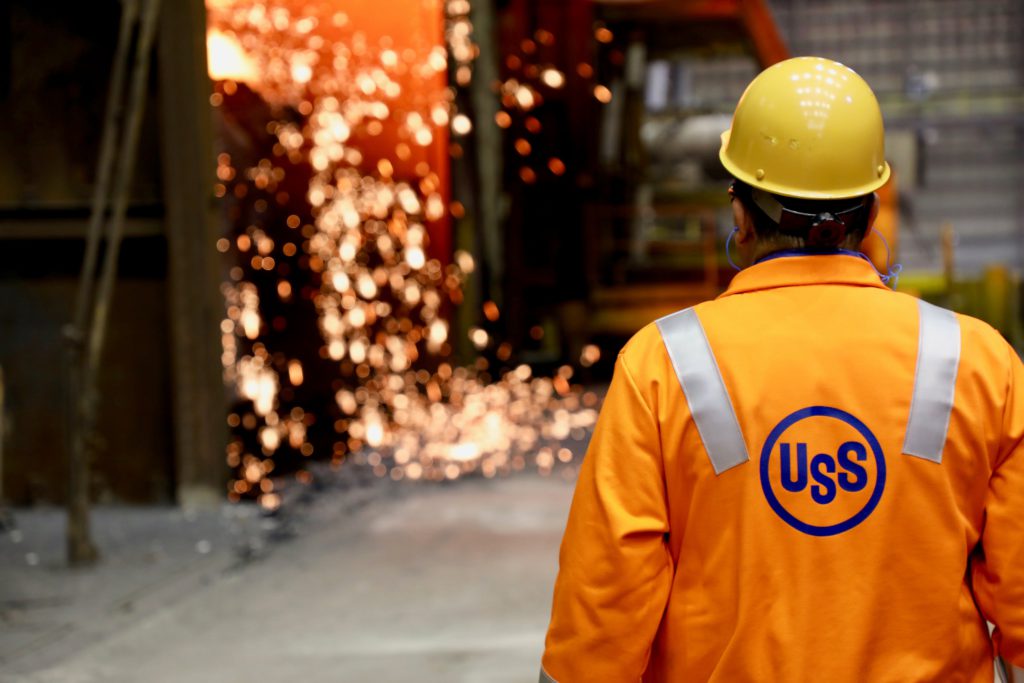
Trump orders fresh review of Nippon Steel’s bid for US Steel


Credit: US Steel

President Donald Trump on Monday directed a powerful US national security panel to take a fresh look at Nippon Steel’s bid for US Steel to help determine if “further action” is appropriate, raising hopes for an elusive greenlight for the deal.

“I direct the Committee on Foreign Investment in the United States…to conduct a review of the acquisition of US Steel by (Nippon Steel) to assist me in determining whether further action in this matter may be appropriate,” the memo reads.

Nippon Steel said it was pleased by the news. “We have been confident from the outset that an objective, fact-based review of our proposed partnership with US Steel will show that it strengthens American economic and national security,” it said.

A spokesperson for US Steel said the company looks forward “to continuing to work closely with President Trump and his administration to finalize this significant and important investment.”

The White House directive sent the share price of US Steel up nearly 14%, as investors took it to mean the administration was considering greenlighting the merger, which former President Joe Biden blocked in January on national security grounds.

After Biden’s decision, the two companies sued CFIUS, which scrutinizes foreign investments for national security risks, alleging that Biden had prejudiced the committee’s decision and violated the companies’ right to a fair review.

They claimed Biden did so in 2024 by expressing opposition to the deal when he was running for re-election, to win the favor of the United Steelworkers (USW) union in the swing state of Pennsylvania, where US Steel is headquartered.

Last month, the Trump administration filed a motion to extend two deadlines in US Steel and Nippon Steel’s lawsuit against a US national security panel to give the government more time to wrap up merger talks with the firms.

(By Alexandra Alper and Brendan O’Brien; Editing by Doina Chiacu)

Another disastrous impact of Brexit: ‘Musicians have stopped touring’, warns Independent Society of Musicians CEO

2 April, 2025 

Brexit has had a disastrous impact on musicians, with a significant fall in the number of musicians touring the EU and many not having any work at all, Parliament has been told.

During a UK-EU reset evidence session in Parliament yesterday, CEO of the Independent Society of Musicians Deborah Annetts, laid out in stark terms the disastrous impact Brexit has had on the British music industry.

She told Parliament: “So in terms of the musicians, the situation has got far worse. You may recall that in 2019, the EU was our largest market, in relation to touring musicians.

“That has fallen. In terms of level of earnings, they have dropped significantly. Musicians have given up touring, about 30% have had no work at all since Brexit came into full force with the TCA.

“Musicians have lost an average between £500-£450,000 as a result of not being able to tour.”

According to a survey by the Independent Society of Musicians in 2023, almost half of UK musicians and workers in the music industry have had less work in the EU since Brexit than before it, and more than a quarter have had no EU work at all.

The most frequently cited extra expense since Brexit was for visas and work permits.

Basit Mahmood is editor of Left Foot Forward
UK
Guido Fawkes owner pays £75,000 libel case costs to Dale Vince


3 April, 2025 
Left Foot Forward


The owner of right-wing blog Guido Fawkes, Paul Staines, has paid green industrialist and Labour Party donor Dale Vince £75,000 towards legal costs, over false claims that Vince supported Hamas.

The legal battle occurred after Staines published articles on the Guido Fawkes blog falsely accusing Mr Vince of having expressed support for Hamas during the Times Radio interview.

Press Gazette reports that it ‘follows news last month that Staines had agreed to pay the Ecotricity founder £9,950 in damages and settle the case to avoid “ruinous” future costs.’

Vince’s lawyer Annabell Hood said in a statement to an open court: “On 9 October 2023, Mr Vince was interviewed by Stig Abell for Times Radio. The interview covered various topics, including the atrocities committed by Hamas in Israel two days previously and the wider situation in Israel and Palestine. During the interview, Mr Vince confirmed that he agreed with Labour’s position that Hamas were terrorists and condemned their attack on 7 October 2023.

“On 13 and 14 March 2024, Mr Staines published articles on the Guido Fawkes blog falsely accusing Mr Vince of having expressed support for Hamas during the Times Radio interview. Mr Staines called for the donations Mr Vince had made to the Labour Party to be returned. He published similar allegations on social media.

“Mr Staines’ false allegations were adopted and/or repeated widely. The allegation that Mr Vince supported Hamas was highly defamatory…

“On 4 April 2024, Mr Vince invited Mr Staines to resolve the matter by retracting the false allegations, apologising and paying Mr Vince’s legal costs. Mr Vince indicated that he would waive any claim for damages if Mr Staines agreed to do this.

“Rather than accept this offer, Mr Staines chose to ‘double down’, claiming that his website was based offshore and that he was immune from suit.

“Mr Staines’ stance forced Mr Vince to bring libel proceedings in order to obtain vindication.”


Basit Mahmood is editor of Left Foot Forward

UK
Select committee criticises DCMS over £400 million in unpaid covid sports loans

Olivia Barber]
3 April, 2025 
Left Foot Forward 

The report highlights “severe weaknesses” in how DCMS has managed the loan book, including a conflict of interest with Rugby Un
ion


The Department for Culture, Media and Sport has been criticised for its management of loans given to sports organisations during covid, as over £400 million in loans have still not been paid back.

The report by the Public Accounts Committee published yesterday notes that there is a high degree of uncertainty over how much of the loans will ever be repaid and that the DCMS had been “overly optimistic” about repayments.

Between October 2020 and March 2022, the DCMS lent a total of £474 million to 120

borrowers in the culture and sports sectors, to help these organisations survive in the pandemic.

By October 2024, just under half of borrowers had started repaying their loans, and DCMS had received £41 million in expected repayments.

In addition, nine borrowers which had collectively received loans totalling £46 million had gone into administration by October 2024.

The report also highlights a conflict of interest involving the accounting officer’s connections with Rugby Union.

Loans to top–tier professional rugby union clubs in the Premiership Rugby League accounted for 57% (£124 million) of the Department’s Covid loans to sports bodies.

The report concluded that “There have been severe weaknesses from the start in the Department’s arrangements for managing its loan book.”

These included the DCMS not drawing on expertise across government when setting up the loan schemes. It also notes that too many organisations were involved in managing the loans, including the department, Sport England, Arts Council England and PwC.

Jo Maugham, executive director of Good Law Project, said: “If the colossal amounts of public money handed out by the chaotic Conservative government are to be recovered to any acceptable level, the Labour government must show more seriousness in closing ‘gaps in governance’.

“The DCMS’ progress in attempting to recover nearly half a billion pounds of public money to date is pitiful.”

Olivia Barber is a reporter at Left Foot Forward
The UK government’s economic strategy is on the wrong track

LABOUR AUSTERITY IS STILL AUSTERITY


4 April, 2025 
Opinion


Labour MP Jon Trickett urges Rachel Reeves to change course


Jon Trickett is the Labour MP for Hemsworth

For the second time in my lifetime, a Labour Chancellor from my home city of Leeds is in charge of the nation’s finances. I’ve known both well. The first was Denis Healey. His decision to turn to the IMF in 1976 and impose spending cuts was a turning point in British history — one that helped pave the way for Thatcherism. Rachel Reeves, the first woman to hold the post, now stands at a comparable crossroads.

I was the Leader of Leeds when Denis was made a freeman of the City. When I said to him that the cuts were wrong and that as a young activist I had opposed him, he admitted to the error. He said that the Treasury had got its sums wrong at the crucial historical moment when he dashed across the Atlantic to meet the IMF. He also wrote about the mistake with typical honesty.

A similar pattern has emerged again. In becoming Chancellor as the first woman to hold the post, Rachel Reeves has shown she has great personal resilience. It isn’t too late for her to avoid Healey’s fate. But she will need to break with her current policies which will have created even more poverty than even the Tories left behind.

The government has said that it will single-mindedly pursue an economic strategy of growth. This is a noble objective. But it is one that requires more, not less, public investment.

But there are also powerful and often unaccountable forces which are working against expansion. A triumvirate of institutions, together with the finance capitalists in the City of London, are focussed on wrong headed fiscal orthodoxy, and exert downward pressure on our country’s economic prospects. The record of the Bank of England, the OBR and the Treasury is abysmal. They tend to serve the City of London’s interests which in turn has a baleful influence on the rest of the economy.

It is time they were confronted and tamed.

The first is the Bank of England. The governor and his advisory committee have determined to set out on a course of ‘fiscal tightening’. We don’t need to focus on the details here. But there are three counter-expansionary effects of this policy. The first is that they are taking money out of the economy. And the second is that interest rates are inevitably higher than they need to be. The third is that many economists now believe the Governor’s policies mean that the Chancellor has to repay £100 billion to the Bank from taxpayer income; money which otherwise could be used to expand the public services or to stimulate growth.

The governor heads the Bank which is not accountable to anyone. He must know that his actions are constraining growth and run contrary to the Chancellor’s stated policy objective but he and his advisors continue blithely on.

The second institution is the Office for Budget Responsibility (OBR). They too are unaccountable. Their predictions are treated as if they arrived on tablets of stone from on high. Yet they are almost inevitably wrong in their forecasts. Just as the Treasury made serious errors in Healey’s time. “These forecasts” they recently wrote “ invariably turn out to be wrong” (my emphasis).

The OBR forecasts tend to direct the Treasury to fiscal tightening. This is because, as the New Economics Foundation recently noted, they don’t have a statistically accurate analysis of the economic impact of public spending or of the negative effect of public expenditure cuts. They underestimate the so-called multiplier effect and this tends to lead to false predictions of public debt.

Although they deny it, the third problematic institution at the Treasury is at the core of a rigid economic and financial orthodoxy. Its tight control of the government’s tax, spend and economic policy that result from this orthodoxy is the central reason for successive government failures, and lies at the core of so much economic damage. Taking money out of the economy through fiscal tightening, public sector cuts and low investment has led to a negative doom-loop in the economy, hindering growth.

Why does this group of institutions fail so often? It’s true that they are led by economists who emerged from University departments which had been captured by an economic orthodoxy based on neoliberal theories. The Chancellor herself emerged from the same world.

But underlying all this is the Finance sector and the City of London. In 2022, the UK financial system had assets of around £27 trillion. This figure dwarves the total annual output of the whole country which in 2022 stood at £2.5 trillion. The finance sector craves economic stability: a controlled value of sterling, low interest rates, tight fiscal controls. Without this stability the value of their assets may fall dramatically. The Treasury, The Bank and the OBR are its obedient servants.

How then are we to understand the Chancellor’s actions following the OBR report? She says that she seeks economic growth. But she is at the mercy of financial orthodoxy based on institutional conservatism and her own self-imposed rules. The truth is that the economic outlook is bleak. The Chancellor’s fiscal squeeze mirrors the Governor’s monetary squeeze. Both work against growth by taking money out of the economy.

In the case of the billions which she is cutting in welfare benefits to the poorest, it is clearly immoral and cuts against the British attachment to fairness. Nor is it recognisably Labour. But equally important is that it is economically inappropriate. It is self-evident that the poorest have the highest tendency to spend all their weekly income, which in turn helps to create economic activity. If you need to create growth and to raise money the most efficient way would be to tax the wealthiest and not to cut the spending by the poorest.

The spring statement marks a historic turning point perhaps even greater than the Denis Healey budget. It’s time that dissenting voices were heard. I look forward to joining with others to resist this latest cruel twist of the austerity knife.

Image credit: Rachel Hurley / DESNZ – Creative Commons


Cuts to disability benefits are riding roughshod over human rights

4 April, 2025 
Opinion
Left Foot Forward

Poverty is a political choice, and ending it is possible should those in powers choose to


Jen Clark is Economic Social & Cultural Rights Lead at Amnesty International UK

Last week the Government announced £5bn of welfare cuts, which will see the eligibility criteria for Personal Independence Payment (PIP) tightened, and the health element of universal credit reduced for new claimants. The DWP’s own impact assessments show that the impact of the cuts will be brutal, with 250,000 people, including 50,000 children pushed into poverty.

For many of the 16 million people in the UK already living below the poverty line the impact will be further destitution. Many more people will have to rely on food banks and plunging into debt to eat, stay warm, and prevent their children from living in poverty. These changes to social security create a brutal domino effect where people’s right to food, health and housing collapse one after another. For instance, a disabled person loses their PIP, meaning their carer also loses their Carer’s Allowance, meaning the carer faces sanctions for not finding work, and then on top of losing their PIP, the disabled person loses the support they need to wash, use the toilet, dress and eat.

We will ultimately see vulnerable people left at extreme risk of harm, and many others forced into debt, poverty and extreme stress, causing a further rise in mental and physical health problems across the country. This will put even more strain on the NHS and local authorities, requiring the Government to make bigger investments in an attempt to solve problems caused by their own cuts.

This government seems to have forgotten that social security is a human right and the bedrock of a civilised society. The protection that social security provides is how we ensure people can eat and live safely with their families and in communities, no matter their circumstances. It’s how we ensure that everyone in our society, no matter their challenges, can live their lives in dignity and with their basic needs met.

The Government likes to boast that the UK leads the world in respecting international law. But that includes economic, cultural and social rights, the right to food and a home for instance, which as the cuts to disability benefits show, the Government is failing to provide to many of its own citizens. Indeed, only last month, the UN concluded that the UK Government is failing in their approach to tackling poverty in the concluding observations on the UKs report to the Committee for Cultural, Economic and Social Rights.

The Government justifies these cuts by claiming that they are ‘getting people back into work’. But to do so in a meaningful way would require them to acknowledge the interdependencies in peoples’ lives that act as a barrier to them engaging with work or earning enough to make ends meet. Many people living in poverty are in work in the UK, and DWP research from 2025 found that 41% of people who claim health or disability benefits were on an NHS waiting list and half felt their ability work was dependent on getting this treatment. People need support to overcome the barriers into decent work, investment in skills, decent social care, childcare, timely healthcare and where these are not in place or someone simply cannot work, they need social security to step in not punishment and stigma.

Poverty is a political choice. Ending it is perfectly possible should those in power choose to, but tragically successive Governments have instead chosen to exacerbate the problem without a clear mechanism to be held accountable. When it comes to balancing the books, successive Governments have chosen to put the squeeze on the people with the lowest incomes first rather than look to those who can afford to contribute more. Instead of investing in social security they’ve chosen to run roughshod over our human rights, at huge personal cost to families across the country.

The social security system isn’t fit for purpose, and it needs reform to recentre human rights principles, dignity and respect to protect people from hunger and hardship. It must be non-negotiable in a relatively wealthy country like ours that the government prioritises reversing poverty not worsening it.

Image credit: Lauren Hurley / 10 Downing Street – Creative Commons
UK

Stop Trump dominating space campaign ramps up
Today
Left Foot Forward

A Stop DARC Radar petition has gained almost 18,000 signatures.


TweetShareWhatsAppMail


Opposition towards plans to build a space radar station that could allow Donald Trump to dominate space from Wales is being ramped up.

In December 2023, the UK, US and Australia announced the creation of the Deep Space Advanced Radar Capability (DARC) programme. DARC will enable detection, identification, and tracking of objects in Earth’s orbit.

The Ministry of Defence is proposing to build the UK DARC site at the former Cawdor Barracks in Pembrokeshire.

DARC dishes would be 66ft high and 49ft wide and built very close to the Pembrokeshire Coast National Park.

The programme is part of the trilateral AUKUS security partnership with the US and Australian governments. The US and Australia are also building similar sites to DARC, in response to possible threats from countries such as China and Russia.

In May 2024, a PARC Against DARC campaign was launched to stop the US military from building a space wars radar station in Wales, which could give Donald Trump the ability to dominate space.

The campaign’s aim is to stop the planning application for DARC Radar by creating such a high level of public opposition that the project becomes unfeasible and has to be scrapped by UK government.

Stop the War notes how the movement has “fast become an inspirational grassroots campaign across the British peace movement.”

PARC, along with groups including CND Cymru, Stop the War and Peace Action Wales (Heddwch ar Waith) are concerned about the possible effects on tourism, residents’ health, pressures on infrastructure and the geopolitical implications.

“There is a mainstream consensus emerging that where once the UK could go on under the assumption that if there was a major war, that the US could be relied upon to be fighting on the same side as the UK, this is no longer the case,” PARC said in a statement.

The campaign has also been working closely with MPs to table an Early Day Motion in Parliament.

The 975 – DARC in Wales EDM was tabled by Liz Saville Roberts MP and has cross-party support.

A ‘Stop DARC radar: Protect Pembrokeshire’s unique landscape’ petition has gained almost 18,000 signatures.

Image credit: PARC Against DARC

Luton airport expansion not a ‘magic bullet for economic growth’, think tank says

4 April, 2025 
Left Foot Forward

'Growing Luton will not deliver the economic growth the government so desperately wants.'


The government’s decision to approve Luton’s airport expansion plans will harm the environment and not deliver the economic growth the government wants, think tanks have warned.

The expansion will nearly double Luton’s capacity from 18 million to 32 million passengers per year.

This comes despite the planning inspectorate’s recommendation to block the expansion on environmental grounds.

Dr Alex Chapman, senior economist at the New Economics Foundation, said: “Growing Luton will not deliver the economic growth the government so desperately wants.

“Business air travel has collapsed over the last few years and even the airlines admit it isn’t coming back.”

The NEF also pointed out that “airport expansion isn’t a magic bullet for economic growth”.

The think tank estimates that the expansion will result in eight million more UK residents travelling abroad for holidays, money that it argues could be spent on UK high streets instead.

Chapman added: “The UK already has enough capacity for 300 million passengers to fly in and out every year. Cheap flights are widely available.

“If this government is so desperate for growth, it should focus on investing properly in the vital public services upon which the health of our economy really depends.”

The environmental charity Green Alliance has warned that the expansion will undermine the UK’s climate credibility.

Johann Beckford, senior policy advisor at the Green Alliance, said: “Doubling passenger and flight numbers will increase emissions, air pollution and noise.

“This latest misguided project does more to undermine UK climate credibility than it does to expand the economy as, once again, the growth impact of the expansion is likely to be overstated.

“With almost 90% of Luton flights taken for leisure, this decision gives priority boarding to British tourists taking their money out of the country to spend abroad.”

Olivia Barber is a reporter at Left Foot Forward

With bills having gone up, it’s time to take UK energy back into public ownership

4 April, 2025 
Left Foot Forward

The obscene profits of the energy industry show the sector is broken


This week the UK household energy bill has risen to an average of £1,849 a year, an increase an increase of £111 since the previous quarter. In October 2020, the average household bill was £1,042 though it hit £2,500 in April 2023. The energy price cap, set by Ofgem, limits the amount suppliers can charge households for each unit of energy and daily standing charges, but it doesn’t cap the total bill.

Just six energy companies control over 90% of the UK energy market, and in the absence of effective competition people are routinely fleeced. Between 2020 and April 2025, 20 energy companies dominating the UK energy industry reported operating profits of over £514bn, which fuels inflation, poverty, misery, premature death and industrial stagnation. Since the pandemic electricity and gas supply companies have increased their profit margins by 363%, electricity generation companies have increased their profit margins by 198%. The industry still receives public subsidies.

Record profits by BP. Shell, British Gas and the National Grid are a reminder that energy sector regulation has failed. The real profits are likely to be much higher than the numbers shown in company accounts because it is not uncommon for energy producers to inflate costs through intragroup transactions and shift profits to low/no tax jurisdictions. Energy companies speculate on the price of their own output to push up prices. BP alone employs more than 3,000 traders to do that. Shell has a trading division but does not reveal details. Energy producers make billions from such speculation, and none of that is subject to any periodic windfall tax on oil and gas companies. Banks also profit from energy price speculation through trading in futures and other derivatives. This is distinct from profits made by energy suppliers and retailers but can hike market prices which form the basis of customer bills.

The UK has the fourth highest electricity price in the world for households. With average real wage unchanged since 2008, the social consequences are stark. Some 6.1m households are in fuel poverty, compared to 4.5m in 2021, and struggle to heat their homes to keep warm and healthy. Some 128,000 Britons a year, including 110,000 pensioners, die in fuel poverty. High energy bills reduce disposable incomes for purchase of other essentials. Some 7m Britons are unable to pay utility bills. Some 3m people are malnourished or at risk of malnutrition. Due to lack of nutrition, UK children are getting shorter and experiencing more ill health than their European counterparts.

For industrial electricity, British businesses pay the highest electricity price in the developed world, more than twice the EU average, 2.6 times that of Korea and four times more than the US. Energy cost in China has less than a quarter of the UK cost. Profiteering by energy companies has handicapped industries such as steel, shipbuilding and engineering and they increasingly struggle to compete. The future of electric vehicles, manufacturing and AI looks precarious.

The UK produces around 34% of its electricity from gas and governments blame the Russia-Ukraine war for higher energy price. This is just another way the state shields the energy sector. In June 2022, the UK ceased importing oil, gas and coal from Russia though scarcity can escalate market prices. Around 50% of gas used in the UK is home produced. The UK gas prices are below the median for industrialised countries, 17% lower than France and 10% less than Germany but they have lower energy costs. The real problem is unchecked profiteering and ineffective regulators.
Ofgem Facilitates Profiteering

One of its non-executive directors resigned and said that the regulator “gave too much benefit to companies at the expense of consumers”.

The main culprit is the Ofgem’s “marginal cost pricing” system which determines consumer prices showers excess profits on companies. Marginal cost is the cost incurred in bringing one additional unit of gas/electricity to the market. When applied correctly, it can lead to efficient use of resource allocation. But there are problems with Ofgem’s assumptions. Energy supply is not a market in the classical economic sense. People must buy energy. They are captive customers who have to pay whatever the prevailing price is. There are no effective substitutes. In a competitive market (where there are many buyers and sellers and everyone is a price taker), firms compete and that drives costs to marginal levels i.e. the cheapest option and sets a price that enables suppliers/producers to recover all costs associated with production. The firms unable to produce goods/services at that level will not be able to sell and will go out of business.

Energy is produced from various sources (such as gas, oil, nuclear, wind, sea, hydro, solar, biomass, etc.) and all elements are mixed and transmitted by the generating stations. The customers cannot distinguish how much of their energy is from gas, oil, coal, wind, nuclear or solar, etc. as electricity from one source is as good as any other. However, each input source has a different cost structure. For example, currently gas costs the most and nuclear, hydro and renewables cost considerably less.

The Ofgem cap does not calculate ‘cost’ based on each variety of input. It is not based on average cost or weighted average of all inputs either. One of the Ofgem’s objectives is to ensure profit for each supplier at each stage i.e. generation, transmission, distribution and retail. This means that the Ofgem cap has to be set at the most expensive price/cost per unit. Otherwise the marginal producer (the most expensive producer) cannot make a profit. This is reverse of what happens in competitive markets where the most expensive supplier is driven out of business.

This is a boon for companies providing oil, nuclear, renewables, solar and hydro and other forms of inputs because they are paid the price of energy generated by the use of gas, which currently is the most expensive input. The cost incurred by domestic producers of gas is considerably less than the wholesale market price, but that does not enter into Ofgem calculus, and consumers bear the brunt.

Ofgem guarantees profits to household energy suppliers. The current rate is 2.4% of the Earnings before Interest and Taxation (EBIT) though most make more than that. There are no limits on the profits made by producers, wholesalers and transmitters of energy though governments may claw some of that back through windfall taxes. In 2022-23, the UK government levied puny £2.6bn windfall tax on oil and gas companies, rising to £3.6bn in 2023-24. The bills received by customers do not show the wholesale cost of energy, network costs, operating costs, various levies, distribution and billing costs, profit or anything else even though companies and Ofgem have full details. The lack of information stifles debate and continues to facilitate exploitation.

A handful of companies control the UK energy industry and their obscene profits show that the sector is broken. Their profiteering is a major cause of inflation, poverty and economic stagnation. The price of energy affects cost of every other sector and makes its uncompetitive. No government can develop an effective industrial strategy without ending profiteering in the energy sector. In countries such as France, Germany, the Netherlands and Denmark industrial strategy is built around public ownership on energy. This gives the state additional levers for protecting the people, controlling business costs and inflation, and promoting industry. Successive UK governments have opposed public ownership of energy but are content to let foreign state-owned companies to control the energy sector. For example, between 2020 and 2025 EDF (Électricité de France) owned by the French state made £91bn operating profit in the UK, which subsidises French households and industry. Indeed, the UK remains obsessed with privatisation. Nearly half of all the UK’s offshore wind capacity is owned by state-owned or majority state-owned foreign entities. Vast export of profits lubricates foreign economies and prevents the development of suitable technologies at home.

The UK must bring energy infrastructure back into public ownership to protect people and rejuvenate the economy.

Prem Sikka is an Emeritus Professor of Accounting at the University of Essex and the University of Sheffield, a Labour member of the House of Lords, and Contributing Editor at Left Foot Forward.


Energy industry profits hit half a trillion pounds while bills soar – and Labour members show their frustration

Energy companies have pocketed over £500 billion in profits since the energy crisis started according to an updated analysis of company reports.

Researchers working for the End Fuel Poverty Coalition examined the declared profits of firms ranging from energy producers, such as Equinor and Shell, through to the firms that control our energy grid, such as National Grid and UK Power Networks, as well as suppliers, such as British Gas.

As energy prices are set to increase by 6.4% this week for households across the country, the analysis shows that almost half of the total profits since 2020 (£207bn) are generated by firms with extensive involvement in the gas industry.

The cost of every unit of gas used will surge by over 10% from 1st April, meaning the cost of gas is now double what it was in winter 2020/21. The cost of gas affects not only households’ ability to keep warm, but also sets electricity prices up to 40% of the time under energy market rules.

Also profiting are the firms and business units responsible for electricity and gas transmission and distribution. These are the “network costs” consumers pay for maintaining the pipes and wires of the energy system and are usually paid for through standing charges on energy bills.

Earlier this year, Citizens Advice found that these firms had made an estimated £4bn in extra profits after a “misjudgement” by regulator Ofgem. Previous research also found that the same firms underspent on vital grid improvements by almost £1bn.

Simon Francis, coordinator of the End Fuel Poverty Coalition, commented: “As energy prices remain at levels way above the 2020 benchmark, the energy industry is taking us for April fools. We need politicians and regulators to act to bring down energy bills now.

“This means radical reform of the electricity pricing markets, investment in homegrown renewables and taking on the vested interests of an energy industry which makes billions of pounds of profits every year at consumers’ expense.

“In addition, we need to see steps taken immediately to help households reduce energy consumption in a safe way, by improving energy efficiency of buildings. This is why MPs need to push the Chancellor to commit the full £13.2bn funding needed for the Warm Homes Plan through the Comprehensive Spending Review.”

Maria Carvalho, from Medact which represents frontline health workers, commented: “The record-breaking profits of energy giants come at an unbearable cost to public health. Cold homes cause illness and drive patients into already overwhelmed NHS services, while energy debt traps families in a cycle of financial and mental distress. 

“Every pound pocketed by these corporations is a pound that could have kept someone warm, well, and out of hospital. The government must act now to rein in energy profiteering and invest in a fair, sustainable energy system that protects health rather than harming it.”

Jonathan Bean from Fuel Poverty Action added: “Without radical reforms, millions of us will continue to suffer and die in energy starvation due to inflated energy pricing. We are not getting the benefit of our increasing supply of cheap renewable energy.”

Warm This Winter spokesperson Caroline Simpson said: “Frankly this is shameful. It’s incomprehensible in so many ways and plain wrong that a mere 20 companies have made so much money out of people’s misery. The industry can spare a few of their many billions to bring down bills, pay for energy-efficient homes and switch from oil and gas to save the planet.

“Now more than ever, we need to give everyone in the UK the peace of mind that comes with having energy security from homegrown solar and wind so we’re not at the mercy of either profiteering oil and gas companies or hostile countries.”

Labour backbench MP Zarah Sultana tweeted: “Since 2020, energy giants have made £514,000,000,000 in profit while bills soar. Meanwhile, UK billionaires hoard £795,000,000,000 as 4.5 million children live in poverty. If the government wanted to tackle poverty & lower bills, it would tax billionaires and nationalise energy.”

She added: “Energy bills up 6.4% — while network providers raked in £4 billion in “excess” profits over four years. Water bills up 26% — while firms paid £78 billion in dividends since privatisation & racked up £64 billion in debt. End this scam. Bring water and energy into public ownership.”

Ian Byrne MP agreed, tweeting: “‘Energy giants rake half a trillion in profits while households’ bills go through the roof. This rip-off cannot continue. We need state ownership of energy and water.” Former Shadow Justice Secretary Richard Burgon MP agreed.

Two-thirds of Labour members want a change of course

As rising utility bills intensify the cost of living crisis and drive more people into poverty, while record profits are made by the energy companies,  pressure is mounting on the Government to deliver the ‘change’ it promised last July. A new survey by Survation found that two-thirds of Labour members felt the Party was heading in the wrong direction.

In a league table of Cabinet favourites, Ed Miliband and Angela Rayner came top, while Keir Starmer himself came third from bottom, ahead of Work and Pensions Secretary Liz Kendall and austerity Chancellor Rachel Reeves, who had a -41% rating.

“Starmer’s project is failing,” noted Momentum. “We need real Labour values to fix the crises in Britain, not more austerity.”

Image: https://milestonemagazine.com/3-global-businesses-that-have-thrived-during-the-pandemic/ Licence:Attribution-ShareAlike 3.0 Unported CC BY-SA 3.0 Deed