It’s possible that I shall make an ass of myself. But in that case one can always get out of it with a little dialectic. I have, of course, so worded my proposition as to be right either way (K.Marx, Letter to F.Engels on the Indian Mutiny)
Monday, July 14, 2025
Brazil Potash inks $200M MOU to power Autazes project
Brazil Potash (NYSE: GRO), a mineral exploration and development company announced Monday the signing of a non-binding Memorandum of Understanding (MOU) with the infrastructure division of Fictor Group, a leading Brazilian private equity firm, outlining terms for Fictor Energia to fund $200 million in power transmission construction costs for the Autazes potash project while securing long-term energy supply and a $20 million strategic equity investment.
Under the terms of the MOU, Fictor Energia would undertake complete development, permitting, construction, and operation of the power transmission infrastructure to supply 300MW per year of ~80% renewable sourced Brazil grid electricity for the Autazes project through a Build, Own, Transfer model. After 25 years of operation, ownership of the electrical power line and associated substation to be transferred to Brazil Potash.
After facing headwinds due to some opposition by Indigenous groups, the state of Amazonas issued Brazil Potash last year the license to build the Autazes project, pegged to be the largest fertilizer mine in Latin America within the Amazon rainforest.
Fictor Energia assumes full responsibility for the ~$200 million power transmission capital expenditure, removing this major infrastructure investment from Brazil potash’s construction budget. Fictor also plans to invest $20 million equity into Brazil Potash in two tranches: $2 million upon signing of the definitive partnership agreement; and $18 million upon receipt of the power line installation license.
The parties will work toward execution of definitive agreements, with Fictor Energia immediately beginning preliminary engineering and regulatory processes.
The power transmission infrastructure would be expected to be completed and operational by July 2029, aligning with the Autazes Project’s planned production timeline.
The proposed mine and processing facilities in Autazes, 75 miles (120 kms) southeast of the Amazonas state capital Manaus, would require about three years to build, the company has said.
Column: Trump’s copper tariffs won’t lift US output, will boost costs
(The views expressed here are those of the author, Clyde Russell, a columnist for Reuters.)
The planned 50% tariff on copper imports may turn out to be the biggest own goal of US President Donald Trump’s ongoing trade war with the rest of the world.
Trump announced the tariff on Wednesday, saying it would become effective on August 1.
While Trump seemed quite definitive in his statement, there is a lack of detail of what products will be included in the definition of copper, and whether there is scope for exemptions or lower rates for some major suppliers to the United States, such as Chile and Canada.
But even if some concessions are made before the implementation date, the end result is likely to be that copper imports are slugged with a considerably higher tariff than what prevailed prior to Trump’s return to power in January.
As with Trump’s other tariffs the motivation behind the tariffs on copper is to encourage more domestic mining and smelting of the industrial metal, which is key to making electric vehicles, military hardware, semiconductors and a wide range of consumer goods.
The problem for Trump’s somewhat naive economic vision is that the reality of the US copper market is that it will be extremely difficult to get a meaningful boost to copper mining and processing in both the short and long terms.
The United States produces just over half of its annual copper requirements, and its imports of refined metal were 810,000 metric tons in 2024.
It’s possible that copper miners such as Freeport McMoRan and Rio Tinto could run their existing mines harder and lift output, but that would only provide a short-term lift in ore supply and would unlikely be sustainable.
Importing copper ore and refining it is also unlikely, as it would take time and money to re-commission idle smelter capacity, with the only viable candidate being the Grupo Mexico-owned Asarco plant in Hayden, Arizona, which has been mothballed for more than four years.
There are new mines in the planning stage, with the most significant being Rio’s Resolution Copper in Arizona, which has been delayed by legal challenges by the indigenous Apache people.
A Supreme Court ruling in May in favour of Rio and its partner in Resolution BHP Group would appear to clear the way for the mine’s development, but even if this is fast-tracked it will still take several years before first production.
Chart showing US refined copper imports by country
Imports needed
In the meantime, the United States is going to be reliant on copper imports, meaning that buyers of the metal have limited choices.
They can either pay the tariff or lower copper consumption by producing less of whatever they are making.
This means that car makers, home builders and electronics manufacturers will likely face higher costs, as domestic copper prices will rise to match the level of imported metal.
How those costs get absorbed or passed on will depend on the market power of the companies involved, but the overall impact is likely to be higher inflation if costs are passed to consumers, or lower investment and employment if companies do what Trump has suggested and “eat the tariffs.”
The impact of the tariffs will also affect copper pricing and movements around the globe, both in the short and long terms.
The United States has sucked in vast quantities of copper so far in 2025, with analysts at Macquarie estimating imports totalled 881,000 tons in the first half of this year compared to an underlying requirement of roughly 441,000 tons.
This means that once the tariff is implemented US imports are likely to plunge as the stockpiled, and cheaper, metal is used up.
This is likely to drag global copper prices lower, reversing a trend of rising prices since Trump’s return to the White House.
Benchmark London copper contracts ended at $9,630.50 a ton on Wednesday, up almost 10% since the end of last year.
US copper contracts rose to a 26% premium over their London equivalent on Wednesday from a 13% premium before Trump’s announcement.
That 26% premium is still well short of the 50% tariff, likely indicating the uncertainty in the market as to what types of copper products will be subject to tariffs or the risk of a lower rate for some countries.
But once clarity is reached on the final form of the copper tariff, and once the existing stockpile is used up, it’s likely that US prices will rise to a premium that reflects the tariff level.
Proposed 50 percent tariffs on imported copper would significantly increase prices for American industries and consumers due to the United States' reliance on imports.
Building domestic copper mining and refining capacity is a challenging, long-term endeavor requiring sustained high prices or substantial government investment.
The US Department of Defense is actively investing in domestic rare earth element production to secure critical minerals for defense, highlighting broader challenges in mineral self-sufficiency.
The mainstream news media has already figured out that the Trump administration's proposed tariffs on imported copper of 50 percent would dramatically hike copper prices for American industry and raise the price of products containing copper for consumers, which is just about everything electrical. The reason is simple; The United States is a net importer of 45 percent of its copper needs according the U.S. Geological Survey.
All right, you may say, so there will be some short-term pain until the United States develops enough new copper mining and refining capacity to be self-sufficient. First, it's not easy to build such capacity. New mines can take years to build, assuming you already know where the copper is. As for copper refining, few people want such facilities near them so half the challenge is quelling the opposition to any new refining operations. They also take years to build.
Now nobody is going to spend money building new copper mines and refining facilities unless there is a guarantee that the price of copper will stay sufficiently elevated to justify such investments. Even if the proposed tariffs on imported copper were to go into effect, there can be no guarantee that they would be maintained for the couple of decades that investors need for such long-term investments to pay off.
I suppose it's possible that all these new investments would be profitable even if the tariffs are later rescinded. But if the mines and refineries are built on the premise of long-term tariffs, high prices for copper will be part of the profitability analysis.
It's certainly possible to construe the proposed copper tariffs as a bargaining position, that the Trump administration will never actually impose them or that they will be much, much lower. But one thing the administration has proven to be regarding tariffs is dramatic. While the general sentiment has been crystallized into the acronym TACO, meaning "Trump always chickens out," he may not this time.
In any case, even if the United States wants to become more self-sufficient in the production key minerals, as I've explained previously, this would be very difficult, either because the country lacks the in-ground resources or because what resources it does have would be too expensive to develop. Attempting to do so would likely require either 1) substantial long-term tariffs that might break the back of the domestic industries that use these minerals for their products or 2) huge government subsidies that might prove unpopular with the public.
PS. Let the subsidies begin! As I was finishing this piece, the U.S. Department of Defense agreed to become a 15 percent shareholder of MP Materials, a U.S.-based rare earth element miner and processor. The DOD guaranteed that for 10 years it would purchase all the high-strength magnets and all the neodymium-praseodymium oxide minerals produced by new facilities financed by the investment at prices that insure profitable operation. This demonstrates how critical the DOD believes these products are for defense purposes. Of course, the arrangement doesn't do anything for American industries that are also in need of domestic sources of these magnets and minerals because the Chinese government—which controls most of the rare earth market—has severely restricted exports of these minerals and related products such as high-strength magnets.
US President Donald Trump’s promised 50% copper tariffs are set to include all refined metal, indicating the president’s far-reaching efforts to bolster American production of one of the world’s most ubiquitous materials.
Trump’s announcement of the levy, which he said would begin Aug. 1, was devoid of much detail, but refined copper will be included, according to people familiar with the matter who asked not to be named as discussions are private.
Refined copper represents the biggest category of the metal that is imported by the US, and including it in the tariff list will have widespread impacts. The metal is vital for electric grids, construction, automaking and consumer electronics. Semi-finished products also would be hit with levies, Bloomberg News reported earlier.
The tariff measures haven’t yet been formalized and they shouldn’t be considered final until announced by Trump, according to a White House official.
Just hours after Trump unexpectedly announced the 50% copper tariff Tuesday, the White House’s Council of Economic Advisers met with industry representatives who asked the president not include export controls of copper scrap, according to the people. The US is one of the world’s biggest generators of metal scrap, which annually outpaces domestic consumption. The extra metal gets shipped abroad.
Leading metals companies including miner Rio Tinto Group, fabricator Southwire Co. and trader Trafigura Group have asked the White House to restrict exports of ore and scrap metal rather than imposing tariffs on imports.
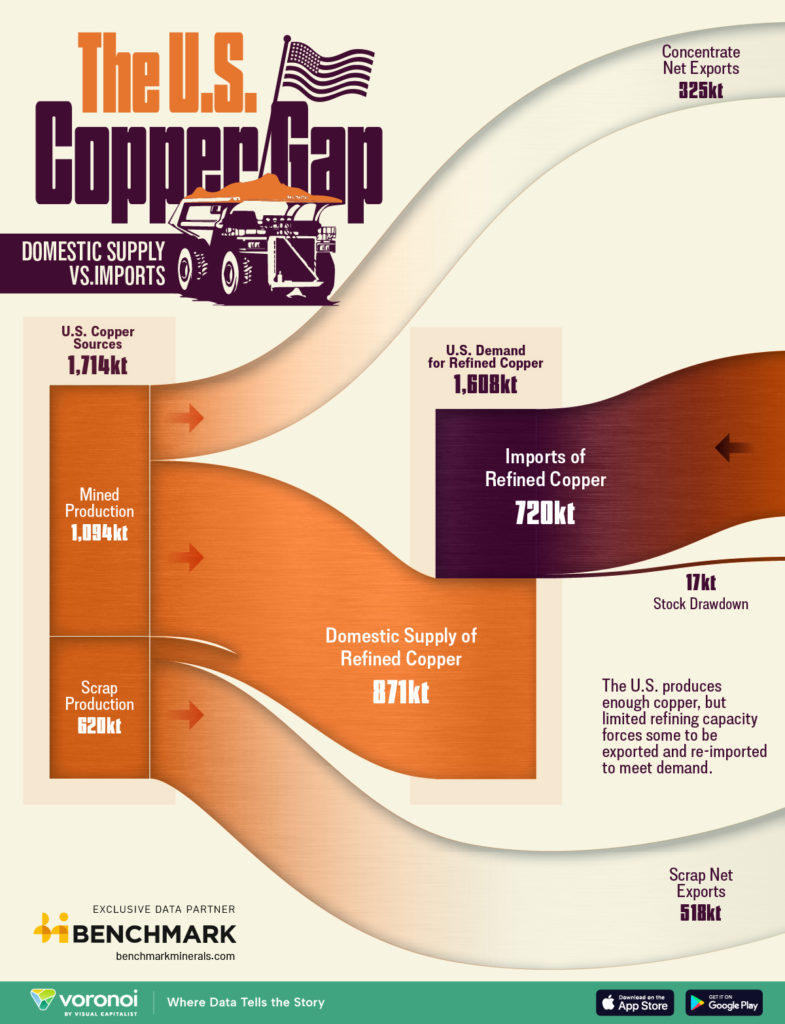
The US is facing a paradox in its copper supply chain. Despite producing over 1.7 million tonnes of copper annually from mining and scrap, it remains heavily reliant on refined copper imports. This visualization highlights the gap between domestic copper production and the country’s limited processing capacity.
It turns out the issue isn’t a shortage of copper, it’s the lack of infrastructure to turn raw material into usable metal.
The US sends nearly half its copper abroad as concentrate and scrap, only to import refined copper for industrial use. The data reveals a potential for reshoring copper processing and reducing dependency on imports.
This data for this visualization comes from Visual Capitalist and Benchmark Mineral Intelligence. It shows how copper flows through the US economy, from domestic production to international trade and final consumption.
Lockheed Martin reboots Pacific seabed mining plans
Lockheed Martin (NYSE: LMT) is back in the deep-sea mining game, holding talks with several mining companies about partnerships to access its long-held seabed licences in the Pacific Ocean.
The US defence giant holds two licences in the Clarion-Clipperton Zone (CCZ), a mineral-rich area of international waters in the eastern Pacific. These were granted by US regulators in the early 1980s during the first wave of interest in ocean mining but remained unused for decades.
Lockheed appeared to exit the sector in 2023, when it sold its UK-based deep-sea mining subsidiary, UK Seabed Resources, to Norway’s Loke Marine Minerals. That firm filed for bankruptcy in April, prompting an asset auction that returned the two licences to Lockheed’s control.
Renewed opportunity
Chief operating officer Frank St John told the Financial Times there was “large interest” from undersea mining groups in accessing the licences. He said Lockheed is evaluating options to secure supplies of critical raw materials and is working closely with the Pentagon to identify resources that could support stockpiling or alternative sourcing strategies.
President Donald Trump issued an executive order in April asserting US rights to issue mining licences in international waters and proposing that seabed metals be treated as strategic assets. Lockheed says the US has a chance to set a global standard for commercial recovery of seabed nodules “in an environmentally responsible manner”.
Polymetallic nodules — rock-like formations packed with nickel, cobalt, copper, manganese and other minerals critical for electric vehicles and electronics — are believed to be abundant in the Pacific ocean. US government estimates suggest over one billion metric tonnes of these nodules lie within American-licensed zones, with the potential to add $300 billion to GDP and create 100,000 jobs over a decade.
Interest from mining firms has surged. Companies based or listed in North America, including Canada’s The Metals Company (Nasdaq: TMC), have recently applied for seabed mining licences.
Hurdles remain
Seabed mining ambitions still face turbulent waters. The International Seabed Authority (ISA), created by the UN Convention on the Law of the Sea — a treaty the US has never ratified — continues to develop environmental and regulatory frameworks for deep-sea mining.
Representatives from 169 countries and the EU have been negotiating standards on royalties, taxation, and environmental impact, including acceptable levels of underwater noise and sediment.
The ISA is holding crucial talks in Jamaica this month to decide under what conditions mining operations may begin. In parallel, the US continues to operate its own licensing regime through the National Oceanic and Atmospheric Administration.
Court Suspends French Riviera’s Attempt to Ban Large Cruise Ships
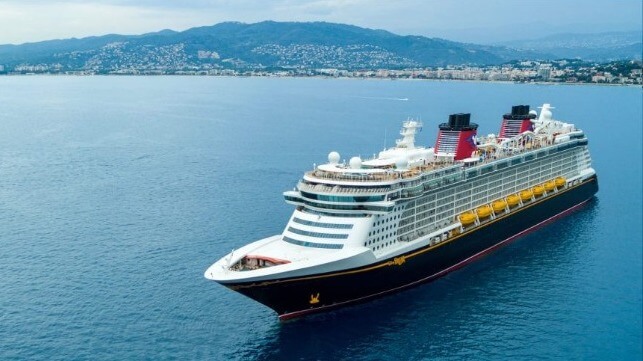
Large cruise ships anchor in the bay at Villefranche (Disney Cruise Line)
The ongoing showdown over large cruise ships visiting the French Riviera took a further turn as the administrative court in Nice suspended the efforts of the local mayor to block large cruise ships. The court issued the temporary injunction after the government of the prefect petitioned the court to stop the actions of the mayor of Nice, who is also the regional president, and who had staged a confrontation with a large cruise ship anchored in the bay.
At issue is the impact of what the metropolis calls the “harmful effects of mass tourism.” Mayor Christian Estrosi highlights the impact of the “uncontrolled growth of cruise ship stopovers” on the local population. He cited the emissions from the ships, which he contends are impacting air and water quality.
Estrosi had gone out on a police boat on July 3 with TV cameras and stood yelling at the officers and crew of the Royal Caribbean cruise ship Voyager of the Seas. He demanded the ship depart immediately as it was violating an order he imposed as of July 1, capping the size of cruise ships visiting Nice and Villefranche. The master of the cruise ship refused to meet with the mayor, and the officers ignored him and motioned for him to go away when he attempted to deliver a letter to the ship.
As the leader of the region, Estrosi enacted a ban on large cruise ships but relaxed it initially by saying the cap was on ships with over 2,500 passengers calling at Villefranche. After the confrontation, he reissued a revised order, due to go into effect on July 11, again placing a limit of 2,500 passengers per day on a single ship in Villefranche and 450 in Nice. He said there was a “climate emergency,” which justified the immediate actions.
The French media said the ban would immediately impact five cruise ship calls in Nice and 12 scheduled for Villefranche this year. Next year, it would impact 15 scheduled stopovers in Nice and 53 in Villefranche, involving more than 200,000 passengers.
The prefect argued, and the court agreed, that the authority to manage cruise ship calls is at the state and federal level, and as such, Estrosi and the metropolis had overstepped their authority. The court agreed issuing a temporary injunction due to the authority issue.
In a statement issued on Sunday, July 13, Estrosi acknowledged that the metropolis cannot act alone. He, however, called for action, writing, “If the state does not take any regulatory measures within a reasonable timeframe, we will take the matter to the administrative courts to hold it accountable.”
The prefect has not ruled out an action but asserts control of the waterways is its sole authority. It said there were “illegalities” in the action that needed to be addressed to protect public or individual freedom.
The French Riviera is just the latest in a growing list of popular destinations that are struggling with the growth of the cruise industry. Greece, starting this month, imposed a tax on cruise passengers at the most popular islands to control the growth in calls. Other destinations have imposed restrictions or sought voluntary agreements with the cruise industry to control overtourism.
END KILLER CHUCKWAGON RACES
Tell the Calgary Stampede to drop cruel and deadly rodeo events now!
Screenshot from video showing Rider the horse falling in a chuckwagon race at the Calgary Stampede on Saturday. Credit: di.filed2 | TikTok
I'm heartbroken to share that yet another horse has died at the Calgary Stampede.
This past weekend, a horse named Rider suffered a catastrophic leg injury while being forced to race in the notoriously deadly chuckwagon race. Despite the announcer telling the crowd he would “get the best care,” Rider was killed shortly after. These brutal races, often called the “Half-Mile of Hell," take horses’ lives nearly every year.
The Calgary Stampede’s response? Instead of expressing any sympathy for what Rider endured in his final agonizing moments, the Stampede offered condolences to the driver who owned and KILLED Rider. I’m disgusted.
Rodeo events aren’t just dangerous. They subject animals to fear and distress to force them to perform, which is illegal under provincial and national animal protection laws. That’s why we’ve filed a complaint with authorities, demanding an investigation into Rider’s death.
They’re often called “professional athletes” by rodeo participants, but the animals used in cruel rodeo events are anything but. Human athletes choose to take on the risks of sport, but animals don’t get to choose. And they often pay with their lives.
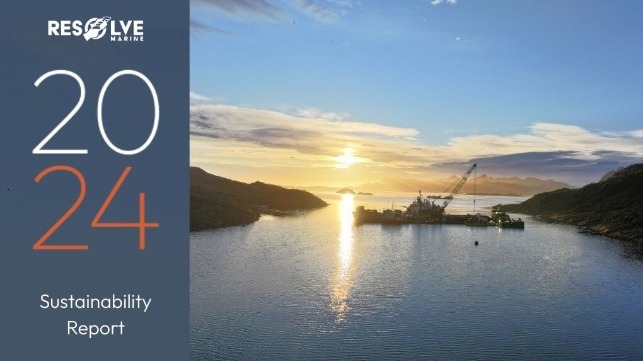
Resolve Marine, a global leader in innovative marine solutions, today announced the publication of its?2024 Sustainability Report, part of the company’s comprehensive environmental, social and governance (ESG) commitments, programs and contributions.
The publication, the company’s second report, outlines Resolve Marine’s?sustainability platform and advancements made in the past year. The report details targets and progress associated with UN Sustainability Development Goals (UN SDGs): UN SDG #14, Life Below Water; UN SDG #11, Sustainable Cities and Communities; and UN SDG #5, Gender Diversity. Resolve Marine aligns with the UN SDGs as a guiding framework to make the most impact in addressing some of the world’s largest sustainable development challenges.
New elements of this year’s report include:
Stakeholder engagement: how Resolve Marine engages with key stakeholder groups
Environmental impact of select emergency response and project work during the year
UN SDG commitments, targets and progress:
Environmental programs and progress across debris recovered, recycling and waste management, ESG considerations in the tender/bid process, charitable donations and humanitarian relief
Social progress through hiring, recruiting, equitable pay, HSEQ policies, safety training and workforce talent development
Governance includes information about company policies and the board of directors
Joseph Farrell III, CEO of Resolve Marine, commented, “Sustainability is not just a commitment for Resolve Marine, it’s part of our identity. With our unique capabilities to remove ocean debris and pollutants, we are in a position to make a real difference for marine ecosystems. We’re also proud to support communities in need through our response and recovery efforts, and we’re actively working to shift the gender imbalance in our industry by opening more doors for women in maritime careers. This report reflects our focus on steady, measurable progress, and we look forward to using it as a platform to guide our actions and hold ourselves accountable."
Jennifer Schlueter, co-lead of the ESG Task Force and Senior Manager of Brand, Marketing and Communications added, “Through continued sustainability efforts, we have deepened engagement with our stakeholders. ESG remains a strong, recurring theme in those conversations and I’m confident that readers of this year’s report will gain a deeper understanding of how we are strengthening our sustainability platform to make a lasting impact in the years to come."
Click?here?to view the 2024 Sustainability Report.
The products and services herein described in this press release are not endorsed by The Maritime Executive.
Swire Shipping Launches New Carbon Insetting Program – ‘Voyage to Zero’
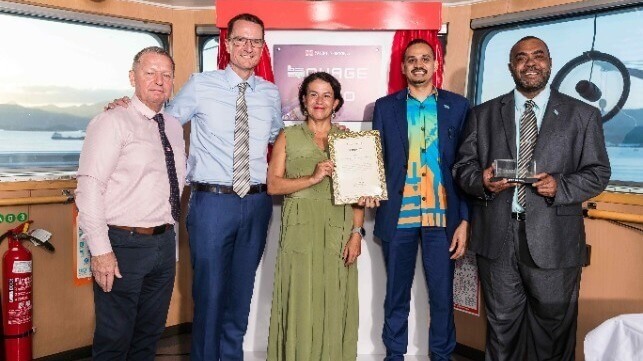
Swire Shipping, a leading shipping company in the Asia-Pacific, today announced the launch of Voyage to Zero, a carbon insetting programme that enables freight customers to reduce their Scope 3 Greenhouse Gas (GHG) emissions, leveraging GHG savings from second generation biofuels used on any Swire Shipping vessel. The programme was officially launched by Fiji’s Minister of the Environment and Climate Change, Hon. Mosese Bulitavu, at a ceremony aboard the MV Apia Chief in Suva on Friday, 11 July 2025.
Carbon insetting allows companies to reduce their carbon footprint by investing in emissions reduction or carbon removal projects within their own value chain or sector. With Voyage to Zero, freight customers can purchase and claim GHG savings from second-generation biofuel voyages (through a book and claim chain of custody model), even if their cargoes are not transported on the same vessel. Emissions savings are calculated based on comparisons with reference fossil fuels on an energy equivalent basis, using independently verified data.
Jeremy Sutton, Chief Executive Officer of Swire Shipping, said, “At Swire Shipping, we are committed to supporting the maritime industry’s journey towards net zero. The launch of Voyage to Zero, and transition to biofuel, are important steps in our decarbonisation strategy that will allow us to provide greater support to customers looking to reduce their emissions. Though the Pacific Island nations contribute the least to global emissions, they face some of the gravest consequences from climate change. By introducing greener fuels in the South Pacific, we stand united with our Pacific Island partners — sharing in their vision and determination for a resilient, thriving, and sustainable future.”
In April 2025, the company announced that three of its vessels serving the South Pacific had made the switch to B24 second-generation biofuel blends. The three vessels involved are the Apia Chief and Tonga Chief on the Pacific Weekly Express (PWX) service running direct calls from Southeast Asia to Papua New Guinea, Solomon Islands, New Caledonia and Fiji, and Kokopo Chief on the East Timor (ETS) service which provides direct service every 10 days between Singapore, Dili, Darwin and Surabaya. The vessels currently bunker B24 in Singapore enroute to the South Pacific.
The products and services herein described in this press release are not endorsed by The Maritime Executive.
Rauma's USCG Icebreaker Bid is Based on Canadian Coast Guard Design
Rauma Marine Constructions (RMC) is rumored to be in the lead for the U.S. Coast Guard's newly-created Arctic Security Cutter contract, and it has partners, according to Finnish media.
Rauma is a well-regarded medium icebreaker yard, and it has delivered some well-known vessels, including the Fennica - the dual-purpose icebreaking offshore vessel that was chartered by Shell for its Alaska project. Earlier this month, RMC CEO Mika Nieminen returned from a business meeting with the U.S. Coast Guard and told outlet Satakunnan Kansa that his company was "number one" on the shortlist of bidders for the USCG's next medium icebreaker.
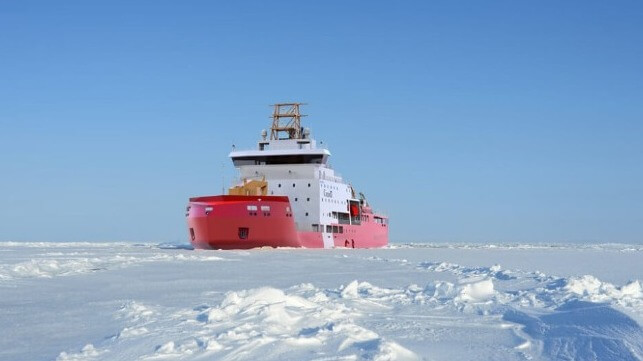
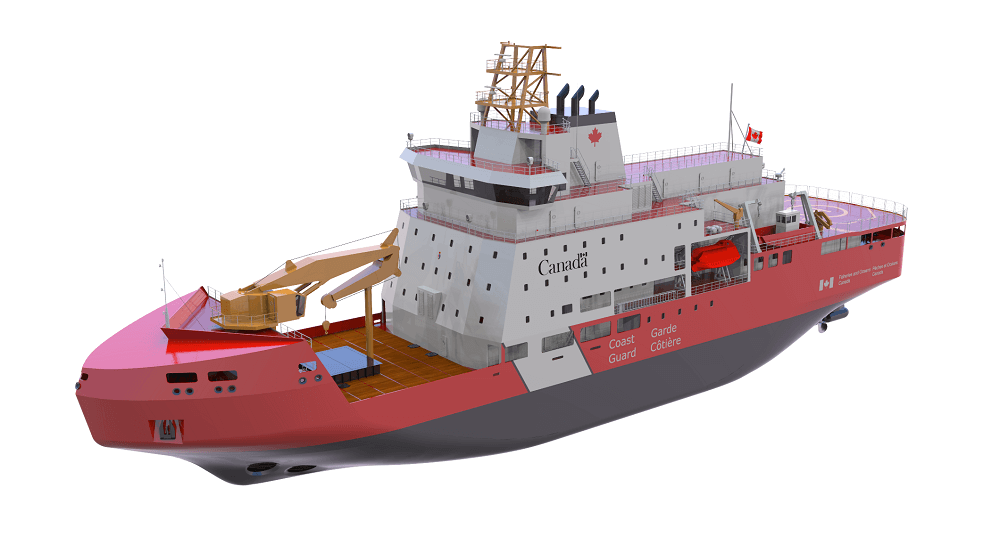
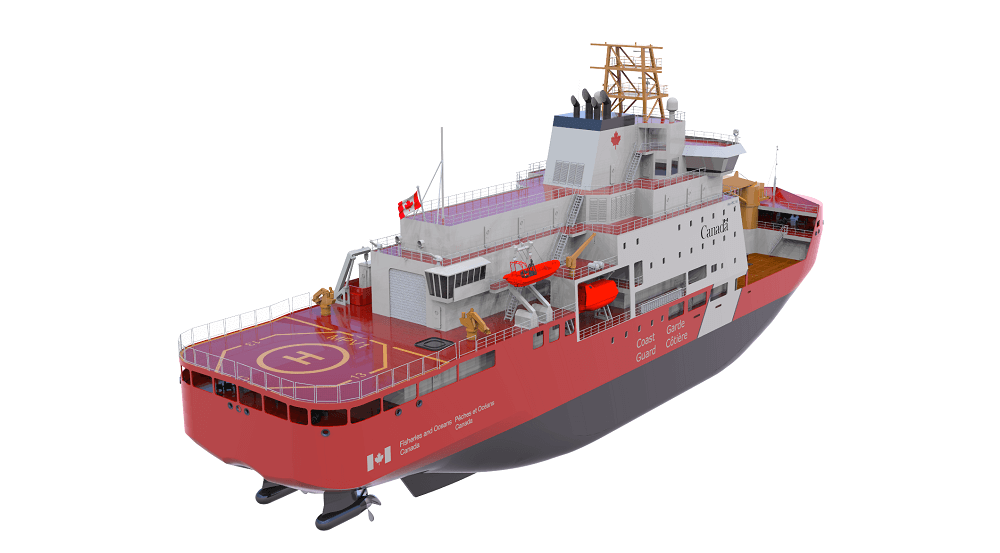
According to Helsingen Sanomat, Rauma has proposed to build five medium icebreakers for the USCG for a price of about $2.7 billion. Satakunnan Kansa reported that RMC is working in partnership with Canada's Seaspan Shipyards and the icebreaker design house Aker Arctic Technology Oy on the bid, which will be based on the Seaspan/Aker Multi-Purpose Icebreaker (MPI) design. (This was previously known as the Canadian Coast Guard's Multi-Purpose Vessel, or MPV.) The MPI is one of three icebreaker classes under Canada's National Shipbuilding Strategy, and it is nearing production - but as Seaspan's yard is fully booked, the construction would be done at Rauma. The details of the bid were first reported by specialist news site Sixty Degrees North.
Illustrations courtesy Aker Arctic
The MPI closely fits the Coast Guard's request for information for a medium icebreaker from a proven shipyard. It is DP-enabled, has provisions for helicopter operations, and comes in just under 330 feet in length. It can make four knots in three feet of ice, and has an ample maximum range of 12,000 nautical miles.
The advantage of building at Rauma would be the timeline. The yard has delivered previous icebreakers in less than three years, a central - and thorny - condition of the Coast Guard's requirements. The service is said to be interested in taking delivery before the end of President Donald Trump's current term.
Funding for the program should not be a significant issue. The One Big Beautiful Bill Act gave the Coast Guard $25 billion for asset recapitalization, including $3.5 billion for the Arctic Security Cutter.
Terminal Expansion Project Kicks Off at Port of Long Beach
ITS's current space in Long Beach will be expanded by infilling the current "horseshoe gap" (ITS)
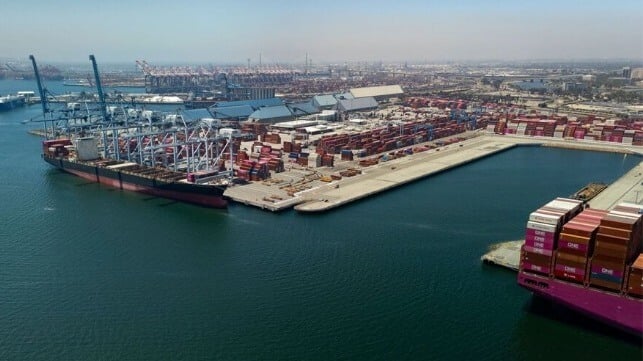
International Transportation Services (ITS), which operates one of the six container terminals at the Port of Long Beach in California, started a major expansion program that will create 19 acres of new space for stacking containers. When the project is completed in 2028, it will increase capacity by 50 percent for ITS to support the long-term growth of the port.
The port and ITS hosted a groundbreaking ceremony on July 11 for the $365 million project. A long-term operator at the port, ITS currently has approximately 246 acres of yard space and 6,700 feet of berth. The operation is supported by 15 cranes and offers a 42.5-foot draft.
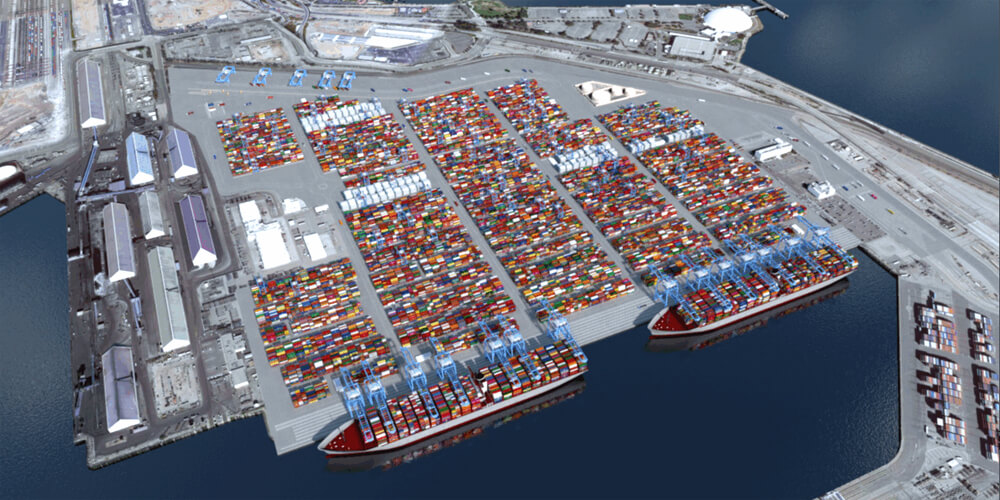
A key part of the project is a 560-foot extension of the existing quay. The upgrade begins with filling in a 19-acre “horseshoe” gap at the terminal. It will create a single, continuous wharf measuring 3,400 feet, which will allow ITS to simultaneously berth up to two 18,000 TEU container vessels. The company and the port called the program a major step forward in handling the next generation of ultra-large ships and increasing overall terminal throughput.
Located in the outer harbor, the ITS terminal is currently nearly divided in half by the south slip, which will be filled with about 2.5 million cubic yards of reused sediment from within the Harbor District in addition to sediments dredged from Newport Harbor at Newport Beach. When completed by December 2028, ITS highlights the project will also increase overall efficiency for the terminal.
Rendering of the expanded facility with the capability to handle two 18,000 TEU containerships (Port of Long Beach)
The expansion is kicking off as the port faces uncertainties due to the Trump administration's tariff policies. The dual ports of Long Beach and Los Angeles are the primary gateway for imports from China and Asia.
While overall volume in the port was up over 17 percent in the first five months of 2025, some of the growth was imports and retailers front-loading to beat the anticipated tariffs. The port handled 4 million TEU in the first five months, but in May (the last reported month), TEU volume declined more than 8 percent due to tariffs and retaliatory tariffs. Port officials were hopeful that they would see a rebound as the U.S. and China paused tariffs and were working on long-term agreements. Growth of the port’s long-term volumes depends on the stability of imports from China and Asia.
Russia Plans Commercial Container and Cargo Port for Crimea Near Sevastopol
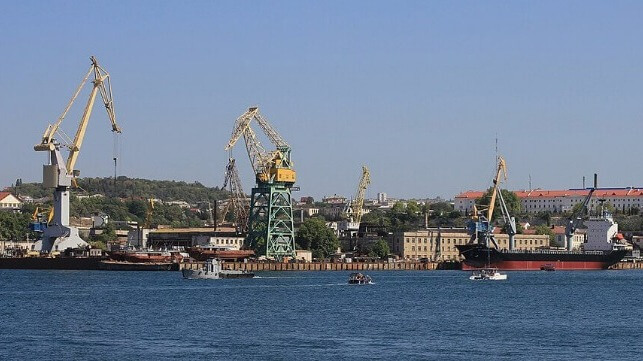
Russia looks to redevelop Sevastopol into a major commercial port a decade after it was closed by the annexation (
The Russian-appointed governor for Sevastopol in Crimea discussed plans for the development of a new commercial port and container operations as the next step in the economic development of the occupied region. The commercial port of Sevastopol has been largely closed for the past 11 years, since the Russian annexation of Crimea, and due to sanctions imposed by the European Union and Ukraine.
“It is very important for Sevastopol to have a powerful, active commercial port,” Mikhail Razvozhaev told a conference in Russia. He announced the signing of key agreements while he wrote on Telegram, “As soon as the sanctions are lifted, the port will operate at full capacity, but already, according to colleagues, there are prospects for starting work.”
In June, an agreement was signed for the reconstruction of the port with the new commercial operation to be located in Kamyshovaya Bay to the west of the city of Sevastopol. They said it will take several years to make the port fully operational and estimated an investment of approximately $25.6 million.
According to the statement, necessary port equipment has been purchased, and preparations are underway for the repair of the main facilities. Hydraulic engineering will also be required.
They said that three test voyages have already been conducted on a vessel with a capacity for 260 TEU. It was sailing between Sevastopol, Turkey, and Egypt. A fourth test voyage is planned for July.
Razvozhaev said the goal is to handle up to 2,000 TEU and 500,000 tons of general cargo in 2025. He predicted it would grow to 20,000 TEU and 1 million tons of cargo next year, with a goal to handle about 250,000 TEU annually by 2030. They aim to increase the tonnage of containerships and the volume of containers, including handling perishable goods.
“The modernization of the infrastructure in Kamyshovaya Bay is an important step towards strengthening the role of the Sevastopol seaport, a key transit hub of the Black Sea region, as well as developing the city's logistics potential, increasing its investment attractiveness in the current difficult conditions,” wrote Razvozhaev.
It is not the first time Russian officials have discussed redeveloping the Sevastopol port. The plan was first reported in 2023 when they called for a multifunctional sea terminal in Sevastopol saying it would handle transshipment of food and cargo as well as containers and refrigerated cargo. At the time, they estimated the cost of the project at around $19 million.
Ukrainian media questions the viability of the plan, highlighting the sanctions enforcement. They noted that Ukraine has sanctioned more than 50 ships for operating into Crimea and arrested several ships that later called in ports such as those on the Danube. Ukraine contends that the Russian occupiers are stealing Ukrainian grain and shipping it out of the ports in Crimea to various countries such as Egypt, Syria, Libya, and Yemen, to raise needed cash.
The Russian company that Razvozhaev said would be implementing the plan, Avia LLC, is also operating the grain terminal in Crimea and has been linked by Ukraine and others to the smuggling operations. It has been included in the sanctions against the operations and vessels involved in the export of grain from Crimea.
Russia’s Federal Agency for Maritime and River Transport and FSUE Rosmorport are also supporting the project. Razvozhaev predicts it will be an economic boost to the region as they work to strengthen Crimea. He also revealed that they are discussing the development of passenger flights into the region.
Top photo by George Chernilevsky of Sevastopol’s Southern Bay (public domain photo)






 Illustrations courtesy Aker Arctic