Terminal Expansion Project Kicks Off at Port of Long Beach
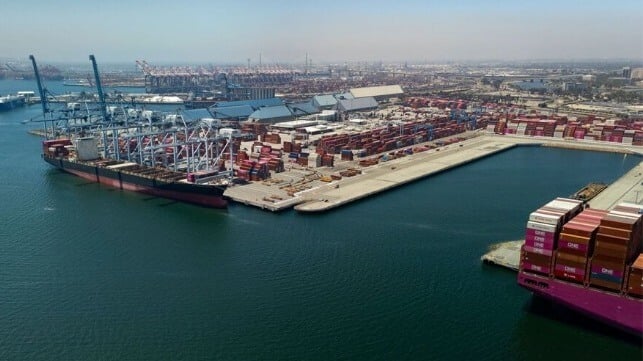
International Transportation Services (ITS), which operates one of the six container terminals at the Port of Long Beach in California, started a major expansion program that will create 19 acres of new space for stacking containers. When the project is completed in 2028, it will increase capacity by 50 percent for ITS to support the long-term growth of the port.
The port and ITS hosted a groundbreaking ceremony on July 11 for the $365 million project. A long-term operator at the port, ITS currently has approximately 246 acres of yard space and 6,700 feet of berth. The operation is supported by 15 cranes and offers a 42.5-foot draft.
A key part of the project is a 560-foot extension of the existing quay. The upgrade begins with filling in a 19-acre “horseshoe” gap at the terminal. It will create a single, continuous wharf measuring 3,400 feet, which will allow ITS to simultaneously berth up to two 18,000 TEU container vessels. The company and the port called the program a major step forward in handling the next generation of ultra-large ships and increasing overall terminal throughput.
Located in the outer harbor, the ITS terminal is currently nearly divided in half by the south slip, which will be filled with about 2.5 million cubic yards of reused sediment from within the Harbor District in addition to sediments dredged from Newport Harbor at Newport Beach. When completed by December 2028, ITS highlights the project will also increase overall efficiency for the terminal.
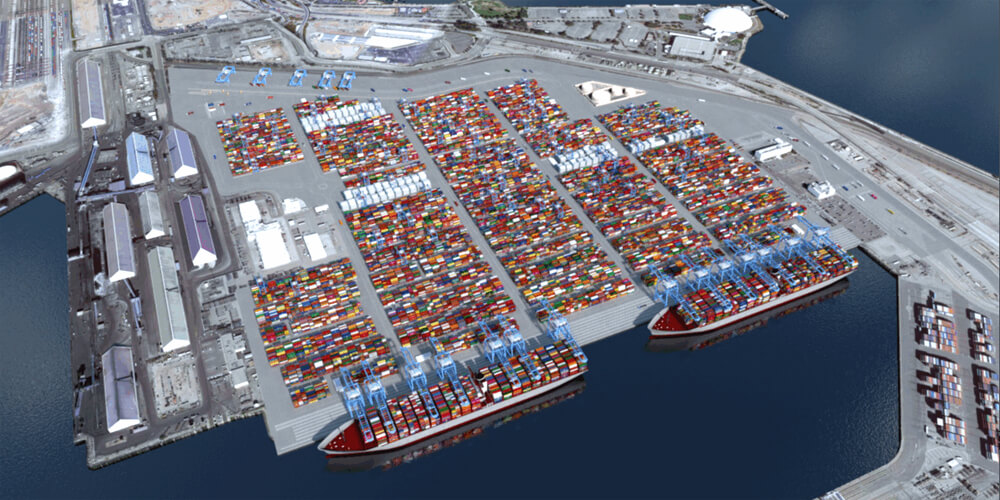
Rendering of the expanded facility with the capability to handle two 18,000 TEU containerships (Port of Long Beach)
The expansion is kicking off as the port faces uncertainties due to the Trump administration's tariff policies. The dual ports of Long Beach and Los Angeles are the primary gateway for imports from China and Asia.
While overall volume in the port was up over 17 percent in the first five months of 2025, some of the growth was imports and retailers front-loading to beat the anticipated tariffs. The port handled 4 million TEU in the first five months, but in May (the last reported month), TEU volume declined more than 8 percent due to tariffs and retaliatory tariffs. Port officials were hopeful that they would see a rebound as the U.S. and China paused tariffs and were working on long-term agreements. Growth of the port’s long-term volumes depends on the stability of imports from China and Asia.
Russia Plans Commercial Container and Cargo Port for Crimea Near Sevastopol
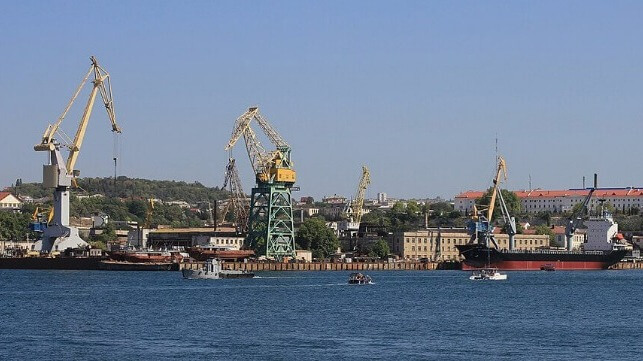
The Russian-appointed governor for Sevastopol in Crimea discussed plans for the development of a new commercial port and container operations as the next step in the economic development of the occupied region. The commercial port of Sevastopol has been largely closed for the past 11 years, since the Russian annexation of Crimea, and due to sanctions imposed by the European Union and Ukraine.
“It is very important for Sevastopol to have a powerful, active commercial port,” Mikhail Razvozhaev told a conference in Russia. He announced the signing of key agreements while he wrote on Telegram, “As soon as the sanctions are lifted, the port will operate at full capacity, but already, according to colleagues, there are prospects for starting work.”
In June, an agreement was signed for the reconstruction of the port with the new commercial operation to be located in Kamyshovaya Bay to the west of the city of Sevastopol. They said it will take several years to make the port fully operational and estimated an investment of approximately $25.6 million.
According to the statement, necessary port equipment has been purchased, and preparations are underway for the repair of the main facilities. Hydraulic engineering will also be required.
They said that three test voyages have already been conducted on a vessel with a capacity for 260 TEU. It was sailing between Sevastopol, Turkey, and Egypt. A fourth test voyage is planned for July.
Razvozhaev said the goal is to handle up to 2,000 TEU and 500,000 tons of general cargo in 2025. He predicted it would grow to 20,000 TEU and 1 million tons of cargo next year, with a goal to handle about 250,000 TEU annually by 2030. They aim to increase the tonnage of containerships and the volume of containers, including handling perishable goods.
“The modernization of the infrastructure in Kamyshovaya Bay is an important step towards strengthening the role of the Sevastopol seaport, a key transit hub of the Black Sea region, as well as developing the city's logistics potential, increasing its investment attractiveness in the current difficult conditions,” wrote Razvozhaev.
It is not the first time Russian officials have discussed redeveloping the Sevastopol port. The plan was first reported in 2023 when they called for a multifunctional sea terminal in Sevastopol saying it would handle transshipment of food and cargo as well as containers and refrigerated cargo. At the time, they estimated the cost of the project at around $19 million.
Ukrainian media questions the viability of the plan, highlighting the sanctions enforcement. They noted that Ukraine has sanctioned more than 50 ships for operating into Crimea and arrested several ships that later called in ports such as those on the Danube. Ukraine contends that the Russian occupiers are stealing Ukrainian grain and shipping it out of the ports in Crimea to various countries such as Egypt, Syria, Libya, and Yemen, to raise needed cash.
The Russian company that Razvozhaev said would be implementing the plan, Avia LLC, is also operating the grain terminal in Crimea and has been linked by Ukraine and others to the smuggling operations. It has been included in the sanctions against the operations and vessels involved in the export of grain from Crimea.
Russia’s Federal Agency for Maritime and River Transport and FSUE Rosmorport are also supporting the project. Razvozhaev predicts it will be an economic boost to the region as they work to strengthen Crimea. He also revealed that they are discussing the development of passenger flights into the region.
Top photo by George Chernilevsky of Sevastopol’s Southern Bay (public domain photo)

No comments:
Post a Comment