Showing posts sorted by relevance for query Pension system collapse. Sort by date Show all posts

Tuesday, August 30, 2022

Germany debates raising retirement age to 70

An aging population, a dramatic labor shortage and a pension pot shortfall are an explosive mix for German economy and society. Would raising the age of retirement to 70 kill all those birds with one stone?
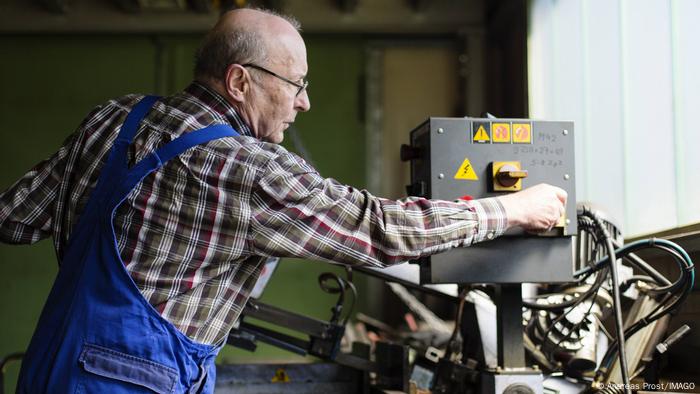
Germany is debating whether an ageing population can be expected to work longer

Germany is reporting a record number of job vacancies in the first quarter of this year the number jumped to an unprecedented 1.74 million open positions. That number was the highest since reunification 30 years ago.

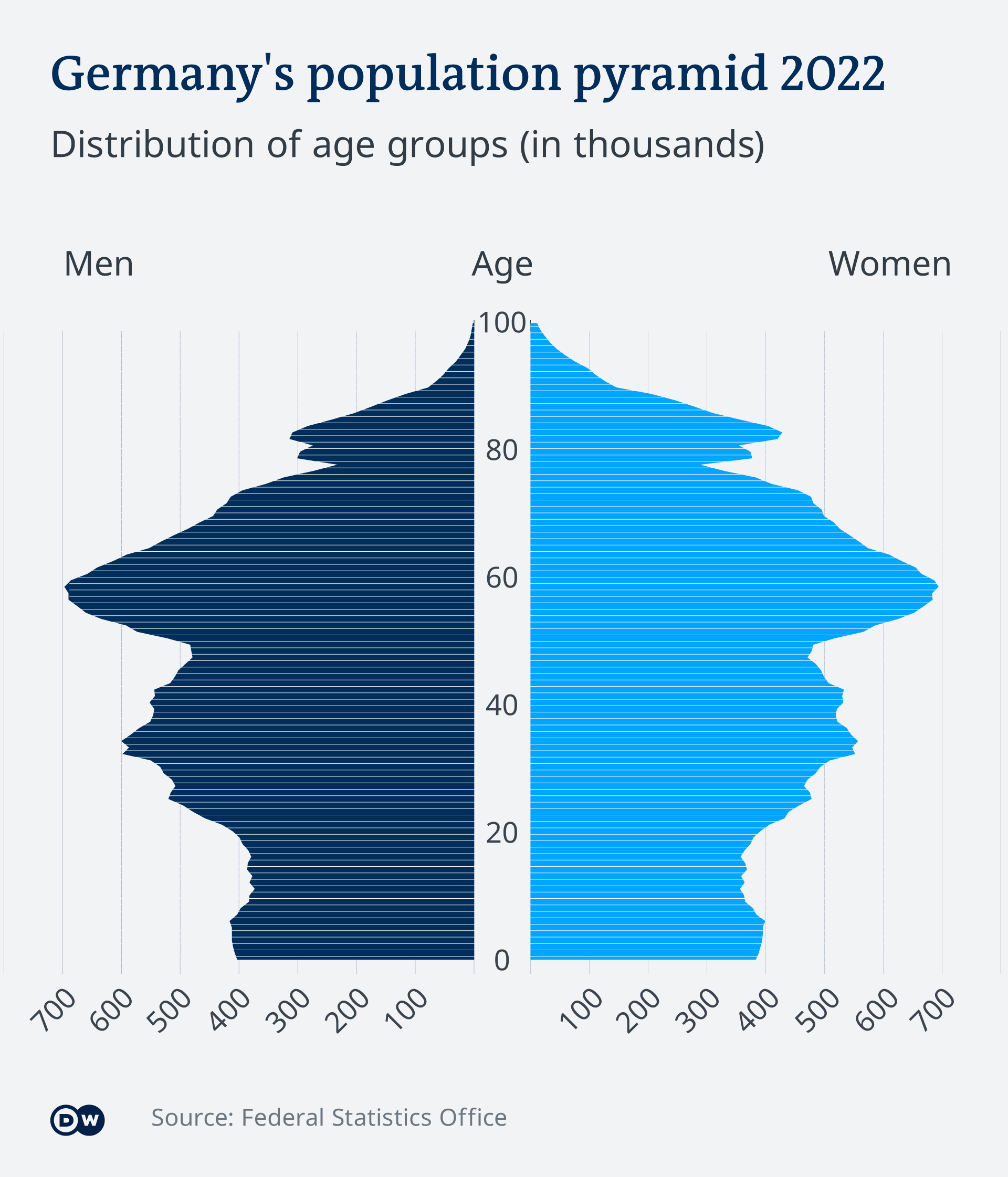
At the same time, Germany also has a record shortage of young people. According to the Federal Statistics Office in July, only 10% of the population is aged between 15 and 24, compared to 20% over the age of 65.

The country's birth rate is too low to compensate for the age shift. This also means that the state pension pot is under severe pressure.
One proposed solution is to raise the retirement age to 70. The president of the Federation of German Employers' Associations in the Metal and Electrical Engineering Industries Stefan Wolf called for this move at the beginning of August. And at summer vacation time the proposal quickly got picked up by national media.

Trade unions, social groups, and left-wingers reacted with fury, with the socialist Left Party's Dietmar Bartsch, calling the proposal "anti-social bullshit".

Currently, Germany is in the process of gradually raising its retirement age from the previous 65 to 67 for those born after 1967.

Pension system collapse predicted

Economists have been warning since as far back as the 1980s that Germany's pension system is facing imminent collapse.

In response, then Labor Minister Norbert Blüm from the center-right Christian Democratic Union (CDU) famously vowed "The pensions are safe" back in 1986. But is the same true today?

In Germany, pensions are predominantly financed through a so-called "pay-as-you-go" system where the majority of Germans — excluding civil servants and the self-employed — pay into the state retirement fund that is used to finance pensions for those who are already retired.

Employees currently contribute just over 9% of their monthly income to the fund. This figure is matched by their employer.

But this type of system only works on the assumption that there are enough working people paying into the state retirement fund to be able to cover current pension payments.

This is where an aging population becomes a problem.

The current Labor Minister Hubertus Heil from the center-left Social Democrats (SPD) has already rejected the idea of raising the retirement age and dismissed the current discussions as a "phantom debate."
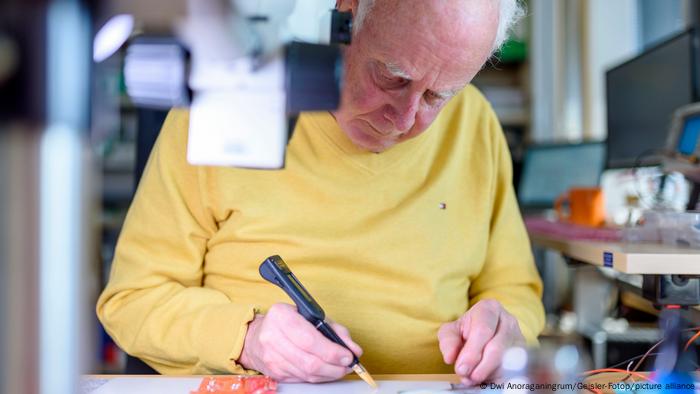
Many senior citizens have such low pensions, they already continue to work beyond retirement age

Mixed bag of proposals

"Raising the retirement age is always a very unpopular measure. That's why it is postponed as much as possible by politicians. But I could imagine that in the mid-2030s when we are stuck in the midst of demographic change, something will happen," says Johannes Rausch of the Munich Center for the Economics of Aging.

Rausch predicts that sooner or later — most likely later — the age of retirement will rise to reflect increasing life expectancy. This way, there would still be enough contributors to finance the system for pensioners, meaning that the contribution rate would have to be raised less and higher pensions could be paid out.

Germany would not be alone in introducing such a measure. The OECD predicts that the average age of retirement for an average person in continual employment will rise to 66.1 years for men and 65.5 years for women.
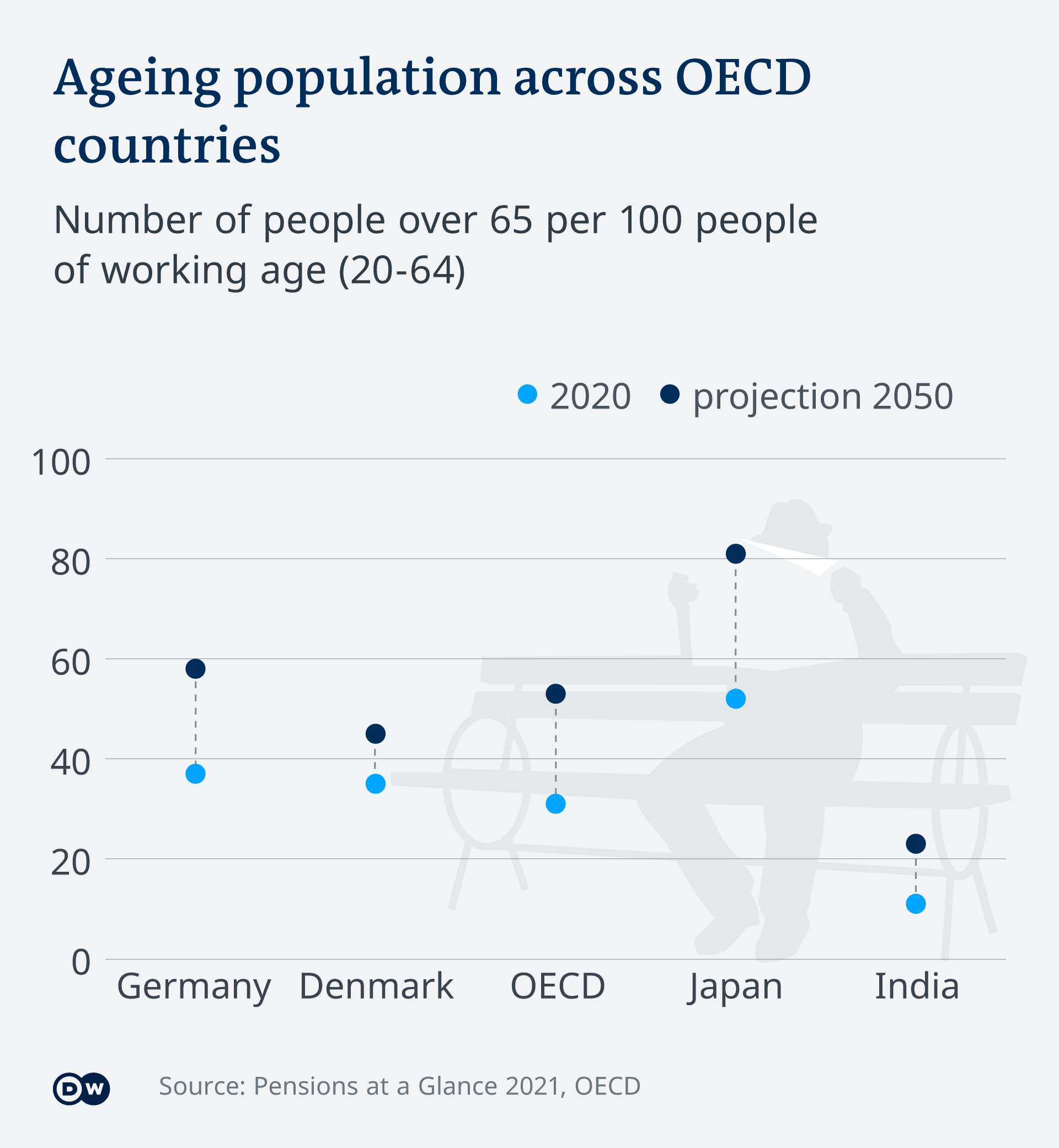
In countries where the retirement age is already linked to life expectancy, including Denmark, Italy, and Estonia, it is already becoming apparent the age of retirement will rise significantly.

Johannes Geyer, deputy head of Public Economics at the German Institute for Economic Research (Deutsches Institut für Wirtschaftsforschung), believes that the quantitative effect of raising the retirement age will be nominal.

"It is a distributional question; who bears the cost of demographic change? Raising the retirement age puts a lot of pressure on the working population," Geyer says. "People with low life expectancy, and those with health problems, will suffer more; a relevant part of the population dies before reaching retirement age."

He sees better potential solutions elsewhere.

"We need migration. It's essential that we have enough people coming from abroad to work in Germany," Geyer says.

"The government is trying to make it easier for migrants' qualifications from abroad to be recognized in Germany. We're also seeing some improvements in the regulations for asylum seekers and those on 'tolerated status' to help legalize their status and recognize vocational degrees and qualifications obtained outside of Germany. This is still a problem."

Many labor market researchers say increased immigration is the only way forward

Targeting part-timers and the long-term unemployed

There are also domestic potentials Geyer points to: "We have a large sector of people working in so-called mini-jobs, so marginal employment, which is poorly paid but not subject to tax or social security contributions. If we could move these people into regular jobs, then this would also help the system."

Geyer also sees the potential to get more unemployed people into work, as well as help to rehabilitate those who have been forced to retire on disability pensions due to illness. This applies to millions of individuals but many of them are unable to work full-time for a variety of reasons — ranging from health issues to caregiving commitments for family members.

Geyer suggests that civil servants and the self-employed, who currently pay into separate pension pots, could also be brought into the general state retirement system.

And finally, he points to another much-touted solution: to extend the working week to 42 hours.

But here, Geyer is skeptical. "I think in many sectors 40 hours is kind of the maximum you can expect people to work," he says. "If you increase working hours you have to take into account that people are already exhausted and those additional hours will add to this exhaustion and could have a negative impact on health." 

Geyer believes people in work can expect to see a rise in contribution rates to the pension pot. He predicts a rise from the current 18.6% to well above 20% by 2025.

"Currently we have rather low [pension] contribution rates. Ten years ago nobody would have expected them to still be below 19%," Geyer says.

"Before the war [in Ukraine] and the increase in inflation I would have said we can afford to increase contribution rates, but given the high inflation, that will trigger a rather heated debate."

For now, Germany may still be taking its time to find a solution. But the likelihood is that demographic change will eventually force the country to act.


SEE LA REVUE GAUCHE - Left Comment: Search results for Pension system collapse 


1932


Wednesday, October 01, 2025

Polish population to shrink by 6.6mn by 2060

Polish population to shrink by 6.6mn by 2060
By bne IntelliNews October 1, 2025

Poland’s population will fall by 6.6mn by 2060 compared with 2024, the country’s statistical office GUS said in a report on September 30. 

Last year’s decline in births already confirmed that Poland is in a demographic crisis, a situation last seen temporarily between 1997 and 2007. “The basis for such a conclusion is provided by trends in births, mortality, life expectancy, marriages, divorces and migration,” GUS said.

Births remain the key factor shaping population numbers, GUS also said. For stable demographic growth, there should be at least 210–215 births per 100 women aged 15–49 each year, compared with the current figure of approximately 110. 

Replacement of generations requires a fertility rate of 2.1, but Poland’s fertility rate dropped below that level in 1990 and has stayed under 1.5 since 1997. Persistently low rates below 1.5 bring irreversible changes in the age structure, GUS said.

While the fertility rate is expected to edge upward, the number of potential mothers will fall as today’s small children form the main cohort of women of childbearing age in the 2040s and 2050s. The report estimates births at about 225,000 in 2060.

“The projection shows that by 2060 Poland’s population will decline by 6.6mn people in relation to 2024. The main driver will be mortality, with deaths reaching nearly 490,000 in 2060, as the post-1980s baby boom cohort enters old age,” GUS said.

According to the study, those now in their twenties will begin reaching retirement age in 2060, while the median age will exceed 50.25 years. That would be around seven years higher than in 2024, meaning half of the population will be older than 50. 

In 2024, the median age already stood at over 43 years, more than seven years higher than in 2000. Between 2000 and 2024, the number of Poles past retirement age - which currently is 60 for women and 65 for men - grew by more than 3mn to 8.9mn, with their share of the population rising from under 15% to nearly 24%. 

“Observed demographic changes, seen both individually and socially, present complex challenges not only economically, but also psychologically, medically and socially,” GUS said.

Slovenia confronts its ageing challenge with contested pension reform

Slovenia confronts its ageing challenge with contested pension reform
Slovenia's population is ageing rapidly, driven by decades of low fertility and rising life expectancy. / voffka offka from Pixabay
By Valentina Dimitrievska in Skopje October 1, 2025

The battle over the comprehensive reform of Slovenia’s pension system is shaping up to be one of the small country’s defining political struggles of the decade.

The overhaul of the pension system in Slovenia, an EU country with a population of slightly over 2mn, has been discussed for years as a response to the country’s ageing population. However, the reform, hailed by the government as a long-overdue step towards securing sustainable public finances, is seen by critics as an unfair burden on workers. They are now demanding a referendum. 

A system under strain

Pensions are more than just monthly cheques; they are a lifeline for retirees and a promise that decades of work will be rewarded with dignity. Yet, like many European nations, Slovenia is facing the heavy weight of demographic change.

The country’s population is ageing rapidly, driven by decades of low fertility and rising life expectancy. According to OECD projections, public pension expenditure, which accounted for about 10% of GDP in 2019, could climb to nearly 16% by 2050 — making Slovenia the second-highest spender on pensions in the EU after Italy. Without reforms, these costs could strain the state budget, forcing higher taxes, cuts in other public services, or both.

Economist and university professor Mojmir Mrak explained to bne IntelliNews that the reform’s main objective is to address ageing pressures.

“The reform aims to address demographic challenges, ensure the long-term sustainability of the pension system, and provide higher and fairer pensions, especially for those with long careers and for vulnerable groups,” Mrak said in a comment.

Mrak added that the reform increases the retirement age as well as the pension accrual rate, adjusts the indexation formula for increases, and keeps contribution rates unchanged. Implementation will start in 2026 and all major changes should be phased in by 2035.

What will change

At its core, the reform guarantees that workers with 40 years of service will retire with a pension equal to 70% of their average salary, a marked improvement over the current system. Vulnerable groups such as disabled pensioners, widows and those in physically demanding jobs will receive stronger protections, according to the labour ministry.

Other provisions include a gradual increase in the retirement age to 62 for women and 67 for men by 2035, the extension of the pension reference period from 24 to 40 years (excluding the five lowest), and a new winter bonus rising to €250 annually by 2030. Rules for vocational rehabilitation will also be simplified.

Explaining the reasons for the reforms, the ministry said in a Facebook post: “The balance between workers and pensioners is becoming increasingly strained. At present, one in five citizens is over 65, and in 35 years’ time, nearly one in three will be.”

Not everyone welcomed the news. Commenting under the ministry’s post, one woman complained that raising the retirement age by two years would force people to work longer, only to enjoy their pensions for a shorter period.

Prime Minister Robert Golob countered that the reform strikes a fair balance. “The whole pension reform is aimed at ensuring sustainable public finances on the one hand, and on the other hand at ensuring that new pensioners who will retire in the next few years will receive as decent a pension as possible,” he said.

A compromise, not a cure-all

While the reform has been described as historic, experts caution that it is not perfect.

“My overall assessment is that taking into account the demographic trends of Slovenia, it is welcome that the pension reform was finally adopted. As usually happens with politically sensitive structural reforms in Slovenia, the final version of the new pension reform is also a compromise,” Mrak said.

“Personally, I would be in favour of fiscally more ambitious reform and of a reform that would include stimulus for development of the pension system’s second pillar.” 

The second pillar, or supplementary pension savings, remains underdeveloped in Slovenia compared with other EU states. Strengthening it could relieve some pressure on the state system, but it requires political will and public trust.

Workers push back

Not everyone shares the government’s enthusiasm. In May 2025, unions and civil society groups in Slovenia formed the Workers’ Coalition (Delavska koalicija) to oppose the reform. They argue the package unfairly punishes workers while letting employers off the hook.

In a comment to bne IntelliNews, the coalition criticised the reform for raising the retirement age and reducing future pension benefits. Under the proposed changes, the retirement age would gradually increase from 60 to 62 for those with 40 years of service, and from 65 to 67 for those with shorter work records.

“This is unacceptable for workers in many fields. In addition, the reform will punish those precarious workers who have had unequal incomes throughout their careers, as it expands the period for calculating pensions from 24 best years of a worker's career to 35 years, effectively lowering their pensions,” the coalition said.

The coalition also warned that the reform’s mechanism for adjusting pensions over time would erode retirees’ purchasing power. Although the calculation rate is set to rise nominally, future adjustments will be linked more to inflation (80%) than to salaries (20%), resulting in slower growth in pension benefits.

Union representatives accused employers of shirking responsibility for the system’s sustainability. Workers currently contribute 15.5% of their wages into the pension fund, compared to 8.85% paid by employers. According to Delavska koalicija, employers benefited from a government-approved reduction in their share in 1996, which was originally meant to be temporary.

“Had employers restored their contributions to the previous level and contributed equally as labour does, there would be no need for a pension reform at all,” the coalition said.

Calling the reform unfair and imbalanced, the group insisted that workers are being forced to retire later for weaker pensions while capital avoids its share of the burden.

The group has launched a referendum initiative, starting with the collection of 2,500 signatures to file the request, followed by another 40,000 to force a national vote. They are confident that workers, given the chance, will reject the reform at the ballot box.

“So far, they [workers] have not had their voice heard in the matter,” the coalition said.

In the meantime, the Workers’ Coalition said on September 26 that it had completed the first phase of collecting signatures against the pension reform, submitting 10,000 signatures to the parliament, four times the required 2,500. The group described the effort as a joint achievement made possible by the commitment of its supporters. “We have shown that there are many of us and that we are capable of coming together,” the coalition noted.

Comparisons in Europe

Slovenia is not alone in facing this dilemma. Across Europe, countries are pushing through unpopular pension reforms to cope with ageing populations. France, despite months of protests and strikes, raised the retirement age from 62 to 64 in 2023. Austria has tied retirement age increases to life expectancy. Germany and Sweden, with much higher employment rates among older workers, offer models of later retirement combined with strong second-pillar pension schemes.

In comparison, Slovenia’s effective retirement age remains low. Only 25% of Slovenians aged 60 to 64 were employed in 2019, far below the OECD average and countries like Germany (41%) and Sweden (58%). Without measures to encourage longer working lives, the system’s sustainability will remain fragile.

The OECD has repeatedly warned that without reform, Slovenia would face unsustainable pension spending. Its recommendations included raising the minimum retirement age, linking it to life expectancy, and shifting from wage-based to price-based pension indexation. The current reform incorporates some of these suggestions.

A nation divided

For many Slovenians, the debate is not just about percentages and formulas, but about fairness and trust. Workers who have spent decades in factories, hospitals or construction sites fear being forced to work longer despite declining health.

On the other hand, economists argue that without reform, the system could collapse, leaving future retirees with even less security.

The pension reform is set to roll out gradually from 2026 in the next 20 years, but its fate is far from certain. The Workers’ Coalition’s referendum push could stall or reverse it, while demographic and fiscal pressures continue to mount.

Slovenia’s path reflects the broader European challenge: how to preserve intergenerational fairness in an ageing society. The compromise reached in Ljubljana may not satisfy all sides, but it marks a step — however contested — towards confronting one of the country’s most pressing challenges.


Tuesday, December 01, 2020

WAGE THEFT
UK
Is my pension ruined if a retail empire crumbles?

Kevin Peachey - Personal finance correspondent
Tue, December 1, 2020
Topshop interior

The collapse of Topshop owner Arcadia is likely to result in a cut in the value of thousands of shopworkers' pensions.

The retailer's demise has led to calls for Sir Philip Green and Lady Green, who run and own the company respectively, to fill the financial gap.

However, as with any business that goes bust, there is a system in place to protect the majority of pension payouts to ensure staff do not lose out entirely.

What happens to pensions when a business folds?

When you work for a company, you are offered membership of a pension scheme, into which the employer makes a contribution and you add to via your pay.

If that businesses collapses, then the contributions stop. A new owner may take on the pension scheme, or - in many cases - certain types of pension scheme go into a rescue scheme called the Pension Protection Fund (PPF).

It pays pensioners already receiving their company pension, and protects those who have yet to reach pension age.

The PPF is paid for, in part, by a levy on other pension funds.

Do all pensions go into the PPF?


No. Anyone with a defined contribution pension has built up a pension pot which belongs to them. This is often managed through a separate investment company and will not go to the PPF.

The individual can decide how it is invested and what to do with it when they reach retirement.

The PPF gets involved with so-called defined benefit pensions - when the employer effectively gives a pension promise about how much you will receive at retirement. This is often based on your final salary, or an average of your career salary.

The PPF usually takes on a failed company's pension scheme and makes payments (officially compensation) to its members.

Topshop owner Arcadia goes into administration

Arcadia's two defined benefit pension schemes are now expected to go into the PPF, after assessors have gone through the books of the schemes.

In a statement, the trustees of the schemes said: "Because Arcadia Group Limited is in administration, the schemes are now expected to enter a Pension Protection Fund (PPF) assessment period.

"The trustees will now liaise closely with the administrators while continuing to work with the Pensions Regulator and the Pension Protection Fund to ensure the best return possible is achieved from asset sales and to make sure the schemes' entry to PPF assessment is as seamless as possible."

How much will pension scheme members get?


That depends on your stage in life.

The PPF promises to pay your pension in full, if you are already receiving pension payments. However, there are some caveats.

The first is that the pension may not increase in value each year as much as expected. This increase is pegged to the rising cost of living as measured by inflation. The PPF uses the Consumer Prices Index (CPI) measure of inflation, which is generally lower than another measure - the Retail Prices Index (RPI) - used by many active pension schemes.

The annual increase only relates to pension accrued since 1997. Any pension built up before that is not increased in line with inflation which is a further blow to older members, and those who worked at the shops more than two decades ago, particularly those who are approaching retirement now.

Ripped up pension statement

For people yet to receive their pension because they are too young, or those who have retired early, the PPF only pays 90% of their pension promise when they hit pension age.

There is a cap on how much someone can receive each year. At present, at the age of 65, that limit is £37,315 a year.

Taken together, all this means, on average, a person with a pension administered by the PPF may receive about 75% to 80% of what they would have expected to have received.
What state are the Arcadia pension schemes in?

There are an estimated 10,000 people with defined benefit pensions from Arcadia - the majority in the Arcadia Group Pension Scheme and the rest in the Arcadia Group Senior Executives Pension Scheme.

In recent times, these defined benefit schemes were closed to new members of staff who work for Arcadia's brands such as Topshop, Dorothy Perkins and Burton, so most of those affected are more long-serving workers or people who have left, or already retired.

At present, the pension scheme does not have the money to pay all future pension obligations. This deficit, according to pensions consultant John Ralfe, is £350m. This is large, but not unprecedented.

Some, but not all, of this shortfall can be made up by a £50m promise from Arcadia-owner Lady Green, and by administrators selling certain properties owned by the company, Mr Ralfe said.
Should the Green family pay up?

There have been calls for the Greens to make up the shortfall. If this were to happen, members would receive all of the pension they were promised.

Sir Philip Green and Lady Green have a widely-publicised fortune

Labour MP Stephen Timms, who chairs the Work and Pensions Committee, said: "Whatever happens to the group, the Green family must make good the deficit in the Arcadia pension fund."

This demand is based on what Mr Timms and others would regard as a moral obligation from the Greens who have huge wealth based on a £1.2bn dividend Sir Philip took from Arcadia and paid to his wife, tax-free in 2005.

There is also the backdrop of a scandal when BHS went bust with the loss of 11,000 jobs and a large pension deficit. Sir Philip reached a deal with the Pensions Regulator to inject £363m into that scheme, after having been accused of earlier selling the business for £1 to avoid pension obligations, something he vigorously denied.

This time, at this stage, there appears to be no legal case which could be pursued by the regulator to oblige the Greens to make any further payment into the pension scheme.

The Pension Protection Fund said: "Insolvency events are a concerning time for employees and scheme members and we want to assure the members of Arcadia's defined benefit pension schemes of our ongoing protection. The robust negotiations at the time of the CVA last year have ensured that both schemes are now in a better financial position."

Monday, July 03, 2023

WORKERS CAPITAL
Will California’s largest pensions, CalPERS and CalSTRS, divest from fossil fuels?

CALMATTERS
JUNE 29, 2023
Oil pumps in the Kern River Oil Field near Bakersfield on July 6, 2022. 
Photo by Larry Valenzuela, CalMatters/CatchLight Local


IN SUMMARY


Climate activists and some lawmakers want two of California’s pension funds to shed about $15 billion of fossil fuel holdings. They say the move would reduce oil and gas companies’ political power, but opponents say it would be a bad move financially.

Climate activists and retirees have pushed retirement funds in Maine and New York to sell their stocks in fossil fuel companies. The push is called “divestment”, and it’s a move that the University of California has embraced as well.

Now, divestment may be coming to more pensions near you.


The California Legislature is considering a bill that would require the pension funds for state workers and teachers to sell holdings in the 200 largest publicly traded fossil fuel companies by July 2031. The bill would also stop the funds from making new investments in those companies starting in 2024.

These pension funds aren’t simple bank accounts, they’re big-time institutional investors. The California Public Employees’ Retirement System has about $459 billion in assets, making it the largest public pension fund in the nation and one of the largest private equity investors in the world according to the agency’s website. When it changes tack, the world of finance takes note.


The California State Teachers’ Retirement System is the second largest public pension fund in the U.S. Together, the two pension funds cover more than 3 million Californians and their families.

Proponents of the bill say it’s important that California put its money where its mouth is, so to speak, on climate policy. Foes of the move say anything that might hurt investment returns should be off the table.

 
Marcie Frost, CEO of CalPERS, at the regional office in Sacramento on June 26, 2023. 
Photo by Rahul Lal for CalMatters

“We’re not saying the intentions around this are not good,” said Marcie Frost, CEO of CalPERS, in an interview with CalMatters. “But they’re not coming through an investor lens. It feels like they’re coming through a morality lens. And we can’t use our own personal values, or our personal morals, to be able to decide how we invest the assets of this portfolio.”

Both pensions are underfunded; if either had to immediately pay out all the benefits they owe, they wouldn’t have enough money.

If CalPERS and CalSTRS shed their investments in the largest oil and gas companies, what would it mean for the teachers and state workers counting on their retirement checks?
Why climate activists are pushing for divestment

For some, it would be a relief.


“When I was younger, I was told by the adults around me that I should work toward obtaining a career with the state of California,” said Francis Macias, a state parks employee who called into a pension fund board meeting in March. A member of the advocacy group Fossil Free California, she said those same adults had told her such a job would come with perks like stable hours — and a nice pension.

But now, Macias said, “I feel like I’m living in a nightmare. Every day, I experience great anxiety knowing my hard-earned pension is funding climate collapse.”

The state worker pension fund has an estimated $9.4 billion in energy company investments it would have to divest under the proposed bill, about 2% of the fund. On the list are companies you’ve probably heard of, including Exxon Mobil and Shell, and ones you probably haven’t, such as Ovintiv Inc. and Cenovus Energy. The teachers’ pension fund would have to divest an estimated $5.4 billion, or about 1.7% of its assets.
 
The bill’s backers include many environmental and climate groups, as well as some unions representing workers who receive pensions, such as the California Faculty Association and the California Nurses Association. But there are other unions, like the California Professional Firefighters and the State Building and Construction Trades Council, that oppose the effort, along with California State Retirees, an organization for retired state workers, and the leadership of the pension funds themselves.

The goal of divestment pushes, climate advocates say, isn’t to directly reduce emissions.

“It’s about calling (fossil fuel companies) out on their immoral activities, and the political consequences of that, which is weakening them politically, so that politicians stop taking their money and politicians stop doing their bidding,” said Carlos Davidson, a retired faculty member of San Francisco State University who receives a pension. He worked on a divestment campaign at the university, and has been involved in the push to divest the state workers’ pension for nearly a decade.

“It is true that divestment does not have direct financial impacts on companies,” Davidson said. “It’s the political effects that really matter. And that is a harder, longer-term, more fuzzy process.”

Davidson lives in Pacifica, off of a combination of his pension and social security benefits.

“I could not have retired and I could not pay my bills right now if I didn’t have my [state] pension,” he said.
 
What are the costs of divestment?

There’s also a camp that thinks divestment would be a bad move financially. That camp includes the leadership of both pension funds.

At the state worker pension fund, the investment and actuarial teams estimated that if the fund sold off its fossil fuel holdings it would get lower returns on its investments, translating to an extra $327.6 million in costs per year for 20 years for employers, like schools, and state and local governments, to meet obligations to retirees.

The state worker pension fund has divested before — from Iran, Sudan, thermal coal, and more. In 2001, the fund divested its tobacco company holdings, worth about $525 million according to news reports at the time. In the more than 20 years since, that move has translated to about $4.3 billion in lost investment profits, according to a 2022 report from Wilshire Advisors. But some divestments, like those from thermal coal, and Iran, have translated to small gains.

When economists from the University of Groningen in the Netherlands and the University of St. Andrews in Scotland compared the financial performance of investment portfolios with and without fossil fuel company stocks from 1927-2016, they found that divested portfolios “would not have significantly underperformed” during that period.

“It’s not just the oil and gas industry,” said pension fund CEO Frost. “What’s next? Divestment from the airline industry, who uses a lot of oil and gas?” she said. “Pretty soon you get to the point that (the pension) has nothing to invest in” and there’s no way to hit the high investment returns the pension fund is tasked with hitting, she said.


“It’s the political effects that really matter. And that is a harder, longer-term, more fuzzy process.”
CARLOS DAVIDSON, RETIRED FACULTY MEMBER OF SAN FRANCISCO STATE UNIVERSITY WHO RECEIVES A PENSION

This isn’t the first legislative push for fossil fuel divestment. Last year a similar bill was passed by the Senate, and then died in the Assembly’s committee on public employment and retirement. It might have a better shot this time, thanks to some political musical chairs. Previously, the Assembly’s public employment committee was led by Jim Cooper, an Elk Grove Democrat who was opposed to the Legislature directing state pension funds on how to invest, Frost said. Now he’s left the Assembly, and the committee has a new chairperson, Tina McKinnor, a Democrat from Inglewood.

A complicating factor is that the pension funds have a “fiduciary duty” under California’s constitution. That means that the people overseeing the funds are legally required to invest prudently, and act exclusively to benefit the fund’s members.

Some of the bill’s opponents say that requiring the funds to divest from fossil fuels would conflict with their fiduciary duty to their members, including the California Professional Firefighters, a union.

“Forcing any California pension system to make investment decisions that may harm the fund in an attempt, in this case, to affect global climate policy, violates their fiduciary mandate and puts the retirements of hard-working Californians at risk,” wrote president Brian Rice in a statement.

Already, the concept of fiduciary responsibility is causing legal headaches for divestment efforts. Three New York City pension funds are being sued for allegedly violating their fiduciary duties after they divested $4 billion in fossil fuel holdings.

Ultimately, it’s up to the pension funds themselves to determine whether divesting would conflict with their mandate.

The state worker pension fund hasn’t done a full analysis yet, but, said Frost, “my impression on this is that it would violate the board’s fiduciary duty to do this.”

The bill has an escape clause of sorts, making it clear that the pension funds don’t have to sell off their investments if doing so would conflict with their fiduciary duties. That means there’s a scenario in which the Legislature passes the bill and then the funds say that divesting goes against their responsibilities to the beneficiaries, and nothing changes in practice.

Davidson, the retiree pushing for divestment, says that’s not the outcome he’s expecting.

But it wouldn’t be all bad, he said. What really matters is the politics, and “the vote of the California Legislature to divest is really powerful, and that’s going to get press coverage around the world,” Davidson said. “That is part of the outcome that we want.”


Thursday, May 07, 2026

Canada Is Quietly Putting War Into Your Portfolio


 May 6, 2026

Image by Hal Gatewood.

Canada is set to host the headquarters of the proposed Defence, Security and Resilience Bank (DSRB), a new multinational institution designed to mobilize tens of billions in financing for military and security projects among allied nations. In short, what we are seeing is the quiet normalization of something far more consequential: the permanent financialization of war. The structure being envisioned for DSRB closely resembles other multilateral financial institutions. It would raise capital on global markets, issue bonds, and extend loans to governments and defense companies. That means funding for military supply chains, weapons systems, and defense infrastructure would increasingly flow through financial markets rather than direct public expenditure. In doing so, war itself risks being transformed from a political decision subject to public scrutiny into a financial product embedded in portfolios.

And so, with remarkable efficiency, we may be arriving at a point where, whether you like it or not, you are investing in war. Not because you consciously chose to, but because modern finance rarely asks for permission. It integrates. It diffuses. It embeds. Just as complex mortgage-backed securities seeped into pension funds and retirement portfolios before the 2008 Financial Crisis, instruments tied to defense financing could quietly become part of the same financial plumbing that underpins everyday savings. Deposits in major banks, such as Royal Bank of Canada or Toronto-Dominion Bank, feed into broader lending and investment pools. If those banks help underwrite DSRB bonds or finance defense projects, then ordinary savings are, at least indirectly, part of the system. You won’t need to opt in. The system will do it for you.

Once you are in that system, try opting out. Go ahead — divest. In theory, it sounds simple. In practice, it is anything but. Large pension funds, such as the Canada Pension Plan Investment Board or the Ontario Teachers’ Pension Plan, operate within a web of financial relationships that makes complete divestment extraordinarily complex. If DSRB bonds are rated as safe, investment-grade assets, they could easily find their way into fixed-income portfolios. Even if funds choose to avoid them directly, indirect exposure remains: through banks that underwrite the bonds, through ETFs that bundle defense assets, and through lending syndicates that finance defense contractors. “All the king’s horses and all the king’s men” of global finance, institutions like JPMorgan Chase and Deutsche Bank, are already lining up behind this model. When the entire financial stack aligns like this, divestment becomes less a matter of choice and more a question of how far you are willing, or even able, to disentangle yourself from the system.

What emerges is not just a new bank, but a new layer of abstraction between citizens and the consequences of war. Traditionally, military spending is debated, however imperfectly, through parliaments and public scrutiny. A financialized model shifts that process into capital markets, where decisions are driven less by voters and more by risk assessments, yield expectations, and institutional incentives. Over time, this risks normalizing war as an investable asset class, something to be priced, traded, and held in portfolios rather than questioned in public forums.

That transformation carries consequences. One of the most immediate concerns is that such a bank could normalize or even facilitate controversial military interventions. If borrowing costs for defense spending are lowered, the financial barriers to launching military operations also fall. History offers a sobering precedent. The Iraq War was widely condemned after the central justification, claims of weapons of mass destruction, collapsed under scrutiny. Yet the war had already been financed, executed, and justified through institutional momentum. A system like DSRB could make such momentum easier to sustain, not harder. When capital is readily available, restraint becomes less likely.

Over time, this could make war financing a permanent feature of the global system. What used to be occasional becomes routine, and what was once debated becomes taken for granted. In that sense, the DSRB starts to look like a ‘World Bank for Warfare.’

Equally concerning is the question of democratic oversight. Traditional military spending must pass through national parliaments, where budgets are debated by elected representatives. A multilateral financial institution operates differently. By raising funds on global capital markets and deploying them through loans and financial instruments, DSRB could create a layer of decision-making that sits at arm’s length from voters. The result is a subtle but significant shift from public accountability to financial abstraction. Decisions about long-term military financing could become less visible, less contested, and ultimately less democratic.

What makes this shift particularly jarring is where it is happening. Canada has long cultivated an image of a country that prioritizes diplomacy, multilateralism, and peacekeeping. Yet by stepping forward to host the DSRB, it is positioning itself not just as a participant in global security, but as a financial hub for its expansion. The very country that has emphasized de-escalation is now spearheading an ecosystem designed to sustain long-term militarization.

The implications extend beyond symbolism. By helping institutionalize a system capable of mobilizing upwards of $100–135 billion in defense financing, Canada is effectively tying part of its economic future to the expansion of military spending. That alignment carries risks. When financial systems are built around a particular sector, they begin to depend on its growth. We have seen this dynamic before, most notably in the housing market prior to the 2008 Financial Crisis, when an entire economic ecosystem became reliant on ever-expanding real estate values.

Apply that same logic to the realm of defense, and the parallels become difficult to ignore. A system that depends on continuous military spending creates subtle but powerful incentives: to maintain high levels of defense budgets, to expand procurement programs, and to sustain the geopolitical tensions that justify both. Over time, what begins as risk management can evolve into dependence. A system built to finance war risks becoming a system that depends on it.

Then comes the uncomfortable question: what happens if the wars actually stop?

In a world where defense financing is deeply embedded in financial markets, peace does not simply reduce risk; it disrupts revenue. If the assumptions underpinning defense-linked investments are built on sustained spending and ongoing tension, then de-escalation could trigger a recalibration across portfolios, institutions, and markets. The consequences would not remain confined to defense companies or financiers. They would ripple outward to pension funds, public investment vehicles, and the everyday savings of millions who never consciously chose to participate in this system.

This is where the analogy to the 2008 Financial Crisis becomes more than rhetorical. Before that collapse, housing was treated as a permanently expanding asset class. Financial innovation spread exposure across the system, embedding risk in places few fully understood. When the underlying assumptions failed, the fallout was systemic. Homes were lost. Savings evaporated. Institutions faltered.

Now imagine a similar architecture built around militarization. A world in which conflict is not just a geopolitical reality, but a financial dependency. Where instability is quietly priced into the system as a driver of returns. And where, if that instability recedes, the economic consequences are felt far beyond the battlefield.

At that point, the challenge will not just be moral or political, it will be structural. Governments may find themselves trying to stabilize a system that has grown dependent on the very thing it claims to minimize: war. And there may come a moment when the system simply breaks, and it becomes impossible to put Humpty Dumpty back together again.

Umer Azad is a software engineer by profession and a volunteer with CODEPINK and the Palestinian Youth Movement (PYM). He previously served as the Regional Social Media Expert for Pakistan Tehreek-e-Insaf (PTI), where he worked on digital outreach, exposing voter fraud, and documenting human rights violations.