Finland Reports Russia Has Begun Naval Escorts for Shadow Fleet Tankers
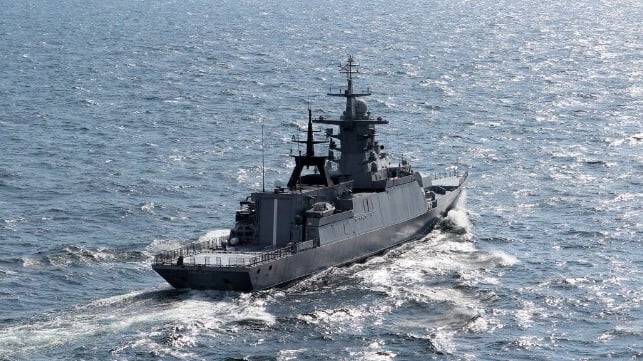
After vowing to take steps to protect its vessels, Russia has reportedly begun escorting shadow fleet tankers in the Gulf of Finland. Defense Minister Antti Häkkänen of Finland called it “unprecedented” during an interview on Finnish TV on Saturday, May 24.
“A new feature is that Russia is protecting tankers from its shadow fleet in the narrow passage of the Gulf of Finland. There is military escort and the presence of armed forces. This is a completely new development,” said Häkkänen on YLE, Finland's national public broadcasting company.
He made the statement after Finland’s Ministry of Defense reported that two Russian military aircraft were suspected of violating Finnish airspace on the afternoon of May 23, 2025. Häkkänen said, "We take the suspected territorial violation seriously and an investigation is underway."
The escalation appears to be in response to the moves by the EU and UK to sanction more tankers and the efforts by Estonia to inspect suspected shadow fleet tankers. On May 13, there was a brief standoff between Estonian forces and a tanker that they suspected was operating without a legitimate registry. The tanker refused to stop for an inspection and a Russian fighter plane entered Estonian airspace possibly to defend the tanker. In April, Estonia detained another suspected “stateless” tanker for several days.
After the incident in May, Russia’s Permanent Representative to the United Nations Vassily Nebenzia called the actions “Baltic pirates” and accused the EU of being “cheerleaders” in the “flagrant violation of freedom of navigation.” Dmitry Peskov, Press Secretary to Vladimir Putin, also said that Russia would use all means to defend its ships.
As an example of the lengths the shadow fleet is going to, the tanker involved in the showdown on May 13, Jaguar (105,000 dwt) registered in Gabon, departed Russia’s oil terminal at Primorsk yesterday, May 25, bearing a new name. AIS signals show the vessel now sailing under the name Blint and registered in Comoros. It would be the third name change for the vessel which began 2025 as Argent, switched to Jaguar, and now to Blint all in a matter of months.
The EU recently enacted rules permitting the inspection of vessels sailing through EU waters even when no port stop was scheduled. After the recent incidents, Estonia’s Defense Ministry has said it would continue its efforts to inspect suspect vessels. It continues to claim the legal authority saying it is acting to protect the region including the environment from these vessels which lack insurance and often are poorly maintained.
Barstad: "Shadow Fleet" Sanctions Need Exception for Scrapping
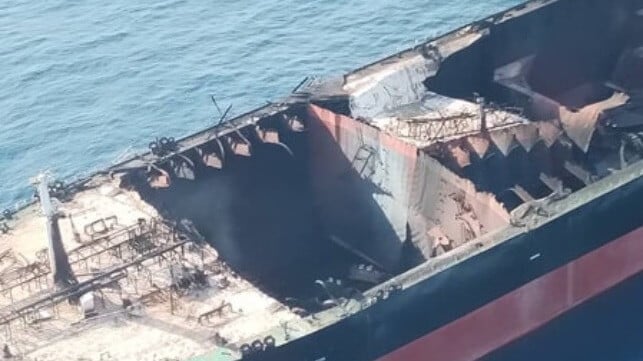
The "shadow fleet" of tankers serving Russia, Iran and Venezuela are on average much older than the "compliant" tanker market, and many are overdue for scrapping. But with American and European sanctions on much of the fleet, it's hard for cash buyers and scrappers to buy these old ships for demolition and take them off the water. As these ships age out of profitable operation, they may have nowhere to go. That's a potential environmental and safety risk, says Lars Barstad, CEO of tanker giant Frontline - a risk that regulators may need to address soon.
"I think actually there needs to be set up some sort of rules for exemptions for recycling [for shadow fleet tankers]. And this is typically where IMO as a UN organization can take a strong initiative," Barstad said in an earnings call last week. "The scary picture is that these vessels will sit somewhere in Southeast Asia . . . and just be kind of floating environmental bombs."
The risk is not theoretical, and there have been problems before. In 2023, the tanker Pablo - sanctioned by the U.S. for carrying Iranian oil - exploded at an anchorage in Malaysia, blowing the main deck off and leaving three crewmembers missing. A suspected Iran-linked shadow fleet tanker, Ceres I, was involved in a dramatic collision and explosion off Malaysia in 2024. And many vessels in the Russia-linked dark fleet are known to operate without valid insurance for spills. There are hundreds of tankers in the shadow fleet that are blacklisted by the U.S. Office of Foreign Asset Control (OFAC) or the European Union, many aging fast towards retirement (or already past the typical point for retiring).
If these vessels could be exempted from sanctions, sold to cash buyers and scrapped - like normal "compliant" tankers - the demolition sales would generate more profits for the anonymous owners of shadow fleet tankers. These shadowy owners could then renew their non-compliant fleets with "new" secondhand tonnage. But it would also provide an industry service by clearing out old, dangerous tonnage that currently has nowhere to go.
"Hopefully, this is going to come up higher on the agenda from the regulators, hopefully higher than decarbonization. So have that conversation first and then we can talk on the decarb later," Barstad said. "On timing, it's regretful that these processes take very, very long until they sit kind of in front."

No comments:
Post a Comment