Syria Announces Another Ceasefire in Suwayda, Says Troops Are Withdrawing
Tuesday’s ceasefire announcement in the southern Syria Suwayda Governorate went pretty poorly. There was fighting before and after, and it fell apart more or less immediately. Wednesday, they’re trying again, announcing a new ceasefire.
Tuesday’s ceasefire came from Defense Ministry officials, while Wednesday’s was announced by the Interior Ministry. Both came with an endorsement from some Druze officials, though once again Wednesday’s agreement has already been disavowed by one prominent local Druze figure, Sheikh Hikmat Al-Hijri.
Adding to the hopes though, Syria has begun to withdraw troops from the Suwayda area. This reportedly came after the US asked them to do so, with an eye toward pushing the Druze to voluntarily integrate into the Islamist-dominated central government.
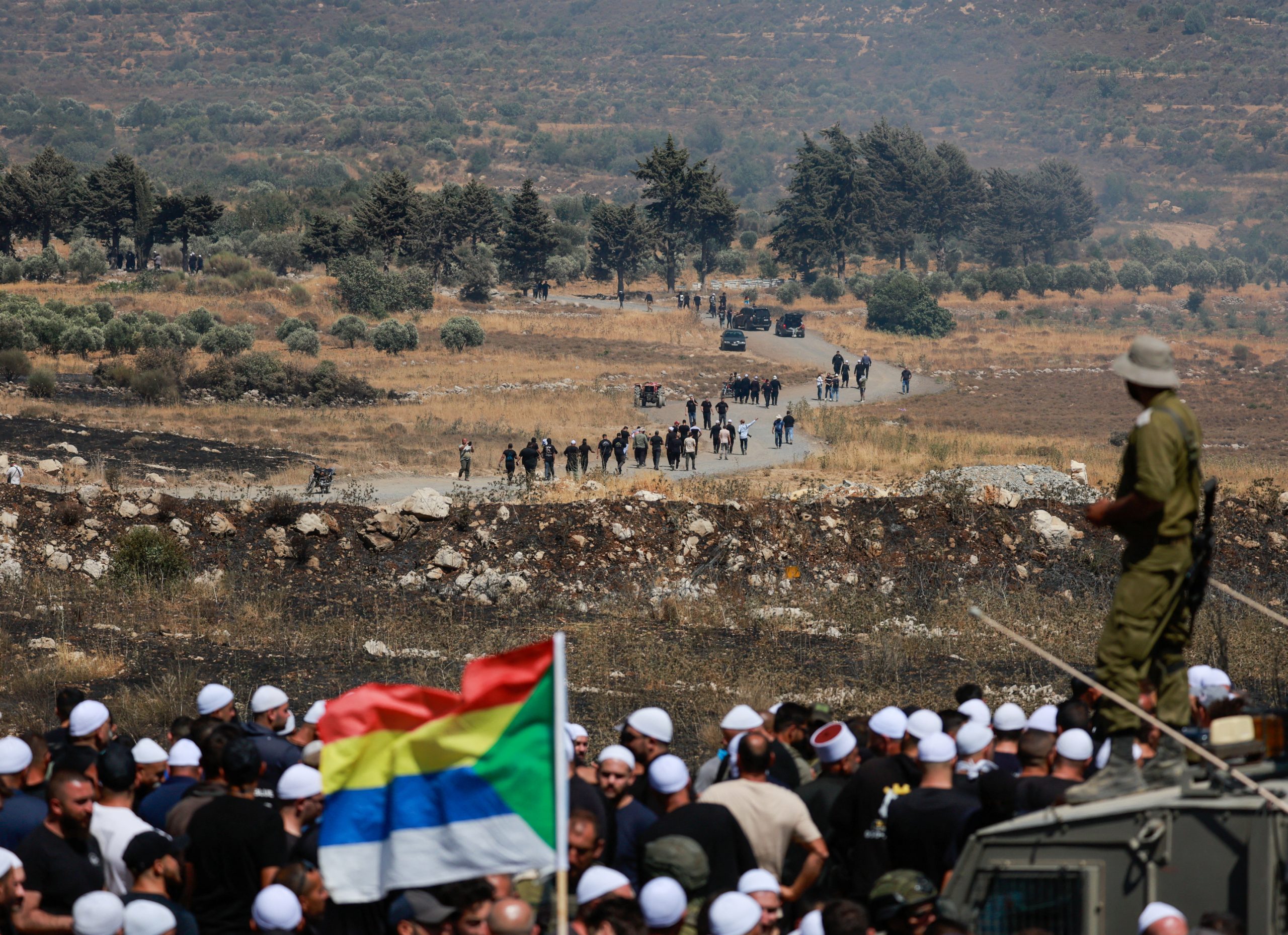
The fighting in Suwayda first erupted Sunday in the Bedouin neighborhood of Maqus, in the city’s east. Fighting escalated, Druze came in from the surrounding areas, and the local Bedouins called tribal allies from nearby as well. When the Syrian military arrived they reportedly took the Bedouins’ side, killing a number of Druze civilians on top of what was already going on.
At this point in excess of 300 people have been killed in Suwayda and the surrounding area. A large number of Israeli Druze crossed into Syria, apparently with designs on participating in the fight. Members of the Israeli Knesset also entered Syria, claiming they were trying to convince the Israeli Druze to return home. The MKs only got as far as the village of Hader, far from the fighting, and it’s not clear if the other Druze that crossed the border went any farther than that.
Israel has forbidden the Syrian military from having any assets south of Damascus, which includes the entire Suwayda Governorate. As a result Israel has attacked Syrian military forces in Suwayda since Monday, and on Wednesday they escalated matters by attacking the Syrian Defense Ministry building in Damascus itself.
Though Israeli officials only sometimes present this as having anything specifically to do with the Druze, at times they present the military operations as being done to protect the Druze from the Islamist government. In practice, Israel invaded Syria in December, more or less immediately after the regime change, and these attacks are in some ways just a continuation of that.
Syrian Government Forces Kill Civilians in Suwayda and Declare Ceasefire
The Syrian Defense Ministry has announced a ceasefire between Druze forces and Bedouin tribes in and around the city of Suwayda, following Syrian security forces entering the city aiming to bring an end to multiple days of fighting.
Today’s reports suggest around 200 people were killed overall in the fighting, which began Sunday with both sides clashing in the neighborhood of Maqus. Both sides were accusing the other of engaging in kidnappings, and eventually the fighting escalated to the city as well as the surrounding area.
Though the ceasefire was declared, the Syrian Observatory for Human Rights has reported that clashes have continued, and says that as many as 93 Defense Ministry forces are among the dead now.
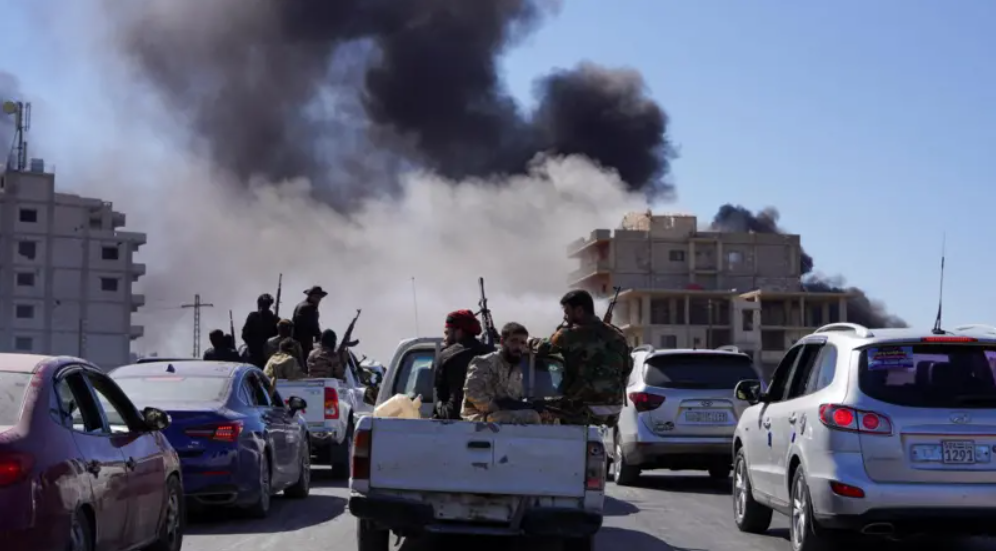
Aftermath of Suwayda fighting | Image from SOHR
Suwayda is a Druze-majority city, while Maqus is a Bedouin-heavy neighborhood. The two sides have long lived side by side, though it has sometimes been tense. Syrian security forces were first sent to the area Sunday when the fighting started, and have been accused participating in fighting against the Druze and even carrying out summary executions of civilians.
Locals said troops entered the city originally nominally to restore order, but were rampaging through neighborhoods before long, looting and burning buildings and killing civilians themselves.
Officials haven’t addressed these allegations, but it’s largely the same as what happened in the northwest earlier in the year, when fighting involving the Alawites turned into massacres, with government-aligned forces participating in executions there as well. Since the Hayat Tahrir al-Sham (HTS) government is styling itself as open to religious minorities, their involvement in killing those minorities is potentially quite embarrassing, even if the government has so far made empty promises of investigations and the matter has largely been dropped internationally.
Further adding to the challenge of this tension in Suwayda is that Israel forbade Syria from having security forces there, and actively carried out strikes against security forces as they approached Suwayda.
This has been an ongoing problem, Israel has declared the whole south of Syria a no-go for Syria’s military and attacks them when they violate that demand. Though the HTS has largely not reacted beyond some international complaints, the Foreign Ministry has asserted the “right to defend ourselves” from Israeli aggression. This could potentially complicate Israel-Syria normalization talks, which were already rather complicated given the ongoing Israeli invasion in the southwest.
BEIRUT (AP) — Syria is deeply divided as it tries to emerge from decades of dictatorship and nearly 14 years of civil war
The Associated Press
July 16, 2025
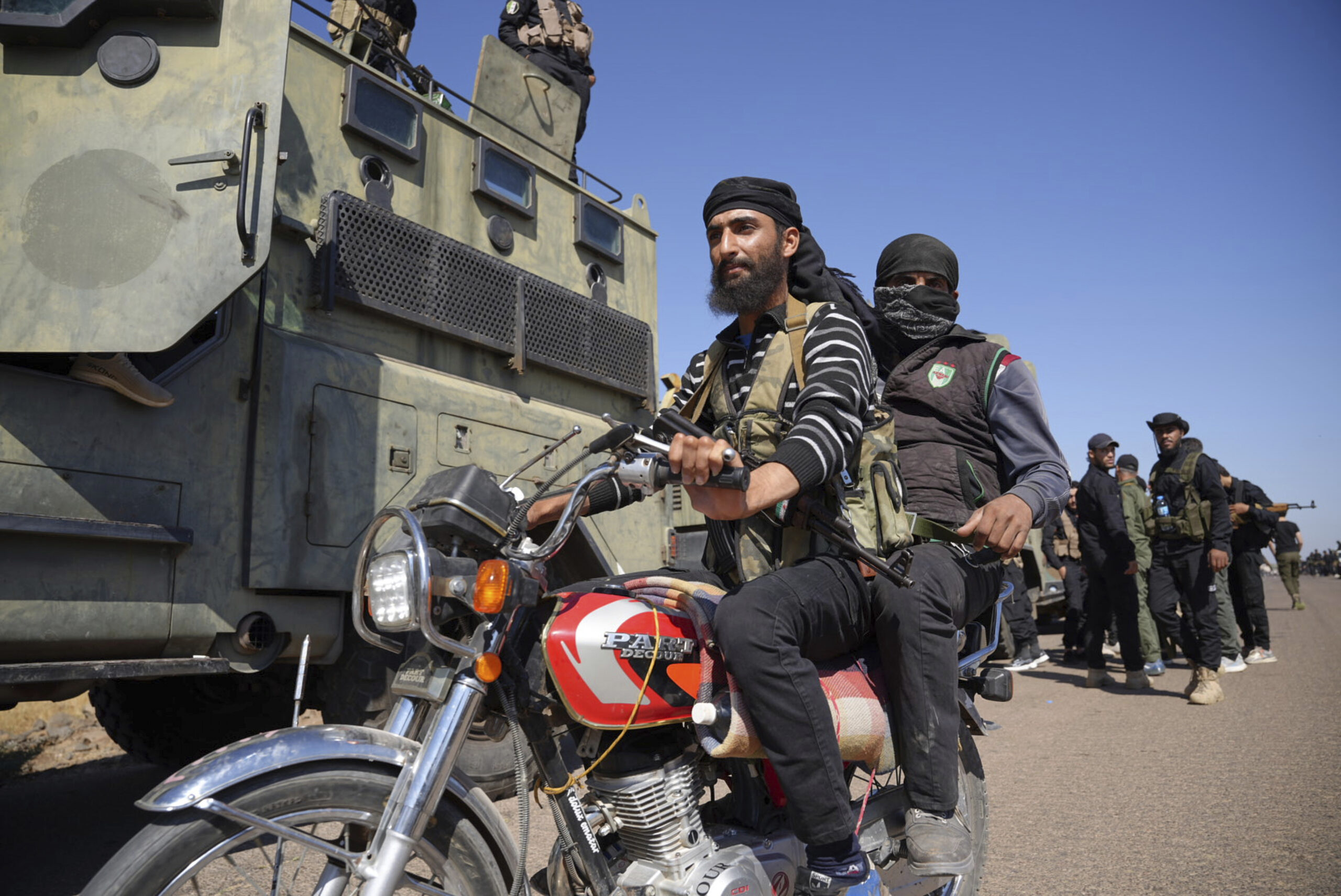
BEIRUT (AP) — Clashes between government forces and members of a minority sect in Syria have drawn intervention by Israel and once again raised fears of a breakdown in the country’s fragile postwar order.
Syria is deeply divided as it tries to emerge from decades of dictatorship and nearly 14 years of civil war.
Clashes have on several occasions broken out between forces loyal to the government and Druze fighters since the fall of President Bashar Assad in early December in a lightning rebel offensive led by Sunni Islamist insurgent groups, but this week’s fighting has escalated to new levels of violence.
Here are the main reasons the clashes expanded in recent days and background on the two sides:
The Druze and Syria’s new government
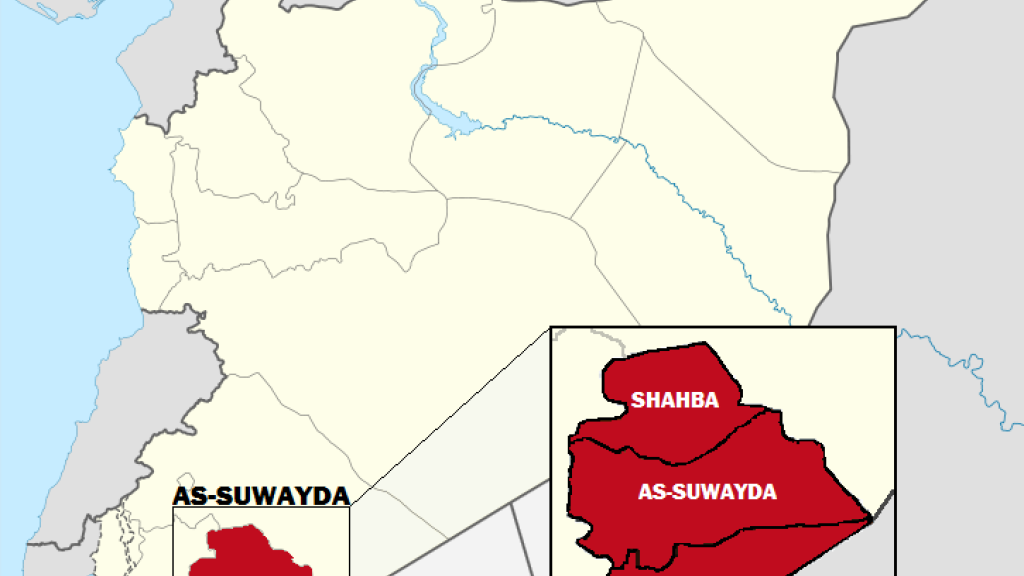
The Druze religious sect is a minority group that began as a 10th-century offshoot of Ismailism, a branch of Shiite Islam. More than half the roughly 1 million Druze worldwide live in Syria. Most of the other Druze live in Lebanon and Israel, including in the Golan Heights, which Israel captured from Syria in the 1967 Mideast War and annexed in 1981. In Syria, they largely live in southern Sweida province and some suburbs of Damascus, mainly in Jaramana and Ashrafiyat Sahnaya to the south.
The transitional government has promised to include minorities, including the Druze, but the new 23-member government in Syria announced in late March only has one Druze member, Minister of Agriculture Amjad Badr.
Under the Assad family’s tight rule, religious freedom was guaranteed as Syria then boasted about its secular and Arab nationalist system.
The Druze had been divided over how to deal with their issues with the new status quo in Syria. Many Druze supported a dialogue with the government while others wanted a more confrontational approach. Reports of attacks on Druze civilians by government-affiliated forces since the latest round of fighting broke out have further alienated many Druze from the new authorities.
Syria’s minorities worry about their rights
Syria’s religious and ethnic communities are worried about their place in Syria’s new system that is mostly run by Islamists, including some who have links to extremist groups.
The country’s new president, Ahmad al-Sharaa, himself is a former militant who once was a member of al-Qaida. Although al-Sharaa had said that the right of ethnic and religious minorities will be protected, there have been several rounds of sectarian killings since Assad’s fall.
The Assad family rule that was dominated by members of the Alawite sect had oppressed much of the country’s Sunni majority while giving minorities some powers.
During Syria’s 14-year conflict, the Druze had their own militias, in part to defend against Muslim militants who consider them heretics. Members of the Islamic State group in 2018 attacked the Druze in Sweida province, killing more than 200 people and taking more than two dozen hostage.
Clashes began after checkpoint robbery
The Syrian Observatory for Human Rights, a U.K.-based war monitor, said the clashes started after members of a Bedouin tribe in Sweida province set up a checkpoint where they attacked and robbed a Druze man, leading to tit-for-tat attacks and kidnappings between the tribes and Druze armed groups.
Government security forces deployed to restore order, but were seen as taking the side of the Bedouin tribes against Druze factions. By Wednesday, the Syrian observatory reported that some 300 people had been killed, including 27 who were “summarily executed.”
Videos and reports surfaced of government-affiliated forces burning and looting civilian houses and humiliating Druze men by forcibly shaving their mustaches.
Israel, which has periodically intervened or threatened to intervene in support of the Druze in Syria, launched dozens of strikes on convoys of government forces in southern Syria and on government facilities in Damascus. It has threatened further escalation. In Israel, the Druze are seen as a loyal minority and often serve in the military.
Israel does not want Islamic militants near the country’s northern border. Since Assad’s fall, Israeli forces have seized control of a U.N.patrolled buffer zone in Syria near the border with the Israel-annexed Golan and have carried out hundreds of airstrikes on military sites.
Concerns that sectarian violence could rise
The clashes raise fears of a worsening spiral of sectarian violence. In March, an ambush on government security forces by fighters loyal to Assad triggered days of sectarian and revenge attacks. Hundreds of civilians were killed, most of them members of the minority Alawite sect that Assad belongs to. A commission was formed to investigate the attacks but has not made its findings public.
There have also been rising tensions between authorities in Damascus and Kurdish-led authorities controlling the country’s northeast. Despite having reached an agreement in March to merge their forces, the two sides have since come to an impasse and the deal has not been implemented.
The ongoing instability threatens to derail Syria’s fragile recovery after more than a decade of war that devastated its infrastructure and displaced half the prewar population of 23 million. In 2017, the United Nations estimated that rebuilding Syria would cost about $250 billion. Since Assad was overthrown, some experts say that number could be as high as $400 billion.
Syria and the dangers of playing with fire
First published in Arabic at Al-Quds al-Arabi. Translation from Gilbert Achcar's blog.
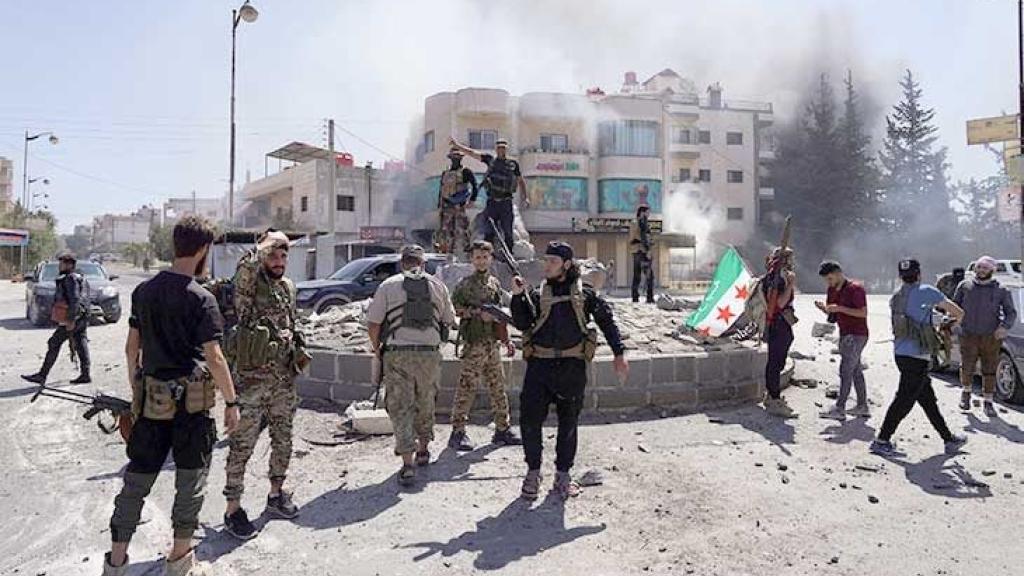
Whatever is the origin of the recent bloody clashes in the Suwayda Governorate — whether they were merely the result of the chaos prevailing in post-Assad Syria, or a manoeuvre by Israel in order to escalate its hypocritical intervention in the region, or a manoeuvre by Hay’at Tahrir al-Sham (HTS) to extend its control over southern Syria — what is unmistakable is that the first factor, the prevailing chaos, provided the conditions for the explosion. The Bedouins who ignited the fuse by attacking a resident of the province were encouraged by the attitude of the new regime in Damascus, which is pressuring all minorities to surrender their weapons while exerting no pressure on various Sunni Arab groups. Instead, it is facilitating the arming of the latter, using them similarly to the former regime’s use of the so-called “Shabiha” (with the difference in sectarian affiliation, of course).
It is striking and extremely dangerous that the new Damascus government has not responded to repeated calls to maintain security on the road between Damascus and Suwayda. This unruliness of the situation, or rather the lack of intervention in controlling it, has paved the way for the current explosion. It could have been prevented had the government shown the same enthusiasm in controlling the Bedouin groups allied with it as it has now shown in seizing the opportunity of the clashes to enter Suwayda, offering a spectacle that looks more like an occupation than like a liberation of the local population. As Al-Quds Al-Arabi’s correspondent in Damascus wrote last Sunday:
At the end of last April, the Suwayda Governorate had witnessed an agreement between the Syrian government and the sheikhs of Suwayda stipulating the activation of police within the governorate, with the Syrian government assuming responsibility for protecting the Damascus-Suwayda road, a vital artery for hundreds of thousands of residents within the governorate. However, the continued attacks on this road and the failure to secure it for civilian traffic have exacerbated societal tensions within the Suwayda Governorate... (Heba Mohammed, “Syrian Suwayda: Deaths in Clashes Between Druze and Bedouins, and Kidnappings”, Al-Quds Al-Arabi, 13 July 2025).
Last Friday, before the outbreak of clashes in Suwayda, the Syrian Observatory for Human Rights (SOHR) warned about the chaotic situation:
Human losses continue to occur daily across Syria under various circumstances as a result of the ongoing escalating violence, military operations, targeted killings, assassinations, unexploded ordnance, and many other causes that claim the lives of many, civilians primarily and personnel from all the military forces controlling the Syrian territory. (SOHR, “Escalation of Violence in Various Syrian Regions Leaves 35 Dead in 72 Hours”, 11 July 2025, in Arabic).
The same pattern threatens to recur in other areas escaping the control of the new Damascus government, especially those with a Kurdish majority. It is well known that the Kurdish armed forces are much stronger than those in the Druze regions, and even stronger than those of HTS in its new “official” iteration. On Monday, the SOHR published a report on its website describing the Syrian government’s continued blocking of petroleum products to the predominantly Kurdish neighbourhoods of Sheikh Maqsud and Ashrafieh in Aleppo for more than 15 days. The report added that residents of the area indicated that
the authorities are using a method similar to that previously used by the Assad regime, through economic and service pressure by withholding fuel, electricity, and basic resources, in an attempt to extort political or financial concessions from the Autonomous Administration [of North and East Syria] ... (SOHR, “The Former Regime’s Method...”, 14 July 2025, in Arabic).
Given this chaotic situation, it is no surprise that Israel continues to fish in troubled waters, claiming to champion the Druze community. That is the same Israel that annexed the occupied Golan Heights in 1981, despite the opposition of the local Druze population, who overwhelmingly rejected the annexation and, along with it, the Israeli citizenship that was offered to them. The Golan Druze population even carried out a five-month general strike in 1982, which the Zionist state quelled by imposing a siege on them. Israel seized the opportunity of the new clashes in Suwayda to destroy more equipment inherited by the HTS forces from the previous Syrian regime. It certainly hopes for an escalation of violence in order to take advantage of it to strengthen the influence of the minority among the Syrian Druze that aspires to establish a Druze emirate under Israeli protection.
In the face of what is happening, allow me to recall what I wrote more than two months ago:
The blame lies primarily with those who attributed the collapse of the Assad regime exclusively to themselves … HTS should have modestly acknowledged the limitations of its own forces, which are quite weaker than those of the Kurdish forces in the northeast, and far too weak to allow it to extend its control over all the Arab regions that were controlled by the ousted regime with the assistance of Russia and Iran. Instead, Ahmad al-Sharaa got euphoric about replacing Bashar al-Assad in his presidential palace (he even began to increasingly look like a bearded version of the deposed president). He acted as if he could dominate all of Syria…
After describing the inclusive democratic process that HTS’s rule should have launched, as most of the former opposition to the Assad regime had demanded, I concluded:
These are the only conditions that can cleanse Syria’s waters and reassure the various components of its population. What the HTS regime has done so far, however, is dangerously muddying the waters, opening the way for various regional adepts of fishing in troubled waters, foremost among them the Zionist state. (“Syria: Fishing in Troubled Waters”, Al-Quds Al-Arabi, 6 May 2025).
[Updated] ‘A serious threat to civil peace and national unity’: Statements from Rojava on sectarian violence in As-Suwayda
[Editor’s note: Nilüfer Koç, spokesperson for the Commission on Foreign Relations of the Kurdistan National Congress, will be speaking at Ecosocialism 2025, September 5-7, Naarm/Melbourne, Australia. For more information on the conference visit ecosocialism.org.au.]
Below LINKS International Journal of Socialist Renewal is republishing statements by the Syrian Democratic Council, the Democratic Union Party (PYD) and the Women’s Protection Units (YPJ) on the escalating sectarian violence in As-Suwayda, in southern Syria.
Syrian Democratic Council (SDC): On the situation in As-Suwayda
The Syrian Democratic Council (SDC) is following, with deep concern, the rapidly unfolding events in Suwayda Governorate. These developments pose a serious threat to civil peace and the fabric of national unity. These events could cause even more suffering and instability in Syria, a country that is already deeply weakened and damaged by years of war and internal strife.
Regardless of causes or motivations of the events, the recent escalation cannot be separated from the broader course of the Syrian crisis. It is also closely tied to the ongoing absence of a just and comprehensive political solution. Such a solution is urgently needed to end the suffering and create a real and meaningful opportunity for positive transformations or reforms.
At the SDC, we believe that turning to armed confrontation, and the increasing normalization of violence, do not serve the people’s interests. Nor do they advance the cause of justice. Instead, they deepen existing divisions and escalate instability — at a time when Syria urgently needs stability and reconciliation, not further harm.
In this context, we strongly condemn the involvement of elements from the Syrian regime’s security apparatus in fueling the internal conflict. We consider this behavior deeply irresponsible. It contradicts the fundamental role of any government that claims to serve its people. A government’s responsibility is to protect its citizens and ensure their safety. It must not use its security institutions to inflame divisions or deepen fragmentation. Any form of government involvement that promotes violence or disrupts social cohesion is a serious violation of its obligation. It puts the country at further risk of chaos and collapse.
We also warn of the serious dangers posed by sectarian rhetoric and hate speech that have accompanied these developments. This kind of language has long fueled conflict in Syria. It must be firmly rejected. The unity of the Syrian people cannot be built on sectarian incitement. It must be based on the principles of citizenship, equality, and mutual respect.
We call on all parties in Suwayda — and throughout Syria — to act with restraint. Immediate de-escalation is essential. We urge all sides to prioritize constructive dialogue over the use of force. We also stress the urgent need to launch responsible, inclusive initiatives to defuse tensions. These efforts must address the root causes of the crisis through political and peaceful means. Above all, they must uphold the dignity and needs of the Syrian people.
Syria stands today at a historic crossroads. There is a real opportunity to emerge from this prolonged national crisis. But this opportunity requires a high level of national responsibility. We must all commit to placing the interests of the Syrian people above sectarian or political divisions. A new Syria cannot be built through internal warfare. It can only emerge through unity, rooted in pluralism, justice, and democracy.
The SDC reaffirms its firm commitment to an inclusive intra-Syrian dialogue. We reject all forms of violence and emphasize the importance of respecting the will of all peoples and communities within Syria. Any internal conflict — no matter where it takes place — weakens the prospects of a political solution. It benefits those who want to keep the country weak, divided, and in crisis.
We greatly appreciate the sensible and wise opinions expressed by people in Suwayda, who urge everyone to remain peaceful and act responsibly. We stand in solidarity with the people of the region in their legitimate aspirations for dignity, rights, and justice — free from coercion and oppression. We call upon all national actors and allies to work together toward a new phase in Syria’s future. One built on reconciliation and transformation — not on conflict and destruction.
July 14, 2025
Democratic Union Party (PYD): Regarding the tragic events in As-Suwayda
In light of the dangerous escalation in Suwayda province and the accompanying bloody events that threaten civil peace and the unity of the Syrian people, our party, the Democratic Union Party (PYD), is issuing a statement to the public, calling for averting strife and protecting the Syrian national fabric:
We, in the Democratic Union Party (PYD), are following with deep concern and regret the recent painful developments in the south of our Syrian homeland, especially in As-Suwayda Governorate, where the recent clashes have led to the deaths of dozens of civilians and young men who took up arms to defend their families against outlawed factions working to spread chaos and terror among the people of the region.
What is happening in Suwayda can only be considered signs of a dangerous internal strife that threatens the Syrian fabric and opens the door to a civil war between the people of one nation.
This strife is being fueled by suspicious parties of warlords and foreign powers, while the price is being paid by our people, who have always struggled for a free and dignified life under a just, democratic state.
We, in the Democratic Union Party (PYD), demand that the transitional government in Damascus shoulder its national responsibilities in protecting all Syrians without discrimination and stand firmly against all those who attack the dignity and property of citizens, regardless of their affiliations or backgrounds.
We also call on them to reconsider their legal and political status, and to immediately move away from the discourse of the majority and minorities, and the language of incitement and hatred broadcast through the official media or through platforms affiliated with or affiliated with them, as this has a profound impact in fueling crises and sowing division among the people of one nation.
We appeal to all Syrian national and democratic forces, who believe in the unity and diversity of Syria, to intervene immediately and wisely to stop the bloodshed in Syria, and to prevent the spread of this strife to other regions of the country.
For our part, we affirm that the solution lies in moving towards a democratic, pluralistic, decentralized Syria that guarantees rights and freedoms, and closes the doors to internal conflicts that are exploited by the enemies of the Syrian people and their schemes.
Women’s Protection Units (YPJ): ‘Martyrs like Mother Fouziya light our path’
We have been closely monitoring the recent attacks carried out by the gangs of the Syrian Interim Government against our Druze people. We strongly condemn these illegal assaults that defy human ethics, as they target civilians, including women and children. At the same time, these unrestrained attacks aim to loot villages, violate human dignity, and destroy the culture of the Druze people. The ancient and rich culture of the Druze community is an inseparable part of Syria’s diverse mosaic heritage.
As a result of these brutal assaults, the local people have sought to preserve their culture and dignity. In doing so, they exercised their legitimate right to self-defense, which led to clashes in several areas. Many individuals who are deeply rooted in their land lost their lives during these confrontations.
We, as the Women’s Protection Units (YPJ), extend our deepest condolences to the families of the victims and wish a speedy recovery to the wounded. We consider these attacks a serious threat to the construction of a democratic Syria that safeguards the unity of all its peoples and components. These assaults stem from a dominant patriarchal mindset and represent a grave danger to all communities of the region. Undoubtedly, those responsible attempt to justify these acts under the guise of regional security, yet in doing so, they undermine Syria’s security on the global stage and endanger the peace and stability of the entire region.
In the face of this, our Druze people continue to resist and rightfully exercise their legitimate right to self-defense. No issue, regardless of its nature, can justify such barbaric attacks. For the sake of regional peace and security, we call on all Syrian forces to resolve their issues through dialogue. To open the door for such dialogue, it is essential to unify the front of women and peoples. Therefore, we once again call on all parties to work together in resolving Syria’s issues and building a democratic Syria.
In the village of Al-Dour in the province of Suwayda, many lives were lost due to ongoing attacks and fierce clashes. Several women were also abducted by the attackers. Among those who were subjected to brutal assault, Mother Fouziya Fakhr Al-Din Al-Sharani took an honorable and courageous stand. She defended her dignity and willpower, protecting her neighborhood and village from these barbaric gangs. This rebellious and fierce warrior woman killed six gang members during the clashes and fought until her last bullet.
The stance of this mother serves as a call to all components of the Syrian people — especially women — to protect and organize themselves. Without legitimate self-defense, there can be no talk of a free, safe, and dignified life. We bow with reverence and respect before the immortal martyr Fouziya Fakhr Al-Din Al-Sharani, honoring her memory with the utmost gratitude. Martyrs like Mother Fouziya light our path and guide us on our journey toward a democratic Syria.
YPJ: ‘We are ready to confront all dark forces that target women’
We strongly condemn and denounce the massacre being carried out against the Druze people, and we reaffirm our solidarity with the women and civilians affected. Once again, the extremist jihadist groups, under the leadership of the Damascus government, have targeted innocent civilians. This violence is systematic and directed against the Druze community. The massacres and brutal assaults on women are a direct threat to human dignity and women’s freedom.
We, the Women’s Protection Units (YPJ), firmly condemn these heinous attacks. The targeting and abduction of women, children, and civilians is incompatible with any moral or human principle. Such acts are enemies of diversity, the freedom of peoples, and the very existence of women. The Druze people are not alone. As women fighters, we are fully prepared to stand against any aggression targeting the will of the people, the right to life, and the belief in freedom.
If called upon, we are ready to confront all dark forces that target women. In order to protect Druze women and civilians, we will shoulder all responsibilities placed upon us without hesitation. As the Women’s Protection Units, standing against attacks on women and oppressed peoples wherever they may be is not only our duty — it is the foundation of our existence.
Those responsible for the massacres committed against Druze women must be held accountable, the perpetrators must be prosecuted, and justice must be served. The struggle for the brotherhood of peoples, women’s freedom, and interfaith coexistence must not be allowed to take even a single step backward. We stand with the Druze people. Women will never be silent, and they will never bow their heads.
Women, Life, Freedom.


No comments:
Post a Comment