The US Made the Mistake of Nuclear War Once—Never Again
The anniversary of the A-bombings must serve not only as a reminder of past devastation, but also as a call for a world free from the existential threat of nuclear war. Instead, we are headed in the opposite direction.

A young girl prays after floating a candle lit paper lantern on the river during 70th anniversary activities, comemorating the atomic bombing of Hiroshima at the Hiroshima Peace Memorial Park on August 6, 2015 in Hiroshima, Japan.
(Photo: Chris McGrath/Getty Images)
Austin Headrick
Aug 06, 2025
Our work is licensed under Creative Commons (CC BY-NC-ND 3.0). Feel free to republish and share widely.
Austin Headrick is the public education and advocacy coordinator for Asia at American Friends Service Committee. Prior to joining AFSC, Austin lived in South Korea for seven years working on peace education. Austin obtained an MA in Korean Studies from Hankuk University of Foreign Studies in Seoul.
Full Bio >
The anniversary of the A-bombings must serve not only as a reminder of past devastation, but also as a call for a world free from the existential threat of nuclear war. Instead, we are headed in the opposite direction.
A young girl prays after floating a candle lit paper lantern on the river during 70th anniversary activities, comemorating the atomic bombing of Hiroshima at the Hiroshima Peace Memorial Park on August 6, 2015 in Hiroshima, Japan.
(Photo: Chris McGrath/Getty Images)
Austin Headrick
Aug 06, 2025
Common Dreams
This year marks 80 years since the U.S. dropped nuclear bombs on Hiroshima and Nagasaki, killing between 110,000 and 210,000 people. Yet, despite the lessons of this dark chapter of history, more countries are investing in expanding their nuclear arsenals as we face the threat of a renewed nuclear arms race.
The Bulletin of Atomic Scientists’ Doomsday Clock, a symbol that represents the estimated likelihood of a human-made global catastrophe, is now only 89 seconds to midnight—unacceptably close to disaster. Global military spending approaches $3 trillion, fueling violence across the world. This spending pays for the Russian bombs dropped on Ukraine, the U.S.-backed genocide in Gaza, and the escalation of militarized violence across the world. Meanwhile, nuclear development and expansion continue in all nine nuclear-armed states alongside growing fears of nuclear war in Ukraine, Taiwan, India, Pakistan, or the Korean Peninsula. We’re adding fuel to the fire.
U.S. President Donald Trump recently called the bombing of Iran’s Fordow nuclear site “essentially the same thing” as the bombings of Hiroshima and Nagasaki on August 6 and 9, 1945. This comparison is unfounded and disrespectful. Stories from the A-bomb survivors all share a common theme: In one instant, the bombs turned an average summer day into a nearly incomprehensible hellscape. Even the B-29 bomber pilots who turned back to see the inferno they had unleashed looked down in shock at the burning city. The scale and destruction of these attacks are unlike any bombing the world has seen since.
The anniversary of the bombings must serve not only as a reminder of past devastation, but also as a call for a world free from the existential threat of nuclear war. Instead, we are headed in the opposite direction.
To expand the U.S. nuclear arsenal, the Trump administration has requested an $87 billion budget in FY26 for nuclear weapons alone—up 26% from the nuclear weapons spending in 2025. The budget request will drastically increase spending on nuclear weapons, while cutting spending on nuclear nonproliferation, cleanup, and renewable energy programs. This is a continuation of the bipartisan trend in the U.S. to continue expanding our nuclear arsenal. For 80 years, A-Bomb survivors have been warning that nuclear weapons can never again be used to destroy lives, yet we are closer today than ever before.
The only world safe from nuclear war is one where nuclear weapons no longer exist. That world is possible—if we choose it.
As the only country to ever use nuclear weapons in war, the U.S. has a unique responsibility to lead the world back from the brink of nuclear catastrophe. Rather than increasing an already unprecedented military budget, the U.S. should instead lead the world as a model for investing in healthcare, education, infrastructure, and social welfare. People around the world are calling for a shift from spending on weapons and war to investing in meeting people’s basic needs. The 10% for All campaign envisions moving just one‑tenth of global military spending into human needs.
Diplomatic efforts are also crucial to stopping a nuclear arms race. Washington and Moscow must also come to the table to discuss the New Strategic Arms Reduction Treaty (New START)—the last nuclear arms control treaty between the two countries which will expire in February 2026. Currently there is little sign of discussion between the U.S. and Russia to find a meaningful proposal to address nuclear proliferation concerns.
To prevent the horrors of Hiroshima and Nagasaki from ever happening again, and to realize the full aspirations of the Treaty on the Non-Proliferation of Nuclear Weapons (NPT), leaders must actively pursue a world free of nuclear weapons. The only world safe from nuclear war is one where nuclear weapons no longer exist. That world is possible—if we choose it. Join advocates across the U.S. urging Congress to take a meaningful step toward a world safe from nuclear war.
This year marks 80 years since the U.S. dropped nuclear bombs on Hiroshima and Nagasaki, killing between 110,000 and 210,000 people. Yet, despite the lessons of this dark chapter of history, more countries are investing in expanding their nuclear arsenals as we face the threat of a renewed nuclear arms race.
The Bulletin of Atomic Scientists’ Doomsday Clock, a symbol that represents the estimated likelihood of a human-made global catastrophe, is now only 89 seconds to midnight—unacceptably close to disaster. Global military spending approaches $3 trillion, fueling violence across the world. This spending pays for the Russian bombs dropped on Ukraine, the U.S.-backed genocide in Gaza, and the escalation of militarized violence across the world. Meanwhile, nuclear development and expansion continue in all nine nuclear-armed states alongside growing fears of nuclear war in Ukraine, Taiwan, India, Pakistan, or the Korean Peninsula. We’re adding fuel to the fire.
U.S. President Donald Trump recently called the bombing of Iran’s Fordow nuclear site “essentially the same thing” as the bombings of Hiroshima and Nagasaki on August 6 and 9, 1945. This comparison is unfounded and disrespectful. Stories from the A-bomb survivors all share a common theme: In one instant, the bombs turned an average summer day into a nearly incomprehensible hellscape. Even the B-29 bomber pilots who turned back to see the inferno they had unleashed looked down in shock at the burning city. The scale and destruction of these attacks are unlike any bombing the world has seen since.
The anniversary of the bombings must serve not only as a reminder of past devastation, but also as a call for a world free from the existential threat of nuclear war. Instead, we are headed in the opposite direction.
To expand the U.S. nuclear arsenal, the Trump administration has requested an $87 billion budget in FY26 for nuclear weapons alone—up 26% from the nuclear weapons spending in 2025. The budget request will drastically increase spending on nuclear weapons, while cutting spending on nuclear nonproliferation, cleanup, and renewable energy programs. This is a continuation of the bipartisan trend in the U.S. to continue expanding our nuclear arsenal. For 80 years, A-Bomb survivors have been warning that nuclear weapons can never again be used to destroy lives, yet we are closer today than ever before.
The only world safe from nuclear war is one where nuclear weapons no longer exist. That world is possible—if we choose it.
As the only country to ever use nuclear weapons in war, the U.S. has a unique responsibility to lead the world back from the brink of nuclear catastrophe. Rather than increasing an already unprecedented military budget, the U.S. should instead lead the world as a model for investing in healthcare, education, infrastructure, and social welfare. People around the world are calling for a shift from spending on weapons and war to investing in meeting people’s basic needs. The 10% for All campaign envisions moving just one‑tenth of global military spending into human needs.
Diplomatic efforts are also crucial to stopping a nuclear arms race. Washington and Moscow must also come to the table to discuss the New Strategic Arms Reduction Treaty (New START)—the last nuclear arms control treaty between the two countries which will expire in February 2026. Currently there is little sign of discussion between the U.S. and Russia to find a meaningful proposal to address nuclear proliferation concerns.
To prevent the horrors of Hiroshima and Nagasaki from ever happening again, and to realize the full aspirations of the Treaty on the Non-Proliferation of Nuclear Weapons (NPT), leaders must actively pursue a world free of nuclear weapons. The only world safe from nuclear war is one where nuclear weapons no longer exist. That world is possible—if we choose it. Join advocates across the U.S. urging Congress to take a meaningful step toward a world safe from nuclear war.
Our work is licensed under Creative Commons (CC BY-NC-ND 3.0). Feel free to republish and share widely.
Austin Headrick is the public education and advocacy coordinator for Asia at American Friends Service Committee. Prior to joining AFSC, Austin lived in South Korea for seven years working on peace education. Austin obtained an MA in Korean Studies from Hankuk University of Foreign Studies in Seoul.
Full Bio >
Remembering the Children of Hiroshima and Nagasaki
The fact that children would suffer the greatest harm of all in the event of a nuclear attack against a city today should have profound implications for policy-making in nuclear-armed states and spur action for disarmament. And yet the world's nuclear-armed states continue to withhold their support for abolition.
The fact that children would suffer the greatest harm of all in the event of a nuclear attack against a city today should have profound implications for policy-making in nuclear-armed states and spur action for disarmament. And yet the world's nuclear-armed states continue to withhold their support for abolition.
PHOTO ESSAY

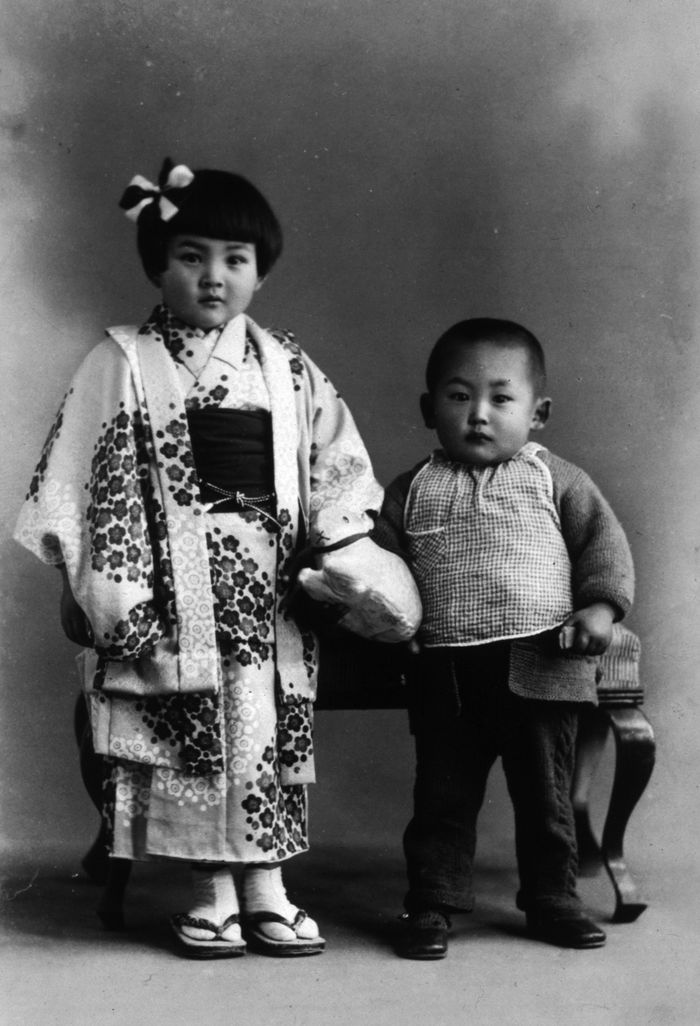
Suzuki Kimiko (left) and her elder brother, Hideaki (right), in Hiroshima a few years before the bombing. Both were killed, along with two other siblings. Their father, Rokuro, was a keen photographer.
(Photo courtesy of Suzuki Tsuneaki)
Tim Wright
Aug 06, 2025
Some parents managed to identify the charred, swollen bodies of their children among scores of corpses only by the name tags on their clothes. Others found their children alive and nursed them for days, weeks or months until they took their final breaths. More than a few expressed guilt at the inadequacy of their care amid extreme shortages of medicines and food.
In Nagasaki, one mother watched as four of her children succumbed to acute radiation poisoning one after another. “I kept thinking that human beings shouldn’t die so easily,” she reflected.
Another Nagasaki mother’s face was so badly burnt and disfigured in the attack that her grievously injured two-year-old son couldn’t recognize her as she cared for him in his dying moments.
Some children appeared unharmed at first, having sustained no burns or other visible injuries, but developed fatal diseases years later, as ionizing radiation had entered their bodies and altered their cells.
Suzuki Kimiko (left) and her elder brother, Hideaki (right), in Hiroshima a few years before the bombing. Both were killed, along with two other siblings. Their father, Rokuro, was a keen photographer.
(Photo courtesy of Suzuki Tsuneaki)
Tim Wright
Aug 06, 2025
Common Dreams
Before dawn on August 6, 1945, Tsuyako Kubota gave birth to her second daughter at her home in Hiroshima’s Nishikanon neighborhood. A few hours later, in a blinding flash, much of the city was reduced to smoldering ruins by a single atomic bomb.
The young mother, her newborn baby and her two-year-old daughter, Sumie, became trapped in the wreckage of their home. The girls’ father, Minoru, a Japanese-American from Hawaii, tried desperately to free them.
“Sumie was crying,” he recalled. “She said to me, ‘Daddy, it’s hot! The fire is coming! My hands are burning!’ There was a final scream, and then I couldn’t hear her voice anymore.”
Sumie and her hours-old sister—who was never given a name—were among the estimated 23,000 children killed in the U.S. atomic bombing of Hiroshima 80 years ago this week. A further 15,000 perished in the attack on Nagasaki three days later.
“She said to me, ‘Daddy, it’s hot! The fire is coming! My hands are burning!’ There was a final scream, and then I couldn’t hear her voice anymore.”
Their deaths, and those of tens of thousands of other civilians, challenge official narratives in the West that the use of nuclear weapons against the two Japanese cities in the final days of World War II was morally justified.

Before dawn on August 6, 1945, Tsuyako Kubota gave birth to her second daughter at her home in Hiroshima’s Nishikanon neighborhood. A few hours later, in a blinding flash, much of the city was reduced to smoldering ruins by a single atomic bomb.
The young mother, her newborn baby and her two-year-old daughter, Sumie, became trapped in the wreckage of their home. The girls’ father, Minoru, a Japanese-American from Hawaii, tried desperately to free them.
“Sumie was crying,” he recalled. “She said to me, ‘Daddy, it’s hot! The fire is coming! My hands are burning!’ There was a final scream, and then I couldn’t hear her voice anymore.”
Sumie and her hours-old sister—who was never given a name—were among the estimated 23,000 children killed in the U.S. atomic bombing of Hiroshima 80 years ago this week. A further 15,000 perished in the attack on Nagasaki three days later.
“She said to me, ‘Daddy, it’s hot! The fire is coming! My hands are burning!’ There was a final scream, and then I couldn’t hear her voice anymore.”
Their deaths, and those of tens of thousands of other civilians, challenge official narratives in the West that the use of nuclear weapons against the two Japanese cities in the final days of World War II was morally justified.
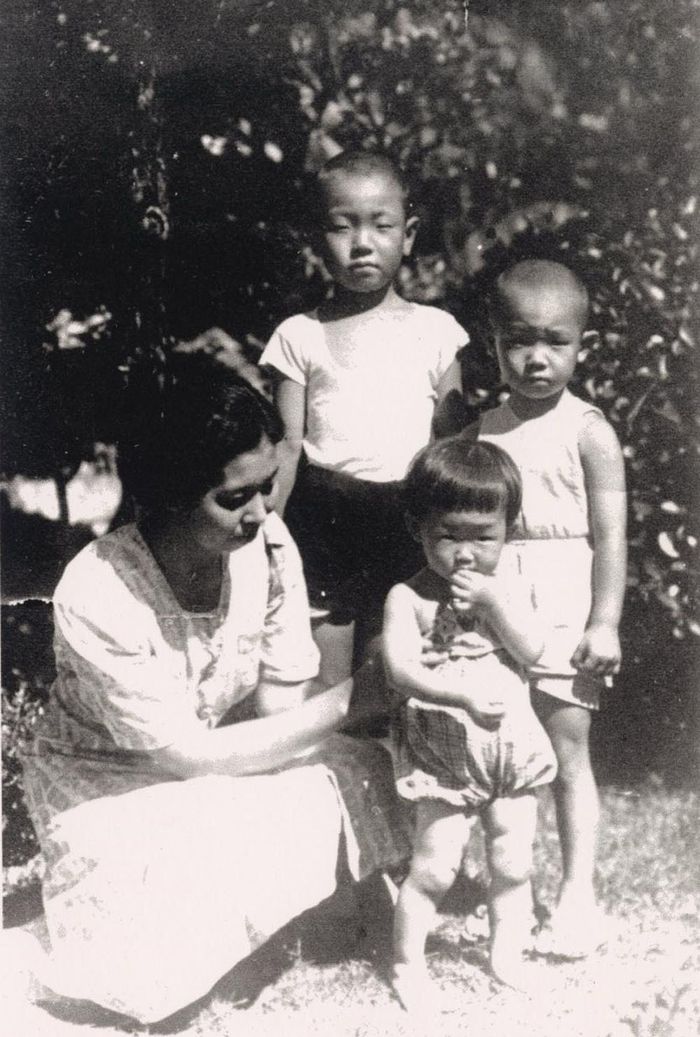
It is believed that this photo was taken one day before the Hiroshima bombing. Five-year-old Wataoka Hirono (right) and her two-year-old sister, Kimino (right), were both killed. (Photo courtesy of Iwata Miho)
A new poll by the Pew Research Center shows that U.S. public support for the attacks is declining. In 1945, it was as high as 85 percent. Today, only around 35 percent of Americans believe their government’s actions were justified, with 31 percent believing they weren’t. The other third are unsure.
…
With few exceptions, those who survived the atomic bombings and are still alive were children at the time. Through their young eyes, they witnessed unimaginable horror. Known in Japanese as hibakusha, many have devoted their lives to the cause of nuclear disarmament, sharing their first-hand testimonies time and again in the hope of avoiding a recurrence of such tragedies. Their warning is stark: humanity and nuclear weapons cannot coexist.
Last December, their efforts were recognized with the Nobel Peace Prize awarded to Nihon Hidankyo, or the Japan Confederation of A- and H-Bomb Sufferers Organizations.
Their warning is stark: humanity and nuclear weapons cannot coexist.
Many of the survivors lost their parents, siblings, and friends. They have suffered lifelong physical and psychological trauma. Some have endured multiple surgeries to treat painful keloid scars, extract glass fragments embedded deep in their bodies, or remove cancers caused by their exposure to the bombs’ radiation.
A new poll by the Pew Research Center shows that U.S. public support for the attacks is declining. In 1945, it was as high as 85 percent. Today, only around 35 percent of Americans believe their government’s actions were justified, with 31 percent believing they weren’t. The other third are unsure.
…
With few exceptions, those who survived the atomic bombings and are still alive were children at the time. Through their young eyes, they witnessed unimaginable horror. Known in Japanese as hibakusha, many have devoted their lives to the cause of nuclear disarmament, sharing their first-hand testimonies time and again in the hope of avoiding a recurrence of such tragedies. Their warning is stark: humanity and nuclear weapons cannot coexist.
Last December, their efforts were recognized with the Nobel Peace Prize awarded to Nihon Hidankyo, or the Japan Confederation of A- and H-Bomb Sufferers Organizations.
Their warning is stark: humanity and nuclear weapons cannot coexist.
Many of the survivors lost their parents, siblings, and friends. They have suffered lifelong physical and psychological trauma. Some have endured multiple surgeries to treat painful keloid scars, extract glass fragments embedded deep in their bodies, or remove cancers caused by their exposure to the bombs’ radiation.
Three-year-old Tetsutani Shinichi (right) was killed in the Hiroshima bombing while doing what he loved most: riding his tricycle. His seven-year-old sister, Michiko (left), and their baby sister, Yoko, were also killed. (Photo courtesy of the Tetsutani family)
In a nuclear attack, children are especially vulnerable, as their skin is more delicate and their bodies frailer, and they have more cells that are growing and dividing rapidly and thus more susceptible to radiation effects. They are significantly more likely than adults to die from burns, blast injuries, and acute radiation sickness.
As the late paediatric endocrinologist Michael S. Kappy explained in a 1984 paper, “Children and adults do not share equally the dreadful short-term effects of ‘the bomb’, and it is clear from all available data that children are also most susceptible to the long-term effects that appear after varying latency periods.”
The disproportionate impact of nuclear weapons on infants and children was underscored in a declaration adopted this March by the 73 countries that have so far ratified or acceded to the landmark 2017 Treaty on the Prohibition of Nuclear Weapons.
In a nuclear attack, children are especially vulnerable, as their skin is more delicate and their bodies frailer, and they have more cells that are growing and dividing rapidly and thus more susceptible to radiation effects.
The fact that children would suffer the greatest harm of all in the event of a nuclear attack against a city today should have profound implications for policy-making in nuclear-armed states and spur action for disarmament. Yet, all nine such states continue to act contrary to that objective. And the risk of a nuclear weapon being used again appears to be at an all-time high.
…
In Hiroshima, thousands of school students were outdoors creating firebreaks on the morning of the atomic bombing. Completely unshielded from the bomb’s effects, they stood little chance of survival. The mortality rate for those within one kilometre of the hypocentre was around 94 percent. Approximately 6,300 of them died.
Many parents spent days or weeks searching for their missing children in the aftermath. For some, not knowing their children’s fate became unbearable. One mother in Hiroshima, refusing to accept her daughter’s death, kept a door or window open for the rest of her life in case she one day returned home.
In a nuclear attack, children are especially vulnerable, as their skin is more delicate and their bodies frailer, and they have more cells that are growing and dividing rapidly and thus more susceptible to radiation effects. They are significantly more likely than adults to die from burns, blast injuries, and acute radiation sickness.
As the late paediatric endocrinologist Michael S. Kappy explained in a 1984 paper, “Children and adults do not share equally the dreadful short-term effects of ‘the bomb’, and it is clear from all available data that children are also most susceptible to the long-term effects that appear after varying latency periods.”
The disproportionate impact of nuclear weapons on infants and children was underscored in a declaration adopted this March by the 73 countries that have so far ratified or acceded to the landmark 2017 Treaty on the Prohibition of Nuclear Weapons.
In a nuclear attack, children are especially vulnerable, as their skin is more delicate and their bodies frailer, and they have more cells that are growing and dividing rapidly and thus more susceptible to radiation effects.
The fact that children would suffer the greatest harm of all in the event of a nuclear attack against a city today should have profound implications for policy-making in nuclear-armed states and spur action for disarmament. Yet, all nine such states continue to act contrary to that objective. And the risk of a nuclear weapon being used again appears to be at an all-time high.
…
In Hiroshima, thousands of school students were outdoors creating firebreaks on the morning of the atomic bombing. Completely unshielded from the bomb’s effects, they stood little chance of survival. The mortality rate for those within one kilometre of the hypocentre was around 94 percent. Approximately 6,300 of them died.
Many parents spent days or weeks searching for their missing children in the aftermath. For some, not knowing their children’s fate became unbearable. One mother in Hiroshima, refusing to accept her daughter’s death, kept a door or window open for the rest of her life in case she one day returned home.
Some parents managed to identify the charred, swollen bodies of their children among scores of corpses only by the name tags on their clothes. Others found their children alive and nursed them for days, weeks or months until they took their final breaths. More than a few expressed guilt at the inadequacy of their care amid extreme shortages of medicines and food.
In Nagasaki, one mother watched as four of her children succumbed to acute radiation poisoning one after another. “I kept thinking that human beings shouldn’t die so easily,” she reflected.
Another Nagasaki mother’s face was so badly burnt and disfigured in the attack that her grievously injured two-year-old son couldn’t recognize her as she cared for him in his dying moments.
Some children appeared unharmed at first, having sustained no burns or other visible injuries, but developed fatal diseases years later, as ionizing radiation had entered their bodies and altered their cells.
All four members of the Miyazaki family in this photo were killed in the Nagasaki bombing: eight-year-old Yuji (centre rear), five-year-old Tsuneji (right), three-year-old Yasuko (centre front) and their mother, Tsuneko. (Photo courtesy of Saito Takeo)
One such child was Sadako Sasaki, a toddler at the time of the Hiroshima bombing. She died a decade later from acute malignant lymph gland leukemia. During her hospitalization, she folded over a thousand paper cranes with her weak and skinny arms in the hope it would bring her good health.
“Until her very last moment, she held onto her wish and made a great effort to survive,” her father remembered. “I loved her so much that I couldn’t come to terms with her death for a long time.”
Sadako’s tragic story continues to inspire children in Japan and throughout the world to work for the abolition of nuclear weapons—an increasingly urgent task given deteriorating relations among nuclear-armed states and the enhancement and expansion of their arsenals.
It is estimated there are more than 12,000 nuclear weapons in the world today, most of them vastly more powerful than the atomic bombs dropped eight decades ago. In the words of the UN Secretary-General, António Guterres, “They offer no security—just carnage and chaos. Their elimination would be the greatest gift we could bestow on future generations.”
Our work is licensed under Creative Commons (CC BY-NC-ND 3.0). Feel free to republish and share widely.
Tim Wright is the treaty coordinator for the International Campaign to Abolish Nuclear Weapons, winner of the 2017 Nobel Peace Prize.
Full Bio >
One such child was Sadako Sasaki, a toddler at the time of the Hiroshima bombing. She died a decade later from acute malignant lymph gland leukemia. During her hospitalization, she folded over a thousand paper cranes with her weak and skinny arms in the hope it would bring her good health.
“Until her very last moment, she held onto her wish and made a great effort to survive,” her father remembered. “I loved her so much that I couldn’t come to terms with her death for a long time.”
Sadako’s tragic story continues to inspire children in Japan and throughout the world to work for the abolition of nuclear weapons—an increasingly urgent task given deteriorating relations among nuclear-armed states and the enhancement and expansion of their arsenals.
It is estimated there are more than 12,000 nuclear weapons in the world today, most of them vastly more powerful than the atomic bombs dropped eight decades ago. In the words of the UN Secretary-General, António Guterres, “They offer no security—just carnage and chaos. Their elimination would be the greatest gift we could bestow on future generations.”
Our work is licensed under Creative Commons (CC BY-NC-ND 3.0). Feel free to republish and share widely.
Tim Wright is the treaty coordinator for the International Campaign to Abolish Nuclear Weapons, winner of the 2017 Nobel Peace Prize.
Full Bio >
80 Years After Hiroshima and Nagasaki, Are We on the Verge of Another Nuclear War?
With escalating military confrontations today—even the possibility of a World War—how long can “deterrence” work?

An activist with a mask of U.S. President Donald Trump marches with a model of a nuclear rocket during a demonstration against nuclear weapons on November 18, 2017 in Berlin, Germany.
(Photo: Adam Berry/Getty Images)
Israel Wages Genocide While Threatening Its Neighbors with Nuclear Weapons
Israel is also a nuclear power, although it has long been considered impolite to say so. The United States helped Israel gain nuclear technology and has helped to shield Israel from any nuclear accountability. Israel has not signed the Nuclear Non-Proliferation Treaty (NPT). Its nuclear arsenal is not inspected by the International Atomic Energy Agency (IAEA), which the U.S. weaponized to support its rationale for war against Iraq, Syria, and Iran. The IAEA announced a resolution critical of Iran’s nuclear program on Thursday, June 12, the day before Israel’s attack on Iran. Coincidence? Probably not. Like so many other international bodies, the IAEA has been subverted to serve U.S. and Israeli war aims.
Unlike Iran, Israel actually has nuclear weapons. Will they use them against Iran? The Israeli government of right-wing extremists has already shown us the depths of depravity they are willing to go. Furthermore, all their Arab neighbors know Israel is the only nuclear-armed nation in the Middle East.
Daniel Ellsberg, author of The Doomsday Machine: Confessions of a Nuclear War Planner, reminded us that “nuclear weapons are used every day. They are like a gun you point at somebody’s head.”
Aside from “luck,” it has been nuclear arms treaties that have held nuclear war in check. In recent years, however, the U.S. has shredded most of these treaties and missed many opportunities for peace:Former President Ronald Reagan rejected Soviet President Mikhail Gorbachev’s offer for both countries to eliminate all their nuclear weapons if the U.S. would stop deployment of a “Star Wars” missile defense system in space.
Former President Bill Clinton refused Russian President Vladimir Putin’s offer to cut our massive nuclear arsenals to 1,500 bombs and to call on all of the other nuclear-armed states to negotiate the elimination of all nuclear weapons, in exchange for the U.S. not placing missile sites in Romania.
Former President George W. Bush walked out of the 1972 Anti-Ballistic Missile (ABM) Treaty and put a missile base in Romania. President Donald Trump placed another missile base in Poland.
Former President Bush in 2008 and former President Barack Obama in 2014 blocked any discussion of Russian and Chinese proposals for a space weapons ban in the consensus-bound United Nations Committee for Disarmament in Geneva.
President Obama rejected President Putin’s offer to negotiate a treaty to ban cyber war.
President Trump pulled the U.S. out of the Intermediate-Range Nuclear Forces (INF) Treaty.
President Trump withdrew from the Iran Nuclear Deal, and placed sanctions on Iran.
From President Clinton through President Trump, the U.S. has never ratified the 1992 Comprehensive Test Ban Treaty, which was ratified by Russia has ratified.
Taken in their totality, these U.S. moves constitute an attempt to gain nuclear superiority, including the possibility of launching a First Strike nuclear attack. Pulling out of the ABM and INF treaties, in particular, indicate U.S. intentions to threaten Russia with nuclear war.
Is it any wonder that Russia, faced with the prospect of the U.S.-North Atlantic Treaty Organization troops and nuclear weapons systems stationed on its border with Ukraine, felt compelled to take military action? Now Russia is stuck in a bloody war that has been constantly escalated by the U.S., which has rejected multiple opportunities for peace talks since the war began. Russia asked for neutrality for Ukraine and respect for the rights of Ukraine’s Russian-speaking populations. Over 1 million casualties later (both sides), the bloody trench-and-drone war drags on, not because of Russian intransigence, but because of the aggressive U.S. policy of “full-spectrum dominance” in every corner of the globe.
Drone Attack on Russia’s Strategic Bombers Tempted Nuclear War
On June 1 of this year, a U.S.-supported Ukrainian drone attack on nuclear bombers in Russia almost triggered a nuclear war. According to a Russian general who spoke with former Central Intelligence Agency (CIA) geopolitical analyst Larry Johnson, the world was even closer to nuclear war than during the Cuban Missile Crisis. The Russian bombers were openly visible on the tarmac, in accordance with the New START Treaty, which is designed to prevent a nuclear-first strike by either Russia or the U.S. This last remaining nuclear arms control treaty between the U.S. and Russia is due to expire this coming February. But it already has been drone bombed.
News Flash! President Trump just posted on his Truth Social account that he is sending two nuclear-armed submarines closer to Russia. Why? Because he didn’t like something that Russia’s Dmitri Medvedev said on social media. What? Trump is scoring pissing points by playing with nuclear weapons? A narcissistic psychopath has his hand on the nuclear button. This is all the more reason to push for an end to the president’s sole authority to launch a nuclear war.
To round out this bleak report, we must at least mention that the U.S. is planning for war against China. The United States is openly planning to wage a war against China—some say as soon as 2027. Why? Because China’s remarkable revolution from extreme poverty to becoming a prosperous global powerhouse is something that the U.S. ruling class (or “deep state”) will not accept. So China will not be attacked because of its military aggression. Even as the U.S. wages perpetual war on multiple countries, China has not been at war with anybody in this century. U.S. complaints about Taiwan are nothing more than an excuse, a trigger for the war that U.S. leaders are determined to wage, at all costs.
The Pentagon Is Planning a Nuclear First-Strike Against China
The Pentagon has figured out that it cannot win a conventional war against China, however. It is planning to use nuclear weapons—an overwhelming first strike or possibly only “tactical nuclear weapons,” those cute little guys that are several times more powerful than what was dropped on Hiroshima.
U.S. war planners recently asked Australia and Japan to declare what military resources they will bring to bear in a war against China. And get this… the U.S. held talks with Japan, of all nations, to discuss how they will coordinate their efforts after a nuclear strike on China. Among the issues they discussed were how they could best manage public opinion after a nuclear war.
It is mostly by dumb luck, however, that we have not all perished in a nuclear Armageddon already.
So if you think I am pointing the finger at the U.S. as the “bad guy” who is mostly responsible for the prospect of a civilization-ending nuclear war, then you are reading correctly. To put it bluntly, the problem is U.S. imperialism. The waning U.S. empire, desperate to maintain its hegemony and expand it, is the elephant in the room. It is buttressed by a very large and powerful military-industrial complex (MIC), the one that former President Dwight Eisenhower warned us about—now on steroids. Ray McGovern of Veterans Intelligence Professionals for Sanity (VIPS), a former CIA analyst himself, has expanded the MIC acronym to MICIMATT (Military Industrial Congressional Intelligence Media Academia Think Tanks). Yes, they are all complicit, not just with genocide in Palestine, but with militarizing and destroying the world. We peace-loving people have our work cut out for us. We are up against a lot.
There is a lot of money to be made from war and militarism. And politicians learn the advantages of justifying war and funding the war machine. The ever-growing Pentagon budget has ballooned to over $1 trillion under Trump, money that will be redirected from the social security net that is being systematically shredded. Spending on nuclear weapons “modernization” alone will cost $100 billion in just the next year (from the budgets of the Pentagon and the Department of Energy).
“The End Is Near”
For decades, peace activists, scientists, and others have been warning us about the “growing danger of nuclear war.” Those sounding the nuclear alarm have been treated like the proverbial fanatic with the sign, “The End Is Near,” or like Chicken Little—“The sky is falling.” It is mostly by dumb luck, however, that we have not all perished in a nuclear Armageddon already. The guard rails have been removed, with the U.S. abrogation of nuclear arms deals. There are very few “adults in the room,” certainly not in the U.S., where neocons who love Israel but hate Iran and Russia have seized the helm. It will take a miracle and a lot of activism to avoid utter disaster in the relatively near future.
Many peoples are already experiencing disaster, what with wars, genocide, extreme poverty, starvation, and the climate crisis—the fruits of corporate greed and militarism. Many people also suffer from the poison of the entire nuclear cycle. There are 15,000 abandoned uranium mines in the Western U.S., many of them on First Nations lands. Radiation contaminates the water, the air, the land, and the people, who suffer from many cancers and radiation-related diseases.
The U.S. Exploded 67 Nuclear Bombs in the Marshall Islands
Then there are the “downwinders” who suffer from the radiation of nuclear bomb testing. Or worse. The Marshall Islands were devastated by nuclear bomb testing. From 1946 to 1958, the U.S. detonated 67 nuclear bombs on this island nation in the middle of the Pacific Ocean. To add insult to injury, their islands are now “sinking” from global warming and rising seas. Many Marshallese, unable to grow food on radiated land and unable to eat the fish from radiated waters, have been allowed to live in the U.S., without citizenship or security, and denied healthcare by many states. There is no cancer treatment facility in the Marshall Islands, and no Veterans Affairs facility for its many veterans of the U.S. military.
We will end this disturbing nuclear tour on a positive note. It has to do with the Marshall Islands. In 1958, four Quaker peace activists bought a sailboat and announced to the world their intention to sail from Los Angeles 4,000 miles into the nuclear test zone in the Marshall Islands to stop U.S. nuclear testing. They were led by Albert Bigelow, a World War II Navy commander who resigned his commission in protest of the U.S. nuclear bombings in Hiroshima and Nagasaki.
The Golden Rule Crew Tried to Stop U.S. Nuclear Testing
Halfway through the voyage, when Bigelow and his intrepid crew pulled into Honolulu, they were arrested and thrown in jail and the Coast Guard seized their boat, named Golden Rule. They never made it to the Marshall Islands, but they succeeded in bringing worldwide attention to the danger of radiation that was floating all over the globe, even getting into mothers’ milk. Opposition to nuclear testing led to the Limited Test Ban Treaty of 1962, signed by then-President John F. Kennedy and the leaders of Russia and the United Kingdom. The treaty banned nuclear testing in the atmosphere, in the water, and in space. Only underground tests were permitted. These days most nuclear testing is done using computer simulations.
The remarkable saga of the Golden Rule continued. The 34-foot ketch was sold and sailed as a pleasure boat by several families to the South Pacific and the Caribbean. Somehow, in 2010 it was found in Humboldt Bay in northern California—a derelict boat that had sunk in a gale and had a big hole in its side. Some locals dragged the beat-up boat onto the beach and planned to make a bonfire of it. When a someone discovered the boat’s legacy, however, local members of Veterans For Peace rescued it and decided to restore it to its original glory.
In June of 2015, after five years of dedicated volunteer labor by veterans, Quakers, and boat lovers, the Golden Rule splashed back into the waters of Humboldt Bay and began sailing up and down the West Coast from British Columbia to Mexico (Ensenada), then to Hawai’i and all around the Hawai’ian islands. Back to California, trucked to Minneapolis, sailed down the Mississippi to the Gulf of Mexico, to Cuba and up the East Coast to Toronto and back to Chicago, a 12-month voyage with a total of 102 port stops. At every stop the Golden Rule and its crew were welcomed excitedly by local peace and environmental activists as well as by state and local officials. Nobody wants a nuclear war!
The Golden Rule Is Sailing Around San Francisco Bay
Peace at Home, Peace Abroad!
The Golden Rule is a national project of Veterans For Peace, a 40-year-old organization dedicated to exposing the true costs of war; to restraining our government from intervening, overtly and covertly, in the internal affairs of other nations; and to ridding the world of nuclear weapons. At its recent national convention, veterans from U.S. wars in Vietnam, Iraq, Afghanistan, and recent deployments made a united call for opposition to the U.S.-backed Israeli genocide in Gaza and for resistance to racist ICE attacks in our own communities. While calling for the abolition of nuclear weapons, the Golden Rule will be echoing these urgent cries for “Peace at Home, Peace Abroad.”
Our work is licensed under Creative Commons (CC BY-NC-ND 3.0). Feel free to republish and share widely.
Gerry Condon is a Vietnam-era veteran and former president of Veterans For Peace.

With escalating military confrontations today—even the possibility of a World War—how long can “deterrence” work?
An activist with a mask of U.S. President Donald Trump marches with a model of a nuclear rocket during a demonstration against nuclear weapons on November 18, 2017 in Berlin, Germany.
(Photo: Adam Berry/Getty Images)
Gerry Condon
Aug 06, 2025
Aug 06, 2025
Common Dreams
Eighty years ago, the U.S. dropped nuclear bombs on the civilian populations of Hiroshima and Nagasaki. There are now nine nuclear-armed nations, many in military confrontation with one another. It is quite remarkable that there has not been another nuclear war. How can this be explained?
Some say the absence of another nuclear war proves that nuclear “deterrence” is working, and to some extent that is true. These nations are rightfully afraid of a nuclear conflagration, which could obliterate their societies, and even destroy all life on planet Earth. With escalating military confrontations today—even the possibility of a World War—how long can “deterrence” work?
“So Far, So Good…”
“So far so good” is probably the faintly hopeful refrain heard from many who feel helpless to undo the nuclear danger. This is reminiscent of the cartoon of the man falling from the top of a building. As he passes each descending floor, he proclaims, “So far, so good…”
In reality, a fair amount of luck has helped humanity avert nuclear catastrophe until now. We came very close during the “Cuban Missile Crisis.” A political officer on a Russian submarine that was out of communication and uncertain if a nuclear war had already begun called off a missile launch at the last minute. Another Russian military technician, suspicious of an errant radar reading that appeared to show incoming U.S. missiles, called off another imminent nuclear strike. It could just as easily have gone the other way.
Many experts worry that it will be an accidental nuclear launch that ends us. This is all the more concerning as Artificial Intelligence is applied to nuclear weapons on hair-trigger alert, decreasing the decision-making time to split seconds, and removing human oversight. What could go wrong?
Eighty years ago, the U.S. dropped nuclear bombs on the civilian populations of Hiroshima and Nagasaki. There are now nine nuclear-armed nations, many in military confrontation with one another. It is quite remarkable that there has not been another nuclear war. How can this be explained?
Some say the absence of another nuclear war proves that nuclear “deterrence” is working, and to some extent that is true. These nations are rightfully afraid of a nuclear conflagration, which could obliterate their societies, and even destroy all life on planet Earth. With escalating military confrontations today—even the possibility of a World War—how long can “deterrence” work?
“So Far, So Good…”
“So far so good” is probably the faintly hopeful refrain heard from many who feel helpless to undo the nuclear danger. This is reminiscent of the cartoon of the man falling from the top of a building. As he passes each descending floor, he proclaims, “So far, so good…”
In reality, a fair amount of luck has helped humanity avert nuclear catastrophe until now. We came very close during the “Cuban Missile Crisis.” A political officer on a Russian submarine that was out of communication and uncertain if a nuclear war had already begun called off a missile launch at the last minute. Another Russian military technician, suspicious of an errant radar reading that appeared to show incoming U.S. missiles, called off another imminent nuclear strike. It could just as easily have gone the other way.
Many experts worry that it will be an accidental nuclear launch that ends us. This is all the more concerning as Artificial Intelligence is applied to nuclear weapons on hair-trigger alert, decreasing the decision-making time to split seconds, and removing human oversight. What could go wrong?
Never Again?

Sunset or nuclear blast?
2025 also marks 80 years from the end of World War II and the defeat of the German fascists by Russia, the United States, and the European Allies. Eighty years since Russian and U.S. troops liberated thousands of skeletal prisoners from German concentration camps, much to the horror of the world, which reacted with calls of “Never Again!”
But wait, don’t we have concentration camps now in the U.S.? Isn’t that why Immigration and Customs Enforcement (ICE) now has a larger budget than many national militaries, and larger than the entire current federal prison system? They are building concentration camps for undocumented workers, whom they demonize as “murderers,” “rapists,” “gang members,” and “terrorists.” The vast majority of immigrants who have already been violently taken from their jobs and families, imprisoned, and deported have no criminal records whatsoever, and are productive, respected members of their communities.
If you think I am pointing the finger at the U.S. as the “bad guy” who is mostly responsible for the prospect of a civilization-ending nuclear war, then you are reading correctly.
Authoritarianism with distinct overtones of white supremacy is on the rise once again, while craven European politicians clamor for war with Russia and more military spending.
2025 also marks 80 years from the end of World War II and the defeat of the German fascists by Russia, the United States, and the European Allies. Eighty years since Russian and U.S. troops liberated thousands of skeletal prisoners from German concentration camps, much to the horror of the world, which reacted with calls of “Never Again!”
But wait, don’t we have concentration camps now in the U.S.? Isn’t that why Immigration and Customs Enforcement (ICE) now has a larger budget than many national militaries, and larger than the entire current federal prison system? They are building concentration camps for undocumented workers, whom they demonize as “murderers,” “rapists,” “gang members,” and “terrorists.” The vast majority of immigrants who have already been violently taken from their jobs and families, imprisoned, and deported have no criminal records whatsoever, and are productive, respected members of their communities.
If you think I am pointing the finger at the U.S. as the “bad guy” who is mostly responsible for the prospect of a civilization-ending nuclear war, then you are reading correctly.
Authoritarianism with distinct overtones of white supremacy is on the rise once again, while craven European politicians clamor for war with Russia and more military spending.
What could go wrong?
Israel, purportedly a safe haven for the persecuted Jewish people—a “land without people for a people without land”—is escalating its blatant genocide in Gaza. The images of intentionally starved Palestinian men, women, and children conjure images of emaciated prisoners—mostly Jews—in World War II concentration camps.
Israel, purportedly a safe haven for the persecuted Jewish people—a “land without people for a people without land”—is escalating its blatant genocide in Gaza. The images of intentionally starved Palestinian men, women, and children conjure images of emaciated prisoners—mostly Jews—in World War II concentration camps.
Israel Wages Genocide While Threatening Its Neighbors with Nuclear Weapons
Israel is also a nuclear power, although it has long been considered impolite to say so. The United States helped Israel gain nuclear technology and has helped to shield Israel from any nuclear accountability. Israel has not signed the Nuclear Non-Proliferation Treaty (NPT). Its nuclear arsenal is not inspected by the International Atomic Energy Agency (IAEA), which the U.S. weaponized to support its rationale for war against Iraq, Syria, and Iran. The IAEA announced a resolution critical of Iran’s nuclear program on Thursday, June 12, the day before Israel’s attack on Iran. Coincidence? Probably not. Like so many other international bodies, the IAEA has been subverted to serve U.S. and Israeli war aims.
Unlike Iran, Israel actually has nuclear weapons. Will they use them against Iran? The Israeli government of right-wing extremists has already shown us the depths of depravity they are willing to go. Furthermore, all their Arab neighbors know Israel is the only nuclear-armed nation in the Middle East.
Daniel Ellsberg, author of The Doomsday Machine: Confessions of a Nuclear War Planner, reminded us that “nuclear weapons are used every day. They are like a gun you point at somebody’s head.”
Aside from “luck,” it has been nuclear arms treaties that have held nuclear war in check. In recent years, however, the U.S. has shredded most of these treaties and missed many opportunities for peace:Former President Ronald Reagan rejected Soviet President Mikhail Gorbachev’s offer for both countries to eliminate all their nuclear weapons if the U.S. would stop deployment of a “Star Wars” missile defense system in space.
Former President Bill Clinton refused Russian President Vladimir Putin’s offer to cut our massive nuclear arsenals to 1,500 bombs and to call on all of the other nuclear-armed states to negotiate the elimination of all nuclear weapons, in exchange for the U.S. not placing missile sites in Romania.
Former President George W. Bush walked out of the 1972 Anti-Ballistic Missile (ABM) Treaty and put a missile base in Romania. President Donald Trump placed another missile base in Poland.
Former President Bush in 2008 and former President Barack Obama in 2014 blocked any discussion of Russian and Chinese proposals for a space weapons ban in the consensus-bound United Nations Committee for Disarmament in Geneva.
President Obama rejected President Putin’s offer to negotiate a treaty to ban cyber war.
President Trump pulled the U.S. out of the Intermediate-Range Nuclear Forces (INF) Treaty.
President Trump withdrew from the Iran Nuclear Deal, and placed sanctions on Iran.
From President Clinton through President Trump, the U.S. has never ratified the 1992 Comprehensive Test Ban Treaty, which was ratified by Russia has ratified.
Taken in their totality, these U.S. moves constitute an attempt to gain nuclear superiority, including the possibility of launching a First Strike nuclear attack. Pulling out of the ABM and INF treaties, in particular, indicate U.S. intentions to threaten Russia with nuclear war.
Is it any wonder that Russia, faced with the prospect of the U.S.-North Atlantic Treaty Organization troops and nuclear weapons systems stationed on its border with Ukraine, felt compelled to take military action? Now Russia is stuck in a bloody war that has been constantly escalated by the U.S., which has rejected multiple opportunities for peace talks since the war began. Russia asked for neutrality for Ukraine and respect for the rights of Ukraine’s Russian-speaking populations. Over 1 million casualties later (both sides), the bloody trench-and-drone war drags on, not because of Russian intransigence, but because of the aggressive U.S. policy of “full-spectrum dominance” in every corner of the globe.
Drone Attack on Russia’s Strategic Bombers Tempted Nuclear War
On June 1 of this year, a U.S.-supported Ukrainian drone attack on nuclear bombers in Russia almost triggered a nuclear war. According to a Russian general who spoke with former Central Intelligence Agency (CIA) geopolitical analyst Larry Johnson, the world was even closer to nuclear war than during the Cuban Missile Crisis. The Russian bombers were openly visible on the tarmac, in accordance with the New START Treaty, which is designed to prevent a nuclear-first strike by either Russia or the U.S. This last remaining nuclear arms control treaty between the U.S. and Russia is due to expire this coming February. But it already has been drone bombed.
News Flash! President Trump just posted on his Truth Social account that he is sending two nuclear-armed submarines closer to Russia. Why? Because he didn’t like something that Russia’s Dmitri Medvedev said on social media. What? Trump is scoring pissing points by playing with nuclear weapons? A narcissistic psychopath has his hand on the nuclear button. This is all the more reason to push for an end to the president’s sole authority to launch a nuclear war.
To round out this bleak report, we must at least mention that the U.S. is planning for war against China. The United States is openly planning to wage a war against China—some say as soon as 2027. Why? Because China’s remarkable revolution from extreme poverty to becoming a prosperous global powerhouse is something that the U.S. ruling class (or “deep state”) will not accept. So China will not be attacked because of its military aggression. Even as the U.S. wages perpetual war on multiple countries, China has not been at war with anybody in this century. U.S. complaints about Taiwan are nothing more than an excuse, a trigger for the war that U.S. leaders are determined to wage, at all costs.
The Pentagon Is Planning a Nuclear First-Strike Against China
The Pentagon has figured out that it cannot win a conventional war against China, however. It is planning to use nuclear weapons—an overwhelming first strike or possibly only “tactical nuclear weapons,” those cute little guys that are several times more powerful than what was dropped on Hiroshima.
U.S. war planners recently asked Australia and Japan to declare what military resources they will bring to bear in a war against China. And get this… the U.S. held talks with Japan, of all nations, to discuss how they will coordinate their efforts after a nuclear strike on China. Among the issues they discussed were how they could best manage public opinion after a nuclear war.
It is mostly by dumb luck, however, that we have not all perished in a nuclear Armageddon already.
So if you think I am pointing the finger at the U.S. as the “bad guy” who is mostly responsible for the prospect of a civilization-ending nuclear war, then you are reading correctly. To put it bluntly, the problem is U.S. imperialism. The waning U.S. empire, desperate to maintain its hegemony and expand it, is the elephant in the room. It is buttressed by a very large and powerful military-industrial complex (MIC), the one that former President Dwight Eisenhower warned us about—now on steroids. Ray McGovern of Veterans Intelligence Professionals for Sanity (VIPS), a former CIA analyst himself, has expanded the MIC acronym to MICIMATT (Military Industrial Congressional Intelligence Media Academia Think Tanks). Yes, they are all complicit, not just with genocide in Palestine, but with militarizing and destroying the world. We peace-loving people have our work cut out for us. We are up against a lot.
There is a lot of money to be made from war and militarism. And politicians learn the advantages of justifying war and funding the war machine. The ever-growing Pentagon budget has ballooned to over $1 trillion under Trump, money that will be redirected from the social security net that is being systematically shredded. Spending on nuclear weapons “modernization” alone will cost $100 billion in just the next year (from the budgets of the Pentagon and the Department of Energy).
“The End Is Near”
For decades, peace activists, scientists, and others have been warning us about the “growing danger of nuclear war.” Those sounding the nuclear alarm have been treated like the proverbial fanatic with the sign, “The End Is Near,” or like Chicken Little—“The sky is falling.” It is mostly by dumb luck, however, that we have not all perished in a nuclear Armageddon already. The guard rails have been removed, with the U.S. abrogation of nuclear arms deals. There are very few “adults in the room,” certainly not in the U.S., where neocons who love Israel but hate Iran and Russia have seized the helm. It will take a miracle and a lot of activism to avoid utter disaster in the relatively near future.
Many peoples are already experiencing disaster, what with wars, genocide, extreme poverty, starvation, and the climate crisis—the fruits of corporate greed and militarism. Many people also suffer from the poison of the entire nuclear cycle. There are 15,000 abandoned uranium mines in the Western U.S., many of them on First Nations lands. Radiation contaminates the water, the air, the land, and the people, who suffer from many cancers and radiation-related diseases.
The U.S. Exploded 67 Nuclear Bombs in the Marshall Islands
Then there are the “downwinders” who suffer from the radiation of nuclear bomb testing. Or worse. The Marshall Islands were devastated by nuclear bomb testing. From 1946 to 1958, the U.S. detonated 67 nuclear bombs on this island nation in the middle of the Pacific Ocean. To add insult to injury, their islands are now “sinking” from global warming and rising seas. Many Marshallese, unable to grow food on radiated land and unable to eat the fish from radiated waters, have been allowed to live in the U.S., without citizenship or security, and denied healthcare by many states. There is no cancer treatment facility in the Marshall Islands, and no Veterans Affairs facility for its many veterans of the U.S. military.
We will end this disturbing nuclear tour on a positive note. It has to do with the Marshall Islands. In 1958, four Quaker peace activists bought a sailboat and announced to the world their intention to sail from Los Angeles 4,000 miles into the nuclear test zone in the Marshall Islands to stop U.S. nuclear testing. They were led by Albert Bigelow, a World War II Navy commander who resigned his commission in protest of the U.S. nuclear bombings in Hiroshima and Nagasaki.
The Golden Rule Crew Tried to Stop U.S. Nuclear Testing
Halfway through the voyage, when Bigelow and his intrepid crew pulled into Honolulu, they were arrested and thrown in jail and the Coast Guard seized their boat, named Golden Rule. They never made it to the Marshall Islands, but they succeeded in bringing worldwide attention to the danger of radiation that was floating all over the globe, even getting into mothers’ milk. Opposition to nuclear testing led to the Limited Test Ban Treaty of 1962, signed by then-President John F. Kennedy and the leaders of Russia and the United Kingdom. The treaty banned nuclear testing in the atmosphere, in the water, and in space. Only underground tests were permitted. These days most nuclear testing is done using computer simulations.
The remarkable saga of the Golden Rule continued. The 34-foot ketch was sold and sailed as a pleasure boat by several families to the South Pacific and the Caribbean. Somehow, in 2010 it was found in Humboldt Bay in northern California—a derelict boat that had sunk in a gale and had a big hole in its side. Some locals dragged the beat-up boat onto the beach and planned to make a bonfire of it. When a someone discovered the boat’s legacy, however, local members of Veterans For Peace rescued it and decided to restore it to its original glory.
In June of 2015, after five years of dedicated volunteer labor by veterans, Quakers, and boat lovers, the Golden Rule splashed back into the waters of Humboldt Bay and began sailing up and down the West Coast from British Columbia to Mexico (Ensenada), then to Hawai’i and all around the Hawai’ian islands. Back to California, trucked to Minneapolis, sailed down the Mississippi to the Gulf of Mexico, to Cuba and up the East Coast to Toronto and back to Chicago, a 12-month voyage with a total of 102 port stops. At every stop the Golden Rule and its crew were welcomed excitedly by local peace and environmental activists as well as by state and local officials. Nobody wants a nuclear war!
The Golden Rule Is Sailing Around San Francisco Bay
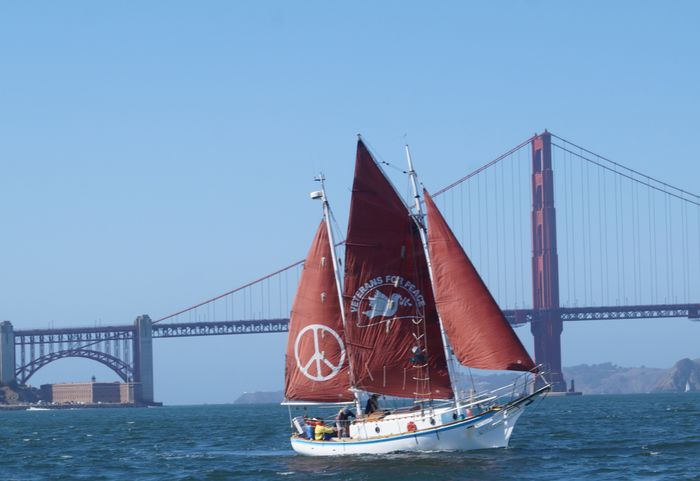
The historic peace boat Golden Rule Sails by the Golden Gate Bridge
The historic Golden Rule peace boat sailed last week from its homeport in Humboldt Bay to San Francisco Bay, where it will spend the month of August educating the public about the “growing danger of nuclear war,” and the importance of supporting the U.N. Treaty on the Prohibition of Nuclear Weapons (TPNW). The treaty, supported by an overwhelming majority of countries, went into force in January 2021. It prohibits nations from developing, testing, producing, manufacturing, transferring, possessing, stockpiling, using, or threatening to use nuclear weapons, or allowing nuclear weapons to be stationed on their territory. It also prohibits them from assisting, encouraging, or inducing anyone to engage in any of these activities
The historic Golden Rule peace boat sailed last week from its homeport in Humboldt Bay to San Francisco Bay, where it will spend the month of August educating the public about the “growing danger of nuclear war,” and the importance of supporting the U.N. Treaty on the Prohibition of Nuclear Weapons (TPNW). The treaty, supported by an overwhelming majority of countries, went into force in January 2021. It prohibits nations from developing, testing, producing, manufacturing, transferring, possessing, stockpiling, using, or threatening to use nuclear weapons, or allowing nuclear weapons to be stationed on their territory. It also prohibits them from assisting, encouraging, or inducing anyone to engage in any of these activities
Peace at Home, Peace Abroad!
The Golden Rule is a national project of Veterans For Peace, a 40-year-old organization dedicated to exposing the true costs of war; to restraining our government from intervening, overtly and covertly, in the internal affairs of other nations; and to ridding the world of nuclear weapons. At its recent national convention, veterans from U.S. wars in Vietnam, Iraq, Afghanistan, and recent deployments made a united call for opposition to the U.S.-backed Israeli genocide in Gaza and for resistance to racist ICE attacks in our own communities. While calling for the abolition of nuclear weapons, the Golden Rule will be echoing these urgent cries for “Peace at Home, Peace Abroad.”
Our work is licensed under Creative Commons (CC BY-NC-ND 3.0). Feel free to republish and share widely.
Gerry Condon is a Vietnam-era veteran and former president of Veterans For Peace.


Hiroshima is marking 80 years since the world's first atomic bomb attack
- Copyright AFP Richard A. Brooks
By AFP
August 5, 2025
Kyoko HASEGAWA
Japan marks 80 years since the atomic bombing of Hiroshima on Wednesday with a ceremony reminding the world of the horrors unleashed, as sabre-rattling between the United States and Russia keeps the nuclear “Doomsday Clock” close to midnight.
A silent prayer was due to be held at 8:15 am (2315 GMT), the moment when US aircraft Enola Gay dropped “Little Boy” over the western Japanese city on August 6, 1945.
The final death toll would hit around 140,000 people, killed not just by the colossal blast and the ball of fire, but also later by the radiation.
Three days after “Little Boy”, on August 9, another atomic bomb killed 74,000 people in Nagasaki. Imperial Japan surrendered on August 15, bringing an end to World War II.
Today, Hiroshima is a thriving metropolis of 1.2 million people, but the ruins of a domed building stand in the city centre as a stark reminder.
Wednesday’s ceremony was set to include a record of around 120 countries and regions including, for the first time, Taiwanese and Palestinian representatives.
The United States — which has never formally apologised for the bombings — will be represented by its ambassador to Japan. Absent will be Russia and China, organisers said Monday.
Nihon Hidankyo, the grassroots organisation that last year won the Nobel Peace Prize, will represent the dwindling number of survivors, known as hibakusha.
As of March, there are 99,130 hibakusha, according to the Japanese health ministry, with the average age of 86.
“I want foreign envoys to visit the peace memorial museum and understand what happened,” the group’s co-chair Toshiyuki Mimaki told local media ahead of the commemorations.
– Younger generation –
The attacks remain the only time atomic bombs have been used in wartime.
Hiroshima Mayor Kazumi Matsui is expected at the ceremony to urge attendees to “never give up” on achieving a nuclear-free world.
Kunihiko Sakuma, 80, who survived the blasts as a baby, told AFP he was hopeful.
“I think the global trend of seeking a nuclear-free world will continue,” he said.
“The younger generation is working hard for that end,” he said ahead of the ceremony.
But in January, the Bulletin of the Atomic Scientists’ “Doomsday Clock” shifted to 89 seconds to midnight, the closest in its 78-year history.
The clock symbolising humanity’s distance from destruction was last moved to 90 seconds to midnight over Russia’s invasion of Ukraine in 2022.
Russia and the United States account for around 90 percent of the world’s over 12,000 warheads, according to the Stockholm International Peace Research Institute (SIPRI).
SIPRI warned in June that “a dangerous new nuclear arms race is emerging at a time when arms control regimes are severely weakened,” with nearly all of the nine nuclear-armed states modernising their arsenals.
Earlier this month, US President Donald Trump said that he had ordered the deployment of two nuclear submarines following an online spat with former Russian president Dmitry Medvedev.
Last month, Matsui urged Trump to visit Hiroshima after the US president likened the 1945 atomic bombings to air strikes on Iran in June.
“It seems to me that he does not fully understand the reality of the atomic bombings, which, if used, take the lives of many innocent citizens, regardless of whether they were friend or foe, and threaten the survival of the human race,” Matsui said at the time.
August 5, 2025
Kyoko HASEGAWA
Japan marks 80 years since the atomic bombing of Hiroshima on Wednesday with a ceremony reminding the world of the horrors unleashed, as sabre-rattling between the United States and Russia keeps the nuclear “Doomsday Clock” close to midnight.
A silent prayer was due to be held at 8:15 am (2315 GMT), the moment when US aircraft Enola Gay dropped “Little Boy” over the western Japanese city on August 6, 1945.
The final death toll would hit around 140,000 people, killed not just by the colossal blast and the ball of fire, but also later by the radiation.
Three days after “Little Boy”, on August 9, another atomic bomb killed 74,000 people in Nagasaki. Imperial Japan surrendered on August 15, bringing an end to World War II.
Today, Hiroshima is a thriving metropolis of 1.2 million people, but the ruins of a domed building stand in the city centre as a stark reminder.
Wednesday’s ceremony was set to include a record of around 120 countries and regions including, for the first time, Taiwanese and Palestinian representatives.
The United States — which has never formally apologised for the bombings — will be represented by its ambassador to Japan. Absent will be Russia and China, organisers said Monday.
Nihon Hidankyo, the grassroots organisation that last year won the Nobel Peace Prize, will represent the dwindling number of survivors, known as hibakusha.
As of March, there are 99,130 hibakusha, according to the Japanese health ministry, with the average age of 86.
“I want foreign envoys to visit the peace memorial museum and understand what happened,” the group’s co-chair Toshiyuki Mimaki told local media ahead of the commemorations.
– Younger generation –
The attacks remain the only time atomic bombs have been used in wartime.
Hiroshima Mayor Kazumi Matsui is expected at the ceremony to urge attendees to “never give up” on achieving a nuclear-free world.
Kunihiko Sakuma, 80, who survived the blasts as a baby, told AFP he was hopeful.
“I think the global trend of seeking a nuclear-free world will continue,” he said.
“The younger generation is working hard for that end,” he said ahead of the ceremony.
But in January, the Bulletin of the Atomic Scientists’ “Doomsday Clock” shifted to 89 seconds to midnight, the closest in its 78-year history.
The clock symbolising humanity’s distance from destruction was last moved to 90 seconds to midnight over Russia’s invasion of Ukraine in 2022.
Russia and the United States account for around 90 percent of the world’s over 12,000 warheads, according to the Stockholm International Peace Research Institute (SIPRI).
SIPRI warned in June that “a dangerous new nuclear arms race is emerging at a time when arms control regimes are severely weakened,” with nearly all of the nine nuclear-armed states modernising their arsenals.
Earlier this month, US President Donald Trump said that he had ordered the deployment of two nuclear submarines following an online spat with former Russian president Dmitry Medvedev.
Last month, Matsui urged Trump to visit Hiroshima after the US president likened the 1945 atomic bombings to air strikes on Iran in June.
“It seems to me that he does not fully understand the reality of the atomic bombings, which, if used, take the lives of many innocent citizens, regardless of whether they were friend or foe, and threaten the survival of the human race,” Matsui said at the time.
ENOLA GAY BY OMD
SLIM PICKENS RIDES A-BOMB DOWN
DR. STRANGELOVE FINALE

No comments:
Post a Comment