Sanctions Have Not Slowed the Growth of the Shadow Fleet
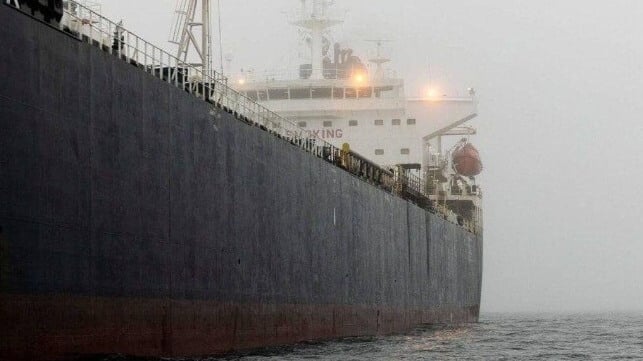
The shadow fleet of sanctions-busting tankers has grown to more than 1,100 vessels and has been adding about one ship a day for the last six months, according to brokers BRS. Fully 18 percent of the world's tanker tonnage now operates in the dark, BRS calculates, including about 300 Suezmaxes and VLCCs.
Four out of five of these ships are sanctioned by one or more nations, but the restrictions have not stopped the fleet's operations, nor the secondhand sales that fuel its expansion. Sanctions mean that the majority of these ships have questionable insurance cover, as they cannot access legitimate insurers in the West. With Panama ramping up efforts to de-flag shadow fleet tonnage, hundreds of these ships have moved over to gray- or black-list flags - like Gabon, whose overseas maritime registration agent is now sanctioned. With few port calls outside of their trading route, these vessels face little regulatory pressure to ensure quality.
The flag state oversight and insurance shortcomings are particularly concerning due to the composition of the fleet, which has been assembled by overpaying for aging tonnage. The average age of the shadow fleet is now about 20 years, and sanctioned vessels are harder to sell for scrap, reducing the incentive to upgrade. An end-of-life cash buyer recently filed suit against the owner of the shadow fleet tanker Conico Atlas for allegedly failing to disclose that it was sanctioned, and a court in Gujarat has ordered the ship's arrest as collateral. (Due diligence checks may be performed against public sanctions lists, including https://tankertrackers.com/report/sanctioned.)
Sanctioned tankers continue to operate with impunity, as evidenced by the high-volume STS activity at anchorages off Malaysia and Singapore. Just outside of the Malaysian EEZ, on the approaches to the Singapore Strait, an aggregation of shadow fleet tankers stays busy conducting nonstop transfers of Iranian and Russian oil bound for China. Sanctioned vessels offload to non-sanctioned vessels, which then ferry the crude to the destination port to maintain plausible deniability. Of 239 tankers that stopped in the area over the last month, 108 were sanctioned, according to an analysis by Windward.
Though sanctions have a mixed history of effectiveness so far, kinetic methods have succeeded in taking some Russia-serving tankers offline. Seven tank vessels with a history of Russian port calls have suffered explosions since last winter, likely caused by the covert placement of limpet mines. AIS tracking provided by Pole Star reveals that five of these ships are still idling at anchor or have gone AIS-dark. Only two have returned to visible trading post-attack.
To combat this threat, Russian President Vladimir Putin has ordered security services to ramp up pre-clearance checks - including dive inspections - before allowing foreign ships into Russian ports. Many analysts suspect Ukrainian involvement, but Kyiv has not claimed responsibility.
Sanctions and Oil Price Pressures Build on Russian Revenues
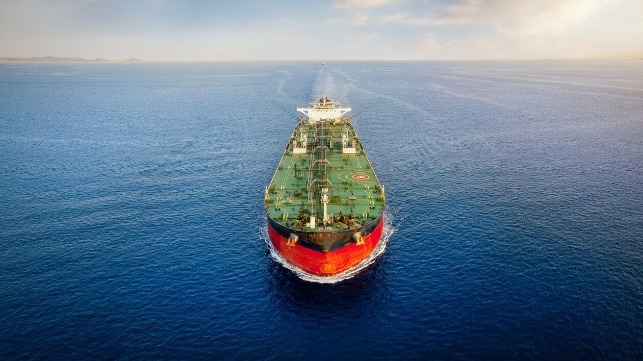
Russia is facing multiple threats to its ability to finance its war on Ukraine, with pressures about to become much worse. For the first time since Russia invaded Ukraine for the second time in February 2022, this pressure appears to be coordinated and comprehensive.
Two sets of sanctions are set to be implemented in the coming weeks. President Trump, fed up with President Putin’s negotiating prevarications, has threatened those countries purchasing Russian oil at above the set price cap with secondary sanctions, in effect adopting the Senator Lindsey Graham-led proposals made in Congress but at less punitive penalty tariff levels. India would be a principal target. The EU has pre-emptively reinforced this action in its 18th round of anti-Russian sanctions, adopting a price cap of $47.60, adjustable to be always 15% lower than the average market price for Urals crude. One or both sets of these sanctions will have an immediate impact on the revenues that Russia can earn from its oil exports, measures that also have the attraction of maintaining sufficient oil production but at lower price levels likely to encourage global economic growth.
At the same time, OPEC oil producers, seeking to recapture market share from those previously tempted to purchase heavily discounted Russian oil, have relaxed production curbs. Indeed, the UAE has been granted an additional market quota, and new production, such as from Guyana, has come on stream.
By previously restricting output and keeping oil prices high, Middle East producers saw their market share drop from 40% in 2015 to 25% this year, losing out to US shale oil producers who were encouraged to invest in output growth by the high prices. Over the same period, US market share has risen from 14% to 20%. Over the past month, the average price of crude has fallen by 3.34% to $65.63, a trend that will accelerate as increased production comes on stream. The production-boosted price fall enhances the effectiveness of the sanctions price cap, because spot market purchasers now have a wider source of low-cost supplies.
Additionally, US and EU sanctions against dark fleet shipping carrying Russian oil are being significantly tightened. In a rush of listings since July, the UK’s National Crime Agency has estimated that 400 dark fleet tankers have now been sanctioned, and have emphasized how insurance and finance companies providing cover for dark fleet shipments are as much under scrutiny as ships and owners directly. The Russian Navy now has to escort dark fleet tankers, for fear of seizure by nations though whose territorial waters they might wish to transit. This is a particular problem for Russia in the Baltic, where sea-lanes to its primary export terminals at Ust-Luga and Primorsk pass through choke points within national 12-mile limits. In seeking to test limits to rights of innocent passage, the Danish Maritime Authority for example is now asserting that it will board ships if it has information “that the safety or working conditions of the seafarers are not in compliance with international regulations including obligatory insurance requirements.” Aside from sanctions, such concerns can be justified sufficiently on environmental grounds alone, given the condition and insurance status of much of the dark fleet.
To these pressures can be added the threat to dark fleet tankers posed by unexplained limpet mine attacks. The latest in the series, the formerly Djibouti-flagged Aframax Pushpa (IMO: 9332810) was attacked while off Malta on July 16, having previously unloaded at Ust-Luga. The Marshall Island-flagged LNG tanker Eco Wizard (IMO: 9941568) was actually in Ust-Luga when it fell victim to limpet mines on July 6. Such attacks, plus the sanctioning of owners, encourages buccaneer operators and investors to withdraw from the business, leaving the financial burden of maintaining the dark fleet to Russian front companies.
A major impediment to a successful squeeze on Russian finances remains. China has a vested interest in keeping the conflict in Ukraine going, and cannot afford a Russian reverse, which would leave Western powers able to focus solely on the threat posed by China without being sidetracked. Hence Beijing may, for both political and commercial advantage, help the Russians out and increase its purchases of discounted oil. But if it does so, it will have to calculate the impact such action will have on its ongoing trade negotiations with the United States.
The opinions expressed herein are the author's and not necessarily those of The Maritime Executive.
Russian Oligarch's Megayacht to be Auctioned Off
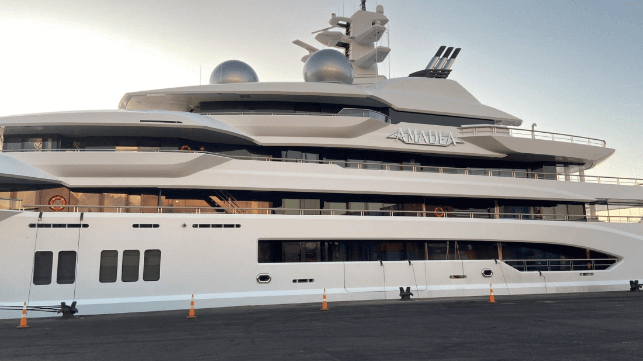
The U.S. government has reached the end of the long process to forfeit and auction off the seized Russian megayacht Amadea, which was captured by the FBI in Fiji and sailed back to San Diego in custody three years ago.
The Amadea is a 350-foot motor yacht built in Germany in 2016. U.S. authorities believe that her beneficial owner was the sanctioned Russian oligarch Suleiman Kerimov, a billionaire with ties to Russian President Vladimir Putin. Its value has been estimated in the range of $300 million.
Amadea called in Fiji in April 2022, and the U.S. Justice Department filed a request for her seizure with local courts. FBI agents were dispatched to carry out enforcement. The yacht's holding company sued, and the case worked its way up through the country's court system. After a month of litigation, Fiji's supreme court awarded custody of the vessel to the U.S. government, and the yacht was reflagged for a voyage to the United States.
“This yacht seizure should tell every corrupt Russian oligarch that they cannot hide – not even in the remotest part of the world. We will use every means of enforcing the sanctions imposed in response to Russia’s unprovoked and unjustified war in Ukraine," said then-Deputy Attorney General Lisa O. Monaco (since replaced by Todd Blanche, President Donald Trump's personal attorney).
After extended civil forfeiture proceedings in the U.S. District Court for the Southern District of New York, the Justice Department won the right to sell the yacht. Fraser Yachts, the world's leading yacht brokerage, has been appointed to promote the sale; National Maritime Services is conducting the sealed-bid auction.
The U.S. government has spent about $32 million to maintain Amadea to its current standards over the past three years, according to court documents. The cost includes insurance, crew wages and exceptional upkeep. Amadea may look much like any other megayacht on the outside, but the interior is stunning in its opulence, featuring exquisite trim work, a glass-walled central elevator, marble and parquet flooring, a spiral grand staircase, and gleaming polished wood at every turn - a testament to the skill of German yachtbuilders. (A video of the interior may be found here.)
"This is perhaps the most spectacular, exacting and beautiful ship any of us will ever see," said National Maritime Services Chairman Bob Toney. "An opportunity like this for discerning owners is exceedingly rare – maybe once in a lifetime."
Russian Mediterranean "Flotilla" Sinks to a Single Submarine
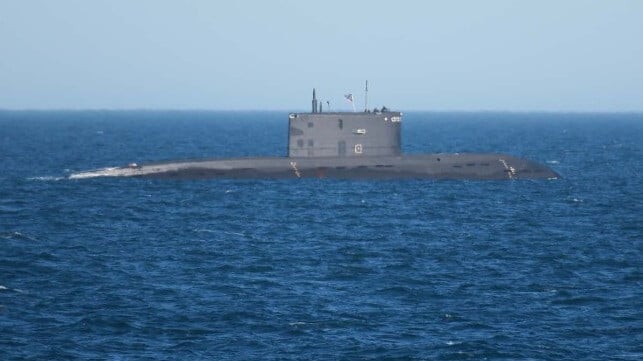
Based on the dedicated efforts of open source information gatherers, particularly @KaptainLOMA, @italmilradar and @key2med observing from atop the Rock of Gibraltar, it can be assessed that the visible Russian naval presence in the Mediterranean will sink this week to just a single submarine, supplemented by its lonely tugboat escort and the intelligence-collection Project 864 vessel Viktor Leonov.
The Russian Kilo Class submarine RFS Novorossiksk (B261), which used to be a frequent presence in the Mediterranean, came back though the English Channel from the Baltic on June 25. The boat then slipped through the Straits of Gibraltar to duties unknown, but supported from afar by the Goryn Class tug Yakov Grebelskiy. The submarine appears to have operated through most of July off Libya and the Levant, based on the position of its escorting tug and the tracks of NATO submarine-hunting P-8 aircraft.
Having spent much of June loitering off the coast of Syria providing cover for the stragglers of the Russian presence, Steregushchy Class corvette RFS Soobrazitelny (F531) left the Mediterranean on July 3, following the familiar track back to the Baltic. As she left, her sister ship RFS Boiky (F532) entered the Mediterranean a few days later on July 9, escorting the well-known arms carriers Sparta and tanker General Skobelev en route to Tartus.
RFS Boiky (F532), Sparta and the tanker General Skobelev were last spotted on their return journey between Malta and Sicily on August 3. If this group of ships conforms to pattern, they may refuel at sea off Al Hoceima on the Moroccan coast, replenishing from the Russian civilian oiler Vyazma, before passing westwards through the Straits of Gibraltar.
This will then leave the Kilo Class submarine RFS Novorossiksk as the only Russian naval vessel in the Mediterranean, at a time when the US carrier strike group led by USS George Washington (CVN-73) is operating at full tempo in the Timor Sea with a large NATO escort complement.
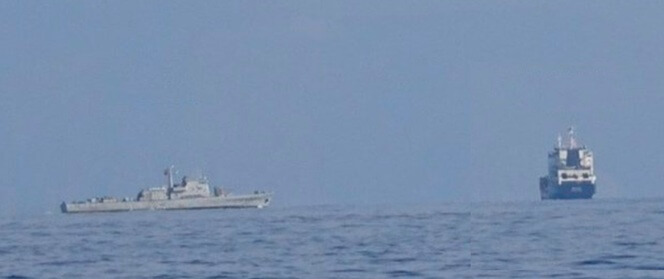
RMNS Rabhi shadowing Russian oiler Vyazma on June 22 (Royal Moroccan Navy)
The anchorage used by the Russians is closely monitored by the Royal Moroccan Navy vessels operating out of Al Hoceima, most notably by PR-72P Class patrol boat RMNS Rabhi (P310). The Russians are also likely to have used up their credit of port visits elsewhere in the Mediterranean. The final Russian foothold on Tartus as a support base appears to have fallen away with the takeover on July 13 by DP World of full management rights for the port, held since 2019 by the Russian company OAO Stroytransgaz.
Among its many purposes, the Russian Navy had used Tartus as a way station on its supply route to West Africa; to compensate, Russia last month signed a visiting forces agreement with Benin, to better support its Africa Corps operations. The Russian Navy has also sought to move forward with its plans for a presence in in the Red Sea. But this latter intent appears to be fading after the proposed locations in Port Sudan were hit by a rebel drone strike on May 6.
If this was not enough bad news for the Russian fleet, the Udaloy Class destroyer RFS Vice Admiral Kulakov (D626) had to fend off a drone threat on July 14 in the Baltic Sea. The mysterious limpet mine explosions on dark fleet tankers shipping sanctioned Russian oil have continued, with an attack on July 16 against the formerly Djibouti-flagged Aframax Pushpa (IMO: 9332810). Finally but significantly, the annual Navy Day Parade at St. Petersburg scheduled for July 27 - always a proud day for the Russian Fleet - was cancelled, presumably because of the plausible risk of Ukrainian drone strikes.

No comments:
Post a Comment