MOSCOW BLOG: Are we drifting into a nuclear war with Russia?
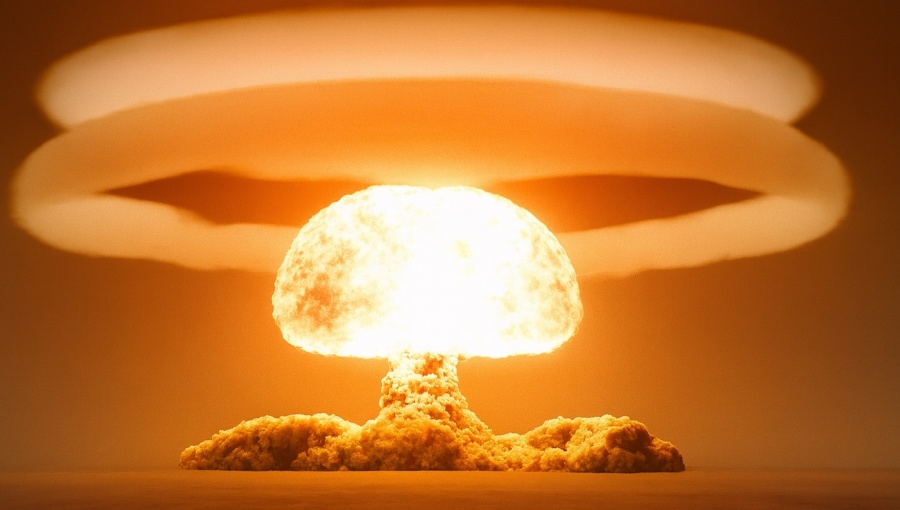
US President Donald Trump moved two nuclear submarines to an “appropriate place” as part of his tough man showdown with Russian President Vladimir Putin that comes to a head this week when the 10-day deadline expires.
Russia has responded by threatening to move its Oreshnik ICBMs into Belarus and the Russian Ministry of Foreign Affairs says that it will give up adhering to the Intermediate-Range Nuclear Forces Treaty (INS Treaty) that limits the placement of short- to medium-range missiles near the border with adversarial countries.
Trump already took the US out of the treaty in 2019, but Russia has been adhering to its terms unilaterally. Like Russia’s decision to suspend, not withdraw from, the START missile treaty it signed with Joe Biden in January 2021, this was one of those gestures the Kremlin has made that keep the door open to resurrecting all the Cold War missile deals.
The Kremlin really wants to go back to the Cold War security deals and jumped on Biden’s offer to renew the START missile treaty in January 2021, which will now expire next year. The Kremlin immediately suggested renewing the INS Treaty as a follow up, as the next most important one. Biden seemed open to these talks. As a Senator he argued strongly against George Bush’s decision to unilaterally withdraw from the key ABM treaty (Anti-Ballistic Missile Treaty) in 2002, saying it would be destabilising.
It was. That decision kicked off what turned into an arms race, and you can draw a line directly from nixing the ABM treaty to the invasion of Ukraine. The ABM deal was the bedrock of the Cold War security arrangements, the first arms deal, signed between Richard Nixon and Soviet leader Leonid Brezhnev in 1972.
Leaving it was a very big deal indeed and a very bad idea. I had friends involved in those talks and the Russians were both outraged and freaked out by the decision. It totally undid what were warming relations. If you remember, Putin’s very first foreign trip was to London where he stood on the floor of the House of Commons with Tony Blair and gave away half of oil major TNK to BP. This was not a 49/51 joint venture, but a straight 50-50 split, a genuine partnership, which is rare in the business. Putin was dead serious about making friends with the West. Nixing the ABM two years later was a stinging slap in the face for those hopes, but it took Putin another five years until he started to push back and take drastic action.
Are we now slowly slipping into a war between Russia and the US? There is a general decay in the security set up going on that has actually been going on for well over a decade. Russia suspended its participation in the Treaty on Conventional Armed Forces in Europe (CFE Treaty) in 2007, the same year Putin gave his famous Munich Security Conference (MSC) speech, and formally withdrew on November 7, 2023. Belarus announced the same day that it was also withdrawing from the treaty.
Russia's decision to now ignore the INS treaty is another notch up in the tensions, and Ukraine’s policy of increasingly hitting targets inside Russia – something its allies have strongly discouraged as part of its “escalation management” strategy – is pouring fuel on the fire. Biden’s team worked hard to prevent these strikes, but after Trump went AWOL on Ukraine, Bankova is increasingly taking the initiative and hitting back the only way it can. Targeting Russian oil refineries or infrastructure, with some symbolic drone attacks on Moscow and other cities thrown in for the spice that brings the war home to the Russian population, is an obvious strategy.
The good start Putin and Biden made in their Geneva meetings at the start of 2021 was a golden opportunity to reset relations and at the least rebuild the security infrastructure that got us through the Cold War without destroying the earth. The slow decay of what is left of that infrastructure is deeply unsettling and dangerous – especially with what Jon Stewart astutely dubbed, “a man-child” in charge of the White House.
However, Putin is also to blame as he carried his insistence that Ukraine stay neutral too far. He first massed troops on Ukraine’s border in March 2021 and then again in the autumn. This was also the year of Russian Foreign Minister Sergei Lavrov’s “new rules of the game” speech delivered in February 2021 that threw down the gauntlet and the year was capped with the Russian Ministry of Foreign Affairs’ eight-point list of demands in December that set the stage for the start of the war in February the next year.
I read Bob Woodward’s excellent book "Plan of Attack" (2004) on the start of the Iraq war, which amply demonstrated that a series of innocuous “just in case” preparations lead inexorably to the start of a war no one intended to fight or thought was necessary, but eventually reached the point of no return. It looks like we are wandering down the same path now.
Russia counters Trumps nuclear submarines, abandons self-imposed limits on short- and medium-range missiles
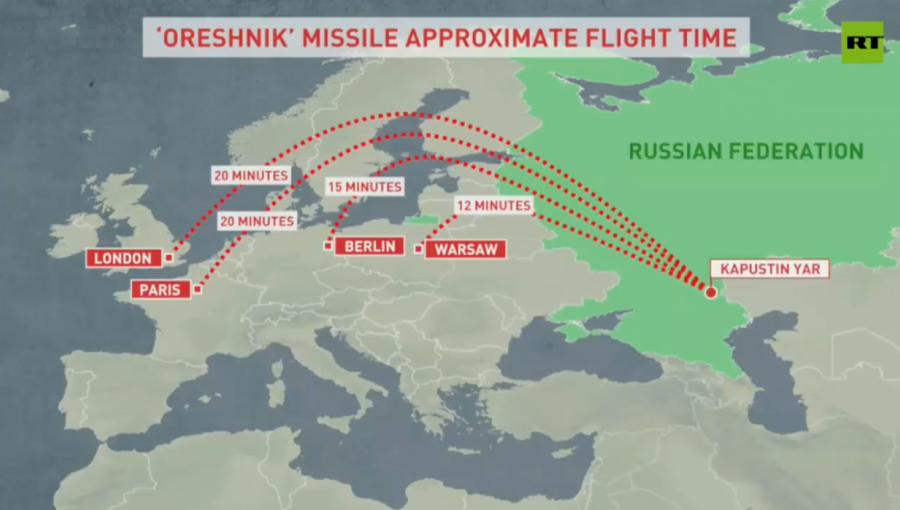
Russia has declared it will no longer observe self-imposed restrictions on deploying medium- and short-range missiles, ending a moratorium introduced after the collapse of the Intermediate-Range Nuclear Forces Treaty with the United States.
The decision comes as both the US and Russia have started to rattle their nuclear sabres. US President Donald Trump said last week that he had moved two nuclear-enabled submarines to an “appropriate place” in a significant escalation of tensions. That provoked a harsh response from the deputy head of Russia’s security council Dmitry Medvedev, who said Russia was prepared to strike the US with nuclear weapons if provoked.
The Russian Ministry of Foreign Affairs said on August 4 it had adopted “unilateral self-restraints” on such ground-based weapons following its withdrawal from the Cold War-era accord. “However, it must be stated that Russian initiatives have not met reciprocity,” the ministry said, citing examples of alleged violations by other countries.
The new announcement comes after Russian President Vladimir Putin upgraded Russia’s nuclear weapons policy last November, giving the Kremlin to make a first strike decision should Russia face an ill-defined “existential threat.”
Now the Russian Ministry of Foreign Affairs has taken another step to undermine that security agreements were in place by allowing it to move missiles into forward positions, including placing Russia’s newest ICBM, the Oreshnik missiles in Belarus, which can hit any European capital within 20 minutes.
“The conditions for keeping the one-sided moratorium on deploying similar weapons are gone and the Russian Federation no longer feels tied to the self-imposed restrictions it agreed to before,” the ministry said.
The INF Treaty, signed in 1987, prohibited the US and the Soviet Union from possessing or testing ground-launched ballistic and cruise missiles with ranges between 500km and 5,500km. Washington and Moscow withdrew from the treaty in August 2019 after accusing each other of non-compliance, but the Kremlin has been adhering to the terms unilaterally in the meantime.
Former Russian President Dmitry Medvedev escalated the rhetoric on Monday, blaming Nato members for the decision to abandon the moratorium. “The Russian Foreign Ministry’s statement on the withdrawal of the moratorium on the deployment of medium- and short-range missiles is the result of Nato countries’ anti-Russian policy,” he wrote in English on X.
“This is a new reality all our opponents will have to reckon with. Expect further steps,” said Medvedev, who is also a former president and prime minister. He did not specify what measures Moscow might take.
The Russian announcement marks a further deterioration in arms control arrangements between the world’s largest nuclear powers, coming amid heightened tensions over the war in Ukraine and Nato’s military posture in Eastern Europe.

No comments:
Post a Comment