The US Recession Door Opens

Photograph by Nathaniel St. Clair
This past week was punctuated by a perfect storm of negative US economic reports and events. Together they mean the door to recession in the US has now opened—quite contrary to all of Trump’s hype that the US economy is doing great.
The reports in question are the July jobs report lasts Friday and the advanced (preliminary) US GDP report for the 2nd quarter (April-June) released a few days before. The events associated with these reports were (1)Trump’s announcement imposing widespread tariff hikes ranging from 15% to 41% on more than 40 countries, with even higher tariffs previously announced on China, Russia, Mexico, Canada as well as ‘across the board’ global tariffs steel, aluminum, copper and other commodities; (2) and The Federal Reserve bank’s decision to keep US interest rates at current levels for at least another six weeks.
If last week’s 2nd quarter GDP data unlocked the door to recession, then last Friday’s Jobs data kicked it wide open. And Trump’s tariffs coming behind threaten to blow it off its hinges.
The Jobs Data Tsunami
It’s generally acknowledged that jobs are a lagging indicator of the condition of the US economy. If so, the July Jobs report shows that there’s no more lag. Jobs have caught up and Friday’s August 1, 2025 report shows Labor Market conditions in the US economy are now flashing red.
According to the US Labor Department’s Establishment Survey (CES) only 73,000 net new jobs were created in July. Moreover, this number is likely to be downward revised, since the July jobs report also revised its previous May and June reports downward big time: for May, the jobs created were reduced from an initially reported 144,000 jobs created that month to only 19,000 in fact: for June, the revision was from 147,000 to 14,000. So when July is similarly revised, it’s highly likely the 73,000 will be reduced dramatically as well. This will mean the total jobs created over the past three months will be barely 50,000!
It’s generally acknowledged the economy has 125,000 new workers entering the labor force and economy every month. The economy must therefore create that many jobs every month just to absorb new entrants, mostly youths seeking jobs for the first time. Only 50,000 created means more than 300,000 are entering the ranks of the unemployed not gainful employment.
The US Labor Department has a second jobs survey to the CES, which covers mostly large companies. The second survey is called the Current Population Survey or CPS. It covers more small and medium sized businesses as well as unemployment levels the CES does not report. The CPS report on Friday showed that new entrants’ unemployment rise by 275,000 in July.
The plight of new workers seeking employment is not the only negative indicator of a rapidly deteriorating US labor market this summer. Here’s some other telling job indicators:
+ The general level of employment in July fell by -260,000. It would have been an even greater decline had the level of part time employment not also risen by 433,000 as well. No doubt many companies converted their full time employed workers to part time in lieu of laying them off. Conversion of full time to part time typically occurs with the onset of early stages of recession.
+ Beyond just July, the CPS revealed that since May 1 the Employment level for the US economy in general declined by -863,000.
+ The unemployment rate, also indicated by the CPS only, remains at approximately 8% for the entire US labor force of 170 million—not the ‘official unemployment rate of 4.2% one consistently reported by the mainstream media and hyped by politicians. The 8% includes the 50 million plus part time, temp, discouraged, independent contractor, gig and similar job categories that the ‘official’ 4.2% excludes.
+ The 8% means there’s roughly 14 million US workers unemployed or underemployed. Of that 14 million, those unemployed long term (more than 27 weeks) has risen sharply as well over the summer. In July alone their numbers rose by 179,000.
Multiple statistics show the band-aid has been ripped off the obfuscation of the real condition of the labor market that has prevailed for at least this past year, exposing the long festering wound beneath.
The labor market has been weak for some time, as this writer has been reporting repeatedly over the past year. One needed only to look behind the mainstream media’s cherry picked reporting of the most favorable numbers in the two jobs reports, ignoring other data in the same reports that were growing consistently weaker.
What’s different the past three months, and in the July report in particular, is that the real rot in the jobs market could no longer be covered up by selective media reporting or by politicians’ hype.
Trump’s response to the recent jobs data has been to shoot the messenger, as he quickly announced his firing of the Labor Department’s statistics chief. But there’s no politically ‘cooked numbers’ to make him look bad here, as Trump claims. It’s just that the facts have now deteriorated to such an extent that even efforts to pave over the pot holes with marginal under-reporting and selective media reporting can no longer cover up the true condition of the deteriorating jobs ‘road-bed’.
The US GDP April-June Report
The second report indicating the US economy now balances on the precipice of recession is the advance (preliminary) US GDP report for the 2nd Quarter 2025. Here’s just three reasons why the announced 3% growth rate is not actually 3%.
First, readers should understand the US, virtually alone among advanced economies, puffs up its quarterly GDP numbers by multiplying the quarter change from the previous quarter by annualizing it. That is, 3% for the 2nd quarter is actually 4 times roughly what the economy actually grew from the previous 1st quarter. 3% sounds a lot better than 0.75% if one is publicly hyping the growth rate in the media.
However, even the 3%(0.75%) is grossly over-estimated for several reasons. Here’s just two of many: First, real GDP is artificially boosted by under-estimating the real rate of inflation. This occurs every report. Second, in the case of the 2nd quarter GDP report, the 3% is grossly over-estimated by temporary effects due to Trump’s current tariffs policies now rolling out which has dramatically distorted the contribution to GDP from what is called ‘net exports’—i.e. the difference and gap between imports into the US and US exports to the rest of the world. For decades, imports have significantly exceeded exports. The result is that ‘net exports’, as the gap is called, has been a consistent subtraction from GDP from other categories like consumer spending, business investment, and government spending.
Let’s look at the under-reporting of real GDP due to low-balling inflation, and then the volatile impact of Trump’s tariffs on GDP for the entire first half of 2025.
(How Under-Estimating Inflation Over-Estimates GDP)
When the government reports GDP it’s for what’s called ‘real’ GDP. Real means adjusted for inflation (unadjusted is called ‘nominal’ GDP). The media reports the ‘real’. For the 2nd quarter that was the 3%. The problem is the inflation adjustment used greatly understates actual inflation. And the more it underestimates actual inflation, the more in turn real GDP is over-estimated.
The price index used to estimate real GDP is called the PCE. For the 2nd quarter the PCE was 2.1%. In the first quarter it was higher, at 3.7%. So simply by reducing PCE from 3.7% to 2.1%, all things equal the real GDP of 3% was boosted by a 1.6% lower PCE in the 2nd quarter. If PCE in the 2nd quarter was 3.7% as in the 1st quarter, then 2nd quarter real GDP would be 1.4% instead of the reported 3%.
Ok. Some will argue perhaps inflation did abate significantly in the 2nd quarter compared to the first. Perhaps inflation was indeed 40%+ less in the 2nd compared to the 1st. But whichever the quarter PCE grossly underestimates actual inflation for dozens of reasons due to faulty assumptions and questionable methodologies used by the government to get PCE. Don’t think the government actually goes out and surveys price changes by businesses to get the PCE, like it does the other price index called the Consumer Price Index. It doesn’t. PCE is determined totally by estimating prices from other sources than the actual prices charged by businesses.
For example, let’s take insurance costs for home, auto, etc. which have been surging the past year. Insurance prices aren’t surveyed. They are extrapolated from insurance company profits. If the big insurance companies hide their profits in order to pay less taxes—which they do—then insurance inflation is grossly underestimated. But that’s what happens with PCE. How about rent inflation. Rents in the PCE index are calculated from reported new rental contracts from a subset of big apartment owners. Landlord price hikes for renters with existing contracts do not report price hikes within the term of the rental contract. There are dozens such examples that result in PCE underestimating actual inflation. Nonethless, PCE is used to low ball actual inflation in order in turn to over-estimate reported ‘real’ GDP. In short, 3% GDP in 2nd quarter is not actual GDP because PCE inflation is not actual inflation.
There are many other ways GDP in general is always over-estimated, apart from the faulty inflation adjustment. There are issues with seasonality adjustment methodologies. There are issues with how GDP is periodically re-defined in order to make it look larger. The latest such example was in 2013 when the government included as business investment items like business logos, trademarks, R&D expenses, IP and other similarly un-estimable values. The government simply accepts whatever businesses tell it are the increase in value (and thus price) of these ephemeral items, and then adds them to GDP. When first introduced more than a decade ago, this boosted real GDP from business investment by more than $500 billion a year. Thus real business investment and its contribution to GDP is, and has been, less than reported every year.
Trump Tariffs & Volatile Net Exports
The even bigger reason why the 2nd quarter GDP growth of 3% is misrepresented has to do with Trump’s recent tariffs and trade policies. Briefly stated: nearly all of the 2nd quarter 3% GDP growth was due to the collapse of imports to the US economy in the quarter in response to Trump’s tariffs.
In the 1st quarter 2025, companies increased their imports excessively in anticipation of Trump’s coming tariffs. That artificially exacerbated the gap between exports from the US and imports to the US. A big negative number resulted, as imports exceeded exports by a wide margin. Imports thus subtracted from overall GDP calculation in the 1st quarter, overwhelming the effect on GDP from government spending, consumption, and business investment. GDP thus contracted by -0.5% in the first quarter. Virtually all due to the effect of import surge.
This flipped in the 2nd quarter. Imports that formerly surged in the 1st quarter collapsed in the 2nd. The difference between imports and exports now added to GDP. How much? Around 5% or 2% more than the actual 3% GDP. So what subtracted from the 5% to get the 3%? Business investment contracted, government spending flattened to virtually zero and consumption slowed. That knocked 2% off the 5% from imports-exports to get to the 3%.
Considering both quarters, it’s clear tariff policy and its impact on exports and imports, especially the latter, is distorting the numbers for GDP in the first half of the year 2025.
But beneath this what’s happening is business investment, a more permanent and less volatile factor in GDP determination, is steadily falling. In part due to tariff and trade volatility but also due to more fundamental forces and developments within the US economy. The same can be said for consumer spending, now steadily slowing even if still growing. In addition, Trump fiscal policies—spending cuts for social programs, government employment, and department dismantling are also building pressure toward less government GDP contribution.
US Economy Next 6-12 Months
The US economy is now at the precipice of recession and will likely deteriorate further over the next 6 to 12 months, and especially so in 2026. Here’s why:
Trump’s ‘big beautiful bill’ Act just passed by the Congress will have a net negative impact on GDP, and will not boost US economic growth as Trump claims.
Most of the at least $3 trillion in corporate and individual (and estate) tax cuts are just a continuation of previous 2018 cuts. The effect of the 2025 bill is just to make them permanent. That’s not net new fiscal stimulus from tax cutting. Meanwhile, the so-called working class $500 billion tax cuts in the bill—for tips, overtime pay, social security, interest on new cars, etc.—have been dramatically reduced and made temporary.
In contrast, the program and employment spending cuts in the bill—for Medicaid, ACA subsidies, education, layoffs of federal workers, and so on—amount to at least $1.5 trillion and take effect immediately. They will significantly reduce current consumer spending this year and next. Furthermore, Trump’s cuts in spending and layoffs will soon begin to spill over to state and local government spending cuts and layoffs, as the states will have to make up for reduced Federal government support and find ways to continue education, health and other spending from their own budgets. They too will have to begin layoffs and cuts to programs, both of which will exacerbate consumer spending in their states.
Add to all this what economists call the ‘multiplier effects’. Tax cut multiplier effects are less than spending cuts multiplier effects. Tax cuts don’t immediately result in more investment by businesses or wealthy investors. They lag. Moreover, the more the cuts accrue to the more wealthy and corporations, the less is actually spent of the total cuts. Some of the cuts are just hoarded. Some are distributed to shareholders as stock buybacks and dividend payouts. Some are invested in financial asset markets, none of which add to GDP. And some are redirected to offshore investment which also contributes nothing to US GDP. So tax multiplier positive effects are relatively low, and increasingly so in the 21st century as the US economy has globalized and financialized.
In contrast, the multiplier negative effects from spending on programs and jobs are immediate and much higher. This is especially more so, to the extent the spending cuts negatively impact incomes of middle to low income levels, which the Trump spending cuts clearly target. In other words, the composition of the Trump tax and spending cuts are net negative and exacerbate the negative multiplier effects of the combined tax and spending cuts as well.
In summary, over the next year US GDP is likely to weaken due to less consumer spending—as state and local government layoffs rise and Trump spending cuts take effect as well as due to less immediate and historically low impacts of tax cuts on the real economy—while the short term positive effect on Imports-Exports on 2nd quarter GDP dissipates.
The recent Jobs and GDP reports reveal the door to near term recession has opened. Trump tariff, tax and spending policies will likely kick it wide open as they take effect.
Trump’s Team of Cowards
Photograph by Nathaniel St. Clair
Donald Trump’s decision to fire Erika McEntarfer, the commissioner of the Bureau of Labor Statistics (BLS), brought his administration to a new level of crazy. Firing the head of a statistical agency because he didn’t like the data is extreme even by Trumpian standards. But Trump’s statements on the firing and the response of his top aides also tell us a lot about the people he has surrounding himself with.
In making his case that McEntarfer was cooking numbers to make Biden and Harris look good — and to make him look bad — Trump has repeatedly claimed that McEntarfer inflated the jobs numbers before the election and then revised them downward shortly after the election. While everything about Trump’s allegations is transparently absurd to anyone who knows anything about BLS procedures, this claim stands out in that it is about a simple fact that is easily shown to be wrong.
The downward revision to which Trump referred was made on August 21, 2024, more than two months before the election. This revision was widely discussed in the media at the time. For example, the New York Times and Los Angeles Times both had major news articles on it.
Anyhow, this is a clear indisputable fact. Trump is mistaken, the revisions took place before the election, not after the election as Trump keeps insisting. Donald Trump’s top economic advisers, people like NEC director Kevin Hassett, Treasury Secretary Scott Bessent, and Stephen Miran, the Chair of his Council of Economic Advisers, are not stupid. They all know that Trump is clearly mistaken on this simple, but very important fact.
Yet apparently none of them can talk to Trump and explain to him his mistake. This is a big deal in the current situation, but it should also be taken as a really big warning on the troubles ahead.
If Trump decides something about the state of the economy, no one on his team is going to ever correct him, no matter how crazy it is. If his tariffs, budget cuts, and arbitrary and ad hoc regulatory changes give us 20 percent unemployment and 20 percent inflation, and Trump says we have a perfect economy, none of his aides is going tell him otherwise. That means that there will never be any opportunity to correct a mistaken policy, because Trump’s advisers are too scared to tell him the real economic situation.
That is very bad news. This means that we not only are looking at bad outcomes due to poorly crafted policies, we are likely looking at situations where Trump will never reverse course because his aides are too scared to tell Trump the truth about the state of the economy.
Everyone understands that a president’s cabinet will be loyal to them, but the willingness of Trump’s top aides to completely ignore reality to humor their boss is unprecedented in this country. It is very bad news.
The Proud Republican History of Paranoia and Anti-Semitism About Government
Statistics
August 5, 2025
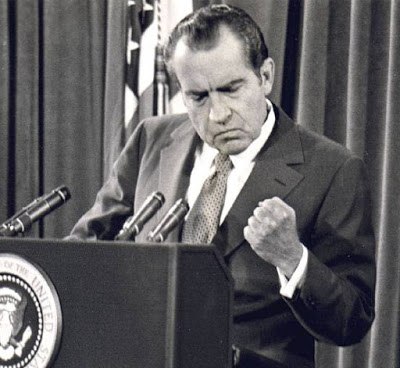
Photo: White House.
Donald Trump’s decision to fire Erika McEntarfer, the Commissioner of the Bureau of Labor Statistics (BLS), brings back memories of Richard Nixon’s orders to identify Jews at the Labor Department. Both efforts stem from paranoid delusions that the people producing the economic data were involved in a conspiracy to make them look bad.
Nixon’s anger stemmed from the fact that the country was in a bad recession. This showed clearly in the unemployment rate, which had risen from 3.4 percent when he took office in January of 1969, to 6.1 percent by December of 1970. Rather than accepting that his policies might be to blame, Nixon was convinced that people, Jewish people, were involved in a conspiracy to cook the data to make him look bad.
In the same vein, Trump seems to have convinced himself that there is a conspiracy, involving at least former BLS Commissioner McEntarfer, to make him look bad. While we may not yet be in a recession, the economy is clearly slowing, as reflected in both GDP data and much slower jobs growth.
Just as Nixon’s Jew counting was driven by his life-long antisemitism, Trump’s rage against McEntarfer is driven by bizarre paranoia. While his administration has tried to clean up the story and say Trump was unhappy about large revisions to the jobs data, which means the original counts were inaccurate, his actual statement is very clear that he was accusing McEntarfer of bias, not incompetence.
“I was just informed that our Country’s “Jobs Numbers” are being produced by a Biden Appointee, Dr. Erika McEntarfer, the Commissioner of Labor Statistics, who faked the Jobs Numbers before the Election to try and boost Kamala’s chances of Victory. This is the same Bureau of Labor Statistics that overstated the Jobs Growth in March 2024 by approximately 818,000 and, then again, right before the 2024 Presidential Election, in August and September, by 112,000. These were Records — No one can be that wrong?”
There is no ambiguity in Trump’s Truth Social post. He is very explicit, saying “no one can be that wrong.” He is not saying that McEntarfer is incompetent, he is saying that she is out to get him.
This allegation is based entirely on Trump’s paranoia and/or dementia. The revisions to the data last year were made in August, more than two full months before the election. It’s hard to see how it could possibly have helped Biden or Harris to have big stories about a large downward revision to job growth occurring appearing shortly before the election.
Somehow Trump has convinced himself that the revisions took place after the election. Apparently, no one on the White House staff has the courage to correct his mistake on this simple fact.
The other big problem with the White House’s clean-up effort to claim that the firing is based on the inaccuracy of the data, and therefore McEntarfer’s alleged incompetence, is that it shows absolutely zero understanding of the process involved in collecting the data. McEntarfer overseas the process, but BLS uses procedures that have been developed over decades and which are entirely transparent. They publish their methods for any interested researcher, reporter, or lay person to evaluate and criticize.
If Trump and his economic team think these methods are inadequate, they presumably have some suggestions as to how they can be improved. They have offered nothing.
For what it’s worth, former Commissioner McEntarfer would not even have had authority to make major changs in procedures on her own. She would have had to submit a concrete proposal for restructuring the Bureau’s methods and to ask permission and funding from Congress. The Trump administration has been cutting the BLS budget and staff.
In short, the effort to sanewash the firing as based on a concern about inaccurate data is absurd on its face and directly contradicts Trump’s own statement. The firing was driven by Trump craziness, just as Nixon’s Jew-counting was driven by his antisemitism and paranoia. That’s the truth.
Photo: White House.
Donald Trump’s decision to fire Erika McEntarfer, the Commissioner of the Bureau of Labor Statistics (BLS), brings back memories of Richard Nixon’s orders to identify Jews at the Labor Department. Both efforts stem from paranoid delusions that the people producing the economic data were involved in a conspiracy to make them look bad.
Nixon’s anger stemmed from the fact that the country was in a bad recession. This showed clearly in the unemployment rate, which had risen from 3.4 percent when he took office in January of 1969, to 6.1 percent by December of 1970. Rather than accepting that his policies might be to blame, Nixon was convinced that people, Jewish people, were involved in a conspiracy to cook the data to make him look bad.
In the same vein, Trump seems to have convinced himself that there is a conspiracy, involving at least former BLS Commissioner McEntarfer, to make him look bad. While we may not yet be in a recession, the economy is clearly slowing, as reflected in both GDP data and much slower jobs growth.
Just as Nixon’s Jew counting was driven by his life-long antisemitism, Trump’s rage against McEntarfer is driven by bizarre paranoia. While his administration has tried to clean up the story and say Trump was unhappy about large revisions to the jobs data, which means the original counts were inaccurate, his actual statement is very clear that he was accusing McEntarfer of bias, not incompetence.
“I was just informed that our Country’s “Jobs Numbers” are being produced by a Biden Appointee, Dr. Erika McEntarfer, the Commissioner of Labor Statistics, who faked the Jobs Numbers before the Election to try and boost Kamala’s chances of Victory. This is the same Bureau of Labor Statistics that overstated the Jobs Growth in March 2024 by approximately 818,000 and, then again, right before the 2024 Presidential Election, in August and September, by 112,000. These were Records — No one can be that wrong?”
There is no ambiguity in Trump’s Truth Social post. He is very explicit, saying “no one can be that wrong.” He is not saying that McEntarfer is incompetent, he is saying that she is out to get him.
This allegation is based entirely on Trump’s paranoia and/or dementia. The revisions to the data last year were made in August, more than two full months before the election. It’s hard to see how it could possibly have helped Biden or Harris to have big stories about a large downward revision to job growth occurring appearing shortly before the election.
Somehow Trump has convinced himself that the revisions took place after the election. Apparently, no one on the White House staff has the courage to correct his mistake on this simple fact.
The other big problem with the White House’s clean-up effort to claim that the firing is based on the inaccuracy of the data, and therefore McEntarfer’s alleged incompetence, is that it shows absolutely zero understanding of the process involved in collecting the data. McEntarfer overseas the process, but BLS uses procedures that have been developed over decades and which are entirely transparent. They publish their methods for any interested researcher, reporter, or lay person to evaluate and criticize.
If Trump and his economic team think these methods are inadequate, they presumably have some suggestions as to how they can be improved. They have offered nothing.
For what it’s worth, former Commissioner McEntarfer would not even have had authority to make major changs in procedures on her own. She would have had to submit a concrete proposal for restructuring the Bureau’s methods and to ask permission and funding from Congress. The Trump administration has been cutting the BLS budget and staff.
In short, the effort to sanewash the firing as based on a concern about inaccurate data is absurd on its face and directly contradicts Trump’s own statement. The firing was driven by Trump craziness, just as Nixon’s Jew-counting was driven by his antisemitism and paranoia. That’s the truth.
The Jobs Report: Why July Was Bad News
August 4, 2025

Photo by Razvan Chisu
I always caution not to make too much of a single report or single month’s data, but I think we can look at the July report and say it was unambiguously bad news. The job growth number for the month wasn’t bad at 73,000, but with the sharp downward revisions to the prior two months’ data, the average for the last three months was just 35,000. That is bad.
But it gets worse. Health care accounted for 55,400 of the new jobs created in July. It accounted for 142 percent of the job gains over the last three months. That means the economy outside of health care has been shedding jobs since April. That is not a good story.
Also, if you want a bit more bad news, the direction of revisions to data tends to be correlated. That means if the prior month’s revision was downward, odds are the current month’s will also be downward and vice-versa. That means when we get the August jobs report, the odds are better than even that the July numbers will have been revised downward, making a bad story worse.
The bad news on jobs is pretty much across sectors. Manufacturing has been losing jobs at a rate of 12,000 a month since April. Construction is treading water, adding 2,000 a month. Coal mining lost 400 jobs in July, 1.0 percent of employment in the sector.
Restaurants lost 300 jobs in July, leaving employment in the sector just 1,800 higher than in December. Scientific research lost 1k jobs in July, down 11.1k since January, or 1.2% of total employment. That’s what happens when you whack the NIH budget and clamp down on university supported research.
Wage growth has also slowed. The annual rate of wage growth taking last three months (May, June, July) compared with prior (Feb, March, April) is 3.7%, down from 4.0% in 2023 and 2024. Slower wage growth, coupled with rising inflation, means lower real wage growth.
The average hourly wage for non-supervisory workers in restaurants rose at just a 2.5% annual rate comparing the last three months with prior three months. These are the lowest paid workers whose pay tends to be very responsive to labor market conditions.
While the overall unemployment rate, at 4.2 percent, is still relatively low, the unemployment rate for Black workers is at 7.2 percent. This is 2.4 percentage points above its all-time low hit in April of 2023. The employment-to-population ratio for Blacks is also at recession levels.
Taking my caution about not looking at a single report in isolation, this jobs report is consistent with other data we have been seeing. GDP grew at just a 1.2 percent annual rate in the first half of the year, with consumption growing at just a 0.9 percent rate. It grew 3.4 percent in 2024.
Inflation is edging higher due to Trump’s tariffs. Higher inflation coupled with slower wage and employment growth will mean slower consumption growth. That is not a good story for the economy.
I wish there was something positive I could point to in this month’s job report, but I really can’t. Employment, as measured by the household survey, has actually fallen over the last four months. Those data are highly erratic, but the direction is clearly wrong.
Anyhow, I suppose Trump can celebrate that the jobs report will distract people from the Epstein scandal, but it’s hard to see how it is good for much else.
This first appeared on Dean Baker’s Beat the Press blog.
Photo by Razvan Chisu
I always caution not to make too much of a single report or single month’s data, but I think we can look at the July report and say it was unambiguously bad news. The job growth number for the month wasn’t bad at 73,000, but with the sharp downward revisions to the prior two months’ data, the average for the last three months was just 35,000. That is bad.
But it gets worse. Health care accounted for 55,400 of the new jobs created in July. It accounted for 142 percent of the job gains over the last three months. That means the economy outside of health care has been shedding jobs since April. That is not a good story.
Also, if you want a bit more bad news, the direction of revisions to data tends to be correlated. That means if the prior month’s revision was downward, odds are the current month’s will also be downward and vice-versa. That means when we get the August jobs report, the odds are better than even that the July numbers will have been revised downward, making a bad story worse.
The bad news on jobs is pretty much across sectors. Manufacturing has been losing jobs at a rate of 12,000 a month since April. Construction is treading water, adding 2,000 a month. Coal mining lost 400 jobs in July, 1.0 percent of employment in the sector.
Restaurants lost 300 jobs in July, leaving employment in the sector just 1,800 higher than in December. Scientific research lost 1k jobs in July, down 11.1k since January, or 1.2% of total employment. That’s what happens when you whack the NIH budget and clamp down on university supported research.
Wage growth has also slowed. The annual rate of wage growth taking last three months (May, June, July) compared with prior (Feb, March, April) is 3.7%, down from 4.0% in 2023 and 2024. Slower wage growth, coupled with rising inflation, means lower real wage growth.
The average hourly wage for non-supervisory workers in restaurants rose at just a 2.5% annual rate comparing the last three months with prior three months. These are the lowest paid workers whose pay tends to be very responsive to labor market conditions.
While the overall unemployment rate, at 4.2 percent, is still relatively low, the unemployment rate for Black workers is at 7.2 percent. This is 2.4 percentage points above its all-time low hit in April of 2023. The employment-to-population ratio for Blacks is also at recession levels.
Taking my caution about not looking at a single report in isolation, this jobs report is consistent with other data we have been seeing. GDP grew at just a 1.2 percent annual rate in the first half of the year, with consumption growing at just a 0.9 percent rate. It grew 3.4 percent in 2024.
Inflation is edging higher due to Trump’s tariffs. Higher inflation coupled with slower wage and employment growth will mean slower consumption growth. That is not a good story for the economy.
I wish there was something positive I could point to in this month’s job report, but I really can’t. Employment, as measured by the household survey, has actually fallen over the last four months. Those data are highly erratic, but the direction is clearly wrong.
Anyhow, I suppose Trump can celebrate that the jobs report will distract people from the Epstein scandal, but it’s hard to see how it is good for much else.
This first appeared on Dean Baker’s Beat the Press blog.
Trump’s Tariffs Come for Your Morning Wake-Up Routine
August 6, 2025

Photo by Yanapi Senaud
On August 6 — unless he chickens out — US president Donald Trump will impose a 50% tariff on American buyers of Brazilian coffee.
Brazilian coffee isn’t the only coffee Americans find themselves paying exorbitant taxes on. Vietnamese, Indonesian, Indian, Colombian, Nicaraguan, and European Union-produced coffee just got hit with tariffs (paid by American consumers) ranging from 18% to 32% as well.
Brazil, however, accounts for 45% of US coffee imports, and 99% of the coffee we drink is imported (outside of Hawaii, American soil/climate are apparently not very hospitable to coffee cultivation).
How much coffee comes to the US from Brazil? About eight million 60-kilogram (132 pound) bags per year. Americans drink 179 billion cups of coffee per year, 491 million cups per day.
That’s about to get a LOT more expensive, whether you go in for fru-fru bespoke beverages prepared by expert baristas at your favorite shop, or just fire up your drip, “k-cup,” or espresso machine at home.
“DON’T MESS WITH PEOPLE’S COFFEE” strikes me as one of the most basic rules implicit in the maintenance of civil society, but apparently Trump didn’t get the memo.
What’s his political and legal rationale for the huge tax increases on American coffee drinkers?
Politically, he’s announced himself annoyed at the Brazilian regime’s prosecution of its previous president for allegedly trying to put over a coup and remain in office despite being defeated in an election. Sounds kind of familiar, doesn’t it?
Legally, he cites an imagined presidential power to impose new taxes any time he decides there’s an “emergency.” No such power is mentioned anywhere in the US Constitution — a document which, in fact, reserves the power to tax exclusively to Congress — but he doesn’t seem inclined toward self-doubt on the matter (or any other matter).
The negative effects on your wallet won’t remain limited to the tariff rate itself, either. There’s also the effect on global demand/supply, an effect that will likely linger long after the tariff is repealed.
The Chinese regime, Reuters reports, just licensed 183 Brazilian coffee companies to sell their wares in that very large market. American coffee drinkers’ loss is Chinese coffee drinkers’ gain. And absent a massive increase in supply, that likely sustained increase in demand for Brazilian beans presages higher US prices even after Trump’s trade war insanity ends.
Wake up and smell the (expensive) coffee:
Tariffs are onerous taxes — on you.
They’re damaging economic sanctions — on you.
There’s nothing “America First” about them.
A Textbook Case of How Tax Policy Fuel Obscene Wealth Accumulation
August 5, 2025

Photograph by Nathaniel St. Clair
The recent wedding of Jeff Bezos and Lauren Sánchez in Venice set off quite the furor over tax avoidance. An enormous banner in the Piazza San Marco put the matter plainly: “If you can rent Venice for your wedding, you can pay more tax.”
That banner prompted a commentary from Phoebe Liu at Forbes on how much tax Bezos does indeed pay. For the year 2024, according to a Forbes estimate, Bezos paid about $2.7 billion in tax on the gain from his sale of $13.6 billion worth of Amazon stock. That stock — the heart of the Bezos fortune since he started Amazon in 1994 — originally cost him no more than $13,600.
In other words, some 99.9999 percent of the proceeds of the Bezos stock sale last year counted as a taxable long-term capital gain. This Forbes tax estimate took into account charitable contributions of Amazon stock that Bezos likely claimed as a 2024 deduction.
The Bezos $2.7 billion income tax payment, Liu noted in her Forbes analysis, represented only 4.5 percent of the 2024 increase in his personal net worth — approximately $60 billion — and barely more than 1 percent of his overall $230 billion net worth.
Props to Liu for her reporting. She has helped shine a light on how undertaxed America’s billionaires have become even in years when they pay billions of dollars in tax.
But I wonder: What would the reporting have looked like if Bezos had sold all $200 billion or so of his Amazon stock? Would we be reading that he paid $40 billion in tax — a sum equal to over 20 percent of his net worth — with a suggestion that he paid his fair tax share? Yeah, we probably would. Not necessarily from Liu, but apologists for the ultra-rich would have been all over it.
Which raises the question: Should our view of how much the ultra-rich pay in tax turn on how much of their investments — as a share of their total wealth — they sell in a given year or on how much their overall wealth happens to increase in that specific year?
Bezos, for example, has sold over $600 million of Amazon shares so far this year, with the apparent intention to sell a bunch more. The value of Amazon shares this year has not increased much. He may well pay more in tax on those sales than his wealth increase for the entire year. Would that mean he’s overtaxed? Of course not.
So how can we better understand billionaire tax avoidance? By focusing only on billionaire taxable transactions, without reference to irrelevant data such as their total wealth or the annual increase in their total wealth.
Consider just the Amazon shares Bezos sold last year, shares worth an astounding one million times what he had paid for them 30 years earlier. The average annual increase in the value of those shares, when you do the math, turns out to be 58.5 percent, an incredible performance.
Now assume Bezos paid the full 23.8 percent tax rate on his gains, without taking those charitable contributions into consideration. That would leave him with $10.36 billion after tax, a total that translates to an after-tax average annual rate of increase of 57.1 percent and a reduction of less than 2.5 percent from his pre-tax annual rate of increase.
Photograph by Nathaniel St. Clair
The recent wedding of Jeff Bezos and Lauren Sánchez in Venice set off quite the furor over tax avoidance. An enormous banner in the Piazza San Marco put the matter plainly: “If you can rent Venice for your wedding, you can pay more tax.”
That banner prompted a commentary from Phoebe Liu at Forbes on how much tax Bezos does indeed pay. For the year 2024, according to a Forbes estimate, Bezos paid about $2.7 billion in tax on the gain from his sale of $13.6 billion worth of Amazon stock. That stock — the heart of the Bezos fortune since he started Amazon in 1994 — originally cost him no more than $13,600.
In other words, some 99.9999 percent of the proceeds of the Bezos stock sale last year counted as a taxable long-term capital gain. This Forbes tax estimate took into account charitable contributions of Amazon stock that Bezos likely claimed as a 2024 deduction.
The Bezos $2.7 billion income tax payment, Liu noted in her Forbes analysis, represented only 4.5 percent of the 2024 increase in his personal net worth — approximately $60 billion — and barely more than 1 percent of his overall $230 billion net worth.
Props to Liu for her reporting. She has helped shine a light on how undertaxed America’s billionaires have become even in years when they pay billions of dollars in tax.
But I wonder: What would the reporting have looked like if Bezos had sold all $200 billion or so of his Amazon stock? Would we be reading that he paid $40 billion in tax — a sum equal to over 20 percent of his net worth — with a suggestion that he paid his fair tax share? Yeah, we probably would. Not necessarily from Liu, but apologists for the ultra-rich would have been all over it.
Which raises the question: Should our view of how much the ultra-rich pay in tax turn on how much of their investments — as a share of their total wealth — they sell in a given year or on how much their overall wealth happens to increase in that specific year?
Bezos, for example, has sold over $600 million of Amazon shares so far this year, with the apparent intention to sell a bunch more. The value of Amazon shares this year has not increased much. He may well pay more in tax on those sales than his wealth increase for the entire year. Would that mean he’s overtaxed? Of course not.
So how can we better understand billionaire tax avoidance? By focusing only on billionaire taxable transactions, without reference to irrelevant data such as their total wealth or the annual increase in their total wealth.
Consider just the Amazon shares Bezos sold last year, shares worth an astounding one million times what he had paid for them 30 years earlier. The average annual increase in the value of those shares, when you do the math, turns out to be 58.5 percent, an incredible performance.
Now assume Bezos paid the full 23.8 percent tax rate on his gains, without taking those charitable contributions into consideration. That would leave him with $10.36 billion after tax, a total that translates to an after-tax average annual rate of increase of 57.1 percent and a reduction of less than 2.5 percent from his pre-tax annual rate of increase.
Remember When the Democrats Lost the Elections Because of Fears About Inflation? The NYT Doesn’t
August 6, 2025
Photograph by Nathaniel St. Clair
As usual, the New York Times gets things exactly wrong in a piece headlined “Trump’s Tariffs are Making Money. That May Make Them Hard to Quit.” The gist of the article is that the tariffs are on a path to raise close to $400 billion a year, and possibly considerably more, depending on where Trump ends up with his trade “deals.”
While this is in fact a very substantial sum, it makes for an obvious campaign issue for Democrats in 2026 and 2028. They can promise a huge tax cut to ordinary workers.
At $400 billion, the tariffs come to an average of more than $3,000 per household annually. The Democrats can promise a large tax cut to working and middle-class families by rolling back the tariffs. They can offset much of the revenue loss by reversing Trump’s tax cuts to the rich. Tax cuts for ordinary people, paid for by higher taxes on the rich, is likely to be a very appealing campaign platform.
The Democrats will also have an advantage in going this route as a result of the fact that Trump will already have the tariffs in effect. Many Democrats, especially union members, have supported tariffs with the idea that they will bring back good-paying manufacturing jobs.
It is almost inconceivable that Trump’s tariffs will bring back any substantial number of manufacturing jobs, and the ones that do come back are not likely to be especially good paying. Historically, manufacturing jobs were high paying because the sector was heavily unionized. This is no longer the case, the manufacturing sector is only slightly more heavily unionized than the rest of the private sector; 8.0 percent in manufacturing compared to 6.0 percent in the rest of the private sector. As a result manufacturing jobs are not likely to pay more than jobs in other sectors.
With the tariffs in effect, workers will be able to see that this is not an effective route for creating good-paying jobs. Therefore, there should be less resistance to rolling them back.
It is also worth reminding folks, especially people who write major articles on economic issues at the New York Times, how tariffs work. They get revenue for the government by raising the prices of things we buy. That means reducing tariffs will lower prices.
The political experts who wrote about the last election all told us that the main reason the Democrats lost was that people hated inflation. This meant that even though most people actually had increases in wages that outpaced prices, they were still angry at Biden and the Democrats because things they bought cost most.
If inflation is very bad news politically, then presumably Donald Trump and the Republicans will be paying a big price for the inflation that is coming about as a result of their tariffs. That would seem to provide a great political opening for the Democrats. Just as Trump scored political points with his promise to bring prices down on day one, the Democrats should be able to score political points by promising to lower prices, but this time with a real plan: cutting tariffs.
It’s true that reducing or eliminating the Trump tariffs may raise the deficit if the tariff reduction is not fully offset by the increased taxes on the rich — but no one seems to vote based on deficits. At least that has been the track record for the last half century. Republicans were not punished for big increases in the deficit under Ronald Reagan and George W. Bush, and Democrats were not rewarded for substantial amounts of deficit reduction under Bill Clinton and Barack Obama. The pundit class may get upset, but why should anyone care?
In short, the political warnings in this article are 180 degrees at odds with reality. The Trump tariffs should create a huge political opening for Democrats in future elections.
When It Comes to Tariffs and Trade, Trump Is Not Playing with a Full Deck

Trans-oceanic cargo ship near the mouth of the Columbia River. Photo: Jeffrey St. Clair.
Trump often makes allusions to card playing when discussing his negotiations on various issues, but in the case of trade, it seems he is the one missing cards. He has a much worse hand than he imagines as he attempts to extort our trading partners into make concessions on various issues.
Our trading partners benefit from selling us stuff, or they wouldn’t do it. Trump apparently thinks that gives us enormous leverage in negotiations. What he somehow seems unable to understand is that the United States benefits from buying things from our trading partners. We would pay more money for a wide range of products if we could not import them.
This doesn’t mean that everyone always benefits from our trade. Manufacturing workers were badly hurt as we had trade deals that exposed them to competition with low-wage workers in the developing world, even as we maintained or increased protection for highly educated workers like doctors.
This competition largely eliminated the wage premium that manufacturing workers had long enjoyed. Longer and stronger government-granted patent and copyright monopolies also disadvantaged most workers. But this history has little relevance to Trump’s trade wars.
Trump makes demands that are supposed to be in exchange for the privilege of selling in the U.S. market. Countries don’t want to lose the U.S. market just as a steel company would not want to lose a major auto manufacturer as a customer.
But there is a limit to how much a country is willing to tolerate to preserve an export market, just as there is a limit to how much a steel manufacturer would be willing to concede to a major automaker to keep it as a customer. And if the automaker constantly reneged on deals and made new demands, the steel manufacturer would at some point be happier just to lose the business.
We don’t have to speculate about this story when it comes to trade, we can see it in the data. China’s exports to the United States used to be a much larger share of its economy. In 2010, these exports were equal to nearly 6.0 percent of China’s GDP. (Both exports and GDP are calculated in dollars.) By last year they had fallen to just 2.3 percent of China’s GDP.

This shrinkage did not cause any sort of collapse of China’s economy. In fact, it continued to grow quite rapidly, except for the hit from the pandemic in 2020. Reducing its dependence on the U.S. market by 60 percent over 14 years did not cause China any major hardship.
At this point, while China still benefits from its trade with the United States, its leadership has not been terribly impressed by tariff threats from Donald Trump. For the most part, they have let Trump negotiate with himself, lowering his proposed rates so as not to send consumer prices here soaring and to restore the flow of vital inputs like rare earth minerals.
Few countries can boast an economy that is anywhere near as successful as China’s but its ability to reduce its dependence on the U.S. an export market is still instructive. Countries can and will move away from the United States as a trading partner if Donald Trump insists that we are unreliable and untrustworthy.
The world outside of the United States is plenty large and countries can look to sell their goods elsewhere. They can’t shift production and trade patterns overnight, but they certainly can make adjustments over a span of four or five years. Most of our trading partners are already moving aggressively to shore up deals with other countries. This process will surely accelerate as Trump makes ever more unhinged demands.
The United States did benefit from being a reliable trading partner for the eight decades since the end of World War II, which is reflected in our strong economic growth over this period. This was very much an “America First” trade policy, even if Donald Trump is unable to understand that fact.
This first appeared on Dean Baker’s Beat the Press blog.

No comments:
Post a Comment