Videos posted on social media by the NGO Refugees in Libya in early September show dozens of refugees crammed together on the floor at the detention centre in Tobruk, Libya. The videos are the latest example of the violence asylum seekers face in Libya, says our Observer, who was once detained himself.
Issued on: 19/09/2025 -
By: The FRANCE 24 Observers/
Mellit DERRE
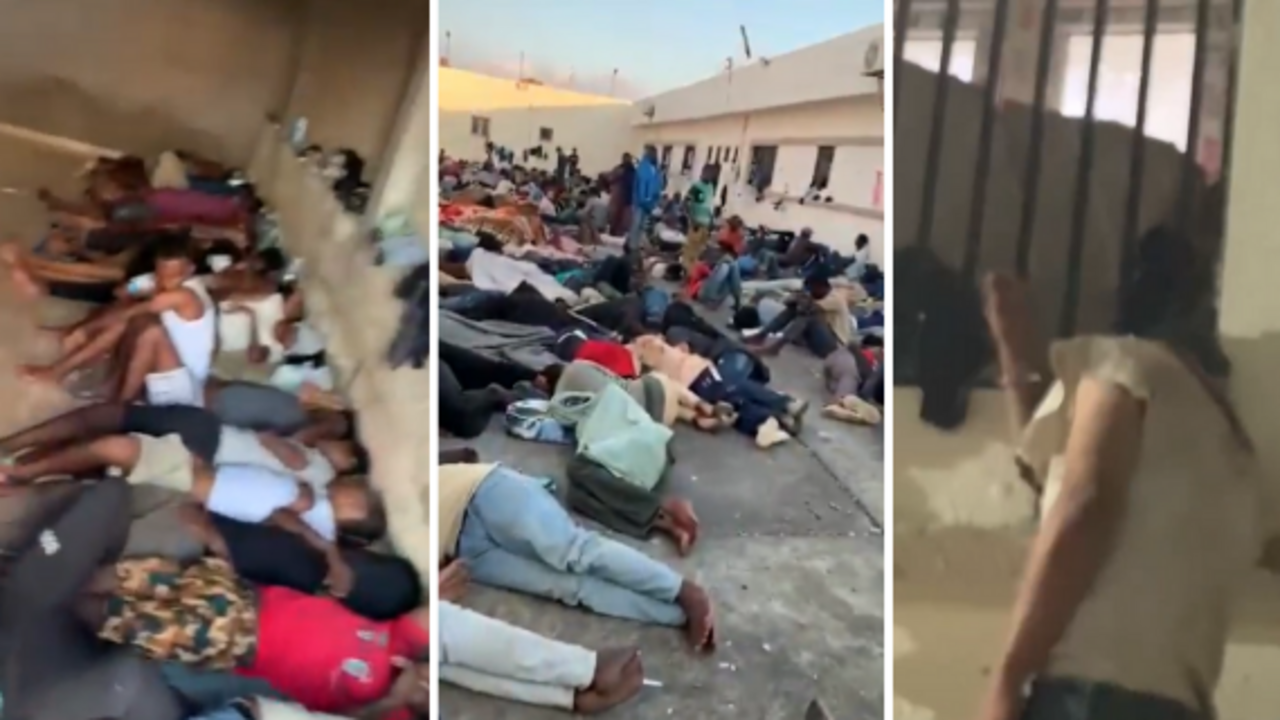
These are screenshots of videos published in early September by the NGO Refugees in Libya showing the appalling living conditions of refugees trapped in the Tobruk detention centre in Libya. © X / Refugees in Libya
This video, published on X on September 1, 2025, shows dozens of refugees lying on the bare ground, without blankets or mattresses. Source: X / Refugees in Libya
This video, published on X on September 1, 2025, shows dozens of refugees lying on the bare ground, without blankets or mattresses. Source: X / Refugees in Libya
Two videos posted online by the aid organisation Refugees in Libya show the appalling conditions in Libyan migrant detention centres. The first, published on September 1, shows dozens of people crammed into a single cell. They lie silently on the ground and have no blankets or mattresses, or even shoes. More than 900 people were detained in the same location, according to Refugees in Libya. In the video, you can see at least 100.
Another video, this one published 10 days later, shows a man handcuffed to bars across a window. These images were shared by people being held in the detention centre in Tobruk, in northeastern Libya. This region is under the control of the government supported by the House of Representatives in Tobruk and Field Marshal Khalifa Haftar’s Libyan National Army.
Another video, this one published 10 days later, shows a man handcuffed to bars across a window. These images were shared by people being held in the detention centre in Tobruk, in northeastern Libya. This region is under the control of the government supported by the House of Representatives in Tobruk and Field Marshal Khalifa Haftar’s Libyan National Army.
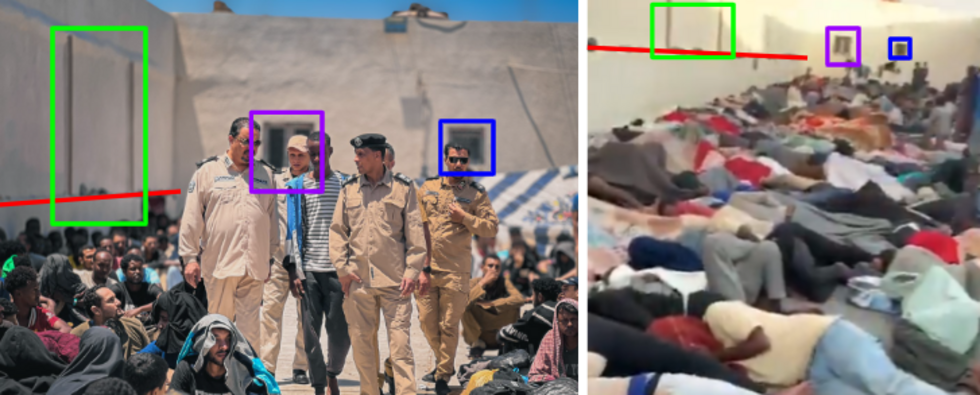
These images show the migrant detention centre in Tobruk in northeastern Libya. © Facebook / Presidency of the agency for the fight against illegal immigration in Libya - X / Refugees in Libya
The FRANCE 24 Observers team was able to establish the location where these videos were filmed. You can see the same courtyard in a post on Facebook on August 3, shared by an organisation called the Agency for the Fight against Illegal Immigration in Libya, which runs the detention centre. It was published to mark a meeting held to try to “fight against illegal immigration, smuggling and criminal activities in any form”. The caption on the post reads “📍Tobruk | Al-Butnan Centre”. In this photo, you can see the same two windows at the end of the courtyard where the refugees are sleeping. You can also see the wall to the left, which has two distinctive vertical lines on it.
Omar (not his real name) is Sudanese. He was detained in the Tobruk facility but got out after paying a large sum of money to the guards. Omar left Sudan at the beginning of the year, in the hopes of reaching Europe. However, he was arrested in Libya during the spring. Many migrants and refugees travel through Libya in their attempt to reach the European Union, especially as Tunisia has upped its efforts to block migrants from crossing its maritime border to the European Union.
"I was arrested in the street in Libya alongside other people. I was trying to reach family members in another town in Libya when I ran into the police, and I ended up in Tobruk.
There are many different nationalities in the prison. We are all trying to get to Europe but first, we have to go through Libya.”
He says that the guards asked refugees to pay enormous sums in order to leave. Essentially, they need their families to intervene and pay this ransom.
"If you are Sudanese, they want you to pay 2,500 Libyan dinars [Editor’s note: 392 euros] to get out of prison. But they ask a lot of the other nationalities for even more money. For example, if you are from Chad, Egypt, Ethiopia, Yemen, Syria, Pakistan, Bangladesh, South Sudan, or Somalia, they ask for 7,000 Libyan dinars [Editor’s note: 1100 euros]."
‘The prison is full of disease’
Omar says he spent several months in this detention centre.
“It’s a very large prison. There were hundreds of us. We didn’t have enough food or water. There were so many problems inside it.
At night, they put us in a space that was very hot and had no ventilation. No ventilation, meaning there wasn’t enough oxygen. In the morning, when they made us go out, the air was cold. It was easy to catch a cold, the flu, a fever, and all the rest of it.
At night, you aren’t allowed to speak at all. We were allowed out of the cell around 10am and, at that point, we would speak together about what was happening inside the prison.
The prison is full of diseases: scabies, pox, rashes, and fevers. There’s really everything.
It is a very difficult situation, honestly.”
The FRANCE 24 Observers team was able to establish the location where these videos were filmed. You can see the same courtyard in a post on Facebook on August 3, shared by an organisation called the Agency for the Fight against Illegal Immigration in Libya, which runs the detention centre. It was published to mark a meeting held to try to “fight against illegal immigration, smuggling and criminal activities in any form”. The caption on the post reads “📍Tobruk | Al-Butnan Centre”. In this photo, you can see the same two windows at the end of the courtyard where the refugees are sleeping. You can also see the wall to the left, which has two distinctive vertical lines on it.
Omar (not his real name) is Sudanese. He was detained in the Tobruk facility but got out after paying a large sum of money to the guards. Omar left Sudan at the beginning of the year, in the hopes of reaching Europe. However, he was arrested in Libya during the spring. Many migrants and refugees travel through Libya in their attempt to reach the European Union, especially as Tunisia has upped its efforts to block migrants from crossing its maritime border to the European Union.
"I was arrested in the street in Libya alongside other people. I was trying to reach family members in another town in Libya when I ran into the police, and I ended up in Tobruk.
There are many different nationalities in the prison. We are all trying to get to Europe but first, we have to go through Libya.”
He says that the guards asked refugees to pay enormous sums in order to leave. Essentially, they need their families to intervene and pay this ransom.
"If you are Sudanese, they want you to pay 2,500 Libyan dinars [Editor’s note: 392 euros] to get out of prison. But they ask a lot of the other nationalities for even more money. For example, if you are from Chad, Egypt, Ethiopia, Yemen, Syria, Pakistan, Bangladesh, South Sudan, or Somalia, they ask for 7,000 Libyan dinars [Editor’s note: 1100 euros]."
‘The prison is full of disease’
Omar says he spent several months in this detention centre.
“It’s a very large prison. There were hundreds of us. We didn’t have enough food or water. There were so many problems inside it.
At night, they put us in a space that was very hot and had no ventilation. No ventilation, meaning there wasn’t enough oxygen. In the morning, when they made us go out, the air was cold. It was easy to catch a cold, the flu, a fever, and all the rest of it.
At night, you aren’t allowed to speak at all. We were allowed out of the cell around 10am and, at that point, we would speak together about what was happening inside the prison.
The prison is full of diseases: scabies, pox, rashes, and fevers. There’s really everything.
It is a very difficult situation, honestly.”
‘They hit them with metal’
The NGO Refugees in Libya regularly shares images and information about the plight of refugees in Libya. They say that they receive dozens of messages every day and that the number of people detained in this centre is on the rise.
The second video documents abuse. You can see a man, who is very weak, handcuffed to one of the bars across a window, forcing him to remain standing.
This video, published on X on September 11, 2025, shows a man handcuffed to one of the bars across a window in the Tobruk detention centre. Source: X / Refugees in Libya
Omar says that he heard about this man from his contacts in the detention centre:
"They kidnapped him right from the street. They took his iPhone to unlock it using iCloud. But the man refused to open his phone. After that, they beat and tortured him. After they beat him, they put him in solitary confinement. They tortured this one man so much. They absolutely wanted to get into his telephone – that’s why they were hitting him.
Then, they handcuffed him to the window in the door. He was afraid. He had to stand up all night. Then, in the morning, they hit him and put him in solitary confinement. They continued to beat him every day in an attempt to get him to open iCloud on his phone.
They wanted his phone because it's expensive. It's probably worth 6,000 or 7,000 Libyan dinars [Editor’s note: between 940 and 1,100 euros] because it's an iPhone, so they take it by force.
For example, they don't want a Samsung that costs 400 or 600 dinars [between 60 and 100 euros]. They want the expensive things.”
While this is the only abuse that has been caught on camera, Omar says that it is far from an isolated case. He says that torture and mistreatment are part of daily life for migrants in this detention centre.
"There is an area in the prison where soldiers beat people. They hit them with metal. They hit them with anything they find in front of them. Sometimes, you are also standing in a line to get bread or water, and the line is very crowded. But if anyone steps out of line, the soldiers will start to beat that person. They beat and torture people who don’t want to go into the buildings. They also want to get any money we have."
Just like the people in Tobruk, thousands of migrants are detained across Libya in inhumane conditions. The practice of demanding money to set them free has been going on for years. In 2023, Médecins Sans Frontières (Doctors without Borders) called for the creation of humanitarian corridors for asylum seekers.
Libya has been locked in a spiral of violence and instability since the fall of former leader Muammar Gaddafi in 2011. Two different governments are running the country: the UN-recognised Government of National Unity in the west and, in the east, the House of Representatives and other followers of Marshall Haftar.
This article has been translated from the original in French.
The NGO Refugees in Libya regularly shares images and information about the plight of refugees in Libya. They say that they receive dozens of messages every day and that the number of people detained in this centre is on the rise.
The second video documents abuse. You can see a man, who is very weak, handcuffed to one of the bars across a window, forcing him to remain standing.
This video, published on X on September 11, 2025, shows a man handcuffed to one of the bars across a window in the Tobruk detention centre. Source: X / Refugees in Libya
Omar says that he heard about this man from his contacts in the detention centre:
"They kidnapped him right from the street. They took his iPhone to unlock it using iCloud. But the man refused to open his phone. After that, they beat and tortured him. After they beat him, they put him in solitary confinement. They tortured this one man so much. They absolutely wanted to get into his telephone – that’s why they were hitting him.
Then, they handcuffed him to the window in the door. He was afraid. He had to stand up all night. Then, in the morning, they hit him and put him in solitary confinement. They continued to beat him every day in an attempt to get him to open iCloud on his phone.
They wanted his phone because it's expensive. It's probably worth 6,000 or 7,000 Libyan dinars [Editor’s note: between 940 and 1,100 euros] because it's an iPhone, so they take it by force.
For example, they don't want a Samsung that costs 400 or 600 dinars [between 60 and 100 euros]. They want the expensive things.”
While this is the only abuse that has been caught on camera, Omar says that it is far from an isolated case. He says that torture and mistreatment are part of daily life for migrants in this detention centre.
"There is an area in the prison where soldiers beat people. They hit them with metal. They hit them with anything they find in front of them. Sometimes, you are also standing in a line to get bread or water, and the line is very crowded. But if anyone steps out of line, the soldiers will start to beat that person. They beat and torture people who don’t want to go into the buildings. They also want to get any money we have."
Just like the people in Tobruk, thousands of migrants are detained across Libya in inhumane conditions. The practice of demanding money to set them free has been going on for years. In 2023, Médecins Sans Frontières (Doctors without Borders) called for the creation of humanitarian corridors for asylum seekers.
Libya has been locked in a spiral of violence and instability since the fall of former leader Muammar Gaddafi in 2011. Two different governments are running the country: the UN-recognised Government of National Unity in the west and, in the east, the House of Representatives and other followers of Marshall Haftar.
This article has been translated from the original in French.
More than 100 Sudanese refugees dead or missing in shipwrecks off Libya
At least 110 people have died or gone missing after two boats carrying mostly Sudanese refugees sunk off the coast of Tobruk, Libya.
Issued on: 18/09/2025 - RFI
War in Sudan
After the latest tragedy, the IOM called for "urgent action… to end such tragedies at sea".
Noting the nationalities of the victims, the UNHCR called for an end to the war in Sudan.
"Because safe and legal pathways are available to only a very small number of people, the real solution is to end the war in Sudan so families can return home in safety and not take these dangerous journeys," the agency wrote.
The Sudanese army has been at war since April 2023 with the paramilitary Rapid Support Forces in a conflict that has left tens of thousands dead and displaced over 13 million people. It has been called the world's worst humanitarian crisis.
Libya became a migration transit route after the fall of dictator Moamer Kadhafi in 2011.
As of February 2025, around 867,055 migrants from 44 nationalities were living in Libya, according to IOM data, and since the start of the year, 456 people have died and 420 went missing on the maritime route.
At least 110 people have died or gone missing after two boats carrying mostly Sudanese refugees sunk off the coast of Tobruk, Libya.
Issued on: 18/09/2025 - RFI
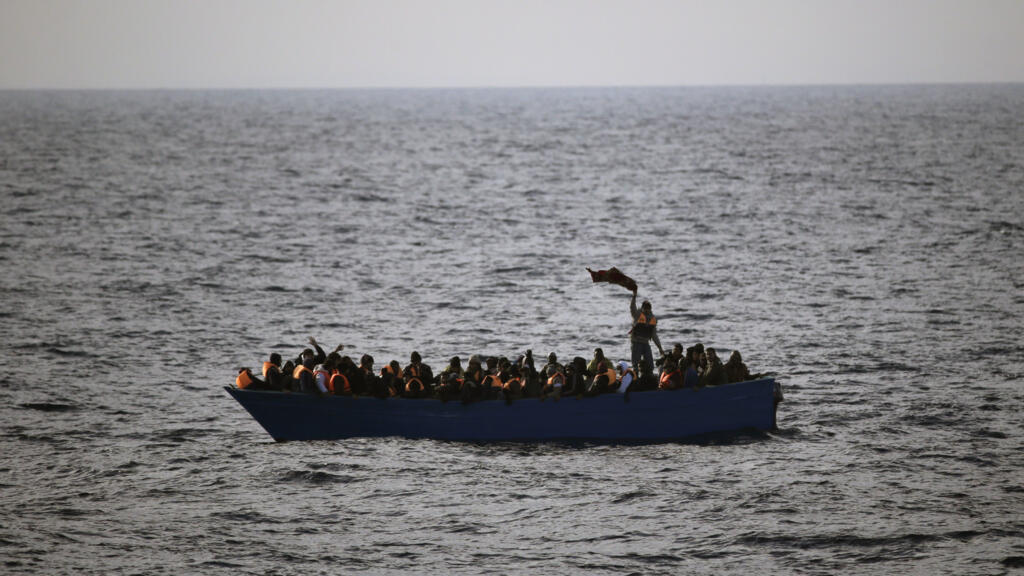
At least 456 people died along the central Mediterranean route between January 1 and September 13, according to the IOM. AP - Emilio Morenatti
The United Nations High Commissioner for Refugees (UNHCR) in Libya said Wednesday evening that only 13 people survived after a vessel carrying 74 people, mostly Sudanese refugees, capsized Sunday off the coast of Tobruk.
The International Organisation for Migration (IOM) reported another shipwreck that occurred on Saturday, in which at least 50 people died "after a vessel carrying 75 Sudanese refugees caught fire off Libya's coast".
Increasing numbers of migrants have been departing from Tobruk, in northeastern Libya, in an attempt to reach Greece.
The European border agency Frontex called it "a new migratory corridor", and the IOM has categorised it as "one of the world's most dangerous migration routes".
Desperate journeys: Ghanian youth risk death for a future in Europe
The United Nations High Commissioner for Refugees (UNHCR) in Libya said Wednesday evening that only 13 people survived after a vessel carrying 74 people, mostly Sudanese refugees, capsized Sunday off the coast of Tobruk.
The International Organisation for Migration (IOM) reported another shipwreck that occurred on Saturday, in which at least 50 people died "after a vessel carrying 75 Sudanese refugees caught fire off Libya's coast".
Increasing numbers of migrants have been departing from Tobruk, in northeastern Libya, in an attempt to reach Greece.
The European border agency Frontex called it "a new migratory corridor", and the IOM has categorised it as "one of the world's most dangerous migration routes".
Desperate journeys: Ghanian youth risk death for a future in Europe
War in Sudan
After the latest tragedy, the IOM called for "urgent action… to end such tragedies at sea".
Noting the nationalities of the victims, the UNHCR called for an end to the war in Sudan.
"Because safe and legal pathways are available to only a very small number of people, the real solution is to end the war in Sudan so families can return home in safety and not take these dangerous journeys," the agency wrote.
The Sudanese army has been at war since April 2023 with the paramilitary Rapid Support Forces in a conflict that has left tens of thousands dead and displaced over 13 million people. It has been called the world's worst humanitarian crisis.
Libya became a migration transit route after the fall of dictator Moamer Kadhafi in 2011.
As of February 2025, around 867,055 migrants from 44 nationalities were living in Libya, according to IOM data, and since the start of the year, 456 people have died and 420 went missing on the maritime route.

No comments:
Post a Comment