Afghanistan
Trump issues vague threat to Afghanistan over Bagram air base
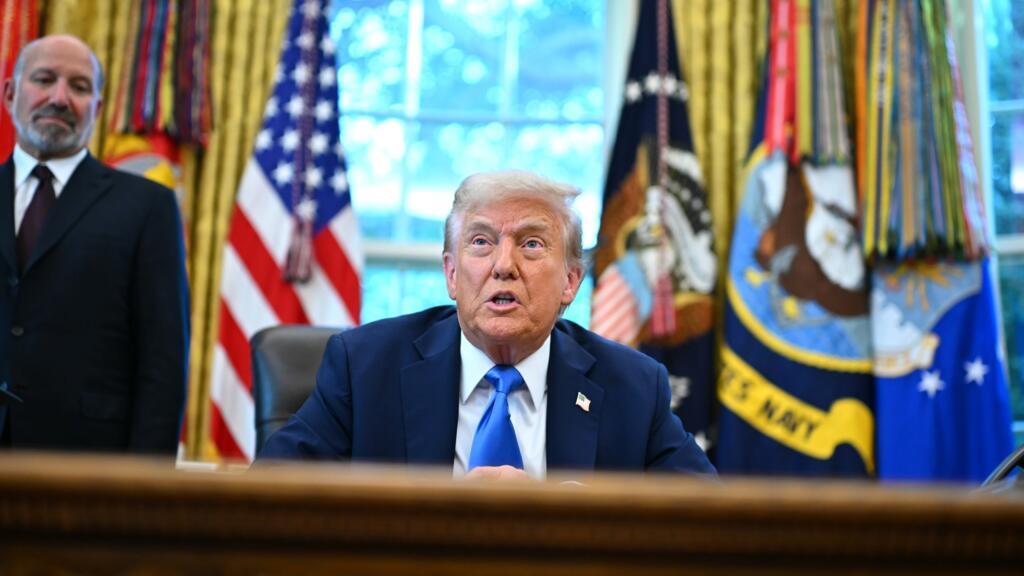
Washington (AFP) – US President Donald Trump on Saturday threatened Afghanistan with unspecified punishment if the Taliban-controlled country did not "give Bagram Airbase back."
Issued on: 21/09/2025 - RFI
\
 T
T"If Afghanistan doesn't give Bagram Airbase back to those that built it, the United States of America, BAD THINGS ARE GOING TO HAPPEN!!!" the 79-year-old leader wrote on his Truth Social platform.
The vague threat came just days after he raised the idea of the United States retaking control of the base while on a state visit to the United Kingdom.
Bagram, the largest air base in Afghanistan, was a linchpin of the US-led war effort against the Taliban, whose government Washington toppled following the September 11, 2001 attacks on the United States.
A massive, sprawling facility, Amnesty International, Human Rights Watch and others have repeatedly raised allegations of systematic human rights abuses by US forces at Bagram, especially pertaining to detainees in Washington's murky "War on Terror."
Trump has often lamented the loss of access to Bagram, noting its proximity to China, but Thursday was the first time he has made public that he was working on the matter.
"We're trying to get it back, by the way, that could be a little breaking news. We're trying to get it back because they need things from us," Trump said at a press conference with British Prime Minister Keir Starmer.
US and NATO troops chaotically pulled out of Bagram in July 2021 as part of a Trump-brokered peace deal, as the resurgent Taliban took over swaths of Afghanistan before finally taking control of the entire country.
Trump has repeatedly criticized the loss of the base since returning to power, linking it to his attacks on his predecessor Joe Biden's handling of the US pullout from Afghanistan.
Trump has also complained about China's growing influence in Afghanistan.
Later on Saturday, the US president was asked by reporters at the White House if he was considering sending US troops to retake Bagram.
"We won't talk about that, but we're talking now to Afghanistan, and we want it back and we want it back soon, right away. And if they don't do it, you're going ot find out what I'm going to do," he said.
© 2025 AFP
Donald Trump has once again put Afghanistan back in Washington’s foreign policy spotlight. Speaking in London alongside British Prime Minister Keir Starmer, the US president said his administration was exploring ways to bring Bagram air base - once the heart of a US-led multilateral military presence in Afghanistan - back under US control.
The base, abandoned during the chaotic US withdrawal in July, 2021, sits just 40 kilometres north of Kabul and for two decades was a sprawling hub for US and NATO-led operations. In the years it was operational, 14 nations operated at, or through Bagram. In addition to the US, these included UK forces, and elements from France, Germany, South Korea and more.
In London, Trump said “We’re trying to get it back because they need things from us,” adding that “one of the reasons we want the base is, as you know, it’s an hour away from where China makes its nuclear weapons” according to Radio Free Europe Radio Liberty. At the UK press conference Trump claims the US "gave it to them for nothing" the BBC reported.
That remark alone pointed to what many military analysts have been reporting for months: that the US president’s ongoing interest in Afghanistan, and Bagram is less about helping get Kabul back on its feet and more to do with containing Beijing.
For their part, however, Taliban officials have dismissed the notion of handing the base back, though they have not ruled out closer political and economic ties with the US.
According to the BBC, a Taliban foreign ministry representative said that the very idea of the US in the future maintaining a military presence in the country had been "completely" rejected prior to the Taliban returning to power.
Reports in the Wall Street Journal on September 19, however, suggest quiet discussions are already underway with the idea of allowing Bagram to serve as a US “launch point” for counterterrorism missions.
Whether or not domestic Chinese repositioning of their nuclear capabilities will one day be deemed an act of 'terrorism' by Trump is still being scoffed at by some in the US but the China-angle on his desire to station US forces back at Bagram complicates things further.
In addition, while Trump points to nuclear sites being “an hour away”, the nearest known Chinese facility, the Lop Nur test range on the remote eastern edge of the Xinjiang region is around 2,000 kilometres northeast of Bagram.
Still, US officials have reportedly grown increasingly anxious about Beijing’s expanding nuclear arsenal, which the Pentagon now estimates at 600 warheads and climbing. Radio Free Asia in June claimed “China’s nuclear arsenal is growing faster than any other country’s, by about 100 new warheads a year” citing the Stockholm International Peace Research Institute.
For now, the idea of US troops back at Bagram feels remote but given the February 2020 “Joint Declaration between the Islamic Republic of Afghanistan and the United States of America for Bringing Peace to Afghanistan” and the last part of a clause stating “The United States will refrain from the threat or the use of force against the territorial integrity or political independence of Afghanistan or intervening in its domestic affairs”, it appears that once again a foreign leader is indeed willing to rewrite the rules of engagement with Afghanistan – only this time using China as the justification.

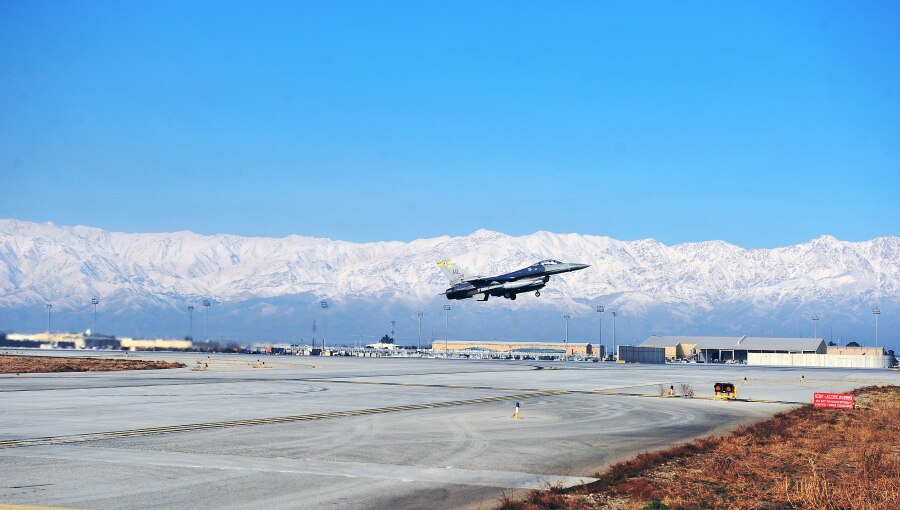
Donald Trump has once again put Afghanistan back in Washington’s foreign policy spotlight. Speaking in London alongside British Prime Minister Keir Starmer, the US president said his administration was exploring ways to bring Bagram air base - once the heart of a US-led multilateral military presence in Afghanistan - back under US control.
The base, abandoned during the chaotic US withdrawal in July, 2021, sits just 40 kilometres north of Kabul and for two decades was a sprawling hub for US and NATO-led operations. In the years it was operational, 14 nations operated at, or through Bagram. In addition to the US, these included UK forces, and elements from France, Germany, South Korea and more.
In London, Trump said “We’re trying to get it back because they need things from us,” adding that “one of the reasons we want the base is, as you know, it’s an hour away from where China makes its nuclear weapons” according to Radio Free Europe Radio Liberty. At the UK press conference Trump claims the US "gave it to them for nothing" the BBC reported.
That remark alone pointed to what many military analysts have been reporting for months: that the US president’s ongoing interest in Afghanistan, and Bagram is less about helping get Kabul back on its feet and more to do with containing Beijing.
For their part, however, Taliban officials have dismissed the notion of handing the base back, though they have not ruled out closer political and economic ties with the US.
According to the BBC, a Taliban foreign ministry representative said that the very idea of the US in the future maintaining a military presence in the country had been "completely" rejected prior to the Taliban returning to power.
Reports in the Wall Street Journal on September 19, however, suggest quiet discussions are already underway with the idea of allowing Bagram to serve as a US “launch point” for counterterrorism missions.
Whether or not domestic Chinese repositioning of their nuclear capabilities will one day be deemed an act of 'terrorism' by Trump is still being scoffed at by some in the US but the China-angle on his desire to station US forces back at Bagram complicates things further.
In addition, while Trump points to nuclear sites being “an hour away”, the nearest known Chinese facility, the Lop Nur test range on the remote eastern edge of the Xinjiang region is around 2,000 kilometres northeast of Bagram.
Still, US officials have reportedly grown increasingly anxious about Beijing’s expanding nuclear arsenal, which the Pentagon now estimates at 600 warheads and climbing. Radio Free Asia in June claimed “China’s nuclear arsenal is growing faster than any other country’s, by about 100 new warheads a year” citing the Stockholm International Peace Research Institute.
For now, the idea of US troops back at Bagram feels remote but given the February 2020 “Joint Declaration between the Islamic Republic of Afghanistan and the United States of America for Bringing Peace to Afghanistan” and the last part of a clause stating “The United States will refrain from the threat or the use of force against the territorial integrity or political independence of Afghanistan or intervening in its domestic affairs”, it appears that once again a foreign leader is indeed willing to rewrite the rules of engagement with Afghanistan – only this time using China as the justification.

Why Does Trump Want Afghanistan’s Bagram Air Base Returned To US Control? – Analysis
By RFE RL
By Reid Standish
(RFE/RL) — US President Donald Trump said that he wants Bagram air base in Afghanistan returned to US control, in a move that could reignite American involvement in the country and the strategic asset that was lost during the chaotic Western withdrawal four years ago.
Speaking alongside UK Prime Minister Keir Starmer on September 18, Trump suggested that his administration was negotiating with the Taliban for US forces to once again occupy the base outside of Kabul, which was abandoned in 2021 shortly before the Taliban retook control of Afghanistan.
He also said that the base’s strategic location close to nuclear sites in China, which shares a short 92-kilometer border with Afghanistan, made it particularly valuable.
“We’re trying to get it back because they need things from us. We want that base back,” Trump said during the joint press conference in Britain. “But one of the reasons we want the base is, as you know, it’s an hour away from where China makes its nuclear weapons.”
Trump didn’t elaborate on what the Taliban might need from the United States and it is unclear whether he was referring to an actual plan to retake ownership of Bagram or which exact Chinese facilities he was mentioning.
But his comments were the first public acknowledgment that negotiations to reclaim the base and other American military assets that fell into the hands of the Taliban might be underway.
Why Is Bagram Air Base Important?
Bagram, which is about 40 kilometers north of Kabul and was built by the Soviet Union in the 1950s, was the largest US base in Afghanistan and served as the central command during its 20-year occupation of the country.
During his September 18 press conference, Trump said that Bagram was one of the largest air bases in the world, with one of the biggest runways constructed of heavy concrete and steel.
The airfield has a 3.6-kilometer runway capable of serving bombers and large cargo aircraft.
Trump had reached an agreement to withdraw from Afghanistan near the end of his first term, but then-US president Joe Biden took over the plans in 2021. Trump has repeatedly criticized his predecessor’s handling of the military pullout, which saw the United States leave behind thousands of weapons and other pieces of military equipment and a sprawling embassy compound that sits vacant in the center of Kabul.
Why Is Trump Focused On China’s Nuclear Weapons?
Trump’s argument that Bagram is an important regional foothold because of its proximity to China is not new.
The US president claimed during his election campaign that Bagram was under the control of China’s People’s Liberation Army (PLA) and during the first cabinet meeting of his second term, he said that in his Afghanistan withdrawal plan, “we were going to keep Bagram … not because of Afghanistan but because of China because it’s exactly one hour away from where China makes its nuclear missiles.
At the time, he claimed that Bagram was “now under China’s influence.”
The Taliban denied the claims and China has no known military footprint at Bagram.
But his comments about Chinese nuclear facilities appear to be referring to the long-standing Lop Nurnuclear test range, some 2,000 kilometers across the border in the northwestern Xinjiang region.
The facility was where China tested its first nuclear bomb nearly 60 years ago and satellite images appear to show an expansion of new buildings and roads around the area since 2017. The site is not known to be where nuclear weapons are manufactured, with Chinese production believed to be concentrated in the center of the country.
This comes as China has been rapidly expanding its nuclear forces in recent years, which has set off some alarm bells at the Pentagon, which said that the PLA had expanded its nuclear stockpile to 600 warheads by mid-2024, a 20 percent annual increase.
Can Trump Gain Control Of Bagram From The Taliban?
Trump did not specify in his recent comments what exactly he envisioned for Bagram, but his remarks come amid increased engagement between the Taliban and US envoys.
Washington has kept a minimal level of public engagement with Afghanistan since the Taliban takeover, restricting it to hostage negotiations. Afghanistan has remained largely isolated on the global stage and its economy is struggling to attract foreign support and private investments.
But in a rare visit last week, Adam Boehler, the Trump administration’s special envoy for hostage response, met with Taliban Foreign Minister Amir Khan Muttaqi in Kabul.
Taliban officials also rejected Trump’s suggestion that the United States might regain control of Bagram, but they left open the possibility of talks to improve ties.
“Without the US having any military presence in Afghanistan, both Afghanistan and the US need to engage with each other, and they can have political and economic relations based on mutual respect and shared interests,” Zakir Jalaly, a Taliban foreign ministry official, said on social media.
“Afghans have never accepted the military presence of anyone throughout history,” Jalaly added. “But for other kinds of engagement, all paths remain open for them.”
Other Taliban officials struck a more defiant tone in their public comments.
Muhajer Farahi, a Taliban deputy minister, posted part of a poem on X: “Those who once smashed their heads against the rocks with us, their minds have still not found peace.”
He ended his post with “Bagram, Afghanistan.”
The State Department and the White House have not provided public comment about Bagram, while Chief Pentagon Spokesman Sean Parnell said in a statement provided to reporters that the Department of War “routinely reviews how the Department would respond to a variety of contingencies across the globe” and that “we are always ready to execute any mission at the President’s direction.”
- Reid Standish is RFE/RL’s China Global Affairs correspondent based in Prague and author of the China In Eurasia briefing. He focuses on Chinese foreign policy in Eastern Europe and Central Asia and has reported extensively about China’s Belt and Road Initiative and Beijing’s internment camps in Xinjiang. Prior to joining RFE/RL, Reid was an editor at Foreign Policy magazine and its Moscow correspondent. He has also written for The Atlantic and The Washington Post.
RFE/RL journalists report the news in 21 countries where a free press is banned by the government or not fully established.


No comments:
Post a Comment