
SEPTEMBER 29, 2025
New Ofgem figures reveal that household energy debt has soared to £4.43 billion in the second quarter of 2025 – more than triple pre-energy crisis levels and three-quarters of a billion pounds more than this time last year – leaving millions of families trapped in arrears they cannot escape.
The latest data show:
- £1.45bn in debt and arrears at the end of 2020 (pre-crisis)
- £3.69bn last year (Q2 2024)
- £4.43bn in Q2 2025 (latest figures)
The regulator also reports that 1,133,683 electricity customers and 926,545 gas customers are now in debt without any repayment arrangement in place. Many households may owe on both accounts, meaning over a million households are struggling in energy debt.
The burden of this energy debt is shared by all bill-payers, with households facing up to an extra £145 a year on their bills to cover the collective cost of debt.
At the same time, new analysis from the Common Wealth think tank shows that around 24% of every household energy bill is taken as profit by the energy industry.
The regulator and ministers are due to launch a new Debt Relief Scheme in the coming months, but while this is supported by members of the End Fuel Poverty Coalition, campaigners have warned it must be simple to understand and accessible.
Debt experts have advised that it must include automatic eligibility for people on means-tested benefits, clear rules on what debt is covered, and flexibility in how households can apply. Experts have also stressed that suppliers should work with debt advice charities to ensure fair and consistent outcomes when implementing the scheme.
The End Fuel Poverty Coalition is calling for urgent reform to tackle the energy debt crisis, including:
- A Debt Relief Scheme with automatic eligibility for households on means-tested benefits and no arbitrary debt thresholds or forced customer contributions.
- An end to punitive late fees, additional charges and rigid repayment plans that push people deeper into hardship.
- Guaranteed protection for customers on prepayment meters, with relief available to those forced onto PPMs due to debt.
- Longer-term action to cut bills and prevent debt recurring, including a national social tariff, fairer standing charges and pricing structures and a major programme of home energy efficiency upgrades and homegrown renewables.
Simon Francis, Coordinator of the End Fuel Poverty Coalition, commented: “Energy debt is now driving people into dangerous financial positions as we approach the fifth winter of the energy bills crisis. Previous research has found that almost one in five households in energy debt have turned to illegal money lenders, with households waking each morning fearful of what using electricity or gas might cost them.
“We must urgently write off arrears and reform the system so fewer households are powerless to pay off their debts.”
Independent Age Policy Manager, David Southgate, said: “Older people on low incomes are increasingly bed-bound by the cold – forced to turn in early in hats, gloves, scarves, and extra blankets during the winter to stay warm. Many have fallen into debt in a bid to keep the heating on. With yet another difficult winter just around the corner, they need immediate support.
“We are calling on the UK Government to tackle this mountain of debt with a properly funded and targeted debt relief scheme, alongside wider affordability reform, including a national energy social tariff, to ensure everyone can afford to heat and power their homes.”
Frazer Scott, Chief Executive of Energy Action Scotland, said: “The latest Ofgem figures show that there has been inadequate debt relief – and there is nothing in the pipeline to make energy genuinely affordable for the households that quite clearly cannot pay.
“The number of accounts in debt continues to rise, with average debts growing as well. Over £580 million in debt has been added in just the first six months of 2025. Without urgent intervention, this crisis will only deepen.”
Robert Palmer, deputy director of Uplift, commented: “This is a saddening debt crisis for too many people in the UK and is driven in part by obscene profits. It’s just plain wrong that nearly a quarter of every household bill is taken as profit by the energy industry. What’s more, the UK’s heavy reliance on expensive gas added an average of £3,000 per household during the energy bills crisis.
“Yet again while shareholders are celebrating rising prices and huge profits, people are facing stark choices of how to ration their energy. Only by supporting struggling households now, improving energy efficiency and getting us off expensive gas through homegrown renewable energy will ministers be able to get a grip on the situation.”
Jonathan Bean from Fuel Poverty Action, added:”Energy debt will continue to grow whilst the Government fails to deliver its promised £300 bill reduction, with energy prices 70% higher than five years ago.”
Toby Murray, Policy and Campaigns Manager of Debt Justice, said: “These figures are a shocking indictment of the government and Ofgem’s failure to act on the energy debt crisis. Record energy debts are leaving millions trapped in arrears for a basic essential, bringing stress and hardship to households already struggling to get by.
“Yet almost a year after Ofgem announced they were looking into a debt relief scheme, not a single household has seen their debts reduced. The government must act now and write off unpayable energy debt.”
Pensioners are particularly hard- hit by rising energy bills. Food inflation and rising water bills mean that many cannot afford to turn on their central heating this winter. 128,000 people each year die in fuel poverty; 110,000 of them are pensioners.
Image: https://pix4free.org/photo/4956/consumer-debt.html Consumer debt by Nick Youngson CC BY-SA 3.0 Pix4free Licence: Attribution-ShareAlike 3.0 Unported CC BY-SA 3.0 Deed
Left Foot Forward
'We can help people take control of their energy security and bring down energy bills permanently.'

Deputy leader of the Lib Dems Daisy Cooper MP has announced a new household energy efficiency loan scheme that the party says it would fund through a windfall tax on banks.
Cooper said the Lib Dems are calling for the creation of a new “energy security bank”, which would provide homeowners and small businesses with loans to invest in energy efficiency initiatives.
The St Albans MP also said that the Lib Dems would create dedicated lending schemes to install solar panels in supermarket car parks, which she claimed could power entire cities such as Bristol or Nottingham.
Cooper delivered a scathing critique of the Conservatives for scrapping climate initiatives while they were in government, such as solar panel subsidies, the requirement for all new homes to be Net Zero and selling off the Green Investment Bank.
The policy would provide up to £10 billion in energy efficiency loans. Cooper said the loans would pay for themselves, but require £2 billion to be put aside to provide government-backed guarantees.
Homeowners could borrow up to £20,000, while businesses could access loans of up to £50,000.
Cooper said the Lib Dems would pay for this through a windfall tax on banks, arguing they have reaped huge profits from the interest generated by quantitative easing.
She said that with this policy: “We can help people take control of their energy security and bring down energy bills permanently.”
Labour’s Warm Homes Plan will invest £6 billion over ten years in grants and low-interest loans for insulation, solar panels, batteries and low-carbon heating to help cut bills.
She condemned them for being “shamelessly locked in a race to the bottom with Reform UK”, with Kemi Badenoch wanting “to go all in on oil and gas production”.
Cooper said “we must call out Nigel Farage, who falsely claims that renewables drive up prices when it’s renewables that bring them down.”
She added: “We must call out those who peddle climate myths and would have us left at the mercy of global gas markets.”
The Lib Dems will also call on the chancellor to extend the VAT exemption on all energy-saving materials, which will end on 1 April 2027, for another 3 years.
Olivia Barber is a reporter at Left Foot Forward
Left Foot Forward
The Lib Dem energy spokesperson told Left Foot Forward she doesn’t think Labour is doing enough for oil and gas workers
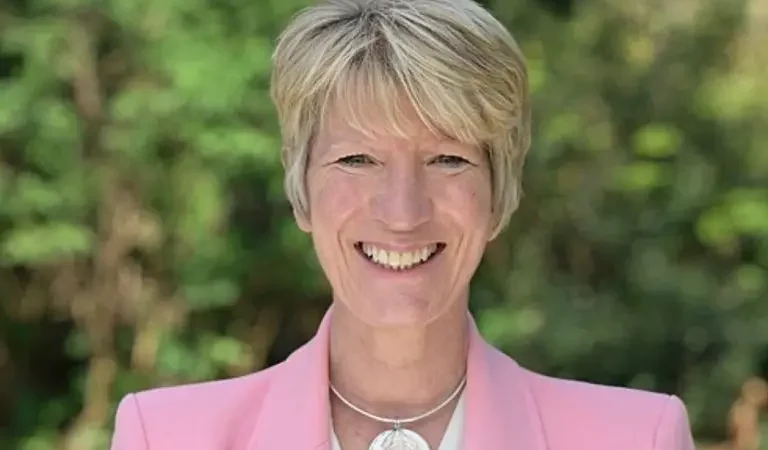
Pippa Heylings MP, the Lib Dem spokesperson for energy security and net zero, said Labour needs to work quickly to deliver the ‘just transition’ and avoid losing ‘highly skilled’ oil and gas workers.
Speaking with Left Foot Forward at Lib Dem conference, she said Labour is “not doing a good enough job” to deliver a “just transition” for oil and gas workers.
Heylings said that currently “highly skilled” oil and gas workers are being told they have to re-qualify to work in the renewable sector. She said “It is just ridiculous, we should make it incentivising”.
The South Cambridgeshire MP told Left Foot Forward that the Lib Dems would work more closely with trade unions and create a skills passport, so workers don’t have to retrain from scratch.
‘Labour thinking about the economy not workers’
Pressed on whether Labour isn’t already working with trade unions, she said the party isn’t doing enough.
“They’re thinking about what we do with the economy and oil and gas companies, they’re not doing enough for oil and gas workers,” she added.
Heylings said that as a result, the UK is losing these “highly skilled workers”. “They’re going to the Gulf of Mexico, right now,” she warned, adding that 75,000 oil and gas workers lost their jobs under the Conservatives.
North Sea oil and gas licences
When asked how she would respond if Labour allows new oil and gas licences next to existing North Sea sites, as has been mooted, she didn’t criticise the plan, but said “they’ve got to shift other things to keep within the carbon budget”.
Labour pledged not to allow any new oil and gas licences, and would need to ‘water down’ this pledge if they allow more drilling in the North Sea.
Heyling added that in the North Sea, “We are marching towards a mature basin that is not economically viable to do any more exploitation in. The market is going to sort that out as long as we’re not sending the wrong signals.”

No comments:
Post a Comment