Behind the Gen Z protesters who want to force Madagascar's president from power
Omega Rakotomalala - BBC Monitoring
Who is demonstrating?

Gen Z protesters have now been joined by others [Getty Images]
Initially, Gen Z Mada was co-ordinating what was going on through social media sites such as Facebook and TikTok. A committee was created to organise further demonstrations following a meeting between Gen Z Mada, civil society groups and local politicians.
Other groups got involved once the protests started. Several labour unions, among them the country's largest, the Malagasy Trade Union Solidarity, have thrown their weight behind the youth-led movement.
Civil society organisations have called for church-led talks to "prevent Madagascar from sinking into chaos or civil war".
Opposition leader Siteny Randrianasoloniaiko and former President Marc Ravalomanana voiced their support for the protests in a rare joint statement on Wednesday.
The two have declined offers to join Rajoelina's government, saying the move would be a "betrayal" of the Malagasy people.
What do the protesters want?
The demonstrators have not issued a manifesto but what started with anger over public services has evolved into broader demands for political change.
Many young people, facing insecure and poorly paid jobs, have called for the president's resignation, blaming him for the problems they are facing.
On Wednesday, the demonstrators in the capital were seen waving flags and banners with the words "Rajoelina out".
A spokesperson for Gen Z Mada told the AFP news agency that they wanted the president to step down and "the cleaning up of the National Assembly".
They also want Rajoelina to take responsibility for those who were reportedly killed by security forces.
Some social media users have also called for the dissolution of the election commission and the country's top court.
What is the government's response?

The UN says at least 22 people have died - a figure disputed by the authorities [AFP via Getty Images]
Security forces have maintained a heavy presence across Antananarivo and other major cities, with police using tear gas and water cannon to disperse the protesters.
A dusk-to-dawn curfew was imposed in the capital after reports of violence and looting, including the torching of the finance ministry's offices.
Rajoelina initially made attempts to placate the protesters, such as sacking his government, calling for dialogue with young people and pledging that the World Bank would fund efforts to address the power outages.
But when these steps failed to put a stop to the demonstrations, his tone changed.
In an address livestreamed on his Facebook page, Rajoelina alleged that the protesters had been "exploited to provoke a coup" and that foreign forces were financing the movement to oust him.
Schools across the capital and nearby districts were closed last week, for fear of escalating violence.
Authorities maintain that gatherings without formal authorisation pose risks to public order.
What is life like in Madagascar?
Madagascar is one of the poorest countries in the world, with 75% of people living below the poverty line, according to the World Bank.
Only about one-third of Madagascar's 30 million people have access to electricity, according to the International Monetary Fund.
One demonstrator told AFP that "living conditions of the Malagasy people are deteriorating and getting worse every day".
Is the president under threat?
Political scientist and human rights activist Ketakandriana Rafitoson told the AFP news agency the demonstrations risked dragging on and intensifying if authorities rely on force to suppress dissent instead of prioritising accountability.
She said the "outcome risks political fragmentation, stronger nationalist rhetoric against perceived external interference, and possible economic fallout".
But in imposing curfews and dismissing UN casualty reports, the government could be signalling that it may double down on repression rather than compromise.
Analysts say control over state media and key institutions could allow Rajoelina to outlast the immediate wave of dissent.
Governance experts say a critical tipping-point would be whether the military refuses orders to crack down on protesters.
Presidential spokesperson Lova Ranoromaro said on social media that "we do not want a coup d'etat, because a coup d'etat destroys a nation, because a coup d'etat destroys the future of our children".
Madagascar has been rocked by multiple uprisings since it gained independence in 1960, including mass protests in 2009 that forced former President Ravalomanana to step down and saw Rajoelina come to power for the first time.
Rajoelina was voted back into office in 2018 and re-elected in 2023 in contested polls boycotted by the opposition.
Omega Rakotomalala - BBC Monitoring
and Wycliffe Muia -
Fri, October 3, 2025

[Gamma-Rapho via Getty Images]
Thousands of people in Madagascar have taken to the streets in different parts of the country for the past week in the largest wave of protests the Indian Ocean island nation has witnessed in more than 15 years.
What began as anger over shortages of basic necessities has rapidly escalated into one of the most serious challenges facing President Andry Rajoelina, who has been in power, for the second time, since 2018. On Monday, in response, he sacked his government but that did not placate the protesters, who now want him to go as well.
At least 22 people have been killed and more than 100 others injured in the unrest, according to the UN, although the Malagasy government has dismissed those figures and described them as based on "rumours and misinformation".
What sparked the protests?
Pressure started to build following the arrest on 19 September of two leading city politicians, who had planned a peaceful demonstration in the capital, Antananarivo, over chronic power and water supply problems
There have been hours-long daily outages of the services run by state-owned utility company Jirama.
Many saw their detention as an attempt to silence legitimate dissent leading to public outrage, with the cause taken up by civil society groups and the formation of a youth-led online movement known as Gen Z Mada.
The protests have since spread beyond Antananarivo, gripping eight other cities across the island, with no signs of subsiding.
Waving banners, protesters have denounced the blackouts and accused the government of failing to guarantee basic rights.
Activists have also blamed widespread corruption within the power company for the electricity crisis.
Fri, October 3, 2025
[Gamma-Rapho via Getty Images]
Thousands of people in Madagascar have taken to the streets in different parts of the country for the past week in the largest wave of protests the Indian Ocean island nation has witnessed in more than 15 years.
What began as anger over shortages of basic necessities has rapidly escalated into one of the most serious challenges facing President Andry Rajoelina, who has been in power, for the second time, since 2018. On Monday, in response, he sacked his government but that did not placate the protesters, who now want him to go as well.
At least 22 people have been killed and more than 100 others injured in the unrest, according to the UN, although the Malagasy government has dismissed those figures and described them as based on "rumours and misinformation".
What sparked the protests?
Pressure started to build following the arrest on 19 September of two leading city politicians, who had planned a peaceful demonstration in the capital, Antananarivo, over chronic power and water supply problems
There have been hours-long daily outages of the services run by state-owned utility company Jirama.
Many saw their detention as an attempt to silence legitimate dissent leading to public outrage, with the cause taken up by civil society groups and the formation of a youth-led online movement known as Gen Z Mada.
The protests have since spread beyond Antananarivo, gripping eight other cities across the island, with no signs of subsiding.
Waving banners, protesters have denounced the blackouts and accused the government of failing to guarantee basic rights.
Activists have also blamed widespread corruption within the power company for the electricity crisis.
Who is demonstrating?
Gen Z protesters have now been joined by others [Getty Images]
Initially, Gen Z Mada was co-ordinating what was going on through social media sites such as Facebook and TikTok. A committee was created to organise further demonstrations following a meeting between Gen Z Mada, civil society groups and local politicians.
Other groups got involved once the protests started. Several labour unions, among them the country's largest, the Malagasy Trade Union Solidarity, have thrown their weight behind the youth-led movement.
Civil society organisations have called for church-led talks to "prevent Madagascar from sinking into chaos or civil war".
Opposition leader Siteny Randrianasoloniaiko and former President Marc Ravalomanana voiced their support for the protests in a rare joint statement on Wednesday.
The two have declined offers to join Rajoelina's government, saying the move would be a "betrayal" of the Malagasy people.
What do the protesters want?
The demonstrators have not issued a manifesto but what started with anger over public services has evolved into broader demands for political change.
Many young people, facing insecure and poorly paid jobs, have called for the president's resignation, blaming him for the problems they are facing.
On Wednesday, the demonstrators in the capital were seen waving flags and banners with the words "Rajoelina out".
A spokesperson for Gen Z Mada told the AFP news agency that they wanted the president to step down and "the cleaning up of the National Assembly".
They also want Rajoelina to take responsibility for those who were reportedly killed by security forces.
Some social media users have also called for the dissolution of the election commission and the country's top court.
What is the government's response?
The UN says at least 22 people have died - a figure disputed by the authorities [AFP via Getty Images]
Security forces have maintained a heavy presence across Antananarivo and other major cities, with police using tear gas and water cannon to disperse the protesters.
A dusk-to-dawn curfew was imposed in the capital after reports of violence and looting, including the torching of the finance ministry's offices.
Rajoelina initially made attempts to placate the protesters, such as sacking his government, calling for dialogue with young people and pledging that the World Bank would fund efforts to address the power outages.
But when these steps failed to put a stop to the demonstrations, his tone changed.
In an address livestreamed on his Facebook page, Rajoelina alleged that the protesters had been "exploited to provoke a coup" and that foreign forces were financing the movement to oust him.
Schools across the capital and nearby districts were closed last week, for fear of escalating violence.
Authorities maintain that gatherings without formal authorisation pose risks to public order.
What is life like in Madagascar?
Madagascar is one of the poorest countries in the world, with 75% of people living below the poverty line, according to the World Bank.
Only about one-third of Madagascar's 30 million people have access to electricity, according to the International Monetary Fund.
One demonstrator told AFP that "living conditions of the Malagasy people are deteriorating and getting worse every day".
Is the president under threat?
Political scientist and human rights activist Ketakandriana Rafitoson told the AFP news agency the demonstrations risked dragging on and intensifying if authorities rely on force to suppress dissent instead of prioritising accountability.
She said the "outcome risks political fragmentation, stronger nationalist rhetoric against perceived external interference, and possible economic fallout".
But in imposing curfews and dismissing UN casualty reports, the government could be signalling that it may double down on repression rather than compromise.
Analysts say control over state media and key institutions could allow Rajoelina to outlast the immediate wave of dissent.
Governance experts say a critical tipping-point would be whether the military refuses orders to crack down on protesters.
Presidential spokesperson Lova Ranoromaro said on social media that "we do not want a coup d'etat, because a coup d'etat destroys a nation, because a coup d'etat destroys the future of our children".
Madagascar has been rocked by multiple uprisings since it gained independence in 1960, including mass protests in 2009 that forced former President Ravalomanana to step down and saw Rajoelina come to power for the first time.
Rajoelina was voted back into office in 2018 and re-elected in 2023 in contested polls boycotted by the opposition.
Supporters of Madagascar’s embattled government, challenged by intense youth-led protests since September 25, took to the streets in rival rallies across the capital Antananarivo on Saturday.
Issued on: 04/10/2025 -
3 minReading time
By: FRANCE 24
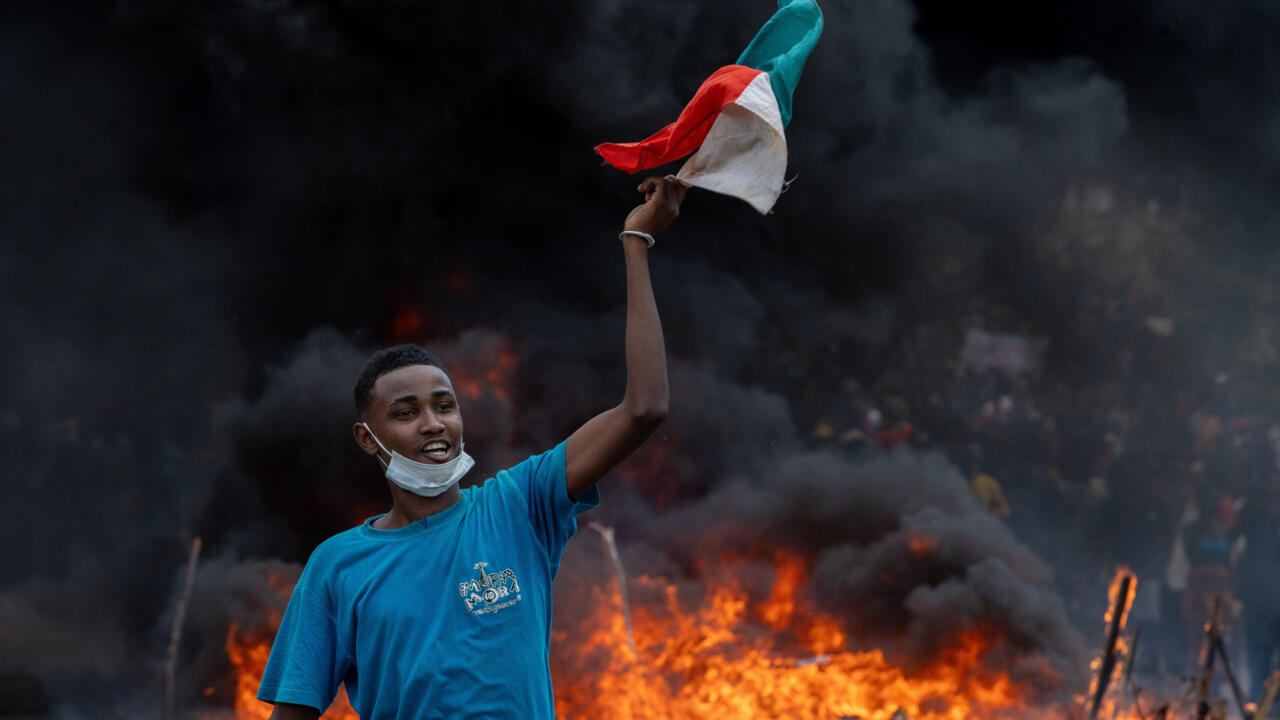
Demonstrators are calling for President Andry Rajoelina to step down. © FITA via AFP
Backers and foes of Madagascar's cornered government staged rival rallies in the capital Antananarivo on Saturday following days of fatal youth-led protests the president has termed a coup bid.
Inspired by similar movements in Bangladesh, Nepal and Indonesia, the protests led by an online youth movement known as Gen Z Mada, have tapped into widespread frustration over poor governance, with demonstrators calling for President Andry Rajoelina to step down.
At least 22 people have been killed and hundreds injured, according to the United Nations, a toll the government has dismissed as based on rumours or misinformation.
The anti-government protesters attempted to converge in the centre of Antananarivo but were prevented by a heavy police presence.
Officers erected roadblocks, including in the Ambondrona neighbourhood.
"It's the shortest route to Ambohijatovo," said 18-year-old student Ilan Randrianarison, referring to their planned meeting point.
Backers and foes of Madagascar's cornered government staged rival rallies in the capital Antananarivo on Saturday following days of fatal youth-led protests the president has termed a coup bid.
Inspired by similar movements in Bangladesh, Nepal and Indonesia, the protests led by an online youth movement known as Gen Z Mada, have tapped into widespread frustration over poor governance, with demonstrators calling for President Andry Rajoelina to step down.
At least 22 people have been killed and hundreds injured, according to the United Nations, a toll the government has dismissed as based on rumours or misinformation.
The anti-government protesters attempted to converge in the centre of Antananarivo but were prevented by a heavy police presence.
Officers erected roadblocks, including in the Ambondrona neighbourhood.
"It's the shortest route to Ambohijatovo," said 18-year-old student Ilan Randrianarison, referring to their planned meeting point.
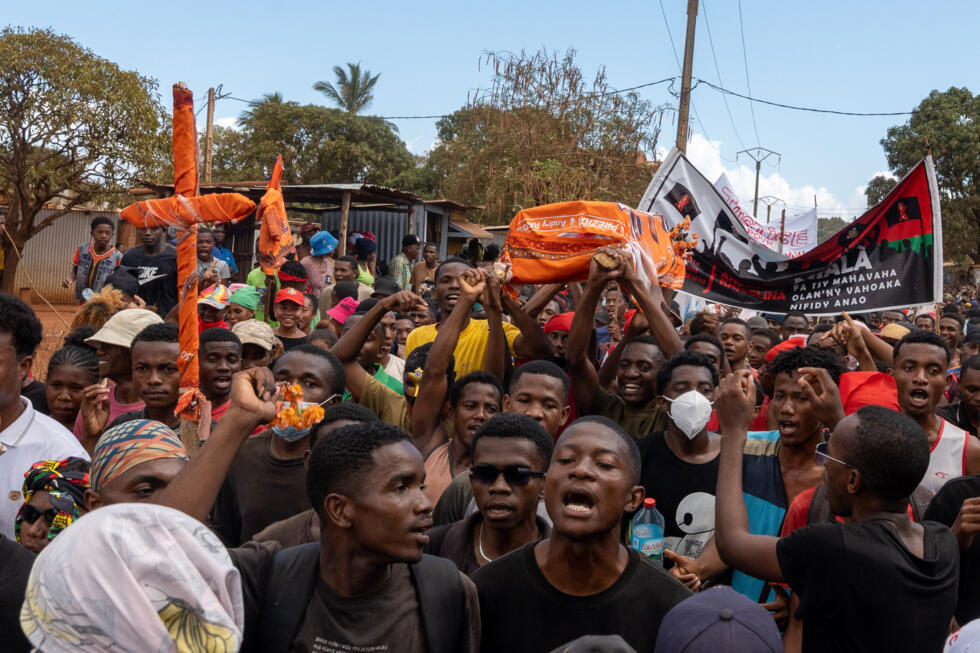
Hundreds of students marched in the northern city of Antsiranana.
© FITA via AFP
"Given the massacres, the protesters are getting angrier and angrier. We're here for our comrades," he said, wearing a straw hat that has become a symbol of defiance.
In the capital's main Independence Avenue, armoured vehicles and military police stood guard.
Some officers killed time on their phones, played cards or napped in the shadow of city hall.
Supporters of the embattled government meanwhile met at the Coliseum – a Roman-inspired amphitheatre inaugurated by Rajoelina after he was first installed in power by the military in 2009 following a popular uprising.
That rally attracted fewer people than the anti-government protests.
In the northern city of Antsiranana, hundreds of students also marched, waving placards and carrying a mock coffin covered with orange fabric emblasoned with the image of Rajoelina, AFP journalists saw.
'Out of touch'
Rajoelina, who has rejected calls to resign, on Saturday shared footage of a meeting with trade unions.
The 51-year-old former mayor of Antananarivo said on Friday he was ready to listen in order to find solutions to problems facing the poor island nation.
He condemned what he said was an attempt to topple his government, without naming who he alleged was behind the move.
Gen Z Mada has rejected Rajoelina's overtures, saying his remarks were "completely out of touch with the gravity of the situation our country is facing".
"You claim to invite dialogue, yet your words stigmatise precisely those you claim to be listening to," the group said in a joint statement with some 20 other organisations.
"Given the massacres, the protesters are getting angrier and angrier. We're here for our comrades," he said, wearing a straw hat that has become a symbol of defiance.
In the capital's main Independence Avenue, armoured vehicles and military police stood guard.
Some officers killed time on their phones, played cards or napped in the shadow of city hall.
Supporters of the embattled government meanwhile met at the Coliseum – a Roman-inspired amphitheatre inaugurated by Rajoelina after he was first installed in power by the military in 2009 following a popular uprising.
That rally attracted fewer people than the anti-government protests.
In the northern city of Antsiranana, hundreds of students also marched, waving placards and carrying a mock coffin covered with orange fabric emblasoned with the image of Rajoelina, AFP journalists saw.
'Out of touch'
Rajoelina, who has rejected calls to resign, on Saturday shared footage of a meeting with trade unions.
The 51-year-old former mayor of Antananarivo said on Friday he was ready to listen in order to find solutions to problems facing the poor island nation.
He condemned what he said was an attempt to topple his government, without naming who he alleged was behind the move.
Gen Z Mada has rejected Rajoelina's overtures, saying his remarks were "completely out of touch with the gravity of the situation our country is facing".
"You claim to invite dialogue, yet your words stigmatise precisely those you claim to be listening to," the group said in a joint statement with some 20 other organisations.
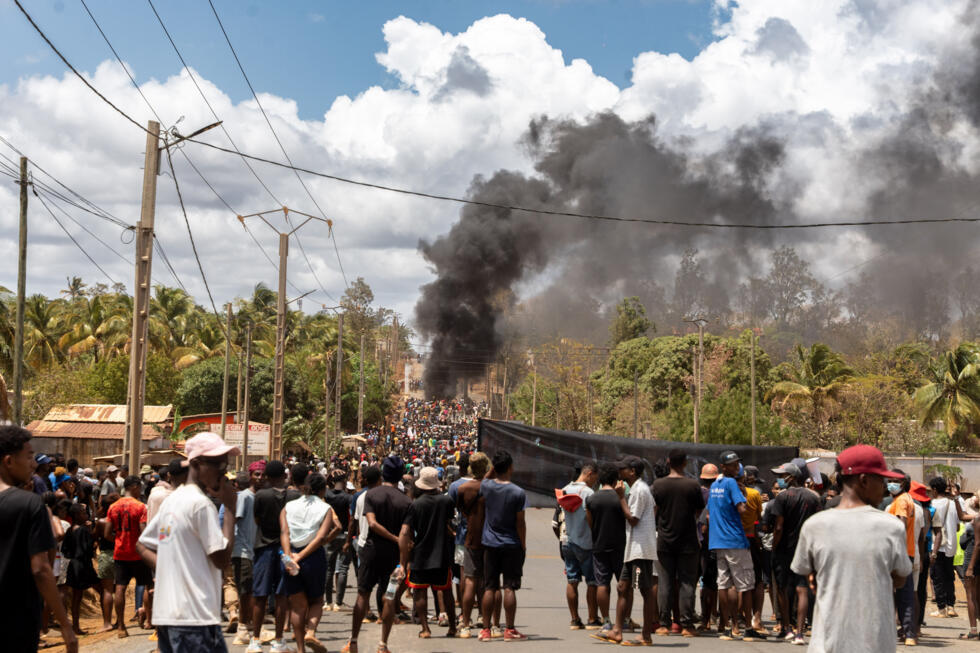
The protests were sparked by public anger over constant water and power cuts
© FITA / AFP
The Council of Christian Churches in Madagascar, known by its Malagasy acronym FFKM and led by Catholic Archbishop Jean de Dieu Raoelison, said on Friday it was ready to mediate between the government and demonstrators.
The protests, sparked by public anger over constant water and power cuts, forced Rajoelina to sack his government on Monday but that was not enough to placate the anger.
The rallies, which began on September 25, are the latest bout of unrest in Madagascar since it gained independence from France in 1960, posing the most significant challenge to Rajoelina's tenure since his 2023 re-election.
The Council of Christian Churches in Madagascar, known by its Malagasy acronym FFKM and led by Catholic Archbishop Jean de Dieu Raoelison, said on Friday it was ready to mediate between the government and demonstrators.
The protests, sparked by public anger over constant water and power cuts, forced Rajoelina to sack his government on Monday but that was not enough to placate the anger.
The rallies, which began on September 25, are the latest bout of unrest in Madagascar since it gained independence from France in 1960, posing the most significant challenge to Rajoelina's tenure since his 2023 re-election.
Gen Z: How social media fuel this generation's global revolt
EN Gen Z thumbnail © France 24
02:18
02:18
The Gen Z movement demanded on Friday to be "consulted and heard" in the choice of a new premier and called for an investigation into the police response to the demonstrations.
"We are giving the president 24 hours to respond favourably to these demands," said the group, vowing to take "all necessary measures".
Rajoelina first came to power in 2009 following a coup sparked by an uprising that ousted former president Marc Ravalomanana.
Despite its natural resources, Madagascar remains among the world's poorest countries.
Nearly three-quarters of its population of 32 million were living below the poverty line in 2022, according to the World Bank.
Corruption is widespread. The country ranks 140th out of 180 in Transparency International's index, which ranks countries by their perceived level of public sector corruption.
(FRANCE 24 with AFP)
"We are giving the president 24 hours to respond favourably to these demands," said the group, vowing to take "all necessary measures".
Rajoelina first came to power in 2009 following a coup sparked by an uprising that ousted former president Marc Ravalomanana.
Despite its natural resources, Madagascar remains among the world's poorest countries.
Nearly three-quarters of its population of 32 million were living below the poverty line in 2022, according to the World Bank.
Corruption is widespread. The country ranks 140th out of 180 in Transparency International's index, which ranks countries by their perceived level of public sector corruption.
(FRANCE 24 with AFP)


No comments:
Post a Comment