Wednesday, December 31, 2025

'Trump is a disgrace': Gavin Newsom's press office rips into president over water bill

Ewan Gleadow
December 31, 2025
RAW STORY
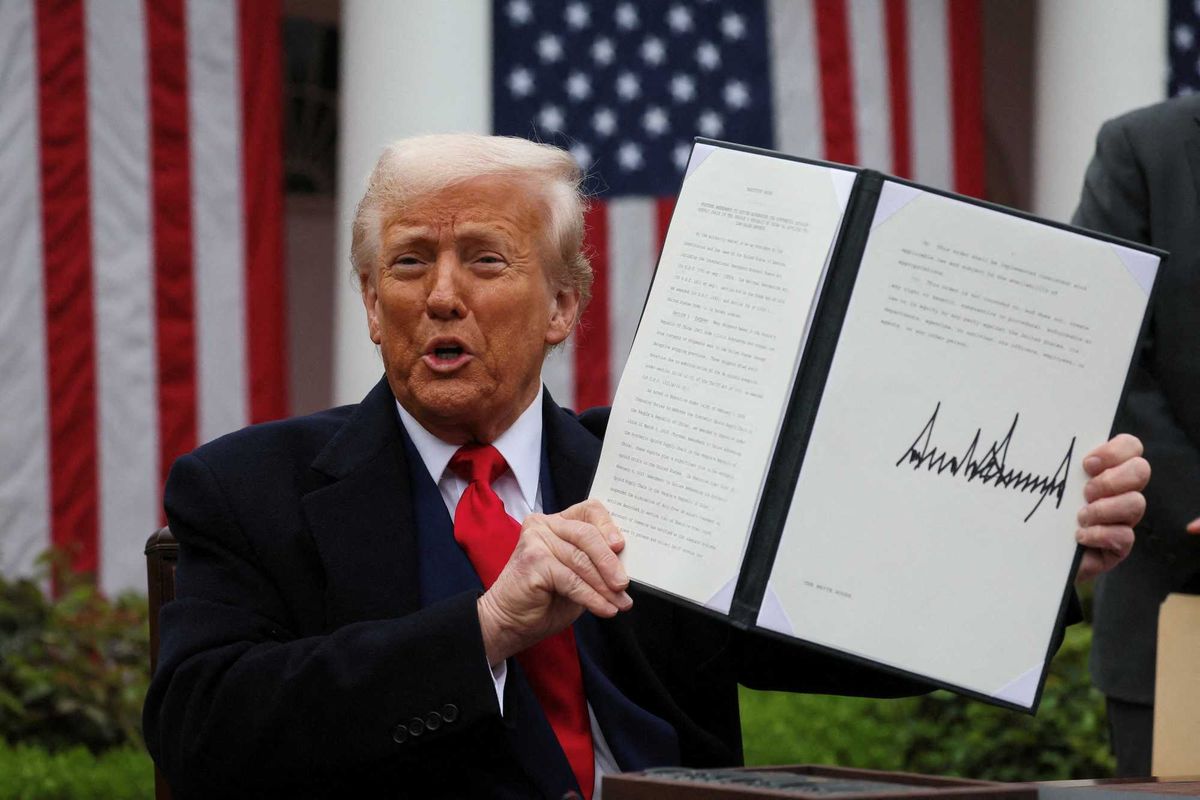

U.S. President Donald Trump holds a signed executive order on tariffs, in the Rose Garden at the White House in Washington, D.C., U.S., April 2, 2025. REUTERS/Leah Millis

Gavin Newsom's Press Office has branded Donald Trump a "disgrace" after the president vetoed a new water bill.


In a string of posts made to X, the Governor of California's official X account backed GOP representative Lauren Boebert's statement regarding a bill that, if passed, would have given clean drinking water to Southeast Colorado. A statement released by the Republican Party rep, who earlier this year challenged Trump to release the Epstein files, criticised the president and his administration for disregarding rural Americans.

Boebert's statement reads, "President Trump decided to veto a completely non-controversial, bipartisan bill that passed both the House and Senate unanimously. Why? Because nothing says 'America First' like denying clean drinking water to 50,000 people in Southeast Colorado, many of whom enthusiastically voted for him in all three elections."

"I must have missed the rally where he stood in Colorado and promised to personally derail critical water infrastructure projects. My bad, I thought the campaign was about lowering costs and cutting red tape."

"But hey, if this administration wants to make its legacy blocking projects that deliver water to rural Americans; that's on them."

Newsom's Press Office had already criticised the decision from Trump to veto the bill, with a post depicting Trump as a member of royalty shared. The image is captioned, "NO WATER FOR YOU PEASANTS, I NEED TO PUNISH YOU FOR A POLITICAL GRUDGE!"

A repost of Bobert's statement from the Press Office also added comment from the Governor of California's team. It reads, "We’re with Lauren Boebert on this one. Trump is a disgrace."

Boebert would end her statement by laying out her hopes that this was not "political retaliation" for demanding the release of the Epstein files.

She wrote, "And I sincerely hope this veto has nothing to do with political retaliation for calling out corruption and demanding accountability. Americans deserve leadership that puts people over politics."


'That's on them!' MAGA rep goes scorched earth on Trump for vetoing state's vital project

Robert Davis
December 30, 2025

RAW STORY


U.S. Rep. Lauren Boebert (R-CO) arrives at the the U.S. Capitol in Washington, D.C., U.S., March 11, 2025. REUTERS/Nathan Howard


Firebrand Colorado Rep. Lauren Boebert (R-CO) went scorched earth on President Donald Trump on Tuesday after he vetoed a water project in her state.

According to a statement Boebert's office shared with journalist Kyle Clark, the Trump administration unilaterally vetoed a "non-controversial, bipartisan bill" for a pipeline project that would have provided clean drinking water to more than 50,000 people in southeastern Colorado. Boebert questioned the timing of the move, considering that she was one of the lawmakers who crossed the aisle to vote on a petition to force Trump to release the Jeffrey Epstein files.

"Nothing says 'America First' like denying clean drinking water to 50,000 people in southeastern Colorado, many of whom enthusiastically voted for [Trump] in the last three elections," Boebert's statement reads in part.

"I must have missed the part of the rally where he stood in Colorado and promised to personally derail critical water infrastructure projects," Boebert added. "My bad, I thought the campaign was about lowering costs and cutting red tape. But hey, if this administration wants to make its legacy blocking projects that deliver water to rural Americans, that's on them."

Boebert also suggested that the veto may have been politically motivated.

"And I sincerely hope this veto has nothing to do with political retaliation for calling out corruption and demanding accountability," she said. "Americans deserve leadership that puts people over politics."


Boebert suggests Trump's veto of funding in her district is 'retaliation' for Epstein vote
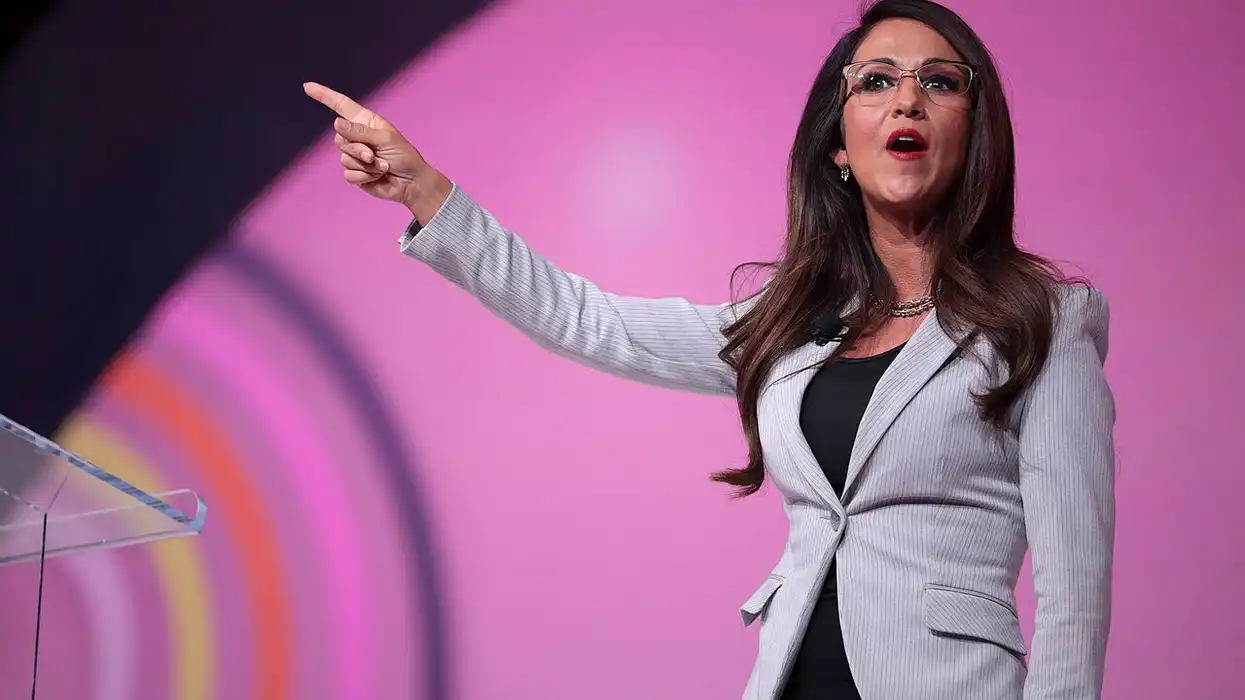

Rep. Lauren Boebert in Grapevine, Texas in June 2023 (Gage Skidmore)

December 30, 2025
ALTERNET


Rep. Lauren Boebert (R-Colo.) is accusing President Donald Trump of blocking a non-controversial water project affecting her district after the lawmaker challenged Trump to force the release of the Epstein files in November.

“… Trump decided to veto … a bipartisan bill that passed both the House and Senate unanimously. Why? Because nothing says ‘America First’ like denying clean drinking water to 50,000 people in Southeast Colorado, many of whom enthusiastically voted for him in all three elections,” Boebert said, according to Colorado news reporter Kyle Clark. “… I sincerely hope this veto has nothing to do with political retaliation for calling out corruption and demanding accountability. Americans deserve leadership that puts people over politics.”

“I thought the [Trump] campaign was about lowering costs and cutting red tape,” Boebert added.

More specifically, Trump vetoed a bill to fund a pipeline project to bring clean drinking water to communities on the Eastern Plains between Colorado’s Pueblo and Lamar cities, according to 9 News. The president’s veto of the “Finish the Arkansas Valley Conduit (AVC) Act,” which passed unanimously in the House and Senate, is Trump’s first veto of his second term.

In his veto letter, Trump wrote: "My Administration is committed to preventing American taxpayers from funding expensive and unreliable policies. Ending the massive cost of taxpayer handouts and restoring fiscal sanity is vital to economic growth and the fiscal health of the Nation."

But Colorado Democrats joined Boebert in accusing Trump of vetoing the project over petty grievance and vengeance, with Clark reporting Sen. John Hickenlooper (D-Colo.) accused the president of “playing partisan games and punishing Colorado by making rural communities suffer without clean drinking water."

Clark also reported U.S. Sen. Michael Bennet (D-Colo.) saying “This is payback because Colorado won't bend to his corruption. It's weak, it's dangerous, and it's un-American."

Social media on X blasted Boebert for not seeing the alleged betrayal coming, with one X user writing: “Another person who blindly supported the face-eating leopard is ranting now that the leopard’s eaten her face.”

“That feeling when you realize you were dating a bully,” posted another commenter on X.

Having passed unanimously, Congress could potentially override Trump’s veto should Trump’s Republican Party find the strength to defy him.

Read the 9 News report at this link.


Norway’s Magnus Carlsen wins 20th world chess title

By AFP
December 30, 2025


Norway's Magnus Carlsen has now won 20 world chess titles - Copyright AFP MAHMUD HAMS

Norway’s Magnus Carlsen, the world’s number one chess player, on Tuesday won the World Blitz Championship in Doha, days after victory in the slightly longer ‘rapid’ format, to secure his 20th world title.

Carlsen, 35, beat Uzbekistan’s Nodirbek Abdusattorov, 21, in the final, securing victory with black in the fourth and final game, after losing the first.

Blitz games are played with three minutes at the start for both players, plus an additional two seconds per move.

Carlsen almost failed to reach the semi-finals after suffering three defeats in the 19 qualifying games, finishing third in the standings.

He beat American Fabiano Caruana in the semis to take on Abdusattorov, rapid world champion in 2021.

On Sunday, Carlsen was crowned rapid world champion, where players have 15 minutes and 10 seconds added per move, finishing first in the regular standings, with the competition taking place without a final phase.

The Nordic grandmaster now has nine blitz titles, six in rapid and five in the most prestigious longer format, which involves more than 10 games between the world champion and a challenger.

Carlsen relinquished his long-format crown in 2023, citing lack of motivation. It is now held by India’s Dommaraju Gukesh.

In October, he and the International Chess Federation (FIDE) backed a new world championship format that sets the stage for his return.

The new “Total Chess World Championship Tour” will consist of four events a year and will crown one combined champion for three disciplines: fast classic, rapid and blitz.

A pilot version of the competition will be tested in the autumn of next year, with the first full season set for 2027.
Iran prosecutor pledges ‘decisive’ response if protests destabilise country


By AFP
December 31, 2025


There have been several days of protests in Iran, focused on the capital, against the tough economic conditions - Copyright FARS NEWS AGENCY/AFP HANDOUT

Iran’s prosecutor general said on Wednesday that economic protests that had gripped the country were legitimate, but any attempt to create insecurity would be met with a “decisive response”.

“Peaceful livelihood protests are part of social and understandable realities,” Mohammad Movahedi-Azad told state media after three days of protests by shopkeepers in capital Tehran, which were joined by students across the country.

“Any attempt to turn economic protests into a tool of insecurity, destruction of public property, or implementation of externally designed scenarios will inevitably be met with a legal, proportionate and decisive response.”

His comments came days after the Mossad intelligence agency of Iran’s arch-foe Israel posted on social media that it was “with you on the ground” in a message to Iranian protesters.

Posting on its Persian-language X account, the spy agency encouraged Iranians to “go out into the streets together”.

The spontaneous protests, driven by dissatisfaction at Iran’s economic stagnation and galloping hyperinflation, began on Sunday in Tehran’s largest mobile phone market where shopkeepers shuttered their businesses.

They have since built momentum, with students at 10 universities in the capital and in other cities, including Iran’s most prestigious institutions, joining in on Tuesday.

Nevertheless, the protests remain limited in number and concentrated in central Tehran, with shops elsewhere in the sprawling metropolis of 10 million people unaffected.

Iran’s economy has been in the doldrums for years, with heavy US and international sanctions over Tehran’s nuclear programme weighing heavily on it.

The currency, the rial, has also plunged in recent months, losing more than a third of its value against the US dollar since last year.


– Last-minute bank holiday –


The streets of Tehran were calm early on Wednesday, a change from the usual chaotic and choking traffic, with the authorities having announced a bank holiday with just a day’s notice.

Schools, banks and public institutions have been closed with officials saying the directive was due to the cold weather and the need to save energy.

The capital’s prestigious Beheshti and Allameh Tabataba’i universities announced that classes would be held online throughout next week for the same reason, the state-run IRNA news agency reported.

The authorities have not linked the bank holiday to the protests. Tehran is experiencing daytime temperatures in the low single digits, which is not unusual for the time of year.

Weekends in Iran begin on Thursdays, while this Saturday marks a long-standing national holiday.

Iran is no stranger to nationwide protests, but the latest demonstrations have not come close to the last major outbreak in 2022 triggered by the death in custody of Mahsa Amini, a young Iranian woman.

Her death in custody after being arrested for allegedly violating the strict dress code for women sparked a wave of anger across the country.

Several hundred people were killed, including dozens of members of the security forces.

There were also widespread protests in 2019, sparked by a sharp increase in the price of petrol.
Regional temperature records broken across the world in 2025

By AFP
December 30, 2025


Globally, the last 12 months are expected to be the third hottest ever recorded after 2024 and 2023 - Copyright AFP Sergei GAPON


Valentin RAKOVSKY

Central Asia, the Sahel region and northern Europe experienced their hottest year on record in 2025, according to AFP analysis based on data from the European Copernicus programme.

Globally, the last 12 months are expected to be the third hottest ever recorded after 2024 and 2023, according to the provisional data, which will be confirmed by Copernicus in its annual report in early January.

But the average, which includes land and oceans, masks overall records for certain parts of the world.

Many poorer nations do not publish detailed climate data, so AFP has completed the global picture by independently analysing Copernicus data from climate models, measurements from about 20 satellites, and weather stations.

The data spans the whole world, hour by hour, since 1970.

Here is what the detailed analysis revealed for 2025, during which 120 monthly temperature records were broken in more than 70 countries.


– Records shattered in C.Asia –


Every country in Central Asia broke its annual temperature records.

Landlocked, mountainous Tajikistan, where only 41 percent of the population has access to safe drinking water, saw the highest abnormal temperatures in the world, at more than 3C above its seasonal averages from 1981 to 2010.

Monthly temperature records have been broken every month since May, with the exception of November.

Neighbouring countries such as Kazakhstan, Iran and Uzbekistan experienced temperatures 2C to 3C above the seasonal average.


– Up to 1.5C hotter in the Sahel –


Temperature records were beaten in several countries in the Sahel and west Africa.

Mali, Niger, Nigeria, Burkina Faso and Chad saw a rare divergence in temperatures, notching 0.7C to 1.5C above their seasonal average.

The last 12 months were the hottest ever recorded in Nigeria, and one of the fourth hottest in the other countries.

Scientists from the World Weather Attribution (WWA) network, who assess the role of human-induced climate change in extreme weather events, wrote in their annual report published on Monday that extreme heat events “have become almost 10 times more likely since 2015”.

Countries in the Sahel — the semi-arid region of west and north-central Africa stretching from Senegal to Sudan — are among the most vulnerable to rising temperatures, with many already facing armed conflict, food insecurity and widespread poverty.


– Scorching summer in Europe-


Around 10 European countries are on the verge of, or coming close to, breaking their annual temperature record, notably due to an exceptional summer.

In Switzerland and several Balkan countries, summer temperatures were 2C and even 3C above their seasonal average.

Spain, Portugal and Britain also recorded their worst summer on record, with extreme heat fuelling massive wildfires.

The driest spring in more than a century led to a UK water shortage.

Northern Europe was largely spared the heatwave that hit Europe at the end of June but it instead experienced an abnormally warm autumn.

The last 12 months are expected to be one of the two warmest years on record in Norway, Sweden, Finland and Iceland.
Global ‘fragmentation’ fuelling world’s crises: UN refugee chief


By AFP
December 30, 2025


Filippo Grandi is leaving his post after 10 years as the United Nations High Commissioner for Refugees - Copyright AFP Fabrice COFFRINI


Nina LARSON

The outgoing United Nations refugee chief fears an increasingly fragmented world is fuelling global conflicts and crises, and inflaming hostility towards people desperately fleeing for safety.

Reflecting on his decade at the helm of the UNHCR, Filippo Grandi told AFP that one of the most worrying developments had been how divisions had left the world seemingly incapable of resolving conflicts — and increasingly unwilling to deal with the repercussions.

“This fragmentation of geopolitics that has caused the emergence of so many crises is perhaps the most worrying thing,” the Italian diplomat said in his final interview as UN High Commissioner for Refugees.

“This world is unable to make peace; has become totally unable to make peace.”

Grandi meanwhile lamented a “race to the bottom” in terms of countries tightening laws and practices to keep asylum seekers and refugees out.

He noted “a growing hostility, a rhetoric by the populist politicians targeting and scapegoating people on the move”.


– ‘Horrifying violations’ –


Speaking at UNHCR’s Geneva headquarters a day before the end of his tenure, Grandi said he had been inspired over the past decade by how regular people worldwide showed kindness and hospitality to people on the move.

“In spite of all the politics, in spite of the real challenges that these movements represent,” he said, there is still a “deeply entrenched sense that if somebody flees from danger, one has the responsibility to help”.

He also highlighted inspiring moments, including in 2021 when he witnessed former Colombian president Ivan Duque grant legal status to 1.7 million Venezuelans.

And more recently, “at the border between Lebanon and Syria and talking to people who had made the choice to go back just a few weeks after the fall of the Assad regime”.

But the exhilaration felt in such moments had been matched by the “anger and profound sadness” felt in others.

“The worst is always when you witness an exodus that is caused by the most horrifying violations of human rights,” he said, pointing to Myanmar and Sudan.

On Thursday, Grandi, 68, will be handing over the UNHCR reins to Barham Salih, 65, Iraq’s president from 2018 to 2022, who was once a refugee himself.

“He will be an excellent leader for this organisation,” Grandi said, adding though that he had warned Salih: “It will be tough”.


– ‘Very painful’ –


Grandi acknowledged it was “very painful” to be leaving when his agency is going through a profound crisis.

The UNHCR, like many other UN agencies, has been clobbered by international aid cuts since US President Donald Trump returned to office in January, and numerous other leading donors have also tightened their purse-strings.

The deep cuts have forced the agency to reduce aid and shutter services — at a time when global displacement is surging.

In June, the UNHCR estimated that more than 117 million people have fled from their homes — a figure that has nearly doubled in the past decade.

“We had to reduce the organisation by about a third,” Grandi said, adding that “even more painful” was that the agency “had to reduce what we deliver to refugees, to displaced people, to stateless people around the world significantly”.

Washington, traditionally the UN’s biggest donor, has branded the United Nations bloated and inefficient, and on Monday warned its agencies to “adapt, shrink or die”.

Grandi said reforms could be beneficial but fears that the current “criticism of multilateralism and the UN focuses on the wrong target”.

“States need institutions that help them work together,” he said, warning that the very concept of international cooperation appeared to be evaporating.

“What worries me most is this ‘my country first’ rhetoric,” he said, stressing: “It’s not just Washington — it’s global”.

“When that slogan is applied to international challenges, it is weak.”

Grandi insisted that “no country can do any of this alone, not even the United States”.

“The challenges will hit us all, including those countries first… We need to work together.”
Trump v ‘Obamacare’: US health costs set to soar for millions in 2026


By AFP
December 30, 2025


More than 20 million Americans from lower and middle-income brackets are facing a significant increase in the cost of their health insurance in 2026 - Copyright GETTY IMAGES NORTH AMERICA/AFP CHIP SOMODEVILLA


Charlotte CAUSIT

Iowa farmer Aaron Lehman was already paying a hefty price for health insurance, but his premium is set to skyrocket in January when major government subsidies expire, after US President Donald Trump’s Republican party declined to extend them.

That imminent change to the “Obamacare” health insurance program means that Lehman, 58, a fifth-generation grain farmer in the US Midwest, may have to postpone improvements in his farm.

“My wife and I have been paying about $500. We’re anticipating to go to about $1,300 a month,” Lehman, who is president of the Iowa Farmers Union, told AFP. “It’s more than double.”

More than 20 million Americans from lower and middle-income brackets are facing a significant increase in the cost of their health insurance in 2026.

The hike comes as persistent inflation weighs on households and adds to political pressure on Trump, who had promised to bring down the cost of living when he took office nearly a year ago.

“It’s pretty stressful for a lot of people,” said Audrey Horn, a 60-year-old retiree from another Midwestern state, Nebraska, that Trump comfortably won in the 2024 presidential elections. She told AFP that her monthly increase will be $300.

“Most Americans can’t afford a bill of (an) extra 300 or whatever a month on top of, you know, their mortgage… car insurance and groceries,” she said.

– Dipping into savings –

For their first payment in January, Horn and her husband will be tapping into some of her retirement savings. Her husband works for a small construction company where he is paid by the hour and doesn’t get health insurance.

“Next year, we probably won’t be going out to eat as much. We don’t go out to eat as much anyway,” Horn said, adding, “And I’m going to keep driving my old 2008 Honda for a few more years.”

Created in 2010 under then President Barack Obama, so-called Obamacare allowed millions more people to access health coverage. The program included financial aid, which was expanded and strengthened during the Covid-19 pandemic. It is this temporary boost that is now coming to an end.

This issue was at the heart of the budget standoff between Republicans and opposition Democrats in October and November that led to a 43-day shutdown of the federal government.

The Democrats demanded the extension of the enhanced subsidies, which the Republicans opposed, arguing it was too expensive for taxpayers, subject to abuse, and failed to control the rising cost of health insurance.

“It is frustrating to me that that these subsidies were cut in order to make tax breaks for billionaires,” said Andrea Deutsch, 58, owner of a pet supply store in Pennsylvania, referring to the Trump-backed legislation that Congress eventually passed.

– ‘Largest rollback in health coverage’ –

Deutsch, who has suffered from type one diabetes since childhood, said that Obamacare was life-changing as it mandated that insurance companies provide coverage to people with pre-existing medical conditions. So, she’s resigned herself to paying $160 more per month for her insurance in 2026.

But others are expected to forgo insurance rather than pay much bigger premiums.

According to a government estimate, the expiration of the subsidies is expected to cause four million Americans to lose their health insurance over the next 10 years.

But Matt McGough, at the health policy think tank KFF, said there are estimates that an additional 10 million could become uninsured because of changes under the budget bill to health insurance marketplaces and the state-funded Medicaid program that serves low-income Americans.

“This is the largest rollback in health coverage in US history, certainly in modern times,” he told AFP.

He warned that could lead to increased mortality and higher health care costs for all Americans, with insured individuals paying for the unpaid bills of the uninsured.

But things could still change.

While Republicans are still refusing to extend the subsidies, they want to limit the surge in costs which will come less than a year before midterm Congressional elections.

Democrats have made the issue key to their election platform to claw back control of both houses of Congress from Republicans.

Faced with this risk, Trump has floated the idea of summoning health insurance executives to his Mar-a-Lago residence in Florida, where he is spending the holidays, “to see if they can lower prices.”


Leftist Mamdani to take over as New York mayor under Trump shadow


By AFP
December 31, 2025


New York City. The Oculus (WTC Transportation Hub). — © Digital Journal

Zohran Mamdani, young upstart of the US left, was readying Wednesday to take over as New York mayor for a term sure to see him cross swords with President Donald Trump.

After the clocks strike midnight, bringing in 2026, Mamdani will take his oath of office at an abandoned subway stop, taking the helm of the United States’ largest city. He will be New York’s first Muslim mayor.

His office says the understated venue for the oath-taking reflects his commitment to working people, after the 34-year-old Democrat campaigned on promises to address the soaring cost of living.

But it remains to be seen if Mamdani — virtually unknown a year ago — can deliver on his ambitious agenda, which envisions rent freezes, universal childcare and free public buses.

Once an election is over, “symbolism only goes so far with voters. Results begin to matter a whole lot more,” New York University lecturer John Kane said.

What Trump does could be a decisive factor.

The Republican, himself a New Yorker, has repeatedly criticized Mamdani, but the pair held surprisingly cordial talks at the White House in November.

Lincoln Mitchell, a political analyst and professor at Columbia University, said that meeting “couldn’t have gone better from Mamdani’s perspective.”

But he warned their relationship could quickly sour.

One flashpoint might be immigration raids as Trump wages an expanding crackdown on migrants across the United States.

Mamdani has vowed to protect immigrant communities.


Zohran Mamdani was born in Uganda to a family of Indian origin before moving to the United States at age seven – Copyright AFP TIMOTHY A.CLARY

Before the November vote, the president also threatened to slash federal funding for New York if it picked Mamdani, whom he called a “communist lunatic.”

The mayor-elect has said he believes Trump is a fascist.

– Block party –

Mamdani’s private swearing-in at midnight to start his four-year term will be performed by New York Attorney General Letitia James, who successfully prosecuted Trump for fraud.

A larger, ceremonial inauguration is scheduled for Thursday with speeches from left-wing allies Senator Bernie Sanders and Congresswoman Alexandria Ocasio-Cortez.

Around 4,000 ticketed guests are expected to attend the event outside City Hall.

Mamdani’s team has also organized a block party that it says will enable tens of thousands of New Yorkers to watch the ceremony at streetside viewing areas along Broadway.

The new job comes with a change of address for Mamdani as he swaps his rent-controlled apartment in the borough of Queens for the luxurious mayor’s residence in Manhattan.

Some had wondered if he would move to the official mansion given his campaigning on affordability issues. Mamdani said he is doing so mainly for security reasons.

Born in Uganda to a family of Indian origin, Mamdani moved to New York at age seven and enjoyed an elite upbringing with only a relatively brief stint in politics, becoming a member of the New York State Assembly before being elected mayor.

Compensating for his inexperience, he is surrounding himself with seasoned aides recruited from past mayors’ offices and former US president Joe Biden’s administration.

Mamdani has also opened dialogue with business leaders, some of whom predicted a massive exodus of wealthy New Yorkers if he won. Real estate leaders have debunked those claims.

As a defender of Palestinian rights, he will have to reassure the Jewish community of his inclusive leadership.

Recently, one of his hires resigned after it was revealed she had posted antisemitic tweets years ago.

Wind Power’s Lost Year May Be Setting Up a Reset in 2026

  • 2025 was a difficult year for clean energy, with major U.S. tax rollbacks and weak European auctions leading to widespread cancellations of solar, wind, and storage projects.

  • Policy adjustments are now improving the outlook for wind in 2026, as Europe raises auction price caps, reforms tender designs, accelerates permitting, and shifts toward more stable revenue models

2025 has proven to be an annus horribilis for clean energy after Trump’s One Big Beautiful Bill Act (OBBBA) rolled back major tax credits and imposed new restrictions, pressuring early-stage solar and wind energy pipelines. Indeed, a Cleanview analysis of U.S. power projects has revealed that developers have cancelled 1,891 power projects with a combined 266 GW of generation capacity in the current year, including 86,466 MW of solar power, 79,045 MW of storage and 54,328 MW of wind power projects. Meanwhile, Europe has witnessed disappointing auctions for new wind power capacity across the continent, highlighting that the industry's woes extend beyond U.S. shores. But the experts are now saying the worst could be in the rear-view mirror, with the global wind energy industry poised for an improved outlook in 2026, driven by strong demand, technological advancements and more supportive policy frameworks. Global wind power generation is set to accelerate, with renewables expected to overtake coal as the largest source of electricity globally by 2026.

In response to project cancellations and auction failures in 2024-2025, policymakers in Europe are adapting wind energy strategies through a variety of measures, most notably by increasing auction price caps and reforming auction designs to manage market risks. Other key adaptations include accelerated permitting processes, new financial incentives and a shift away from "negative bidding".

To wit, the UK government, raised the maximum strike prices for its Allocation Round 6 (AR6) Contracts for Difference (CfD) scheme in 2024 to reflect soaring supply chain costs and high interest rates. This adjustment made projects more financially viable and resulted in a more successful AR6 auction compared to the failed AR5 in 2023, which received no bids for offshore wind. Similarly, Germany and Denmark are moving away from auction designs that required developers to pay for the right to build projects (negative bidding), a practice that deterred investment, instead transitioning towards a greater use of Contracts for Difference (CfDs) which offer more stable and predictable revenue streams for developers.

Some policy makers are adjusting the allocation of risk between developers and the government. For example, in the Netherlands, rules for certain tenders were eased, reducing the required investment per site and limiting developer liability during the initial years of the permit.

A major focus is on strategic grid development to integrate the growing capacity of wind energy efficiently. Initiatives like the UK's Offshore Transmission Network Review (OTNR) and the EU's TEN-E Regulation promote coordinated, "networked" systems to reduce costs and environmental disruption. Policymakers are also focusing on accelerating the often-lengthy and bureaucratic permitting process. The EU's Renewable Energy Directive III introduced "go-to areas" with pre-assessed environmental impacts to cap permitting times for new projects at 12 months. Likewise, the UK's Offshore Wind Environmental Package is designed to cut average permitting time by 40% through better data sharing and coordinated assessments.

On the technological front, continued advancements are driving down costs and improving efficiency.  Development of advanced blade designs and larger turbines (e.g., above 15 MW class) is increasing energy capture and lowering the levelized cost of energy (LCOE). Larger turbines utilize massive rotors and longer blades to sweep a significantly greater area. This allows them to capture more wind energy at higher altitudes where winds are often stronger and more consistent, directly boosting electricity generation. Advanced blade designs incorporate sophisticated aerodynamic profiles and materials that optimize how the blades interact with the wind, maximizing the efficiency of energy conversion. Meanwhile, the integration of AI and data analytics in wind farm operations is enabling predictive maintenance, optimized performance, and integration into real-time energy markets, reducing operational costs and unplanned downtime.

Capital has not left the sector, but it has become more selective. 

Publicly traded wind-focused equities have rebounded in 2025 after a weak prior year, supported by rising electricity demand from data centers, electrification, and tighter power markets rather than by subsidy expansion alone. As of mid-year, wind-linked funds such as the First Trust Global Wind Energy ETF have outperformed broader equity benchmarks, reflecting expectations that project economics improve as auction terms reset and supply-chain pressures ease. 

At the same time, investors remain cautious, with balance-sheet strength, grid access, and contract structure increasingly determining which developers can move projects forward. Cost competitiveness remains a core support: multiple independent analyses show that new onshore wind capacity is among the lowest-cost sources of new electricity generation in many regions, often competing directly with new gas-fired power even without direct subsidies.

The recovery narrative is uneven, particularly in the United States. 

While technology and power-market fundamentals are improving, U.S. offshore wind continues to face policy uncertainty beyond subsidies and auctions. Washington has paused certain offshore wind leasing and reviews on national security grounds, introducing new risk that has nothing to do with project economics.

By Alex Kimani for Oilprice.com


U.S. Blockade Leaves $900 Million of Venezuelan Oil Stranded at Sea

  • New data suggest nearly $900 million worth of Venezuelan crude is stuck on tankers due to U.S. naval enforcement.

  • The blockade is already slowing exports, raising logistical and financial pressure on Venezuela and its allies.

  • While Chevron continues limited imports under a waiver, broader oil flows to Cuba and China are increasingly constrained.

With a two-month "quarantine" placed on Venezuelan oil by the Trump administration in a foreign policy move called "gunboat diplomacy," new data estimate that roughly $900 million worth of crude is currently loaded on tankers, unable to depart Venezuela due to the U.S. blockade.

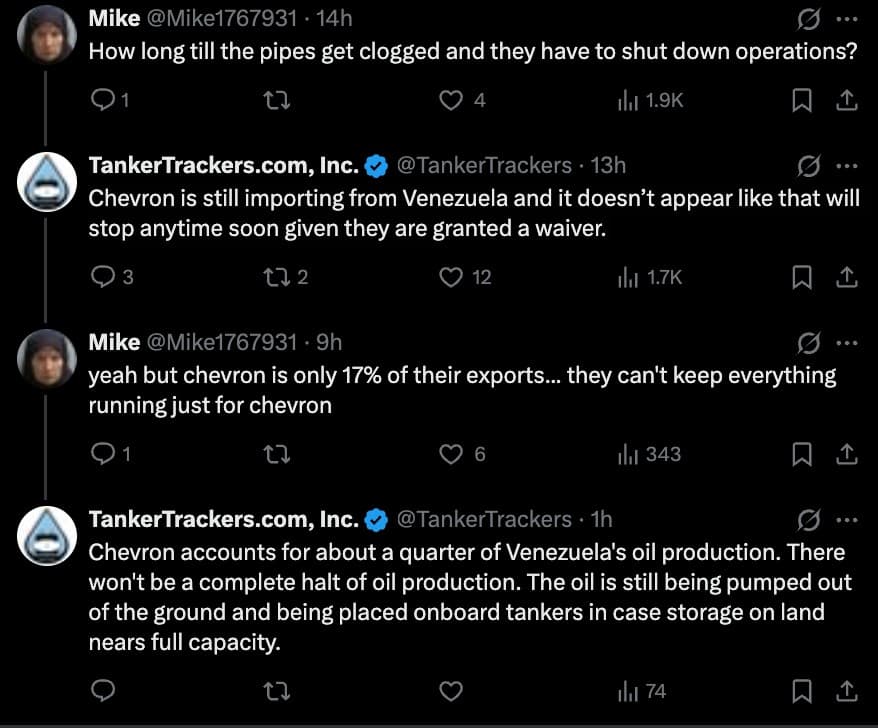
"Based on our visual analysis from both shore and space, we estimate that there are around 17.5 million barrels of crude oil floating onboard tankers in Venezuela which are unable to depart due to the ongoing US blockade," independent research Tanker Trackers wrote on X. "That's around $900M of oil."

Tanker Trackers responded to a question on X about how long it would take for land-based oil and gas operations in Venezuela to become "clogged" due to the blockade. The research firm noted, "Chevron is still importing from Venezuela, and it doesn't appear that will stop anytime soon, given they are granted a waiver."

Here's the conversation:

T

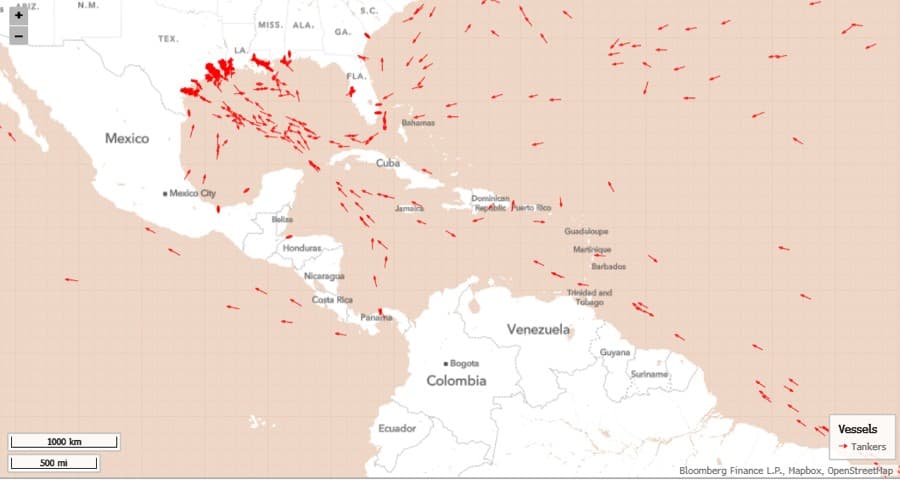
Current tankers sailing in the Caribbean with destinations to the U.S. and/or China.

Tank

Last week, the Trump administration directed U.S. military forces to enforce a two-month "quarantine" on Venezuelan oil exports, signaling ramped-up sanctions enforcement.

According to a U.S. military official cited by Reuters, while military options remain available, the near-term strategy prioritizes economic pressure through strict enforcement of sanctions to pressure Venezuela.

Operationally, the U.S. Coast Guard has intercepted two Venezuelan dark fleet tankers and forced a third to retreat into the Atlantic Basin.

Our assessment: The gunboat diplomacy posture is designed to disrupt Venezuela-Cuba-China oil flows, tighten financial pressure, and accelerate regime instability in both Caracas and Havana.

China is furious and has wargamed a potential conflict with the U.S. in the Caribbean. Okay Beijing ...

By Zerohedge

Where are The World's Rare Earth Minerals Located?

Rare earth elements (REEs) are the backbone of modern technology, from EV motors and wind turbines to smartphones and precision-guided systems.

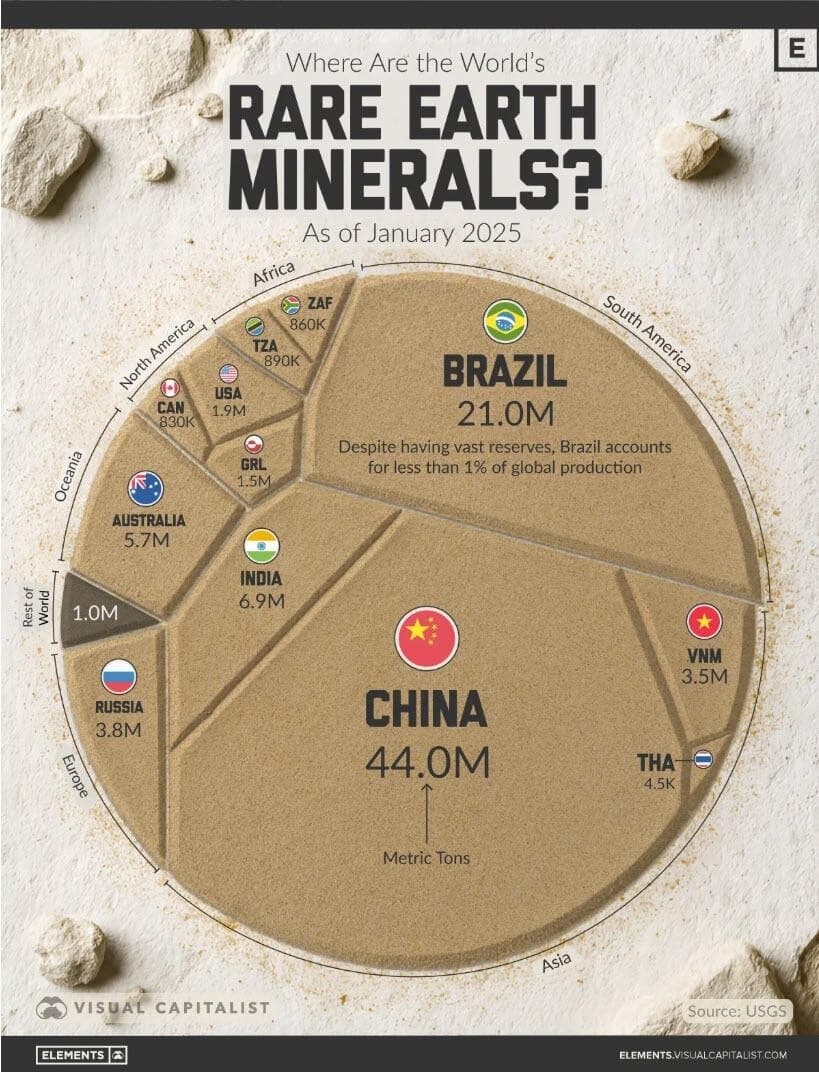
This map, via Visual Capitalist's Bruno Venditti, breaks down where the world’s known rare earth reserves are located in 2025, highlighting how concentrated they are across a handful of countries.

The data for this visualization comes from the U.S. Geological Survey (USGS).

The distribution is highly uneven. China alone holds nearly half of the global total, followed by Brazil’s sizable deposits. By contrast, many advanced economies have limited reserves.

A Heavily Concentrated Reserve Base

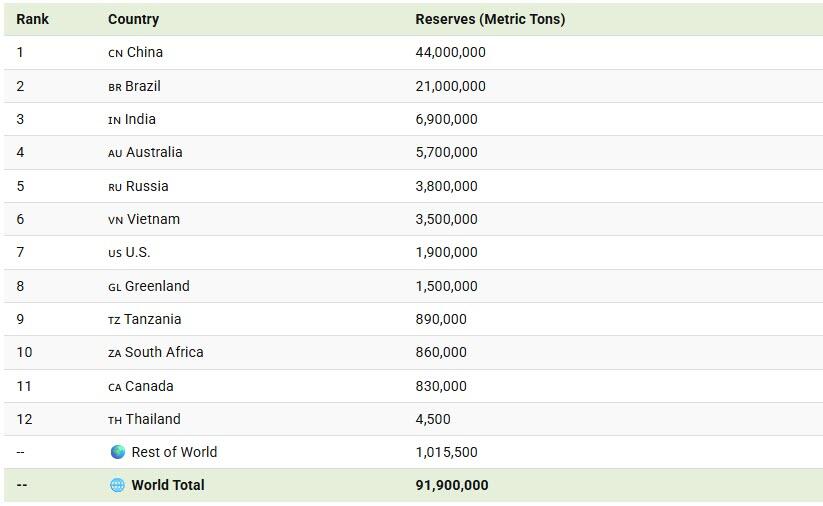
China leads with 44.0 million metric tons, about 48% of the world total of 91.9 million metric tons. Brazil is a clear second at 21.0 million tons (23%), reflecting large ionic clay and hard-rock deposits that are still early in development.

India (6.9 million tons) and Australia (5.7 million tons) round out the top tier, while Russia (3.8 million tons) and Vietnam (3.5 million tons) are also ahead of the United States. Together, the top six countries account for roughly four-fifths of known reserves.

Advanced Economies: Small Shares, Big Demand

The United States holds just 1.9 million metric tons of rare earths (2%), underscoring its reliance on trade and midstream processing to secure supply. In recent months, the Trump administration has sought to reduce U.S. dependence on Chinese materials by funding domestic mining projects, streamlining permits, and partnering with allies to diversify supply chains.

In October, President Trump and President Xi Jinping agreed to reduce tariffs in exchange for China maintaining the flow of rare earth exports.

Emerging Players

Canada (0.83 million tons) and the EU-adjacent Greenland (1.5 million tons) have meaningful but smaller bases.

Africa and the Arctic feature emerging sources: Tanzania (0.89 million tons) and South Africa (0.86 million tons) join Greenland as potential growth nodes if infrastructure and processing scale.

By Zerohedge.com