Benchmarking on Decarbonization Finds Progress and Areas for Improvement
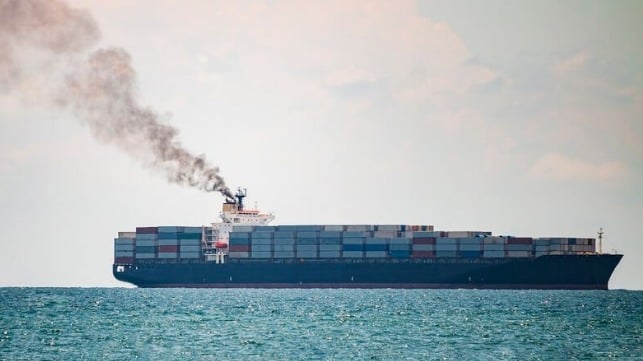
The Getting to Zero Coalition, a non-profit focusing on decarbonization of the maritime industry, released its first benchmarking as a tool to assess and document the collective actions of members. While saying its goal is to increase transparency, promote collective accountability, and inspire actions, it shows that the industry has just begun to address the challenges that lie ahead.
Formed in 2019, the group today has over 200 members, including leaders across the industry, governments, and non-governmental agencies. It received 76 responses from companies and used that to formulate its benchmark. It believes some clear trends have already begun to emerge in the first year’s data and that the value of the benchmark expands over time.
“A general picture emerges of a Coalition that is grappling with many of the same challenges faced by the wider sector,” they write in the conclusions to the report. They identified a total of 26 actions and measured progress in broad areas ranging from creating enabling conditions to incentives in areas from finance to policy and operations, efforts by first moves, transitional investments, and the deployment of zero-emission shipping.
Among the key challenges that they found are shared across the industry is a lack of clarity around the IMO’s forthcoming mid-term measures and how they will impact the business case for investments. It also points to uncertainty about the relative competitiveness of various fuel pathways and the challenges of connecting future supply and demand for zero-emission fuels and shipping services.
They found that members are “stepping up” by promoting enabling conditions. They highlighted efforts at target-setting, advocacy for strong decarbonization policies, and improving emissions' transparency. The report concludes that “members are embracing their roles as leaders in the sector.”
It, however, finds that “progress remains weak” in efforts such as green premium-based offerings and green shipping corridors. They note these efforts are designed to overcome policy and economic uncertainties by supporting strategic commitments and providing risk and cost-sharing. Yet, while companies are involved in these efforts, they find that activities “remain at an exploratory level, and more needs to be done to deliver on the promise of these first-mover efforts.”
Among the five broad categories, it finds the most progress with creating enabling conditions (58 percent) followed by incentives and market-making (42 percent). First move efforts, mostly limited to demonstration projects and infrastructure efforts, transitional investments, and deployment of zero-emission shipping, each score between 23 and 26 percent.
It ranks the strongest progress with elements such as reporting and transparency, as well as pilot projects. Efforts such as zero-emission refits and commercializing zero-emission shipping services gained the lowest scores, under 10 percent.
It calls for the industry to focus on long-term transition planning for 2035 and beyond and to leverage best practices through knowledge sharing. It also recommends exploring and participating in innovative commercial arrangements to spread the costs and risks of the transition.
Governments are encouraged to strengthen international regulations by adopting predictable and reliable measures. They also call for implementing national incentives and infrastructure investments and highlight the need to develop national hydrogen strategies.
The Getting to Zero Coalition released the 2025 report online. It highlights that a clearer picture will emerge as year-on-year data becomes available, but says it can be a key tool to shape policy and incentivize the industry and policymakers.
Study Quantifies Net GHG Emissions Savings From Onboard Carbon Capture
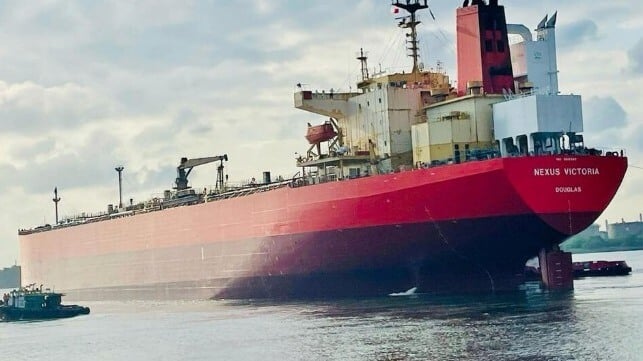
The Global Centre for Maritime Decarbonisation (GCMD) based in Singapore released what it believes is the first comprehensive study looking at the emissions savings and costs associated with the use of onboard carbon capture and storage systems. The center notes that while life cycle assessments are available for onshore carbon capture technologies, assessments of the overall GHG emissions from deploying these solutions onboard vessels across the associated value chains are limited. It hopes the results of its new study will provide shipowners with valuable information as they consider incorporating the technology into their planning.
The study, named COLOSSUS (Carbon capture, offloading, onshore storage, utilization, and permanent storage), provides an in-depth analysis of GHG emissions and costs associated with OCCS across the entire carbon value chain, accounting for emissions from fuel production, transport, and use, to CO2 capture onboard the vessel and its final disposition. The study explored five OCCS technologies, with six marine fuel options, and three post-capture scenarios.
The key findings illustrated some encouraging potential for ship owners with for example a base finding of a 29 percent savings well-to-wake in GHG emissions for a vessel burning heavy fuel oil (HFO) using the most developed of the OCCS technologies (monoethanolamine (MEA)-based OCCS). This is considered to be the most mature of the technologies.
The savings can be expanded by replacing HFO with biofuels. For example, bio-LNG and biodiesel from used cooking oil combined with OCCS they found could produce reductions of 69 to 121 percent well-to-wake.
Among the post-capture scenarios evaluated, using the captured CO2 in concrete they reported is most effective. This approach can increase GHG emissions savings from 29 to 60 percent across the carbon value chain by partially displacing the need for carbon-intensive cement in applications ashore. Captured CO2 they also reported can be used to produce e-methanol with renewable electricity, allowing the vessel that consumes this e-methanol to claim a 17 percent GHG emissions savings.
Post-capture transport and permanent storage of CO2 they also reported add minimal emissions, approximately 1 percent to the WtW emissions of a vessel deploying MEA-based OCCS when the captured CO2 is transported 1,000 km. They also concluded that the cost of avoided carbon for OCCS with permanent storage is between $269 to $405/tCO2 for a 40 percent gross capture on an MR tanker.
The results also show a potential pathway for extending the economic life of current in-service vessels. They highlight that an HFO-fueled ship adopting MEA-based OCCS at 40 percent gross capture can, on a WtW basis, maintain an equivalent GFI below the direct compliance target until 2032. Similarly, LNG-fueled ships equipped with the same OCCS can maintain an equivalent GFI below the direct compliance target until 2035. Further, when fossil fuels are completely replaced by their bio-counterparts, OCCS can lower the GFI enough for the ship to be compliant with the more stringent 2040 targets.
“As we face an increasing array of decarbonization solutions spanning different industries and value chains, coupled with the challenges of quantifying and elucidating carbon flows from source to sink including its re-use, there is a pressing need for a comparable means to understand their net abatement impact,” said Professor Lynn Loo, CEO of GCMD. “We hope this LCA (life cycle assessment) study for OCCS provides a foundation for the comprehensive understanding needed to shape robust regulatory frameworks surrounding OCCS and supports decision makers in making informed, value chain-based decisions.”
The Center notes that while the recently articulated GHG Fuel Intensity (GFI) framework does not explicitly specify how emissions reduction from OCCS is taken into consideration, they believe the study offers a structured basis for assessing the solution’s potential in helping shipowners and operators manage their emissions' portfolio.

No comments:
Post a Comment