MAY 7, 2025

FILE PHOTO: An LNG tanker is guided by tug boats at the Cheniere Sabine Pass LNG export unit in Cameron Parish, Louisiana, U.S., April 14, 2022. REUTERS/Marcy de Luna/File Photo© Thomson Reuters
By Lisa Baertlein and Jarrett Renshaw
LOS ANGELES/WASHINGTON (Reuters) -U.S. energy groups are asking President Donald Trump's administration to exempt liquefied natural gas tankers from a new rule that will require producers to move an increasing percentage of their exports on U.S.-built vessels as part of a broader push to revive domestic shipbuilding
The U.S. is the world's No. 1 LNG exporter at $34 billion annually and the Trump administration has been a supporter of the industry in his push for energy dominance.
In a move that shocked the industry, the U.S. Trade Representative (USTR) announced April 17 that LNG producers would have to transport 1% of their exports on U.S.-built ships starting in April 2028. That percentage would escalate to 15% in April 2047 and beyond.
That could put the U.S. LNG industry at a disadvantage to its peers around the world because there aren't enough U.S.-built ships to meet the requirement, the American Petroleum Institute (API) said in an April 23 letter to U.S. Energy Secretary Chris Wright and National Energy Dominance Council Chair Doug Burgum seen by Reuters. Burgum is also U.S. Interior Secretary.
It "risks counteracting the significant progress the Trump Administration has made towards reducing uncertainty and unleashing U.S. LNG," API CEO Mike Sommers wrote in that letter. API counts as members some of the world's largest energy companies, such as Exxon Mobil, Chevron and Cheniere Energy.
Individual exporters that do not comply could lose their export licenses, even though the percentages apply to the overall industry and to ships that exporters do not own or control, industry groups warned.
"They have little control over their ability to comply with USTR's new requirements but ultimately face the consequences of not doing so," Sommers said in the letter.
"We will continue working with USTR and the Department of Energy in support of feasible and durable policies that benefit consumers and advance American energy dominance," Aaron Padilla, API's vice president of corporate policy, told Reuters in a statement late on Tuesday.
Representatives from the USTR and White House press office did not immediately respond to requests for comment. USTR proposed the rules as part of a larger effort to counter China's growing commercial and military dominance on the high seas
There are now 792 LNG carriers in operation globally, according to shipping consultancy AXSMarine.
LNG ships from South Korea and Japan dominate that group with 703 combined. China, which aims to become a LNG tanker powerhouse, built 58. Five come from U.S. shipyards - though those 1970s-era American made vessels are laid up and not currently in use, AXSMarine said.
South Korea remains the dominant builder with 232 LNG carriers currently on order. China, while still behind, is rapidly expanding its footprint with 101 LNG carriers on order, AXS Marine said.
U.S. shipyards cannot turn out vessels fast enough to meet the USTR deadline, the Center for LNG told Reuters in a statement.
"There are no such vessels in existence today, and building them would take decades, making compliance impossible for the industry," Charlie Riedl, executive director at the Center for LNG, said in a statement on Wednesday.
The USTR requirement for 1% of LNG exports to be transported on U.S.-built vessels would require as many as five American-built ships by the end of the decade, which is not feasible, API CEO Sommers said in the letter.
That's because it would take as long as five years to build one LNG carrier at either of the two U.S. shipyards with docks long enough to build such a ship, Sommers said.
"We urge the Administration to exempt crude oil and refined product imports and exports - consistent with this Administration's approach to exempt these same products from baseline and reciprocal tariffs," Sommers wrote.
Vehicle carrier operators also hope to win relief from new rules that would levy hefty U.S. port fees on all of their foreign-built vessels. USTR also announced those unexpected rules on April 17.
(Reporting by Lisa Baertlein in Los Angeles and Jarrett Renshaw in Washington; additioanl reporting by Arathy Somasekhar in Houston; Editing by Chizu Nomiyama)
Indian Registry Continues Growth as MOL Transfers LPG Carrier
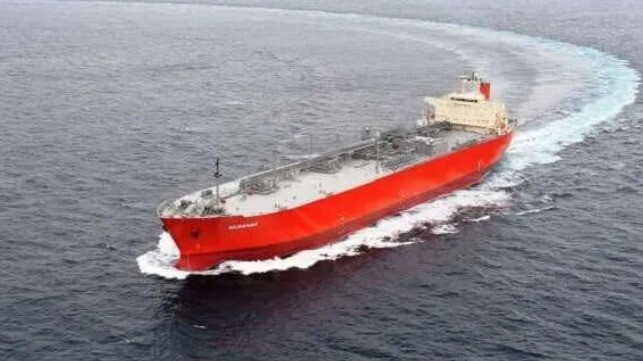
Shipping under the Indian flag is continuing to grow as international companies move ships to the registry. It comes as India seeks to become a powerhouse in international shipping, shipbuilding, and repairs.
Japan’s Mitsui O.S.K. Lines is continuing the trend by expanding its fleet under the Indian flag. According to India’s Economic Times, MOL (India) has emerged as the country’s fourth-largest ship owner. It has a fleet of 11 ships operating under the Indian flag and staffed with Indian crews as per the requirements of the flag.
In April, the company reflagged its LPG carrier Yamabuki (58,811 dwt) to India and renamed the ship Green Sachi. Built in 2010, the vessel became the eighth LPG carrier the company has flagged in India. The ship had previously been registered in Liberia. Its move followed its sister ship, which became Green Sanvi under the Indian flag in November 2024.
The company, in March, when the management was transferred to the Indian company, highlighted it as a “valuable addition significantly expands our fleet capabilities and strengthens our commitment to serving the Indian subcontinent.” They said the vessel would play a crucial role in enhancing our regional operations, providing reliable and efficient maritime transport solutions.”
India’s government the Economic Times highlights is taking steps to encourage the growth of its domestic fleet. The cabinet approved a subsidy scheme for vessels registered in India after February 2021 and budgeted a subsidy for moving crude oil, LPG, coal, and fertilizer for state-run firms on Indian ships.
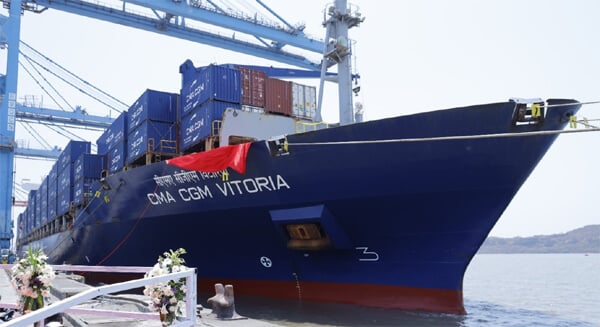
CMA CGM recently transferred the first of four containerships to the Indian flag (IRS)
Major shipping companies are responding to India as they look to increase business with the subcontinent. At the end of March, BW LPG announced it was selling two VLGCs acquired in the Avance Gas transaction, BW Pampero and BW Chinook (each 53,500 dwt), to BW LPG India. The ships are currently registered in the Marshall Islands. The deal valued each vessel at $75 million, with delivery set for the third quarter of 2025.
BW LPG India was established as a joint venture in 2017 and currently has seven ships. It reports transporting approximately 20 percent of India’s gas imports. BW cited the opportunities tied to India’s continued growth in LPG demand.
The newest arrival to the Indian ship registry is CMA CGM, which became the first major foreign carrier to reflag a containership to the Indian flag. CMA CGM Vitoria was officially transferred on April 28. The company said it will register three more vessels in the coming months in India. They highlighted that the efforts underscore CMA CGM’s commitment to India and its ambition to further develop its presence in the country.
The Indian Registry of Shipping commented that this milestone, with the transfer of the CMA CGM vessel, marks a significant achievement in IRS’s growing engagement with major global shipping companies. They said it reinforces its standing as a trusted and recognized classification society on the international stage.
Germany Adds FSRU and LNG Terminal as it Works to Manage Import Suppl
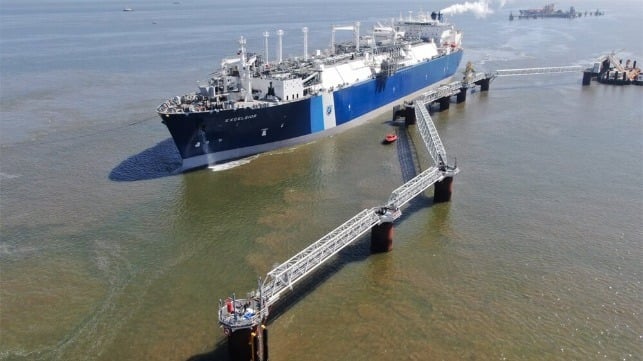
Germany’s federally owned Deutsche Energy Terminal GmbH (DET) announced the arrival of its third FSRU unit and the second to be placed in the port of Wilhelmshaven. Coming a little over two months after another German company terminated an FSRU contract in the east, the country continues to work to balance the imports of LNG and plan for the country’s long-term energy needs.
With the support of the German government, the LNG import projects were started in 2022 to replace the flow of gas from Russia after the start of the war in Ukraine. Five FSRU units were chartered with the first going to Wilhelmshaven and later ones placed at strategic points around the country. The first LNG cargo arrived in January 2023.
“This winter, we saw how quickly German natural gas storage facilities are depleting. The discontinuation of pipeline-based gas deliveries via Ukraine at the turn of the year put our European neighbors under pressure,” said Dr. Peter Röttgen, Managing Director of DET. “Past experience has shown us: As long as renewables do not yet fully cover our energy needs, a reliable natural gas supply remains crucial.”
A specially developed second terminal was built in Wilhelmshaven to support the arrival of the second FSRU unit. It is a purpose-built island jetty in the Jade Stream with the company highlighting the unique structure. While it is in the seabed of the Jade Stream, the steel structure has no physical connection to the dyke 1.5 kilometers away. It is connected to the onshore transfer station underwater via various pipelines.
“In order to reliably fill the storage facilities for next winter and keep natural gas prices as low as possible for industry, commerce, and, last but not least, households, we need the capacity of LNG terminals to strengthen the resilience of our energy supply – especially in crisis situations,” said Röttgen.
On April 28, the FSRU Excelsior reached Wilhelmshaven. The 277-meter-long Floating Storage and Regasification Unit built in 2005 and owned by the shipping company Excelerate Energy will be operated by DET. In the coming weeks, the floating regasification vessel will be connected to the long-distance gas grid and prepared for commissioning under strict safety requirements.
Wilhelmshaven02 is DET's second terminal in Wilhelmshaven and, together with Brunsbüttel, DET's third terminal. The FSRU Excelsior has a storage capacity of 138,000 cubic meters of LNG.
In 2025, the regasification ship will feed up to 1.9 billion cubic meters of natural gas into the German gas grid. This corresponds to the natural gas consumption for heating 1.5 million households in apartment buildings. In each of the two subsequent years, the regasification and grid feed-in capacity of the Excelsior will then reach up to 4.6 billion cubic meters, which is equivalent to the heating energy required by up to 3.7 million four-person households.
Deutsche ReGas in February terminated its charter for the FSRU Energos Power. The 174,000 cbm vessel had been operating since February 2024 as one of the two FSRUs on the 13.5 bcm/year Deutsche Ostsee LNG import terminal, located in the port of Mukran (Rügen Island), Germany. Reports suggested the vessel would be going to Egypt, but the 145,000 cbm FSRU Neptune which is 50 percent owned by Hoegh LNG and sub-chartered by Deutsche ReGas from TotalEnergies remained operational at the terminal in the eastern part of the country.
Data from the German Federal Network Agency (Bundesnetzagentur), highlighted that the FSRUs now represent about eight percent of the country’s LNG imports. Approximately 69 TWh of natural gas were imported via the LNG terminals in Wilhelmshaven, Brunsbüttel, Lubmin, and Mukran during the 2024-2025 season.

No comments:
Post a Comment