Japan’s Imabari Consolidates Shipbuilding for Lower Costs and Competition
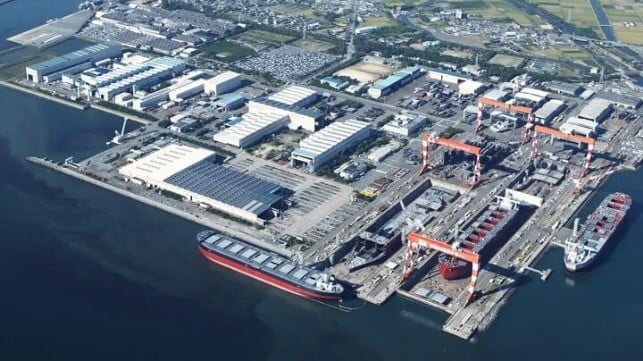
In what is seen as a strategic move aimed at strengthening Japan’s shipbuilding industry, its largest builder, Imabari Shipbuilding, will consolidate JMU (Japan Marine United) to become a fully-controlled subsidiary. Japan has been losing market share as a builder for more than two decades and now looks to leverage the emerging opportunities with the U.S. to rebuild its industry.
Imabari, which operates 10 shipyards for the construction of tankers, bulkers, and containerships, has been an investor in the smaller JMU since 2020. The companies also launched a joint venture for ship design as well as agreeing to efforts to standardize parts to increase manufacturing efficiency. Imabari is doubling its investment in JMU and will now hold 60 percent ownership of the shipbuilding group. JMU was formed in 2013 as a merger of JFE and IHI.
The companies explain the restructuring as a key competitive step. Imabari will have management control and looks to realize further economies of scale in design and material costs. They pointed to the potential cost savings for purchases, including steel and engines. JMU also adds new specializations in warships and niche categories to the combined company.
Imabari ranks as the world’s sixth largest shipbuilder producing more than 3.28 million tons annually, while JMU is ranked twelfth building about 1.4 million tons annually. The deal is drawing attention in Korea, as the combined Japanese company will surpass Hanwha Ocean to become number four globally behind HD Hyundai and Samsung Heavy Industries. China State Shipbuilding Corporation (CSSC) is the leader in shipbuilding.
Japan was once the world’s leading shipbuilder producing as much as 50 percent of the industry’s annual output into the 1990s. As competition grew from South Korea and China, Japan slipped and today is a distant third in the market to the lower-cost producers. Data from Japan’s Ministry of Land, Infrastructure and Transport showed total shipbuilding output of approximately 10 million tons in 2023, which was down 30 percent over the preceding five years.
Reports indicate that the Japanese government has involved shipbuilding as a key bargaining chip in its trade negotiations with the United States. Japanese shipyards have already performed maintenance work for the U.S. Navy, including last month Mitsubishi Heavy Industries (MHI) in Yokohama highlighted its largest project, a five-month overhaul of a USN expeditionary mobile base. With the Trump administration looking to expand U.S. shipbuilding and the Navy, and the Navy looking to increase overseas maintenance, Japan believes it has a strong opportunity in the shipbuilding sector. It also looks to benefit as the U.S. imposes fees on Chinese-built ships.
This week, it came out that Japan's conservative Liberal Democratic Party has a new proposal to address the rebuilding of the Japanese shipbuilding industry. It is calling for a $7 billion shipyard investment used to modernize the yards and adopt technologies such as automation and robots.
Civmec to Acquire Luerssen Australia Consolidating Defense Shipbuilding
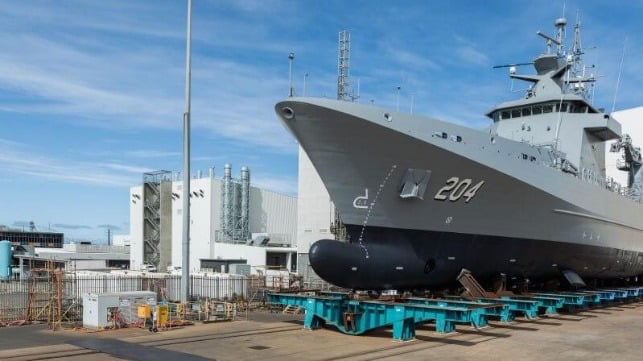
In a move designed to consolidate Australia’s defense shipbuilding industry and build sovereign capabilities, construction and engineering services company Civmec has reached terms to buy Luerssen Australia. Civmec had announced its intention to acquire the shipbuilder last October as a key move to strengthen its position in a competition for a new contract from the Australian government.
Civmec said the acquisition represents a pivotal step in its long-term strategy to strengthen its position as a sovereign Australian shipbuilder. Civmec, which has operations in Western Australia and has been working with Luerssen on offshore patrol vessels, reports it will pay A$20 million (US$13 million) and expects to complete the acquisition by July 1.
“This Acquisition enhances Civmec’s ability to deliver end-to-end naval shipbuilding solutions, from design through to commissioning, and unlocks opportunities to drive production efficiencies, accelerate delivery schedules, and secure future shipbuilding contracts. It also fast-tracks the development of Civmec’s sovereign shipbuilding capabilities,” the company said explaining the strategic rationale for the acquisition.
Luerssen Australia was launched eight years ago as a subsidiary of NVL (Naval Vessels Lürssen) of Germany to pursue the SEA 1180 contract, a program to build offshore patrol boats. NVL was selected as the preferred prime contractor and designer for the SEA 1180 Offshore Patrol Vessel program. The first two were built by BAE Systems, and four additional vessels were built by Civmec in a partnership with Luerssen Australia.
The focus on Luerssen Australia was expanded with the company reporting it specializes in the design, manufacture and servicing of yachts, naval, and coastguard vessels.
The Australian government has announced that its next major project will be the development of a new generation general purpose frigate to replace aging vessels. It is planning to order 11 vessels with the plan calling for the three lead vessels to be built internationally and eight additional vessels to be built in Western Australia.
The competition for the designer and lead for the project is reported to be between Japan’s Mogami and Germany’s Meko 200, but each would partner with a Western Australia company. The plan calls for three vessels to be built immediately in Western Australia and the five additional vessels to be built also in Western Australia with a revised design based on experience with the first ships.
Civmec says that by combining with Luerssen Australia, it will expand its experienced workforce, systems, and technical know-how. The group, which is viewed as a leading contender for the construction of the eight frigates, says that with the increased scale, its defense operations will be able to deliver five vessels over the next 3.5 years.

No comments:
Post a Comment