Fukushima Radioactive Waste Problems Metastasize
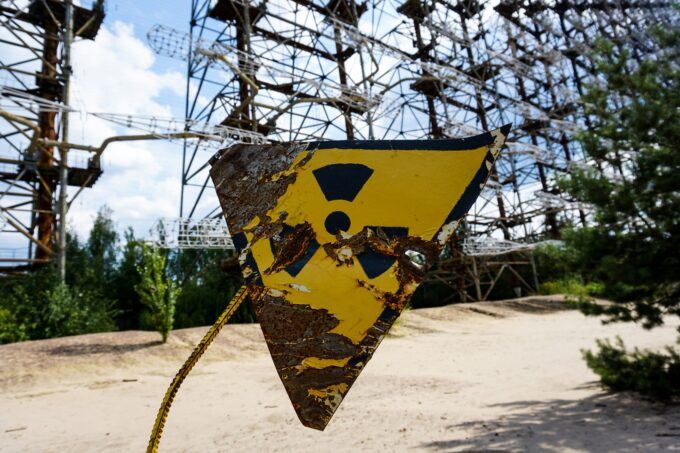
Image by Ilja Nedilko.
The Tokyo Electric Power Company, Tepco, has said that two specially designed and newly installed robots will need three years to remove 3,000 sandbags from the basements of the three destroyed nuclear reactor buildings at Fukushima-Daiichi, in Japan.
The sandbags were used in the initial, panic-driven days of the site’s triple reactor meltdowns of March 2011, when highly radioactive water gushed into the reactor basements and had to be diverted. Interesting Engineering reported that the sandbags are in areas “with lethal radiation levels” too hazardous for manual work.
The robots will be operated remotely due to the sandbags’ fierce radioactivity, because of the large bulk of the bags which weigh a total of 41 metric tonnes, and because of the chaotic wreckage inside the destroyed reactors’ basements.
The project is expected to take at least until March 2028, according to Tepco.
News reports did not specify the kind of radioactivity that contaminates the deadly sandbags, but the melted reactor No. 3 was using fuel made partially of plutonium, the most toxic material known to science, which is radioactively hazardous for 240,000 years. Deadly isotopes in addition to plutonium inside the high radiation zones too hot for humans include strontium-90, cesium-137 and -134, iodine-131, cobalt-60, carbon-14, tritium, technetium, neptunium, americium, and others.
Tepco says the deadly sandbags will be “sealed in dedicated containers” and moved to “temporary storage.” The company’s plan for long-term containment of this radioactive waste was not outlined and Tepco was not compelled by the press or the government to explain its long-term strategy.
In Tokyo, the Citizens Nuclear Information Center (CNIC) reports that the sandbags have deteriorated, and cannot be recovered with the bags intact, forcing engineers to consider pumping them out together with the basement’s stagnant water, and then enclosing it all in containers.
Waste storage systems at risk from quakes
Until at least 2027, the sandbags, in addition to tons of highly radioactive sludge produced by filtering contaminated cooling water, have to be kept in an area still at risk of flooding from potential earthquakes and tsunamis, the CNIC reported.
A March 2025 report by Japan’s Cabinet Office’s Disaster Management Working Group said that a long-predicted “mega-quake” ⸺ if it occurs, as anticipated, along the Nankai Trough off Japan’s southwest Pacific coast ⸺ would likely trigger huge tsunamis, destroy thousands of buildings, spawn mass fires, cost Japan $1.81 trillion, and potentially kill 300,000 people. Under the government report’s worst-case scenario, a magnitude-9 earthquake could see 1.23 million evacuees fleeing the area, or about 10% of its population.
The Nankai trough is where the Philippine Sea Plate is subducting under the Eurasian Plate and accumulating tectonic pressure that can snap. The magnitude 9 undersea tectonic eruption of March 11, 2011 — Japan’s worst ever recorded earthquake whose power smashed reactor foundations at Fukushima Daiichi and flooded the site with tsunami waves — moved the island of Honshu, Japan’s largest, eastward an astounding eight feet.
Japan is one of the earth’s most earthquake-prone areas, and because of Fukushima’s daily accumulation of contaminated cooling water, some 1.3 million tonnes of this highly radioactive liquid waste is held in 1,000 giant 1,000-tonne tanks near the coast. So, the sludge containers, the sandbags, and the wastewater tanks are all vulnerable to daily tremors and the dreaded mega-quake, which can potentially send much of this radioactive waste into the Pacific Ocean.
“Dirty, dangerous, and bank-busting” is so negative. Let’s call nuclear power “Clean, safe, too cheap to meter.”

By Reuters
June 26, 2025

The World Bank and the United Nations nuclear watchdog on Thursday launched a new agreement to co-operate on the safe development and financing of nuclear power for developing countries, including extending the life of existing reactors.
World Bank President Ajay Banga and International Atomic Energy Agency Director General Rafael Grossi were due to sign the memorandum of understanding in Paris that is part of the bank’s return to nuclear energy financing.
The IAEA and the World Bank said in a statement that they agreed to work together to build knowledge in the nuclear field, including expanding the World Bank Group’s understanding of nuclear safety, security, energy planning, and waste management.
The institutions also said they would work together to extend the lifespan of existing nuclear power plants as a cost-effective source of low-carbon power and accelerate the development of small modular reactors, saying that they have potential for widespread adoption in developing countries.
In prepared remarks, Banga said that reliable baseload power provided by nuclear energy was essential for job-generating sectors such as infrastructure, agribusiness, health care, tourism and manufacturing.
“Jobs need electricity. So do factories, hospitals, schools, and water systems. And as demand surges — with AI and development alike — we must help countries deliver reliable, affordable power,” Banga said.
“That’s why we’re embracing nuclear energy as part of the solution — and re-embracing it as part of the mix the World Bank Group can offer developing countries to achieve their ambitions.”
Grossi said that the “landmark” agreement was “a sign of the world’s return to realism on nuclear power” and would open the door for other multilateral development banks and private investors to consider nuclear power as a viable tool for energy security.
He called the partnership a “crucial first step” to clearing the financing path for small modular reactor technology, which has the potential to cleanly power developing economies.
Reporting by David Lawder; Editing by Saad Sayeed, Reuters
Centrica Eyes Major Stake in UK Nuclear Power Project

Centrica, the owner of British Gas, is prepared to take a 15% stake in the UK’s Sizewell C nuclear power plant project, the final investment decision on which is expected shortly, the Financial Times reported on Friday, quoting sources with knowledge of the talks.
Sizewell C was initially proposed years ago by France’s EDF and China General Nuclear Power Group. However, the UK government bought out the Chinese group’s stake in 2022 amid concerns about China’s influence, and is now a shareholder with 84%, with EDF owning the remainder.
Sizewell C is the first British-owned nuclear power station to be announced in over three decades, with the government currently as a majority shareholder alongside EDF.
The UK government has already committed billions of UK pounds of investment in Sizewell C on the Suffolk Coast in east England, including $19.5 billion (£14.2 billion) announced earlier this month to support the project, which is estimated to cost a total of about three times more.
Now the current shareholders and potential new investors aim to reach a final investment decision on the project before July 21, the beginning of Parliament’s recess, according to FT’s sources.
Apart from Centrica, another new shareholder could be Brookfield Asset Management, which continues to be in discussions about an investment in Sizewell C. Brookfield could be ready to take an even larger stake than the 15% which Centrica is eyeing, FT’s sources say.
A year ago, the UK regulator granted nuclear site license to Sizewell C, which was the first such license issued by the Office for Nuclear Regulation since the license granted to Hinkley Point C in 2012.
The UK has been betting big on nuclear power in recent years to boost its energy security and help each net-zero emissions by 2050.
Announcing the government’s massive $19.5 billion investment in Sizewell C this month, Energy Secretary Ed Miliband said that “We need new nuclear to deliver a golden age of clean energy abundance, because that is the only way to protect family finances, take back control of our energy, and tackle the climate crisis.”
Apart from major conventional nuclear power projects, the UK government is supporting Small Modular Reactors (SMR) technology development with competitions to unlock private finance, with a long-term ambition to bring forward one of the first SMR fleets in Europe.?
By Tsvetana Paraskova for Oilprice.com
Companies partner on AI platform to speed up nuclear deployments
Software development company Palantir Technologies Inc is partnering with The Nuclear Company to develop and deploy an AI-driven, real-time software system that they say will transform the construction of nuclear reactors.
_32620.jpg)
The companies say their Nuclear Operating System - NOS - will be the first AI-driven, real-time software system built exclusively for nuclear construction, and will transform the construction of nuclear reactors into a data-driven, predictable process to achieve on-time, on-budget nuclear construction.
NOS is the latest project in Palantir’s Warp Speed manufacturing operating system initiative to provide material resource planning enabling users to adapt and accelerate every product line according to unique constraints and objectives, in real time.
The Nuclear Company emerged from stealth mode in 2024, with plans to reduce costs and shorten development times for the construction of new US nuclear capacity by integrating proven, licensed reactor technologies with digital innovation and a design-once, build-many, methodology, leveraging AI-powered real-time construction monitoring and advanced project management to streamline deployment.
The companies say that NOS will provide schedule certainty by giving construction teams "instantaneous, context-aware guidance" adapted to real-time constraints so they can plan their work efficiently and avoid downtime. It will provide a tracked and verified supply chain, preventing shipment errors, material shortages and lost documentation, and allowing work to be prioritised or initiate backup options if delays are likely, providing cost savings.
"The future of energy security and sovereignty will be shaped by our ability to deploy advanced technologies at scale,” said Mike Gallagher, from Palantir Technologies.
The Nuclear Company's mission is to build nuclear power "fast, safe and at scale", founder and CEO Jonathan Webb said. "With Palantir, we have a technology partner who shares our sense of urgency and understands that nuclear isn’t just an energy issue - it’s a national security imperative."
Centrus reaches HALEU production milestone
The company's American Centrifuge Operating, LLC subsidiary has met the 900 kg production target for the second phase of its three-phase contract to supply the US Department of Energy with high-assay, low-enriched uranium.
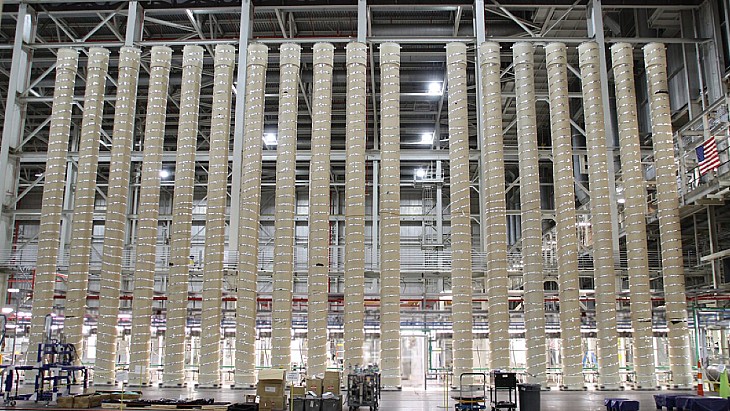
To date, Centrus has produced and delivered over 920 kg of high-assay low-enriched uranium (HALEU) under the contract. The company said it will now begin enrichment production under Phase III, for which it has earlier this month secured a contract extension for an additional year of production to 30 June 2026. The third phase also includes options for up to a further eight years of additional production: these are at the Department's sole discretion, and subject to the availability of appropriations.
HALEU fuel enriched to between 5% and 20% of the fissile uranium-235 isotope will be needed to fuel many of the advanced reactor designs that are under development, but there is currently no commercial source of the material in the USA, and the Department of Energy has been actively supporting the development of a domestic US supply chain. In 2019, it awarded Centrus a contract to licence and construct a cascade of advanced centrifuges to demonstrate HALEU production at the American Centrifuge Plant in Piketon, Ohio, and in 2022 selected the company through a competitive process for the three-phase follow-on contract to bring the cascade into production and to deliver HALEU for the DOE's use.
The material produced at Piketon will be used as part of the Department of Energy's HALEU allocation process to support the fuel qualification and testing of advanced reactor designs.
Acting Assistant Secretary for Nuclear Energy Mike Goff said the HALEU demonstration project is critical to the department's efforts to ensure there is enough HALEU material to meet the near-term needs of its industry partners as they work to bring advanced reactors into operation. "It's also an important step in rebuilding the nation's nuclear fuel supply chain as directed by President Trump's recent executive orders to expand America's Dominance agenda," he added.
"Achievement of this milestone further demonstrates the ability of our technology to deliver results for our customers and for the nation," said Centrus Energy President and CEO Amir Vexler. "As the only source of HALEU enrichment in the Western world, our product is urgently needed to power the next generation of reactors," he said, adding that the company remains focused "on the ultimate goal of expanding our capacity in Ohio so that we can meet the full range of America's commercial and national security requirements for HALEU as well as low-enriched uranium for the existing reactor fleet."
Reactor internals installed at Haiyang 4
The reactor internals have been successfully hoisted into position at unit 4 of the Haiyang nuclear power plant in China's Shandong province.
_83311.jpg)
Reactor internals are the major structures within a reactor pressure vessel that have one or more functions such as supporting the core, maintaining fuel alignment, directing primary coolant flow, providing radiation shields for the reactor vessel, and guiding in-core instrumentation.
The reactor internals for Haiyang 4 - with a total hoisting weight of about 260 tonnes - were hoisted into the unit's reactor building on 24 June in a process lasting 2 hours and 31 minutes, China National Nuclear Corporation announced.
The construction of two CAP1000 reactors - the Chinese version of the Westinghouse AP1000 - as units 3 and 4 of the Haiyang plant was approved by the country's State Council on 20 April 2022.
The first safety-related concrete was poured for the nuclear island of Haiyang unit 3 in July 2022. The reactor pressure vessel was installed in unit 3 in December 2023. Construction of Haiyang 4 began in April 2023. The two units are scheduled to be fully operational in 2027.
The 281-tonne reactor pressure vessel - which houses the internals - was hoisted by a 3,200-tonne crawler crane and placed inside the reactor building in November last year.
UK looks to robots to assist in waste management tasks
The UK's Nuclear Decommissioning Authority has announced a partnership which will see innovative technology deployed for the first time on a nuclear site to remotely and autonomously sort and segregate radioactive waste.
_56011.jpg)
The project - Auto-SAS - will be delivered jointly by AtkinsRéalis and Createc, working in partnership as ARCTEC to combine their joint experience and track record of developing automated systems and robotics in nuclear. The two companies will take learning from the solutions they developed in an earlier innovation competition to develop a system which will be deployed on the former Oldbury nuclear power plant site.
The Nuclear Decommissioning Authority (NDA) has committed to invest up to GBP9.5 million (USD13 million) in the project over four years, which is a collaboration with Nuclear Restoration Services, Sellafield Ltd and Nuclear Waste Services.
"The NDA and its operating companies recognise that robotics and automation have a key role to play in reducing the time, cost and risk associated with our decommissioning mission," the organisation said. "Auto-SAS aims to push the boundaries of robotic systems in the NDA group, acting as a stepping-stone to the routine use of autonomous systems and continuous operations."
Manual segregation of radioactive waste is complex and hazardous due to the nature of the material, so caution is exercised and where waste is mixed it is currently all categorised as intermediate-level waste or plutonium-contaminated material, rather than being sorted by type or radioactivity.
Using robotics provides the ability to use technology to more accurately categorise the waste, avoiding using more costly waste routes when they are not required, while also removing people from hazardous environments and giving them the opportunity to develop new skills.
The ARCTEC system will use a combination of sensors to categorise the waste before robotic manipulators grasp and consign waste items to the most appropriate waste route.
Auto-SAS will initially be deployed on the Oldbury site and will be used to separate low-level waste from intermediate-level waste which has been retrieved from the vaults on site - created when the power station was operational.
The project is being undertaken in two phases. Phase 1 runs from June 2025 to August 2027 and will deliver a fully operational system in an inactive environment. Phase 2 will deliver an active demonstration of the system at Oldbury.
NDA said the aim is to transfer learning to support future deployments at other NDA group sites, for example Sellafield.
"This is a hugely exciting project for us, using robotics to autonomously sort and categorise waste, and has the potential to save hundreds of millions of pounds in waste storage and disposal costs," said NDA Chief R&D Officer Melanie Brownridge. "It's a great example of collaboration across the NDA group and supply chain to develop transformative solutions to decommissioning challenges which enable us to deliver our mission safely and efficiently."
Argentina and Peru strengthen nuclear energy ties
Representatives of Argentina and Peru have signed an agreement to establish new areas of collaboration as they seek to further their long-standing ties in the field of peaceful nuclear energy.
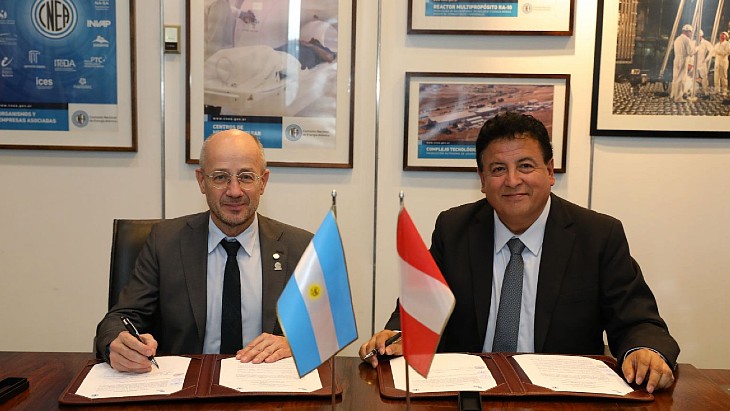
Germán Guido Lavalle, head of Argentina's National Atomic Energy Commission (CNEA), said: "Argentina maintains a long-standing and deep relationship with Peru, which also extends to the nuclear field. A significant milestone in that collaboration was our country's construction of the RP-10 research reactor, located on the outskirts of Lima. Since then, we have maintained a fruitful exchange, especially in human resource development and technical cooperation.
"The agreement we just signed renews and projects this cooperative relationship toward the challenges of the coming years."
The agreement was signed on the Peruvian side by Rolando Páucar Jáuregui from the country's Institute of Nuclear Energy (IPEN). It establishes new areas of collaboration in the development of scientific and technological research projects and in training as well as reaffirming "the commitment of the CNEA and IPEN to the use of nuclear energy as a driver of development in various fields, such as health, agriculture, and scientific research".
Argentina has exported two research reactors in the past to Peru - the RP-0 was launched in 1978 at IPEN headquarters and the RP-10, used for radioisotope production and scientific research, was launched in 1989.
Argentina currently has three operable nuclear power units - Atucha 1, connected in 1974, Atucha 2, which was connected in 2014 and Embalse which was connected to the grid in 1983. Between them they generate about 5% of the country's electricity. There had been plans for a fourth unit, as Atucha III, but it appears that has been superceded by plans for the development and deployment of a new wave of small modular reactors.
Argentina has already had an SMR in development: the CAREM SMR - the name comes from Central Argentina de Elementos Modulares - is a 32 MWe prototype and is Argentina's first domestically designed and developed nuclear power unit. First concrete was poured in 2014, but construction has since been suspended a number of times. It is currently estimated to be about two-thirds complete. With reports of funding uncertainty, a Critical Design Review was ordered for it in May last year. The country's INVAP has built several research reactors for CNEA and international customers including Peru, and is currently completing the RA-10 multipurpose research reactor in Argentina.
JEK2 spatial planning consultation being launched
Slovenia is due to begin a three month public consultation as part of the spatial planning process for proposed JEK2 new nuclear capacity at the Krško nuclear power plant.
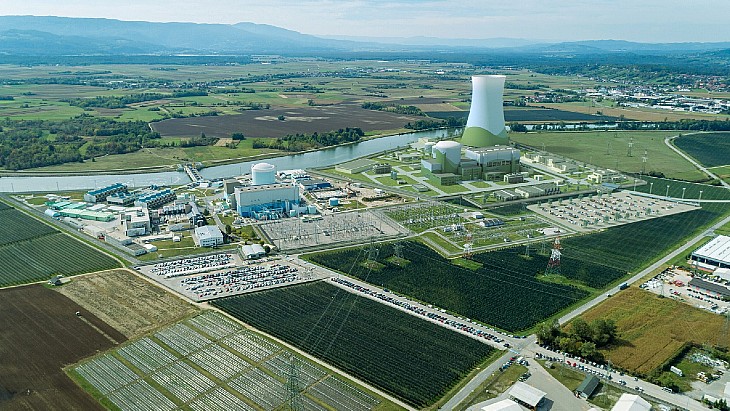
The Ministry of Natural Resources and Spatial Planning will publish the initiative for the preparation of the spatial plan for the new nuclear power plant on 1 July, kick-starting a three month process to inform the public about the proposal and enable public comment on the plan.
Nuclear operator GEN Energija submitted its proposal for the preparation of the national spatial plan for the new capacity to the Environment, Climate and Energy Ministry in October.
Environment, Climate and Energy Minister, Bojan Kumer, said: "The public announcement of the initiative ... for JEK2 represents an important milestone, as the prepared material is the result of numerous expert coordinations and is now suitable for further consideration in the broadest professional framework. This begins a process in which the public has the opportunity to familiarise themselves with the content and participate with their opinions, suggestions and comments."
State Secretary at the Ministry of Natural Resources and Spatial Planning, Miran Gajšek, said that during the process "municipalities also play an important role in this phase, submitting data from their competence and, if desired, planning guidelines".
GEN Energija CEO Dejan Paravan said that the company would carry out communication activities with stakeholders, the public and interest groups throughout the planning process and continue "throughout the construction of the power plant until the start of commercial operation [and] also during the operation phase".
The proposed new nuclear capacity is categorised as a strategic and intergenerational project of national importance. GEN Energija is to open information offices in Krško, Ljubljana, Maribor and Nova Gorica, where the public will be able to learn about the initiative. The next steps will include a cross-border environmental impact assessment.
The background
Slovenia's JEK2 project is for a new one or two-unit nuclear power plant, with up to 2400 MW capacity, next to Krško NPP which has a 696 MWe pressurised water reactor generating about one-third of the country's electricity. Krško is owned and operated by Nuklearna Elektrarna Krško, which is jointly owned by Croatia's Hrvatska elektroprivreda (HEP Group) and Slovenia's GEN Energija.
The JEK2 project team, following discussions with potential nuclear power plant providers EDF, Korea Hydro & Nuclear Power (KHNP) and Westinghouse, in May last year, estimated the cost for various reactor sizes, ranging from EUR9.314 billion (USD10.1 billion) for a 1000 MW unit, up to EUR15.371 billion for a 1650 MW unit. KHNP withdrew from the process in January, with GEN saying the decision was "based on an assessment of the current business environment and a change in their strategic business priorities".
In March it was announced that technical feasibility studies were being carried out by potential technology providers Westinghouse and EDF, with their studies due to be completed "in the third quarter of this year".
Slovenia had been due to hold a referendum on new nuclear in November, but that was called off amid a political row over how it was being conducted. Prime Minister Robert Golob said he remained committed to holding a referendum before a final investment decision is taken - which is currently due to be in 2028.

No comments:
Post a Comment