Five Crewmembers Caught Smuggling Drugs on Tanker in Zeebrugge
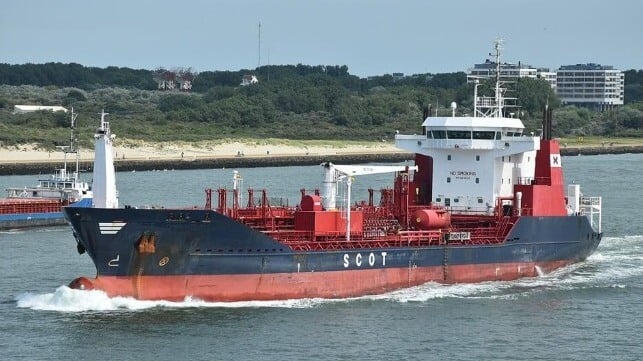
Five crewmembers from the product tanker Scot Bremen have been arrested after the vessel's master found out that they were concealing packages of narcotics, operator Scot Tankers said Thursday. The update adds new dimensions to the story of the seizure, which Belgian authorities announced earlier this week.
On Friday, Scot Bremen arrived off Ostend, Belgium on a voyage from the small port of Pecem, Brazil. She anchored to await a pilot and her entrance into port.
Two days later, the master of Scot Bremen discovered that five ratings "were concealing suspected packages" on board, Scot Tankers said in a statement. He canceled the pilot boarding, notified Belgian authorities, isolated the crewmembers, and collected their cell phones.
Weather at the time was too poor for police to come out to the anchorage and board the ship for an inspection, so the tanker waited overnight. On Monday evening, Scot Bremen navigated to the nearby port of Zeebrugge, where Belgian customs boarded her and seized "significant quantities" of cocaine.
Five members of the crew were detained by Belgian police. The master was questioned as a witness and released, and the Scot Bremen has been cleared to continue on her commercial voyage.
"Both the police and the Public Prosecutor’s office have commended the master for his conduct in reporting the matter, preserving evidences, and assisting the investigation," said Scot Tankers in a statement.
Scot Tankers arranged for replacement crewmembers to join the ship on Thursday, after which the ship will depart for its next port of call, the small town of Zelzate, Belgium. The company continues to work with Belgian authorities on the matter of the smuggling case.
In addition to the five suspects from Scot Bremen, eight men were arrested while launching a boat at a marina in nearby Blankenberge, Belgium on Sunday. Local media reports suggest that they are suspected of attempting to retrieve the cocaine from the tanker while it was off the coast. They have been held on suspicion of forming a gang while the investigation continues, according to Belgian news agency Belga.
Top image: A SCOT-8000 tanker (Niels Johannes / CC BY SA 4.0)
Belgian Police Bust Cocaine Smuggling Attempt on Product Tanker
On Monday, authorities in Belgium seized a cargo of cocaine from a small tanker - along with eight men who may have been preparing to head out to sea to pick it up.
At about 2100 hours GMT last Friday night, the Turkish-owned product tanker Scot Bremen arrived off the coast of Ostend, Belgium on a voyage from Brazil. She anchored offshore for the next three days. At about 1500 hours on Monday, she got under way once more and put into port at Zeebrugge. On her arrival, customs agents found hundreds of kilos of cocaine on board, according to local media.
The case is believed to be linked to an arrest that local police accomplished on Sunday. That night, eight men were spotted launching a boat into the water at the Blankenberge marina, roughly 15 nautical miles to the southeast of where Scot Bremen was anchored at the time. All eight men were arrested, and an investigating judge in Bruges has ordered them held on suspicion of forming a gang.
So far, prosecutors have not specifically charged them with smuggling offenses, but Belgian news agency Belga reports that the men are suspected of attempting to head out to sea to retrieve cocaine - and their arrest led to the drug intercept aboard Scot Bremen.
Scot Bremen is a 2003-built chemical tanker flagged in Malta. Formerly Wappen von Bremen, she is one of eight specially-constructed sister ships acquired in 2015 by a Turkish shipmanager. The Scot Bremen usually trades between North America, Northern Europe and the Mediterranean, but this year she made two runs to the small port of Pecem, Brazil - one call in April and one more in early June, according to AIS data provided by Pole Star.
Brazil's biggest seaports are well-known as powerhouses of the global cocaine trade; the risk of smuggling at smaller ports like Pecem is also growing, local authorities say. Focused enforcement at the main hubs may be squeezing criminal activity out into regional ports, according to Brazil's Federal Revenue Service.
"While larger port complexes such as Santos, Paranaguá, and Rio de Janeiro rank among the top exporters of cocaine . . . all Brazilian ports – regardless of their location and size – are susceptible to varying degrees to the actions of sophisticated and powerful criminal organizations," warns P&I correspondent Proinde.
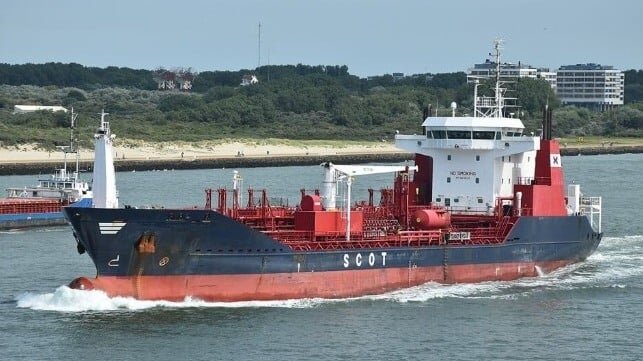
Top image: A SCOT-8000 tanker (Niels Johannes / CC BY SA 4.0)

.jpg)
No comments:
Post a Comment