Russia’s Grip Weakens In The South Caucasus, Opening Doors To New Players – Analysis
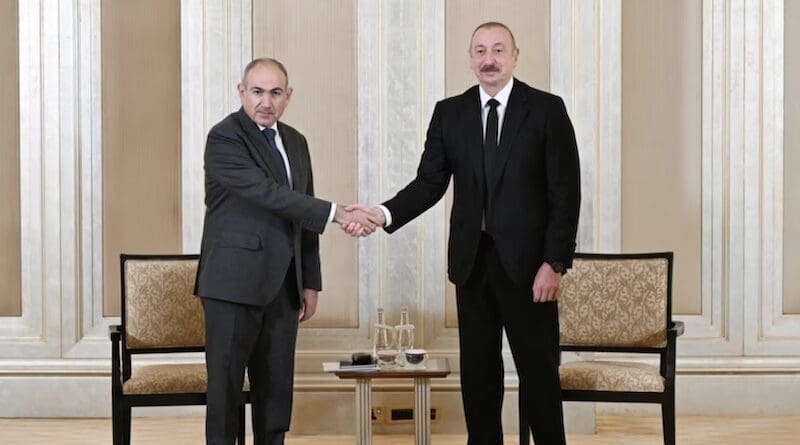
Armenia's Prime Minister Nikol Pashinian with Azerbaijan's President Ilham Aliyev in Abu Dhabi. Photo Credit: president.az
By RFE RL
By Ulviyya Asadzade
(RFE/RL) — As Russia remains preoccupied with its war in Ukraine, its influence is weakening along its southern border, particularly in Armenia and Azerbaijan.
This power shift is opening the door for other players, including Turkey, the European Union, and the United States, to expand their presence in the region, analysts told RFE/RL.
On July 10, Armenian Prime Minister Nikol Pashinian and Azerbaijani President Ilham Aliyev met in Abu Dhabi to discuss a potential peace deal, notably without any mediators — including Russia.
Although no breakthrough was reached, a joint statement reaffirmed both countries’ commitment to bilateral negotiations and continuing “confidence-building measures.”
Just five years ago, however, the dynamics were starkly different.
After a 44-day war between the two countries in 2020 over Nagorno-Karabakh — a mostly ethnic Armenian region internationally recognized as part of Azerbaijan and long at the center of the two countries’ mutual animosity — Russian President Vladimir Putin mediated a cease-fire, reinforcing Moscow’s traditional role as the region’s power broker.
But the truce has since contributed to what Rauf Mirgadirov, an analyst with the Ayna-Zerkalo newspaper in Baku, calls “a historic shift.”
“The two countries — after more than 30 years of conflict over Karabakh — are now closer to one another and distancing themselves from Russia,” he told RFE/RL. “Both want to be free from Russian influence, and this is their opportunity, as Russia is very busy with the war in Ukraine.”
Ruben Mehrabian, an analyst at the Armenian Institute of International Relations and Security, agrees that Yerevan views the current situation as a chance to loosen Moscow’s hold on the country.
“Russia wanted Armenia to remain in eternal conflict so that it could continually rescue us to justify its indefinite presence,” he said. “But Armenia wants to resolve these disputes and remove any Russian presence from our country. Now Russia doesn’t like that.”
Mounting Tensions And Accusations
In the eyes of some analysts, Yerevan’s ties with Moscow began to deteriorate in 2016 during a brief bout of hostilities between Armenia and Azerbaijan over Nagorno-Karabakh.
The conflict concluded with a Russian-brokered cease-fire and some territorial gains for Azerbaijan, fueling Armenian frustration over Moscow’s limited support for its traditional ally.
According to Richard Giragosian, founding director of the Regional Studies Center in Yerevan, this moment marked “the beginning of Armenian erosion and loss of confidence in Russia as a security partner.”
“Russia’s position and policy beginning with the 2016 war began to shift to Azerbaijan,” he said.
Relations plunged further after the 2020 conflict, when Baku regained control over Nagorno-Karabakh and Russia again failed to back Yerevan.
Recent events have highlighted how strained the bond between the two countries has grown.
On June 17, Russian-Armenian billionaire Samvel Karapetian was arrested on charges of calling for the unlawful seizure of power.
In Giragosian’s view, the arrest was “a move by the Armenian government to preempt any Russian interference” in next year’s parliamentary elections.
“But at the same time, it was more about pushing against Russian interest or influence within Armenia itself,” he added. “This man is a product of Moscow; he is widely perceived as pro-Putin.”
Just days later, on June 25, Armenian authorities arrested Archbishop Bagrat Galstanian, a prominent cleric in the Armenian Apostolic Church, accusing him of plotting to overthrow the government.
Russia responded angrily, with Foreign Minister Sergei Lavrov calling for an end to “unjustified attacks” against the church, describing it as “one of the key pillars of Armenian society.”
Armenian Foreign Minister Ararat Mirzoyan fired back, accusing Moscow of meddling in Armenia’s internal affairs.
Azerbaijan Also Turns Away From Moscow
The shifts aren’t limited to Armenia.
Relations between Baku and Moscow have also deteriorated sharply this summer.
In late June, Aliyev suspended high-level meetings, barred Russian Deputy Prime Minister Aleksei Overchuk from visiting and canceled Russian cultural events in Baku.
These actions followed the deaths of two ethnic Azeris during a police raid in Yekaterinburg, Russia, amid allegations of torture.
Russia’s Zangezur Dilemma
Five years ago, Russia had other ambitions for maintaining influence in the region — specifically through a military presence.
The 2020 cease-fire agreement signed by Russia, Armenia, and Azerbaijan called for reopening economic and transportation routes. It also stipulated that Armenia would ensure secure transit between Azerbaijan proper and its Naxcivan exclave via the so-called Zangezur corridor, with Russia’s Federal Security Service (FSB) assigned to oversee it.
“Perhaps the Zangezur corridor is Russia’s only viable option for maintaining a presence in the region,” Kirill Krivosheev, a Russian analyst at the Carnegie Foundation, told RFE/RL’s Azerbaijani Service in 2023.
However, Armenia sees the corridor as a threat to its sovereignty.
While negotiations continue, it remains unclear whether Russian FSB oversight will be part of any final deal.
In March, Pashinian said there would be no foreign deployments along the Armenia-Azerbaijan border after a treaty is signed, and the idea is also not really attractive to the Azerbaijanis either, according to Vadim Dubnov, a correspondent for RFE/RL’s Echo of the Caucasus.
Deploying FSB forces may have made sense for Azerbaijan before the Karabakh conflict was resolved,” he said. “But now, direct negotiations with Armenia — and not Russian involvement — are more beneficial to Baku.”
Control over Zangezur also ties into a larger geopolitical picture: the Middle Corridor, a route linking China to Europe and bypassing Russia.
“Zangezur is part of the Middle Corridor,” Mirgadirov explained. “Russia doesn’t just want to control Zangezur; it wants to dominate all land and air routes in the South Caucasus. But I think Turkey is well-positioned to lead regional security efforts.”
New Regional Players
While analysts agree that Russia’s influence is waning, they caution that deep economic and historical ties cannot be severed overnight.
However, since Russia’s full-scale invasion of Ukraine in 2022, this economic dependence has also begun to shift, Russian analyst Krivosheev noted in his 2023 interview with RFE/RL’s Azerbaijani Service.
“Turkey has become a key import partner for Russia. Many goods are transported via Turkey and Azerbaijan,” he said. “The Istanbul straits are vital, and Azerbaijan is now a crucial hub for Russian gas. We sell oil and gas to Azerbaijan, which then sells it to Europe. This is legal and does not violate sanctions.”
Paul Goble, senior fellow at the Jamestown Foundation, highlighted Azerbaijan’s rising importance.
“Aliyev has finally realized that Moscow needs Azerbaijan at least as much as Azerbaijan needs Russia,” he said. “When you realize that the other side needs you more than you need it, that changes how you make calculations.”
Meanwhile, Yerevan is rebuilding ties with Istanbul while distancing itself from Moscow.
Long strained over the Nagorno-Karabakh conflict — in which Turkey supported Azerbaijan, closing its borders with Armenia in the 1990s — and historical grievances, relations between the two countries are cautiously improving.
In June, Pashinian visited Turkey and met President Recep Tayyip Erdoğan — the first political working visit aimed at bilateral negotiations.
“Armenia is economically dependent on Russia because most of our communication with external markets runs through Georgia to the Russian market,” said Mehrabian. “Our border with Iran is open but limited in capacity. Opening the Turkish border would allow Armenia access to European markets.”
Yet Armenia is not putting all its hopes on Turkey. Mehrabian said Yerevan is also strengthening ties with the US and EU.
“We are working with the EU and the US to elevate cooperation,” he said. “With the US, we have already signed a charter of strategic partnership. With the EU, we have passed legislation aligned with potential membership — even though we know it’s a long road ahead.”
- Ulviyya Asadzade works as a journalist in RFE/RL’s Central Newsroom. Prior to this role, she spent nearly two decades with RFE/RL’s Azerbaijani Service, where she reported extensively on corruption, human rights, and the geopolitics of the South Caucasus, Russia, Turkey, and Iran. In addition to her work with RFE/RL, Asadzade has contributed to Eurasianet.org, The Bulletin, and Caucasus Edition, covering regional politics and cross-border issues.

RFE RL
RFE/RL journalists report the news in 21 countries where a free press is banned by the government or not fully established.
Security Competition Intensifies On The Caspian – Analysis
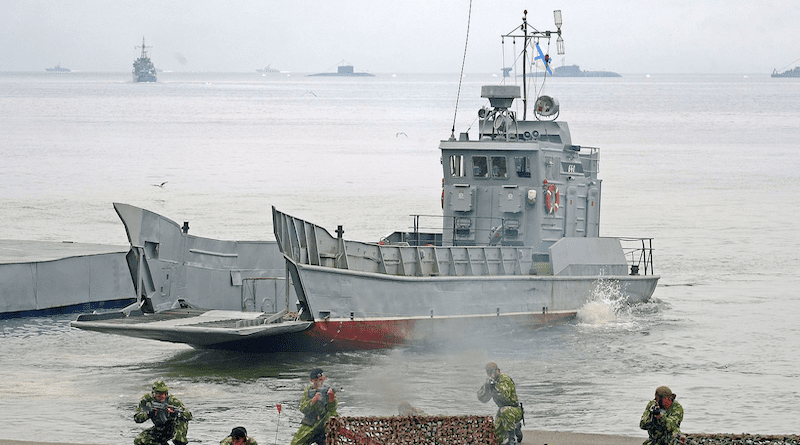
File photo of Russian Navy's Caspian Flotilla holding military drill. Photo Credit: Alex omen, Wikipedia Commons
By Paul Goble
The Caspian Sea is rapidly ceasing to be a Russian lake. The other littoral countries have grown their navies and increased cooperation amongst themselves, upending the Russian Flotilla’s preeminence in the Caspian (see EDM, June 24, 2021).
Over the last few years, Azerbaijan, Kazakhstan, and Turkmenistan have all significantly expanded their fleets. The three Turkic countries bordering the Caspian are forming more security cooperation agreements and increasing their individual and collective leverage relative to Russia. Türkiye’s backing also increases the three countries’ bargaining power vis-à-vis Russia and countries, including the People’s Republic of China and the European Union, who want to use the Caspian for transit or development (Kaspiyskiy Vestnik, July 8 [1], [2]).
In a transparent effort to recover some of its former influence, Russia announced on July 14 that it will be expanding naval cooperation with Iran (Izvestiya, July 14). This announcement sets the stage for competition in the Caspian between the three Turkic countries and Türkiye, on the one hand, and Moscow and Tehran, on the other (see EDM, April 11,August 1, September 5, 2023).
The Soviet navy was the only force that mattered on the Caspian before the Soviet Union disintegrated. Since 1991, Moscow has worked hard to maintain that position, securing an agreement on territorial delimitation in 2018, which stipulated that the littoral countries would cooperate in the Caspian but not allow others to participate in naval operations (Window on Eurasia, June 23, 2018; see EDM, September 16, 2021). In the years since 2018, however, the four other littoral states have expanded their navies, with Türkiye facilitating the naval expansion of the three Turkic countries of Kazakhstan, Azerbaijan, and Turkmenistan (see EDM, August 1, September 5, 2023, January 21).
The increase in the Turkic littoral states’ naval power has intensified since Russian President Vladimir Putin’s full-scale invasion of Ukraine in 2022, and the Kremlin can no longer take their deference for granted. The three Turkic countries have expanded their ties with outside powers, most notably Azerbaijan, which earlier this year became a member of the North Atlantic Treaty Organization Maritime Security Center (NATO MARSEC), based in Türkiye (Ministry of Defense of Azerbaijan, February 25; Kaspiyskiy Vestnik, July 16).
Cooperation among the three Turkic littoral states, excluding Russian involvement, has been a significant development in the Caspian Sea in recent years. Some of this cooperation has been directed at other countries, most commonly Russia and Iran. Azerbaijan and Kazakhstan conducted joint naval maneuvers on the Caspian near the Russian border, and Azerbaijan and Turkmenistan are moving to do the same (see EDM, April 24, July 3; Caspiyskiy Vestnik, July 8). These steps have eclipsed earlier Russian efforts to promote naval cooperation among the littoral states (Vestnik Kavkaza, July 22, 2024). While relations between Russia, its neighbors, and the West have deteriorated since 2022, the three Turkic littoral countries have expanded their cooperation on the Caspian. In response, Moscow is expanding its partnership with Iran despite past friction, including when Tehran signed but did not ratify the 2018 Caspian delimitation accord (Window on Eurasia, July 22, 2022).
Azerbaijan and Kazakhstan conducted joint exercises in May and June to improve the coordination of their fleets, especially in the context of increased drone use and the need for defense against them (Kaspiyskiy Vestnik, May 19,June 18). These joint exercises build on earlier cooperations and, as a result, have attracted less attention than might otherwise be the case (see EDM, April 24, July 3). More recent developments in the naval relationships between Azerbaijan and Turkmenistan, as well as between Moscow and Tehran, may represent a more significant shift.
On July 3, Azerbaijani President Ilham Aliyev received Turkmenistan’s Foreign Minister, Rashid Meredov, to discuss a wide range of issues. Media reports focused on humanitarian discussions, but also mentioned the development of expanded protection for pipelines and oil and gas platforms on the Caspian (Kaspiyskiy Vestnik, July 8). These reports suggest that Baku and Ashgabat will use their joint naval forces to protect pipelines on the floor of the Caspian and platforms on its surface against attacks or other disruptions. Just a few years ago, Azerbaijani–Turkmen cooperation would have been unthinkable, given the bilateral disputes over oil and gas fields. Now, partnership has become essential, given the changing relationship with Russia and Iran. Ties between Azerbaijan and Turkmenistan are warming as they seek to cope with Tehran’s plans to resume oil drilling on the Caspian after a 30-year hiatus and accordingly expand Iran’s navy (Kaspiyskiy Vestnik, May 19).
Moscow and Tehran’s July decision to conduct joint naval exercises is the most dramatic recent development in the Caspian littoral region (Izvestiya, July 14). While official government spokesmen claim that the exercises will be for “search and rescue” procedures, pro-Kremlin commentators stressed that the decision to hold joint maneuvers is a response to recent attacks by Israel and the United States on Iran’s nuclear facilities (Izvestiya, July 14).
The Russian experts with whom Izvestiya spoke noted that similar joint maneuvers have been held, asserting that they are entirely normal for neighbors sharing a common sea. The analysts, however, explicitly contrasted the seriousness of the Russian–Iranian relationship with their more distant ties with the other littoral states, particularly Azerbaijan and Turkmenistan (Izvestiya, July 14).
This comparison suggests Moscow now views Iran, rather than the former Soviet republics, as its key ally in the Caspian region. This shift raises the possibility that Russia and Iran, two international outcasts, are preparing for potential clashes with the three other littoral states, which are Turkic and Türkiye-backed.
There is a very real risk of naval conflict between these two growing alliances, especially as Iran expands its economic and military presence on the Caspian. Moscow sees Tehran, rather than Baku, Ashgabat, or Astana, as its more reliable partner. This attitude could become a kind of self-fulfilling prophecy, especially if the three Turkic states believe they can rely on their growing ties to Türkiye and the West. Shifting allegiances may put another nail in the coffin of the post-Soviet order as Moscow increasingly relies on a non-Soviet country to try to keep the Turkic Caspian littoral states in line.
- This article was published at The Jamestown Foundation’s Eurasia Daily Monitor Volume: 22 Issue

Paul Goble
Paul Goble is a longtime specialist on ethnic and religious questions in Eurasia. Most recently, he was director of research and publications at the Azerbaijan Diplomatic Academy. Earlier, he served as vice dean for the social sciences and humanities at Audentes University in Tallinn and a senior research associate at the EuroCollege of the University of Tartu in Estonia. He has served in various capacities in the U.S. State Department, the Central Intelligence Agency and the International Broadcasting Bureau as well as at the Voice of America and Radio Free Europe/Radio Liberty and at the Carnegie Endowment for International Peace. Mr. Goble maintains the Window on Eurasia blog and can be contacted directly at paul.goble@gmail.com .

No comments:
Post a Comment