Shipments include essential medicines, trauma and surgical equipment, says director-general
Necva Tastan Sevinc |03.08.2025 - TRT/AA
ISTANBUL
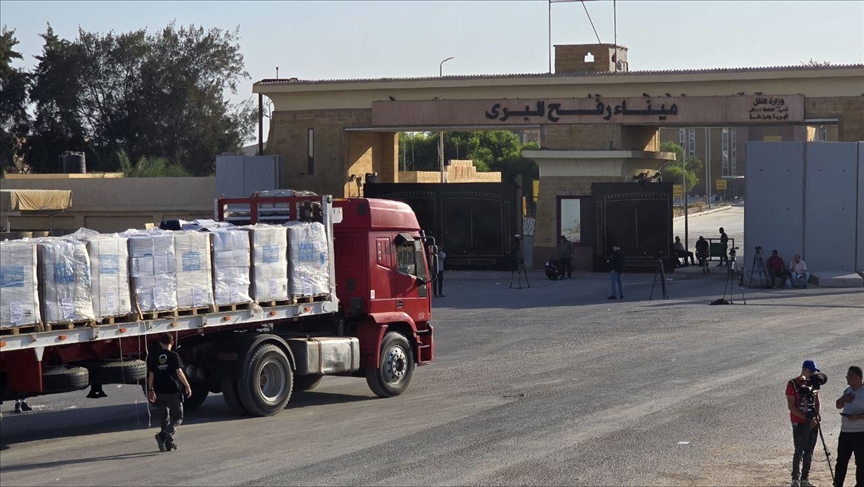
The World Health Organization (WHO) has delivered 24 trucks carrying vital medical supplies to Gaza since Friday, the agency’s Director-General Tedros Adhanom Ghebreyesus announced on Sunday.
The shipments include essential medicines, trauma and surgical equipment, treatments for non-communicable diseases, and laboratory and water testing supplies, according to Tedros.
“These items will be transported to health facilities and health partners in the coming days,” he said in a statement on X.
He expressed gratitude to the United Arab Emirates for its contribution to the latest aid delivery.
Tedros also renewed calls for the facilitation of a sustained, uninterrupted, and expanded flow of humanitarian health aid into the besieged enclave.
“We urge for the continued facilitation of a sustained, uninterrupted and scaled-up flow of health aid. Lives across Gaza depend on it,” he said.
Rejecting international calls for a ceasefire, the Israeli army has killed more than 60,400 Palestinians, most of them women and children, in Gaza since October 2023. The military campaign has destroyed the enclave, collapsed the health system and led to deaths from hunger and starvation.
Euro-Med Monitor: Israeli Occupation Destroys 97% of Livestock in Gaza
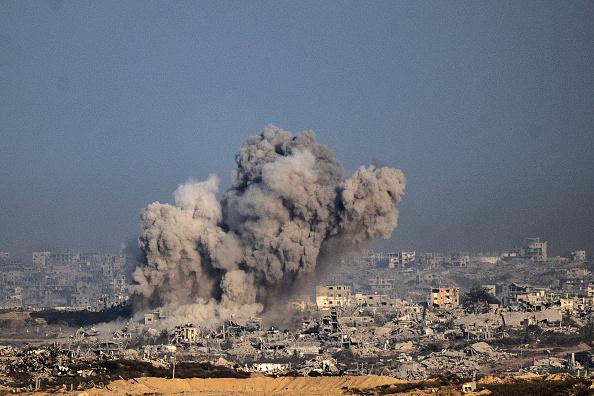
The Euro-Mediterranean Human Rights Monitor explained that the Israeli occupation authorities have caused the near-total destruction of livestock in the Gaza Strip, with losses reaching approximately 97%.
This occurred through direct bombing or systematic starvation, including the loss of working animals, which were the primary means of transportation in light of the fuel shortage and the disruption of movement.
The Euro-Med Human Rights Monitor noted in a statement issued Saturday that these policies coincided with the razing of thousands of dunams of agricultural land as part of a strategy aimed at starving the population and drying up their food resources, significantly deepening human and psychological suffering. These measures, according to the monitor, represent key components of the ongoing genocide against Palestinians in the Gaza Strip.
The Euro-Med Monitor emphasized that Israeli policies constitute a systematic pattern of genocide, imposing unbearable living conditions that inevitably lead to the physical destruction of the population through the systematic targeting of food sources and livestock and agricultural production.
This also includes the illegal blockade imposed on the Gaza Strip, the widespread killing of civilians, and the deliberate restriction of food supplies, which constitute a flagrant violation of all international laws and reflect a clear intent to eliminate the Palestinian population as a protected group under the Genocide Convention.
The statement explained that before the genocide began in October 2023, the Gaza Strip contained approximately 6,500 poultry farms, supplying three million chickens per month to the local market. Over time, according to data, more than 93% of these farms were completely destroyed, while the rest ceased operations and fell out of production.
The Euro-Med Monitor revealed that thousands of birds died as a result of direct bombing or from a lack of feed and water, in what it described as one of the largest attacks on white meat production.
Regarding the livestock sector, data showed that the Gaza Strip contained approximately 15,000 cows before the genocide, but more than 97% of them died as a result of direct killing or starvation, with a limited number slaughtered during the first months due to a lack of alternatives.
Regarding sheep and goats, statistics show that Gaza had approximately 60,000 sheep and 10,000 goats before the genocide. Current data indicates that 97% of this livestock perished as a result of direct bombardment or the tragic conditions resulting from the genocide.
The Euro-Med Monitor also explained that the number of donkeys in Gaza was approximately 20,000 before the genocide, in addition to horses and mules used as working animals. Recent estimates indicate that approximately 43% of these animals had died by August 2024, with no more than 6% remaining, representing a near-total collapse of this vital sector.
Hunger lines in Gaza: ‘Food is not enough’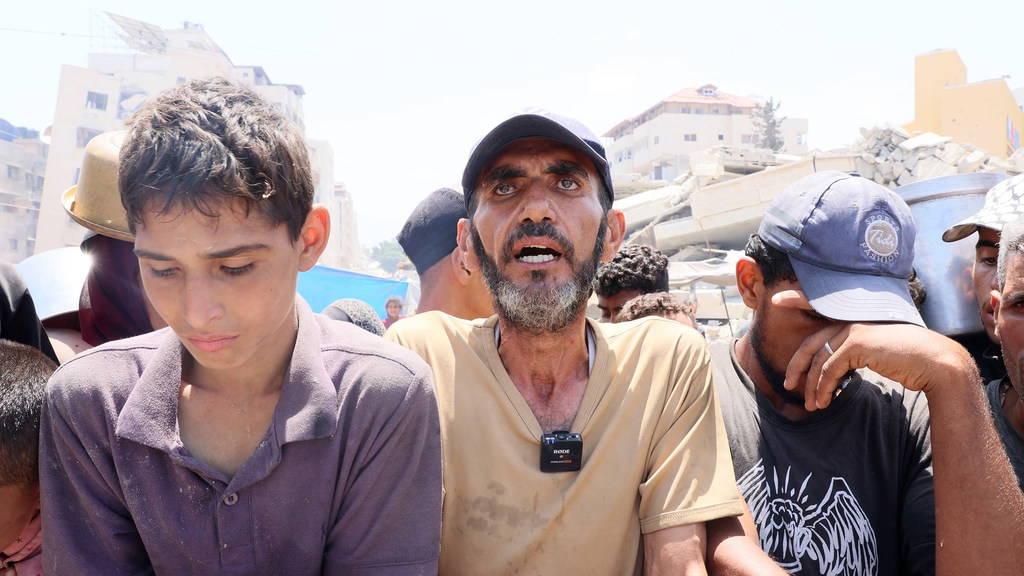
Bassam Abu Odeh, a displaced person from Beit Hanoun in western Gaza City.
In western Gaza City, displaced people live crammed into cramped tents, and a human tragedy is unfolding across a landscape of hunger.
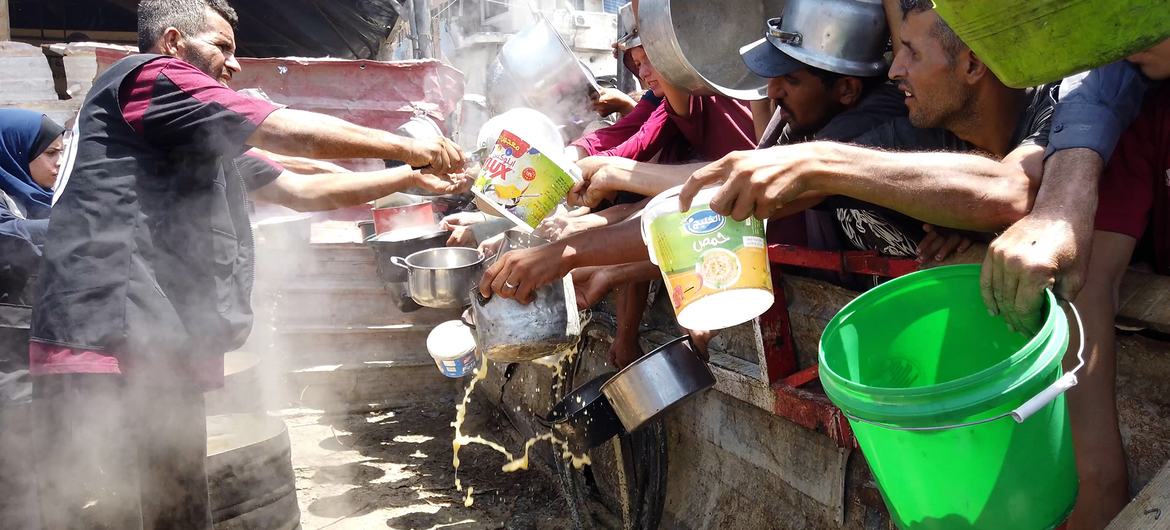
Earning a living has become a daily struggle, and hundreds of men, women and children stand in endless queues, under the scorching sun, outside the few community kitchens that serve nothing but lentil soup.
A community kitchen in western Gaza reveals a panorama of painful scenes amid displaced people suffering, their cries for help and their urgent appeals to the world, demanding an end to their tragedy and relief.
Community kitchen workers are busy preparing lentil soup while plastic bowls and empty plates are piled up behind an iron fence, waiting for a small amount that many may not be able to get a sip of.
After a bitter struggle, Ziad Al-Ghariz, an elderly displaced person from Gaza, managed to obtain a cup of lentil soup. He sat on the floor and began to take slow sips. He told UN News that he had not tasted bread for 10 consecutive days.
‘We are dying of hunger here’
“I eat the lentil soup distributed by the community kitchen,” he said. “I cannot afford flour at all. I do not have the money for it, so I try to get whatever the kitchen distributes. The people of Gaza are hungry.”
Young Mohammed Nayfeh says he spent four hours waiting for a meal for his family.
“I've been standing here for four hours, and I can’t get any food in the crowds and the sun,” he said. “We’re dying. We need support. We need food and drink. Where is the world? We’re dying here of hunger. Every day we eat only lentils. There’s no flour, no food, no drink. We’re dying of hunger.”
UN News
A group of displaced Palestinians gathering in front of a local community kitchen in western Gaza City.
"Either we burn in the sun or we are trampled underfoot"
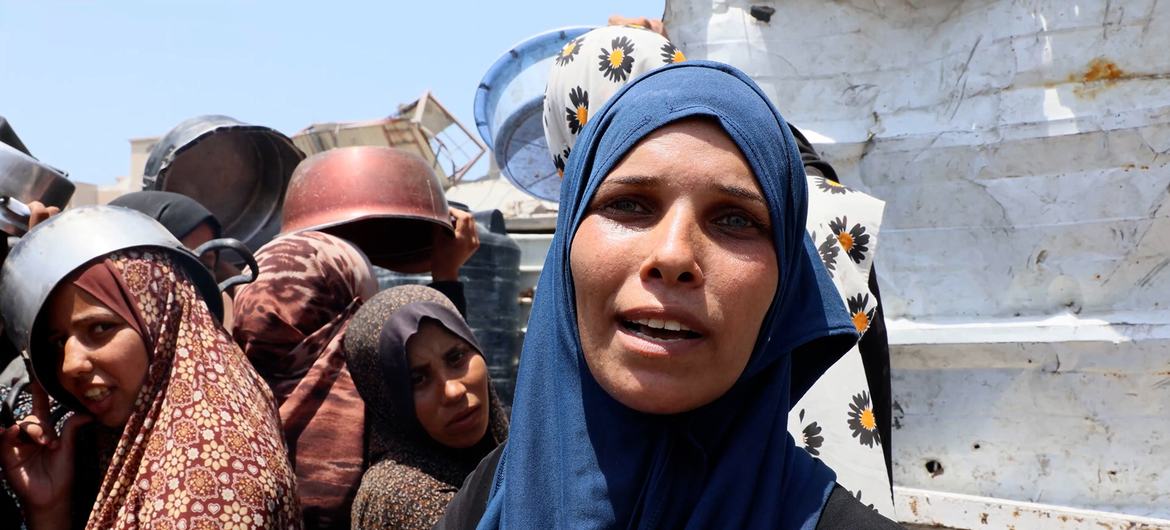
Umm Muhammad, a displaced person from the Shujaiya neighborhood, described the macabre scene around her.
“There is no water, no food, no bread,” she said. “The bitterness of the situation forces us to come here. In the end, we return with nothing. We either return burned under the sun or trampled underfoot due to overcrowding, and we return empty-handed. And no one listens.”
Hussam al-Qamari, who was also displaced from Shujaiya, said the situation is no longer acceptable.
“We are dying, and our children are starving to death,” she said. “So much is happening to the people of Gaza. Much of what is happening is unacceptable. An old man like me has been standing here since morning, carrying a bowl for his children to eat breakfast, and they still haven’t eaten.”
UN News
Um Muhammad, who fled from the Shujaiya neighbourhood in eastern Gaza City to its western areas, waits to get food.
From classrooms to queues for lentils
According to the latest findings from the United Nations Relief and Works Agency for Palestine Refugees (UNRWA), one in five children in Gaza City suffers from malnutrition, with cases increasing daily.
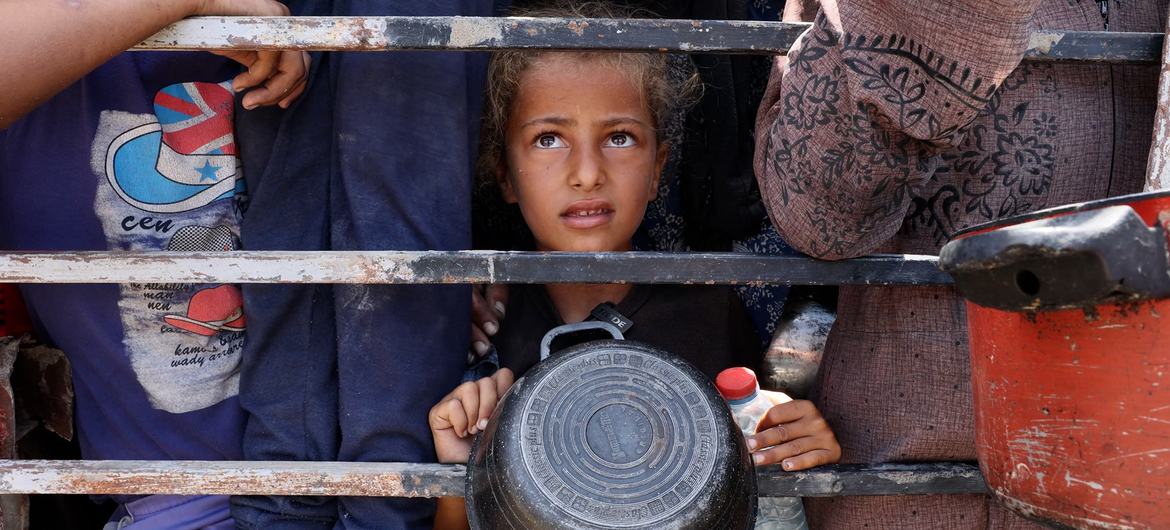
The image of this little girl standing behind an iron fence, holding her empty bowl waiting for a little lentil soup, encapsulates this horrific tragedy, for which children pay the heaviest price.
Bassam Abu Odeh, a displaced person from Beit Hanoun, made an appeal.
“We call on all the free people of the world and peace lovers to help us provide food and water until this famine imposed on us by the occupation ends. The trucks allowed into the area by the occupation are not even a drop in the ocean of needs. We have no one, but God.”
UN News
A young girl from Gaza waiting to fill her container with lentils.
Umm Rami, a displaced person from the Zeitoun neighborhood, said the necessities of life are lacking in Gaza, calling on the world to look at the people of the Strip with compassion.
“I came here to get a small amount of food to feed my children. “This is our reality now: we come to community kitchens for food, having once lived with dignity and respect in our own homes.”
She said food is not enough.
“We have reached a point where we stand in lines for food and water. As you can see, the lives of children now revolve around the lines for water and food. Food is not enough. We have only God. The world must look at us, and everyone must awaken their consciences.”
Undeniable risk of famine
According to a warning issued by the Integrated Food Security Phase Classification (IPC), Gaza is facing a severe risk of famine, as food consumption and nutrition indicators have reached their worst levels since the beginning of the current conflict.
The alert highlights that two of the three famine thresholds have been observed in parts of the Gaza Strip, with the World Food Programme (WFP) and the UN Children's Fund (UNICEF) warning that time is running out to launch a comprehensive humanitarian response.
The UN Secretary-General said the alert confirms that Gaza is on the brink of famine. He said the facts are undeniable, and that Palestinians in Gaza are suffering a humanitarian catastrophe of epic proportions.
“This is not a warning, but a reality unfolding before our eyes,” he said.
He stressed the need for the aid trickle to become an “ocean”, with food, water, medicine and fuel flowing without hindrance.
“This nightmare must end,” he declared.
Death in search of food
The United Nations Office for the Coordination of Humanitarian Affairs (OCHA) said that days after the start of the tactical pauses announced by the Israeli authorities in Gaza, “we continue to witness casualties among those seeking assistance and more deaths from hunger and malnutrition.”
The UN office said that parents continue to struggle to save their starving children. Desperate and hungry people continue to unload small amounts of aid from trucks that manage to exit the crossings.
Although the UN and its partners are taking advantage of every opportunity to support those in need during unilateral tactical pauses, conditions for delivering aid and supplies are far from adequate, according to OCHA.

No comments:
Post a Comment