Copyright AP Photo
By Marta Pacheco
Published on 22/10/2025 - EURONEWS
LONG READ
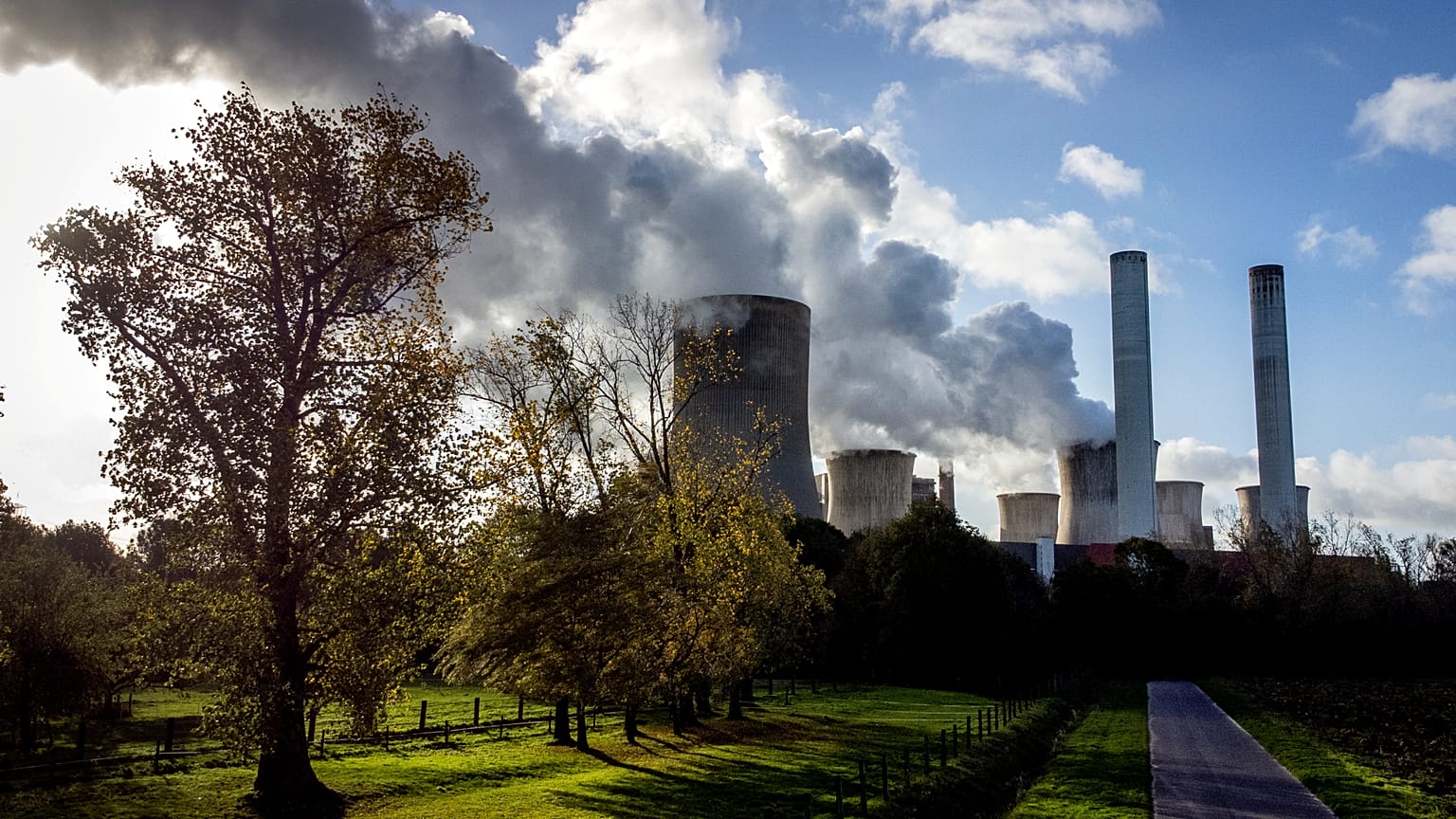
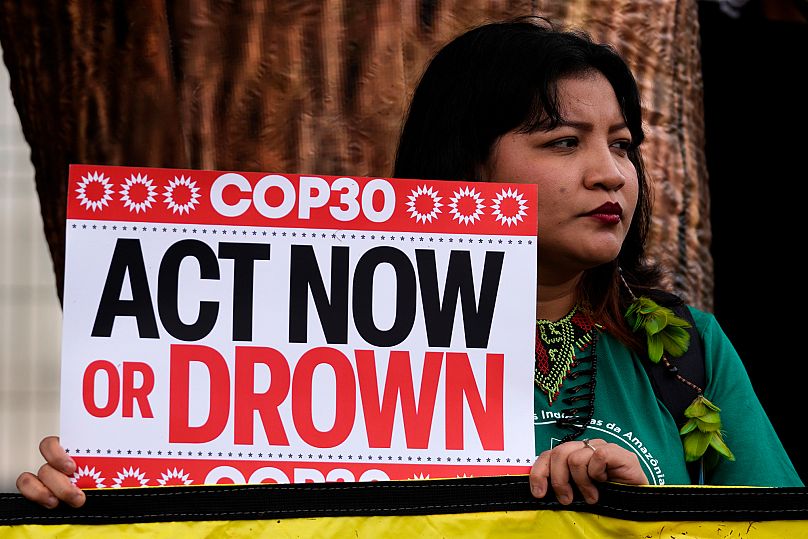
EU talks will continue on two key climate targets — 2035 and 2040 — ahead of the upcoming COP30 summit in Belém, Brazil.
EU environment ministers have again delayed a decision over national emissions targets for 2035 and 2040, just weeks before the UN climate change summit in Belém, Brazil, where the bloc is expected to present its contribution to green goals.
Pressure to set an ambitious 2035 target to present at COP30 comes as the EU is struggling to settle a 2040 climate goal at home.
Both targets will affect European industries through major upfront investment and the reskilling of workers, ultimately sending a strong signal to businesses and investors.
The European Commission has proposed a binding target of 90% emissions reduction by 2040 under the bloc’s climate law, which sets the EU on course for climate neutrality by 2050. This was discussed by environment ministers at a Council meeting on Tuesday.
The 2040 climate target will impact the EU’s national climate action plans (the 2035 goal) under the Paris Agreement, expected to be presented at COP30. This is seen as the bridge from near-term action to the long-term 2050 net-zero objective.
"We must leave Belém with a clear path forward to keep 1.5°C within reach," Lars Aagaard, Denmark's minister for energy, climate, said on Tuesday on behalf of the Danish presidency of the EU.
"Next step is EU’s National Determined Contributions (NDC) [2035 climate target] and the Climate Law, and we stand ready to carry on after the strategic discussion between the European heads of state and government," he added.
EU environment ministers have again delayed a decision over national emissions targets for 2035 and 2040, just weeks before the UN climate change summit in Belém, Brazil, where the bloc is expected to present its contribution to green goals.
Pressure to set an ambitious 2035 target to present at COP30 comes as the EU is struggling to settle a 2040 climate goal at home.
Both targets will affect European industries through major upfront investment and the reskilling of workers, ultimately sending a strong signal to businesses and investors.
The European Commission has proposed a binding target of 90% emissions reduction by 2040 under the bloc’s climate law, which sets the EU on course for climate neutrality by 2050. This was discussed by environment ministers at a Council meeting on Tuesday.
The 2040 climate target will impact the EU’s national climate action plans (the 2035 goal) under the Paris Agreement, expected to be presented at COP30. This is seen as the bridge from near-term action to the long-term 2050 net-zero objective.
"We must leave Belém with a clear path forward to keep 1.5°C within reach," Lars Aagaard, Denmark's minister for energy, climate, said on Tuesday on behalf of the Danish presidency of the EU.
"Next step is EU’s National Determined Contributions (NDC) [2035 climate target] and the Climate Law, and we stand ready to carry on after the strategic discussion between the European heads of state and government," he added.
EU leaders previously failed to reach a deal on the 2035 target ahead of the UN Framework Convention on Climate Change (UNFCCC) in September, instead proposing a range to cut CO2 emissions by 66.25% to 72.5% compared to 1990 levels.
EU heads of state are now due to discuss the "various enabling factors" and the conditionalities that will back an "ambitious and realistic" target for 2035 and 2040 at the Council summit on 23 October, according to EU Climate Commissioner Wopke Hoekstra.
However, no decision is expected to be taken on either of the targets during the Council summit.
"Leaders will task us to continue this conversation [debate on 2035 and 2040 climate targets] and seek to close it at the next Environment council," Hoekstra told reporters in Luxembourg.
An extraordinary meeting of environment ministers will be held on 4 November, when a formal proposal on both targets is expected.
'We will fall short'
Under the Paris Agreement, countries must submit or update their Nationally Determined Contributions (NDCs) every five years.
The EU's NDC needs to be updated to include its 2035 target and reflect intermediate goals — such as the controversial 2040 climate target — to be presented at COP30.
"If you’re looking at what the NDC will be like, it is safe to assume that we will fall short," Hoekstra said, noting the bloc was still ahead of China's weak ambition or even the US, which has abandoned its climate efforts.
"We’re doing more than our fair share ourselves, that’s what the conversation is going to be about," Hoekstra added.
While the EU's NDC is formally adopted by member states, the bloc's 2040 climate target will be enacted as an amendment to the European Climate Law, passed in 2021.
However, several countries, including Denmark, have pushed to adopt both targets simultaneously, arguing this would strengthen the EU’s position to advocate for higher global ambition at COP30.
Eraldo Peres AP Photo
But France, Germany, Hungary, Italy and Slovakia are among those resisting the 2040 climate target, calling for a lower goal and demanding more flexibility to ensure their industries remain competitive in the shift to zero-carbon technologies.
Key issues under discussion among EU ambassadors include the role of international carbon credits — tradable certificates allowing the emission of a set amount of CO2 — in achieving the 2040 target.
Negotiators are also debating how to ensure such credits do not interfere with the EU’s Emissions Trading System (ETS), and whether CO2 storage outside the bloc should be allowed.
But France, Germany, Hungary, Italy and Slovakia are among those resisting the 2040 climate target, calling for a lower goal and demanding more flexibility to ensure their industries remain competitive in the shift to zero-carbon technologies.
Key issues under discussion among EU ambassadors include the role of international carbon credits — tradable certificates allowing the emission of a set amount of CO2 — in achieving the 2040 target.
Negotiators are also debating how to ensure such credits do not interfere with the EU’s Emissions Trading System (ETS), and whether CO2 storage outside the bloc should be allowed.
In a letter sent to governments on 20 October, Commission President Ursula von der Leyen reiterated support for the 90% target and suggested the path to achieving it would include “significant flexibilities.”
"Part of the target — 3% in the Commission's proposal — can be reached with high quality international credits. Our domestic target for emission reductions can be lower than 90%, as long as this is compensated by similar and cost-efficient, high-integrity reductions outside of the EU," von der Leyen wrote.
However, many environmental groups have criticised the proposed flexibilities, arguing that such carbon offsets would undermine the integrity of the targets by allowing reductions abroad rather than within the EU.
Decarbonisation and competitiveness
The EU’s 2035 and 2040 climate targets are intended to accelerate Europe’s path to decarbonisation.
That trajectory is meant to increase near-term investment and compliance costs for energy-intensive industries and raise transitional price pressures for fossil fuel–dependent households. It would also pave the way for long-term and sustainable market opportunities in clean technology, energy efficiency and low-carbon exports.
The distribution of effort will depend on how national governments deploy targeted funds and industrial support to protect vulnerable households and preserve competitiveness — one of the key sticking points among member states.
"Decarbonisation is something we need to do for climate but equally important for competitiveness and for our independence. All three go hand in hand and we do need to make sure that going forward none is going at the expense of the others," said Hoekstra.
The climate commissioner said it was an "absolute imperative" to reduce external dependencies during the transition, acknowledging the "complexity" and "paradoxical" nature of the task.
More than half of the emissions reductions required to meet Europe’s 2040 targets depend directly on expanding electricity grids, scaling renewable generation, electrifying transport, and deploying large-scale energy storage, according to a new report from Boston Consulting Group (BCG) and Dansk Industri.
The study estimates the bloc will need around €12 trillion in infrastructure investment by 2040 to remain competitive.
'Strategic opportunity'
After several failed attempts to reach an agreement, scientists urged EU leaders to make an urgent decision on the 2040 climate target in an open letter penned on 20 October.
"The EU must adopt a 2040 climate target of at least 90–95% domestic reduction in greenhouse gases," the letter said.
The primary data points supporting this position are clear: evidence indicates that decisive decarbonisation is not only a climate necessity but a strategic economic opportunity," the scientists wrote, referring to potential savings of hundreds of billions on fossil fuel imports and the creation of over two million jobs in clean industrial sectors.
Global instability, technological advancement, rising inequalities and policy credibility are the key four risks that could eventually derail the successful delivery of the 2040 climate target, according to a report from the think tank Bruegel.
Business Wire AP Photo
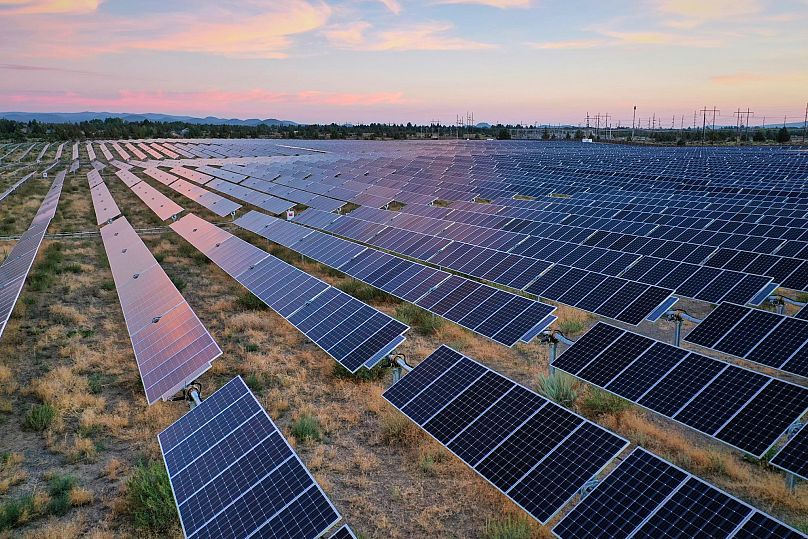
While the Brussels-based think tank considers the target feasible based on previous modelling, it notes that such efforts will require a 50% increase of renewable electricity generation, a 75% reduction in fossil fuel use compared to 2019, energy efficiency measures and deep electrification across transport, industry, and housing.
"A global economy with more trade disputes and greater risk of conflict endangers the massive capital investment needed for the transition, while the cost of clean technologies is a primary determinant of the economic viability of decarbonisation," read Bruegel’s policy report.
Joseph Dellatte, head of energy and climate studies and resident fellow at the Institut Montaigne, said Europe can no longer delay a decision on the 2040 target.
"If we want to be an actor, a manufacturer of the future decarbonisation and the technologies of the decarbonisation, or if we want to be a mere customer. This is what is at stake with the target and with the instrument that will follow the target," said Delatte.
While the Brussels-based think tank considers the target feasible based on previous modelling, it notes that such efforts will require a 50% increase of renewable electricity generation, a 75% reduction in fossil fuel use compared to 2019, energy efficiency measures and deep electrification across transport, industry, and housing.
"A global economy with more trade disputes and greater risk of conflict endangers the massive capital investment needed for the transition, while the cost of clean technologies is a primary determinant of the economic viability of decarbonisation," read Bruegel’s policy report.
Joseph Dellatte, head of energy and climate studies and resident fellow at the Institut Montaigne, said Europe can no longer delay a decision on the 2040 target.
"If we want to be an actor, a manufacturer of the future decarbonisation and the technologies of the decarbonisation, or if we want to be a mere customer. This is what is at stake with the target and with the instrument that will follow the target," said Delatte.
Climate crunch time in Brussels as EU leaders meet
Brussels (Belgium) (AFP) – The European Union's climate ambitions and its hopes for an industrial revival will come to a head Thursday as the bloc's 27 leaders meet to chart a way forward -- with the clock ticking to set a key emissions goal.
Issued on: 23/10/2025 - FRANCE24
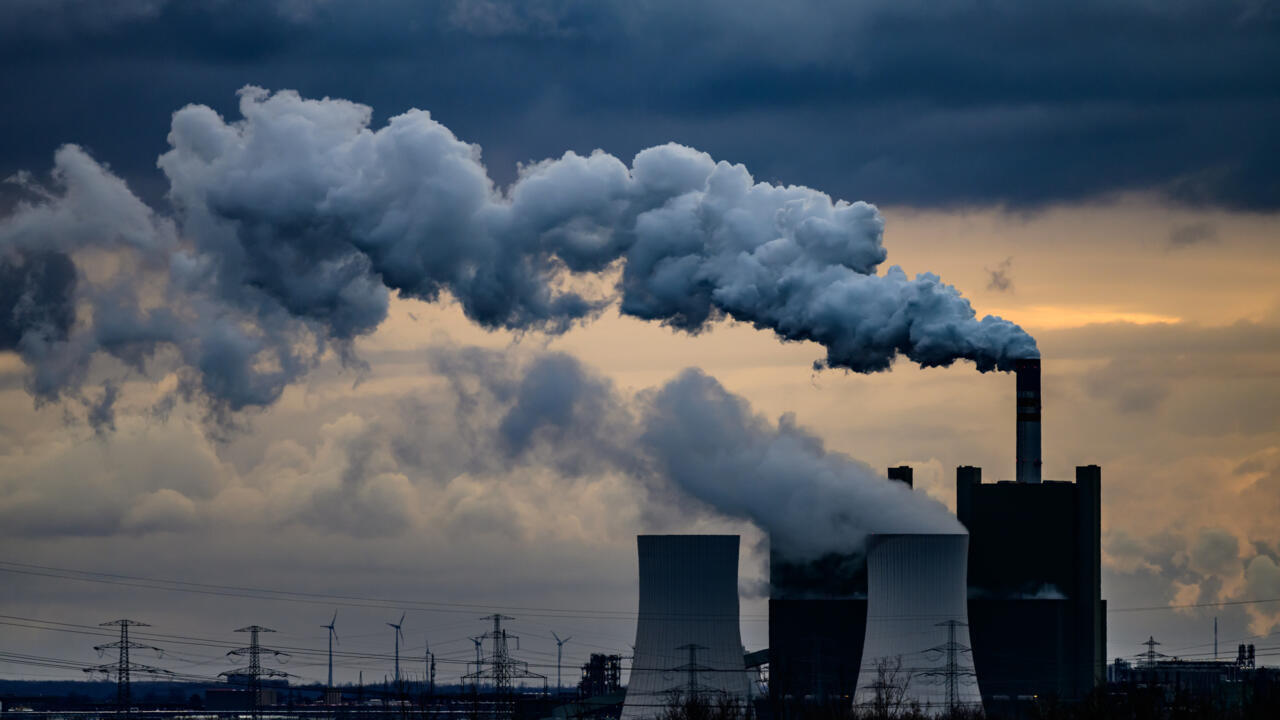
Brussels (Belgium) (AFP) – The European Union's climate ambitions and its hopes for an industrial revival will come to a head Thursday as the bloc's 27 leaders meet to chart a way forward -- with the clock ticking to set a key emissions goal.
Issued on: 23/10/2025 - FRANCE24
Tensions between the EU's desire to play a starring role in the fight against global warming and to boost its sluggish economy have come to a head © John MACDOUGALL / AFP/File
The EU is under pressure to agree on a 10-year target to cut carbon emissions ahead of the United Nations COP30 climate summit next month. But competing concerns over supporting ailing businesses including Europe's cherished car industry have stalled progress.
"Leaders now have a narrow window to break the deadlock and send a clear signal ahead of COP30," said Elisa Giannelli, of the E3G climate advocacy group.
The EU is under pressure to agree on a 10-year target to cut carbon emissions ahead of the United Nations COP30 climate summit next month. But competing concerns over supporting ailing businesses including Europe's cherished car industry have stalled progress.
"Leaders now have a narrow window to break the deadlock and send a clear signal ahead of COP30," said Elisa Giannelli, of the E3G climate advocacy group.
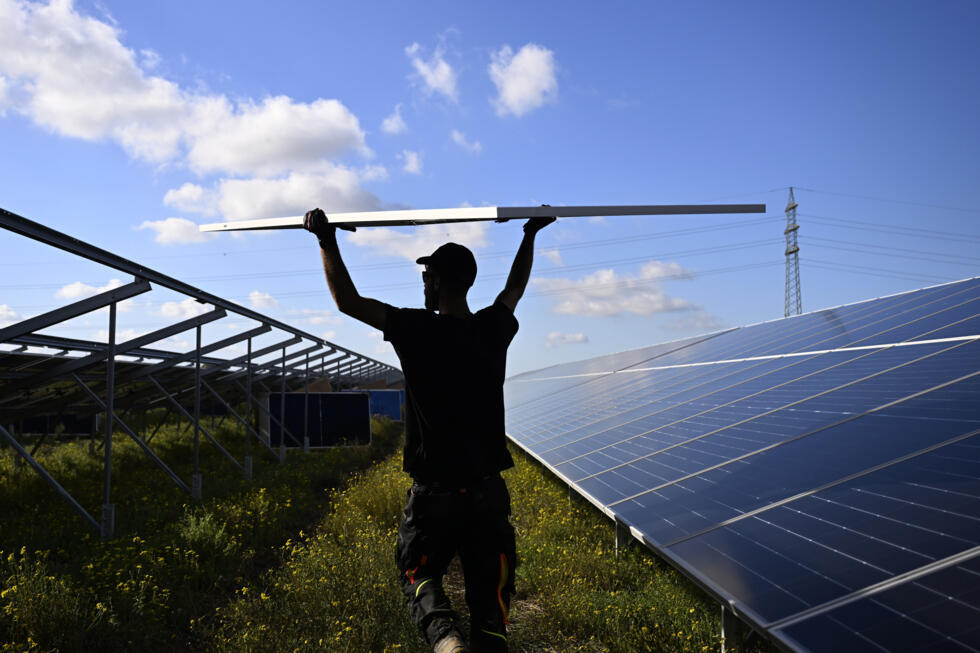
A solar power park in Germany -- advocates say climate ambition is crucial for the EU to draw investments in green technologies © Ina FASSBENDER / AFP/File
Tensions between the EU's desire to play a starring role in the fight against global warming and boost its sluggish economy have been bubbling up for months.
Many businesses complain they are being asked to invest in greening their operations at a time when trade tensions and competition from China are squeezing returns.
A growing number of capitals, in what is an increasingly right-leaning bloc, have been receptive to industry's arguments, culminating in a standoff over the headline figure Brussels has put forward to drive its future climate action.
' At stake'
In July, the European Commission said it wanted to cut emissions by 90 percent by 2040, compared to 1990 levels -- a major milestone towards the overarching goal of reaching net-zero by 2050.
Tensions between the EU's desire to play a starring role in the fight against global warming and boost its sluggish economy have been bubbling up for months.
Many businesses complain they are being asked to invest in greening their operations at a time when trade tensions and competition from China are squeezing returns.
A growing number of capitals, in what is an increasingly right-leaning bloc, have been receptive to industry's arguments, culminating in a standoff over the headline figure Brussels has put forward to drive its future climate action.
' At stake'
In July, the European Commission said it wanted to cut emissions by 90 percent by 2040, compared to 1990 levels -- a major milestone towards the overarching goal of reaching net-zero by 2050.
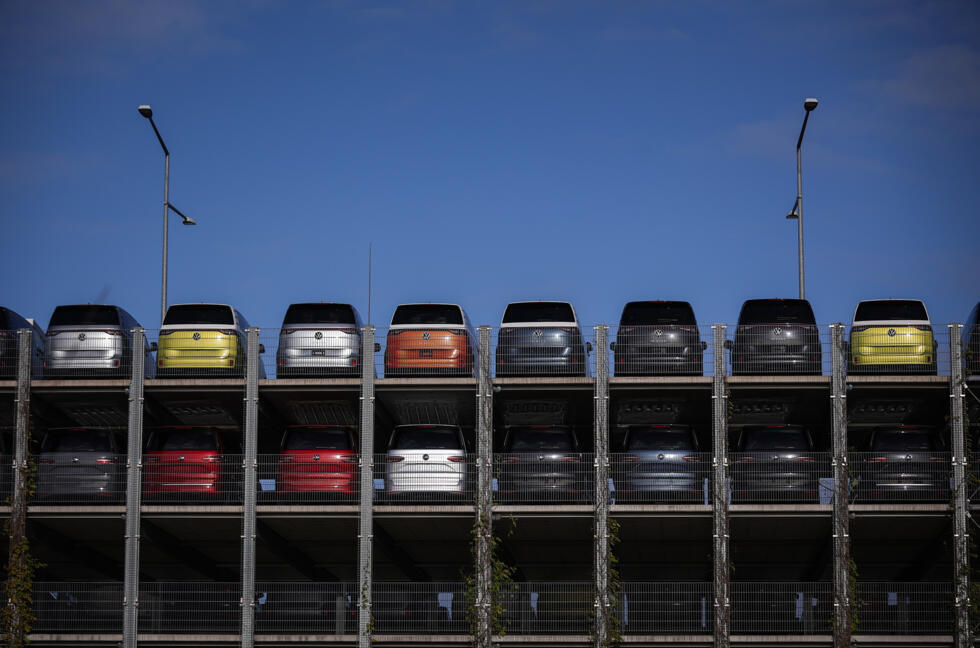
European carmakers have struggled with the switch to electric vehicles as they face rising competition from China © Ronny HARTMANN / AFP
The EU executive hoped for member states to greenlight the target ahead of COP30, which starts in Brazil on November 10.
Signatories to the Paris Agreement are supposed to bring an updated 2035 emission reduction plan to the summit, which Brussels was aiming to derive from its 2040 target.
But this has not been forthcoming.
Unable to reach an agreement, last month EU environment ministers passed the ball to the bloc's leaders, who will discuss the matter Thursday.
No decision is expected but the debate is meant to provide fodder for a deal within two weeks.
"Europe's position as a global leader on climate change is at stake, both at the negotiating table and in the fierce economic race to dominate the industries of a carbon-neutral world," said Joseph Dellatte of the Institut Montaigne, a think tank.
Behind only China, the United States and India in terms of emissions -- the EU has been the most committed of the major polluters to climate action, having already cut emissions by 37 percent compared to 1990.
'No walk in the park'
Green advocates say more is needed to help stave off the worst consequences of rising global temperatures and persuade laggards to follow Brussels' lead.
Ambition is also crucial for the bloc to draw investments and become a leader in green technologies, avoiding falling further behind China, they say.
"If a robust, resilient, sustainable and innovative economy is our goal, then dogmatically clinging to our existing business models, whatever their past successes, is not the solution," EU chief Ursula von der Leyen wrote in a letter Monday, urging leaders "to stay the course".
But some like Poland and the Czech Republic, say a 90-percent emissions cut is unachievable and are dragging their feet.
"It's harder to go from 55 to 90 than it is to go from 20 to 55. It's much more expensive. It requires technological breakthroughs and changes in society that aren't easy," said a European diplomat.
In her letter, von der Leyen listed a series of reforms to sweeten the pill, including an early review of a 2035 ban on new combustion engine vehicles paired with a pledge to look into allowing cars running on biofuels or synthetic fuels.

The EU executive hoped for member states to greenlight the target ahead of COP30, which starts in Brazil on November 10.
Signatories to the Paris Agreement are supposed to bring an updated 2035 emission reduction plan to the summit, which Brussels was aiming to derive from its 2040 target.
But this has not been forthcoming.
Unable to reach an agreement, last month EU environment ministers passed the ball to the bloc's leaders, who will discuss the matter Thursday.
No decision is expected but the debate is meant to provide fodder for a deal within two weeks.
"Europe's position as a global leader on climate change is at stake, both at the negotiating table and in the fierce economic race to dominate the industries of a carbon-neutral world," said Joseph Dellatte of the Institut Montaigne, a think tank.
Behind only China, the United States and India in terms of emissions -- the EU has been the most committed of the major polluters to climate action, having already cut emissions by 37 percent compared to 1990.
'No walk in the park'
Green advocates say more is needed to help stave off the worst consequences of rising global temperatures and persuade laggards to follow Brussels' lead.
Ambition is also crucial for the bloc to draw investments and become a leader in green technologies, avoiding falling further behind China, they say.
"If a robust, resilient, sustainable and innovative economy is our goal, then dogmatically clinging to our existing business models, whatever their past successes, is not the solution," EU chief Ursula von der Leyen wrote in a letter Monday, urging leaders "to stay the course".
But some like Poland and the Czech Republic, say a 90-percent emissions cut is unachievable and are dragging their feet.
"It's harder to go from 55 to 90 than it is to go from 20 to 55. It's much more expensive. It requires technological breakthroughs and changes in society that aren't easy," said a European diplomat.
In her letter, von der Leyen listed a series of reforms to sweeten the pill, including an early review of a 2035 ban on new combustion engine vehicles paired with a pledge to look into allowing cars running on biofuels or synthetic fuels.
Behind only China, the United States and India in terms of emissions -- the EU has been by far the most committed of the major polluters to climate action
© Ina FASSBENDER / AFP/File
Plans to amend an emissions trading system to avoid fuel price volatility and to allow countries to count some carbon credits towards their 2040 target were also mentioned.
Draft conclusions leaked ahead of the EU summit welcome such steps and urge the commission to include a revision clause in its 2040 proposal to allow future tweaks if needed.
"The negotiations among EU leaders won't be a walk in the park," said Neil Makaroff, of the Strategic Perspectives think tank.
"But a political compromise is within reach."
© 2025 AFP
Plans to amend an emissions trading system to avoid fuel price volatility and to allow countries to count some carbon credits towards their 2040 target were also mentioned.
Draft conclusions leaked ahead of the EU summit welcome such steps and urge the commission to include a revision clause in its 2040 proposal to allow future tweaks if needed.
"The negotiations among EU leaders won't be a walk in the park," said Neil Makaroff, of the Strategic Perspectives think tank.
"But a political compromise is within reach."
© 2025 AFP

No comments:
Post a Comment