As world leaders celebrate the release of Israeli captives, over 9,000 Palestinian prisoners still face torture, hunger, and isolation behind bars. Half of them are held by Israel without charge or trial.
October 15, 2025
MONDOWEISS

Allam al-Ra’i, 47, released by Israel from Ofer Prison, arrives in Ramallah as part of the first phase of the ceasefire between Israel and Hamas, October 13, 2025.
(Photo: Qassam Muaddi/Mondoweiss)
This article was paid for by Mondoweiss readers. Not a donor? Scroll to the bottom or click here and help keep us fiercely independent.
As the leaders of 20 countries gathered in Egypt’s Sharm al-Sheikh to celebrate the ceasefire, mainstream media celebrated the release of the remaining 20 living Israeli captives in Gaza. After reuniting with their families, the captives described the harsh conditions in which they were held. Meanwhile, 1,968 Palestinians were released from Israeli prisons, 88 of whom were released in the West Bank, 154 were deported to Egypt, and the rest were released in the Gaza Strip. Most of them were abducted by Israeli forces inside Gaza over the past two years. Of the total number of prisoners released, 250 had been serving life sentences for charges related to armed activity.
But over 9,100 Palestinians continue to be held in Israeli prisons. Some 3,544 of them are held under the Israeli system of “administrative detention,” which allows Israel to imprison Palestinians for up to six months without charge or trial. According to the Palestinian Prisoners’ Club, none of the released prisoners in Monday’s swap were administrative detainees.
Administrative detention orders are ratified by an Israeli military court, and the six-month period of imprisonment can be renewed indefinitely based on a “secret file” that neither the detainees nor their lawyers can access. Consecutive renewals have led many Palestinians to serve up to two years under this system, never having been given due process.
Administrative detainees represent the largest category of Palestinians in Israeli prisons, says Ayah Shreiteh, the spokesperson of the Prisoners’ Club.
Shreiteh added that around 1,000 Palestinians have been arrested and held without trial, without even an administrative detention order. Many of them have spent months behind bars.
As for those who have been sentenced based on clear charges, the majority of sentences are for belonging to political organizations and unions, participating in protests, or throwing stones. Since October 2023, however, Shreiteh points out that the most common conviction has been over “incitement,” a charge that covers anything from a social media post to delivering public speeches, and even to raising the flags of Palestinian political factions in public.
“Before October 7, the detention conditions of Palestinian prisoners had already been deteriorating,” Shreiteh noted. Then everything changed.
“Food quantity and quality deteriorated,” she explained. “Israeli prison guards raided cells on a weekly, sometimes daily basis. Medical neglect became widespread.”
“Cells with an average surface of five or six square meters that usually held up to six prisoners were now being crammed with nine to 12 prisoners,” she added. “Four or six of them would sleep on the floor.”
Lawyers who were allowed to visit Palestinians in Israeli jails have reported on these conditions throughout the past two years, corroborated by the countless testimonies emerging from freed Palestinian prisoners who were released in prisoner swaps last January and last Monday
This article was paid for by Mondoweiss readers. Not a donor? Scroll to the bottom or click here and help keep us fiercely independent.
As the leaders of 20 countries gathered in Egypt’s Sharm al-Sheikh to celebrate the ceasefire, mainstream media celebrated the release of the remaining 20 living Israeli captives in Gaza. After reuniting with their families, the captives described the harsh conditions in which they were held. Meanwhile, 1,968 Palestinians were released from Israeli prisons, 88 of whom were released in the West Bank, 154 were deported to Egypt, and the rest were released in the Gaza Strip. Most of them were abducted by Israeli forces inside Gaza over the past two years. Of the total number of prisoners released, 250 had been serving life sentences for charges related to armed activity.
But over 9,100 Palestinians continue to be held in Israeli prisons. Some 3,544 of them are held under the Israeli system of “administrative detention,” which allows Israel to imprison Palestinians for up to six months without charge or trial. According to the Palestinian Prisoners’ Club, none of the released prisoners in Monday’s swap were administrative detainees.
Administrative detention orders are ratified by an Israeli military court, and the six-month period of imprisonment can be renewed indefinitely based on a “secret file” that neither the detainees nor their lawyers can access. Consecutive renewals have led many Palestinians to serve up to two years under this system, never having been given due process.
Administrative detainees represent the largest category of Palestinians in Israeli prisons, says Ayah Shreiteh, the spokesperson of the Prisoners’ Club.
Shreiteh added that around 1,000 Palestinians have been arrested and held without trial, without even an administrative detention order. Many of them have spent months behind bars.
As for those who have been sentenced based on clear charges, the majority of sentences are for belonging to political organizations and unions, participating in protests, or throwing stones. Since October 2023, however, Shreiteh points out that the most common conviction has been over “incitement,” a charge that covers anything from a social media post to delivering public speeches, and even to raising the flags of Palestinian political factions in public.
“Before October 7, the detention conditions of Palestinian prisoners had already been deteriorating,” Shreiteh noted. Then everything changed.
“Food quantity and quality deteriorated,” she explained. “Israeli prison guards raided cells on a weekly, sometimes daily basis. Medical neglect became widespread.”
“Cells with an average surface of five or six square meters that usually held up to six prisoners were now being crammed with nine to 12 prisoners,” she added. “Four or six of them would sleep on the floor.”
Lawyers who were allowed to visit Palestinians in Israeli jails have reported on these conditions throughout the past two years, corroborated by the countless testimonies emerging from freed Palestinian prisoners who were released in prisoner swaps last January and last Monday
.
Palestinians released by Israel from Ofer Prison arrive in Ramallah as part of the first phase of the ceasefire between Israel and Hamas, October 13, 2025.
(Photo: Qassam Muaddi/Mondoweiss)
Mondoweiss spoke to some of the recently released prisoners earlier this week, who asked not to be named for fear of Israeli reprisal. One of them, who had been detained for a year, said that he and his cellmates had been beaten with batons multiple times during cell raids. Another, who was also detained for a year, said that the Israeli Prison Service, the administrative body running the prisons, ignored his requests for medical treatment for an entire year and only gave him painkillers.
In January, Mondoweiss interviewed Amir Abu Raddaha, a Palestinian prisoner who was released during the first prisoner exchange between Israel and Hamas during the January-March ceasefire. Abu Raddaha told Mondoweiss that after October 7, Israeli prison authorities confiscated all books and electronic devices from prisoners, reduced their food so drastically that a meal became three or four spoons of rice alongside a comparable quantity of thin soup, and breakfast was one spoon of yogurt and a piece of bread.
It didn’t start on October 7
But the deterioration of detention conditions of Palestinians did not start on October 7, Milena Ansari from Human Rights Watch tells Mondoweiss. “The restriction of Palestinians’ detention conditions was part of the political agenda of Israel’s National Security minister, Itamar Ben-Gvir,” Ansari said. “Since he came into office [in 2022], human rights groups and even the UN have been reporting on these restrictions, well before 2023.”
“Before October 7, cell overcrowding was already a rising problem for Palestinian prisoners, and so was the limitation of food quality and quantity, but these practices increased after October 2023,” she continues. “The food offered to Palestinians in Israeli jails became limited to dry food and beans lacking in most basic nutrients.”
Ansari also notes that “several human rights groups, including Israel’s Physicians for Human Rights, reported that there has been political intervention by Israeli politicians to determine the type of medical treatment that Palestinian prisoners receive, limiting the role of prison clinic doctors to basic nursing.”
“It is unlikely that any of these restrictions will be reversed in the near future, because they are not related to October 7, although they accelerated after that date.”Milena Ansari, Human Rights Watch
“It is important to remember that ensuring proper medical treatment and food is not a privilege,” Ansari added. “It is a right of Palestinian prisoners, and Israel is obligated under international law to respect it.”
After October 7, things got dramatically worse, Ansari says. Both verbal and physical violence increased against Palestinian detainees to the point that violence was used during all phases of detention, starting from the moment of arrest. “But the most noticeable change after October 7 has been the complete isolation of Palestinian prisoners, with the ban of family visitation,” she said. “This is still ongoing.”
Mondoweiss spoke to some of the recently released prisoners earlier this week, who asked not to be named for fear of Israeli reprisal. One of them, who had been detained for a year, said that he and his cellmates had been beaten with batons multiple times during cell raids. Another, who was also detained for a year, said that the Israeli Prison Service, the administrative body running the prisons, ignored his requests for medical treatment for an entire year and only gave him painkillers.
In January, Mondoweiss interviewed Amir Abu Raddaha, a Palestinian prisoner who was released during the first prisoner exchange between Israel and Hamas during the January-March ceasefire. Abu Raddaha told Mondoweiss that after October 7, Israeli prison authorities confiscated all books and electronic devices from prisoners, reduced their food so drastically that a meal became three or four spoons of rice alongside a comparable quantity of thin soup, and breakfast was one spoon of yogurt and a piece of bread.
It didn’t start on October 7
But the deterioration of detention conditions of Palestinians did not start on October 7, Milena Ansari from Human Rights Watch tells Mondoweiss. “The restriction of Palestinians’ detention conditions was part of the political agenda of Israel’s National Security minister, Itamar Ben-Gvir,” Ansari said. “Since he came into office [in 2022], human rights groups and even the UN have been reporting on these restrictions, well before 2023.”
“Before October 7, cell overcrowding was already a rising problem for Palestinian prisoners, and so was the limitation of food quality and quantity, but these practices increased after October 2023,” she continues. “The food offered to Palestinians in Israeli jails became limited to dry food and beans lacking in most basic nutrients.”
Ansari also notes that “several human rights groups, including Israel’s Physicians for Human Rights, reported that there has been political intervention by Israeli politicians to determine the type of medical treatment that Palestinian prisoners receive, limiting the role of prison clinic doctors to basic nursing.”
“It is unlikely that any of these restrictions will be reversed in the near future, because they are not related to October 7, although they accelerated after that date.”Milena Ansari, Human Rights Watch
“It is important to remember that ensuring proper medical treatment and food is not a privilege,” Ansari added. “It is a right of Palestinian prisoners, and Israel is obligated under international law to respect it.”
After October 7, things got dramatically worse, Ansari says. Both verbal and physical violence increased against Palestinian detainees to the point that violence was used during all phases of detention, starting from the moment of arrest. “But the most noticeable change after October 7 has been the complete isolation of Palestinian prisoners, with the ban of family visitation,” she said. “This is still ongoing.”
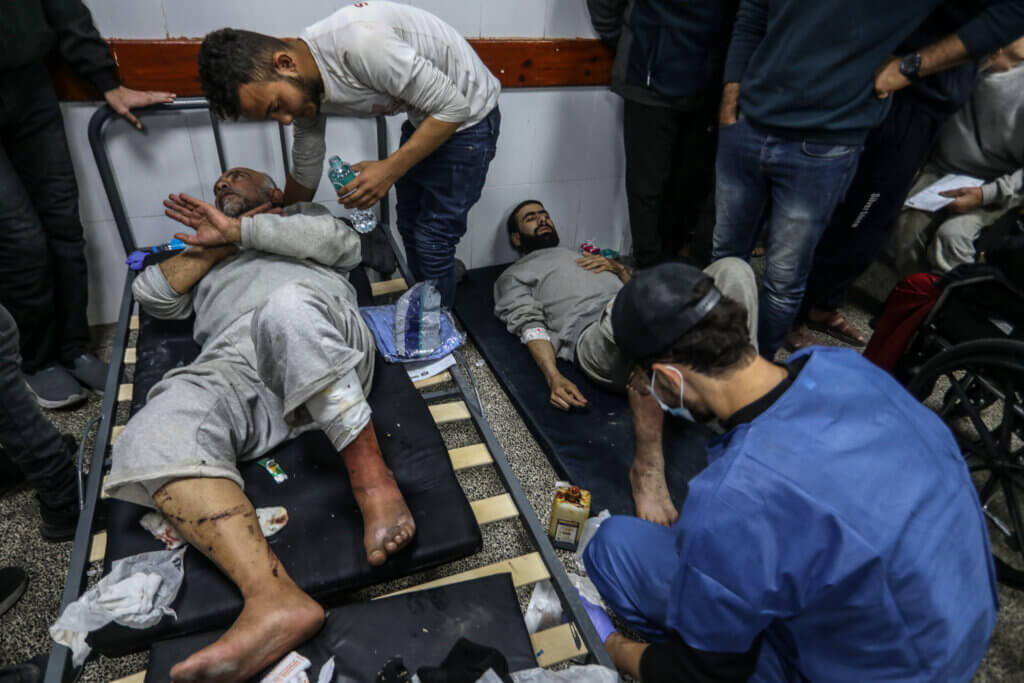
A groups of Palestinian detainees from Gaza show signs of abuse and torture on their bodies after being released from Israeli custody. (APA Images)
Ansari says that human rights groups have documented increasing difficulties for lawyers to visit their clients who are detained by Israel.
The families of prisoners who spoke to Mondoweiss last Monday all said that they haven’t been allowed to visit their family members for two full years.
Israel’s ban on family visitation has continued after the ceasefire. “It is unlikely that any of these restrictions will be reversed in the near future,” Ansari says. “Because they are not related to October 7, although they accelerated after that date.”
“They are part of a political agenda,” she explains. “And that agenda hasn’t been met with any accountability.”
Last September, the Israeli High Court ruled in favor of a petition presented by the Association for Citizen Rights in Israel (ACRI), an Israeli human rights group, to halt the violations against Palestinian prisoners, especially food restrictions. The next day, while speaking to the media at the site of a shooting attack in Jerusalem that killed six Israelis, Ben-Gvir slammed the High Court ruling, saying it sends a positive message to “terrorists” that “their detention conditions will be eased.”
Standing beside Ben-Gvir was Israel’s Prime Minister, Benjamin Netanyahu, who also challenged the court. “We are all at war, and you, too, are at war,” the Israeli Prime Minister said. “We will not change the detention conditions of terrorists.”
Palestinian prisoners have been largely absent from mainstream media since before October 7, appearing only in the context of prisoner swaps last January and last week. However, the day before October 7, human rights groups reported that a total of 5,000 Palestinians were in Israeli jails — at the time, it was considered a record that had not been met in several years, including 1,300 administrative detainees. Over the past two years, that record-breaking prison population doubled.
Mass captivity as a phenomenon is foreign to Israelis, but for Palestinians, it has been normalized over decades. According to human rights reports, at least 1 million Palestinians have experienced Israeli detention since 1967. Yet after October 7, the Israeli captives became the only talking point for Western politicians and the mainstream media, while Palestinian prisoners remained invisible.
On Monday, Donald Trump celebrated his vaunted “forever” peace after the signing of the ceasefire deal in Egypt. Now that the Israeli captives have been released, the 9,100 Palestinians languishing in Israel’s dungeons can continue to be forgotten.
Ansari says that human rights groups have documented increasing difficulties for lawyers to visit their clients who are detained by Israel.
The families of prisoners who spoke to Mondoweiss last Monday all said that they haven’t been allowed to visit their family members for two full years.
Israel’s ban on family visitation has continued after the ceasefire. “It is unlikely that any of these restrictions will be reversed in the near future,” Ansari says. “Because they are not related to October 7, although they accelerated after that date.”
“They are part of a political agenda,” she explains. “And that agenda hasn’t been met with any accountability.”
Last September, the Israeli High Court ruled in favor of a petition presented by the Association for Citizen Rights in Israel (ACRI), an Israeli human rights group, to halt the violations against Palestinian prisoners, especially food restrictions. The next day, while speaking to the media at the site of a shooting attack in Jerusalem that killed six Israelis, Ben-Gvir slammed the High Court ruling, saying it sends a positive message to “terrorists” that “their detention conditions will be eased.”
Standing beside Ben-Gvir was Israel’s Prime Minister, Benjamin Netanyahu, who also challenged the court. “We are all at war, and you, too, are at war,” the Israeli Prime Minister said. “We will not change the detention conditions of terrorists.”
Palestinian prisoners have been largely absent from mainstream media since before October 7, appearing only in the context of prisoner swaps last January and last week. However, the day before October 7, human rights groups reported that a total of 5,000 Palestinians were in Israeli jails — at the time, it was considered a record that had not been met in several years, including 1,300 administrative detainees. Over the past two years, that record-breaking prison population doubled.
Mass captivity as a phenomenon is foreign to Israelis, but for Palestinians, it has been normalized over decades. According to human rights reports, at least 1 million Palestinians have experienced Israeli detention since 1967. Yet after October 7, the Israeli captives became the only talking point for Western politicians and the mainstream media, while Palestinian prisoners remained invisible.
On Monday, Donald Trump celebrated his vaunted “forever” peace after the signing of the ceasefire deal in Egypt. Now that the Israeli captives have been released, the 9,100 Palestinians languishing in Israel’s dungeons can continue to be forgotten.

No comments:
Post a Comment