INBRED ENGLISH UPPER CLASS BAD TEETH BIG EARS
Want Right-Wing Watch in a different format? Subscribe on Substack.
Yesterday
Right-Wing Watch
Right-Wing Watch
Left Foot Forward
Half of Britain’s commentariat attended private school
Half of Britain’s commentariat attended private school
.
Ever wondered why so many newspaper columnists sound like they’ve never stepped inside an Aldi, been camping, or taken a bus? The answer’s simple – most of them probably haven’t. Half of Britain’s commentariat attended private school. And, as Right-Wing Media Watch readers know all too well – it shows.
New research by the Sutton Trust confirms 50 percent of columnists were privately educated, a six-point increase since 2019. To put that in perspective, just 6 percent of UK children attend private schools. Yet those who shape public opinion through newspaper columns and broadcast commentary overwhelmingly come from this small, privileged slice of society.
The ‘Elitist Britain 2025’ report looks at the educational backgrounds of Britain’s leading figures. Columnists, opinion writers, and pundits, it found, are far more likely to have attended private school than news reporters. In other words, the people telling us what the news means tend to come from a very narrow social background.
The Sutton Trust attributes this imbalance to the growing precarity of journalism. Long-term, well-paid media roles are increasingly difficult to secure, and those without family wealth or a financial safety net may simply be unable to pursue them. As a result, the pipeline to opinion-shaping positions remains tilted toward the privileged.
Right-Wing Media Watch readers will be unsurprised by the findings. After all, many of Britain’s best-known right-wing commentators embody the very elitism they claim to criticise.
Take Douglas Murray, associate editor of the Spectator and a leading neoconservative voice. He positions himself as a straight-talking man of the people, yet his education tells another story. Murray attended local state schools before his parents withdrew him, citing a “declining ethos,” and secured scholarships to St Benedict’s School and the world-famous Eton College. From there, it was on to Magdalen College, Oxford, a classic establishment trajectory.
Then there’s Isabel Oakeshott, prominent right-wing pundit and partner of Reform UK’s Richard Tice. In September, Oakeshott made headlines for falsely claiming that Heathrow Airport was sponsoring Reform’s party conference. Oakeshott, too, enjoyed a privileged education, attending St George’s School, Edinburgh, and Gordonstoun School in Moray, both private institutions.
Or consider Katie Hopkins, the ‘professional’ online provocateur, who was fired from LBC after calling for a “final solution” in the wake of the Manchester Arena bombing. Hopkins was educated at a private convent school.
Likewise, Jacob Rees-Mogg, GB News presenter and self-styled defender of traditional values, is an Eton alumnus and former cabinet minister who inherited considerable wealth and status.
The list could go on and on.
Given this dominance of privilege, it’s little surprise that younger audiences are turning away from traditional media. For Gen Z, platforms like TikTok, YouTube, and Instagram feel far more authentic and representative of real life than the comment pages of the Telegraph or Spectator.
Why would they trust columnists who grew up in boarding houses and dining halls to speak for their lived experiences?
Ever wondered why so many newspaper columnists sound like they’ve never stepped inside an Aldi, been camping, or taken a bus? The answer’s simple – most of them probably haven’t. Half of Britain’s commentariat attended private school. And, as Right-Wing Media Watch readers know all too well – it shows.
New research by the Sutton Trust confirms 50 percent of columnists were privately educated, a six-point increase since 2019. To put that in perspective, just 6 percent of UK children attend private schools. Yet those who shape public opinion through newspaper columns and broadcast commentary overwhelmingly come from this small, privileged slice of society.
The ‘Elitist Britain 2025’ report looks at the educational backgrounds of Britain’s leading figures. Columnists, opinion writers, and pundits, it found, are far more likely to have attended private school than news reporters. In other words, the people telling us what the news means tend to come from a very narrow social background.
The Sutton Trust attributes this imbalance to the growing precarity of journalism. Long-term, well-paid media roles are increasingly difficult to secure, and those without family wealth or a financial safety net may simply be unable to pursue them. As a result, the pipeline to opinion-shaping positions remains tilted toward the privileged.
Right-Wing Media Watch readers will be unsurprised by the findings. After all, many of Britain’s best-known right-wing commentators embody the very elitism they claim to criticise.
Take Douglas Murray, associate editor of the Spectator and a leading neoconservative voice. He positions himself as a straight-talking man of the people, yet his education tells another story. Murray attended local state schools before his parents withdrew him, citing a “declining ethos,” and secured scholarships to St Benedict’s School and the world-famous Eton College. From there, it was on to Magdalen College, Oxford, a classic establishment trajectory.
Then there’s Isabel Oakeshott, prominent right-wing pundit and partner of Reform UK’s Richard Tice. In September, Oakeshott made headlines for falsely claiming that Heathrow Airport was sponsoring Reform’s party conference. Oakeshott, too, enjoyed a privileged education, attending St George’s School, Edinburgh, and Gordonstoun School in Moray, both private institutions.
Or consider Katie Hopkins, the ‘professional’ online provocateur, who was fired from LBC after calling for a “final solution” in the wake of the Manchester Arena bombing. Hopkins was educated at a private convent school.
Likewise, Jacob Rees-Mogg, GB News presenter and self-styled defender of traditional values, is an Eton alumnus and former cabinet minister who inherited considerable wealth and status.
The list could go on and on.
Given this dominance of privilege, it’s little surprise that younger audiences are turning away from traditional media. For Gen Z, platforms like TikTok, YouTube, and Instagram feel far more authentic and representative of real life than the comment pages of the Telegraph or Spectator.
Why would they trust columnists who grew up in boarding houses and dining halls to speak for their lived experiences?
Right-wing press gloats over ‘Your Party chaos’, forgetting Reform UK’s endless fiascos
Gabrielle Pickard-Whitehead
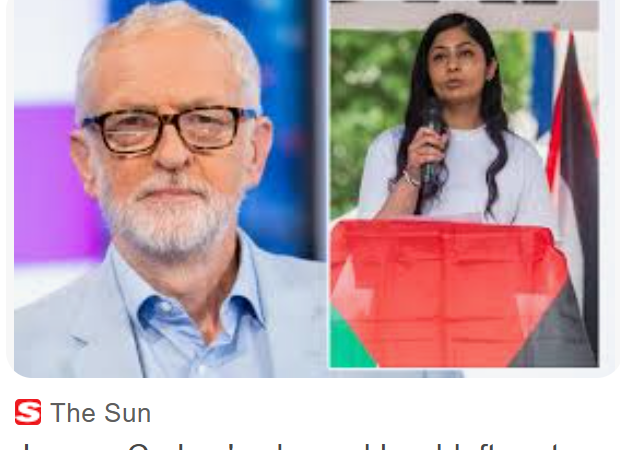
Editors across the right-wing press must be rubbing their hands with glee. Another chance to sink their claws into Jeremy Corbyn, this time not over alleged anti-Semitism, but over his new project, Your Party.
‘Your Party hit by fresh chaos after losing access to member data,’ the Telegraph splashed this week, adding the ‘hard-left bloc founded by Jeremy Corbyn and Zarah Sultana hamstrung by rift that overshadowed launch.’
It follows the ruckus around the party’s summer launch. “Two left feet,” jeered the Sun, declaring, ‘Jeremy Corbyn’s planned hard-left party of two in chaos as he refuses to confirm who’ll lead it.”
Admittedly, it wasn’t the smoothest of starts for the fledgling left-wing venture. The early and very public falling-out left supporters frustrated, many of whom see Your Party as the best chance to prise Britain from the grip of the right.
But, while the anti-Corbyn press crows loudly, it’s worth recalling the shambolic beginnings, and continuing chaos, of Reform UK. Because if Your Party is a ‘mess,’ then Reform is a full-blown mutiny.
Reform’s murky foundations
Reform UK was founded not as a political party in the traditional sense, but as a private limited company in 2018, with Nigel Farage himself holding the majority of shares.
Imagine the outcry if a left-wing leader had done the same. Yet the same media outlets that howl about Corbyn’s ‘factionalism’ barely blinked at a party literally owned by one man.
Now, according to Companies House filings, Reform has been replaced by a newly registered business called Reform 2025 Ltd. And its two directors are Nigel Farage and Zia Yusuf. The company declares “no persons with significant control,” though the pair remain firmly at the helm. Yusuf called the move “an important step in professionalising the party.” Professional? That’s dubious, but democratic? Definitely not, a world apart from Your Party.
Reform’s origins as a private limited company were soon followed by a series of scandals. Ben Habib resigned as deputy leader in November 2024, citing ‘fundamental differences’ with Farage over Brexit and immigration, ironically, because Habib wanted more extreme policies, including ‘mass deportations.’
Then came the scandal involving MP Rupert Lowe, suspended in March after allegations of workplace bullying and ‘derogatory and discriminatory remarks.’ Reform’s own statement claimed Lowe had “on at least two occasions made threats of physical violence against our party chairman.”
And let’s not forget the debacle in Kent, the county where, when Reform swept to power at the local elections, Nigel Farage arrived by helicopter for a victory party with champagne and fireworks.
Now, the sparks are flying for very different reasons. A leaked recording from a fractious council meeting captured Reform’s combative leader, ex-Tory journalist Linden Kemkaran, telling dissenting colleagues they had to “fucking suck it up” if they didn’t like her decisions.
The leak triggered a wave of retaliations, four councillors were suspended and the party issued “oaths of loyalty” to its councillors in an attempt to flush out those who the deputy leader, Richard Tice, accused of “treachery”.
So much for Reform’s promise of “common-sense politics.”
Yet the right-wing press has been curiously silent. No front-page exposés about “Kent chaos.”
Instead, the focus returns, again, to Corbyn. While Reform stumbles from one crisis to another, the press prefers to mock Your Party’s teething troubles.
Now, Reform has even recruited ex-Tory MP Danny Kruger to draft its policy platform for the next election.
As the Guardian’s John Crace observed: “A man with no experience of government is to prepare the party… to govern. What could possibly go wrong?”
But never mind that. The papers have a new chew toy: Jeremy Corbyn, Zarah Sultana, and the ‘chaos’ of Your Party.
If only the same energy were spent scrutinising the right’s own dysfunction.
Gabrielle Pickard-Whitehead
Yesterday
Left Foot Forward
So much for Reform’s promise of “common-sense politics.”
Left Foot Forward
So much for Reform’s promise of “common-sense politics.”
Editors across the right-wing press must be rubbing their hands with glee. Another chance to sink their claws into Jeremy Corbyn, this time not over alleged anti-Semitism, but over his new project, Your Party.
‘Your Party hit by fresh chaos after losing access to member data,’ the Telegraph splashed this week, adding the ‘hard-left bloc founded by Jeremy Corbyn and Zarah Sultana hamstrung by rift that overshadowed launch.’
It follows the ruckus around the party’s summer launch. “Two left feet,” jeered the Sun, declaring, ‘Jeremy Corbyn’s planned hard-left party of two in chaos as he refuses to confirm who’ll lead it.”
Admittedly, it wasn’t the smoothest of starts for the fledgling left-wing venture. The early and very public falling-out left supporters frustrated, many of whom see Your Party as the best chance to prise Britain from the grip of the right.
But, while the anti-Corbyn press crows loudly, it’s worth recalling the shambolic beginnings, and continuing chaos, of Reform UK. Because if Your Party is a ‘mess,’ then Reform is a full-blown mutiny.
Reform’s murky foundations
Reform UK was founded not as a political party in the traditional sense, but as a private limited company in 2018, with Nigel Farage himself holding the majority of shares.
Imagine the outcry if a left-wing leader had done the same. Yet the same media outlets that howl about Corbyn’s ‘factionalism’ barely blinked at a party literally owned by one man.
Now, according to Companies House filings, Reform has been replaced by a newly registered business called Reform 2025 Ltd. And its two directors are Nigel Farage and Zia Yusuf. The company declares “no persons with significant control,” though the pair remain firmly at the helm. Yusuf called the move “an important step in professionalising the party.” Professional? That’s dubious, but democratic? Definitely not, a world apart from Your Party.
Reform’s origins as a private limited company were soon followed by a series of scandals. Ben Habib resigned as deputy leader in November 2024, citing ‘fundamental differences’ with Farage over Brexit and immigration, ironically, because Habib wanted more extreme policies, including ‘mass deportations.’
Then came the scandal involving MP Rupert Lowe, suspended in March after allegations of workplace bullying and ‘derogatory and discriminatory remarks.’ Reform’s own statement claimed Lowe had “on at least two occasions made threats of physical violence against our party chairman.”
And let’s not forget the debacle in Kent, the county where, when Reform swept to power at the local elections, Nigel Farage arrived by helicopter for a victory party with champagne and fireworks.
Now, the sparks are flying for very different reasons. A leaked recording from a fractious council meeting captured Reform’s combative leader, ex-Tory journalist Linden Kemkaran, telling dissenting colleagues they had to “fucking suck it up” if they didn’t like her decisions.
The leak triggered a wave of retaliations, four councillors were suspended and the party issued “oaths of loyalty” to its councillors in an attempt to flush out those who the deputy leader, Richard Tice, accused of “treachery”.
So much for Reform’s promise of “common-sense politics.”
Yet the right-wing press has been curiously silent. No front-page exposés about “Kent chaos.”
Instead, the focus returns, again, to Corbyn. While Reform stumbles from one crisis to another, the press prefers to mock Your Party’s teething troubles.
Now, Reform has even recruited ex-Tory MP Danny Kruger to draft its policy platform for the next election.
As the Guardian’s John Crace observed: “A man with no experience of government is to prepare the party… to govern. What could possibly go wrong?”
But never mind that. The papers have a new chew toy: Jeremy Corbyn, Zarah Sultana, and the ‘chaos’ of Your Party.
If only the same energy were spent scrutinising the right’s own dysfunction.
Want Right-Wing Watch in a different format? Subscribe on Substack.

No comments:
Post a Comment