New U.S. military funding bill includes measure to oppose global arms embargoes on Israel
The 2026 National Defense Authorization Act includes a U.S. commitment to counter arms embargoes on Israel as the country's isolation deepens due to the Gaza genocide.
What effect would this provision have?
As with so many things regarding the United States’ relationship with Israel, the wording of the bill creates an elasticity that can be used to the advantage of whoever is making decisions.
There is nothing in the bill that defines a “gap” that needs to be filled or at what point Israel would be considered to have seen a diminishment in its QME. So, potentially, this provision could open the door to a significant increase in the quality and quantity of aid the U.S. sends to Israel, using a perceived shortcoming as a pretext.
In the wake of the ongoing Gaza genocide, several countries forbade some arms sales to Israel. Those states included Japan, Canada, France, Italy, and Spain. Such actions were limited and had hardly any impact on Israel’s military capabilities. But even this was enough to motivate the provision in the NDAA.
Perhaps more importantly, stalwart sellers of weaponry to Israel like the United Kingdom and Germany enacted symbolic or temporary suspensions of select equipment and licenses to Israel. Germany quickly reversed its limited embargo after just over two months, citing the bogus “ceasefire.” The UK license suspension was never even fully implemented and represented a small, mostly meaningless, portion of the hundreds of licenses they issue to Israel.
Still, the UK and Germany are Israel’s most important European allies when it comes to arms sales, and there remains political pressure in both countries to end arms sales to Israel over the Gaza genocide. That they even considered making such empty gestures clearly concerned Israel and the U.S.
This American guarantee means that any impact that social movements in those countries, and others in Europe, could have had if they succeeded is now moot. This is likely to diminish enthusiasm for such movements in Europe, though they will certainly continue their work.
Collaboration on drones and AI
The loose wording of the guarantee of Israel’s military dominance is particularly troubling, considering the NDAA’s emphasis, throughout the document, on drone technology.
In describing the intended enhancement of cooperation in research with Israel, the NDAA strongly emphasizes “unmanned aerial systems,” treating this as a high priority. In other parts of the document, considerable attention is also paid to drone technology, both in developing it for American use and countering its use by potential rivals.
In 2025, there was no funding for such specific research collaboration with Israel. In this NDAA, $70 million is earmarked for that work. While that is a small amount in a bill that envisions spending upwards of $900 billion, it is likely only the beginning.
We can count on the Trump administration working overtime to expand collaboration between the government and the private sector. Drone technology is certainly an area where that will happen, given Trump’s dream of a “Golden Dome” defense system over all of the United States.
The NDAA utilizes collaboration with Israel to open a door to a massive expansion of work in that direction, far exceeding the paltry $70 million requested here. Drones will be seen as a key threat to both Israel and the United States, as it is one area in which Iran is a particularly significant player. And of course, China is a global leader in drone technology.
This could be one major direction the U.S. could take, using aid to Israel as a lever to push Congress for increased funding. The annual reports the Defense Secretary must make regarding gaps in Israel’s defense or slippage in its QME are required by the NDAA to be unclassified. That will add considerable political weight to any request for such funding the White House might make.
Artificial Intelligence is a virtual obsession with Trump, and it is not only a major area of research for militaries around the world, but it overlaps a great deal with drone technology. That will surely be a big component of the work this NDAA envisions in partnership with Israel.
This open door in the NDAA becomes much harder to keep track of when we consider the potential strategy, which I discussed here at Mondoweiss recently, where Israel and its lobbyists in Washington would ask for a significant increase in annual aid and justify it by diverting a large portion of that aid into public-private sector collaboration. This NDAA opens the door for funds to flow widely to such enterprises.
Thus, the provisions in the new NDAA have the potential not only to blunt the already scant European efforts to stop arming Israel as it pursues genocidal and apartheid policies, but it also to greatly broaden U.S. aid to Israel and make that aid harder to fully keep track of.
All of this is happening at a time when Israel knows its time as a political force in domestic American politics is waning. This is a way of ensuring American support despite its unpopularity with the American people.
December 10, 2025
MONDOWEISS
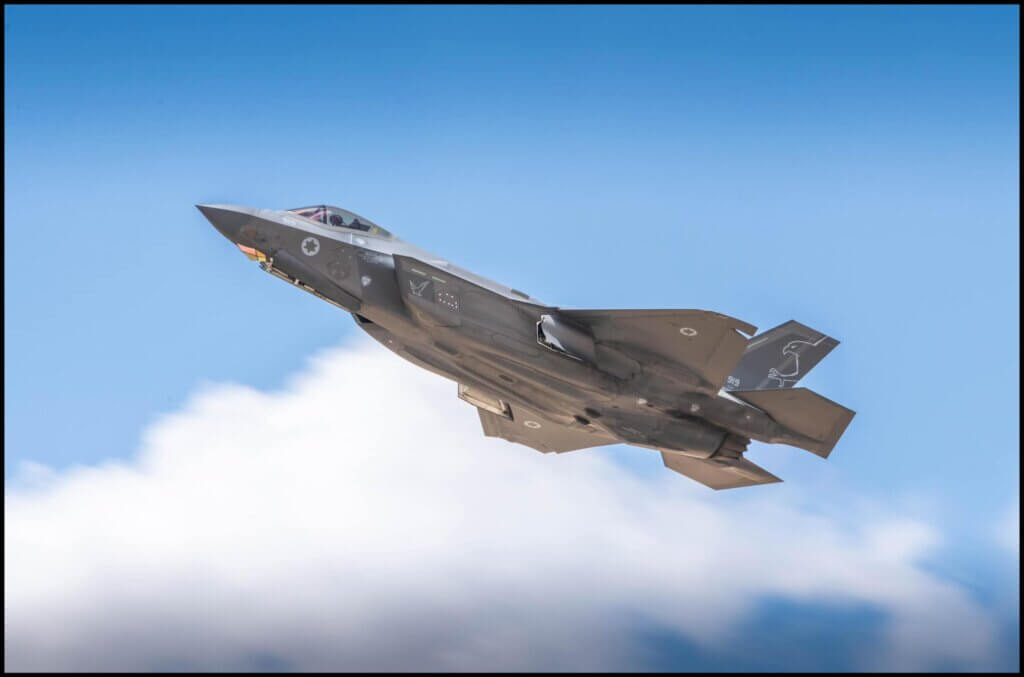 Israeli Air Force (IAF) F-35I “Adir” stealth multi-role fighter jet (Photo: IDF Spokesperson’s Unit)
Congress unveiled their 2026 National Defense Authorization Act (NDAA) on Monday. This bill is the culmination of a lengthy process in both chambers and a reconciliation conference so that both the House and Senate can vote on the whole bill and send it to the president for his signature.
It comes as little surprise, based on the recently released National Security Strategy, that the Middle East doesn’t take up an inordinate amount of space in the NDAA. But it’s there, and Israel is, of course, a primary feature.
In fact, there’s an entire section devoted to what we will give to Israel. Most of that is merely business as usual, renewing and expanding defense and research cooperation between the United States and Israel. Still, we should keep in mind that, aside from some missile defense funding, this “business as usual” means funds in addition to the aid that Israel gets under the Memorandum of Understanding (MOU) signed under Barack Obama in 2016, which amounts to $3.8 billion annually.
But there is one provision clearly meant to address Israel’s growing isolation: a commitment by the United States to fill any gaps in Israel’s arsenal and weapons capabilities created by any other country’s decision to stop selling all or some weapons to Israel.
Such assurances not only undercut the growing international efforts to cut arms from Israel as it carries out a genocide in Gaza, but also opens a potential backdoor for increasing weapons and aid to Israel as support for the country is dropping across the political spectrum.
Israeli Air Force (IAF) F-35I “Adir” stealth multi-role fighter jet (Photo: IDF Spokesperson’s Unit)Congress unveiled their 2026 National Defense Authorization Act (NDAA) on Monday. This bill is the culmination of a lengthy process in both chambers and a reconciliation conference so that both the House and Senate can vote on the whole bill and send it to the president for his signature.
It comes as little surprise, based on the recently released National Security Strategy, that the Middle East doesn’t take up an inordinate amount of space in the NDAA. But it’s there, and Israel is, of course, a primary feature.
In fact, there’s an entire section devoted to what we will give to Israel. Most of that is merely business as usual, renewing and expanding defense and research cooperation between the United States and Israel. Still, we should keep in mind that, aside from some missile defense funding, this “business as usual” means funds in addition to the aid that Israel gets under the Memorandum of Understanding (MOU) signed under Barack Obama in 2016, which amounts to $3.8 billion annually.
But there is one provision clearly meant to address Israel’s growing isolation: a commitment by the United States to fill any gaps in Israel’s arsenal and weapons capabilities created by any other country’s decision to stop selling all or some weapons to Israel.
Such assurances not only undercut the growing international efforts to cut arms from Israel as it carries out a genocide in Gaza, but also opens a potential backdoor for increasing weapons and aid to Israel as support for the country is dropping across the political spectrum.
What the U.S. is committing to
This part of the NDAA would require the Secretary of Defense to conduct an ongoing assessment at least once every six months on “the scope, nature, and impact on Israel’s defense capabilities of current and emerging arms embargoes, sanctions, restrictions, or limitations imposed by foreign countries or by international organizations; the resulting gaps or vulnerabilities in Israel’s security posture against shared regional adversaries… and its ability to maintain its qualitative military edge (QME).” The Defense Secretary is then required to report on these assessments annually to Congress.
This requires the United States to ensure that Israel is protected against a decision by any country or any potential United Nations decision to stop selling it weapons regardless of what crimes it might commit. It is a public declaration that, should Israel repeat or amplify its crimes in Gaza, it can do so with even greater impunity than it did before.
It’s important to note that many national and international laws govern the sale of weapons to human rights abusers. Barring weapons sales is a key legal tool to discourage large-scale human rights violations. It is also a tool of first resort in diplomacy; when a state is not swayed by mere arguments, suspension of certain weapon sales is often the first method used to apply genuine pressure, before enacting trade sanctions that impact the populace rather than just the military.
The first part of the provision in the NDAA involves tracking any potential effects that the cessation of a particular sale of weapons to Israel might have. It also demands that the United States monitor any potential diminishing of Israel’s Qualitative Military Edge (QME), which is the ability of Israel to fight off any combination of nations in the Mideast that might attack it. Guaranteeing that QME is already U.S. law.
So, what does the NDAA say we need to do if the Secretary of Defense finds that decisions to stop selling certain weapons to Israel have left a gap in Israel’s dominance over the region?
The bill lays out four options. Two of them are simply enhancing cooperation in research, development, training, logistics, and such. The other two are more substantive.
The first of these is a sort of internal review, seeking any regulations that might be eased to grant Israel even more weaponry than it already gets. It involves examining any limitations on what Israel can purchase from, or be provided by, the United States, as well as identifying items that can address the gaps left by other countries.
The second, more concerning option is spelled out as: “leveraging United States industrial base capacity to provide substitute defensive capabilities.” In other words, this would mean contracting with American defense corporations to manufacture the equipment Israel has been deprived of or a reasonable substitute for it, depending on the specific need.
This part of the NDAA would require the Secretary of Defense to conduct an ongoing assessment at least once every six months on “the scope, nature, and impact on Israel’s defense capabilities of current and emerging arms embargoes, sanctions, restrictions, or limitations imposed by foreign countries or by international organizations; the resulting gaps or vulnerabilities in Israel’s security posture against shared regional adversaries… and its ability to maintain its qualitative military edge (QME).” The Defense Secretary is then required to report on these assessments annually to Congress.
This requires the United States to ensure that Israel is protected against a decision by any country or any potential United Nations decision to stop selling it weapons regardless of what crimes it might commit. It is a public declaration that, should Israel repeat or amplify its crimes in Gaza, it can do so with even greater impunity than it did before.
It’s important to note that many national and international laws govern the sale of weapons to human rights abusers. Barring weapons sales is a key legal tool to discourage large-scale human rights violations. It is also a tool of first resort in diplomacy; when a state is not swayed by mere arguments, suspension of certain weapon sales is often the first method used to apply genuine pressure, before enacting trade sanctions that impact the populace rather than just the military.
The first part of the provision in the NDAA involves tracking any potential effects that the cessation of a particular sale of weapons to Israel might have. It also demands that the United States monitor any potential diminishing of Israel’s Qualitative Military Edge (QME), which is the ability of Israel to fight off any combination of nations in the Mideast that might attack it. Guaranteeing that QME is already U.S. law.
So, what does the NDAA say we need to do if the Secretary of Defense finds that decisions to stop selling certain weapons to Israel have left a gap in Israel’s dominance over the region?
The bill lays out four options. Two of them are simply enhancing cooperation in research, development, training, logistics, and such. The other two are more substantive.
The first of these is a sort of internal review, seeking any regulations that might be eased to grant Israel even more weaponry than it already gets. It involves examining any limitations on what Israel can purchase from, or be provided by, the United States, as well as identifying items that can address the gaps left by other countries.
The second, more concerning option is spelled out as: “leveraging United States industrial base capacity to provide substitute defensive capabilities.” In other words, this would mean contracting with American defense corporations to manufacture the equipment Israel has been deprived of or a reasonable substitute for it, depending on the specific need.
What effect would this provision have?
As with so many things regarding the United States’ relationship with Israel, the wording of the bill creates an elasticity that can be used to the advantage of whoever is making decisions.
There is nothing in the bill that defines a “gap” that needs to be filled or at what point Israel would be considered to have seen a diminishment in its QME. So, potentially, this provision could open the door to a significant increase in the quality and quantity of aid the U.S. sends to Israel, using a perceived shortcoming as a pretext.
In the wake of the ongoing Gaza genocide, several countries forbade some arms sales to Israel. Those states included Japan, Canada, France, Italy, and Spain. Such actions were limited and had hardly any impact on Israel’s military capabilities. But even this was enough to motivate the provision in the NDAA.
Perhaps more importantly, stalwart sellers of weaponry to Israel like the United Kingdom and Germany enacted symbolic or temporary suspensions of select equipment and licenses to Israel. Germany quickly reversed its limited embargo after just over two months, citing the bogus “ceasefire.” The UK license suspension was never even fully implemented and represented a small, mostly meaningless, portion of the hundreds of licenses they issue to Israel.
Still, the UK and Germany are Israel’s most important European allies when it comes to arms sales, and there remains political pressure in both countries to end arms sales to Israel over the Gaza genocide. That they even considered making such empty gestures clearly concerned Israel and the U.S.
This American guarantee means that any impact that social movements in those countries, and others in Europe, could have had if they succeeded is now moot. This is likely to diminish enthusiasm for such movements in Europe, though they will certainly continue their work.
Collaboration on drones and AI
The loose wording of the guarantee of Israel’s military dominance is particularly troubling, considering the NDAA’s emphasis, throughout the document, on drone technology.
In describing the intended enhancement of cooperation in research with Israel, the NDAA strongly emphasizes “unmanned aerial systems,” treating this as a high priority. In other parts of the document, considerable attention is also paid to drone technology, both in developing it for American use and countering its use by potential rivals.
In 2025, there was no funding for such specific research collaboration with Israel. In this NDAA, $70 million is earmarked for that work. While that is a small amount in a bill that envisions spending upwards of $900 billion, it is likely only the beginning.
We can count on the Trump administration working overtime to expand collaboration between the government and the private sector. Drone technology is certainly an area where that will happen, given Trump’s dream of a “Golden Dome” defense system over all of the United States.
The NDAA utilizes collaboration with Israel to open a door to a massive expansion of work in that direction, far exceeding the paltry $70 million requested here. Drones will be seen as a key threat to both Israel and the United States, as it is one area in which Iran is a particularly significant player. And of course, China is a global leader in drone technology.
This could be one major direction the U.S. could take, using aid to Israel as a lever to push Congress for increased funding. The annual reports the Defense Secretary must make regarding gaps in Israel’s defense or slippage in its QME are required by the NDAA to be unclassified. That will add considerable political weight to any request for such funding the White House might make.
Artificial Intelligence is a virtual obsession with Trump, and it is not only a major area of research for militaries around the world, but it overlaps a great deal with drone technology. That will surely be a big component of the work this NDAA envisions in partnership with Israel.
This open door in the NDAA becomes much harder to keep track of when we consider the potential strategy, which I discussed here at Mondoweiss recently, where Israel and its lobbyists in Washington would ask for a significant increase in annual aid and justify it by diverting a large portion of that aid into public-private sector collaboration. This NDAA opens the door for funds to flow widely to such enterprises.
Thus, the provisions in the new NDAA have the potential not only to blunt the already scant European efforts to stop arming Israel as it pursues genocidal and apartheid policies, but it also to greatly broaden U.S. aid to Israel and make that aid harder to fully keep track of.
All of this is happening at a time when Israel knows its time as a political force in domestic American politics is waning. This is a way of ensuring American support despite its unpopularity with the American people.

No comments:
Post a Comment